

Global IV Flush Syringe Market Size and Forecast – 2026To 2033
The global IV flush syringe market is expected to grow from USD 478.3 Mn in 2026 to USD 728.6 Mn by 2033, registering a compound annual growth rate (CAGR) of 6.2% from 2026 to 2033. The market for IV flush syringes is poised for significant expansion, fueled by the prevalent use of intravenous catheters and the heightened emphasis on catheter maintenance and infection prevention.
As per a study published by the U.S. National Library of Medicine, approximately 80% of hospitalized patients in the U.S. have one or more intravenous catheters placed during the course of their hospital stay, highlighting the considerable demand for IV flush syringes to maintain catheter patency and reinforce safe vascular access management.
(Source: National Library of Medicine)
Key Takeaways of the Global IV Flush Syringe Market
- Saline flush syringes are projected to hold 68.4 % of the global IV flush syringe market share in 2026, making it the dominant product type segment across North America due to the increasing emphasis on standardized catheter maintenance and infection prevention practices. For instance, the U.S. Centers for Disease Control and Prevention (CDC) recommend routine catheter flushing and maintenance as part of evidence-based strategies to reduce vascular access complications and healthcare-associated infections. (Source: Centers for Disease Control and Prevention) These recommendations continue to support the widespread use of saline flush syringes across healthcare facilities.
- Central venous catheters (CVCs) are projected to hold 38.7 % of the global IV flush syringe market share in 2026, making it the dominant application segment across Europe due to the extensive use of central venous access devices in critical care and long-term infusion therapies. For instance, the European Centre for Disease Prevention and Control (ECDC) promotes best practices for the prevention of catheter-related bloodstream infections, including proper catheter maintenance procedures. (Source: European Centre for Disease Prevention and Control) Such guidance reinforces the need for routine flushing protocols in central venous catheter management.
- Hospitals are projected to hold 72.8 % of the global IV flush syringe market share in 2026, making it the dominant end user segment across Asia Pacific due to rising focus on patient safety and infection prevention within hospital settings. For instance, China's National Health Commission (NHC) has issued policies aimed at strengthening hospital quality management and healthcare-associated infection control practices. (Source: The People's Republic of China) These initiatives support the adoption of IV flush syringes for routine vascular access maintenance and catheter care in hospitals.
- North America maintains dominance with an estimated share of 39.6 % in 2026, bolstered by widespread adoption of vascular access management protocols and patient safety initiatives across healthcare facilities. For instance, the Joint Commission's National Patient Safety Goal (NPSG.07.04.01) requires accredited U.S. healthcare organizations to implement evidence-based practices to prevent central line-associated bloodstream infections (CLABSIs). (Source: The Joint Commission) These requirements support the routine use of catheter maintenance products, including IV flush syringes, across hospitals and other healthcare settings.
- Asia Pacific is expected to exhibit the fastest growth with an estimated contribution of 23.1 % share in 2026, driven by healthcare modernization efforts, increasing procedural volumes, and growing adoption of standardized infusion practices. For instance, Japan’s Ministry of Health, Labour and Welfare (MHLW) has promoted the implementation of the Medical Safety Promotion Program, which emphasizes standardized medication administration and vascular access management practices across healthcare institutions. (Source: Ministry of Health, Labour and Welfare) Such initiatives are supporting the adoption of ready-to-use IV flush syringes in clinical settings.
- Growing Adoption of Prefilled Flush Syringes in Home Infusion and Ambulatory Care Settings: Increased use of home-based infusion therapy and outpatient treatment centers are expanding the demand for prefilled IV flush syringes. With a push for easier and safer catheter care, along with better patient compliance, facilities are using ready-to-use flushing solutions to eliminate any potential error that comes with preparation in an offsite facility. This should continue to rise as more services shift toward a more dispersed system of care.
- Increasing Utilization of Long-Term Vascular Access Devices: The increasing adoption of peripherally inserted central catheters (PICCs), implanted ports and other long-term vascular access devices in the areas of oncology, nutritional support, and chronic disease therapy is expected to fuel the demand for IV flush syringes. As long-term devices will necessitate periodic flushing to maintain patency and prevent obstructions, consequently stimulating the re-purchase of flush syringes over the entire course of treatment. Accordingly, an increase in demand for devices to maintain the catheter is expected as the utilization of long-term infusion therapies increases.
Segmental Insights
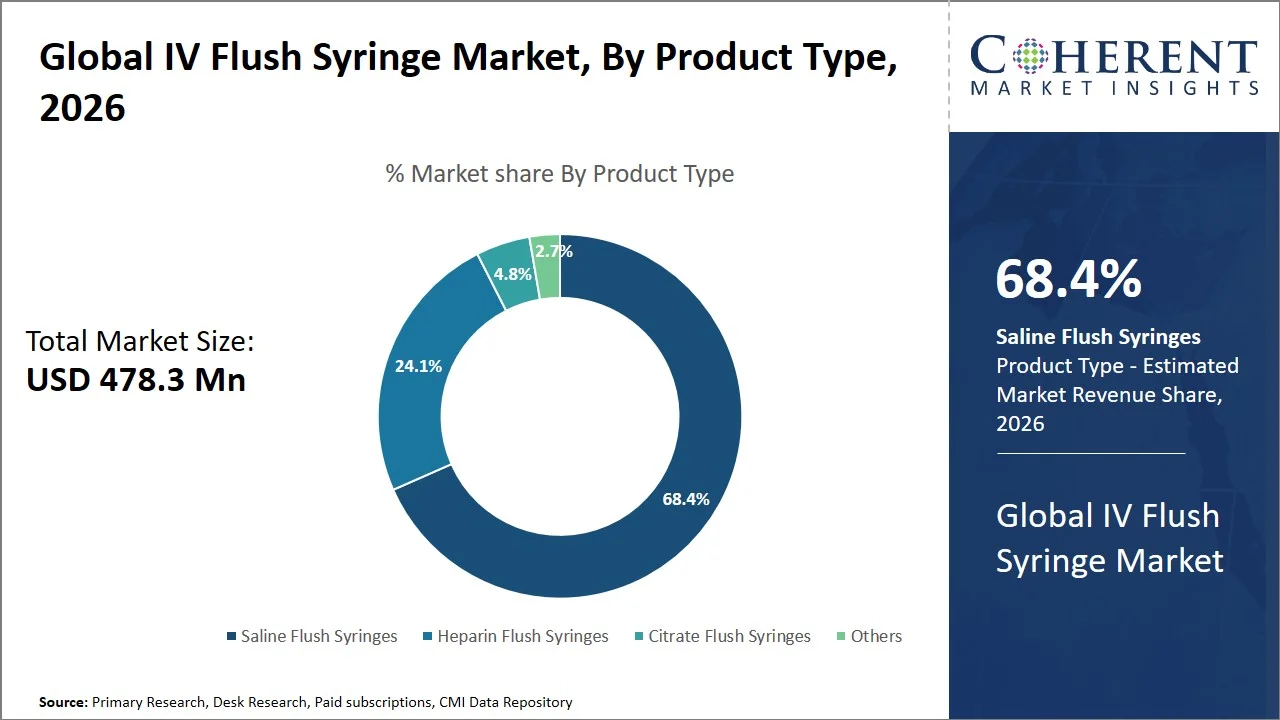
Why Do Saline Flush Syringes Dominate the Global IV Flush Syringe Market?
Saline flush syringes are projected to hold a market share of 68.4% in 2026, due to their physiological compatibility, better safety features and usage for maintaining IV catheter patency in various types of intravenous access devices. Saline solution is an effective flushing agent for residual medicines and blood from an intravenous catheter, thus enabling standard maintenance of an IV catheter without introducing any complications by anticoagulation caused by heparin. Preference of standardized, pre-filled flushing syringes over other alternative is also enhancing their adoption. For instance, in July 2023, the U.S. Food and Drug Administration (FDA) granted 510(k) clearance to the 10mL BD PosiFlush 0.9% Sodium Chloride Injection pre-filled flush syringe, further ensuring access to sterile, ready-to-use saline flush products for maintenance of vascular access devices. (Source: Food and Drug Administration)
- Current Industry Events of 2026
- Market Size Estimation
- Regional Breakdown
- Competitive Landscape
- Customer Intelligence
- Segmental Analysis
- Pricing Analysis
- Key Market Drivers, Challenges & Future Trends
- Customized Insights Section
Why Does Central Venous Catheters (CVCs) Represent the Largest Application Segment in the IV Flush Syringe Market?
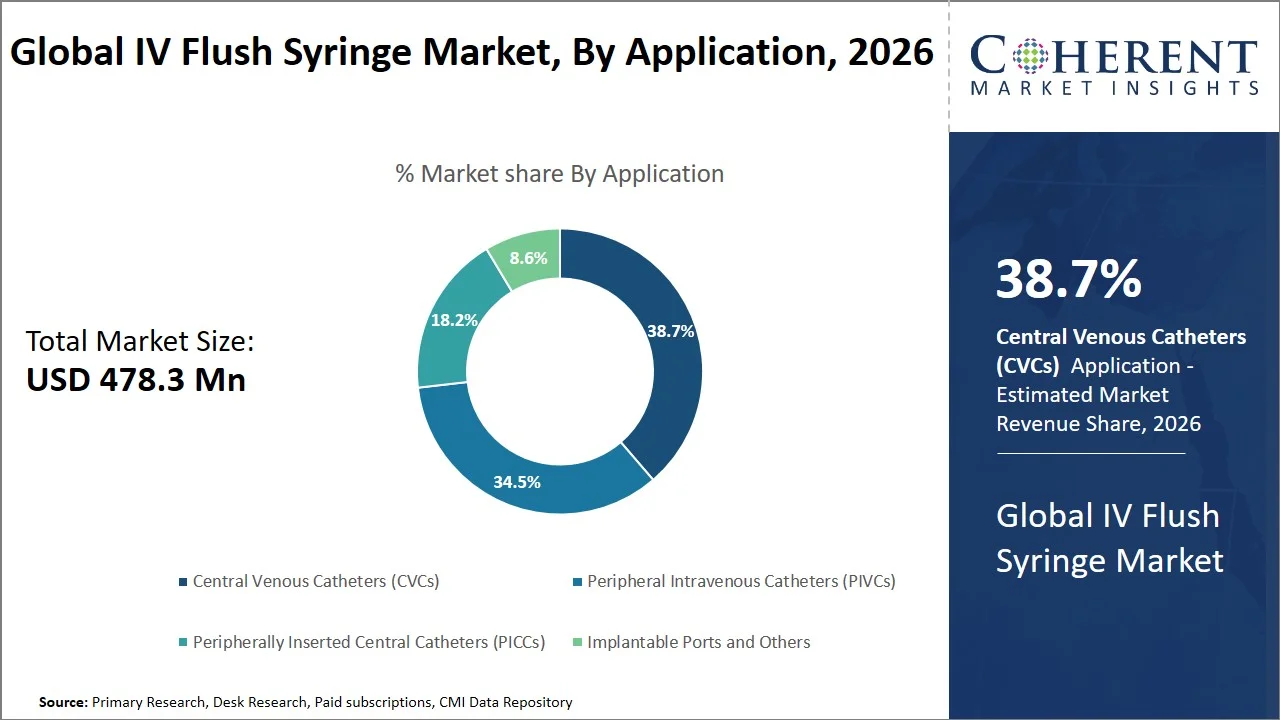
Central venous catheters (CVCs) are projected to hold a market share of 38.7% in 2026, owing to its frequent use in critical care, oncology, dialysis, and long-term infusion therapies where the catheters require frequent flushing. Flushing the CVCs at regular intervals helps to prevent blockages or occlusions in the catheters and the occurrence of complications associated with CVCs. There is growing use of long-term vascular access devices to manage chronic conditions further bolstering the segment’s growth. For instance, Infusion Nurses Society (INS) revised its Infusion Therapy Standards of Practice, reiterating the evidence-based recommendations for the flushing and locking of central venous access devices for improved catheter efficacy and patient safety. (Source: Infusion Nurses Society)
Hospitals Segment Dominates the Global IV Flush Syringe Market
The hospitals segment is projected to hold a market share of 72.8% in 2026, as a large number of intravenous therapies are carried out in the intensive care unit, operation theater, emergency and subspecialty department within hospitals. Due to recurring need for maintenance of catheter and administration of medicine there is a consistent need of sterile flush syringes in the hospitals. Standardized protocol of vascular access management is implemented at the hospitals to reduce catheter related infections. For instance, the U.S. Centers for Medicare & Medicaid Services (CMS) Hospital-Acquired Condition (HAC) Reduction Program emphasizes hospitals minimizing central line-associated bloodstream infections (CLABSIs) with greater infection prevention and catheter management practices. (Source: Centers for Medicare & Medicaid Services)
Currents Events and their Impact
Current Events | Description and its Impact |
U.S. FDA Resolves U.S. IV Saline and Prefilled Flush Syringe Supply Constraints (August 2025) |
|
China Introduces Registration Review Guideline for Pre-filled Catheter Flush Syringes (November 2025) |
|
(Source: MEDQOR LLC., Asia Actual)
IV Flush Syringe Market Dynamics
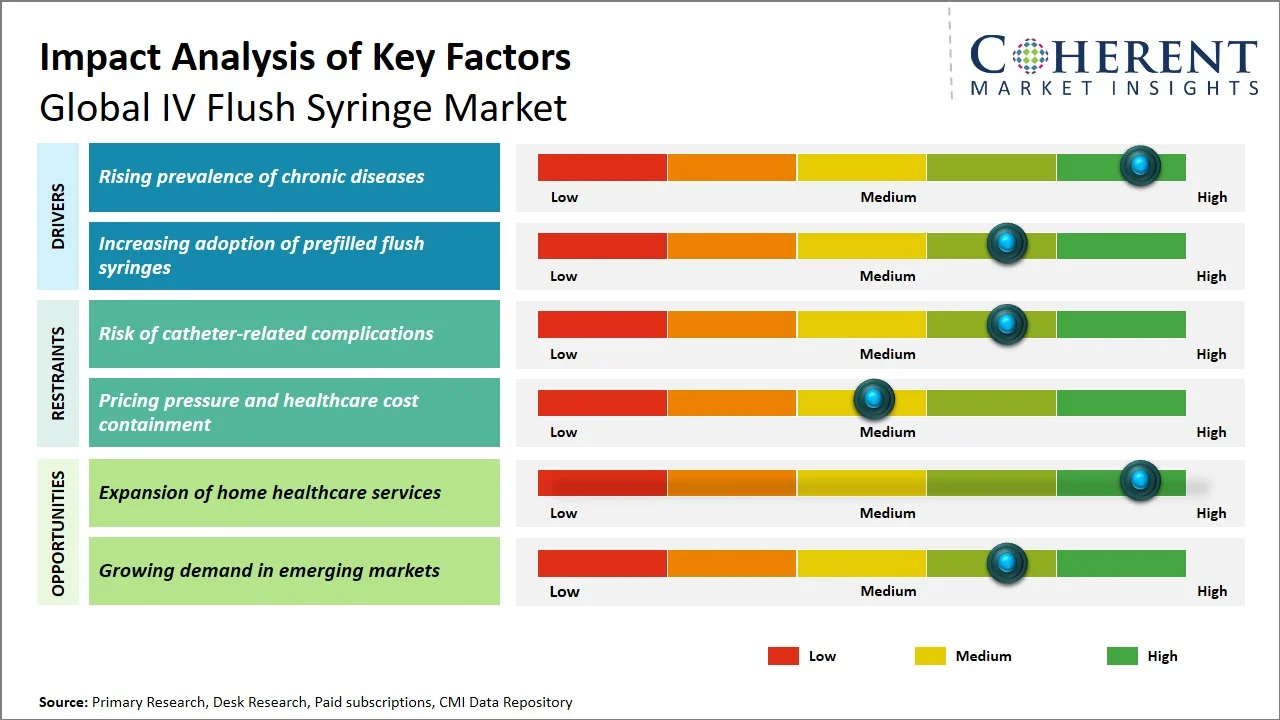
Market Drivers
- Rising prevalence of chronic diseases: The increasing global burden of chronic diseases such as cardiovascular diseases, autoimmune diseases, cancers and renal diseases, bolsters significant demand for IV flush syringes. The increasing reliance of healthcare providers on long-term therapies and intravenous infusions through vascular access devices and requires frequent catheter maintenance for consistent delivery of treatments and reducing risks associated with catheter care. For instance, in February 2026, U.S. FDA approved once-monthly dosing schedule of Johnson & Johnson’s RYBREVANT FASPRO (amivantamab and hyaluronidase-lpuj) in combination with LAZCLUZE (lazertinib) for EGFR-mutated non-small cell lung cancer, supporting continued use of long-term infusion and vascular access management practices in oncology care. (Source: Johnson & Johnson)
- Increasing adoption of prefilled flush syringes: The increasing use of prefilled flush syringes is contributing to the IV flush syringe market as they provide better medication safety, reduced preparation times, and minimize the risks of contamination through the use of manually prepared flush solutions. Healthcare professionals are continually turning to pre-use syringes, to increase workflow efficiency and decrease medication handling while facilitating standard practice for vascular access maintenance. This movement towards prefilled products is also evident in the efforts of healthcare facilities to increase nursing efficiency and improve patient safety performance. For instance, the Safe Practice Guidelines for Adult IV Push Medications from the Institute for Safe Medication Practices (ISMP) recommends that, when available, commercially prepared and prefilled products be used to minimize the potential for preparation errors and the risk of contamination associated with manual preparation. (Source: Institute for Safe Medication Practices)
Emerging Trends
- Shift Toward Ready-to-Use and Prefilled Syringe Formats: As the industry moves towards standardization of vascular access management practices in both hospital and outpatient care environments, healthcare providers are increasingly selecting prefilled IV flush syringes to improve medication safety, reduce preparation time and eliminate the contamination risks associated with manual syringe preparation.
- Integration of Safety-Engineered and Needle-Free Vascular Access Solutions: To improve patient safety and decrease needle-stick injuries manufacturers are coming up with IV flush syringes for needle free connections and sophisticated vascular access systems. The increase in closed system catheter care and infection control is expected to facilitate the use of such combination flushing products.
Regional Insights
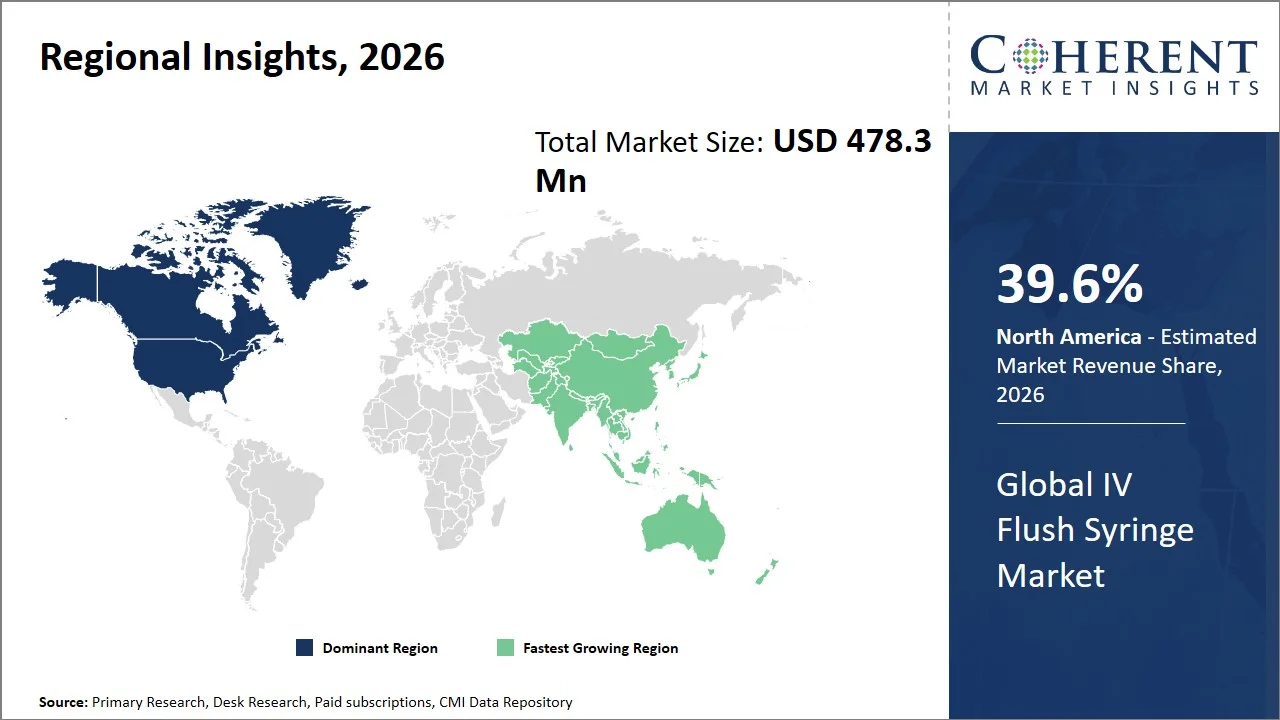
Why is North America a Strong Market for IV Flush Syringes?
North America leads the global IV flush syringe market, accounting for an estimated 39.6% share in 2026, due to its advanced healthcare infrastructure, widespread use of latest medical technology, and increasing government investment on healthcare innovation. In North America, highly developed supply chain system with advanced regulatory standards provides high product quality, which in return fosters extensive adoption of IV flush syringe for both hospitals and clinics.
For instance, in order to promote optimal medication safety and reduce contamination risks, USP General Chapter <797> mandates strict requirements for sterile compounding practices and strongly suggests healthcare facilities use manufacturer prepared sterile products when feasible. This concept of utilizing readily available, prefilled sterile products like sterile IV flush syringes has become an accepted standard throughout hospitals and outpatient care centers. In addition, the region receives significant investment in healthcare R&D that leads to constant product innovation. Besides, efficient import-export activities driven by North American trade system allows companies to maintain its product supply as well as market prices.
Why Does the Asia Pacific IV Flush Syringe Market Exhibit High Growth?
The Asia Pacific IV flush syringe market is expected to exhibit the fastest growth with an estimated contribution of 23.1% share to the global market in 2026, due to rapid development in healthcare infrastructure, rise in prevalence of chronic diseases, increasing adoption of high-tech medical devices, with developing economies such as India, China and the Southeast Asian countries leading the market expansion. Furthermore, government efforts to improve access and quality of health care, with increasing government and private investment, are driving the market growth.
For instance, as part of the Pradhan Mantri Ayushman Bharat Health Infrastructure Mission (PM-ABHIM) program, the Indian government is reinforcing the development of critical care, diagnostics, and healthcare infrastructure throughout the country. Expanding healthcare and medical infrastructure along with the increased access to tertiary healthcare is anticipated to augment the demand for intravenous therapy products such as IV flush syringes in hospitals and specialized care centers. (Source: Department of Health Research) Furthermore, the rising requirement for minimally invasive procedure and infection control further boosts the demand for IV flush syringes. Moreover, the liberalization of trade and the enhancement of logistics in the health care industry are promoting market entry into various markets within the region.
Global IV Flush Syringe Market Outlook for Key Countries
Why is the U.S. Leading Innovation and Adoption in the IV Flush Syringe Market?
The U.S. dominates the IV flush syringe market because pre-filled saline flush syringes are universally used in the hospital setting as well as in the ambulatory infusion center and home infusion markets. Healthcare professionals have become more systematic in the manner of vascular access maintenance, thereby fostering sustained use of a ready to use flush solution. Adoption of safety-engineered syringes and needle-free catheter access devices which reduce contamination risk and enhance workflow are also high. Finally, the proliferation of long-term vascular access devices in oncology, intensive care and infusion therapy continue to stimulate demand for more sophisticated IV flush syringe devices.
Is Japan a Favorable Market for IV Flush Syringes?
Japan is one of the most promising markets for the IV flush syringe market, as the country highly values drug safety and infection control. Also, the hospitals have highly standardized clinical procedures. Hospitals prefer to use ready-to-use or pre-filled products for efficient workflow and to avoid medication preparation errors while managing IV vascular access procedures. Japan utilizes significant amounts of infusion therapy, oncology treatment and long-term intravenous therapies. These therapies mandate regular catheter maintenance and flushing procedures. Furthermore, well established regulatory requirements along with growing preference for quality, sterile medical consumables provide the potential for growing need for high-tech IV flush syringes.
Is China Emerging as a Key Growth Hub for the IV Flush Syringe Market?
China is positioned as a key growth hub in the global IV flush syringe market as the modernization of hospital infrastructure and standardization of vascular access management across healthcare facilities continues to proliferate. The rise of infusion therapy, oncology services and critical care are spurring the adoption of catheter maintenance products such as prefilled flush syringes. The rise of prefilled syringe production of domestically owned medical devices, such as sterile consumables, continues to rise to meet clinical needs. Increasing hospital infection control and patient safety standards are also driving demand for superior IV flush syringe products.
Why Does Germany Top the European IV Flush Syringe Market?
Germany is the leader in the European market for IV flush syringes, as the country uses infusion therapy, oncology, dialysis, and critical care procedures to great extent which involves regular vascular access. The country has a well-established infrastructure for healthcare, and acceptance of standardized practices for catheter care and medication safety practices helps maintain stable demand for sterile flush syringes. Germany is also one of the first countries to embrace pre filled as well as safety engineered disposables, designed for faster workflow, minimal contamination and improved patient outcomes. The number of dedicated infusion therapy providers and complex clinical care pathways has kept driving the demand for these devices.
Is the IV Flush Syringe Market Developing in India?
India is a high-potential market for IV flush syringe owing to developing healthcare infrastructure, usage of infusion therapy growing day-by-day and greater focus being put on practices for infection control and patient safety. Increasing use of CVC, PICC lines and other vascular access devices, for usage in oncology, critical care and dialysis settings is driving demand of catheter maintenance products. Hospitals and other caregivers are adopting standard IV therapy protocols and disposable consumables for medical care with aim of increasing efficiency of clinical operations. Developing networks of private hospitals and increase in ambulatory health services and home health care facilities are promoting growth of the market.
Product Innovation Landscape in the Global IV Flush Syringe Market
Product Category | Key Features | Clinical Benefit | Market Impact |
Prefilled Saline Flush Syringes | Ready-to-use sterile format | Reduces preparation errors | Largest and fastest-growing product category |
Heparin Flush Syringes | Anticoagulant-containing solution | Supports catheter patency in specific applications | Established niche segment |
Preservative-Free Flush Syringes | Additive-free formulation | Improved patient safety | Growing adoption in sensitive patient groups |
Safety-Engineered Flush Syringes | Needle-free and safety mechanisms | Reduces needlestick injuries | Increasing use in hospitals |
Sterile Single-Use Flush Syringes | Disposable format | Minimizes contamination risk | Standard of care across healthcare facilities |
How are the expansion of home healthcare services creating new growth opportunities in the IV flush syringe market?
Increasing home health care and home infusion therapy segments are generating enormous growth opportunities in the IV flush syringe market, as intravenous therapies are administered more frequently outside the hospital environment. It is an indispensable element for sustaining catheter patency and enabling safe vascular access management in the home care settings. Patients’ preference for cost effective as well as convenient therapy modalities has boosted the demand for ready-to-use and user-friendly flushing solutions. For instance, the U.S. Centers for Medicare & Medicaid Services (CMS) sustained reimbursement coverage for home infusion therapy services under the Home Infusion Therapy (HIT) Benefit, which permits eligible providers to deliver the professional service in relation to home administered infusion therapies. (Source: Centers for Medicare & Medicaid Services)
Market Players, Key Development, and Competitive Intelligence
Key Developments
- In November 2025, Amsino was chosen as the sole flush syringe supplier for Mount Sinai Health System, which is one of the largest health systems in the U.S. The agreement will enhance Amsino's position in the prefilled flush syringe industry and is indicative of the increasing favorability among healthcare providers for securing a stable, consistent supply chain partnership. Industry experts anticipate such contracts will intensify competition between the major players, with a further emphasis on supply reliability, product quality, and acquisition efficiency in the IV flush syringe sector.
- In August 2025, BD announced an investment of over USD 35 million to scale its prefilled flush syringe manufacturing operations at its Nebraska facility, creating around 50 new jobs. The expansion seeks to boost the country's own production capabilities and bolster the U.S. Health system's supply chain. This announcement is illustrative of the rise in demand for prefilled flush syringes and the shift by manufacturers to prioritize secure availability of products in hospitals, as well as other health systems.
Competitive Landscape
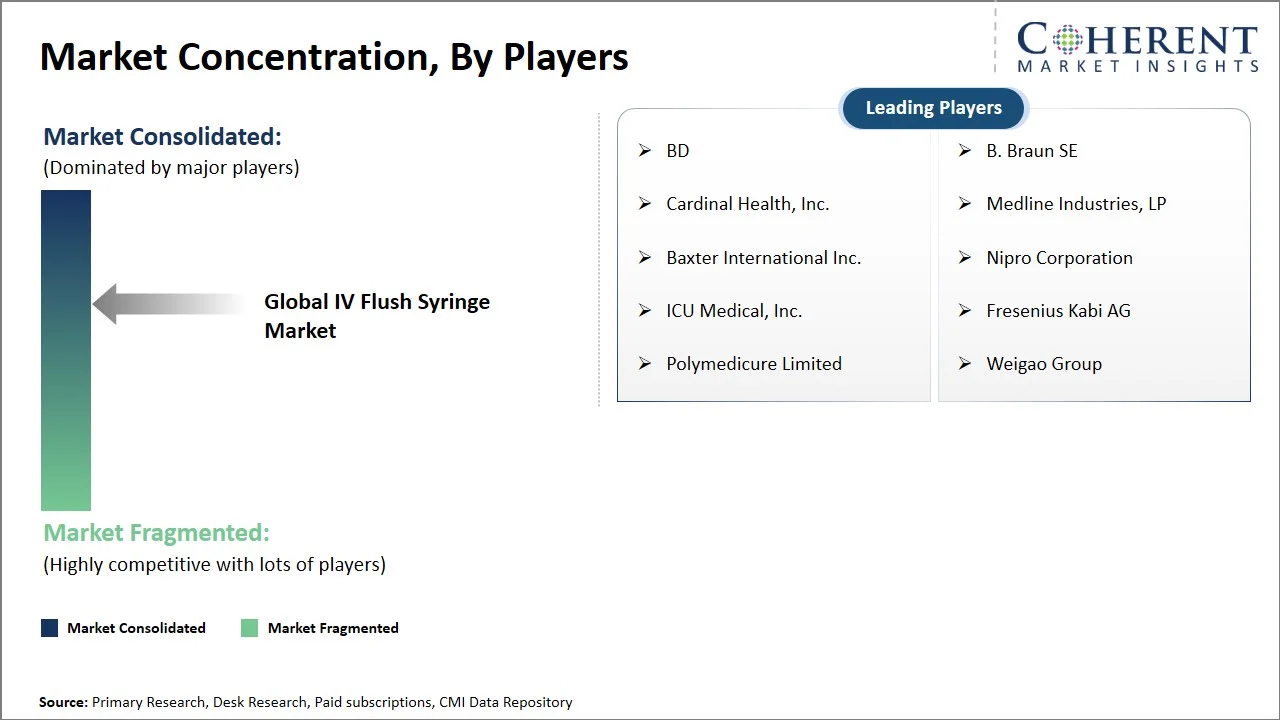
The global IV flush syringe market is moderately consolidated, in which competition revolves around safety of the products, prefilled syringes penetration, regulatory compliance and presence in the health care facilities. The market players are actively adding the range of prefilled saline flush syringes and improving the sterility aspects. They are integrating safety features into the syringes for lowering chances of contamination and needlestick injuries. Manufacturers are also in partnership with hospitals, ambulatory infusion centers and home healthcare. Furthermore, enhancement of manufacturing capacity, supply chain robustness and obtaining regulatory approvals in major health care markets are driving the competition in the market. Key focus areas include:
- Development of prefilled and ready-to-use flush syringe solutions to improve workflow efficiency and medication safety
- Integration of needle-free and safety-engineered technologies to reduce catheter-related complications and needlestick injuries
- Expansion of hospital, ambulatory care, and home infusion distribution networks to increase product adoption
- Regulatory approvals and geographic expansion to strengthen presence in high-growth healthcare markets
- Manufacturing scale-up and supply chain optimization to ensure product availability and meet growing clinical demand
Market Report Scope
IV Flush Syringe Market Report Coverage
| Report Coverage | Details | ||
|---|---|---|---|
| Base Year: | 2025 | Market Size in 2026: | USD 478.3 Mn |
| Historical Data for: | 2020 To 2024 | Forecast Period: | 2026 To 2033 |
| Forecast Period 2026 to 2033 CAGR: | 6.2% | 2033 Value Projection: | USD 728.6 Mn |
| Geographies covered: |
| ||
| Segments covered: |
| ||
| Companies covered: | BD, B. Braun SE, Cardinal Health, Inc., Medline Industries, LP, Baxter International Inc., Nipro Corporation, ICU Medical, Inc., Fresenius Kabi AG, Polymedicure Limited, and Weigao Group | ||
| Growth Drivers: |
| ||
| Restraints & Challenges: |
| ||
Analyst Opinion (Expert Opinion)
- IV flush syringe market is expected to see consistent growth in the long term driven by rapid transition towards prefilled, ready-to-use IV flush syringes which offer significant medication safety benefits, as well as infection control and workflow efficiency improvements throughout the healthcare industry. Long-term demand for IV flush syringes will also continue to be driven by their expanding use in vascular access device administration for chronic diseases, infusion therapy, oncology and home healthcare.
- The maximum opportunities will probably exist within prefilled saline flush syringes for central venous catheter (CVC) and peripherally inserted central catheter (PICC) maintenance applications in the United States. The widespread use of long-term vascular access devices across hospitals, ambulatory infusion centers, and home infusion settings creates recurring demand for catheter maintenance products and supports continued adoption of ready-to-use flush solutions.
- In order to obtain a competitive advantage, market participants should on expanding prefilled syringe portfolios, incorporating safety-engineered and needle-free technologies, and strengthening partnerships with hospitals, infusion providers, and home healthcare organizations. Investments in manufacturing resilience, regulatory compliance, and differentiated product features that enhance safety and ease of use will be critical for capturing market share in an increasingly quality-focused healthcare environment.
Speak to the analyst
Want personalized insights?
Take the findings above to one of our principal consultants, or have the report rebuilt around the segments, geographies and competitors you actually track.
Market Segmentation
- Product Type Insights (Revenue, USD Mn, 2021 - 2033)
- Saline Flush Syringes
- Heparin Flush Syringes
- Citrate Flush Syringes
- Others
- Application Insights (Revenue, USD Mn, 2021 - 2033)
- Central Venous Catheters (CVCs)
- Peripheral Intravenous Catheters (PIVCs)
- Peripherally Inserted Central Catheters (PICCs)
- Implantable Ports and Others
- End User Insights (Revenue, USD Mn, 2021 - 2033)
- Hospitals
- Ambulatory Surgical Centers (ASCs)
- Clinics
- Others
- Regional Insights (Revenue, USD Mn, 2021 - 2033)
- North America
- U.S.
- Canada
- Latin America
- Brazil
- Argentina
- Mexico
- Rest of Latin America
- Europe
- Germany
- U.K.
- Spain
- France
- Italy
- Russia
- Rest of Europe
- Asia Pacific
- China
- India
- Japan
- Australia
- South Korea
- ASEAN
- Rest of Asia Pacific
- Middle East
- GCC Countries
- Israel
- Rest of Middle East
- Africa
- South Africa
- North Africa
- Central Africa
- North America
- Key Players Insights
- BD
- Braun SE
- Cardinal Health, Inc.
- Medline Industries, LP
- Baxter International Inc.
- Nipro Corporation
- ICU Medical, Inc.
- Fresenius Kabi AG
- Polymedicure Limited
- Weigao Group
Sources
Primary Research Interviews
- Hospital pharmacists and infusion therapy specialists involved in vascular access management
- Vascular access nurses and intravenous therapy practitioners
- Critical care physicians and oncology specialists utilizing central venous catheters (CVCs) and PICCs
- Procurement and supply chain managers from hospitals and ambulatory infusion centers
- Medical device quality assurance and regulatory professionals from IV flush syringe manufacturers
- Executives and product managers from vascular access and infusion therapy companies
Stakeholders
- IV flush syringe manufacturers and vascular access device companies
- Contract manufacturers and sterile injectable product suppliers
- Healthcare distributors and group purchasing organizations (GPOs)
- End-use Sectors
- Hospitals and multispecialty healthcare facilities
- Ambulatory surgery centers (ASCs)
- Ambulatory infusion centers
- Home healthcare and home infusion providers
- Dialysis centers
- Oncology treatment centers
- Regulatory & Health Bodies
- U.S. Food and Drug Administration (FDA)
- Centers for Medicare & Medicaid Services (CMS)
- European Medicines Agency (EMA)
- European Centre for Disease Prevention and Control (ECDC)
- Pharmaceuticals and Medical Devices Agency (PMDA), Japan
- National Medical Products Administration (NMPA), China
Databases
- FDA 510(k) Premarket Notification Database
- FDA Medical Device Registration and Listing Database
- CMS Healthcare Cost Report Information System (HCRIS)
- OECD Health Statistics
- World Bank Health Indicators Database
- Global Health Observatory (WHO)
Magazines
- Infection Control Today
- Healthcare Purchasing News
- Medical Design & Outsourcing
- Medical Device Network
- IVTEAM
- Outpatient Surgery Magazine
Journals
- Journal of Infusion Nursing
- Journal of Vascular Access
- American Journal of Infection Control
- BMJ Open Quality
Newspapers
- The Wall Street Journal
- Financial Times
- USA Today
- The New York Times
- The Guardian
Associations
- Infusion Nurses Society (INS)
- Association for Vascular Access (AVA)
- Association for Professionals in Infection Control and Epidemiology (APIC)
- Society of Hospital Medicine (SHM)
- European Society of Clinical Microbiology and Infectious Diseases (ESCMID)
- International Federation of Infection Control (IFIC)
Public Domain Sources
- World Health Organization (WHO) – Patient Safety and Infection Prevention Resources
- Centers for Disease Control and Prevention (CDC) – Healthcare-Associated Infection (HAI) Data
- National Institutes of Health (NIH) – Vascular Access and Infusion Therapy Research
- Centers for Medicare & Medicaid Services (CMS) – Hospital Quality Programs
- European Centre for Disease Prevention and Control (ECDC) – Catheter-Related Infection Prevention Guidance
- World Bank – Healthcare Infrastructure and Health Expenditure Statistics
Proprietary Elements
- CMI Data Analytics Tool, Proprietary CMI Existing Repository of information for last 10 years.
Get access to 250+ pages report
Every segment, forecast, competitor profile and data table behind the analysis above — available for instant download.
- ESOMAR Member
- ISO 9001:2015 Certified
- D-U-N-S Registered
- GDPR & CCPA Compliant
Missing comfort of reading report in your local language? Find your preferred language:
Transform your Strategy with Exclusive Trending Reports
Frequently Asked Questions
The global IV flush syringe market is estimated to be valued at USD 478.3 Mn in 2026 and is expected to reach USD 728.6 Mn by 2033.
Saline flush syringes dominate due to their broad clinical applicability, favorable safety profile, cost-effectiveness, and widespread use in maintaining catheter patency without the anticoagulant-related risks associated with heparin-based flushes.
IV flush syringes are sterile, prefilled or manually filled syringes used to clear and maintain intravenous catheters and vascular access devices by flushing residual medications, blood, or fluids from the line.
The CAGR of the global IV flush syringe market is projected to be 6.2% from 2026 to 2033.
In terms of end user, hospitals are estimated to dominate the market revenue share in 2026.
IV flush syringes remove blood and medication residues from vascular access devices, helping prevent catheter occlusions and ensuring uninterrupted fluid or drug administration.
Prefilled IV flush syringes reduce preparation errors, minimize contamination risks, improve workflow efficiency, and support standardized vascular access management practices.