

Global Knee Osteoarthritis Market Size and Forecast – 2026 To 2033
The global knee osteoarthritis market is expected to grow from USD 9,228.4 Mn in 2026 to USD 19,842.3 Mn by 2033, registering a compound annual growth rate (CAGR) of 11.6% from 2026 to 2033. The market for knee osteoarthritis is poised for significant expansion, fueled by the soaring burden of osteoarthritis and increasing demand for long-term treatment solutions.
According to the U.S. Centers for Disease Control and Prevention (CDC), approximately 33 million U.S. adults are living with osteoarthritis, with the knee being one of the most commonly affected joints. The growing patient population continues to increase demand for pharmacological, regenerative, and surgical knee osteoarthritis therapies
Key Takeaways of the Global Knee Osteoarthritis Market
- Hyaluronic acid is projected to hold 37.5 % of the global knee osteoarthritis market share in 2026, making it the dominant drug type segment across Europe due to its widespread use in patients with failed conservative therapies. For instance, the European Society for Clinical and Economic Aspects of Osteoporosis, Osteoarthritis and Musculoskeletal Diseases (ESCEO) recommends intra-articular hyaluronic acid for selected knee osteoarthritis patients to improve pain relief and functional outcomes, supporting its continued clinical adoption across the region.
- Oral is projected to hold 41.6 % of the global knee osteoarthritis market share in 2026, making it the dominant route of administration segment across North America due to the widespread use of oral NSAIDs as first-line pharmacological therapy. For instance, the American Academy of Orthopaedic Surgeons (AAOS) recommends oral nonsteroidal anti-inflammatory drugs (NSAIDs) to improve pain and function in patients with symptomatic knee osteoarthritis when clinically appropriate, reinforcing the dominance of oral therapies.
- Hospital pharmacies are projected to hold 45.9 % of the global knee osteoarthritis market share in 2026, making it the dominant distribution channel segment across Asia Pacific owing to the increasing volume of hospital-based orthopedic care and intra-articular injection therapies. For instance, Japan's Ministry of Health, Labour and Welfare (MHLW) strengthen regional healthcare delivery through its community-based integrated care system, with hospitals remaining the primary setting for the management of chronic musculoskeletal disorders, including knee osteoarthritis, thereby supporting hospital pharmacy dispensing.
- North America maintains its dominance with an expected share of 35.4 % in 2026, bolstered by the region's advanced orthopedic care infrastructure and supportive reimbursement environment. For instance, in August 2025, the U.S. Centers for Medicare & Medicaid Services (CMS) finalized the Transforming Episode Accountability Model (TEAM), introducing mandatory episode-based payment for lower extremity joint replacement procedures beginning in 2026, reinforcing value-based management of knee osteoarthritis.
- Asia Pacific is expected to exhibit the fastest growth with an estimated contribution of 22.7 % share in 2026, driven by expanding access to musculoskeletal care and supportive government policies. For instance, in February 2025, the Australian Government released the National Health Reform Agreement (2025–2030), prioritizing improved access to specialist and multidisciplinary care for chronic musculoskeletal conditions, including osteoarthritis, thereby supporting market growth.
Segmental Insights
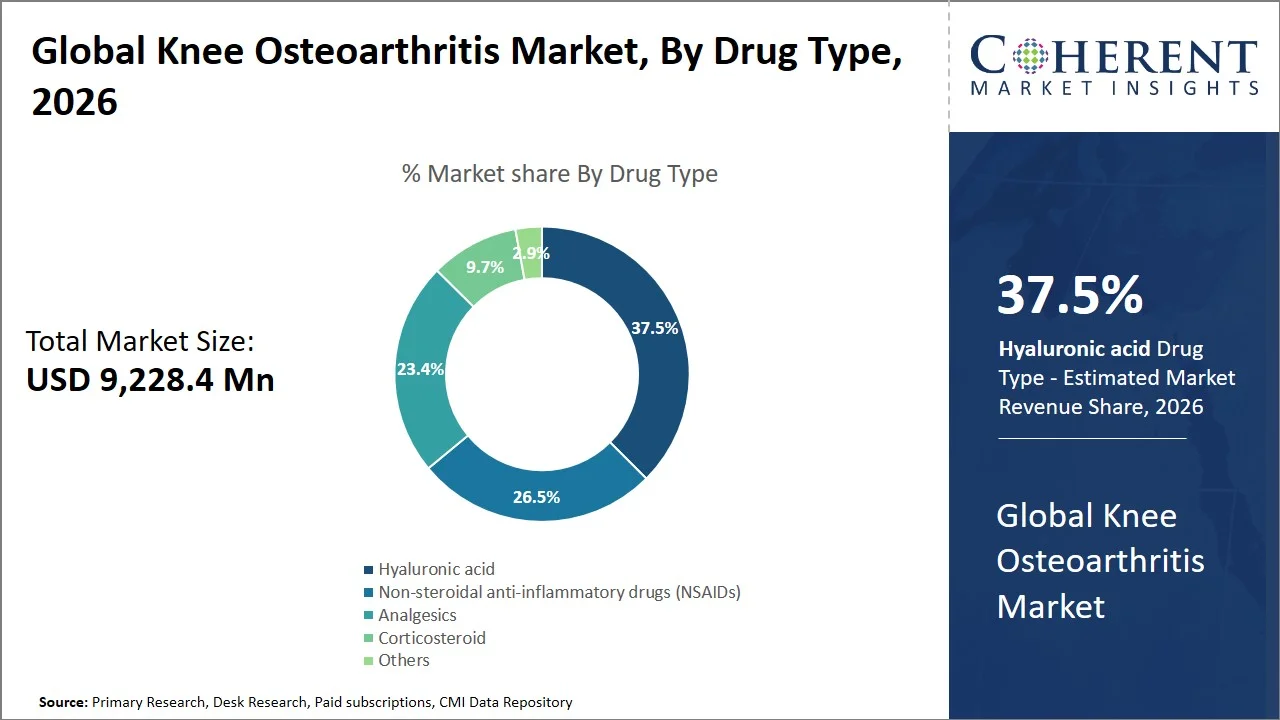
Why Does Hyaluronic Acid Dominate the Global Knee Osteoarthritis Market?
Hyaluronic acid is projected to hold a market share of 37.5% in 2026, owing to its efficacy of regaining viscosities of synovial fluid, enhancing lubricity of a joint as well as relieving pain for prolonged periods along with well-established safety characteristics in patients with osteoarthritis ranging from mild to moderate degrees. Higher molecular-weight and cross-linking of visco supplements have made these treatments more durable and more efficacious in terms of clinical outcome thereby increasing physicians’ preference for visco supplements. For instance, in March 2026 Fidia Farmaceutici announced the U.S. Food and Drug Administration (FDA) granted accelerated approval to HYMOVIS ONE, a first-of-its kind, single-injection intra-articular hyaluronic acid formulation used to treat pain in patients with knee osteoarthritis inadequately managed with conservative therapy.
- Current Industry Events of 2026
- Market Size Estimation
- Regional Breakdown
- Competitive Landscape
- Customer Intelligence
- Segmental Analysis
- Pricing Analysis
- Key Market Drivers, Challenges & Future Trends
- Customized Insights Section
Why Does Oral Represent the Largest Route of Administration Segment in the Global Knee Osteoarthritis Market?
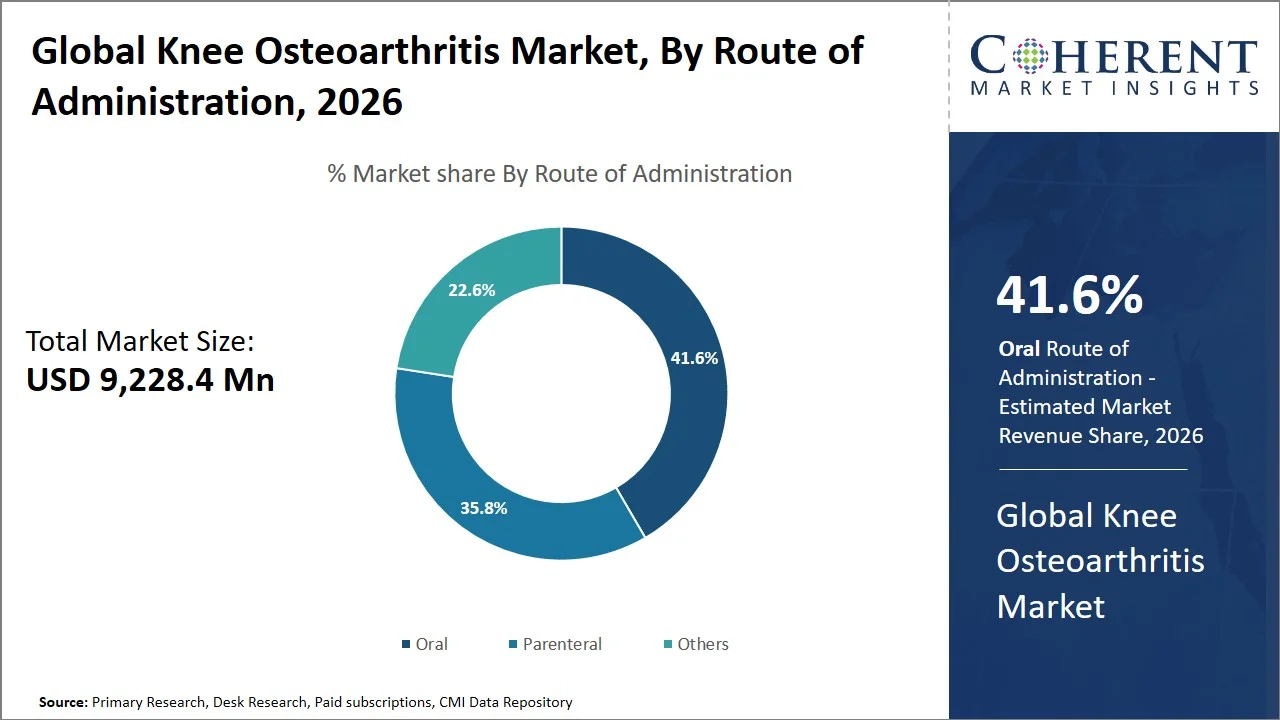
Oral is projected to hold a market share of 41.6% in 2026, due to high patient adherence, rapid action against symptoms and easier to administer treatment along with wide availability of relatively low-cost therapies i.e., analgesics and non-steroidal anti-inflammatory drugs (NSAIDs). Furthermore, convenience of long-term administration in the patients and established clinical practice have made oral agents’ choice of initial treatment for mild to moderate knee osteoarthritis. For instance, in June 2025, the Osteoarthritis Research Society International (OARSI) reaffirmed evidence-based guidelines for appropriate clinical practice emphasizing selected individuals with knee osteoarthritis, oral non-steroidal anti-inflammatory drugs (NSAIDs) as a core treatment option for appropriately selected patients with knee osteoarthritis. (Source: Springer Nature)
Hospital Pharmacies Segment Dominates the Global Knee Osteoarthritis Market
The hospital pharmacies segment is projected to hold a market share of 45.9% in 2026, owing to the role of hospital pharmacies in the distribution of specialist medications such as intra-articular hyaluronic acid and corticosteroids dispensed by physicians as part of a collaborative orthopedic team. Also, hospital pharmacy-based systems are more effectively structured to handle specialized pharmacy facilities and their procurement strategies are better developed to address drug supply chain factors. For instance, the Government of Delhi, consolidated the procurement of medicines, medical devices and medical consumables for all the public hospitals through CPA (Central Procurement Agency) improving hospital pharmacy supply chains and availability of standardized drugs for public hospitals.
Current Events and their Impact
Current Events | Description and its Impact |
Australia Enacts the Health Legislation Amendment (Modernizing My Health Record—Sharing by Default) Act 2025 (February 2025) |
|
American College of Radiology (ACR) Releases Updated Appropriateness Criteria (April 2025) |
|
Global Knee Osteoarthritis Market Dynamics
Market Drivers
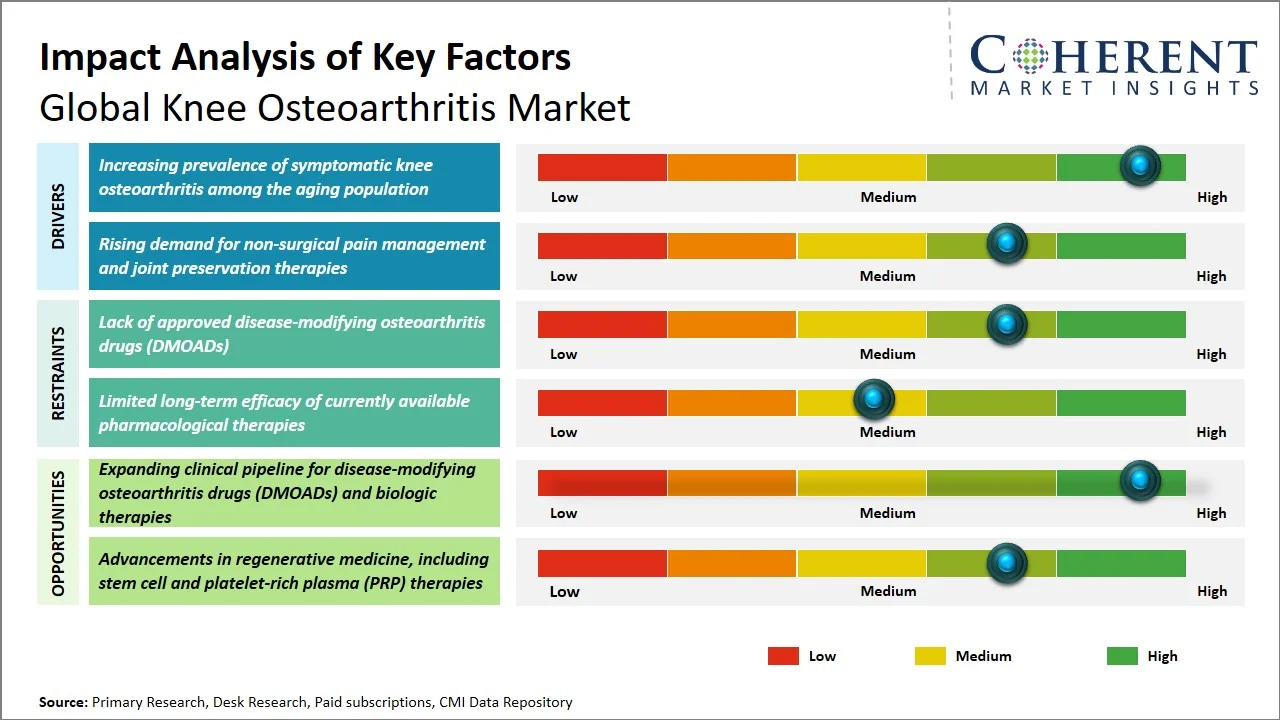
- Increasing prevalence of symptomatic knee osteoarthritis among the aging population: The rising prevalence of symptomatic knee osteoarthritis is driving the demand for effective long-term treatment solutions, particularly among older adults who are at greater risk of cartilage degeneration and functional impairment. As the number of patients experiencing chronic knee pain and mobility limitations increases, healthcare systems are expanding access to pharmacological, regenerative, and surgical interventions. For instance, according to the U.S. Centers for Disease Control and Prevention (CDC), nearly 1 in 2 adults may develop symptomatic knee osteoarthritis by the age of 85, highlighting the substantial future disease burden and the need for advanced therapeutic options.
- Rising demand for non-surgical pain management and joint preservation therapies: The rising demand for non-surgical pain management and joint preservation therapies is driving growth in the knee osteoarthritis market as patients increasingly seek alternatives that delay or avoid total knee replacement. Treatments such as intra-articular injections, physical rehabilitation, and biologic therapies are gaining traction due to their potential to alleviate pain, improve joint function, and preserve mobility. For instance, in July 2025, Johnson & Johnson MedTech and Pacira BioSciences entered into a strategic collaboration to expand early intervention solutions for knee osteoarthritis, combining orthopedic technologies with non-opioid pain management approaches to enhance joint preservation and patient outcomes.
- Increasing volume of knee replacement procedures: The increasing volume of knee replacement procedures is driving the knee osteoarthritis market by highlighting the growing burden of end-stage disease and the need for effective treatment across the care continuum. Rising surgical volumes are also encouraging earlier therapeutic intervention, including pharmacological and intra-articular therapies, to delay disease progression and improve patient outcomes. For instance, according to the American Joint Replacement Registry (AJRR) 2025 Annual Report, more than 3.7 million hip and knee arthroplasty procedures have been captured in the registry since its inception, reflecting the substantial and growing demand for osteoarthritis management in the U.S.
Emerging Trends
- Shift Toward Disease-Modifying Osteoarthritis Drugs (DMOADs): The knee osteoarthritis treatment landscape is transitioning from symptom management to disease modification, with increasing clinical focus on therapies that slow cartilage degeneration and preserve joint function. Pharmaceutical companies are expanding investments in DMOAD candidates to address the unmet need for long-term disease control.
- Increasing Adoption of Combination Therapies: Healthcare providers are increasingly adopting multimodal treatment approaches that combine pharmacological therapies with intra-articular injections, physiotherapy, weight management, and rehabilitation. This integrated strategy is improving pain control, delaying surgical intervention, and enhancing long-term functional outcomes in knee osteoarthritis patients.
- Integration of Personalized Medicine in Knee Osteoarthritis Management: The integration of personalized medicine is emerging as a key trend in the knee osteoarthritis market, enabling treatment strategies tailored to individual patient characteristics, disease severity, and biomarker profiles. Advances in genomics, imaging, and digital health technologies are supporting more precise patient stratification, improving therapeutic selection and clinical outcomes.
Regional Insights
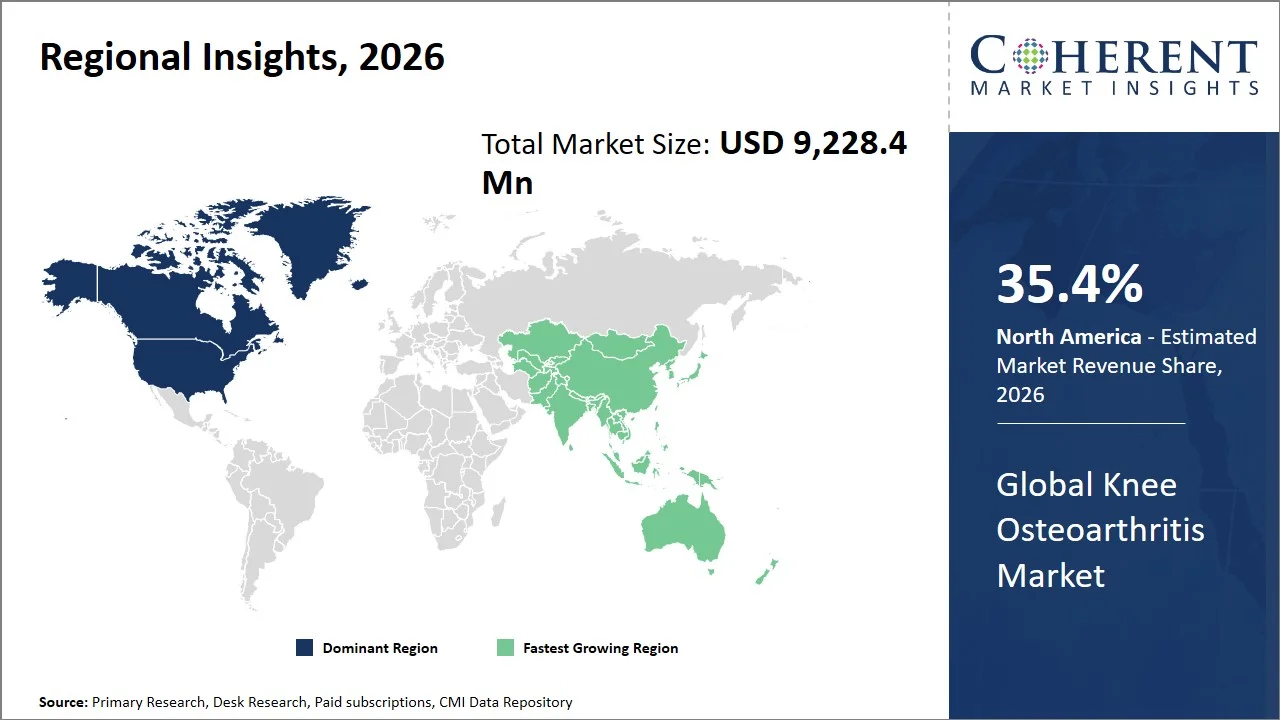
Why is North America a Strong Market for Knee Osteoarthritis?
North America leads the global knee osteoarthritis market, accounting for an estimated 35.4% share in 2026, due to advanced orthopedic technology, robust clinical research in orthopedics, and the extensive use of conservative knee procedures, such as arthroscopy, and limb preservation. The region benefits from supportive government policies that aid orthopedic research, orthopaedic innovation, and orthopaedic technology development that facilitates novel and progressive therapies.
For instance, in January 2025, the National Institute of Arthritis and Musculoskeletal and Skin Diseases (NIAMS) published its Strategic Plan for Fiscal Years 2025–2029, identifying research priorities that are needed to promote the development of therapies, regenerative medicine, translational research, artificial intelligence (AI), and precision medicine, among others, for the treatment of arthritis and other musculoskeletal and skin diseases, including osteoarthritis. Moreover, well-entrenched reimbursement systems and widely available access to cutting-edge diagnostics as well as surgical procedures continue to boost the region’s market edge.
Why Does the Asia Pacific Knee Osteoarthritis Market Exhibit High Growth?
The Asia Pacific knee osteoarthritis market is expected to exhibit the fastest growth with an estimated contribution of 22.7% share to the global market in 2026, fuelled by growing aging population, prevalence of obese population and increasing availability of orthopedic treatments. In efforts to develop strong musculoskeletal healthcare programs in region, governments are focusing on healthy aging, rehabilitating services and modernizing health infrastructure.
For instance, in June 2025, the Government of Japan established “Basic Policy on Economic and Fiscal Management and Reform 2025” focused on ensuring a healthy and long-life span, targeting disease prevention and promotion of rehabilitation and a community integrated-care systems that help build the environment conducive to widespread use of advanced therapies for chronic knee pain such as for degenerative knee osteoarthritis. Moreover, growing trend of undergoing minimally invasive procedures, increased consumption of regenerative medical treatments and heightened awareness about early osteoarthropathy management bolsters growth to expand the Asia Pacific knee osteoarthritis market.
Global Knee Osteoarthritis Market Outlook for Key Countries
Why is the U.S. Leading Innovation and Adoption in the Knee Osteoarthritis Market?
The U.S. dominates the knee osteoarthritis market owing to the presence of robust orthopedic innovation infrastructure, diverse development pipeline for disease modifying and regenerative therapies, and higher utilization of minimally invasive therapies. The ecosystem of orthopedic centers and the mature clinical trials environment ensure faster adoption of therapies in clinical practice, placing the country at the forefront of innovation and commercialization in knee osteoarthritis management.
Is Japan a Favorable Market for Knee Osteoarthritis Market?
Japan is one of the most promising markets for the knee osteoarthritis as the country focuses on joint-preserving treatment approaches, has a high utilization rate of visco supplementation in clinical practice, and is a prolific user of regenerative medicine-based therapies. Japan is a vibrant development hub for cell-based therapeutics, cartilage repair technologies and precision orthopedic treatments and an important market to follow for next-generation knee osteoarthritis innovations.
Is China Emerging as a Key Growth Hub for the Knee Osteoarthritis Market?
China is positioned as a key growth hub in the global knee osteoarthritis market as it rapidly develops orthopedic services while more emphasis being placed on minimally invasive and regenerative therapies. The country is experiencing robust growth of its domestic biopharmaceutical pipeline with the development of new cell therapies and biopharmaceutical-based drugs for knee osteoarthritis, along with the increase in the portfolio of disease-modifying drugs. The country has also witnessed growth in its provision of novel orthopaedic technologies and its commercial manufacturing scale up capacities, further enhancing its position as a growth market in the world.
Why Does Germany Top the European Knee Osteoarthritis Market?
Germany leads the European knee osteoarthritis market due to the existing orthopedics and joints technology infrastructure, widespread adoption of organ-sparing technologies, as well as a comprehensive understanding of advanced treatment for the knees and an extensive adoption of advanced intra-articular therapies. Additionally, the high clinical research for musculoskeletal health and regenerative medicine leads to the creation and incorporation of new biologics as well as cartilage repair therapies continues to reinforce Germany's leadership in the regional knee osteoarthritis market.
Is the Knee Osteoarthritis Market Developing in India?
India is a high-potential market for knee osteoarthritis owing to increased adoption of orthopedic treatments based on minimal invasive procedures as well as rising popularity of regenerative treatments including platelet rich plasma and stem cell therapies in the country. The increasing access to modern orthopedic treatments, expansion in the sports medicine and rehabilitation sector, as well as growing clinical practice towards conservative joint-friendly approach for managing knee arthritis, are further favoring the growth of modern and novel therapies for knee osteoarthritis in India.
Emerging Innovation Landscape in the Global Knee Osteoarthritis Market
Innovation Area | Technology Focus | Clinical Objective | Commercial Significance |
Disease-Modifying Osteoarthritis Drugs (DMOADs) | Cartilage-protective therapeutics | Slow disease progression | Expands long-term treatment market |
Regenerative Therapies | Stem cells, PRP, cell-based therapies | Promote cartilage regeneration | Creates premium therapy segment |
Long-Acting Intra-Articular Therapies | Extended-release injections | Prolong pain relief | Reduces treatment frequency |
Biologic & Gene-Based Therapies | Cytokine modulation, gene therapy | Target underlying disease mechanisms | Strengthens late-stage pipeline |
Digital Therapeutics & Smart Monitoring | Wearables, remote monitoring | Improve treatment adherence | Supports value-based care |
How are the expanding clinical pipeline for disease-modifying osteoarthritis drugs (DMOADs) and biologic therapies creating new growth opportunities in the knee osteoarthritis market?
The evolving pipeline of disease-modifying treatments and next-generation biologics is a considerable avenue for future growth in the knee osteoarthritis market by tackling the drivers of disease progression, as well as relevant risk factors. Pharmaceutical firms are continuing to explore a range of novel agents offering not only targeted pain relief, but also multi-system benefit. For instance, in June 2026, Eli Lilly and Company, announced its exploratory triple agonist retatrutide demonstrated a significant impact on reducing pain among adults with obesity-related knee osteoarthritis in the Phase III TRIUMPH-1 trial, alongside rapid weight loss in response to the treatment. These favorable clinical results support the expansion of value in the next-generation disease-modifying osteoarthritis therapies pipeline and enhance future treatment prospects across the knee osteoarthritis market globally.
Market Players, Key Development, and Competitive Landscape
Key Developments
- In April 2026, 4Moving Biotech announced that the U.S. Food and Drug Administration (FDA) granted Fast Track Designation to 4P004, an intra-articular GLP-1 receptor agonist for the treatment of knee osteoarthritis. The designation supports accelerated clinical development and enhanced regulatory interactions for this first-in-class investigational therapy, reflecting growing momentum toward disease-modifying treatments for knee osteoarthritis.
- In December 2025, Cipla partnered with Stempeutics Research to launch Ciplostem, an allogeneic stem cell therapy for the treatment of knee osteoarthritis in India. The therapy aims to provide a regenerative treatment option by targeting cartilage repair and reducing pain, marking a significant advancement in cell-based therapies for knee osteoarthritis. The launch reflects the growing commercialization of regenerative medicine in the osteoarthritis treatment landscape.
- In July 2025, Johnson & Johnson MedTech entered into a strategic agreement with Pacira BioSciences to expand its early intervention portfolio for knee osteoarthritis. The collaboration combines orthopedic technologies with non-opioid pain management solutions to improve patient outcomes and delay disease progression. The partnership reflects the growing industry focus on minimally invasive, joint-preserving treatment approaches for knee osteoarthritis.
Competitive Landscape
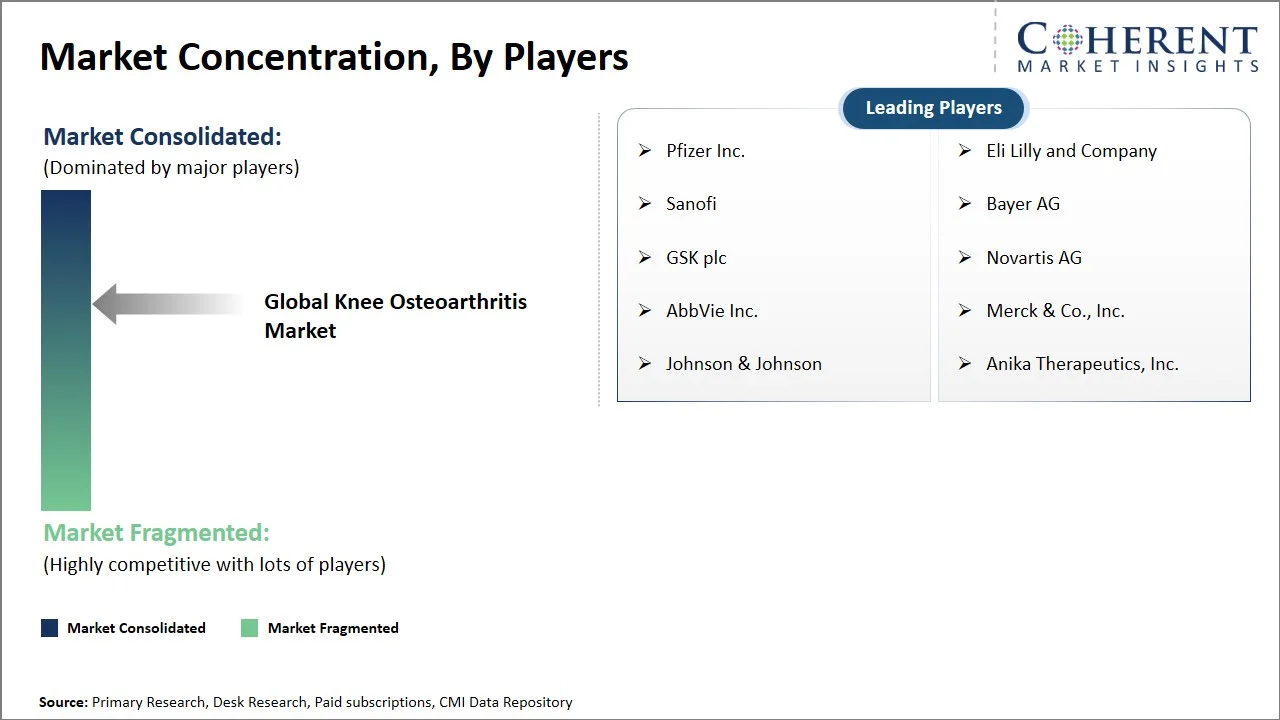
The global knee osteoarthritis market is fragmented, characterized by the presence of multinational pharmaceutical companies, orthopedic device manufacturers, biotechnology firms, and regenerative medicine developers competing across diverse therapeutic modalities. Competition is increasingly focused on developing disease-modifying therapies, expanding regenerative medicine portfolios, advancing minimally invasive interventions, and generating robust clinical evidence to differentiate products. Strategic licensing agreements, collaborations, and late-stage clinical development remain key approaches to strengthen market position and accelerate commercialization. Key focus areas include:
- Development of disease-modifying osteoarthritis drugs (DMOADs)
- Expansion of regenerative medicine and biologic therapies
- Advancement of minimally invasive and joint-preserving interventions
- Strategic licensing, partnerships, and pipeline acquisitions
- Global clinical trial expansion and regulatory approvals
Market Report Scope
Knee Osteoarthritis Market Report Coverage
| Report Coverage | Details | ||
|---|---|---|---|
| Base Year: | 2025 | Market Size in 2026: | USD 9,228.4 Mn |
| Historical Data for: | 2020 To 2024 | Forecast Period: | 2026 To 2033 |
| Forecast Period 2026 to 2033 CAGR: | 11.6% | 2033 Value Projection: | USD 19,842.3 Mn |
| Geographies covered: |
| ||
| Segments covered: |
| ||
| Companies covered: | Pfizer Inc., Eli Lilly and Company, Sanofi, Bayer AG, GSK plc, Novartis AG, AbbVie Inc., Merck & Co., Inc., Johnson & Johnson, Anika Therapeutics, Inc. | ||
| Growth Drivers: |
| ||
| Restraints & Challenges: |
| ||
Analyst Opinion (Expert Opinion)
- In the coming years, global knee osteoarthritis market is expected to be shaped by the transition from conventional pain management toward disease-modifying and regenerative treatment approaches. Continued advancements in biologics, cell and gene therapies, and precision medicine are likely to redefine the standard of care by focusing on slowing disease progression, preserving joint function, and delaying or reducing the need for knee replacement surgeries. Increasing integration of biomarker-driven patient selection and minimally invasive interventions will further improve treatment outcomes and support long-term market growth.
- The maximum opportunities will probably exist within regenerative therapies for early- to moderate-stage knee osteoarthritis, particularly in the U.S. The country's strong clinical research ecosystem, high prevalence of obesity and osteoarthritis, favorable reimbursement landscape, and robust investment in orthopedic innovation make it an attractive market for the commercialization of next-generation therapies, including disease-modifying osteoarthritis drugs (DMOADs), stem cell therapies, and advanced biologics.
- In order to obtain a competitive advantage, market participants should focus on generating robust long-term clinical evidence demonstrating structural disease modification and sustained functional improvement. Companies should also accelerate strategic collaborations with academic research institutions, orthopedic centers, and biotechnology firms to strengthen their innovation pipeline. Additionally, expanding manufacturing capabilities for advanced biologics and regenerative therapies, while pursuing timely regulatory approvals and broad market access strategies across key geographies, will be critical to securing long-term competitive advantage.
Speak to the analyst
Want personalized insights?
Take the findings above to one of our principal consultants, or have the report rebuilt around the segments, geographies and competitors you actually track.
Market Segmentation
- Drug Type Insights (Revenue, USD Mn, 2021 - 2033)
- Hyaluronic acid
- Non-steroidal anti-inflammatory drugs (NSAIDs)
- Analgesics
- Corticosteroid
- Others
- Route of Administration Insights (Revenue, USD Mn, 2021 - 2033)
- Oral
- Parenteral
- Others
- Distribution Channel Insights (Revenue, USD Mn, 2021 - 2033)
- Hospital Pharmacies
- Retail Pharmacies
- Online Pharmacies
- Regional Insights (Revenue, USD Mn, 2021 - 2033)
- North America
- U.S.
- Canada
- Latin America
- Brazil
- Argentina
- Mexico
- Rest of Latin America
- Europe
- Germany
- U.K.
- Spain
- France
- Italy
- Russia
- Rest of Europe
- Asia Pacific
- China
- India
- Japan
- Australia
- South Korea
- ASEAN
- Rest of Asia Pacific
- Middle East
- GCC Countries
- Israel
- Rest of Middle East
- Africa
- South Africa
- North Africa
- Central Africa
- North America
- Key Players Insights
- Pfizer Inc.
- Eli Lilly and Company
- Sanofi
- Bayer AG
- GSK plc
- Novartis AG
- AbbVie Inc.
- Merck & Co., Inc.
- Johnson & Johnson
- Anika Therapeutics, Inc.
Sources
Primary Research Interviews
- Orthopedic surgeons specializing in knee osteoarthritis and joint preservation
- Rheumatologists and musculoskeletal medicine specialists
- Sports medicine physicians and rehabilitation experts
- Hospital pharmacists involved in osteoarthritis therapeutics
- Executives from pharmaceutical, biologics, and regenerative medicine companies
- Clinical researchers leading osteoarthritis and cartilage regeneration trials
Stakeholders
- Pharmaceutical companies developing osteoarthritis therapeutics
- Biotechnology and regenerative medicine companies
- Orthopedic hospitals and specialty clinics
- Contract research organizations (CROs)
- Healthcare distributors and specialty pharmacy providers
- End-use Sectors
- Hospitals
- Orthopedic specialty clinics
- Ambulatory surgery centers (ASCs)
- Rehabilitation and physiotherapy centers
- Academic and research institutes
- Regulatory & Health Bodies
- U.S. Food and Drug Administration (FDA)
- European Medicines Agency (EMA)
- Medicines and Healthcare products Regulatory Agency (MHRA), UK
- Pharmaceuticals and Medical Devices Agency (PMDA), Japan
- National Medical Products Administration (NMPA), China
- Therapeutic Goods Administration (TGA), Australia
- European Alliance of Associations for Rheumatology (EULAR)
Databases
- ClinicalTrials.gov
- FDA Drugs Database
- European Medicines Agency (EMA) Medicines Database
- OECD Health Statistics
- WHO Global Health Observatory (GHO)
- Global Burden of Disease (GBD) Study – Institute for Health Metrics and Evaluation (IHME)
Magazines
- Orthopedics Today
- Healio Rheumatology
- The Rheumatologist
- MedTech Dive
- Pharmaceutical Technology
Journals
- Osteoarthritis and Cartilage
- Annals of the Rheumatic Diseases
- Arthritis & Rheumatology
- Journal of Orthopaedic Research
- The Journal of Bone & Joint Surgery (JBJS)
Associations
- Osteoarthritis Research Society International (OARSI)
- American Academy of Orthopaedic Surgeons (AAOS)
- American College of Rheumatology (ACR)
- European Alliance of Associations for Rheumatology (EULAR)
- International Society for Cartilage Regeneration & Joint Preservation (ICRS)
Public Domain Sources
- World Health Organization (WHO)
- U.S. Centers for Disease Control and Prevention (CDC)
- U.S. Food and Drug Administration (FDA)
- National Institute for Health and Care Excellence (NICE), UK
- European Medicines Agency (EMA)
- National Institutes of Health (NIH)
- Organisation for Economic Co-operation and Development (OECD)
- ClinicalTrials.gov
Proprietary Elements
- CMI Data Analytics Tool, Proprietary CMI Existing Repository of information for last 10 years.
Get access to 250+ pages report
Every segment, forecast, competitor profile and data table behind the analysis above — available for instant download.
- ESOMAR Member
- ISO 9001:2015 Certified
- D-U-N-S Registered
- GDPR & CCPA Compliant
Missing comfort of reading report in your local language? Find your preferred language:
Transform your Strategy with Exclusive Trending Reports
Frequently Asked Questions
The global knee osteoarthritis market is estimated to be valued at USD 9,228.4 Mn in 2026 and is expected to reach USD 19,842.3 Mn by 2033.
Hyaluronic acid dominates due to its widespread use as an intra-articular visco supplementation therapy that provides prolonged pain relief, improves joint lubrication, and delays the need for surgical intervention in patients with mild-to-moderate knee osteoarthritis.
Knee osteoarthritis is a chronic degenerative joint disease characterized by progressive cartilage deterioration, resulting in pain, stiffness, and reduced knee function.
The CAGR of global knee osteoarthritis market is projected to be 11.6% from 2026 to 2033.
Increasing prevalence of symptomatic knee osteoarthritis among the aging population, and rising demand for non-surgical pain management and joint preservation therapies are the major factors driving the growth of the global knee osteoarthritis market.
Lack of approved disease-modifying osteoarthritis drugs (DMOADs), and limited long-term efficacy of currently available pharmacological therapies are the major factors hampering the growth of the global knee osteoarthritis market.
In terms of route of administration, oral is estimated to dominate the market revenue share in 2026.