

Global Lime Plaster Market Size and Forecast
The Global Lime Plaster Market is estimated to be valued at USD 1.87 Bn in 2026 and is expected to reach USD 2.61 Bn by 2033, exhibiting a compound annual growth rate (CAGR) of 4.9% from 2026 to 2033.
Key Takeaways of the Lime Plaster Market
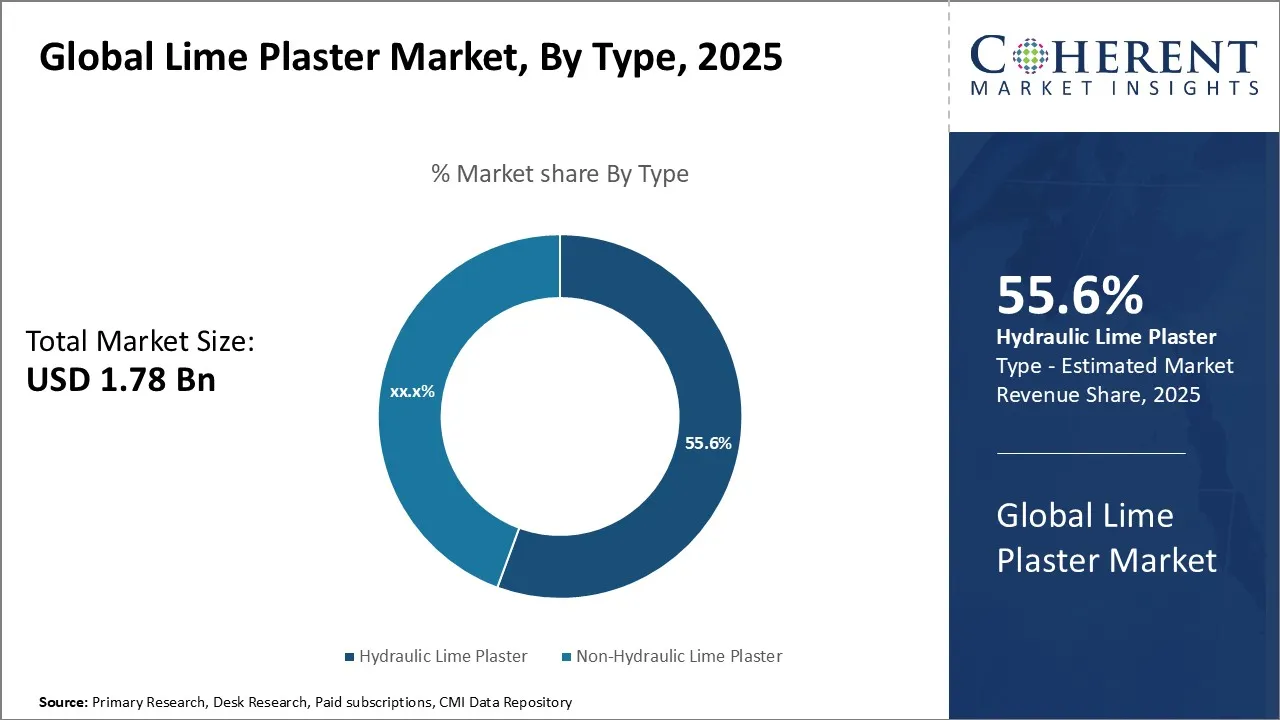
- The hydraulic lime plaster segment is expected to account for 56.6% of the market share in 2026.
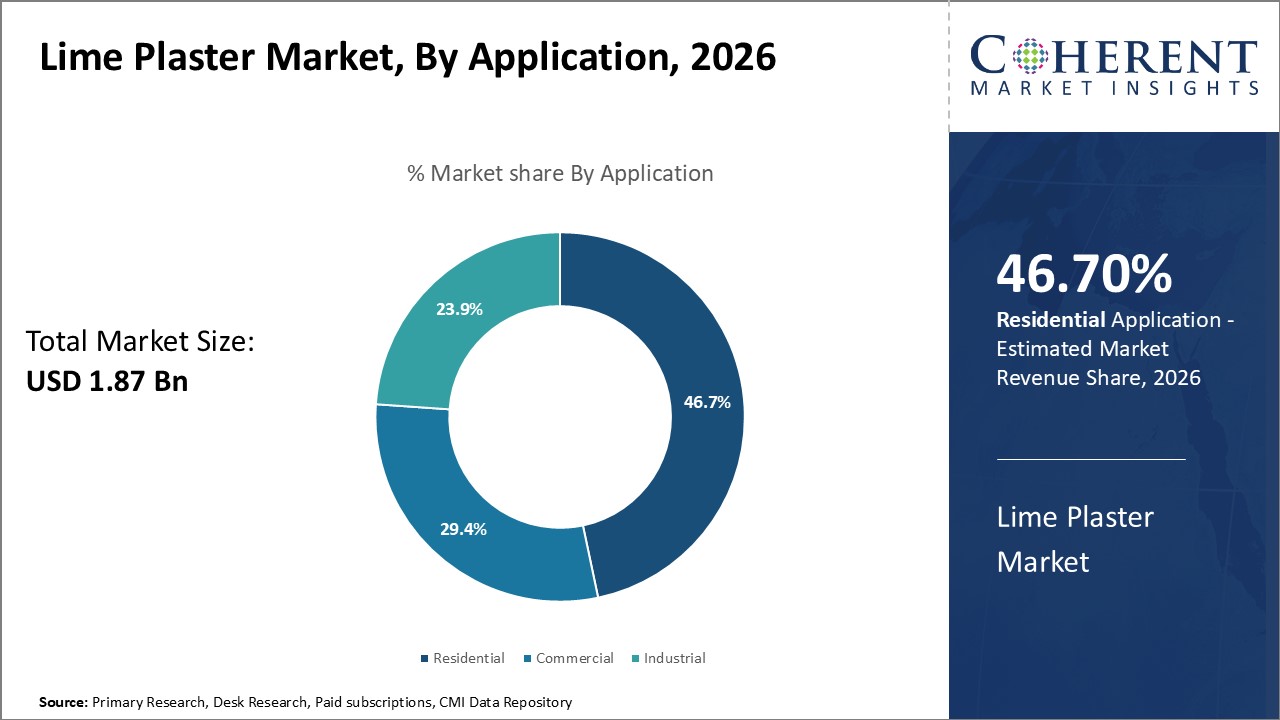
- The residential segment is projected to hold 46.7% of the market share in 2026.
- The construction segment is projected to hold 50.8% of the market share in 2026.
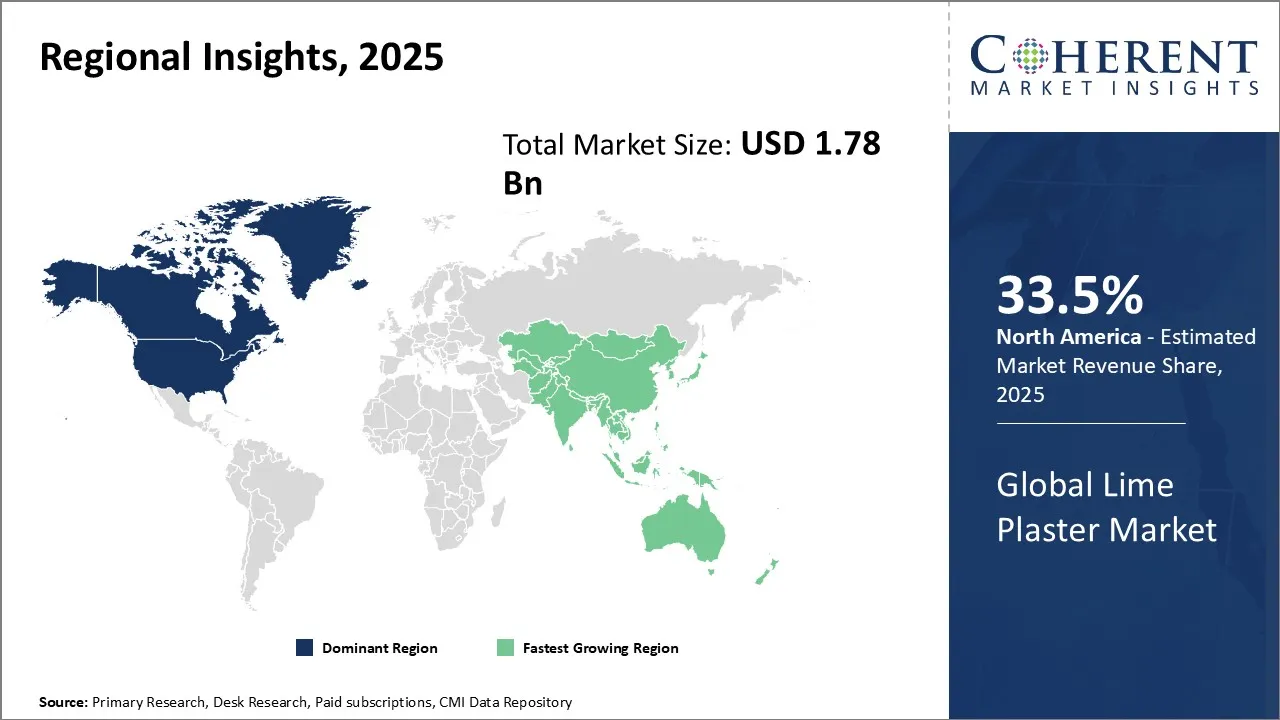
- North America is expected to lead the global lime plaster market in 2026 with a 33. 5% share. Asia Pacific, growing at the fastest rate, is projected to account for 13.5% share in 2026.
Market Overview
The trend in the lime plaster market is driven by several factors including the growing awareness about the environmental benefits of using natural materials, the increasing focus on energy-efficient buildings, and the desire to preserve and restore historical structures. Lime plaster is known for its breathability, durability, and ability to regulate humidity, making it an attractive choice for both new construction and renovation projects. Additionally, the market is witnessing innovations in product formulations and application techniques, further boosting its adoption across various sectors.
Currents Events and their Impact
Current Events | Description and its impact |
Surge in Demand for Sustainable Building Materials |
|
Influence of Interior Design Trends Favoring Textured Finishes |
|
Segmental Insights
- Current Industry Events of 2026
- Market Size Estimation
- Regional Breakdown
- Competitive Landscape
- Customer Intelligence
- Segmental Analysis
- Pricing Analysis
- Key Market Drivers, Challenges & Future Trends
- Customized Insights Section
Lime Plaster Market Insights, By Type - Hydraulic Lime Plaster Dominates the Market due to Superior Properties and Versatile Applications
Hydraulic lime plaster segment is expected to contribute 56.6% share of the market in 2026, owing to its superior properties and versatile applications. Hydraulic lime plaster is a type of plaster that sets and hardens through hydration, forming a durable and long-lasting surface. This unique setting process allows it to be applied in a wider range of environmental conditions compared to non-hydraulic lime plaster, making it suitable for both interior and exterior applications.
One of the key factors driving the growth of the hydraulic lime plaster segment is its excellent breathability. This property allows moisture to escape from the walls, preventing dampness and mold growth, which is crucial for maintaining a healthy indoor environment. Additionally, hydraulic lime plaster has a lower environmental impact compared to cement-based plasters, as it absorbs carbon dioxide during the curing process, reducing its carbon footprint.
Lime Plaster Market Insights, By Application - Residential Segment Drives the Demand for Lime Plaster due to Aesthetic Appeal and Health Benefits
The residential segment is expected to contribute 46.7% share of the market in 2026, driven by the increasing demand for natural and eco-friendly building materials that enhance both aesthetics and indoor air quality. Homeowners are becoming increasingly aware of the potential health risks associated with synthetic materials and are seeking alternatives that promote a healthier living environment.
Lime plaster offers several benefits that make it an attractive choice for residential applications. Its natural composition and breathability help regulate humidity levels, reducing the risk of moisture-related issues such as mold and mildew growth. This is particularly important in areas with high humidity, such as bathrooms and kitchens, where the risk of moisture damage is higher.
Lime Plaster Market Insights, By End-use Industry - Construction Sector Dominates the Lime Plaster Market due to Increasing Demand for Sustainable and Durable Building Materials
Construction segment is expected to contribute 50.8% share of the market in 2026, fueled by the growing demand for sustainable and durable building materials. As the construction industry faces increasing pressure to reduce its environmental impact, lime plaster has emerged as a viable alternative to traditional cement-based plasters. One of the primary factors driving the growth of lime plaster in the construction sector is its low embodied energy. The production of lime plaster requires significantly less energy compared to cement-based plasters, resulting in a smaller carbon footprint. This is particularly important as the construction industry aims to meet stricter environmental regulations and reduce greenhouse gas emissions.
Regional Insights
North America Lime Plaster Market Analysis and Trends
North America is projected to lead the lime plaster market with a 33.5% share in 2026. The region's demand for lime plaster is driven by the need to preserve and restore historic buildings, which are abundant due to its rich architectural history. The growing focus on sustainability and eco-friendly building materials in North America further supports the preference for lime plaster, known for its natural composition and environmental benefits.
Stringent regulations surrounding construction materials, especially regarding their environmental impact, have propelled the adoption of lime plaster. Key market players, such as Lhoist Group, Tarmac, and Saint-Gobain Weber, have established a strong foothold in the region, investing in research and development to improve product performance and innovation.
Asia Pacific Lime Plaster Market Analysis and Trends
The Asia Pacific region is expected to exhibit the fastest growth in the market contributing 13.5% share in 2026. The region's rapid urbanization, coupled with increasing construction activities, has fueled the demand for lime plaster. Countries like China and India are undergoing significant infrastructure development, including the restoration of historic buildings and the construction of new ones, creating a vast market opportunity for lime plaster manufacturers.
Government initiatives such as Singapore's Building and Construction Authority (BCA) Green Mark Scheme promoting sustainable construction practices and the use of eco-friendly materials have further propelled the growth of the lime plaster market in Asia Pacific. The region's abundant limestone reserves and cost-effective labor have attracted investments from international players, leading to the establishment of local manufacturing facilities. Companies, such as Hempel, JK Cement, and Birla White, have capitalized on the region's growth potential, expanding their presence and product offerings to cater to the increasing demand.
Global Lime Plaster Market Outlook for Key Countries
U.S. Lime Plaster Market Trends
The U.S. lime plaster market is driven by a combination of factors, including the preservation of historic buildings, the growing interest in sustainable construction materials, and the presence of key market players. The country's diverse architectural landscape, ranging from colonial-era structures to modern buildings, has created a steady demand for lime plaster in restoration and renovation projects. Leading companies, such as U.S. Heritage Group and Traditional Lime Company, have been instrumental in promoting the use of lime plaster and developing specialized products for various applications.
Germany Lime Plaster Market Trends
Germany lime plaster market is characterized by a strong focus on quality, innovation, and sustainability. The country's stringent building regulations and environmental standards have encouraged the use of natural materials like lime plaster in construction projects. German manufacturers, such as Knauf have been at the forefront of developing advanced lime plaster formulations that offer improved performance and ease of application. The country's skilled workforce and technological expertise have further contributed to the growth of the lime plaster market.
China Lime Plaster Market Trends
China continues to lead the Asia Pacific region in terms of lime plaster consumption and production. The country's rapid urbanization, coupled with government initiatives to promote sustainable construction practices, has fueled the demand for lime plaster. Chinese manufacturers, such as BBMG and Guangxi Mengshan, have expanded their production capacities to meet the growing domestic and international demand. The country's vast infrastructure projects, including the restoration of historic landmarks and the development of new buildings, have provided ample opportunities for the lime plaster market to thrive.
India Lime Plaster Market Trends
India lime plaster market is driven by the country's rich architectural heritage and the increasing emphasis on sustainable building materials. The restoration and preservation of historic structures, such as palaces, temples, and colonial-era buildings, have created a significant demand for lime plaster. Indian companies, like JK Cement and Birla White, have been actively involved in the production and distribution of lime plaster, catering to both domestic and export markets. The One such initiative is the implementation of the Energy Conservation Building Code (ECBC) by the Bureau of Energy Efficiency (BEE) to promote green building practices and the use of traditional materials have further boosted the growth of the lime plaster market in India.
End User Feedback and Unmet Needs in the Lime Plaster Market
Positive User Experience
Example 1: Restoration and Green Building Projects
- One of the most positive feedback items in the lime plaster market comes from end-users in the building restoration and sustainable construction sectors. Lime plaster is increasingly being used in the renovation of historical buildings and the construction of green buildings due to its environmentally friendly properties and superior breathability compared to modern cement-based alternatives.
- A major restoration project in Europe involved the use of lime plaster to maintain the historical integrity of a 16th-century cathedral while meeting contemporary energy-efficiency standards. The project’s project manager highlighted the ease of applying lime plaster and its adaptability to different surfaces, from rough stone to delicate frescoes. The material’s ability to allow for moisture regulation and prevent mold growth in a highly humid environment was particularly appreciated. This use case reflects the growing adoption of lime plaster in sustainable and heritage-sensitive projects, with end-users expressing satisfaction with both the material's performance and its role in achieving green building certifications such as LEED.
Customization and Versatility in Product Offerings
- There is a need for greater customization of lime plaster products to meet diverse project requirements. End-users across different regions and sectors are seeking tailored solutions that fit specific aesthetic preferences or functional needs.
- For example, some restoration projects require lime plaster with particular colors, textures, or binding agents to match the historical context of the structure. Manufacturers could explore offering more specialized product lines, such as lime plaster tailored for specific geographical conditions or for unique applications like decorative wall finishes or flooring.
Market Players, Key Development, and Competitive Intelligence
Company Insights
- Saint-Gobain, through its brand Weber, offers a comprehensive range of lime-based plaster solutions tailored to various construction and renovation needs. Its product lineup includes both hydraulic and hydrated lime-based plasters, such as the weber.cal BIO-lime plasters, which are designed to enhance indoor air quality by regulating humidity and preventing mold growth. These plasters are particularly suitable for areas with high moisture levels, like kitchens and bathrooms, and are free from preservatives, solvents, or plasticizers, making them ideal for allergy sufferers.
- Boral Limited, a prominent Australia-based construction materials company, offers various lime-based products catering to the lime plaster market. Its offerings are designed to enhance the performance and sustainability of plastering applications. Boral's Hydrated Lime is a high-grade product available in 20 kg bags. Commonly referred to as "Plaster's Lime," it is primarily used to improve the plasticity and binding qualities of renders, thereby enhancing the durability of mortar mixes.
Top Strategies Followed by Global Lime Plaster Market Players
- Established players in the global lime plaster market are focusing on extensive research and development to innovate high-performance products. These companies invest heavily in R&D to develop advanced formulations and technologies that enhance the durability, sustainability, and aesthetic appeal of lime plaster. By continuously improving their products, established players aim to maintain their competitive edge and meet the evolving demands of the market.
- For example, Lime Green is a leading UK manufacturer specializing in hydraulic lime mortars, plasters, and renders. The company is committed to ongoing R&D to improve product quality and performance. Their state-of-the-art mixing plant, operational since 2018, underwent a substantial investment in 2023, introducing a new mixer and an automated packaging line in early 2024.
- Mid-level players in the global lime plaster market, on the other hand, focus on delivering cost-effective solutions to target price-sensitive consumers. They prioritize offering quality products at competitive prices to attract a wider customer base. These players often engage in collaborations with technology providers and production partners to boost their capabilities and market presence.
- For example, Lhoist Group, a leader in lime-based products, has collaborated with architects and construction companies to offer customized solutions for large-scale historical restoration projects. These partnerships enable established players to expand their reach, access new markets, and offer comprehensive solutions to their customers.
- Small-scale players in the industry adopt niche specialization as a key strategy. They target specific market segments with unique features or innovative products tailored to meet particular requirements. By focusing on niche markets, small players can differentiate themselves from larger competitors and establish a loyal customer base.
- For instance, LimeWorks.us in the Telford, U.S. specializes in high-end, handcrafted lime plaster products, offering bespoke solutions for the luxury property sector. By focusing on niche markets, small players can differentiate themselves from larger competitors and establish a loyal customer base.
Market Report Scope
Lime Plaster Market Report Coverage
| Report Coverage | Details | ||
|---|---|---|---|
| Base Year: | 2025 | Market Size in 2026: | USD 1.87 Bn |
| Historical Data for: | 2020 To 2024 | Forecast Period: | 2026 To 2033 |
| Forecast Period 2026 to 2033 CAGR: | 4.9% | 2033 Value Projection: | USD 2.61 Bn |
| Geographies covered: |
| ||
| Segments covered: |
| ||
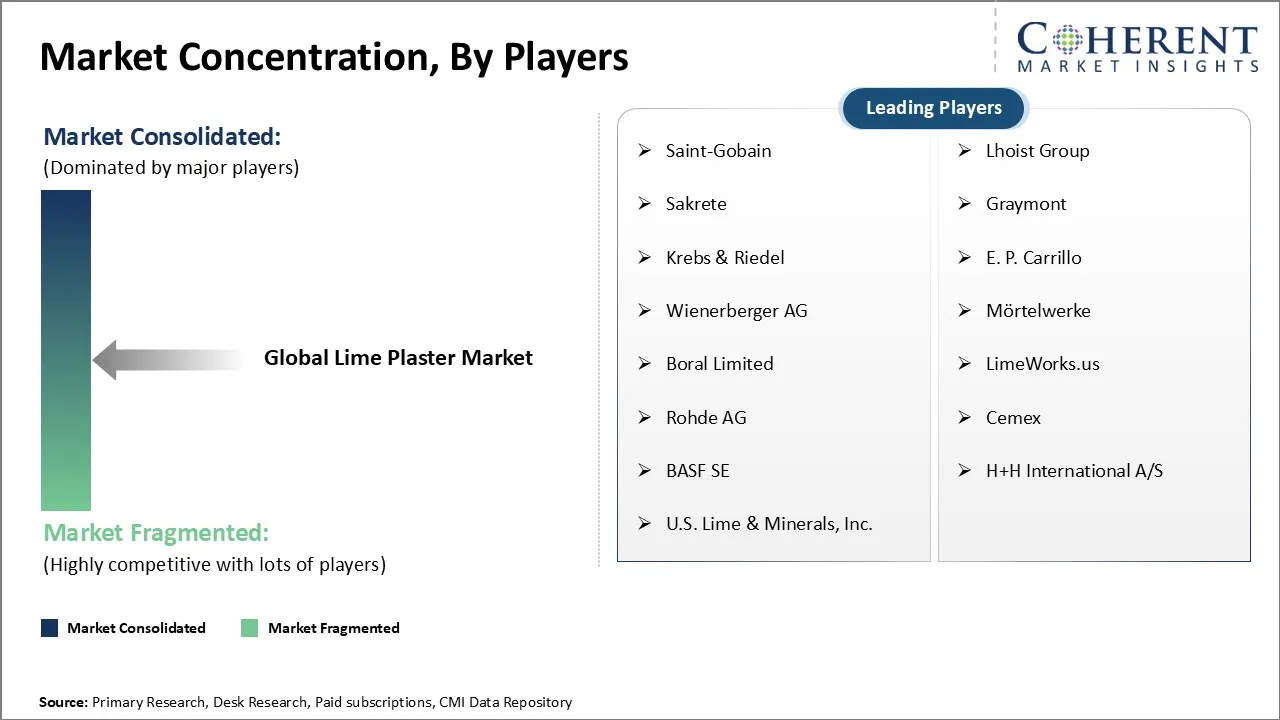
| Companies covered: | Saint-Gobain, Lhoist Group, Sakrete, Graymont, Krebs & Riedel, E. P. Carrillo, Wienerberger AG, Mörtelwerke, Boral Limited, LimeWorks.us, Rohde AG, Cemex, BASF SE, H+H International A/S, and U.S. Lime & Minerals, Inc. | ||
| Growth Drivers: |
| ||
| Restraints & Challenges: |
| ||
Lime Plaster Market Dynamics
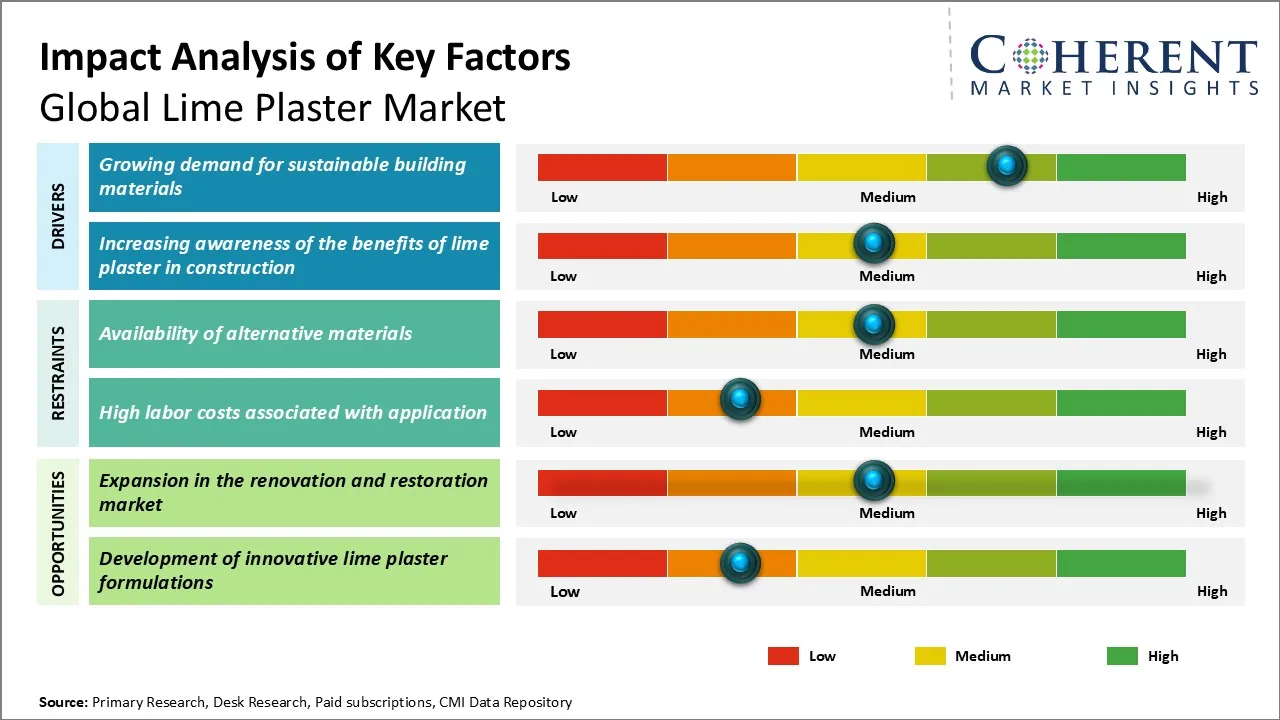
Lime Plaster Market Driver - Growing Demand for Sustainable Building Materials
The global lime plaster market is witnessing a significant driver in the form of the growing demand for sustainable building materials. As environmental concerns continue to rise, architects, builders, and property owners are increasingly seeking eco-friendly alternatives to traditional building materials. Lime plaster, known for its natural composition and low environmental impact, has emerged as a popular choice in this context. The material's ability to regulate moisture, improve indoor air quality, and contribute to energy efficiency has further fueled its adoption.
Lime plaster, derived from natural limestone, offers several sustainable advantages over conventional cement-based plasters. It has a lower carbon footprint during production and application, as it requires less energy to manufacture and can absorb carbon dioxide from the atmosphere during the curing process. According to the United Nations Environment Programme (UNEP), the building and construction sector accounted for 38% of global energy-related CO₂ emissions in 2020, highlighting the urgent need for sustainable alternatives like lime plaster to reduce the environmental impact of construction activities.
Lime Plaster Market Opportunity - Expansion in the Renovation and Restoration Market
The growing trend of renovating and restoring historic buildings presents a significant opportunity for the global lime plaster market. Lime plaster has been used for centuries in the construction of traditional and heritage structures due to its compatibility with historic construction materials and its ability to allow walls to breathe, preventing moisture buildup and dampness. As the appreciation for preserving architectural heritage increases, along with the rising demand for sustainable and eco-friendly building practices, the renovation and restoration market is expected to experience substantial growth.
Lime plaster, known for its breathability, flexibility, and eco-friendliness, is a preferred choice for restoration projects. According to the United Nations Educational, Scientific and Cultural Organization (UNESCO), as of 2021, there are 1,154 World Heritage Sites, many of which require ongoing conservation and restoration efforts. This global recognition of the importance of preserving cultural heritage is driving the demand for skilled craftsmanship and authentic materials, including lime plaster.
Analyst Opinion (Expert Opinion)
- The lime plaster market is experiencing a resurgence, driven by a growing appreciation for sustainable building materials and historical restoration projects. Companies like St Astier and Ecohousemart are pioneering eco-friendly formulations that not only enhance aesthetic appeal but also improve indoor air quality. Recent conferences, such as the International Building Exhibition (2022) and the Green Building Council Conference (2023), have spotlighted the advantages of lime plaster in energy-efficient construction and renovation practices.
- These events have underscored the importance of educating builders and architects on the benefits of lime-based products, particularly in terms of durability and breathability. As the construction industry increasingly prioritizes sustainability and heritage conservation, the lime plaster market is poised for significant growth, bolstered by innovative products and a shift towards environmentally responsible building practices.
Speak to the analyst
Want personalized insights?
Take the findings above to one of our principal consultants, or have the report rebuilt around the segments, geographies and competitors you actually track.
Market Segmentation
- Type Insights (Revenue, USD Bn, 2021 - 2033)
- Hydraulic Lime Plaster
- Non-Hydraulic Lime Plaster
- Application Insights (Revenue, USD Bn, 2021 - 2033)
- Residential
- Commercial
- Industrial
- End-use Industry Insights (Revenue, USD Bn, 2021 - 2033)
- Construction
- Renovation
- Restoration
- Formulation Insights (Revenue, USD Bn, 2021 - 2033)
- Pre-mixed Lime Plaster
- Custom Formulated Lime Plaster
- Distribution Channel Insights (Revenue, USD Bn, 2021 - 2033)
- Direct Sales
- Online Retail
- Regional Insights (Revenue, USD Bn, 2021 - 2033)
- North America
- U.S.
- Canada
- Latin America
- Brazil
- Argentina
- Mexico
- Rest of Latin America
- Europe
- Germany
- U.K.
- Spain
- France
- Italy
- Russia
- Rest of Europe
- Asia Pacific
- China
- India
- Japan
- Australia
- South Korea
- ASEAN
- Rest of Asia Pacific
- Middle East
- GCC Countries
- Israel
- Rest of Middle East
- Africa
- South Africa
- North Africa
- Central Africa
- North America
- Key Players Insights
- Saint-Gobain
- Lhoist Group
- Sakrete
- Graymont
- Krebs & Riedel
- E.P. Carrillo
- Wienerberger AG
- Mörtelwerke
- Boral Limited
- LimeWorks.us
- Rohde AG
- Cemex
- BASF SE
- H+H International A/S
- US. Lime & Minerals, Inc.
Sources
Primary Research Interviews
- Industry Expert – Leading Lime Plaster Manufacturer
- Product Development Manager – Major Construction Material Supplier
- Architectural Consultant – Heritage Restoration Specialist
- Sustainability Manager – Green Building Materials Certification Body
Stakeholders
- Manufacturers
- End-use Industry Sectors:
- Residential Construction (Renovation and eco-friendly building projects)
- Commercial Construction (Use in new builds and restoration projects)
- Heritage Restoration (Renovating and preserving historical buildings)
- Regulatory & Certification Bodies
- E-commerce Platforms and Distributors (Online sales channels for lime plaster products)
- Technology Integration Players: Suppliers of AI tools for sustainable material development and smart building technologies
Databases
- UN Comtrade Database
- India Import Export (EXIM) Database
- Trade and Market Intelligence Database (Lime Plaster global trends and import-export analysis)
Magazines
- Construction & Sustainability Review – Innovations in eco-friendly building materials
- Building Design + Construction – Trends in sustainable materials for construction
- Global Construction Review – Materials focus on lime plaster and other traditional eco-friendly solutions
- Materials Performance – Performance trends in lime-based materials
- Architectural Digest – Lime plaster in design and historic restoration
Journals
- Journal of Building Performance – Durability of lime plaster in modern buildings
- Construction and Building Materials Journal – Performance characteristics of lime-based plasters
- Environmental Science & Technology – Sustainable construction materials including lime plaster
- Journal of Sustainable Architecture & Design – Advances in eco-friendly materials for green buildings
- International Journal of Building Pathology and Adaptation – Use of lime plaster in the preservation of historic buildings
Newspapers
- Financial Times – Market trends and financial performance of lime plaster manufacturers
- Construction Today – Reports on sustainable building materials including lime plaster
- Asian Construction Journal – Lime plaster’s adoption in Asian markets for eco-friendly construction
- European Construction News – Regional analysis of lime plaster in Europe for historical buildings and sustainable architecture
Associations
- International Lime Association (ILA)
- European Lime Association (EuLA)
- International Council on Monuments and Sites (ICOMOS)
- US Green Building Council (USGBC) – LEED certifications and the use of lime plaster in green buildings
- Green Building Council of Australia (GBCA) – Incorporating lime plaster in sustainable architecture
Public Domain Sources
- EU Commission – EU regulations for lime-based products in construction
- Building Research Establishment (BRE) – Sustainable construction guidelines for lime plasters
- International Standards Organization (ISO) – International standards for lime plaster production and application
- U.S. Environmental Protection Agency (EPA) – Sustainability initiatives and material use in building construction
Proprietary Elements
- CMI Data Analytics Tool, Proprietary CMI Existing Repository of Information for Last 8 Years
Get access to 250+ pages report
Every segment, forecast, competitor profile and data table behind the analysis above — available for instant download.
- ESOMAR Member
- ISO 9001:2015 Certified
- D-U-N-S Registered
- GDPR & CCPA Compliant
Missing comfort of reading report in your local language? Find your preferred language:
Transform your Strategy with Exclusive Trending Reports
Frequently Asked Questions
The global lime plaster market is estimated to be valued at USD 1.87 Bn in 2026 and is expected to reach USD 2.61 Bn by 2033.
The CAGR of the global lime plaster market is projected to be 4.9% from 2026 to 2033.
Growing demand for sustainable building materials and increasing awareness of the benefits of lime plaster in construction are the major factors driving the growth of the global lime plaster market.
Availability of alternative materials and high labor costs associated with application are the major factors hampering the growth of the global lime plaster market.
In terms of type, hydraulic lime plaster segment is estimated to dominate the market revenue share in 2026.
Saint-Gobain, Lhoist Group, Sakrete, Graymont, Krebs & Riedel, E. P. Carrillo, Wienerberger AG, Mörtelwerke, Boral Limited, LimeWorks.us, Rohde AG, Cemex, BASF SE, H+H International A/S, and U.S. Lime & Minerals, Inc. are the major players.
North America is expected to lead the global lime plaster market in 2026.