

Silicone Elastomers Market Size and Forecast — 2026-2033
The Global Silicone Elastomers Market size is estimated to be valued at USD 5.59 billion in 2026 and is expected to reach USD 8.7 billion by 2033, exhibiting a compound annual growth rate (CAGR) of 7.5% from 2026 to 2033.
Overview
Sirolimus (rapamycin) is an immunosuppressive and antiproliferative pharmaceutical drug primarily used to prevent organ transplant rejection and coat coronary stents to reduce restenosis. It works by inhibiting the mTOR pathway, regulating immune responses and cell growth, making it valuable in transplantation medicine and emerging oncology research.
Key Takeaways
Liquid silicone rubber (LSR) dominates the market, capturing 43% of the segment market share, driving performance in automotive and healthcare due to its versatility and injection molding compatibility.
From a regional standpoint, Asia Pacific dominates, attributed to its robust electronics and automotive industries, backing a 40% regional market share.
North America represents a hub for innovation with elevated demand for premium medical-grade silicone elastomers, complemented by stringent product quality standards.
Europe’s emphasis on sustainability and regulatory compliance fosters steady growth and adoption of eco-friendly silicone elastomers in construction and consumer goods.
Silicone Elastomers Market Segmentation Analysis
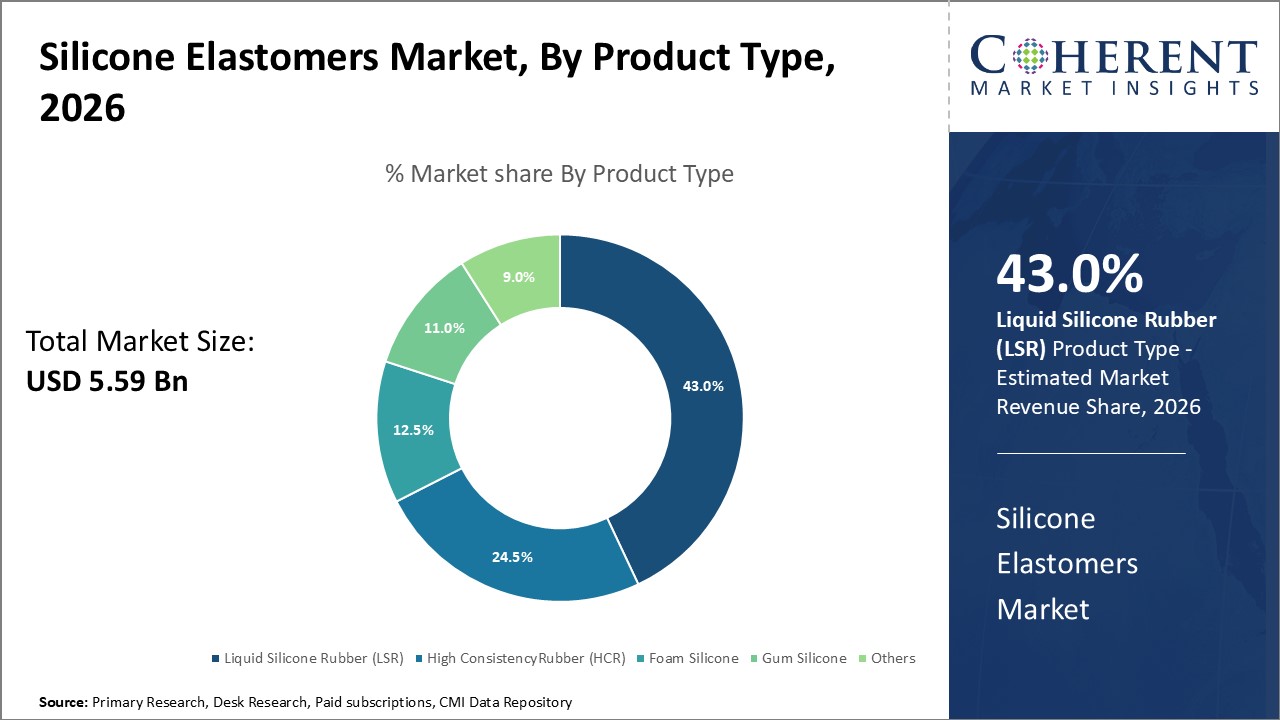
Silicone Elastomers Market Insights, By Product Type
Liquid Silicone Rubber (LSR), commanding 43% market share, is driving growth due to its superior thermal stability, biocompatibility, and suitability for injection molding. This subsegment’s versatility across automotive, healthcare, and electronics applications fuels sustained demand. The fastest growing subsegment is Foam Silicone, increasingly adopted for lightweight, cushioning applications, particularly in electronics and consumer goods. High Consistency Rubber (HCR) remains widely used in industrial applications due to its excellent mechanical properties, whereas Gum Silicone is preferred for specialized medical devices requiring elasticity. The Others category includes niche materials like fluorosilicone elastomers used in chemical-resistant environments.
Silicone Elastomers Market Insights, By Application
The Automotive segment leads due to the accelerating use of silicone elastomers in EV battery systems, engine components, and thermal management, accounting for more than 35% of the market. Increasing global electric vehicle production and government subsidies amplify this dominance. Healthcare is the fastest-growing application, benefiting from rising demand for medical implants, wound care, and wearable medical devices with silicone elastomers offering biocompatibility and durability. Electronics demand is driven by the need for encapsulating compounds and flexible connectors, while Consumer Goods incorporate silicone elastomers in personal care products and household items.
Silicone Elastomers Market Insights, By End-User Industry
Transportation leads primarily due to the automotive sector’s expansive integration of silicone elastomers in multiple vehicle components, contributing over 40% of the segment’s business growth. Medical Devices represent the fastest-growing end-user industry with increased implantable and wearable device manufacturing. Electrical & Electronics follows with consistent uptake in circuit board encapsulation and flexible connectors, given the broad demand for miniaturization and device protection. Construction utilizes silicone elastomers predominantly in sealants and coatings for durability and weather resistance. Personal Care applications involve silicone elastomers in skincare products, driven by consumer preference for hypoallergenic materials.
Silicone Elastomers Market Trends
The market continues advancing through innovation-led trends, particularly the adoption of green silicone elastomers formulated to comply with rising environmental norms.
One prominent trend is the shift toward integrating additive manufacturing processes; for instance, rapid prototyping of LSR components has shortened product development cycles by up to 31% in sectors like medical devices, accelerating market responsiveness.
Additionally, the surge in electric vehicle production globally increased demand for specialized silicone elastomers with enhanced thermal and electrical insulating properties, promoting sustained market revenue growth.
Silicone Elastomers Market Insights, By Geography
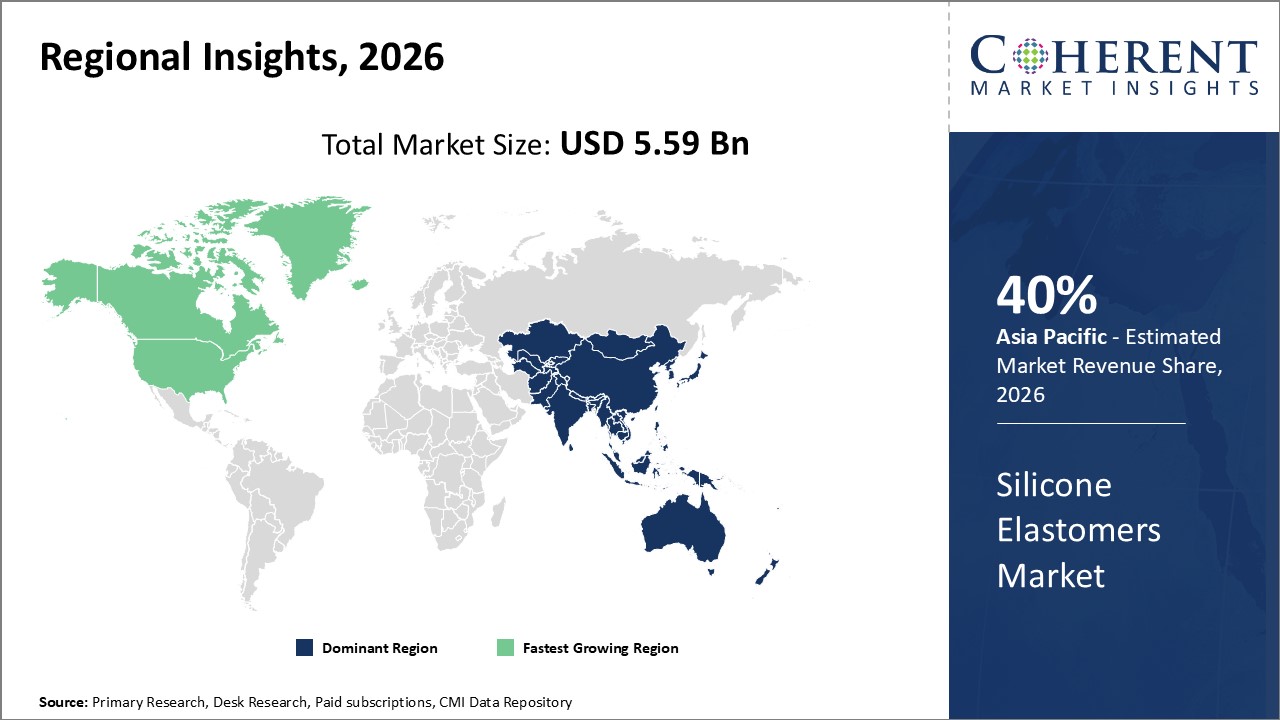
Asia Pacific Silicone Elastomers Market Analysis and Trends
In the Asia Pacific region, the dominance in the market is largely attributed to the region’s extensive automotive production base and a booming electronics sector. Countries like China, Japan, and South Korea collectively account for approximately 40% of the global market share. Aggressive investments in manufacturing infrastructure, coupled with growing exports of automotive parts and consumer electronics, underpin robust market dynamics. Significant contributions from companies like Shin-Etsu’s regional plants and Dow Silicones’ strategic collaborations with OEMs reinforce this leadership.
North America Silicone Elastomers Market Analysis and Trends
Meanwhile, North America exhibits the fastest growth with a CAGR of approximately 8% driven by advancements in healthcare applications and growing demand in high-end electronics. The U.S., supported by strong regulatory frameworks and substantial R&D funding, catalyzes innovation in medical-grade silicone elastomers. Entry of specialized startups and intensified competition among market players in the region foster an ecosystem propelling rapid product development cycles.
Silicone Elastomers Market Outlook for Key Countries
USA Silicone Elastomers Market Analysis and Trends
The USA’s Silicone Elastomers market stands out as an innovation powerhouse, driven by high demand in medical devices, aerospace, and specialized electronics. Advanced R&D facilities enable the development of premium silicone elastomer grades employed in implantables and wearable devices. The presence of major companies such as Dow Silicones Corporation and Momentive Performance Materials, coupled with stringent FDA regulations, ensures high product standards. Furthermore, government incentives toward clean manufacturing and investments in high-tech industries have galvanized business growth.
Germany Silicone Elastomers Market Analysis and Trends
Germany’s market benefits from its strong automotive and industrial manufacturing ecosystem, making it a key player in Europe. With a focus on sustainability, German producers and OEMs emphasize eco-friendly silicone elastomer formulations, aiming to reduce lifecycle environmental impact. Companies like Wacker Chemie AG lead strategic expansions and partnerships with automotive manufacturers for thermal management solutions. The construction industry's increasing demand for durable and weather-resistant silicone elastomer sealants supports market revenue diversification.
Analyst Opinion
The growing demand for silicone elastomers in automotive powertrain systems has propelled supply-side growth, with production capacities increasing by approximately 11% annually through 2025. For instance, a leading auto parts manufacturer reported a 13% volume increase in silicone elastomer components used within electric vehicle (EV) thermal management systems in 2023, highlighting this trend’s impact on market dynamics.
On the demand side, pricing trends have remained relatively stable despite raw material cost pressures, preserving profitability. In 2025, silicone elastomer prices rose marginally by 3%, a reflection of tight supply chains balanced by steady import volumes, especially from Asia Pacific, reinforcing the market’s revenue resilience.
Micro-indicators show a shift toward specialized grades of silicone elastomers designed for medical implants and wearables, which accounted for nearly 23% of total industry share in 2026 projections. Notably, regulatory approvals for implantable devices enhanced consumer confidence, elevating demand in healthcare applications.
Nano-scale silicone elastomer composites for electronics encapsulation have surged, with market players doubling R&D investments in 2025. This strategic focus facilitated improved dielectric properties, contributing to a 16% increase in adoption in consumer electronics, thereby supporting overall market growth.
- Current Industry Events of 2026
- Market Size Estimation
- Regional Breakdown
- Competitive Landscape
- Customer Intelligence
- Segmental Analysis
- Pricing Analysis
- Key Market Drivers, Challenges & Future Trends
- Customized Insights Section
Market Scope
| Report Coverage | Details | ||
|---|---|---|---|
| Base Year: | 2025 | Market Size in 2026: | USD 5.59 billion |
| Historical Data for: | 2020 To 2024 | Forecast Period: | 2026 To 2033 |
| Forecast Period 2026 to 2033 CAGR: | 7.5% | 2033 Value Projection: | USD 8.7 billion |
| Geographies covered: |
| ||
| Segments covered: |
| ||
| Companies covered: | Shin-Etsu Chemical Co., Ltd., Wacker Chemie AG, Dow Silicones Corporation, Momentive Performance Materials Inc., Elkem ASA, KCC Corporation, Nusil Technology LLC, Grace Silicone, Bluestar Silicones, Kaneka Corporation. | ||
| Growth Drivers: |
| ||
Silicone Elastomers Market Growth Factors
The increased focus on electric vehicles and renewable energy infrastructure has notably driven silicone elastomer demand, particularly in battery encapsulation and thermal management solutions. In 2025, the automotive segment accounted for nearly 36% of the market revenue. Secondly, growing adoption of silicone elastomers in medical applications, including implantable devices and wound care products, has been propelled by stringent regulatory approvals and heightened healthcare investments globally. Additionally, rising consumer electronics production, especially in the Asia Pacific, sustains demand for durable and flexible silicone elastomer components. Lastly, advancements in manufacturing processes such as injection molding and 3D printing are enabling cost efficiencies and enhanced product customization, further stimulating market growth.
Silicone Elastomers Market Development
In November 2025, Elkem Silicones introduced its AMSil 20503 and AMSil 92102 series—advanced silicone elastomers specifically engineered for additive manufacturing and 3D printing applications. These new materials offer improved printability, mechanical strength, and thermal stability, enabling manufacturers in healthcare, industrial prototyping, automotive, and consumer goods to produce highly durable, flexible, and complex silicone components. The launch reflects Elkem’s continued investment in high-performance silicone solutions that support digital manufacturing trends, customization, and faster production cycles.
In March 2025, Wacker Chemie AG launched a new portfolio of silicone elastomer gels and gum blends for the cosmetics and hair-care industries, including BELSIL EG 3000 and BELSIL eco EG 3001. These formulations are designed to provide enhanced sensory properties, improved spreadability, long-lasting smoothness, and better conditioning performance in premium beauty products.
Key Players
Leading Companies of the Market
Shin-Etsu Chemical Co., Ltd.
Wacker Chemie AG
Dow Silicones Corporation
Momentive Performance Materials Inc.
Elkem ASA
KCC Corporation
Nusil Technology LLC
Grace Silicone
Bluestar Silicones
Kaneka Corporation
Competitive strategies include Shin-Etsu’s partnership with automotive OEMs to develop customized silicone elastomers for next-generation EV battery systems, leading to a 21% increase in market penetration within that segment by 2025. Wacker Chemie’s expansion in Asia through greenfield manufacturing facilities enhanced supply chain effectiveness in 2023, significantly reducing lead times and boosting revenues in the region.
Silicone Elastomers Market Future Outlook
Future demand is projected to rise as electric vehicles, medical wearables, renewable energy infrastructure, and advanced electronics increasingly require high-performance elastomer components. Sustainability considerations will drive innovation in recyclable and bio-based silicone chemistries, while automation and 3D printing are expected to streamline production and customization. Growth in Asia-Pacific and Latin America—with expanding industrial manufacturing—will reshape competitive dynamics. Regulatory focus on material safety and carbon footprint will encourage product reformulation, supporting long-term technological evolution and market diversification.
Silicone Elastomers Market Historical Analysis
The silicone elastomers market has historically been driven by their unique combination of thermal resistance, flexibility, chemical stability, and biocompatibility, making them indispensable across automotive, construction, consumer goods, and medical industries. From the 1980s onward, growth was supported by rapid industrialization, improved silicone polymerization technologies, and expansion of global manufacturing capabilities—especially in Asia. Liquid silicone rubber and high-consistency rubber grades gained dominance due to processing efficiency and regulatory approval for healthcare and electronics applications. Over time, environmental durability and long product lifecycle further reinforced market maturity and customer dependence.
Sources
Primary Research Interviews:
Polymer Engineers
Silicone Product Manufacturers
Materials Procurement Managers
Databases:
ICIS Chemical Pricing Data
UN Comtrade Trade Data
Magazines:
Chemical & Engineering News
Rubber World
Plastics Today
Journals:
Journal of Applied Polymer Science
Materials Today
Polymer Testing
Newspapers:
Financial Times (Industrials)
The Wall Street Journal (Chemicals)
Business Standard (Manufacturing)
Associations:
American Chemical Society (ACS)
European Rubber Manufacturers Association (ERMA)
ASTM International
Get access to 250+ pages report
Every segment, forecast, competitor profile and data table behind the analysis above — available for instant download.
- ESOMAR Member
- ISO 9001:2015 Certified
- D-U-N-S Registered
- GDPR & CCPA Compliant
Missing comfort of reading report in your local language? Find your preferred language:
Transform your Strategy with Exclusive Trending Reports
Frequently Asked Questions
Shin-Etsu Chemical Co., Ltd., Wacker Chemie AG, and Dow Silicones Corporation lead the Silicone Elastomers market, leveraging strategic partnerships and capacity expansions to maintain industry share.
The Silicone Elastomers market size is expected to grow from USD 5.59 billion in 2026 to USD 8.7 billion by 2033, driven by increasing demand across automotive, healthcare, and electronics applications.
The automotive sector, fueled by EV and thermal management system growth, presents the largest opportunity, contributing over 35% to market revenue by 2026.
Market trends will focus on sustainable silicone elastomers, bio-based formulations, and integrations with additive manufacturing, enhancing product performance and environmental compliance.
The competitive landscape is characterized by strong R&D investments and vertical integration strategies; challenges include raw material cost volatility and stringent regulatory requirements across geographies.
Leading companies leverage strategic collaborations with end-user industries, regional production expansions, and customized product development to enhance market penetration and revenue growth.