

Evaporation Materials Market Size and Forecast — 2026-2033
Evaporation Materials Market is estimated to be valued at USD 2,247.4 Mn in 2026 and is expected to reach USD 3,687.4 Mn in 2033, exhibiting a compound annual growth rate (CAGR) of 7.3% from 2026 to 2033. The increasing demand for evaporation materials in various applications such as electronics, optics, power and energy, and others is driving the market growth. Furthermore, the growing demand for miniaturization and higher efficiency in electronic devices is propelling the evaporation materials market forward.
On the other hand, non-essential items (including most electronics products) are no longer being delivered by numerous e-commerce sites around the world, which is harming the electronics industry. This will have a significant impact on the market for sputtering targets and evaporation materials in the electronics sector, which is the largest market for sputtering targets and evaporation materials. Over the forecast period, the described factors will have a negative impact on the market's revenue growth path.
The operations that have been halted and canceled will continue, and as a result, it is anticipated that the market will grow.
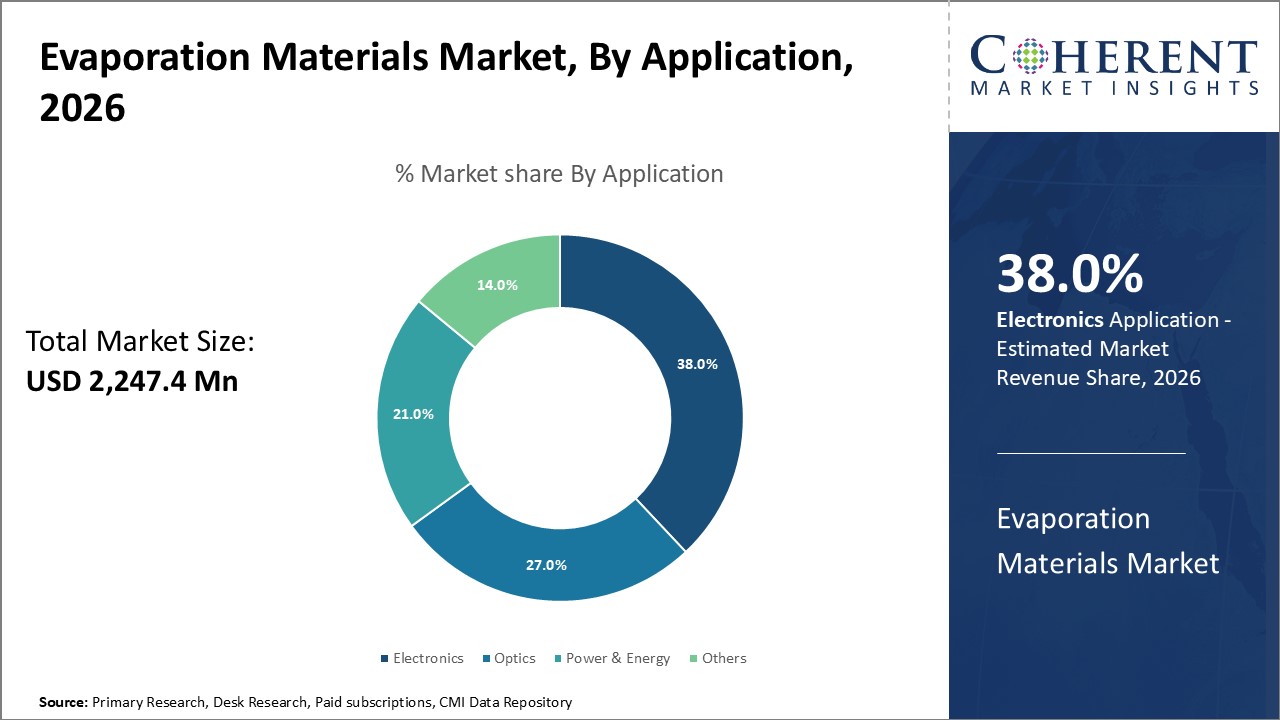
Figure 1. Global Evaporation Materials Market, By Application, in 2026
Global Evaporation Materials Market: Growth Drivers
Technology benefits over sputtering targets are driving the market for evaporation materials
Materials provide very high purity coatings compared to evaporation because of the extreme vacuum conditions used during the process. Additionally, compared to sputtering targets, very high film deposition rates are achieved in evaporation materials. In addition, there is less substrate surface damage caused by impinging atoms as the film is shaped. Sputtering, on the other hand, causes more damage because it contains high energy particles. Moreover, unintentional substrate heating is less common in evaporation materials. These application benefits of evaporation materials are propelling the global evaporation materials market growth. As opposed to sputtering, it should be noted that thermal evaporation is a more mature technology. Comparing it to sputtering technology, it is a more advanced technology with easy access to skilled and trained operators everywhere in the globe. Additionally, the market for evaporation materials is anticipated to be strongly driven by the numerous applications of thermal evaporation in terms of coating numerous material types for standard coating applications. As a result, evaporation materials have been in high demand for a variety of applications across numerous industries.
Government support for solar energy initiatives
Governments in various countries, including China and India, have been seen to promote the use of renewable energy. Solar panels, which harness solar energy, are an important adoption. Solar panel manufacturers have a high demand for evaporation materials.
The expansion of the solar energy industry, fueled by government initiatives, is expected to accelerate the growth rate of the global evaporation materials market. The consistent increase in demand for thin film solar panels is also a major driving factor in solar energy applications.
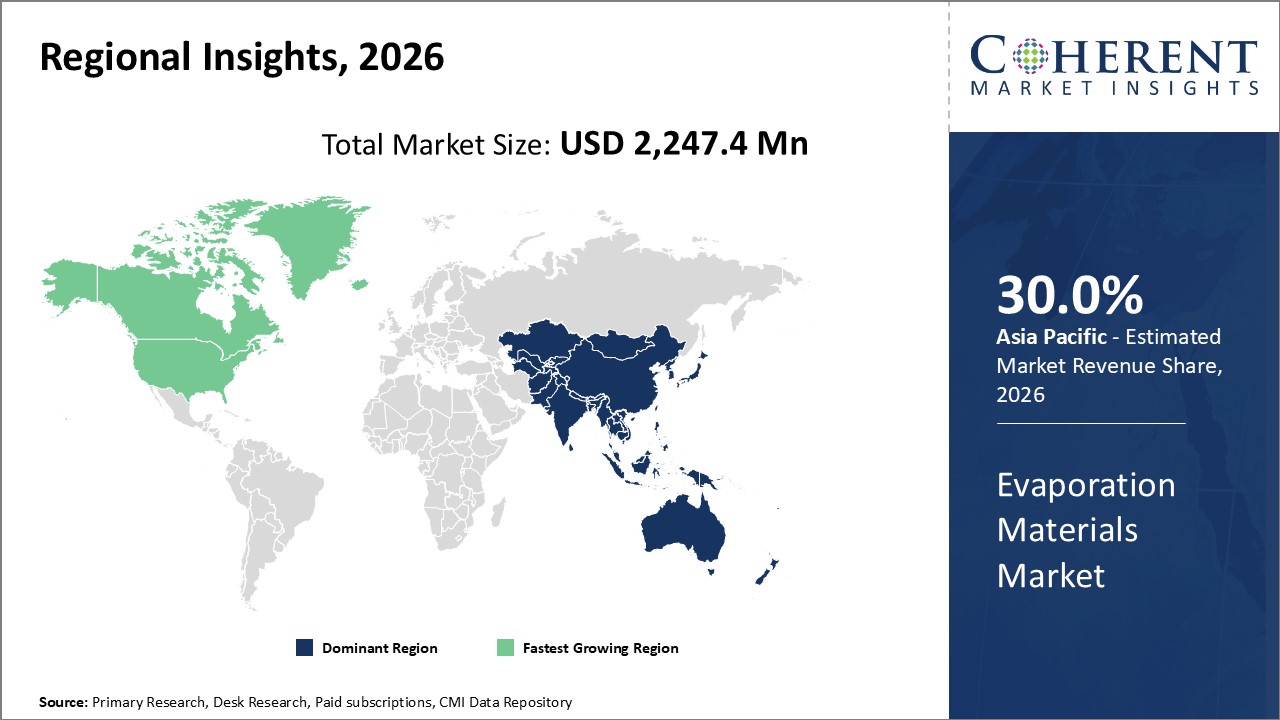
Figure 2. Global Evaporation Materials Market, By Region, 2026
Global Evaporation Materials Market: Market Restraints
Fluctuating cost of evaporation materials & difficulties in evaporation rate control of finished products
Issues associated with the evaporation materials such as difficulties in evaporation rate control of finished products is projected to restrict the market growth of evaporation materials. The quality of evaporation material coatings completely depends on the evaporation rates of materials that need to be controlled carefully in order to produce efficiency in coatings. Therefore, such issues are expected to hinder the market growth of evaporation materials.
The fluctuating cost of evaporation materials as compared to those of materials used in other vapor deposition technology is expected to hinder the market growth. Many industries are looking for alternative applications for promoting sustainable profitability. This the factor will impact the market growth negatively to some extent over the forecast period.
- Current Industry Events of 2026
- Market Size Estimation
- Regional Breakdown
- Competitive Landscape
- Customer Intelligence
- Segmental Analysis
- Pricing Analysis
- Key Market Drivers, Challenges & Future Trends
- Customized Insights Section
Evaporation Materials Market Report Coverage
| Report Coverage | Details | ||
|---|---|---|---|
| Base Year: | 2025 | Market Size in 2026: | USD 2,247.4 Mn |
| Historical Data for: | 2020 To 2024 | Forecast Period: | 2026 To 2033 |
| Forecast Period 2026 to 2033 CAGR: | 7.3% | 2033 Value Projection: | USD 3,687.4 Mn |
| Geographies covered: |
| ||
| Segments covered: |
| ||
| Companies covered: | Key players operating in the global evaporation materials market includes Materion Corporation, Umicore Group, ULVAC, Inc., Nichia Corporation, China Rare Metal Material Co., Ltd., GRIKIN Advanced Materials Co., Ltd., Canon Optron Inc., Plasmaterials Inc., Process Materials, Inc., The Kurt J. Lesker Company, Aida Chemical Industries Co., Ltd. | ||
| Growth Drivers: |
| ||
| Restraints & Challenges: |
| ||
Global Evaporation Materials Market: Market Segmentation
On the basis of application, in 2026, electronics segment has accounted the largest market share of 49% in terms of value, followed by power & energy and others respectively. Due to this, there is a growing need for evaporation materials in the production of semiconductors, chips, and circuit boards. Evaporation is crucial for the production of integrated circuits because it helps electronic devices become thinner and lighter, which reduces their weight and ultimately lowers their energy consumption. Additionally, these products are applied to flexible substrates or printed circuit boards during the assembly or packaging process, where they help prevent moisture from penetrating between layers and increase the durability and dependability of the product over its lifetime.
The power & energy segment by application is expected to grow at the fastest Y-o-Y rate during the forecast period. Over the forecast period, the electronics application segment is expected to be the most appealing in terms of incremental opportunity factor.
Global Evaporation Materials Market: Regional Analysis
On basis of the region, Asia Pacific region dominated the global evaporation material market, in 2012, accounting for 31% share in terms of volume, followed by North America and Europe respectively. The Asia Pacific region is anticipated to lead in terms of demand for evaporation materials due to the significant and expanding electronics industries in nations such as China, Japan, Korea, and Taiwan. Additionally, it is anticipated that in the upcoming years, the global evaporation materials market will continue to grow in terms of revenue due to the rising demand for optical coatings for a variety of applications. Growing automotive refinish coatings market is expected to augment the market growth of evaporation materials as these materials are widely used across the automotive industry for depositing the coating layer into the automobile.
Due to the rising demand from numerous end use industries in the region, North America dominant the second-largest position in the market for evaporation materials.
Global Evaporation Materials Market: Recent Developments
- In January 2022, the TurboVap 96 Dual, a second-generation system with two distinct and independently controlled evaporation compartments, was unveiled by Biotage. It builds on the solid reputation of the Biotage TurboVap product line.
- In January 2021, a new second-generation model of Porvair Sciences' Ultravap Mistral sample evaporator has been released. This automation-ready device offers throughput benefits to labs looking to optimize and hasten sample preparation.
- In March 2023, Nichia, the largest producer of LEDs in the world and the creator of highly-bright blue and white LEDs, is happy to officially introduce Nichia Light Cluster Type L to the market. An LED module for lighting that has an extremely wide light distribution is the Nichia Light Cluster Type L. This feature makes it possible to use light, thin fixtures that produce uniform luminescence, and it also makes it possible to create a relaxing lighting environment that fills the entire space with gentle light.
Global Evaporation Materials Market: Key Companies
Key players operating in the global evaporation materials market includes Materion Corporation, Umicore Group, ULVAC, Inc., Nichia Corporation, China Rare Metal Material Co., Ltd., GRIKIN Advanced Materials Co., Ltd., Canon Optron Inc., Plasmaterials Inc., Process Materials, Inc., The Kurt J. Lesker Company, Aida Chemical Industries Co., Ltd.
Sources
Primary Research Interviews
- Evaporation materials suppliers (e.g., Materion, Kurt J. Lesker Company, Heraeus, Plansee, Umicore)
- Thin-film coating engineers at semiconductor, display and optical OEMs
- PVD/CVD equipment vendors
Databases
- SEMI equipment and materials data
- UN Comtrade specialty metal trade data
- Eurostat semiconductor materials data
Magazines
- Solid State Technology
- Vacuum Technology & Coating
Journals
- Thin Solid Films (Elsevier)
- Surface and Coatings Technology (Elsevier)
Newspapers
- Reuters Technology
- Financial Times – Technology
Associations
- AVS Science and Technology Society
- Society of Vacuum Coaters (SVC)
- SEMI
Public Domain Sources
- NIST thin film publications
- U.S. DOE materials programs
- ResearchGate publications on evaporation materials
Proprietary Elements
- CMI Data Analytics Tool, Proprietary CMI Existing Repository of information for last 10 years.
*Definition: Evaporation materials are used in the thin film precious metal coatings for providing high purity, reproducibility, cleanliness and uniformity in coatings. They are available in different form such as pellets, granules, starter sources, etc. both thermal and e-beam evaporation process. Oxide, fluoride, silicide, sulfide, nitride, carbide, boride, selenide and telluride ceramics are some of the major evaporation materials. Moreover, precious metal, nonprecious metals, and alloys are also used as evaporation materials. Electronics, optics, power & energy, packaging, automotive, and aerospace are some of the major end User of the evaporation materials.
Get access to 250+ pages report
Every segment, forecast, competitor profile and data table behind the analysis above — available for instant download.
- ESOMAR Member
- ISO 9001:2015 Certified
- D-U-N-S Registered
- GDPR & CCPA Compliant
Missing comfort of reading report in your local language? Find your preferred language:
Transform your Strategy with Exclusive Trending Reports
Frequently Asked Questions
The Evaporation Materials Market is estimated to be valued at USD 2,247.4 Mn in 2026, and is expected to reach USD 3,687.4 Mn by 2033.
Global evaporation materials market is estimated to reach US$ 2,954.9 Mn by 2033.
Key players operating in the global evaporation materials market includes Materion Corporation, Umicore Group, ULVAC, Inc., Nichia Corporation, China Rare Metal Material Co., Ltd., GRIKIN Advanced Materials Co., Ltd., Canon Optron Inc., Plasmaterials Inc., Process Materials, Inc., The Kurt J. Lesker Company, Aida Chemical Industries Co., Ltd.
Fluctuating cost of evaporation materials & difficulties in evaporation rate control of finished products is expected to hamper the growth of the market during the forecast period.
Technology benefits over sputtering targets and government support for solar energy initiatives is fuelling the growth of the market in the region.
The CAGR of the Evaporation Materials Market is projected to be 7.3% from 2026 to 2033.
Among region, Asia Pacific is expected to hold a dominant position in the market over the forecast period.