

Global Lipid Disorder Treatment Market Size and Forecast – 2026 to 2033
The global lipid disorder treatment market is estimated to be valued at USD 32.58 Bn in 2026 and is expected to reach USD 56.20 Bn by 2033, exhibiting a compound annual growth rate (CAGR) of 8.1% from 2026 to 2033. This significant growth reflects increasing prevalence of lipid disorders worldwide, coupled with rising awareness and advancements in therapeutic options. The expanding patient pool and continuous innovation in lipid-lowering drugs contribute to the robust market expansion during this period.
Key Takeaways of the Global Lipid Disorder Treatment Market
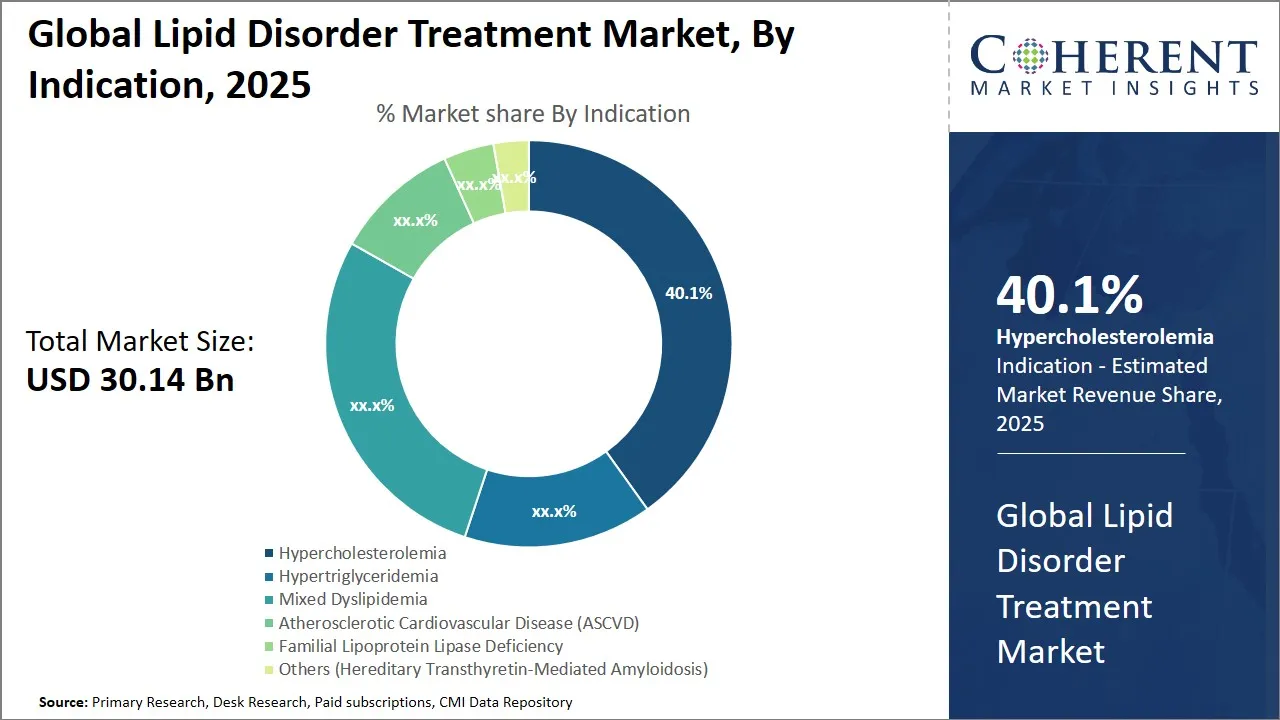
- Hypercholesterolemia, is the leading indication segment in the global lipid disorder treatment market, holding an estimated 41.1 % share in 2026.
- Statins segment is projected to account for 33.5 % of the market share in 2026.
- The generic segment is expected to dominate the lipid disorder treatment market, accounting for 66.6 % share in 2026.
- North America is expected to lead the market, holding a share of 38.8 % in 2026. Asia Pacific is anticipated to be the fastest-growing region, with a market share of 24.4% in 2026.
Market Overview
Current market trends highlight a shift towards personalized medicine and the integration of advanced technologies such as gene therapy and novel antihyperlipidemic drugs. There is a growing emphasis on early diagnosis and combination therapies to enhance treatment efficacy and patient compliance. Additionally, the rising demand for non-statin therapies and the development of innovative drug delivery systems are transforming the lipid disorder treatment landscape, driving both market growth and improved patient outcomes globally.
Current Events and Its Impact
Current Events | Description and its Impact |
Expansion of Point-of-Care Testing (POCT) |
|
USFDA Approvals for New Lipid-Lowering Drugs |
|
Segmental Insights
- Current Industry Events of 2026
- Market Size Estimation
- Regional Breakdown
- Competitive Landscape
- Customer Intelligence
- Segmental Analysis
- Pricing Analysis
- Key Market Drivers, Challenges & Future Trends
- Customized Insights Section
Lipid Disorder Treatment Market Insights, By Indication - Hypercholesterolemia Contributes the Highest Share of the Market Owing to its Widespread Prevalence and Critical Role in Cardiovascular Health
The hypercholesterolemia segment is projected to account for 41.1% of the market share in 2026. The reason behind this growth is its strong association with a considerable risk of developing atherosclerotic cardiovascular diseases (ASCVD). Hence, their management becomes indispensable to preventing these severe complications.
For example, in September 2026, the pharmaceutical company, Merck, which is known for its innovative healthcare products, made a very positive announcement concerning its Phase 3 CORALreef Lipids trial for the oral PCSK9 inhibitor enlicitide decanoate. The trial successfully achieved all the primary and key secondary endpoints with significant reductions in LDL-C and other lipid markers when compared with the placebo group.
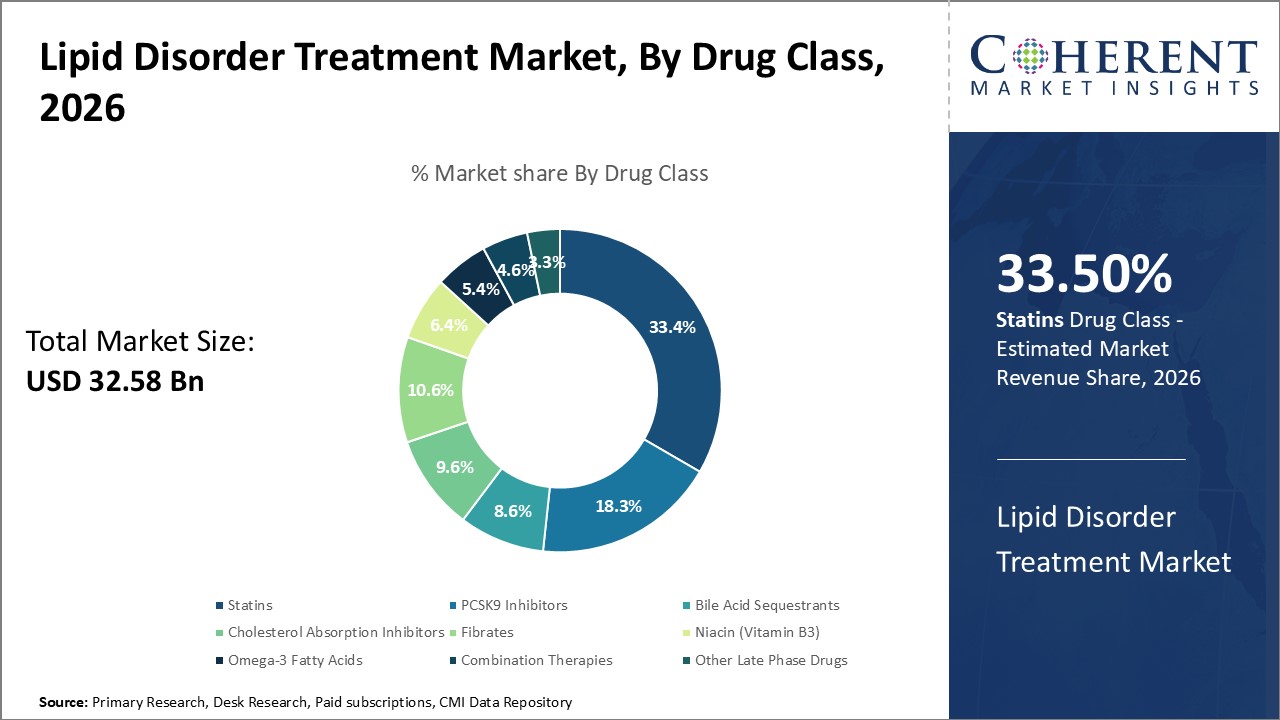
Lipid Disorder Treatment Market Insights, By Drug Class - Statins Dominate the Market Fueled by their Proven Efficacy and Established Safety Profile in Lipid Management
The development of lipid disorder treatment is primarily through the use of statins, which is expected to capture one-third of the market share by 2026, that is, 33.5%. The potential of statins is shown in their popularity worldwide and being supported by quite a lot of clinical evidence that indicates great reduction in LDL cholesterol and incidence of cardiovascular events, such as heart attacks and strokes. Statins block the action of HMG-CoA reductase, which is the main enzyme responsible for cholesterol biosynthesis, thus giving the patient lipid lowering effects that lead to better outcomes in dyslipidemia patients with high risk of cardiovascular diseases besides.
For example, Sunshine Biopharma made an announcement on October 16, 2025, regarding the launch of Pravastatin, which is a generic version of Pravachol, through its subsidiary in Canada, Nora Pharma. Pravastatin is a statin medication that lowers LDL cholesterol and raises HDL levels, thus preventing heart attacks, strokes, and other cardiovascular diseases.
Lipid Disorder Treatment Market Insights, By Type - Generic Segment Leads the Market Driven by Cost-Effectiveness and Widespread Accessibility
The generic segment is the major player in the global lipid disorder treatment market accounting for an estimated 66.6% of the market share in 2026. The reason for this is the low cost and wide availability of generics, especially in resource-limited regions. These disorders require long-term treatment hence cost becomes a significant factor in noncompliance. The availability of generics like atorvastatin, simvastatin, and rosuvastatin has further contributed to this trend. The lapse of patents of leading drugs has not only led to increased production of generics but also heightened competition and lowered prices.
For instance, in November 2023, Lupin Limited, a global pharmaceutical leader, received U.S. FDA approval for its Pitavastatin Tablets, 1 mg, 2 mg, and 4 mg, a generic version of Kowa’s Livalo Tablets. Manufactured at Lupin’s Pithampur facility in India, Pitavastatin is indicated to reduce LDL cholesterol as an adjunct to diet in adults with primary hyperlipidemia and pediatric patients aged 8 and older with heterozygous familial hypercholesterolemia (HeFH).
Regional Insights
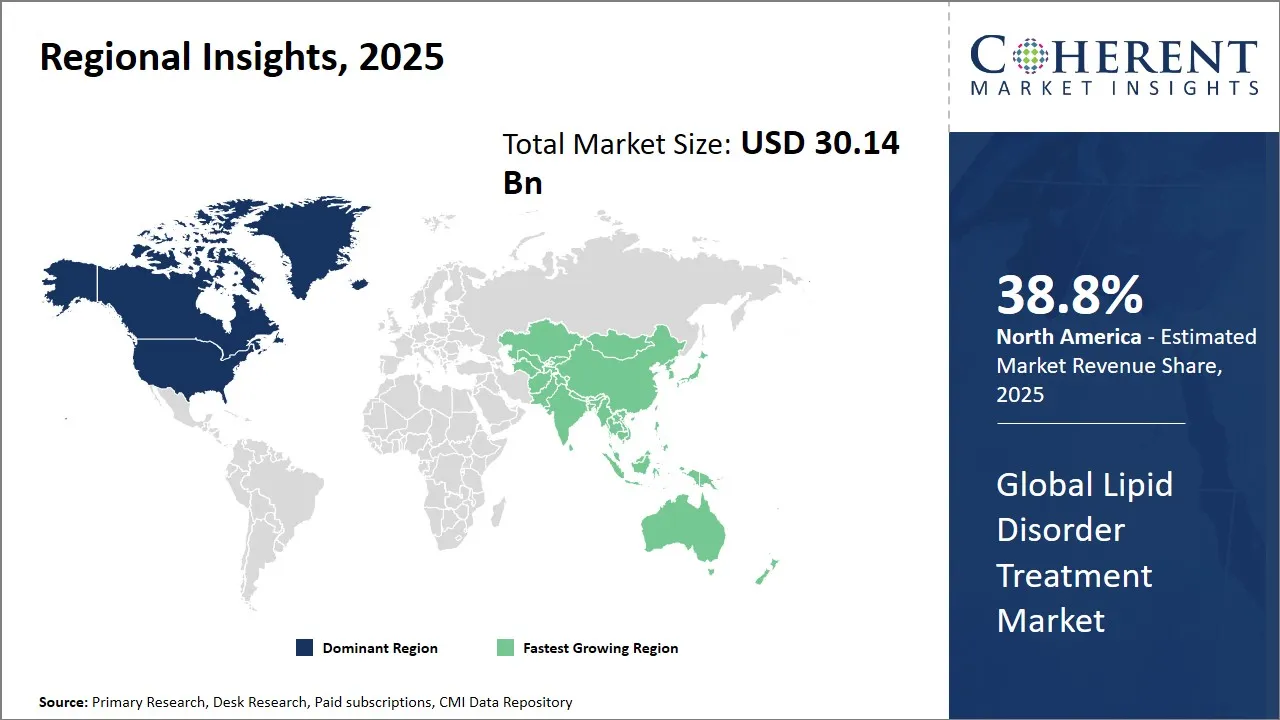
North America Lipid Disorder Treatment Market Analysis and Trends
In 2026, North America will have the largest share of 38.8% in the market of lipid disorder treatment, which is attributed to the pioneering healthcare system, strong pharmaceutical R&D as well as excellent regulatory measures. The involvement of large companies such as Pfizer, Amgen, and AbbVie in the innovation of lipid-lowering therapies including statins and PCSK9 inhibitors is a tremendous push for progress in this area.
For example, in February 2026, the U.S. Food and Drug Administration (FDA) approved Ctexli (chenodiol) as the first treatment for cerebrotendinous xanthomatosis (CTX), a rare lipid storage disease. Developed by the U.S. FDA, Ctexli helps address the underlying genetic defect in CTX, which leads to abnormal cholesterol metabolism and organ damage
Asia Pacific Lipid Disorder Treatment Market Analysis and Trends
The lipid disorder treatment market in the Asia Pacific region is expected to grow the fastest, capturing 24.4% of the market share by 2026, primarily due to the rise in lifestyle diseases and the increase in healthcare spending. Urbanization and the shift in people's diets have caused a rise in lipid disorders, thus the need for effective treatment has become critical.
Healthcare access improvements through government initiatives and infrastructure developments in China and India are factors that increase treatment penetration. The presence and expansion of major pharmaceutical firms such as Novartis and Sanofi, together with the emergence of local biotech companies, are the reasons for robust market growth in this part of the world.
Global Lipid Disorder Treatment Market Outlook for Key Countries
U.S. Lipid Disorder Treatment Market Analysis and Trends
The U.S. lipid disorder treatment market is mainly supported by the pharmaceutical giants working around the world like Pfizer and Amgen, who are recognized for their inventions PCSK9 inhibitors and new statins, among others. The market is flourishing by strong U.S. FDA regulations, advanced diagnostics and extensive research that are all in place, plus the policies that stress preventive care and chronic disease management. The existing health insurance policies also facilitate the patients' compliance with long-term lipid disorder treatments.
As an example, Ionis Pharmaceuticals reported in December 2024, the U.S. FDA had given the green light to TRYNGOLZA (olezarsen), making it the first therapy for adult patients with familial chylomicronemia syndrome (FCS) in the U.S. the medication, which is combined with a low-fat diet, decreases triglyceride levels considerably and minimizes the likelihood of acute pancreatitis occurrences. TRYNGOLZA, which is an auto-injector for self-administration once a month, is a new option for patients suffering from this rare, life-threatening disorder.
China Lipid Disorder Treatment Market Analysis and Trends
The treatment of lipid disorders in China is witnessing a fast change for the better, all thanks to the numerous government health schemes that are coming into play to the most affected area, which is the cardiovascular diseases area as they account for the most deaths. The rising of the awareness regarding lipid disorders among people, together with upgrading of the healthcare system particularly in the rural areas, increases the number of patients coming for treatment.
For instance, in September 2023, China’s new guidelines for lipid management were released to address the growing burden of atherosclerotic cardiovascular disease (ASCVD), the leading cause of death in the country. The guidelines emphasize LDL-C as the primary target for lipid control, with risk stratification used to determine target values.
Germany Lipid Disorder Treatment Market Analysis and Trends
Among all Europe countries, Germany is the one that takes the longest in the market of lipid disorder treatment thanks to its powerful healthcare system and its beneficial public health policies. The existence of established pharmaceutical manufacturers like Bayer and Boehringer Ingelheim assures that a wide array of lipid-lowering drugs will be accessible. Besides that, the country’s early screening programs and the campaigns for patient education make it easy for diagnosis and adherence to treatment.
For instance, in September 2026, Daiichi Sankyo announced the initiation of the development of a new oral triple combination lipid-lowering tablet aimed at improving LDL-C management. The combination includes bempedoic acid, ezetimibe, and statins (atorvastatin or rosuvastatin) to help patients reach LDL-C targets more effectively.
India Lipid Disorder Treatment Market Analysis and Trends
India lipid disorder treatment market is one of the fastest-growing markets in the world due to the factors such as an increase in the middle class, better awareness of cardiovascular health, and more efficient delivery of healthcare services. The government initiatives to improve chronic disease management, along with the growing insurance cover, are making treatment accessible to more people. Domestic pharmaceutical companies, are providing a great deal of affordable generic lipid-lowering medications for the market and also gaining experience through the partnership with big drug makers for the development of new treatments.
For instance, in May 2022, Sun Pharmaceutical Industries announced plans to launch Brillo, a first-in-class oral lipid-lowering drug in India. The drug, containing bempedoic acid, introduces a new mechanism of action compared to existing treatments for hypercholesterolemia.
Reimbursement Policy for Lipid Disorder Treatments
- Viatris has various programs for patients regarding the management of their out-of-pocket expenses, especially for lipid disorder treatments. The LIPITOR Savings Card is one such program that considerably reduces the expenses of the eligible patients by providing a discount which ultimately makes the price of the medication to as low as USD 4 for a month's supply with a maximum saving of USD 150 per filling, which is capped at USD 1,800 per annum. This offer is only applicable at the pharmacies that are part of the program, and it is not allowed to use it simultaneously with any of the healthcare programs funded by the federal or state government such as Medicare, Medicaid, TRICARE, or Veterans Affairs, nor other discount schemes, moreover, it cannot be availed if the patient's full cost is covered by private insurance.
- In addition to this, Viatris has a Patient Assistance Program (PAP) that gives certain drugs like LIPITOR for free to the qualifying uninsured or underinsured patients who comply financially with the criteria. To be considered, the patients need to provide a filled application containing personal and financial information and a prescription from a licensed U.S. healthcare provider.
Market Players, Key Developments, and Competitive Intelligence
Key Developments
- On October 27, 2025, Health Canada granted conditional approval for LEQEMBI (lecanemab), developed by Eisai Co., Ltd. and Biogen Inc., a monoclonal antibody for the treatment of early Alzheimer’s disease (AD). This treatment is indicated for adult patients with mild cognitive impairment or mild dementia due to Alzheimer’s who are non-carriers or heterozygotes of the apolipoprotein gene and have confirmed amyloid pathology.
- In August 2025, AbbVie, a global biopharmaceutical leader, completed its acquisition of Capstan Therapeutics. This acquisition adds Capstan's innovative lipid nanoparticle (tLNP) platform and the Phase 1 anti-CD19 CAR-T therapy CPTX2309 to AbbVie's portfolio. CPTX2309 is designed to treat B cell-mediated autoimmune diseases by generating in vivo CAR-T cells, targeting B cells without requiring chemotherapy.
- In March 2024, Regeneron announced that the USFDA granted clearance for the pediatric use of Praluent, a PCSK9 inhibitor, (alirocumab) in children with heterozygous familial hypercholesterolemia. This approval expands the treatment options for pediatric patients suffering from this genetic disorder, providing an important tool for managing high cholesterol levels.
- In August 2022, Boston Heart Diagnostics launched Lipidseq, a saliva-based next-generation sequencing (NGS) test designed to identify genetic disorders of lipid metabolism, including lysosomal acid lipase deficiency (LAL-D). The test, which can be performed at any age, is capable of detecting a wide range of lipid and lipoprotein genetic disorders such as hypercholesterolemia, sitosterolemia, and dysbetalipoproteinemia.
Top Strategies Followed by Global Lipid Disorder Treatment Market Players
- The adoption of R&D as a key strategy in the market has enabled the establishment of market leaders who have already gained a foothold to produce next-generation, high-quality, and efficacious lipid-lowering products. These companies have an unwavering commitment to R&D, which culminates in the production of high-performance products like next-generation statins, PCSK9 inhibitors, and new combinations of existing therapies that fulfill the strictest regulatory requirements while still catering to the unfulfilled clinical needs.
- In October 2024, AstraZeneca, a global biopharmaceutical company, announced an exclusive license agreement with CSPC Pharmaceutical Group to develop a novel small molecule Lipoprotein (a) (Lp(a)) disruptor, YS2302018, for lipid-lowering therapy. This pre-clinical candidate aims to address dyslipidaemia and related cardiovascular diseases by targeting elevated Lp(a), a key risk factor for heart disease and stroke.
- The treatment of lipid disorders through mid-level players in the market is different as it focuses on providing cost-effective yet reliable therapeutic options to price-conscious consumers especially in the less developed economies. These companies choose a wise but bold strategy of relying on generic formulations, biosimilars, and affordable branded drugs of good quality without the high pricing that is typical of new ones.
- Companies like Viatris exemplify mid-level players focusing on cost-effective lipid disorder therapies. Viatris offers a broad portfolio, including generic statins and biosimilars, catering to price-sensitive consumers in developing economies. Their approach centers on providing reliable therapeutic options without the premium pricing of novel drugs.
- Small players have made their point of differentiation in the market by being innovators and specialization. They usually aim at underserved markets or create products with features that no other competitors have. They compete on price and are often able to afford it and are differentiated by the use of nanotechnology-based drug delivery, personalized medicine, or new lipid-targeting molecular entities, which are considered cutting-edge technologies.
- Smaller firms such as Retrotope are at the forefront of innovation in lipid disorder treatments. Retrotope develops deuterium-stabilized polyunsaturated fatty acids (PUFAs) to prevent lipid peroxidation, a key factor in age-associated diseases. Their unique approach offers potential advancements in managing lipid-related disorders.
Market Report Scope
Lipid Disorder Treatment Market Report Coverage
| Report Coverage | Details | ||
|---|---|---|---|
| Base Year: | 2025 | Market Size in 2026: | USD 32.58 Bn |
| Historical Data for: | 2020 To 2024 | Forecast Period: | 2026 To 2033 |
| Forecast Period 2026 to 2033 CAGR: | 8.1% | 2033 Value Projection: | USD 56.20 Bn |
| Geographies covered: |
| ||
| Segments covered: |
| ||
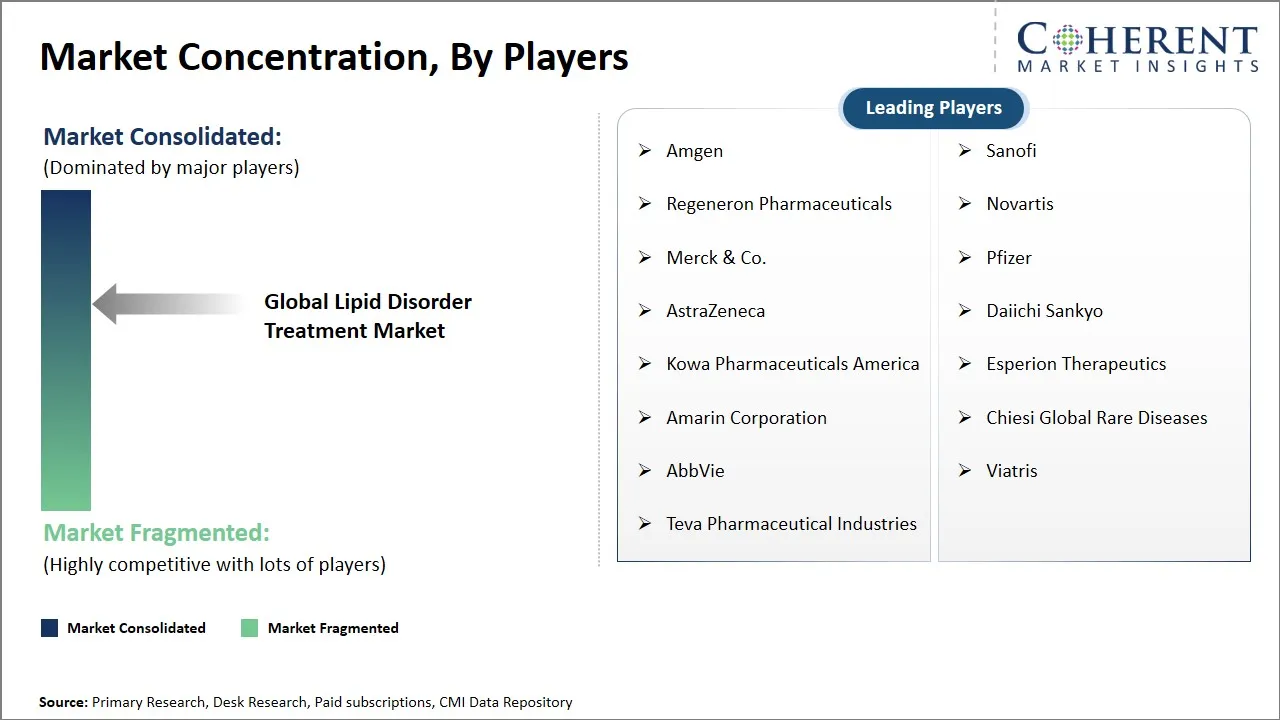
| Companies covered: | Amgen, Sanofi, Regeneron Pharmaceuticals, Novartis, Merck & Co., Pfizer, AstraZeneca, Daiichi Sankyo, Kowa Pharmaceuticals America, Esperion Therapeutics, Amarin Corporation, Chiesi Global Rare Diseases, AbbVie, Viatris, and Teva Pharmaceutical Industries | ||
| Growth Drivers: |
| ||
| Restraints & Challenges: |
| ||
Lipid Disorder Treatment Market Dynamics
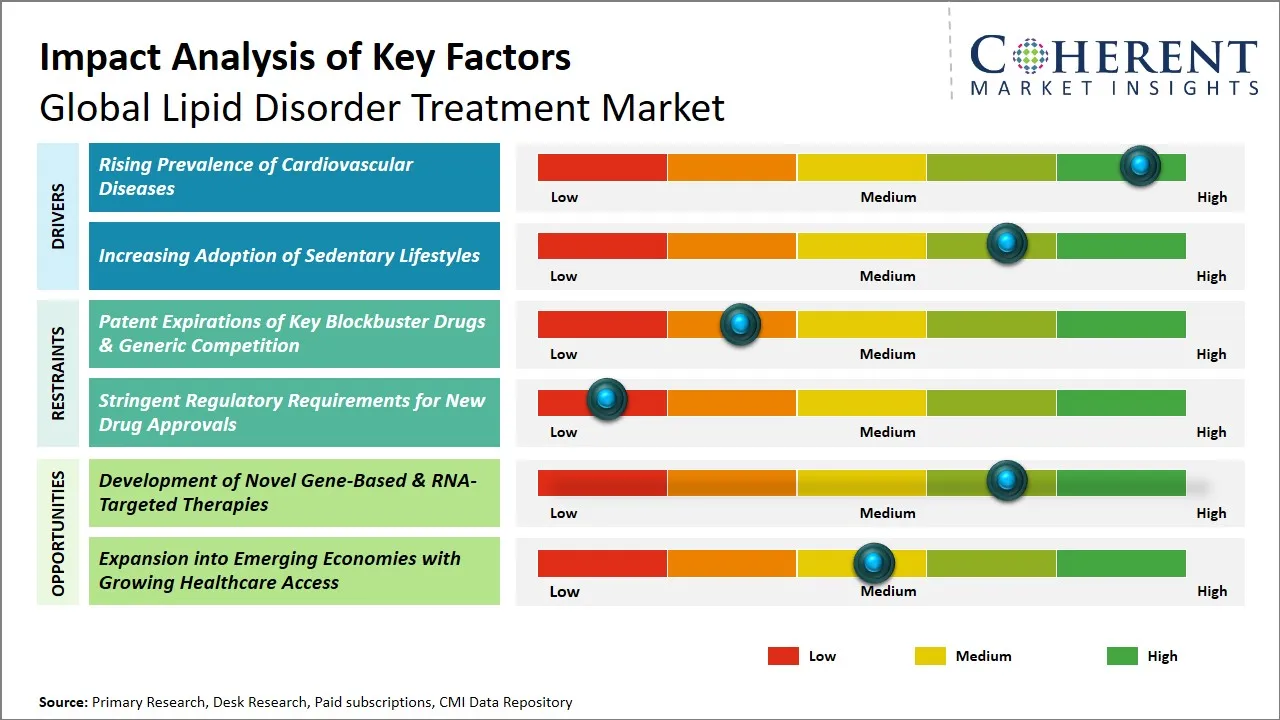
Lipid Disorder Treatment Market Driver - Rising Prevalence of Cardiovascular Diseases
The rise in the number of people suffering from cardiovascular diseases (CVDs) is a major factor that influences the growth of the lipid disorder treatment market. Among the various types of cardiovascular diseases are ailments like coronary artery disease, stroke, and hypertension, which are all closely connected to the abnormal levels of lipids in the body, such as increased levels of low-density lipoprotein (LDL) cholesterol and triglycerides. The rise of sedentary lifestyles accompanied by dietary habits that consist mainly of fatty and processed food has led to the occurrence of lipid imbalances among the population, a condition that is associated with the formation of arterial plaque and consequent vascular problems.
In July 2025, according to WHO, Cardiovascular diseases (CVDs) are the leading global cause of death, responsible for 32% of all deaths, with 85% of these due to heart attacks and strokes. In 2022, 19.8 million deaths occurred, and over three-quarters were in low- and middle-income countries. CVDs contribute to 38% of premature deaths from noncommunicable diseases.
Lipid Disorder Treatment Market Opportunity - Development of Novel Gene-Based & RNA-Targeted Therapies
The global lipid disorder treatment market is a huge growth opportunity for the companies that manufacture gene-based and RNA-targeted therapies as the result of the continuing technological development and the increasing acceptance of these approaches. The novel genetic therapies are intended for treating the root causes of lipid disorders and they promise to be more precise and effective compared to the traditional lipid-lowering drugs like statins and fibrates. The technological advancements in gene editing and RNA interference have opened up a new era of genetic-based treatments for lipid disorders, this due to the clearer understanding of the genetic makeup that influences lipid metabolism and the resultant promising outcomes from preclinical and clinical studies based on tools like CRISPR-Cas9 and RNAi.
In November 2023, CRISPR Therapeutics, a leader in gene editing, presented promising preclinical data at the American Heart Association Scientific Sessions. The company showcased its innovative lipid disorder treatments, CTX310 and CTX320, which are in vivo CRISPR-based therapies targeting cardiovascular disease. CTX310 showed significant reductions in ANGPTL3 protein and triglyceride levels in non-human primates, with effects lasting over a year after a single dose. Similarly, CTX320 reduced lipoprotein(a) (Lp(a)) levels by 95%, also with durable results.
Analyst Opinion (Expert Opinion)
- The lipid disorder treatment market flourishes with the support from innovations in therapy such as PCSK9 inhibitors, backing from the government, and slowly but surely, the increasing need for treatment due to a global rise in lipid disorders. Personalized medicine and genetic testing, while serving as new opportunity areas, have the challenges of high costs and restricted access still looming over them.
- On the other hand, the development of software tools for the healthcare sector is where the opportunities lie, with the telemedicine platforms activated to support the management of patients coming to the forefront. The European Society of Cardiology Congress and the National Lipid Association Annual Sessions are the main venues for exchanging ideas and influencing policy-making. Furthermore, the government health programs targeting early detection and prevention are now shaping the market's future in the U.S. and India among other countries.
Speak to the analyst
Want personalized insights?
Take the findings above to one of our principal consultants, or have the report rebuilt around the segments, geographies and competitors you actually track.
Market Segmentation
- Indication Insights (Revenue, USD Bn, 2021 - 2033)
- Hypercholesterolemia
- Primary Hypercholesterolemia
- Familial Hypercholesterolemia
- Hypertriglyceridemia
- Mixed Dyslipidemia
- Elevated LDL-C and Triglycerides
- Low HDL-C with Elevated LDL-C
- Atherosclerotic Cardiovascular Disease (ASCVD)
- Familial Lipoprotein Lipase Deficiency
- Others (Hereditary Transthyretin-Mediated Amyloidosis)
- Hypercholesterolemia
- Drug Class Insights (Revenue, USD Bn, 2021 - 2033)
- Statins
- Atorvastatin
- Rosuvastatin
- Simvastatin
- Others (Pravastatin, etc.)
- PCSK9 Inhibitors
- Alirocumab
- Evolocumab
- Others (Inclisiran, etc.)
- Bile Acid Sequestrants
- Colesevelam
- Colestipol
- Others (Cholestyramine, etc.)
- Cholesterol Absorption Inhibitors
- Ezetimibe
- Bempedoic Acid
- Fibrates
- Fenofibrate
- Gemfibrozil
- Niacin (Vitamin B3)
- Nicotinic Acid
- Omega-3 Fatty Acids
- Icosapent ethyl (Vascepa)
- Omega-3-acid ethyl esters (Lovaza)
- Combination Therapies
- Ezetimibe/Statin Combinations
- Other Late Phase Drugs
- Statins
- Type Insights (Revenue, USD Bn, 2021 - 2033)
- Generic
- Brand
- Route of Administration Insights (Revenue, USD Bn, 2021 - 2033)
- Oral
- Parenteral
- Age Group Insights (Revenue, USD Bn, 2021 - 2033)
- Adults
- Pediatric
- Geriatric
- Gender Insights (Revenue, USD Bn, 2021 - 2033)
- Male
- Female
- Distribution Channel Insights (Revenue, USD Bn, 2021 - 2033)
- Retail Pharmacies
- Online Pharmacies
- Hospital Pharmacies
- Regional Insights (Revenue, USD Bn, 2021 - 2033)
- North America
- U.S.
- Canada
- Latin America
- Brazil
- Argentina
- Mexico
- Rest of Latin America
- Europe
- Germany
- U.K.
- Spain
- France
- Italy
- Russia
- Rest of Europe
- Asia Pacific
- China
- India
- Japan
- Australia
- South Korea
- ASEAN
- Rest of Asia Pacific
- Middle East
- GCC Countries
- Israel
- Rest of Middle East
- Africa
- South Africa
- North Africa
- Central Africa
- North America
- Key Players Insights
- Amgen
- Sanofi
- Regeneron Pharmaceuticals
- Novartis
- Merck & Co.
- Pfizer
- AstraZeneca
- Daiichi Sankyo
- Kowa Pharmaceuticals America
- Esperion Therapeutics
- Amarin Corporation
- Chiesi Global Rare Diseases
- AbbVie
- Viatris
- Teva Pharmaceutical Industries
Sources
Primary Research Interviews
- Industry Stakeholders
- National Lipid Association (NLA)
- American Heart Association (AHA)
- End Users
- American College of Cardiology (ACC)
- European Society of Cardiology (ESC)
Government and International Databases
- U.S. Food and Drug Administration (FDA)
- European Medicines Agency (EMA)
- World Health Organization (WHO)
- Centers for Disease Control and Prevention (CDC)
- National Institutes of Health (NIH)
Trade Publications
- Journal of Clinical Lipidology
- American Journal of Cardiology
- Circulation
- Lancet Diabetes & Endocrinology
- Journal of the American College of Cardiology
- European Heart Journal
Academic Journals
- Journal of Clinical Lipidology
- American Journal of Cardiology
- Circulation
- Lancet Diabetes & Endocrinology
- Journal of the American College of Cardiology
- European Heart Journal
Reputable Newspapers
- The New York Times
- The Guardian
- The Washington Post
- BBC News
- Reuters
- Associated Press
Industry Associations
- National Lipid Association (NLA)
- American Heart Association (AHA)
- American College of Cardiology (ACC)
- European Society of Cardiology (ESC)
- World Heart Federation (WHF)
- International Atherosclerosis Society (IAS)
Public Domain Resources
- National Institutes of Health (NIH)
- Centers for Disease Control and Prevention (CDC)
- World Health Organization (WHO)
- U.S. Food and Drug Administration (FDA)
Proprietary Elements
- CMI Data Analytics Tool: Proprietary analytics tool to analyze real-time market trends, consumer behavior, and technology adoption in market
- Proprietary CMI Existing Repository of Information for Last 8 Years
Get access to 250+ pages report
Every segment, forecast, competitor profile and data table behind the analysis above — available for instant download.
- ESOMAR Member
- ISO 9001:2015 Certified
- D-U-N-S Registered
- GDPR & CCPA Compliant
Missing comfort of reading report in your local language? Find your preferred language:
Transform your Strategy with Exclusive Trending Reports
Frequently Asked Questions
The global lipid disorder treatment market is estimated to be valued at USD 32.58 Bn in 2026 and is expected to reach USD 56.20 Bn by 2033.
The CAGR of the global lipid disorder treatment market is projected to be 8.1% from 2026 to 2033.
Rising prevalence of cardiovascular diseases and increasing adoption of sedentary lifestyles are the major factors driving the growth of the global lipid disorder treatment market.
Patent expirations of key blockbuster drugs & generic competition and stringent regulatory requirements for new drug approvals are the major factors hampering the growth of the global lipid disorder treatment market.
In terms of indication, the hypercholesterolemia segment is estimated to dominate the market revenue share in 2026.
Amgen, Sanofi, Regeneron Pharmaceuticals, Novartis, Merck & Co., Pfizer, AstraZeneca, Daiichi Sankyo, Kowa Pharmaceuticals America, Esperion Therapeutics, Amarin Corporation, Chiesi Global Rare Diseases, AbbVie, Viatris, and Teva Pharmaceutical Industries are the major players.
North America is expected to lead the global lipid disorder treatment market in 2026.