

Global Magnesium Glycinate Market Size and Forecast – 2026 To 2033
The global magnesium glycinate market is expected to grow from USD 1.39 Bn in 2026 to USD 2.12 Bn by 2033, registering a compound annual growth rate (CAGR) of 6.2% from 2026 to 2033. The market for magnesium glycinate is poised for significant expansion, fueled by increased insufficiency in magnesium consumption and surging demand for highly absorptive magnesium supplements.
According to a review published in the U.S. National Library of Medicine, about 60% of adults do not achieve the average dietary intake (ADI) and 45% of Americans are magnesium deficient, highlighting the need for effective magnesium supplementation such as magnesium glycinate.
(Source: National Library of Medicine)
Key Takeaways of the Global Magnesium Glycinate Market
- Capsules are projected to hold 34.2 % of the global magnesium glycinate market share in 2026, making it the dominant form segment, across North America due to strong consumer preference for convenient, accurately dosed oral supplements and the availability of premium capsule formulations. For instance, the Council for Responsible Nutrition (CRN) reported that 75% of U.S. adults used dietary supplements in 2023, supporting sustained demand for capsule-based magnesium products.
- Dietary supplements are projected to hold 39.0 % of the global magnesium glycinate market share in 2026, making it the dominant application segment across North America due to sustained consumer investment in preventive healthcare and nutritional supplementation. For instance, the Council for Responsible Nutrition (CRN) reported that the median monthly expenditure on dietary supplements increased from USD 48 in 2023 to USD 50 in 2024, reflecting resilient consumer spending despite inflationary pressures.
- Offline is projected to hold 64.5 % of the global magnesium glycinate market share in 2026, making it the dominant distribution channel segment, across Asia Pacific, particularly Japan, where pharmacies and drugstores remain the primary retail channel for dietary supplements. For instance, the Japan Self-Medication Industry (JSMI) identifies drugstores as the leading sales channel for health foods and nutritional supplements, supported by the country's well-established self-medication culture.
- North America maintains its dominance with an expected share of 34.0 % in 2026, bolstered by growing awareness about magnesium deficiency, high dietary supplement adoption, and well-established nutraceutical distribution networks. For instance, the U.S. National Institutes of Health (NIH) reports that nearly 50% of Americans consume less magnesium than the Estimated Average Requirement (EAR) from food alone, with adolescent girls, older adults, and individuals with gastrointestinal disorders among the populations at highest risk of inadequate intake. This continues to drive the demand for highly bioavailable magnesium supplements such as magnesium glycinate.
- Asia Pacific is expected to exhibit the fastest growth with an estimated contribution of 25.5 % share in 2026, driven by increasing demand for scientifically validated nutritional supplements and supportive regulatory frameworks. For instance, Japan's Consumer Affairs Agency (CAA) continues to regulate Foods with Function Claims (FFC), enabling manufacturers to market dietary supplements with evidence-based health claims. The framework has accelerated innovation and consumer adoption of functional nutritional products across Japan.
- Growing Clinical Adoption for Sleep and Stress Management: Increasing clinical recognition of magnesium glycinate for managing sleep disturbances, anxiety, and stress-related disorders is expanding its use beyond general supplementation. Owing to its high bioavailability and the calming effects of glycine, healthcare professionals are increasingly recommending magnesium glycinate as a non-pharmacological option for improving sleep quality and supporting mental well-being. This trend is driving the demand for premium, evidence-based formulations.
- Expansion of Personalized Nutrition and Precision Supplementation: The rapid growth of personalized nutrition is creating new opportunities for magnesium glycinate manufacturers to develop customized formulations tailored to individual nutrient deficiencies, lifestyle factors, and genetic profiles. Integration with digital health platforms, at-home biomarker testing, and AI-driven nutrition recommendations is accelerating the adoption of premium, condition-specific magnesium glycinate products through direct-to-consumer channels.
Segmental Insights
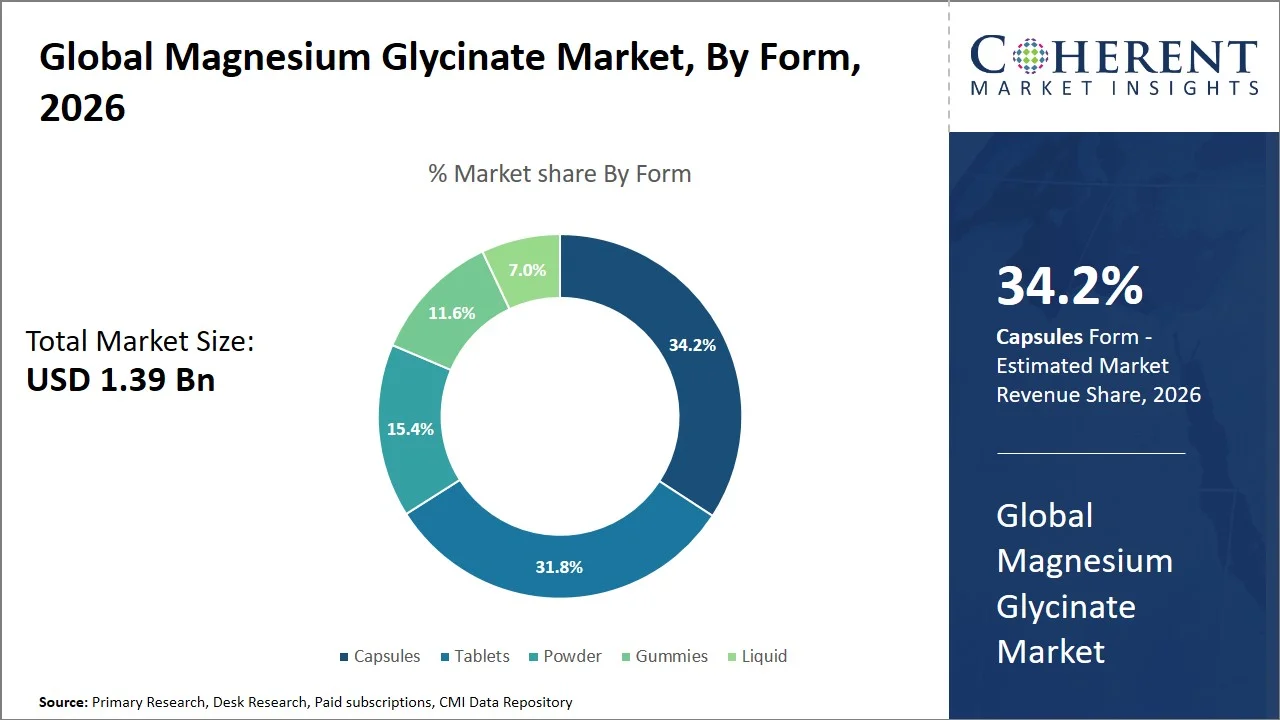
Why Do Capsules Dominate the Global Magnesium Glycinate Market?
Capsules are projected to hold a market share of 34.2% in 2026, driven by their ability to deliver precise dosages, improve mineral stability, effectively mask unpleasant tastes, and provide a convenient format for daily supplementation. Additionally, they require a smaller number of excipients than tablets and facilitate the formulation of pure ingredients due to the increasing demand for clean-label food. For instance, an analysis of the U.S. FDA's Dietary Supplement Label Database (DSLD) identified more than 17,000 different dietary supplement products in capsule form, from about 34% of all forms, making capsules the most prevalent formulation with supplement companies due to their adaptability to ingredient form and appeal to consumer choice. (Source: Tablets & Capsules)
- Current Industry Events of 2026
- Market Size Estimation
- Regional Breakdown
- Competitive Landscape
- Customer Intelligence
- Segmental Analysis
- Pricing Analysis
- Key Market Drivers, Challenges & Future Trends
- Customized Insights Section
Why Do Dietary Supplements Represent the Largest Application Segment in the Magnesium Glycinate Market?
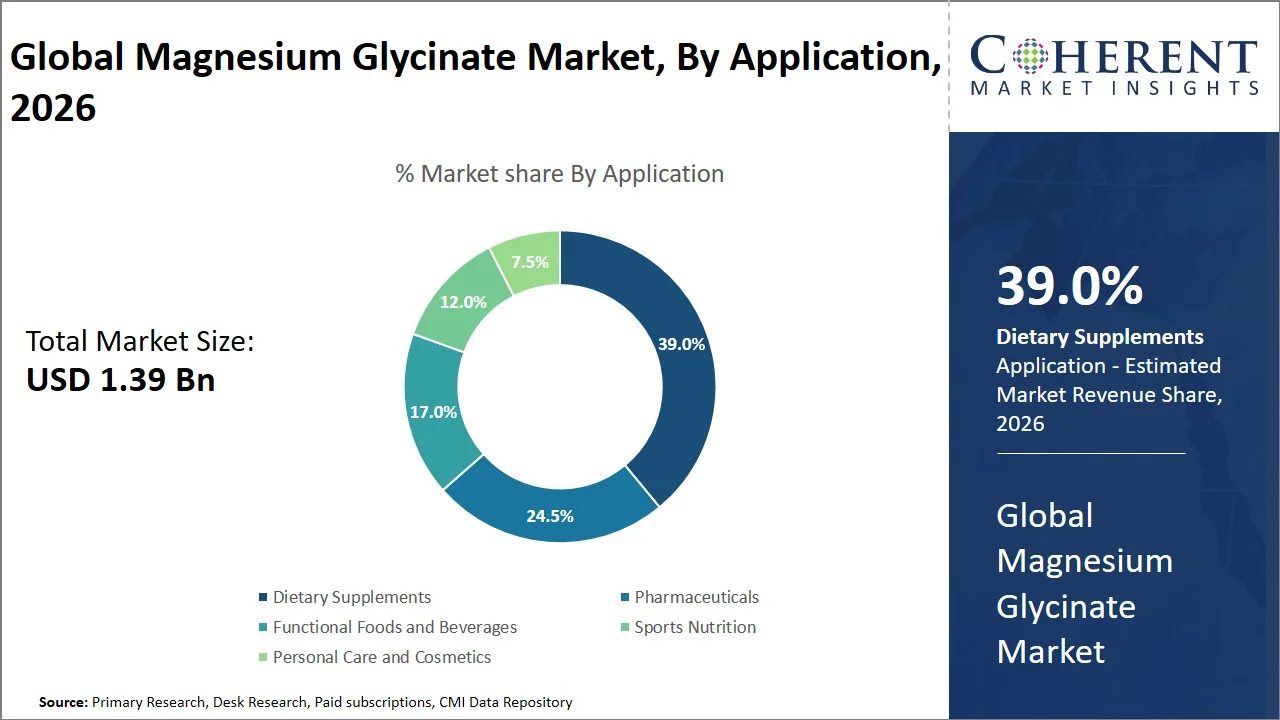
Dietary supplements are projected to hold a market share of 39.0% in 2026, due to greater consumer inclination towards preventive nutrition, and demand for high bioavailable mineral supplements. Magnesium glycinate is one of the popular ingredients used in dietary supplements like sleep and stress supplements, muscle performance, and bone health supplements as it gets easily digested and easily absorbed in the body. For instance, according to the U.S. National Institutes of Health (NIH) Office of Dietary Supplements, information from more than 200,000 dietary supplement labels sold in the U.S. is included in the Dietary Supplement Label Database (DSLD), reflecting how wide-ranging the dietary supplement market has become. (Source: National Institutes of Health)
Offline Segment Dominates the Global Magnesium Glycinate Market
The offline segment is projected to hold a market share of 64.5% in 2026, owing to higher consumer confidence towards pharmacies, health stores, and specialty nutrition outlets for buying dietary supplements. Offline purchase allows customers to compare, evaluate label information, and take professional advices particularly to the health benefits of premium nutritional supplement products. For instance, in July 2023, a study published by the National Library of Medicine reported that due to their greater popularity, supermarkets and hypermarkets accounted for approximately 33.9% of all dietary supplement sales in the offline sector in 2021, highlighting the persistent dominance of physical retail channels in supplement purchasing. (Source: National Library of Medicine)
Currents Events and their Impact
Current Events | Description and its Impact |
FDA Updates Dietary Supplement Regulation Under the Human Foods Program (May 2025) |
|
Global Food Regulators Summit 2025 Promotes Harmonized Food Supplement Standards (October 2025) |
|
(Source: Global Regulatory Partners, FAO)
Magnesium Glycinate Market Dynamics
Market Drivers
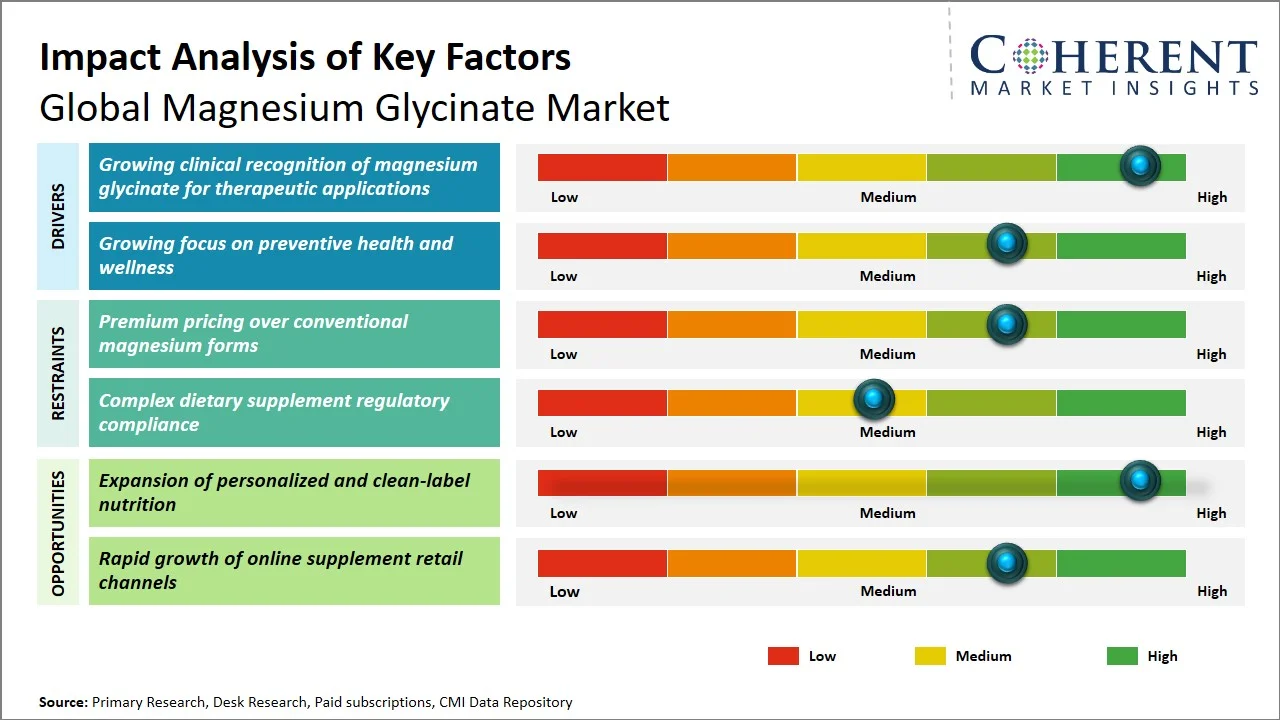
- Growing Clinical Recognition of Magnesium Glycinate for Therapeutic Applications: The growing recognition and prescription of magnesium glycinate by healthcare professionals for managing conditions such as sleep disorders, stress, muscle health, and cardiovascular wellness are driving market demand. Magnesium compound’s use continues to grow in the natural dietary and supplements space because of its extremely high rate of absorption into the body and minimal side effects. For instance, according to the U.S. National Institutes of Health (NIH) Office of Dietary Supplements, organic forms of magnesium salts like magnesium glycinate are more efficiently utilized by the body than many inorganic forms such as magnesium oxide and the health supplement, magnesium oxide, making the use of them in dietary supplementation and therapy more popular.
- Growing focus on preventive health and wellness: Increasing trend towards preventive healthcare drives the demand for nutritional supplements that promote overall lifelong wellness rather than disease management. Magnesium glycinate is most commonly used as an oral wellness supplement for a number of benefits which include promoting sound sleep, enhancing muscle function, aiding stress regulation and supporting the cardiovascular health. For instance, the World Health Organization encourages preventive healthcare practices and universal health coverage by embracing self-care interventions, or empowering people to take an active approach to their own health and wellness with evidence-based dietary habits and nutrition solutions.
Emerging Trends
- Shift Toward Multi-Functional Magnesium Formulations: Manufacturers are increasingly combining magnesium glycinate with ingredients such as vitamin D3, vitamin K2, zinc, melatonin, and ashwagandha to develop condition-specific supplements targeting sleep, stress management, bone health, and muscle recovery. These value-added formulations are gaining traction as consumers seek comprehensive wellness solutions through a single product.
- Rising Adoption of Alternative Supplement Delivery Formats: The market is witnessing growing demand for gummies, stick packs, flavored powders, effervescent tablets, and ready-to-drink formulations as alternatives to conventional capsules and tablets. These innovative delivery formats enhance convenience, taste, and consumer compliance while expanding magnesium glycinate adoption among younger consumers and active lifestyle segments.
Regional Insights
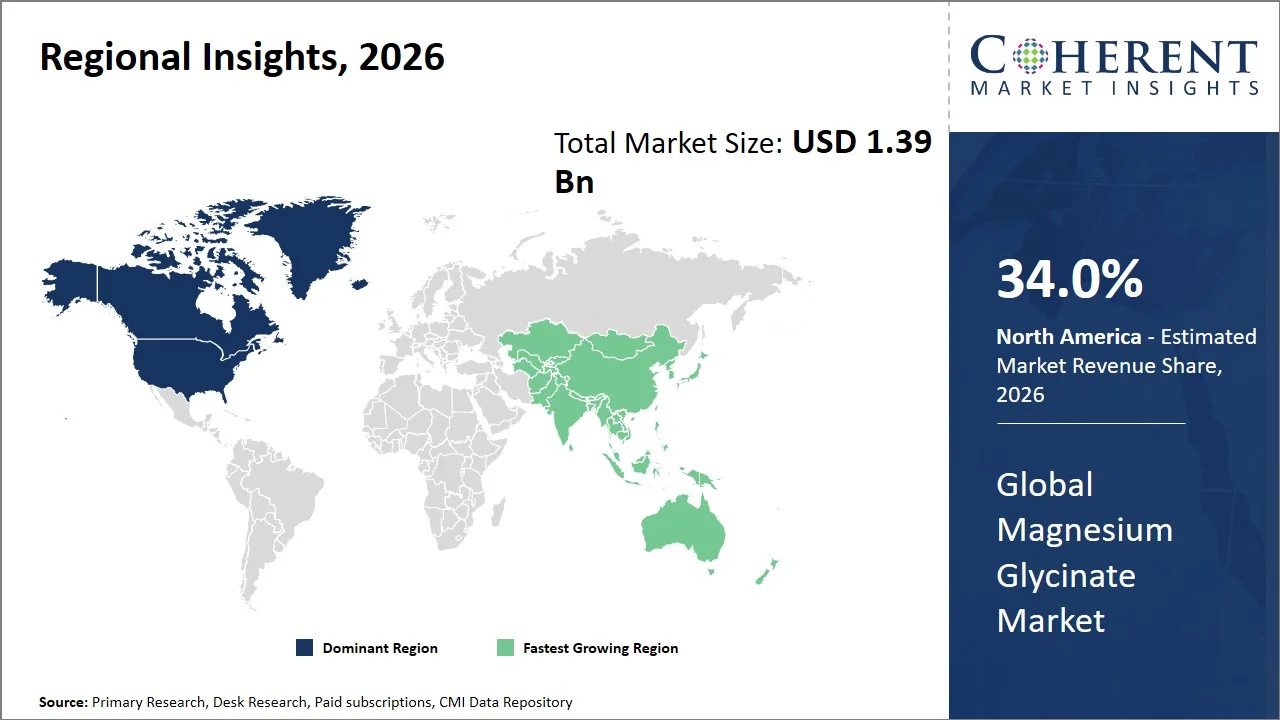
Why is North America a Strong Market for Magnesium Glycinate?
North America leads the global magnesium glycinate market, accounting for an estimated 34.0% share in 2026, driven by mature and advanced health and wellness system coupled with increasing awareness in food supplement and nutraceuticals industries. Strict food quality regulations enforced by U.S. FDA provide product reliability, thus paving for higher levels of trust among consumers. For instance, the U.S. Food & Drug Administration (FDA) monitors compliance with the Current Good Manufacturing Practice (CGMP) regulations, including Title 21 of the Code of Federal Regulations part 111, which requires dietary supplement manufacturers to have quality controls over ingredient identity, purity, strengths, and composition. These stipulations create stability for product quality and increase brand loyalty for the sophisticated supplements, such as the magnesium glycinate. (Source: Code of Federal Regulations) Furthermore, mature retail infrastructure with prominent presence of specialty retailers, pharmacists, and e- commerce players are resulting in wider reach to consumers, bolstering demand for magnesium glycinate.
Why Does the Asia Pacific Magnesium Glycinate Market Exhibit High Growth?
The Asia Pacific magnesium glycinate market is expected to exhibit the fastest growth with an estimated contribution of 25.5% share to the global market in 2026. This growth is driven by increasing health consciousness among the expanding middle-class population, along with rising disposable incomes in countries such as China, Japan, India, and other Southeast Asian economies. Healthcare initiatives launched by the government have further given a boost to the sector to cater to health supplements including magnesium glycinate. For instance, under the framework of Food Safety and Standards (health supplements, nutraceuticals, food for special dietary use, food for special medical purpose, functional food and Novel food) Regulations 2016 Food Safety and Standards Authority of India (FSSAI) sets out science-based standards on health supplements, allowable ingredients, their quality and labelling norms. This has ensured a better degree of standardization of products that has been crucial in the progress of India’s nutraceutical sector. (Source: Food Safety and Standards Authority of India) Furthermore, localized production facilities are also growing as global players partner with local businesses to utilize cost advantages in manufacturing products.
Global Magnesium Glycinate Market Outlook for Key Countries
Why is the U.S. Leading Innovation and Adoption in the Magnesium Glycinate Market?
The U.S. dominates the magnesium glycinate market driven by robust nutraceutical infrastructure and growing emphasis on elite, science-based products. Manufacturers (such as Thorne, NOW Foods, Pure Encapsulations, and Life Extension) are swiftly launching specialized formulations for sleep, stress, workout recovery and women’s health backed by superior chelation and stringent ingredient purity. Coupled with a healthy direct-to-consumer marketplace and relentless product development, America can commercialize advanced magnesium supplements and win over consumers with enhanced solutions.
Is Japan a Favorable Market for Magnesium Glycinate?
Japan is one of the most promising markets for the magnesium glycinate market driven by its robust functional nutrition market and high consumer awareness about effective and science-based dietary supplements. The Foods with Function Claims (FFC) system in Japan promotes effective nutritional supplements for consumer market by allowing for scientific proof to be utilized. Magnesium glycinate also addresses an increasingly growing consumer need for healthy aging, sleep-promoting and muscle-support products that further strengthens the adoption potential of magnesium glycinate in Japan.
Is China Emerging as a Key Growth Hub for the Magnesium Glycinate Market?
China is positioned as a key growth hub in the global magnesium glycinate market due to strong foothold in the burgeoning nutraceutical sector, high consumer inclination towards the premium segment of nutrition supplements. Growing awareness pertaining to health benefits, and increasing sales of specialized supplements that target sleep, stress, and bone health and soaring proliferation of e-commerce and digital retail channels are bolstering demand in the country. The continuous product development and proliferation of novel wellness blends (such as magnesium glycinate combined with L-theanine, melatonin, and vitamin B6) have increased the market potential in China.
Why Does Germany Top the European Magnesium Glycinate Market?
Germany is the leader in the European market for magnesium glycinate attributed to country’s well-established premium nutraceutical sector, widespread demand for dietary supplements with substantiated claims and an inclination towards quality mineral products. Germany hosts a variety of pharmaceutical & nutraceutical players (such as Queisser Pharma, Orthomol pharmazeutische Vertriebs GmbH, Salus Haus, and Dr. Loges + Co. GmbH) involved in product innovation, research and development for new wellness-based offerings catering to the growing concerns about sleep, stress and healthy aging. Moreover, extensive presence of health and pharmacy stores ensures higher product accessibility and adoption rates in the nation.
Is the Magnesium Glycinate Market Developing in India?
India is a high-potential market for magnesium glycinate due to rapid growth of nutraceutical industry as well as rising acceptance of specialized/ luxury health products. Increasing preventive health awareness, rising demand for products to help in sleep and relaxation, bone health and workout have aided in growth of the market across the country. An ongoing supply of new products entering the marketplace along with the proliferation of branded magnesium glycinate products are continuing to drive market growth. For instance, HK Vitals introduced its Magnesium Glycinate tablets, formulated to support muscle recovery, relaxation, and restful sleep, catering to the increasing demand for premium wellness supplements among Indian consumers.
Product Innovation Landscape in the Global Magnesium Glycinate Market
Innovation Area | Recent Product Innovation | Key Consumer Benefit | Market Impact |
Advanced Chelation Technology | High-purity magnesium bisglycinate with enhanced bioavailability | Improved absorption with minimal gastrointestinal discomfort | Strengthens premium product positioning and clinical acceptance |
Clean-Label & Plant-Based Formulations | Vegan, non-GMO, gluten-free, and allergen-free magnesium glycinate supplements | Meets growing demand for transparent and sustainable nutrition | Expands consumer base among health-conscious and label-aware buyers |
Multi-Ingredient Wellness Formulas | Magnesium glycinate combined with Vitamin D3, Vitamin K2, Zinc, Ashwagandha, or Melatonin | Supports multiple health benefits through a single formulation | Increases product differentiation and premium pricing potential |
Novel Delivery Formats | Gummies, stick packs, flavored powders, liquid shots, and effervescent tablets | Improves convenience, taste, and consumer compliance | Drives adoption among younger consumers and first-time supplement users |
Personalized Nutrition Solutions | Customized magnesium glycinate formulations integrated with digital health platforms and biomarker-based recommendations | Enables targeted nutritional support based on individual health needs | Creates new opportunities in premium direct-to-consumer and subscription-based supplement markets |
How is the expansion of personalized and clean-label nutrition creating new growth opportunities in the magnesium glycinate market?
The surging need for personalized nutrition and clean label supplements is expected to result in emerging avenues for the development of magnesium glycinate from producers and players in high-end wellness and preventive care sectors. Customers in the global space, are opting for formulations free from allergens and genetically modified components and those targeting various individual medical conditions and wellness aspirations. For instance, in December 2024, Makers Nutrition cited non-GMO ingredients as one of the most critical trends influencing diet supplement innovation for the 2025 new product launch cycle. Identifying consumer demand for clean and clear labeling in formulations and in sourcing information is driving supplement brands to update products with non-GMO, and more natural, sustainable ingredients like premium magnesium glycinate. (Source: Makers Nutrition, LLC)
Market Players, Key Development, and Competitive Intelligence
Key Developments
- In March 2026, Thorne announced the results of two independent consumer studies validating the benefits of its Magnesium Glycinate and Ginseng Plus formulations. The 28-day study demonstrated improvements in sleep quality, stress resilience, mood, focus, and muscle recovery among participants, reinforcing the scientific evidence supporting the company's magnesium glycinate formulation. The findings strengthen Thorne's evidence-based product portfolio and reinforce consumer confidence in its clinically backed nutritional supplements.
- In September 2025, Zaytun Vitamins expanded its halal-certified supplement portfolio with the launch of Magnesium Glycinate tablets. The new product features a highly bioavailable magnesium glycinate formulation designed to support muscle function, relaxation, sleep quality, and overall wellness. Manufactured in FDA-registered facilities in the U.S., the vegetarian and non-GMO supplement strengthens the company's position in the premium halal nutraceutical market.
Competitive Landscape
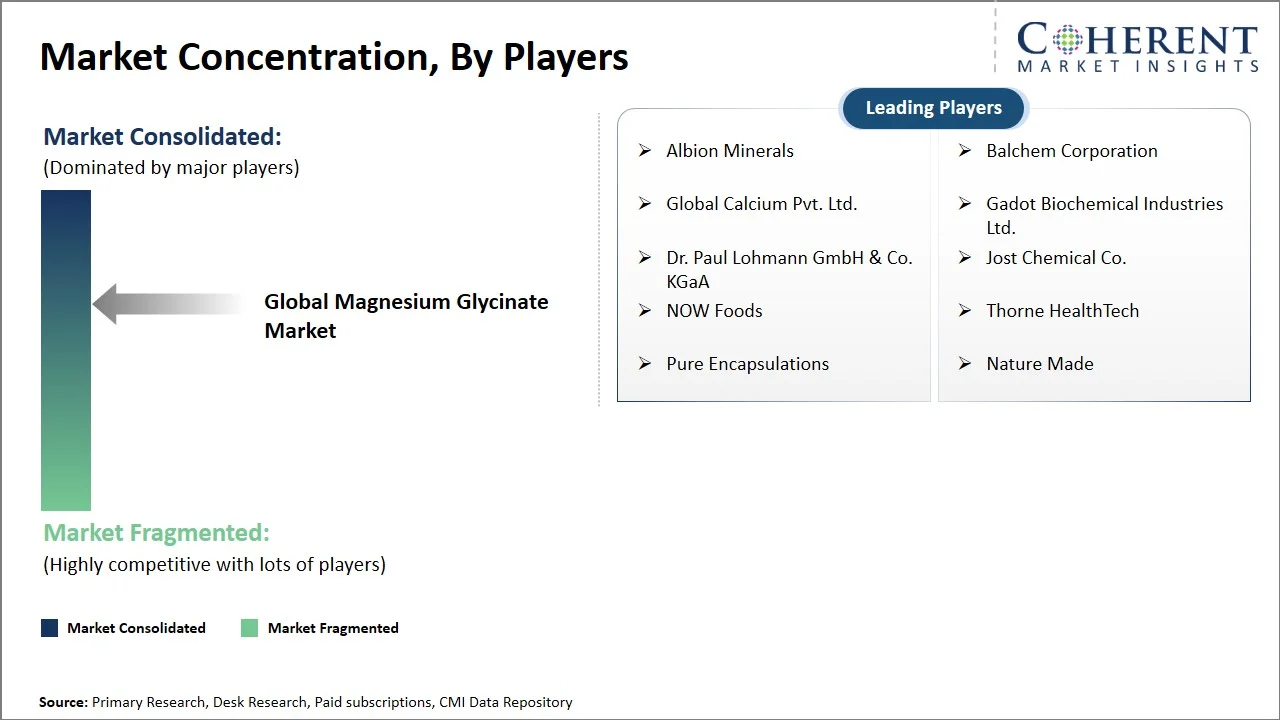
The global magnesium glycinate market is moderately consolidated, where various market players contend over product quality, ingredient purity, bioavailability, and regulatory compliance of products along with brand reputation. Market stakeholders are strategically pouring in significant investment in R&D on clinically proven formulations, obtaining clean-label certifications, and adopting novel chelation technologies in an effort to secure a stronger footing in the global marketplace. Furthermore, strategic alliances with raw ingredient suppliers, building more in-house manufacturing infrastructure and enhancing omni-channel retail presence are among the leading factors escalating market competition in both established and the nascent geographies. Key focus areas include:
- Development of high-bioavailability and clinically validated magnesium glycinate formulations for sleep, stress, muscle, and cardiovascular health
- Expansion of clean-label, vegan, non-GMO, and allergen-free product portfolios to meet evolving consumer preferences
- Strengthening e-commerce, direct-to-consumer (DTC), and pharmacy distribution channels to improve global market reach
- Investment in advanced chelation technologies, quality certifications, and regulatory compliance to enhance product differentiation and consumer trust
- Geographic expansion and strategic partnerships to increase presence in high-growth Asia Pacific and Latin American nutraceutical markets
Market Report Scope
Magnesium Glycinate Market Report Coverage
| Report Coverage | Details | ||
|---|---|---|---|
| Base Year: | 2025 | Market Size in 2026: | USD 1.39 Bn |
| Historical Data for: | 2020 To 2024 | Forecast Period: | 2026 To 2033 |
| Forecast Period 2026 to 2033 CAGR: | 6.2% | 2033 Value Projection: | USD 2.12 Bn |
| Geographies covered: |
| ||
| Segments covered: |
| ||
| Companies covered: | Albion Minerals, Balchem Corporation, Global Calcium Pvt. Ltd., Gadot Biochemical Industries Ltd., Dr. Paul Lohmann GmbH & Co. KGaA, Jost Chemical Co., NOW Foods, Thorne HealthTech, Pure Encapsulations, and Nature Made | ||
| Growth Drivers: |
| ||
| Restraints & Challenges: |
| ||
Analyst Opinion (Expert Opinion)
- In the coming years, the market for magnesium glycinate will shift towards condition-specific nutrition rather than broad-based mineral support. Increased scientific backing for magnesium glycinate-particularly in areas of sleep, stress, muscle recovery, and women’s health-will fuel product use within the premium nutraceutical segment, and emerging consumer bases will grow with the aid of personalized nutrition and digital wellness solutions.
- The maximum opportunities will probably exist within dietary supplement applications in the Asia Pacific region, especially in India where rising per capita spending, heightened focus on preventive health measures, and accelerated expansion of organized nutraceutical retail are all contributing to the higher demand for value-added mineral supplements. The higher regulatory emphasis on dietary supplements along with the soaring share of the region in e-commerce penetration is likely to add more fuel to market opportunities.
- In order to obtain a competitive advantage, market participants should invest in clinically-proven formulas, clean-label, vegan certification, and diverse product formats like gummies, stick packs and combo packs for sleep, stress, and athletic recovery. An enhanced relationship with health care practitioners, investment in direct-to-consumer (DTC) capabilities and the scale-up of a manufacturing facility in the rapidly growing Asian markets will further enhance brand differentiation and long-term market share.
Speak to the analyst
Want personalized insights?
Take the findings above to one of our principal consultants, or have the report rebuilt around the segments, geographies and competitors you actually track.
Market Segmentation
- Form Insights (Revenue, USD Bn, 2021 - 2033)
- Capsules
- Tablets
- Powder
- Gummies
- Liquid
- Application Insights (Revenue, USD Bn, 2021 - 2033)
- Dietary Supplements
- Pharmaceuticals
- Functional Foods and Beverages
- Sports Nutrition
- Personal Care and Cosmetics
- Distribution Channel Insights (Revenue, USD Bn, 2021 - 2033)
- Offline
- Online
- Regional Insights (Revenue, USD Bn, 2021 - 2033)
- North America
- U.S.
- Canada
- Latin America
- Brazil
- Argentina
- Mexico
- Rest of Latin America
- Europe
- Germany
- U.K.
- Spain
- France
- Italy
- Russia
- Rest of Europe
- Asia Pacific
- China
- India
- Japan
- Australia
- South Korea
- ASEAN
- Rest of Asia Pacific
- Middle East
- GCC Countries
- Israel
- Rest of Middle East
- Africa
- South Africa
- North Africa
- Central Africa
- North America
- Key Players Insights
- Albion Minerals
- Balchem Corporation
- Global Calcium Pvt. Ltd.
- Gadot Biochemical Industries Ltd.
- Paul Lohmann GmbH & Co. KGaA
- Jost Chemical Co.
- NOW Foods
- Thorne HealthTech
- Pure Encapsulations
- Nature Made
Sources
Primary Research Interviews
- Nutraceutical manufacturers and magnesium glycinate ingredient suppliers
- Dietary supplement formulators and product development managers
- Clinical nutritionists and registered dietitians specializing in mineral supplementation
- Healthcare professionals, pharmacists, and integrative medicine practitioners
- Procurement and sourcing managers from dietary supplement companies
- Regulatory and quality assurance professionals from nutraceutical manufacturers
- Executives and business development managers from contract manufacturing organizations (CMOs)
Stakeholders
- Magnesium glycinate ingredient manufacturers
- Dietary supplement brands and nutraceutical companies
- Contract manufacturers and private-label supplement manufacturers
- Ingredient distributors and raw material suppliers
- End-use Sectors
- Dietary supplement manufacturers
- Pharmaceutical companies
- Functional food & beverage manufacturers
- Sports nutrition companies
- Personal care & cosmetics manufacturers
- Regulatory & Health Bodies
- U.S. Food and Drug Administration (FDA)
- European Food Safety Authority (EFSA)
- Health Canada – Natural and Non-prescription Health Products Directorate (NNHPD)
- Therapeutic Goods Administration (TGA), Australia
- Pharmaceuticals and Medical Devices Agency (PMDA), Japan
- National Medical Products Administration (NMPA), China
Databases
- NIH Office of Dietary Supplements (ODS)
- USDA FoodData Central
- FDA Dietary Supplement Ingredient Directory
- EFSA Open Data Portal
- WHO Global Health Observatory (GHO)
- OECD Health Statistics
- World Bank Health Nutrition and Population Statistics
Magazines
- Nutritional Outlook
- Natural Products INSIDER
- Nutrition Industry Executive
- Food Processing
- Nutraceutical Business Review
- NutritionInsight
Journals
- Journal of the American College of Nutrition
- Journal of Dietary Supplements
- Frontiers in Nutrition
- American Journal of Clinical Nutrition
- Advances in Nutrition
Newspapers
- Financial Times
- The Wall Street Journal
- USA Today
- The New York Times
- The Guardian
Associations
- Council for Responsible Nutrition (CRN)
- International Alliance of Dietary/Food Supplement Associations (IADSA)
- Food Supplements Europe (FSE)
- Consumer Healthcare Products Association (CHPA)
- Health Foods & Dietary Supplements Association (HADSA), India
- American Society for Nutrition (ASN)
Public Domain Sources
- U.S. National Institutes of Health (NIH) – Office of Dietary Supplements
- U.S. Food and Drug Administration (FDA) – Dietary Supplements
- European Food Safety Authority (EFSA)
- World Health Organization (WHO)
- USDA Food Data Central
- Japan Consumer Affairs Agency (CAA) – Foods with Function Claims (FFC)
Proprietary Elements
- CMI Data Analytics Tool, Proprietary CMI Existing Repository of information for last 10 years.
Get access to 250+ pages report
Every segment, forecast, competitor profile and data table behind the analysis above — available for instant download.
- ESOMAR Member
- ISO 9001:2015 Certified
- D-U-N-S Registered
- GDPR & CCPA Compliant
Missing comfort of reading report in your local language? Find your preferred language:
Transform your Strategy with Exclusive Trending Reports
Frequently Asked Questions
The global magnesium glycinate market is estimated to be valued at USD 1.39 Bn in 2026 and is expected to reach USD 2.12 Bn by 2033.
Capsules dominate due to their high consumer preference, precise dosing, ease of consumption, and widespread availability through pharmacies and dietary supplement retailers.
Magnesium glycinate is a chelated form of magnesium bound to the amino acid glycine, known for its high bioavailability and excellent gastrointestinal tolerability.
The CAGR of the global magnesium glycinate market is projected to be 6.2% from 2026 to 2033.
Its chelated structure enhances intestinal absorption while minimizing gastrointestinal side effects compared to forms such as magnesium oxide.
Demand is primarily driven by its use in sleep support, stress management, muscle recovery, cardiovascular health, and overall metabolic wellness.
Premium pricing over conventional magnesium forms, and complex dietary supplement regulatory compliance are the major factors hampering the growth of the global magnesium glycinate market.