

Global Digital Medical Screening and Monitoring Market Size and Forecast – 2026 To 2033
The global digital medical screening and monitoring market is expected to grow from USD 185,903.9 Mn in 2026 to USD 484,747.0 Mn by 2033, registering a compound annual growth rate (CAGR) of 14.7% from 2026 to 2033. The market for digital medical screening and monitoring is poised for significant expansion, fueled by the rapid expansion of national digital health infrastructure, accelerating the adoption of digital medical screening and monitoring solutions.
According to the Organisation for Economic Co-operation and Development (OECD) Health at a Glance 2025, the average availability of online digital health services across OECD countries increased to 82% in 2024, up from 79% in 2023, reflecting continued investments in interoperable digital health systems, electronic health records, and connected care platforms that support remote screening and continuous patient monitoring.
Key Takeaways of the Global Digital Medical Screening and Monitoring Market
- The product segment is projected to hold 63.1 % of the global digital medical screening and monitoring market share in 2026, making it the dominant offering segment, across North America due to the rapid adoption of AI-enabled digital medical devices and remote monitoring technologies. For instance, in January 2025, the U.S. Food and Drug Administration (FDA) granted 510(k) clearance to AliveCor's Kardia 12L ECG System, an AI-powered portable ECG device designed for rapid cardiac screening in clinical and ambulatory settings. This regulatory approval reinforces the growing adoption of digital screening products across the region.
- Single test is projected to hold 69.0 % of the global digital medical screening and monitoring market share in 2026, making it the dominant test type segment, across Europe owing to organized population screening initiatives and increasing regulatory support for AI-assisted diagnostics. For instance, the European Commission supports the implementation of organized cancer screening programs under the Europe's Beating Cancer Plan, promoting the integration of innovative digital and AI-enabled technologies for breast, cervical, and colorectal cancer screening across Member States. These initiatives continue to strengthen the adoption of single-test digital screening solutions.
- Blood is projected to hold 59.2 % of the global digital medical screening and monitoring market share in 2026, making it the dominant sample type segment, across North America due to the widespread use of blood-based diagnostics for chronic disease detection and continuous health monitoring. For instance, the U.S. Food and Drug Administration (FDA) expands the availability of blood-based screening through its Breakthrough Devices Program, including approvals for innovative blood-based diagnostic technologies intended for earlier disease detection and improved patient management. These regulatory initiatives reinforce the continued reliance on blood samples in digital screening workflows
- North America maintains its dominance with an estimated share of 34.7 % in 2026, bolstered by the region's strong regulatory support for digital health technologies and AI-enabled medical devices. For instance, in January 2025, the U.S. Food and Drug Administration (FDA) issued draft guidance, "Artificial Intelligence-Enabled Device Software Functions: Lifecycle Management and Marketing Submission Recommendations," providing a regulatory framework for the safe development, validation, and lifecycle management of AI-enabled medical devices, including digital screening and monitoring solutions.
- Asia Pacific is expected to exhibit the fastest growth with an estimated contribution of 21.9 % share in 2026, propelled by accelerating digital health transformation and government-led healthcare modernization initiatives. For instance, Singapore's Ministry of Health (MOH) has expanded the Healthier SG strategy, integrating preventive health screening, digital health records, and remote monitoring into primary care to improve population health management and chronic disease prevention. These initiatives are driving wider adoption of digital medical screening and monitoring technologies across the region.
Segmental Insights
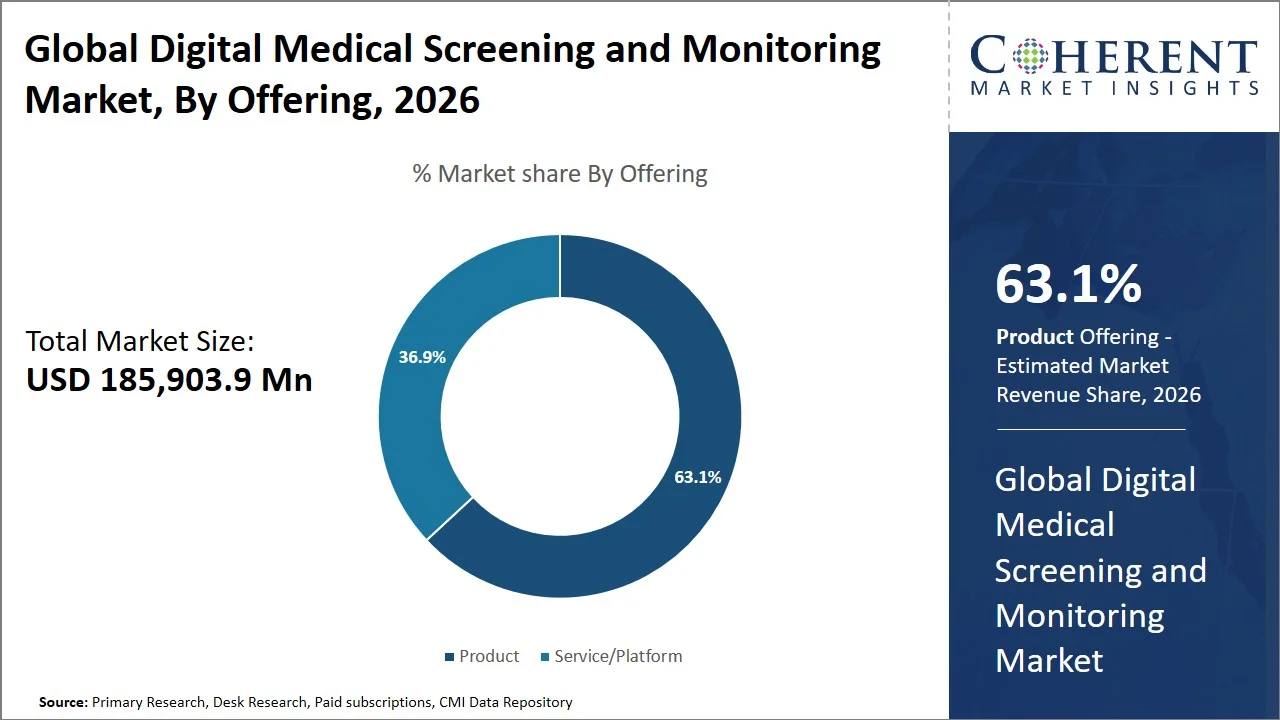
Why Does the Product Segment Dominate the Global Digital Medical Screening and Monitoring Market?
The product segment is projected to hold a market share of 63.1% in 2026, due to growing research and development on AI-based medical devices, wearables and point-of-care diagnostics which enables health monitoring and early disease diagnosis in a real-time manner. Moreover, an increasing demand for remote and home based or portable monitoring solution is increasing product adoption across both clinical and non-clinical settings. For instance, in April 2025, Withings unveiled the FDA-cleared BPM Vision, a sophisticated connected blood pressure monitor. Equipped with a high-resolution display, this device offers clinically accurate cardiovascular tracking from the home while ease of blood pressure measurements, and continuous monitoring for digital health and cardiovascular risks.
- Current Industry Events of 2026
- Market Size Estimation
- Regional Breakdown
- Competitive Landscape
- Customer Intelligence
- Segmental Analysis
- Pricing Analysis
- Key Market Drivers, Challenges & Future Trends
- Customized Insights Section
Why Does Single Test Represent the Largest Test Type Segment in the Global Digital Medical Screening and Monitoring Market?
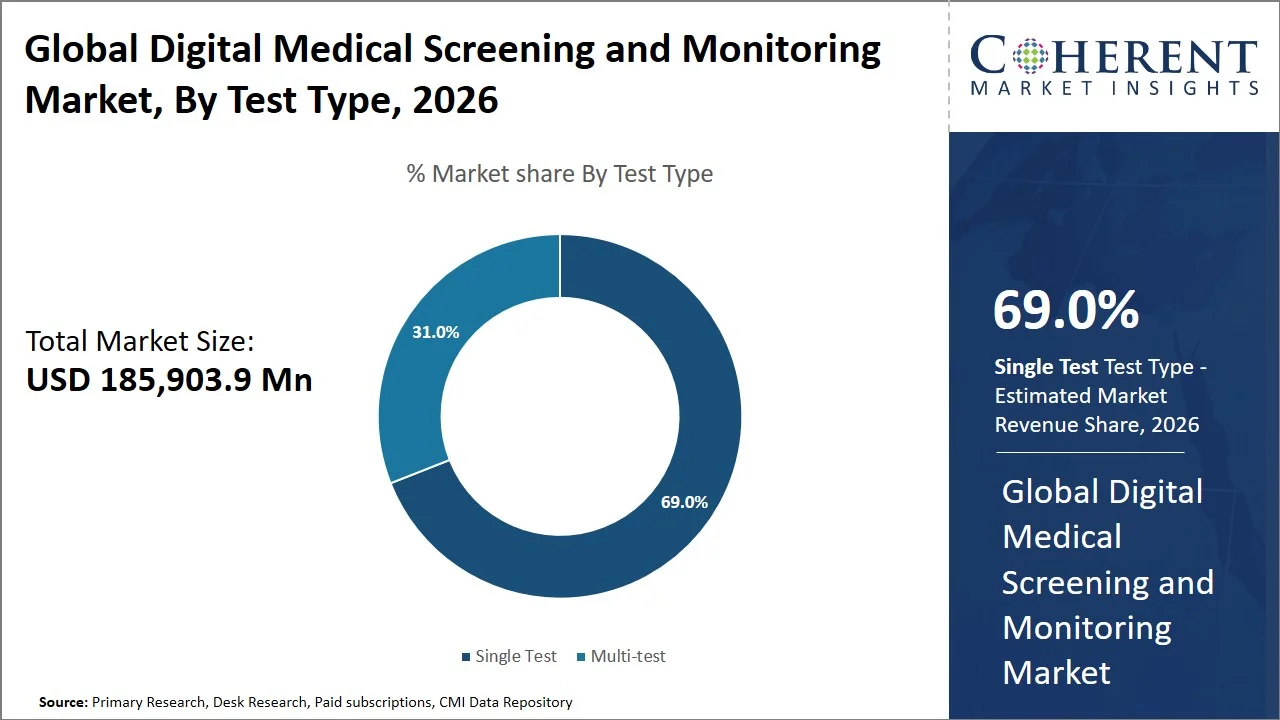
Single test is projected to hold a market share of 69.0% in 2026, due to its ease of use, shorter results time, point-of-care as well as the home-testing settings contribute to the dominance of the market segment. Moreover, a high-quality single-use digital medical screening and monitoring solutions allow fast, localized, cost-efficient medical diagnosing for certain diseases to enable efficient decision for timely treatment and for consistent monitoring of the diseases. For instance, in January 2025, F. Hoffmann-La Roche Ltd received U.S. FDA approval along with CLIA waiver of its cobas liat molecular tests for rapid, on-demand Chlamydia trachomatis and Neisseria gonorrhoeae detection. The U.S.FDA approval gives patients access to single-test molecular diagnostics in single-use tubes which will help to speed up clinical decisions, in line with trending, digital, single-target screening.
Blood Segment Dominates the Global Digital Medical Screening and Monitoring Market
The blood segment is projected to hold a market share of 59.2% in 2026, due to its superior accuracy for a wide array of biomarkers and for use with AI-supported lab and point-of-care diagnostic instruments. Blood diagnostics will remain the gold standard for chronic disease, infectious disease and metabolic disorder monitoring and detection due to clinical robustness and integration into digital health infrastructure. For instance, in May 2025, the U.S. Food and Drug Administration (FDA) granted 510(k) clearance to Lumipulse G pTau217/-Amyloid 1-42 Plasma Ratio test from Fujirebio Diagnostics as the first FDA-cleared in vitro diagnostic test for plasma. The approval strengthens the adoption of blood based digital diagnostics, offering less intrusive and clinically viable methods to screen for disease.
Current Events and their Impact
Current Events | Description and its Impact |
European Health Data Space (EHDS) Regulation Enters into Force (March 2025) |
|
U.S. FDA Issues Draft Guidance for AI-Enabled Medical Device Software Functions (January 2025) |
|
Global Digital Medical Screening and Monitoring Market Dynamics
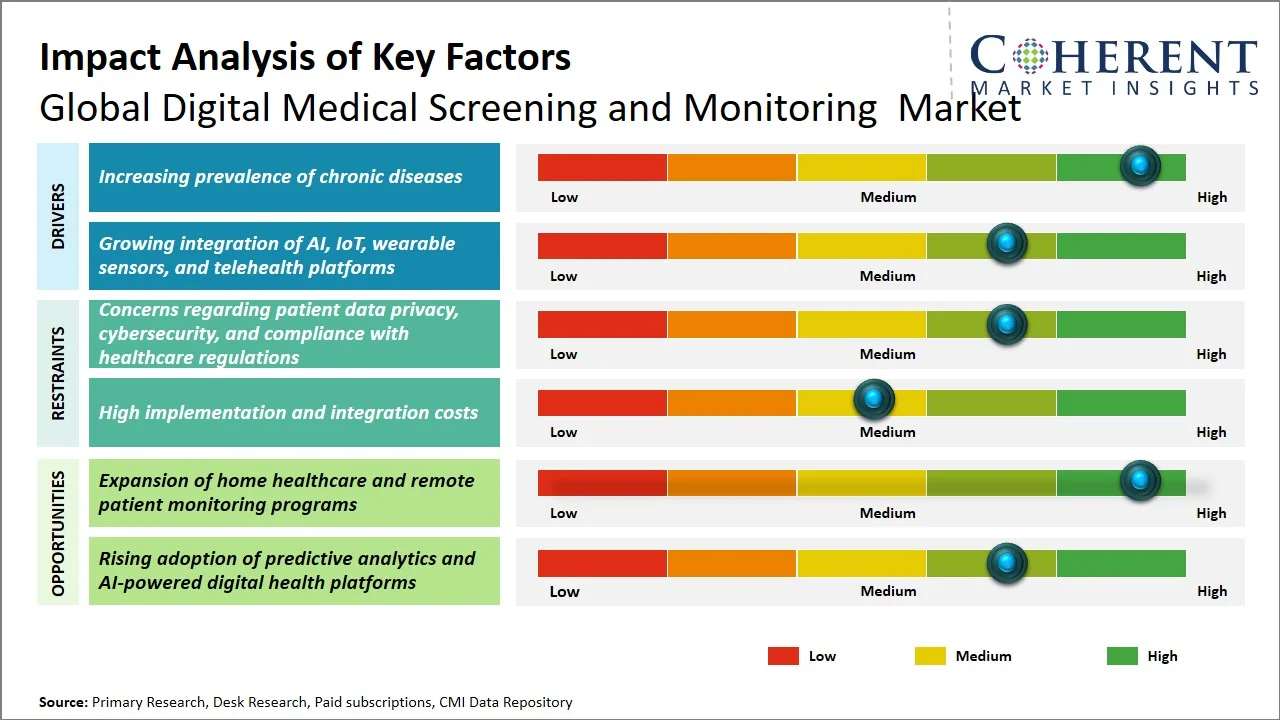
Market Drivers
- Increasing prevalence of chronic diseases: The increasing prevalence of chronic diseases is driving the demand for digital medical screening and continuous patient monitoring solutions that enable early diagnosis, proactive disease management, and remote care. Wearable devices, AI-enabled monitoring platforms, and connected health technologies are increasingly being integrated into routine clinical practice to improve patient outcomes and reduce healthcare costs. For instance, in June 2025, the U.S. Food and Drug Administration (FDA) approved Abbott's over-the-counter Lingo continuous glucose monitoring (CGM) system, expanding access to real-time metabolic monitoring for adults and reinforcing the growing adoption of digital health technologies for preventive care.
- Growing integration of AI, IoT, wearable sensors, and telehealth platforms: The growing convergence of AI, IoT-enabled diagnostic devices, mobile health applications, and telehealth platforms is transforming healthcare delivery by enabling real-time disease screening, continuous monitoring, and improved access to preventive care. These integrated solutions support early diagnosis while extending healthcare services beyond conventional clinical settings. For instance, in May 2026, MedPredict launched the MediElaj AI-powered healthcare app and smart diagnostic kiosk platform in India, combining AI diagnostics, mobile health services, and connected kiosks to expand digital health screening across urban and rural communities.
- Increasing Deployment of Community-Based Digital Screening Infrastructure: The expansion of community-based digital healthcare infrastructure is accelerating the adoption of digital medical screening and monitoring technologies by improving access to preventive healthcare in underserved and remote areas. Governments and healthcare providers are increasingly investing in connected diagnostic systems that enable point-of-care screening and remote clinical consultations. For instance, in April 2025, Royal Philips partnered with the Government of Indonesia to deploy AI-enabled tele-ultrasound solutions across community health centers (Puskesmas), enhancing early disease screening and expanding access to specialist care in rural regions.
Emerging Trends
- Rise of Multimodal AI Screening Platforms: Healthcare providers are increasingly adopting multimodal AI platforms that combine imaging, physiological signals, laboratory data, and patient history to improve diagnostic accuracy. These integrated solutions enable comprehensive risk assessment and earlier detection of complex diseases such as cancer, cardiovascular disorders, and neurodegenerative conditions while reducing clinician workload.
- Expansion of Hospital-at-Home Monitoring Ecosystems: Healthcare systems are rapidly transitioning from episodic monitoring to continuous home-based care through connected wearables, biosensors, and virtual care platforms. This trend is enabling clinicians to remotely monitor patients after hospital discharge, reducing readmissions while supporting proactive management of chronic and post-acute conditions.
- Integration of Digital Screening into Preventive Population Health Programs: Governments, insurers, and healthcare providers are increasingly embedding digital screening and remote monitoring technologies into preventive care initiatives. AI-powered health risk assessments, digital health kiosks, and connected screening platforms are being deployed to improve early disease detection, expand access in underserved populations, and support value-based healthcare delivery.
Regional Insights
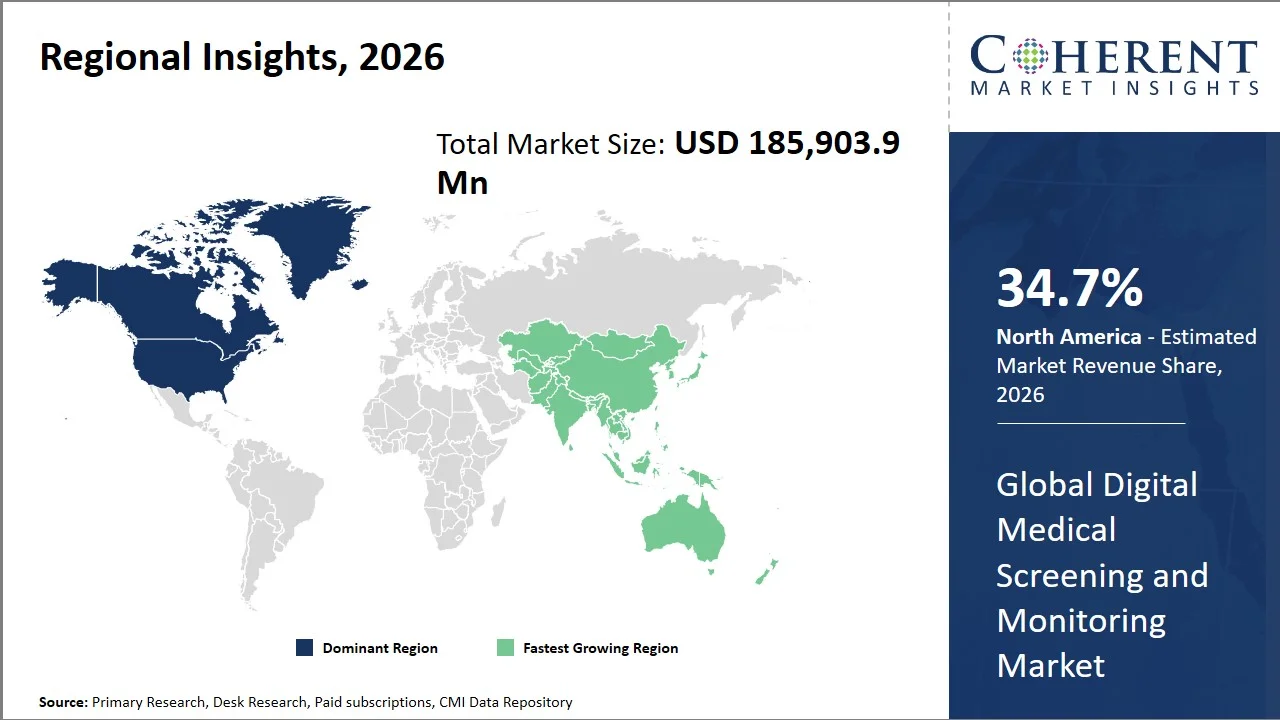
Why is North America a Strong Market for Digital Medical Screening and Monitoring?
North America leads the global digital medical screening and monitoring market, accounting for an estimated 34.7% share in 2026, due to a well-established healthcare infrastructure, increasing adoption of digital health technologies, and increasing integration of digital AI-enabled screening and digital remote patient monitoring devices. Furthermore, favorable reimbursement policies for remote patient monitoring devices and efficient regulatory framework allow adoption of innovative digital health technologies.
For instance, in January 2025, the U.S. Food and Drug Administration (FDA) issued draft guidance, Artificial Intelligence-Enabled Device Software Functions: Lifecycle Management and Marketing Submission Recommendations, on an aspect of regulatory strategy, which will offer further regulatory clarity for those developing, validating, marketing and gaining approval for AI-enabled devices, such as for digital screening and patient monitoring. Moreover, the U.S. FDA's digital health road map and guidance for digital AI-enabled medical devices is fostering early commercialization and clinical application of the advanced digital monitoring and screening devices.
Why Does the Asia Pacific Digital Medical Screening and Monitoring Market Exhibit High Growth?
The Asia Pacific digital medical screening and monitoring market is expected to exhibit the fastest growth with an estimated contribution of 21.9% share to the global market in 2026, due to digitalization within healthcare sectors, expanding healthcare infrastructure and increasing integration of AI-based medical diagnostics and telemedicine services. The government policies for development of digital healthcare ecosystem, interoperable health information exchange systems and smart healthcare delivery have stimulated deployment of connected medical screening and remote patient monitoring system at a faster pace.
For instance, by integrating interoperable health records, a unique digital health ID (ABHA) and allowing seamless data sharing among all healthcare providers. India's Ayushman Bharat Digital Mission (ABDM) will fortify the nation's digital health ecosystem, laying a firm ground for widespread deployment of digital screening and remote monitoring technologies. (Source: National Health Authority) Also, escalating healthcare spending, widespread usage of internet and increased demand for effective and affordable preventive care has favorable demand for the market in the region.
Global Digital Medical Screening and Monitoring Market Outlook for Key Countries
Why is the U.S. Leading Innovation and Adoption in the Digital Medical Screening and Monitoring Market?
The U.S. holds the largest market share for innovation and adoption in digital medical screening and monitoring market due to its advanced digital health infrastructure, rapid adoption of AI-integrated diagnostic devices, and seamless integration of connected medical devices into electronic health records (EHRs). The continuous deployment of remote patient monitoring by hospitals and home healthcare, as well as its mature digital health market, is a critical driver of innovation and commercialization of future generation screening and monitoring products.
Is the U.K. a Favorable Market for Digital Medical Screening and Monitoring Market?
The U.K. remains an attractive market with the swift uptake of digital health across the National Health Service (NHS) including the acceleration of remote patient monitoring, virtual ward setup, and AI driven diagnosis. The country's commitment to preventive healthcare, a community-based approach to health delivery, and a national interoperable digital health infrastructure are fueling the uptake of advanced medical screening and remote monitoring tools.
Is China Emerging as a Key Growth Hub for the Digital Medical Screening and Monitoring Market?
China digital medical screening and monitoring market is set to observe a rapid expansion driven by rapid growth of AI-driven healthcare, increase in implementation of smart hospitals and adoption of connected devices. China’s high-degree of emphasis on digital health, telehealth and smart diagnosis technologies further facilitate the adoption of digital medical screening and constant remote monitoring within both urban and community settings.
Why Does Germany Top the European Digital Medical Screening and Monitoring Market?
Germany leads the European digital medical screening and monitoring market owing to the well-established healthcare infrastructure, significant proliferation of digital diagnostic tools, and solid integration of interconnected medical devices into hospitals and outpatient settings. The country’s high focus on AI driven clinical workflows, electronic health records (EHRs), and digital therapeutics would speed up the adoption of new screening and continuous patient monitoring solutions in the healthcare landscape.
Is the Digital Medical Screening and Monitoring Market Developing in Japan?
The digital medical screening and monitoring market in Japan is gradually expanding because of the continued increase in use of AI medical diagnostic systems, connected medical devices, and remote patient monitoring technologies. Smart health, digital medical service transformation and the incorporation of digital technology into elderly and chronic condition management also fuels market expansion.
Evolution of Digital Medical Screening and Monitoring Technologies
Market Dimension | Historical Landscape | Current Landscape | Future Outlook |
Healthcare Delivery Model | Hospital-centric screening | Hybrid hospital & remote monitoring | Predictive, continuous, decentralized care |
Screening Technology | Conventional diagnostic devices | AI-enabled digital screening & connected diagnostics | Autonomous AI-driven multimodal screening |
Patient Monitoring | Periodic clinical visits | Wearables & Remote Patient Monitoring (RPM) | Continuous ambient monitoring with digital twins |
Data Management | Standalone medical records | Cloud-integrated EHRs & interoperable platforms | Federated health data ecosystems with real-time analytics |
Clinical Decision Support | Physician-led interpretation | AI-assisted clinical decision support | Predictive and personalized treatment recommendations |
How is the expansion of home healthcare and remote patient monitoring programs creating new growth opportunities in the global digital medical screening and monitoring market?
The increased preference towards home-based healthcare is significantly contributing towards developing digital medical screening and monitoring solutions as this helps in the constant monitoring of a patient outside the clinical environment. The ongoing development of smart, connected medical devices, wearables and cloud-enabled monitoring solutions will facilitate early intervention, the reduction of hospital re-admission rates and more effective chronic care management. For instance, U.K’s National Health Service (NHS) is rolling out its Virtual Wards program, empowering approved patients to be treated at home with the equivalent quality of acute hospital care utilizing mobile monitoring, remote devices, and remotely guided care to digitally screen patients for chronic illness, as well as manage post-acute and long-term illness through their digital monitoring devices.
Market Players, Key Development, and Competitive Landscape
Key Developments
- In October 2025, Samsung Electronics completed the acquisition of digital health platform Xealth, expanding its connected care capabilities and strengthening integration between wearable devices, healthcare providers, and digital health applications. The acquisition enhances Samsung's ability to support remote patient monitoring, personalized health insights, and seamless digital healthcare delivery across clinical and home settings.
- In May 2025, Aptar Digital Health entered into a licensing agreement with AstraZeneca to develop and commercialize AI-powered screening algorithms for the early detection of chronic kidney disease (CKD) and other cardiovascular, renal, and metabolic conditions. The solution leverages AI analysis of retinal fundus images to enable non-invasive, earlier disease screening and improve patient outcomes through digital diagnostics.
- In October 2024, DeepHealth acquired Kheiron Medical Technologies to strengthen its AI-powered cancer diagnostics and breast cancer screening portfolio. The acquisition integrates Kheiron's AI-based mammography screening solutions into DeepHealth's diagnostic imaging ecosystem, enhancing early cancer detection capabilities and supporting more efficient clinical screening workflows.
Competitive Landscape
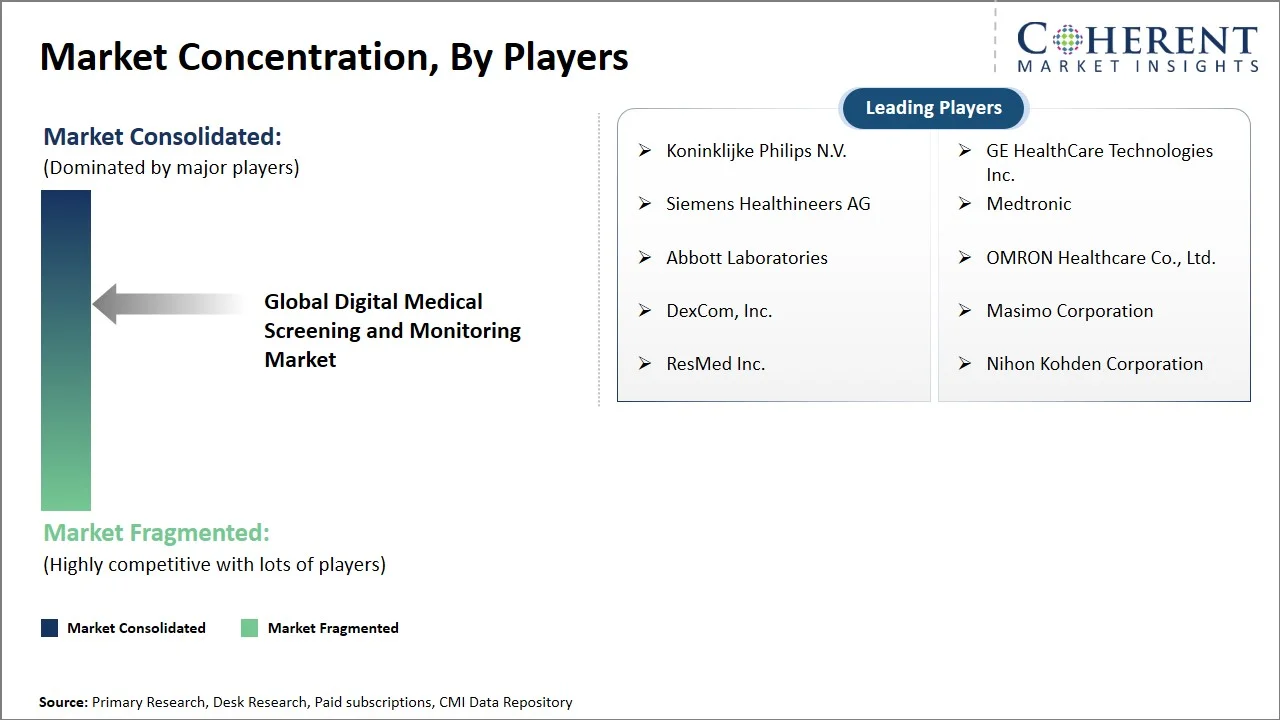
The global digital medical screening and monitoring market is moderately fragmented, with competition centered on technological innovation, AI-enabled diagnostics, connected medical devices, and integrated digital health platforms. Companies are strengthening their market position through strategic acquisitions, partnerships with healthcare providers, regulatory approvals, and expansion of remote patient monitoring (RPM) and cloud-based healthcare ecosystems. The increasing emphasis on interoperability, predictive analytics, and personalized digital care continues to shape competitive differentiation. Key focus areas include:
- AI-enabled diagnostic and clinical decision support solution development
- Expansion of remote patient monitoring (RPM) and connected care platforms
- Strategic partnerships, acquisitions, and digital health ecosystem integration
- Regulatory approvals and commercialization of digital screening technologies
- Development of interoperable cloud-based healthcare and data management platforms
Market Report Scope
Digital Medical Screening and Monitoring Market Report Coverage
| Report Coverage | Details | ||
|---|---|---|---|
| Base Year: | 2025 | Market Size in 2026: | USD 185,903.9 Mn |
| Historical Data for: | 2020 To 2024 | Forecast Period: | 2026 To 2033 |
| Forecast Period 2026 to 2033 CAGR: | 14.7% | 2033 Value Projection: | USD 484,747.0 Mn |
| Geographies covered: |
| ||
| Segments covered: |
| ||
| Companies covered: | Koninklijke Philips N.V., GE HealthCare Technologies Inc., Siemens Healthineers AG, Medtronic, Abbott Laboratories, OMRON Healthcare Co., Ltd., DexCom, Inc., Masimo Corporation, ResMed Inc., and Nihon Kohden Corporation | ||
| Growth Drivers: |
| ||
| Restraints & Challenges: |
| ||
Analyst Opinion (Expert Opinion)
- In the coming years, the global digital medical screening and monitoring market will be driven by the transition from episodic diagnostics to continuous, AI-enabled, and preventive healthcare. As healthcare systems increasingly prioritize early disease detection and decentralized care, digital screening technologies integrated with remote patient monitoring, predictive analytics, and interoperable health platforms are expected to become an integral part of routine clinical workflows.
- The maximum opportunities are foreseen within AI-powered chronic disease screening and remote patient monitoring (RPM), particularly across the U.S., where supportive reimbursement policies, high chronic disease prevalence, and rapid digital health adoption continue to accelerate market expansion. Emerging opportunities are also anticipated in China and India, driven by government-led healthcare digitalization initiatives and expanding access to community-based digital screening programs.
- In order to gain a competitive advantage market players should prioritize the development of interoperable AI-enabled platforms that seamlessly integrate wearable devices, electronic health records (EHRs), and telehealth services. Strategic collaborations with healthcare providers, investment in clinically validated AI algorithms, and compliance with evolving global digital health regulations and cybersecurity standards will be critical to achieving long-term market differentiation and sustainable growth.
Speak to the analyst
Want personalized insights?
Take the findings above to one of our principal consultants, or have the report rebuilt around the segments, geographies and competitors you actually track.
Market Segmentation
- Offering Insights (Revenue, USD Mn, 2021 - 2033)
- Product
- Service/Platform
- Test Type Insights (Revenue, USD Mn, 2021 - 2033)
- Single Test
- Multi-test
- Sample Type Insights (Revenue, USD Mn, 2021 - 2033)
- Blood
- Urine
- Saliva
- Others
- Application Insights (Revenue, USD Mn, 2021 - 2033)
- Oncology
- Cardiovascular
- Respiratory
- Infectious Disease
- Central Nervous System (CNS)
- Metabolic
- Others
- End User Insights (Revenue, USD Mn, 2021 - 2033)
- Diagnostic Laboratories
- Point of Care (POC)
- Hospitals and Clinic
- Ambulatory Surgical Centers
- Others
- Regional Insights (Revenue, USD Mn, 2021 - 2033)
- North America
- U.S.
- Canada
- Latin America
- Brazil
- Argentina
- Mexico
- Rest of Latin America
- Europe
- Germany
- U.K.
- Spain
- France
- Italy
- Russia
- Rest of Europe
- Asia Pacific
- China
- India
- Japan
- Australia
- South Korea
- ASEAN
- Rest of Asia Pacific
- Middle East
- GCC Countries
- Israel
- Rest of Middle East
- Africa
- South Africa
- North Africa
- Central Africa
- North America
- Key Players Insights
- Koninklijke Philips N.V.
- GE HealthCare Technologies Inc.
- Siemens Healthineers AG
- Medtronic
- Abbott Laboratories
- OMRON Healthcare Co., Ltd.
- DexCom, Inc.
- Masimo Corporation
- ResMed Inc.
- Nihon Kohden Corporation
Sources
Primary Research Interviews
- Executives from Digital Medical Screening and Monitoring API manufacturers and finished dosage
- Executives from digital health technology companies, remote patient monitoring (RPM) solution providers, and medical device manufacturers
- Directors of Digital Health, Clinical Informatics, Regulatory Affairs, and Product Development
- Hospital CIOs, CMIOs, and Chief Medical Officers (CMOs)
- Clinical laboratory directors and diagnostic imaging specialists
- Telehealth providers and remote patient monitoring program managers
- Healthcare IT system integrators and cloud healthcare platform providers
- AI and machine learning experts specializing in digital diagnostics
- Procurement managers from hospitals, diagnostic centers, and integrated healthcare networks
Stakeholders
- Digital medical screening and monitoring solution providers
- Medical device and wearable technology manufacturers
- AI-enabled diagnostic software developers
- Telehealth and remote patient monitoring platform providers
- Hospitals and integrated healthcare delivery networks (IDNs)
- Diagnostic laboratories and imaging centers
- Home healthcare service providers
- Health insurance companies and payer organizations
- Government health agencies and digital health authorities
- End-use Sectors
- Hospitals
- Diagnostic Centers
- Ambulatory Surgical Centers (ASCs)
- Home Healthcare Settings
- Primary Care Clinics
- Specialty Clinics
- Long-term Care Facilities
- Regulatory & Health Bodies
- U.S. Food and Drug Administration (FDA)
- Centers for Medicare & Medicaid Services (CMS)
- European Medicines Agency (EMA)
- European Commission – DG SANTE
- Medicines and Healthcare products Regulatory Agency (MHRA), UK
- Health Canada
- Therapeutic Goods Administration (TGA), Australia
- Central Drugs Standard Control Organization (CDSCO), India
- World Health Organization (WHO)
- International Medical Device Regulators Forum (IMDRF)
Databases
- FDA Medical Devices Database
- FDA 510(k) Premarket Notification Database
- FDA De Novo Database
- EUDAMED (European Database on Medical Devices)
- WHO Global Health Observatory (GHO)
- OECD Health Statistics
- World Bank Open Data
- CMS Data Portal
Magazines
- Healthcare IT News
- MedTech Dive
- Medical Device Network
- HealthTech Magazine
- Digital Health
- Healthcare Innovation
Journals
- npj Digital Medicine
- The Lancet Digital Health
- Journal of Medical Internet Research (JMIR)
- Nature Digital Medicine
- IEEE Journal of Biomedical and Health Informatics
- Digital Health (SAGE)
Associations
- Healthcare Information and Management Systems Society (HIMSS)
- Digital Medicine Society (DiMe)
- American Medical Informatics Association (AMIA)
- Medical Device Innovation Consortium (MDIC)
- Continua Health Alliance (Personal Connected Health Alliance)
- International Society for Telemedicine and eHealth (ISfTeH)
Public Domain Sources
- U.S. Food and Drug Administration (FDA) – Digital Health Center of Excellence
- World Health Organization (WHO) – Digital Health Reports
- Centers for Medicare & Medicaid Services (CMS) – Telehealth Data
- European Medicines Agency (EMA) – Digital Health Publications
Proprietary Elements
- CMI Data Analytics Tool, Proprietary CMI Existing Repository of information for last 10 years.
Get access to 250+ pages report
Every segment, forecast, competitor profile and data table behind the analysis above — available for instant download.
- ESOMAR Member
- ISO 9001:2015 Certified
- D-U-N-S Registered
- GDPR & CCPA Compliant
Missing comfort of reading report in your local language? Find your preferred language:
Transform your Strategy with Exclusive Trending Reports
Frequently Asked Questions
The global digital medical screening and monitoring market is estimated to be valued at USD 185,903.9 Mn in 2026 and is expected to reach USD 484,747.0 Mn by 2033.
Single-test dominates due to its rapid turnaround time, lower cost, ease of implementation, and widespread adoption in routine health screening and point-of-care diagnostics, enabling efficient early disease detection and continuous patient monitoring.
Digital medical screening and monitoring refers to the use of connected digital technologies, AI-enabled software, wearable devices, and remote monitoring systems to detect, assess, and continuously track an individual's health status for early diagnosis and disease management.
The CAGR of the global digital medical screening and monitoring market is projected to be 14.7% from 2026 to 2033.
The market is expected to witness robust growth, driven by the increasing adoption of AI-powered diagnostics, remote patient monitoring, wearable health technologies, and interoperable digital healthcare platforms that support preventive and personalized care.
Connected medical devices, wearable sensors, AI-powered analytics, and cloud-based health platforms collectively form the foundation of digital medical screening and monitoring systems.
Artificial intelligence (AI), IoT-enabled medical devices, cloud computing, and wearable biosensors are the primary technologies driving innovation in digital medical screening and monitoring.