

Huber Needles Market Size and Share Analysis - Growth Trends and Forecasts (2026 - 2033)
The Huber Needles market is anticipated to grow at a CAGR of 6.1% with USD 50.72 Mn in 2026 and is expected to reach USD 76.7 Mn in 2033. The market is growing as more people have long-term illnesses that need IV treatments, more hospitals and clinics are opening, and doctors are using easier, less invasive ways (minimally invasive procedures 64 Mn) to give medicine. Better needle designs, stronger safety rules, and more healthcare in developing countries are also helping the market grow.
Key Takeaways
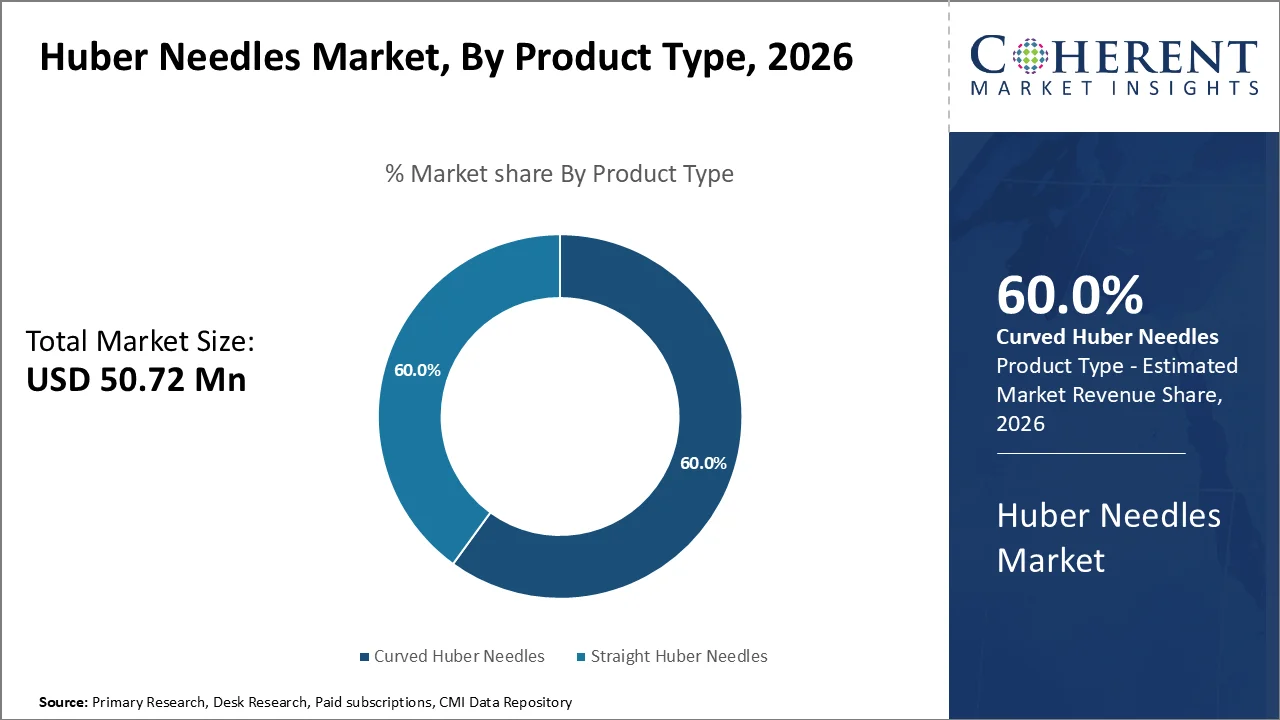
- Curved Huber Needles is expected to account the largest share of 60% in 2026, curved needles are more commonly used in ports and catheters because they reduce the risk of damage to the device and are easier for long-term infusion therapies. With home infusion therapy in the U.S. alone serving approximately 1–2 Mn patients annually, demand for curved Huber needles is projected to increase substantially.
- Based on application, dialysis will dominate with 55% in 2026, Huber needles are essential in dialysis because they reduce damage to ports and make repeated access safer. In 2025, an estimated 3.3 Mn patients worldwide were on dialysis for end-stage kidney disease, with approximately 583 Mn dialysis sessions performed, highlighting the significant scale of this therapy.
- Based on end user, hospitals will dominate with 45% in 2026, hospitals perform the majority of hemodialysis, chemotherapy, and other procedures requiring Huber needles. Notably, 70–80% of hemodialysis sessions are conducted in hospital or clinic settings, while the remainder occurs in home hemodialysis or peritoneal dialysis.
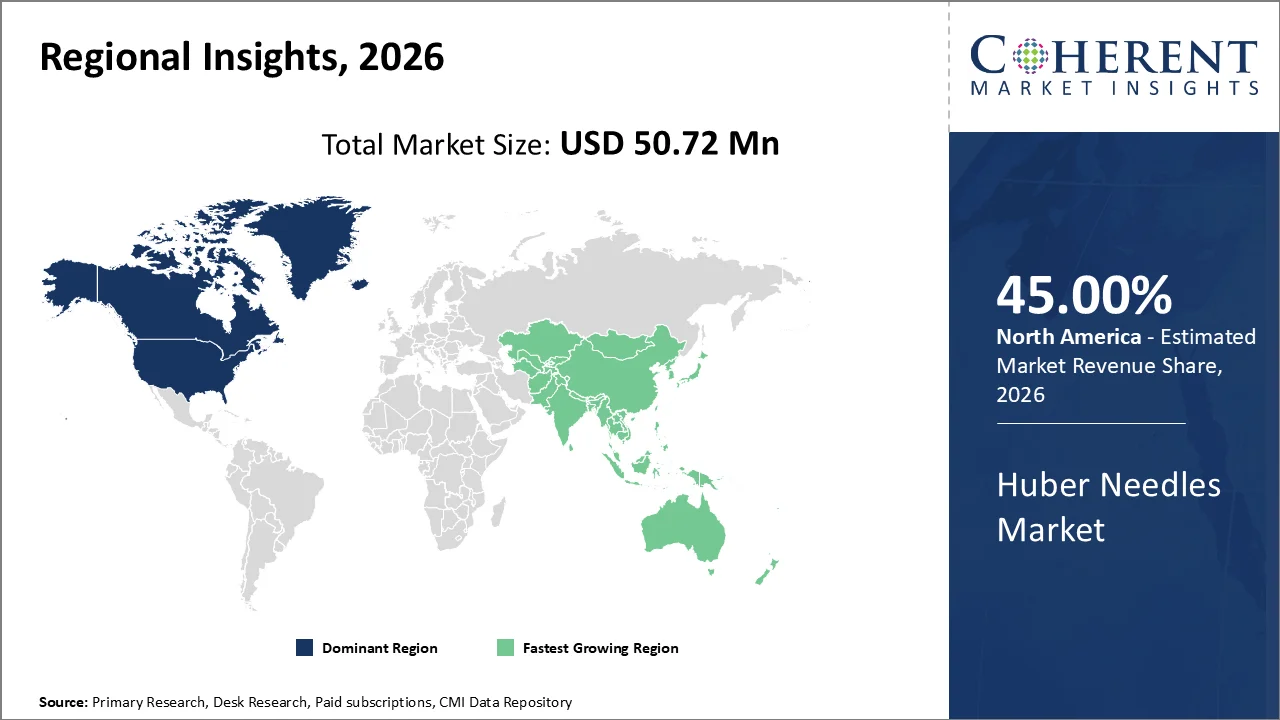
- North America is expected to acquire the dominant share of 45% in 2026, owing to high prevalence of chronic diseases requiring IV therapy. Many adults have one or more long-term illnesses. In 2024, 77.5% of U.S. adults had at least one of 12 major chronic conditions.
Segmental Insights
Why is Curved Huber Needles Acquiring the Largest Market Share?
Curved Huber Needles is projected to account for the largest share of product type in 2026, representing approximately 60% of the total volume. As they work well, are more comfortable for patients, and are widely used in many medical treatments. The curved design of these needles shows a significant advancement in implantable port access technology, offering healthcare providers improved maneuverability and reduced tissue trauma during insertion procedures.
90″ curved Huber Needle Is made with Highest Quality imported from Japan. The tubing is made up of Pellethane Polyurethane material, ideal for chemotherapy application. This design advantage has been particularly recognized by major healthcare institutions as well as nursing organizations, with the Oncology Nursing Society highlighting the benefits of curved Huber needles in reducing insertion-related complications and improving patient outcomes in their clinical practice guidelines.
- Current Industry Events of 2026
- Market Size Estimation
- Regional Breakdown
- Competitive Landscape
- Customer Intelligence
- Segmental Analysis
- Pricing Analysis
- Key Market Drivers, Challenges & Future Trends
- Customized Insights Section
Dialysis Holds the Largest Market Share
Based on application, dialysis dominates the market, accounting for a significant 55% share in 2026, owing to the high prevalence of chronic kidney diseases (CKD) and end-stage renal disease (ESRD) globally. According to data from the World Health Organization (WHO) and the Global Kidney Health Atlas, hundreds of millions of people suffer from kidney-related ailments, with many getting regular dialysis treatments to manage their condition. According to the National Kidney Foundation, 10% of the population worldwide is affected by chronic kidney disease (CKD), and millions die each year because they do not have access to affordable treatment.
Dialysis centers heavily rely on Huber needles because they allow for safer, more efficient, and less painful access to implanted ports and catheters. These needles consist of beveled tips and a special design to prevent damage or coring of the port septum, which is critical in repeated use scenarios such as dialysis. The safety and reliability associated with Huber needles ensure optimum patient care and reduce complications like infections or port failure, which might result from standard needles.
Hospitals Holds the Largest Market Share
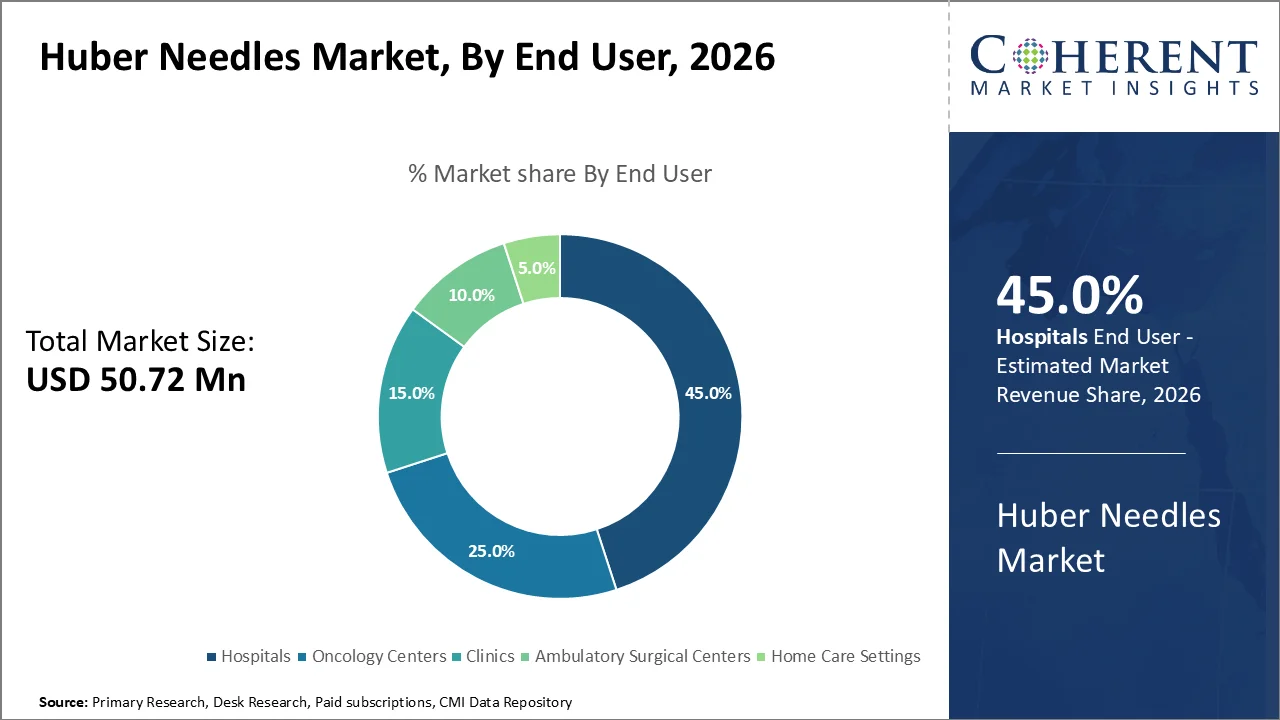
Based on end user, hospitals dominate the market, accounting for a significant 45% share in 2026, primarily due to their expansive role in delivering complex as well as high-volume healthcare services. These institutions typically handle a wide variety of medical conditions requiring frequent and precise vascular access, such as chemotherapy administration, blood sampling, parenteral nutrition, and long-term intravenous therapies.
Huber needles, which are specifically designed to prevent damage to implantable ports and reduce patient discomfort, are highly favored in hospital settings where patients often require repeated or continuous access to central venous catheters.
For instance, institutions like the Mayo Clinic, Cleveland Clinic, etc., utilize Huber needles extensively across multiple departments, from oncology wards to intensive care units, to maintain the safety along with efficiency of venous access.
Increasing prevalence of chronic diseases Driving Demand for Huber Needles
American adults with Chronic Conditions: Age-wise Percentage
Metric: American adults with chronic condition (in Per cent)
Age | Per cent |
35–64 | 75% have at least one condition |
18–34 | 60% have at least one condition |
65 and older | 90% have at least one chronic condition |
Advanced Coating Technologies is transforming the Huber Needles Industry
Modern Huber needles use advanced coatings to improve safety, comfort, and biocompatibility. Hydrophilic coatings reduce friction during insertion, antimicrobial coatings prevent bacterial growth, as well as silicone-based coatings minimize tissue damage (BD, B. Braun, Smiths Medical). Companies like BD with PowerLoc needles, B. Braun with Ultrasite needles, and Smiths Medical with Gripper needles have adopted these technologies, showing reductions in insertion force, bacterial adhesion, and improved patient comfort.
The impact includes 30–40% less patient discomfort, 25% fewer catheter-related bloodstream infections, extended indwelling time from 5–7 to 7–14 days, and a 35% surge in healthcare provider satisfaction (BD, B. Braun, Smiths Medical).
Safety Mechanism Technologies: A major breakthrough in Huber Needles
Safety-engineered Huber needles use both passive and active mechanisms to protect healthcare workers from needlestick injuries. Passive safety shields activate automatically when the needle is withdrawn, while active systems require manual activation. Retractable needles fully retract into the housing, and blunting technologies dull the needle tip after use.
Companies like ICU Medical with the CLAVE NeedleFree Connector, Teleflex with the Arrow HuberPLUS, and AngioDynamics with BioFlo PICC have adopted these technologies, leading to an 80% reduction in needlestick injuries in hospitals as well as cancer centers. Overall, these safety innovations have reduced needlestick injuries by 70–85%, saved about USD1.2 billion annually in related costs, improved compliance with safety protocols by 45%, and cut liability and workers’ compensation claims by 60%.
Current Events and Their Impact on the Huber Needles Market
Current Event | Description and its Impact |
FDA Updates Infusion Device Safety Guidelines (2025) |
|
Expansion of Reimbursement Policies for Home Care Infusions in Europe (2026) |
|
Huber Needles Market Trends
- Inclination toward safety-engineered needles: Growing adoption of passive as well as active safety mechanisms is a major trend, with safety-designed Huber needles lowering needlestick injuries by 70–85% in healthcare settings
- Expansion of home infusion & outpatient care: Around 40% of long-term infusion patients now use Huber needles in home-care settings, supported by growing parenteral nutrition and chronic disease management needs
- Strong infection-control focus: Increasing use of antimicrobial coatings and non-coring designs is reducing infection risks, with some systems reporting up to approximately 25% reduction in catheter-related infections
Regional Insights
North America dominates owing to region's healthcare infrastructure and research capabilities
North America account 45% market share in 2026, North America, particularly the United States and Canada, hosts a robust network of advanced hospitals, oncology centers, and infusion therapy clinics that extensively utilize Huber needles due to their specialized design for safe, repeated access to implantable ports and catheters.
Many cases of cancer and long-term chronic diseases have increased the need for Huber needles. For example, the National Cancer Institute (NCI) estimated nearly 1.9 million new cancer cases in the U.S. in recent years. This makes Huber needles important because they are safe, reduce infection risk, and make chemotherapy more comfortable for patients.
Asia Pacific Huber Needles Market Trends
The Asia-Pacific region is poised to be the fastest-growing region through 2026-2033, expanding at a CAGR of approximately 7.5%. The region presents a unique landscape marked by stark variations in healthcare infrastructure, which fuels demand for a broad spectrum of Huber needle products, from ultra-high precision needles for specialized oncology centers in Japan as well as South Korea to cost-effective, mass-produced variants tailored to meet basic medical needs across India, Indonesia, and Vietnam.
For example, India’s rapid expansion in outpatient chemotherapy centers and homecare services, supported by government programs such as Ayushman Bharat, will have a defined benefit cover of Rs. 5 lakh per family per year which necessitates widespread usage of Huber needles designed for long-term vascular access.
Furthermore, the Chinese government is spending a lot on improving healthcare through its ‘Healthy China 2030’ plan, focusing on better cancer care and increasing the need for advanced IV devices.
Advancement in Medical Research facilities is Accelerating the Huber Needles Market Demand in United States
Many top hospitals, cancer centers, and specialty clinics create a high demand for precise medical devices like Huber needles, which are used to access ports for chemotherapy and apheresis treatments.
For example, the U.S. National Cancer Institute reports that approximately 1.9 million new cancer cases were diagnosed in the country in the past year, resulting in a substantial requirement for reliable venous access devices to facilitate chemotherapy treatments.
This creates sustained demand for Huber needles, which are widely preferred for their non-coring design that minimizes port damage and patient discomfort.
Japan Huber Needles Market Trends
The highly advanced medical infrastructure as well as stringent quality standards governing medical device usage is working as the growth inducing factor for the growth of the market. The country’s robust healthcare system, backed by initiatives by government authorities that emphasize patient safety and precision in invasive medical procedures, has created substantial demand for superior quality Huber needles primarily used for accessing implantable ports.
Japan has one of the oldest populations in the world, which leads to many people having cancer and chronic diseases. These conditions often need chemotherapy or IV nutrition, where Huber needles are very important. For instance, according to Japan’s Ministry of Health, Labour and Welfare, cancer remains one of the leading causes of mortality, along with an estimated 1 million patients undergo chemotherapy annually, necessitating reliable and safe vascular access devices like Huber needles.
Who are the Major Companies in Huber Needles Industry
Some of the major key players in Baxter International Inc., B. Braun Medical Inc., Smiths Medical, NIPRO Medical Corporation, AngioDynamics, Inc., and C. R. Bard, Inc.
Key News
- In October 2025, West Pharmaceutical Services, Inc., a worldwide leader in injectable drug solutions, announced the launch of its West Synchrony Prefillable Syringe (PFS) System at CPHI Worldwide in Frankfurt, Germany. This new system is an important step in drug delivery, offering a fully tested platform from one supplier. It was made available for sale in January 2026.
Market Report Scope
Huber Needles Market Report Coverage
| Report Coverage | Details | ||
|---|---|---|---|
| Base Year: | 2025 | Market Size in 2026: | USD 50.72 Mn |
| Historical Data for: | 2020 To 2024 | Forecast Period: | 2026 To 2033 |
| Forecast Period 2026 to 2033 CAGR: | 6.1% | 2033 Value Projection: | USD 76.7 Mn |
| Geographies covered: |
| ||
| Segments covered: |
| ||
| Companies covered: | Baxter International Inc., B. Braun Medical Inc., Smiths Medical, NIPRO Medical Corporation, AngioDynamics, Inc., and C. R. Bard, Inc. | ||
| Growth Drivers: |
| ||
| Restraints & Challenges: |
| ||
Analyst Opinion
- The market growth is driven by clinical necessity in oncology and chronic care. In 2025, over 20 million new cancer cases globally required repeated infusion therapies, showing the essential role of Huber needles in long-term IV treatment.
- Safety-engineered needles are becoming the standard. For example, hospitals using passive or retractable Huber systems reported a 70–85% reduction in needlestick injuries in 2025, highlighting regulatory and procedural adoption pressures in North America and Europe.
- Curved Huber needles dominate the market, capturing around 56–57% share, due to reduced port damage and better ergonomics, especially in chemotherapy and dialysis protocols across key APAC and European markets.
- Home and outpatient infusion is expanding rapidly, with nearly 40% of long-term infusion patients using Huber needles outside hospitals in 2025, driving higher per-patient device utilization and encouraging manufacturers to innovate for patient-friendly designs.
Speak to the analyst
Want personalized insights?
Take the findings above to one of our principal consultants, or have the report rebuilt around the segments, geographies and competitors you actually track.
Market Segmentation
- By Product Type
- Curved Huber Needles
- Straight Huber Needles
- By Application
- Dialysis
- Blood Transfusions
- IV Cancer Application
- Lap-band Adjustments
- Home Parenteral Nutrition
- Others
- By End User
- Hospitals
- Oncology Centers
- Clinics
- Ambulatory Surgical Centers
- Home Care Settings
- By Region
- North America
- U.S.
- Canada
- Latin America
- Brazil
- Mexico
- Argentina
- Rest of Latin America
- Europe
- Germany
- U.K.
- France
- Italy
- Spain
- Russia
- Rest of Europe
- Asia Pacific
- China
- India
- Japan
- Australia
- South Korea
- ASEAN
- Rest of Asia Pacific
- Middle East
- GCC
- Israel
- Rest of Middle East
- Africa
- South Africa
- Central Africa
- North Africa
- North America
Sources
Primary Research Interviews
- Huber Needles Manufacturers
- Healthcare Professionals & Practitioners
- Medical Device Distributors
- Hospital Procurement Managers
- Others
Databases
- Euromonitor International
- Others
Magazines
- Medical Device News Magazine
- Healthcare Purchasing News
- MD+DI (Medical Device and Diagnostic Industry)
- Others
Journals
- Journal of Medical Devices
- International Journal of Medical Sciences
- Journal of Biomedical Materials Research
- Others
Newspapers
- The Wall Street Journal (Health Section)
- The New York Times (Health Section)
- Financial Times (Healthcare Section)
- Others
Associations
- Association for the Advancement of Medical Instrumentation (AAMI)
- Medical Device Manufacturers Association (MDMA)
- International Society of Blood Transfusion (ISBT)
- Others
Public Domain Sources
- World Health Organization (WHO)
- Centers for Disease Control and Prevention (CDC)
- U.S. Food and Drug Administration (FDA)
- Others
Proprietary Elements
- CMI Data Analytics Tool
- Proprietary CMI Existing Repository of information for last 10 years
Get access to 250+ pages report
Every segment, forecast, competitor profile and data table behind the analysis above — available for instant download.
- ESOMAR Member
- ISO 9001:2015 Certified
- D-U-N-S Registered
- GDPR & CCPA Compliant
Missing comfort of reading report in your local language? Find your preferred language:
Transform your Strategy with Exclusive Trending Reports
Frequently Asked Questions
The Huber Needles market is expected to reach USD 76.7 Mn in 2033.
Major players operating in the global Huber Needles market include Baxter International Inc., B. Braun Medical Inc., Smiths Medical, NIPRO Medical Corporation, AngioDynamics, Inc., and C. R. Bard, Inc.
Risk of infection associated with Huber needles is one of the major factors that is expected to hamper growth of the market over the forecast period.
Increasing prevalence of cancer is one of the major factors that is expected to propel growth of the market over the forecast period.
The Huber Needles market is anticipated to grow at a CAGR of 6.1% between 2026 and 2033.
Among regions, North America is expected to account for a largest market share in the global Huber Needles market over the forecast period.
Huber needles have a unique beveled design and puncture pattern that reduces damage to blood vessels and surrounding tissues.