

Middle East and Saudi Arabia Advanced Wound Care Market Size and Forecast – 2026 To 2033
The Middle East and Saudi Arabia advanced wound care market is expected to grow from USD 239.5 Mn in 2026 to USD 381.7 Mn by 2033, registering a compound annual growth rate (CAGR) of 6.9% from 2026 to 2033. The market for advanced wound care in the Middle East and Saudi Arabia is poised for significant expansion, fueled by the rising prevalence of diabetes and chronic wounds across the region.
According to the International Diabetes Federation (IDF), 23.1% of Saudi Arabia's adult population (approximately 5.34 million people) were living with diabetes in 2024, creating a substantial patient pool requiring advanced wound management, particularly for diabetic foot ulcers.
Key Takeaways of the Middle East and Saudi Arabia Advanced Wound Care Market
- Chronic wounds are projected to hold 75.3 % of the Middle East and Saudi Arabia advanced wound care market share in 2026, making it the dominant wound type segment, due to the high burden of diabetes and diabetic foot ulcers across the region. For instance, the Saudi Ministry of Health's National Diabetes Prevention and Control Program promotes early diabetic foot screening and multidisciplinary wound management to reduce diabetes-related amputations, driving the demand for advanced wound care products.
- Moist wound dressings are projected to hold 44.3 % of the Middle East and Saudi Arabia advanced wound care market share in 2026, making it the dominant product type segment, owing to their effectiveness in maintaining a moist healing environment for chronic and post-operative wounds. For instance, the International Working Group on the Diabetic Foot (IWGDF) Guidelines widely adopted by healthcare providers across the Middle East recommend moisture-balancing dressings as part of standard diabetic foot ulcer management, supporting their widespread clinical use.
- Hospitals are projected to hold 47.1 % of the Middle East and Saudi Arabia advanced wound care market share in 2026, making it the dominant end user segment, due to the concentration of specialized wound care services and complex surgical procedures. For instance, under Saudi Vision 2030, the Ministry of Health continues to expand specialized healthcare services and hospital capacity through the Health Sector Transformation Program, strengthening the adoption of advanced wound care technologies in tertiary care hospitals.
- Expansion of Diabetic Limb Salvage and Multidisciplinary Foot Care Programs: The growing establishment of dedicated diabetic foot clinics and limb salvage programs across Saudi Arabia and GCC countries is accelerating the adoption of advanced wound care products. These centers rely on advanced dressings, negative pressure wound therapy (NPWT), and bioactive wound therapies to reduce infection rates, promote healing, and prevent lower-limb amputations, creating sustained demand for specialized wound management solutions.
- Growing Adoption of AI-Enabled Digital Wound Assessment and Remote Monitoring: The rapid digitalization of healthcare under Saudi Vision 2030 presents significant opportunities for AI-based wound imaging, remote wound monitoring, and telemedicine-supported wound management. Integration of digital wound assessment tools with electronic health records enables clinicians to monitor healing progression more accurately, optimize treatment decisions, and extend advanced wound care services to patients in remote and underserved areas, supporting future market growth.
Segmental Insights
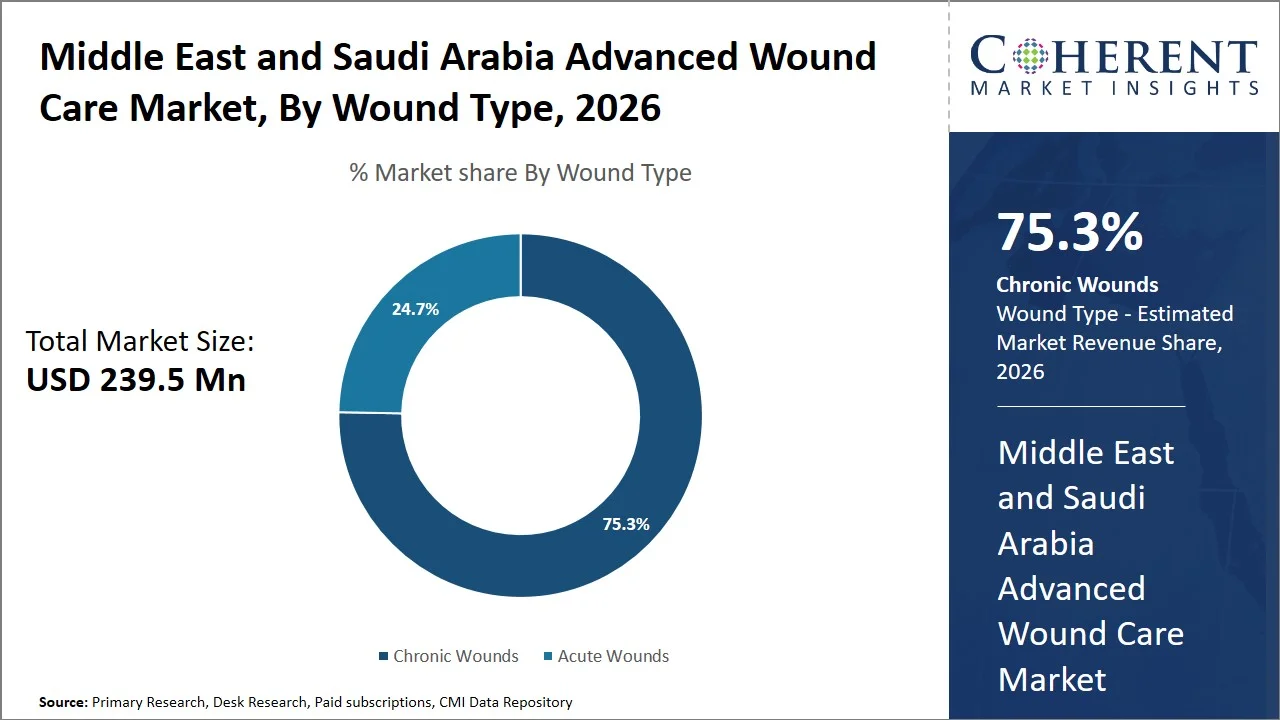
Why Do Chronic Wounds Dominate the Middle East and Saudi Arabia Advanced Wound Care Market?
Chronic wounds are projected to hold a market share of 75.3% in 2026, attributed to the rising prevalence of diabetic foot ulcers, pressure ulcers and venous leg ulcers which require long-term treatment and advanced care. Chronic wounds necessitate the higher utilization of advanced dressing, negative pressure wound therapy (NPWT) and regenerative wound care solutions to accelerate wound healing and avoid amputations. For instance, in October 2025, the Saudi Ministry of Health unveiled the world’s first Diabetes Command and Control Centre, a digital hub that monitors diabetic patients in real-time to proactively manage complications, including diabetic foot ulcers that would fuel the demand for wound management solutions.
- Current Industry Events of 2026
- Market Size Estimation
- Regional Breakdown
- Competitive Landscape
- Customer Intelligence
- Segmental Analysis
- Pricing Analysis
- Key Market Drivers, Challenges & Future Trends
- Customized Insights Section
Why Do Moist Wound Dressings Represent the Largest Product Type Segment in the Middle East and Saudi Arabia Advanced Wound Care Market?
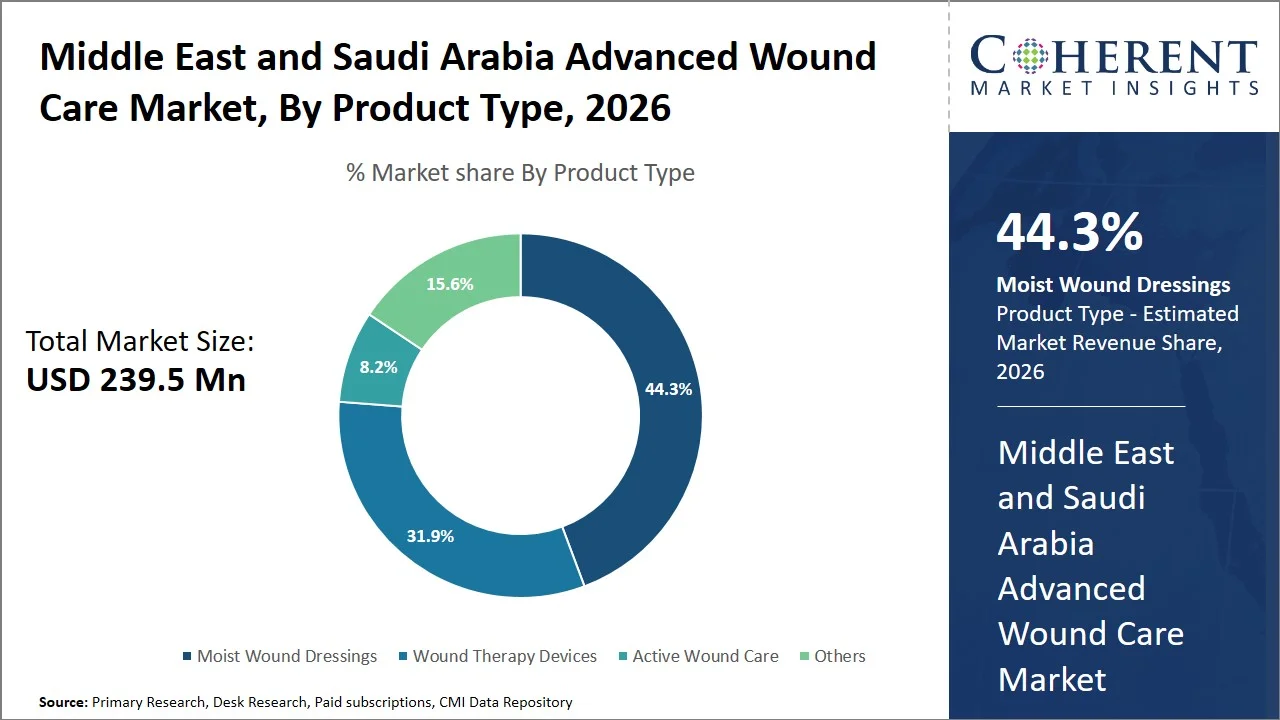
Moist wound dressings are projected to hold a market share of 44.3% in 2026, due to their ability to create a wound healing conducive environment, absorb excessive exudates efficiently, protect against infections, and speed up tissue regeneration in both acute and chronic wounds. Moreover, its usage in hydrocolloids, hydrogels, alginates, foams and its high patient tolerance and low wound dressing change related trauma make it the favored solution among medical facilities and specialized wound care facilities. For instance, in November 2025, the region’s first consensus recommendations on advanced wound management were published by a panel of 15 wound care experts from the Middle East. Advanced wound care recommendations highlight the use of advanced wound dressings, including foam and hydrocolloid dressings, in clinical scenarios for preparation of the wound bed and exudate control.
Hospitals Segment Dominates the Middle East and Saudi Arabia Advanced Wound Care Market
The hospitals segment is projected to hold a market share of 47.1% in 2026, owing to the availability of multidisciplinary care teams, specialized wound care units, and advanced treatment infrastructure. Hospitals are well-equipped to manage complex acute and chronic wounds as well as post-surgical cases using advanced wound care technologies, including negative pressure wound therapy (NPWT), bioengineered dressings, and other specialized therapies. The rising incidence of diabetic foot ulcers, traumatic injuries, and surgical procedures is driving the demand for advanced wound care products. For instance, in April 2025, the Health Holding Company (HHC) in Saudi Arabia increased the roll out of the Center of Excellence model across hospitals to unify specialist clinical services, enhance multi-disciplinary treatment pathways, and optimize patient outcomes in areas of complexity such as the management of chronic wounds.
Current Events and their Impact
Current Events | Description and its Impact |
Saudi Arabia expanded diabetic foot care services under the Health Sector Transformation Program (January 2025) |
|
GCC countries strengthened adoption of International Working Group on the Diabetic Foot (IWGDF) Guidelines (March 2025) |
|
Middle East and Saudi Arabia Advanced Wound Care Market Dynamics
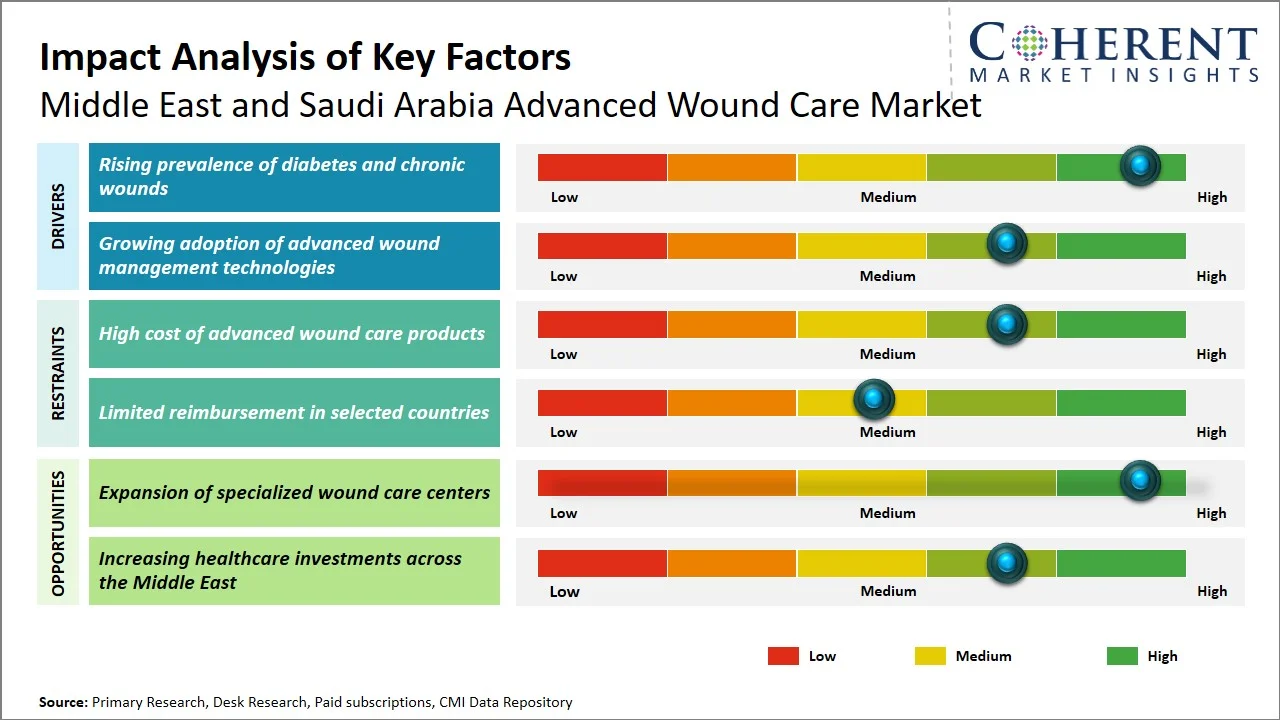
Market Drivers
- Rising prevalence of diabetes and chronic wounds: The increasing incidence of diabetic foot ulcers and other chronic wounds is accelerating the adoption of advanced wound care products across Saudi Arabia and the Middle East. Healthcare providers are increasingly utilizing advanced dressings, negative pressure wound therapy (NPWT), and bioactive wound care solutions to improve healing outcomes and reduce amputation rates. For instance, the Saudi Ministry of Health's National Diabetes Prevention and Control Program promotes standardized diabetic foot screening, early intervention, and multidisciplinary wound management across healthcare facilities, reinforcing the demand for advanced wound care technologies.
- Growing adoption of advanced wound management technologies: The increasing adoption of advanced wound management technologies is improving clinical outcomes for chronic, surgical, and traumatic wounds across the Middle East and Saudi Arabia. Healthcare providers are integrating negative pressure wound therapy (NPWT), antimicrobial dressings, and bioengineered skin substitutes to enhance healing efficiency, reduce infection rates, and shorten hospital stays. For instance, the Saudi Food and Drug Authority (SFDA) strengthen its medical device regulatory framework through enhanced registration and post-market surveillance, facilitating greater availability and adoption of innovative wound care technologies across the Kingdom.
Emerging Trends
- Increasing Adoption of Bioengineered Skin Substitutes and Regenerative Wound Therapies: Healthcare providers across Saudi Arabia and the Middle East are increasingly incorporating bioengineered skin substitutes, collagen-based matrices, and cellular therapies for the treatment of complex chronic wounds and burns. Growing clinical evidence supporting faster tissue regeneration and reduced healing time is driving the adoption of regenerative wound care solutions in tertiary hospitals.
- Rising Preference for Antimicrobial and Silver-Impregnated Advanced Dressings: Hospitals are increasingly shifting toward antimicrobial wound dressings containing silver, iodine, polyhexamethylene biguanide (PHMB), and other infection-control technologies to manage chronic and post-surgical wounds. This trend is fueled by the need to reduce surgical site infections, combat antimicrobial resistance, and improve wound healing outcomes while minimizing dressing changes.
Competitive Positioning of Key Countries in the Middle East and Saudi Arabia Advanced Wound Care Market Based on Healthcare Infrastructure and Technology Adoption
Country | Diabetes & Chronic Wound Burden | Advanced Wound Care Infrastructure | Adoption of Advanced Wound Technologies | Government Support | Competitive Position |
Saudi Arabia | Very High | Extensive | High (NPWT, bioengineered dressings, antimicrobial dressings) | Strong | Market Leader |
UAE
| High | Advanced | High | Strong | Innovation Hub |
Qatar | Moderate | Well-developed | Moderate-High | Strong | Emerging Market |
Israel | Moderate | Highly Advanced | Very High | Strong | Technology Leader |
Turkey | High | Expanding | Moderate | Moderate | Fast-growing Market |
How is the expansion of specialized wound care centers creating new growth opportunities in the Middle East and Saudi Arabia advanced wound care market?
The growing chronic wound prevalence and severe diabetic complications are strongly supporting the demand for specialty wound care clinics around the Middle East and Saudi Arabia. Specialized wound care centers offer a multidisciplinary care for chronic wounds facilitated by sophisticated dressing types and negative pressure wound therapies (NPWT), and regenerative wound therapies to facilitate optimal patient outcomes, and minimize hospitalization. For instance, in June 2026, the Abu Dhabi Department of Health announced the growth of its Centers of Excellence (CoE) program, to enhance and build upon already existing delivery of specialty and high-level care within the Emirate by utilizing advanced capabilities, clinical network pathways, and access to new forms of care delivery. Such initiatives are anticipated to encourage the use of specialized wound management services, as well as innovative technologies for wound care throughout the region.
Market Players, Company Insights, and Competitive Landscape
Company Insights
- Smith + Nephew
- Company Overview
- Headquarters: England, U.K.
- Establishment Year: 1856
- Employee Strength: Approximately 18,000
- Leadership: Deepak Nath, Chief Executive Officer (CEO)
- Core Services/Products: Advanced wound dressings (ALLEVYN, OPSITE, ACTICOAT), Negative Pressure Wound Therapy (PICO), bioactive wound management solutions, surgical products, orthopedics, and sports medicine technologies.
- SWOT Analysis
- Strengths
- Comprehensive advanced wound care portfolio comprising advanced dressings, negative pressure wound therapy (NPWT) systems, antimicrobial dressings, and bioactive wound therapies.
- Strong commercial presence across the Middle East through established distributor networks and extensive clinical education programs supporting product adoption.
- Weaknesses
- Premium pricing of advanced wound care products may limit penetration in cost-sensitive healthcare facilities.
- Dependence on hospital procurement and government tenders can prolong sales cycles in the Middle East.
- Opportunities
- Rising incidence of diabetic foot ulcers and chronic wounds across GCC countries creates sustained demand for advanced wound management solutions.
- Expansion of home healthcare and outpatient wound management increases opportunities for portable NPWT systems such as PICO.
- Threats
- Intense competition from Mölnlycke Health Care, ConvaTec, Solventum, Coloplast, and regional suppliers.
- Increasing pricing pressure from centralized government procurement and reimbursement constraints may impact profit margins.
- Strengths
- Company Overview
- Mölnlycke Health Care AB
- Company Overview
- Headquarters: Gothenburg, Sweden
- Establishment Year: 1849
- Employee Strength: Approximately 8,600
- Leadership: Ms. Zarina Lukash, Chief Executive Officer (CEO)
- Core Services/Products: Advanced wound dressings (Mepilex, Mepitel, Mepore), antimicrobial wound care solutions, Granudacyn wound cleansing products, surgical gloves, drapes, procedure trays, and pressure injury prevention solutions.
- SWOT Analysis
- Strengths
- Strong clinical reputation for silicone-based wound dressings and antimicrobial wound care products supported by extensive clinical evidence.
- Well-established distribution network in the Middle East, strengthened through strategic partnerships such as Tamer Healthcare in Saudi Arabia.
- Weaknesses
- Business portfolio is relatively concentrated in wound care and surgical solutions compared with more diversified medical technology companies.
- Premium product positioning may reduce competitiveness in healthcare systems with strict budget controls.
- Opportunities
- Growing investment in specialized wound care centers and diabetic foot clinics across Saudi Arabia and the UAE supports increased product adoption.
- Rising demand for pressure injury prevention products and infection-control solutions creates opportunities to expand hospital penetration.
- Threats
- Growing competition from multinational manufacturers and lower-cost wound dressing suppliers intensifies pricing pressure.
- Evolving medical device regulations and tender-based purchasing across GCC countries may delay product registrations and procurement decisions.
- Strengths
- Company Overview
Competitive Landscape
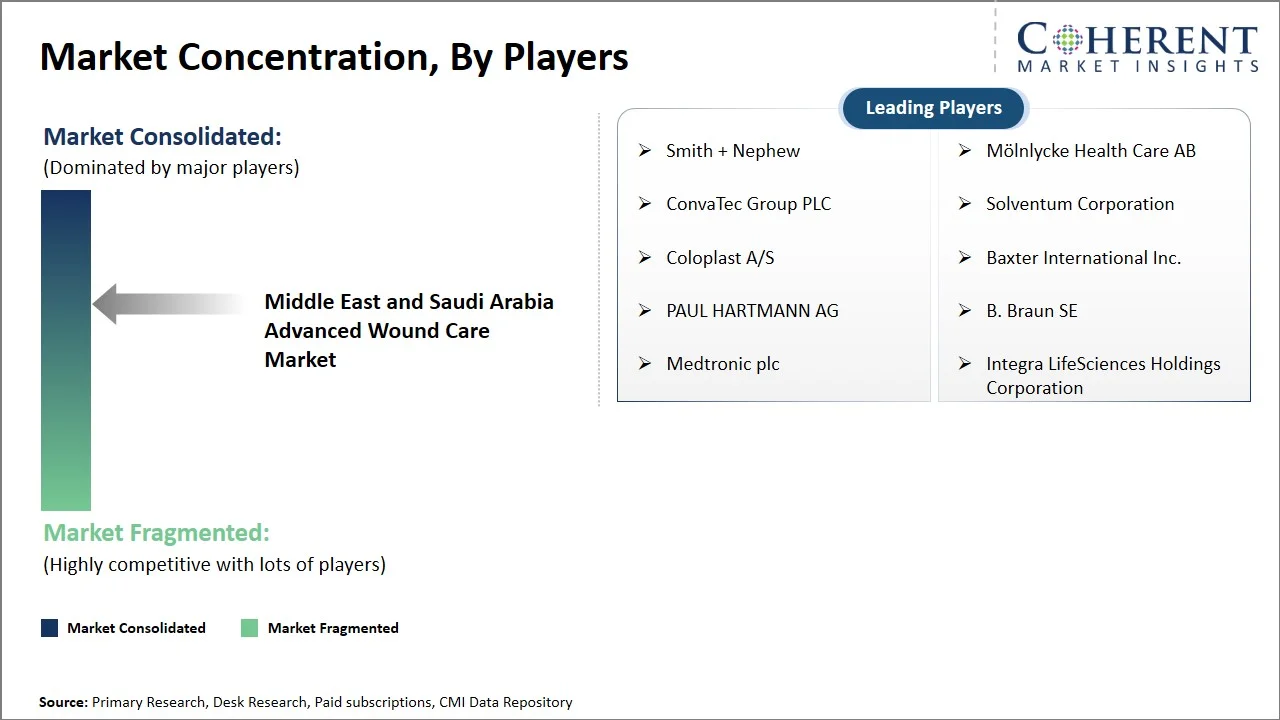
The Middle East and Saudi Arabia advanced wound care market is moderately consolidated, with competition driven by product innovation, clinical efficacy, strategic distribution partnerships, and regulatory compliance. Leading manufacturers are expanding their regional footprint through collaborations with healthcare providers, localized supply networks, and investments in clinician education to strengthen the adoption of advanced wound care technologies. Key focus areas include:
- Expansion of advanced wound dressing portfolios, including silicone foam, antimicrobial, hydrofiber, and superabsorbent dressings.
- Increased adoption of Negative Pressure Wound Therapy (NPWT), bioengineered skin substitutes, and regenerative wound care solutions for chronic and complex wounds.
- Strategic partnerships with hospitals, distributors, and healthcare organizations to strengthen regional market access and product availability.
- Investment in clinical training, diabetic foot care programs, and evidence-based wound management to improve treatment outcomes and technology adoption.
- Focus on regulatory approvals, local product registrations, and commercialization of innovative wound care technologies across Saudi Arabia and the broader Middle East.
Market Report Scope
Middle East and Saudi Arabia Advanced Wound Care Market Report Coverage
| Report Coverage | Details | ||
|---|---|---|---|
| Base Year: | 2025 | Market Size in 2026: | USD 239.5 Mn |
| Historical Data for: | 2020 To 2024 | Forecast Period: | 2026 To 2033 |
| Forecast Period 2026 to 2033 CAGR: | 6.9% | 2033 Value Projection: | USD 381.7 Mn |
| Segments covered: |
| ||
| Companies covered: | Smith + Nephew, Mölnlycke Health Care AB, ConvaTec Group PLC, Solventum Corporation, Coloplast A/S, Baxter International Inc., PAUL HARTMANN AG, B. Braun SE, Medtronic plc, Integra and LifeSciences Holdings Corporation | ||
| Growth Drivers: |
| ||
| Restraints & Challenges: |
| ||
Analyst Opinion (Expert Opinion)
- In the coming years, the Middle East and Saudi Arabia advanced wound care market is poised for sustained growth, driven by the increasing prevalence of diabetes, chronic wounds, and an aging population, alongside continued healthcare modernization initiatives. The market is expected to transition toward value-based wound management, with greater adoption of advanced dressings, negative pressure wound therapy (NPWT), regenerative wound care products, and digital wound monitoring technologies to improve patient outcomes and reduce hospitalization costs.
- The maximum opportunities will probably exist within treatment of chronic wounds—particularly diabetic foot ulcers—in Saudi Arabia, where the high burden of diabetes, expanding specialized wound care centers, and government investments under Vision 2030 are accelerating the demand for advanced wound management solutions. Additionally, the UAE presents strong potential for innovative wound care technologies through its emphasis on specialized healthcare services and medical innovation.
- In order to obtain a competitive advantage, market participants should strengthen collaborations with hospitals and diabetic foot clinics, expand localized distribution and training programs, and invest in clinical evidence demonstrating superior healing outcomes and cost-effectiveness. Companies that introduce innovative bioengineered wound therapies, antimicrobial dressings, and portable NPWT systems while aligning with regional regulatory requirements and value-based healthcare initiatives will be best positioned to capture long-term market growth.
Speak to the analyst
Want personalized insights?
Take the findings above to one of our principal consultants, or have the report rebuilt around the segments, geographies and competitors you actually track.
Market Segmentation
- Wound Type Insights (Revenue, USD Mn, 2021 - 2033)
- Chronic Wounds
- Acute Wounds
- Product Type Insights (Revenue, USD Mn, 2021 - 2033)
- Wound Dressings
- Wound Therapy Devices
- Active Wound Care
- Others
- End User Insights (Revenue, USD Mn, 2021 - 2033)
- Hospitals
- Clinics
- Homecare Settings
- Ambulatory Surgical Centers
- Nursing Homes/Care Homes
- Others
- Key Players Insights
- Smith + Nephew
- Mölnlycke Health Care AB
- ConvaTec Group PLC
- Solventum Corporation
- Coloplast A/S
- Baxter International Inc.
- PAUL HARTMANN AG
- Braun SE
- Medtronic plc
- Integra LifeSciences Holdings Corporation
Sources
Primary Research Interviews
- Wound care specialists and plastic surgeons specializing in chronic wound management and diabetic foot care
- General and vascular surgeons managing diabetic foot ulcers, pressure injuries, and post-operative wounds
- Heads of Wound Care Centers and Directors of Nursing at tertiary care hospitals
- Hospital procurement managers for advanced wound care products and medical devices
- Medical device distributors specializing in wound care, NPWT systems, and advanced dressings
- Clinical application specialists for advanced wound dressings, NPWT, and regenerative wound care products
- Healthcare infrastructure and wound care consultants
- Officials from healthcare regulatory authorities and medical device registration agencies
Stakeholders
- Advanced wound care product manufacturers (advanced dressings, NPWT devices, bioengineered skin substitutes, antimicrobial dressings)
- Multispecialty and tertiary care hospitals
- Specialized wound care centers and diabetic foot clinics
- Home healthcare service providers
- Ambulatory surgical centers (ASCs) and outpatient wound care facilities
- Hospital purchasing organizations and group procurement entities
- Healthcare investors and private hospital operators
- End-use Sectors
- Tertiary care hospitals
- Specialized wound care centers
- Diabetic foot clinics
- Home healthcare settings
- Ambulatory surgical centers (ASCs)
- Long-term care and rehabilitation facilities
- Military and government hospitals
- Regulatory & Health Bodies
- Saudi Food and Drug Authority (SFDA)
- Saudi Ministry of Health (MOH)
- Emirates Drug Establishment (EDE)
- UAE Ministry of Health and Prevention (MoHAP)
- Department of Health – Abu Dhabi (DoH)
- Dubai Health Authority (DHA)
- Gulf Health Council (GHC)
Databases
- Saudi Ministry of Health Statistical Yearbook
- Saudi Food and Drug Authority (SFDA) Medical Devices Database
- International Diabetes Federation (IDF) Diabetes Atlas
- World Health Organization (WHO) Eastern Mediterranean Regional Office (EMRO)
- UAE Ministry of Health and Prevention (MoHAP) Open Data & Health Statistics
- Gulf Health Council Publications
- International Working Group on the Diabetic Foot (IWGDF) Guidelines
Magazines
- Middle East Health Magazine
- Saudi Medical Journal Digest
- MedTech Intelligence Magazine
- Healthcare IT News Middle East
Journals
- International Wound Journal
- Journal of Wound Care
- Wound Repair and Regeneration Journal
Newspapers
- Arab News (Health Section)
- Saudi Gazette
- Gulf News Healthcare
- Al Arabiya Business & Health
Associations
- Saudi Health Council, Middle East and North Africa Wound Care Association (MENAWCA)
- Gulf Cooperation Council (GCC) Health Ministers' Council
- Saudi Commission for Health Specialties (SCHS)
Public Domain Sources
- Saudi Ministry of Health Official Portal (moh.gov.sa)
- World Health Organization (WHO) Publications
- Gulf Health Council Official Reports
- Saudi Vision 2030 Health Sector Reports
Proprietary Elements
- CMI Data Analytics Tool, Proprietary CMI Existing Repository of information for last 10 years.
Get access to 250+ pages report
Every segment, forecast, competitor profile and data table behind the analysis above — available for instant download.
- ESOMAR Member
- ISO 9001:2015 Certified
- D-U-N-S Registered
- GDPR & CCPA Compliant
Missing comfort of reading report in your local language? Find your preferred language:
Transform your Strategy with Exclusive Trending Reports
Frequently Asked Questions
The Middle East and Saudi Arabia advanced wound care market is estimated to be valued at USD 239.5 Mn in 2026 and is expected to reach USD 381.7 Mn by 2033.
Moist wound dressings dominate due to their ability to maintain an optimal wound healing environment, effectively manage exudate, reduce infection risk, and support the treatment of chronic wounds such as diabetic foot ulcers and pressure ulcers.
Advanced wound care refers to specialized products and therapies designed to accelerate healing of chronic, complex, or non-healing wounds beyond conventional dressings.
The CAGR of the Middle East and Saudi Arabia advanced wound care market is projected to be 6.9% from 2026 to 2033.
Rising prevalence of diabetes and chronic wounds, and growing adoption of advanced wound management technologies are the major factors driving the growth of the Middle East and Saudi Arabia advanced wound care market.
High cost of advanced wound care products, and limited reimbursement in selected countries are the major factors hampering the growth of the Middle East and Saudi Arabia advanced wound care market.
Silicone foam dressings provide atraumatic removal, effective exudate absorption, and a moist wound environment, minimizing tissue damage and supporting faster healing of chronic wounds.