

Digital X-ray Devices Market Analysis & Forecast: 2026-2033
Digital X-ray Devices Market size is estimated to be valued at USD 14,227.2 Mn in 2026 and is expected to reach USD 23,757.7 Mn in 2033, exhibiting a compound annual growth rate (CAGR) of 7.6% from 2026 to 2033.
Key Takeaways
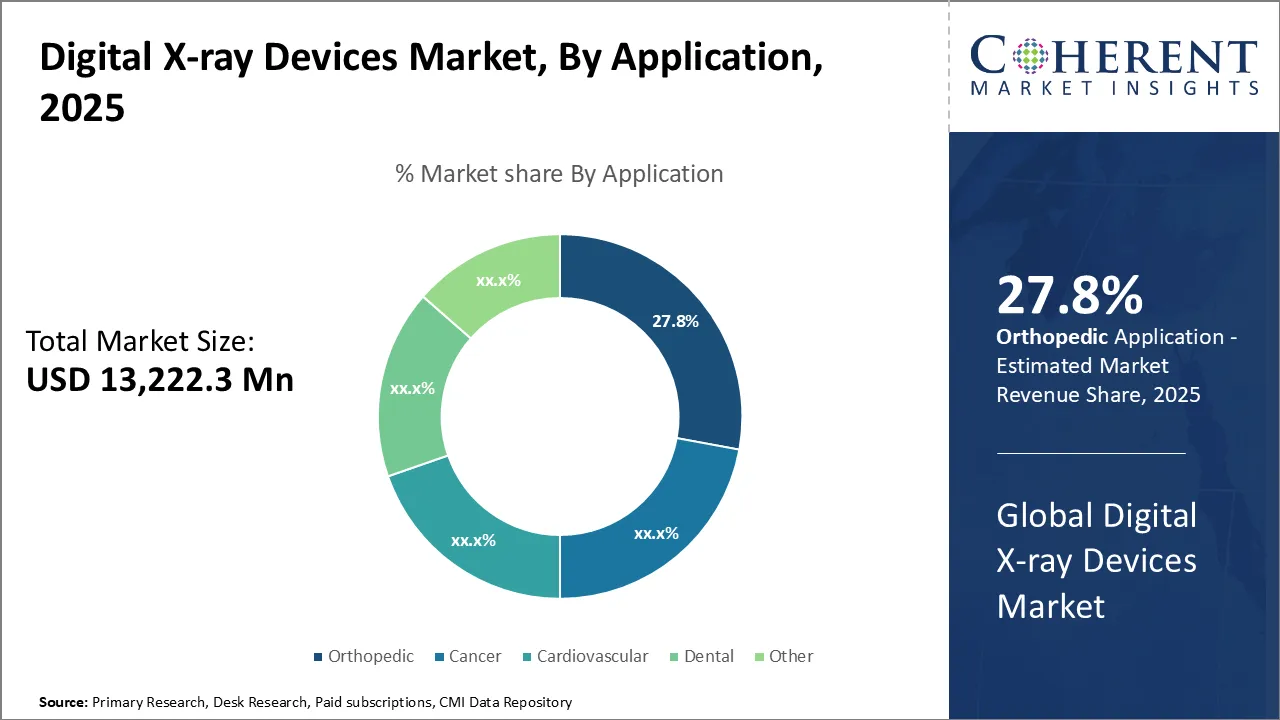
- By Application, the Orthopedic segment leads the global market with 28.8% shares, due to rising prevalence of bone, joint, and trauma-related conditions.
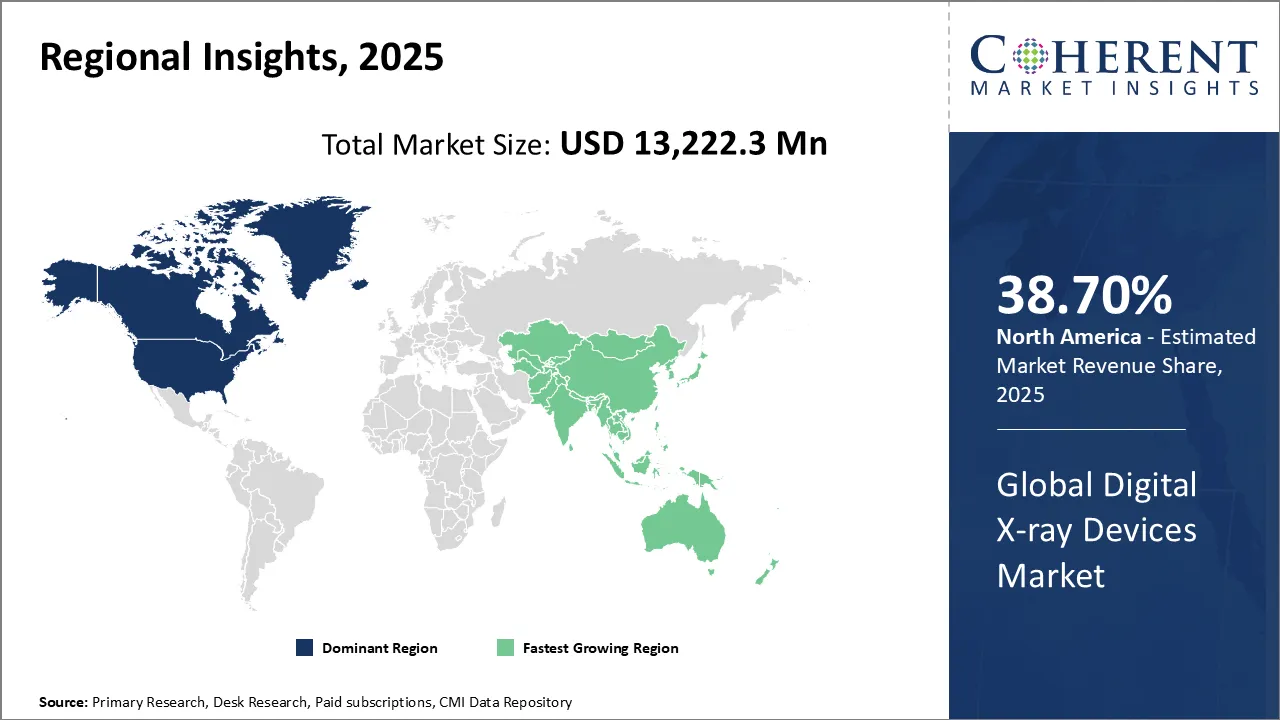
- By Geography, North America is expected to hold the 38.7% market share, driven by high incidence of chronic and orthopedic diseases, an aging population, and rapid adoption of digital imaging systems.
Market Overview
The global digital x-ray devices market is experiencing strong growth due to the rise in prevalence of chronic and orthopedic disease and advantages of digital x-ray system over conventional x-rays. Moreover, increase in demand for digital x-ray devices and growing geriatric population is expected to boost the growth of the market. However, factors such as high cost of installation and high cost of devices and rise in use of refurbished x-ray devices are expected to hamper the market growth.
Current Events and Its Impact on the Digital X-ray Devices Market
Event | Description and Impact |
Russia-Ukraine Conflict and Black Sea Disruptions |
|
Indonesian Palm Oil Export Policy Changes |
|
Climate Change and Weather Disruptions |
|
Segmental Insights
- Current Industry Events of 2026
- Market Size Estimation
- Regional Breakdown
- Competitive Landscape
- Customer Intelligence
- Segmental Analysis
- Pricing Analysis
- Key Market Drivers, Challenges & Future Trends
- Customized Insights Section
Global Digital X-ray Devices Market Insights, By Application
The Orthopedic Segment is expected to dominate with 28.8% share in the digital x-ray devices market over the forecast period and this is attributed to the increasing prevalence of orthopedic diseases. X-ray imaging is extremely important to orthopedic professionals, as precise imaging helps in determining the best care possible for the patients.
Global Digital X-ray Devices Market Insights, By Technology
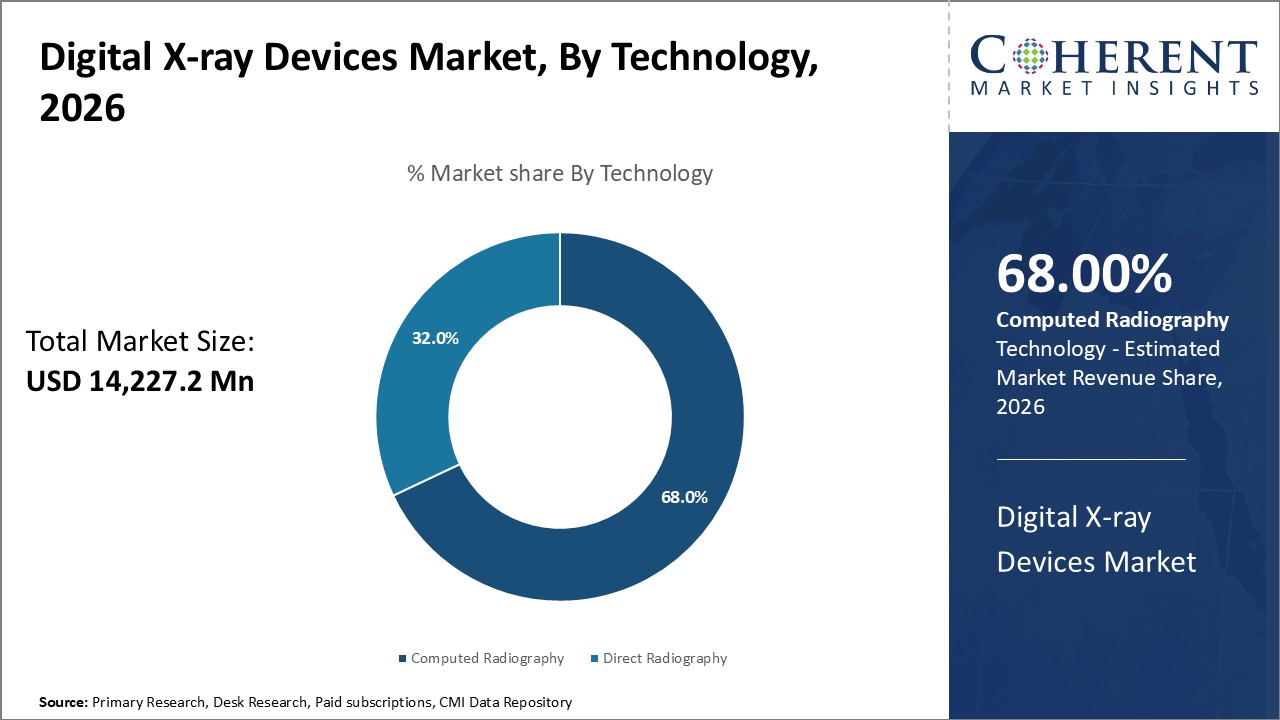
The Computed Radiography Segment is expected to dominate the market over the forecast period and this is attributed to the rise in use of computed radiography (CR). It is a digital replacement for conventional X-ray film radiography, and offers enormous advantages.
Global Digital X-ray Devices Market Insights, By Portability
The Portable Systems Segment is expected to dominate the market over the forecast period and this is attributed to the high demand for portable systems worldwide.
Global Digital X-ray Devices Market Insights, By End User
The Hospitals Segment is expected to dominate the market over the forecast period and this is attributed to the rise in prevalence of chronic and orthopedic diseases worldwide.
Global Digital X-ray Devices Market: Regional Insights
North America Digital X-ray Devices Market Analysis and Trends
Among regions, North America is expected to gain highest share in the market over the forecast period owing to the increasing incidence of orthopedic diseases, rise in burden of cancer, and rise in geriatric population in this region. For instance, with the increase in prevalence of chronic and orthopedic diseases, the use of medical imaging devices, such as x-ray devices, is also increasing with a rapid pace.
In August 2026, GE Healthcare announced the launch of the AI-enabled x-ray system. The Definium 656 HD platform includes artificial intelligence (AI) to provide enhanced anatomic detail and clarity through the use of Helix 2.2 advanced image processing and 100 um FlashPad HD detectors, according to the company.
Asia Pacific Digital X-ray Devices Market Analysis and Trends
Asia Pacific is also expected to witness significant growth in the global digital x-ray devices market due to the increase in prevalence of chronic and orthopedic diseases, rise in number of serious injuries, and rise in geriatric population in these regions. For instance, X-rays and other radiographic tests help doctors look for cancer in different parts of the body.
India’s cancer cases could increase by 12% in the next five years, with 1.5 million people projected to suffer from the non-communicable disease by 2026, up from 1.39 million in 2020, according to the data based on current trends from the cancer report by Indian Council of Medical Research (ICMR). This in turn is driving the growth of the market in these regions.
Dominating Countries
- United States (within North America) is projected to dominate the global digital X‑ray market in 2026, supported by high adoption of advanced DR systems driven by an aging population, rising chronic and orthopedic disease burden, and substantial healthcare infrastructure upgrades.
- Canada follows closely within North America, benefiting from comparable healthcare modernization trends and technology uptake in diagnostic imaging.
Global Digital X-ray Devices Market Drivers
- High prevalence of chronic and orthopedic diseases to boost market growth
One of the key factors expected to augment the growth of the global digital x-ray devices market over the forecast period is the increase in prevalence of chronic and orthopedic diseases worldwide. Digital radiography is very helpful for examining the musculoskeletal system of trauma victims.
For instance, according to the World Health Organization (WHO), musculoskeletal conditions are the leading contributor to disability worldwide, with low back pain being the single leading cause of disability in 160 countries; 1.71 billion people have musculoskeletal conditions worldwide. This in turn is driving the growth of the market.
- Advantages of digital x-ray devices to underpin market growth
Another factor which is driving the digital x-ray devices market demand is the advantages of digital x-ray systems over conventional x-rays. For instance, the major advantages of digital x-ray or imaging are easy accessibility and cost-effectiveness. While traditional X-rays are considered safe, digital X-rays produce 80% less radiation than traditional.
This is beneficial for the long-term health of patients, especially for those suffering from a disease and pregnant women, thus ensuring safety. Moreover, digital X-rays provide better and clearer images with high resolution that can be enlarged or manipulated as needed, minimizing the need for repeating the procedure.
Global Digital X-ray Devices Market Opportunities
- Portable X-ray Systems
The rising demand for point-of-care imaging is significantly boosting the adoption of portable and mobile X-ray systems, especially in emergency rooms, intensive care units, and remote healthcare settings. These systems offer rapid diagnostics, reduced patient movement, and improved workflow efficiency. Devices like Fujifilm’s FDR Go iQ exemplify this trend, offering advanced imaging capabilities with enhanced mobility and user-friendly interfaces. Their ability to deliver high-quality images at the bedside makes them invaluable in critical care scenarios. As a result, portable solutions are capturing a growing portion of the digital X-ray devices market share, positioning them as key drivers of future market expansion.
Global Digital X-ray Devices Market Trends
- Demand for portable digital x-ray devices is a recent trend
Portable x-ray devices play an important role in diagnosis and monitoring at the patient's bedside, with no barriers to transfer the patient to the X-ray room. A portable x-ray offers many advantages over the traditional x-ray systems.
Furthermore, the portable x-ray has the potential to overcome location barriers and benefit patients who are in life-threatening conditions and require immediate treatment, possibly needing an on-the-spot diagnosis. This in turn is expected to drive the global digital x-ray devices market price.
- Technological advancements are another trend
Over the past few years, digital x-ray devices have undergone significant advances focused on core and ancillary technologies to provide high-quality, high-resolution images without corresponding increase in radiation dose. These solutions integrate new technologies and algorithms along with, other improvements to take advantage of the optimization potential of digital image enhancement. Artificial intelligence (AI) is running rampant in radiology and imaging equipment, and is already being used in many ways in radiology and is the future.
Market Report Scope
Digital X-ray Devices Market Report Coverage
| Report Coverage | Details | ||
|---|---|---|---|
| Base Year: | 2025 | Market Size in 2026: | USD 14,227.2 Mn |
| Historical Data for: | 2020 To 2024 | Forecast Period: | 2026 To 2033 |
| Forecast Period 2026 to 2033 CAGR: | 7.6% | 2033 Value Projection: | USD 23,757.7 Mn |
| Geographies covered: |
| ||
| Segments covered: |
| ||
| Companies covered: | Hologic, Inc., Hitachi, Ltd., Siemens Healthineers, Shimadzu Corporation, Koninklinje Philips NV, Carestream Health, Inc., Canon Medical Systems Corporation, GE Company (GE Healthcare), Samsung Electronics Co. Ltd (Samsung Medison), and Fujifilm Holdings Corporation (Fujifilm Medical Systems) | ||
| Growth Drivers: |
| ||
| Restraints & Challenges: |
| ||
Global Digital X-ray Devices Market: Key Developments
- In July 2025, GE HealthCare unveiled its latest digital X-ray system, Definium 656 HD, designed to enhance diagnostic precision and workflow efficiency. Launched in May 2025, the system integrates advanced automation and AI-powered features to support clinicians in delivering faster, more accurate diagnoses. It reflects GE HealthCare’s commitment to innovation in medical imaging technology.
- In July 2025, Fujifilm has launched the FDR Go iQ, a portable digital radiography system designed for hospitals and ambulatory surgery centers. The system features advanced image processing, a 3D camera for positioning guidance, and antibacterial-coated, glass-free detectors. It aims to enhance bedside imaging efficiency and diagnostic accuracy with smart charging and intuitive touchscreen controls.
Analyst Viewpoint
- The global digital X-ray devices market is witnessing steady expansion, driven by the increasing demand for faster, lower-radiation diagnostic imaging and the broadening use of X-ray across outpatient, emergency, and point-of-care settings. Key factors include a growing geriatric population, the rise in chronic respiratory and orthopedic conditions, and an accelerated shift from analog to digital radiography systems.
- Growth opportunities are emerging with innovations in portable X-ray systems, AI-enabled anomaly detection, and wireless flat-panel detectors that enhance workflow efficiency in resource-constrained and mobile environments. The integration of cloud-based image sharing and PACS systems is further improving diagnostic collaboration and continuity of care.
- Market expansion faces headwinds from high upfront equipment costs, lack of skilled radiology technicians in rural areas, and persistent reliance on refurbished or analog systems in lower-income regions. Reimbursement complexities and price sensitivity continue to challenge digital adoption in public hospitals.
- North America remains the dominant market, supported by strong reimbursement structures and high imaging volume. However, Asia-Pacific is poised for the fastest growth, fueled by rapid healthcare infrastructure development, urbanization, and increased governmental support for digital health technologies.
Speak to the analyst
Want personalized insights?
Take the findings above to one of our principal consultants, or have the report rebuilt around the segments, geographies and competitors you actually track.
Market Segmentation
- Global Digital X-ray Devices Market, By Application (Revenue, USD Mn, 2021 - 2033)
- Orthopedic
- Cancer
- Dental
- Cardiovascular
- Other Applications
- Global Digital X-ray Devices Market, By Technology (Revenue, USD Mn, 2021 - 2033)
- Computed Radiography
- Direct Radiography
- Global Digital X-ray Devices Market, By Portability (Revenue, USD Mn, 2021 - 2033)
- Fixed Systems
- Portable Systems
- Global Digital X-ray Devices Market, By End User (Revenue, USD Mn, 2021 - 2033)
- Hospitals
- Diagnostic Centers
- Other End Users
- Global Digital X-ray Devices Market, By Geography (Revenue, USD Mn, 2021 - 2033)
- North America
- U.S.
- Canada
- Latin America
- Brazil
- Argentina
- Mexico
- Rest of Latin America
- Europe
- Germany
- U.K.
- Spain
- France
- Italy
- Russia
- Rest of Europe
- Asia Pacific
- China
- India
- Japan
- Australia
- South Korea
- ASEAN
- Rest of Asia Pacific
- Middle East
- GCC Countries
- Israel
- Rest of Middle East
- Africa
- South Africa
- North Africa
- Central Africa
- Company Profiles
- Hologic, Inc.
- Hitachi, Ltd.
- Siemens Healthineers
- Shimadzu Corporation
- Koninklinje Philips NV
- Carestream Health, Inc.
- Canon Medical Systems Corporation
- GE Company (GE Healthcare)
- Samsung Electronics Co. Ltd (Samsung Medison)
- Fujifilm Holdings Corporation (Fujifilm Medical Systems)
Sources
Primary Research Interviews
- Medical Equipment Manufacturers (Siemens Healthineers, GE Healthcare, Philips Healthcare executives)
- Hospital Procurement Directors and Radiology Department Heads
- Digital X ray Technology Distributors and Sales Representatives
- Healthcare IT Integration Specialists
- Others
Databases
- Medical Device Market Database (MDR)
- Healthcare Technology Analytics Database
- Global Medical Equipment Trade Statistics Database
- FDA Medical Device Registration Database
- Others
Magazines
- Medical Equipment & Technology Magazine
- Radiology Business Journal
- Healthcare Technology Report
- Medical Device & Diagnostic Industry Magazine
- Others
Journals
- Journal of Digital Imaging
- Radiology Technology Journal
- Medical Physics International Journal
- Others
Newspapers
- Healthcare Finance News
- Medical Device Network
- Fierce Healthcare
- Modern Healthcare
- Others
Associations
- Radiological Society of North America (RSNA)
- American College of Radiology (ACR)
- Medical Device Manufacturers Association (MDMA)
- International Association of Healthcare Central Service Personnel
- Others
Public Domain Sources
- World Health Organization (WHO) Medical Equipment Reports
- U.S. Food and Drug Administration (FDA) Public Database
- European Medicines Agency (EMA) Device Registration Portal
- Centers for Medicare & Medicaid Services (CMS) Reports
- Others
Proprietary Elements:
- CMI Data Analytics Tool
- Proprietary CMI Existing Repository of information for last 8 years
Definition: Digital x ray or digital radiography (DR) is advanced form of x ray inspection which produces a digital radiographic image instantly on a computer. It is the form of imaging where digital x ray sensors are used instead of traditional photographic films.
Get access to 250+ pages report
Every segment, forecast, competitor profile and data table behind the analysis above — available for instant download.
- ESOMAR Member
- ISO 9001:2015 Certified
- D-U-N-S Registered
- GDPR & CCPA Compliant
Missing comfort of reading report in your local language? Find your preferred language:
Transform your Strategy with Exclusive Trending Reports
Frequently Asked Questions
The Digital X-ray Devices Market outlook is estimated to be valued at USD 14,227.2 Mn in 2026, and is expected to reach USD 23,757.7 Mn by 2033.
The CAGR of the global Market is projected to be 7.6% from 2026 to 2033.
Increase in prevalence of chronic and orthopedic diseases and advantages of digital x-ray systems over conventional x-rays is fueling the market.
The market for digital X-ray equipment is growing steadily, driven by rising demand for faster, low-dose imaging solutions across hospitals, clinics, and mobile healthcare settings.
High cost of installation and cost of devices and rise in use of refurbished x-ray devices worldwide are major factors restraining market.
Major players operating in the market are Hologic, Inc., Hitachi, Ltd., Siemens Healthineers, Shimadzu Corporation, Koninklinje Philips NV, Carestream Health, Inc., Canon Medical Systems Corporation, GE Company (GE Healthcare), Samsung Electronics Co. Ltd (Samsung Medison), and Fujifilm Holdings Corporation (Fujifilm Medical Systems).