

Middle East and Saudi Arabia Hemostasis Market Size and Forecast – 2026 To 2033
The Middle East and Saudi Arabia hemostasis market is expected to grow from USD 100.1 Mn in 2026 to USD 165.1 Mn by 2033, registering a compound annual growth rate (CAGR) of 7.4% from 2026 to 2033. The Middle East and Saudi Arabia hemostasis market is poised for significant expansion, fueled by the rapid increase in surgical capacity across Saudi Arabia, which directly raises demand for products used to control perioperative bleeding
Saudi Arabia’s Ministry of Health reported that surgical capacity across health clusters doubled from around 6,000 to 12,000 procedures per week in 2025, supporting greater demand for hemostatic products.
Key Takeaways of the Middle East and Saudi Arabia Hemostasis Market
- Passive hemostats are projected to hold a market share of 63.7 % of the Middle East and Saudi Arabia hemostasis market share in 2026, making it the dominant product type segment, driven by their broad use as absorbable materials for surgical bleeding control. For instance, the Saudi Food and Drug Authority (SFDA) classifies absorbable hemostatic dressings as medical devices, requiring them to comply with the Kingdom’s medical-device regulatory framework.
- Thrombin-based are projected to hold 34.0 % of the Middle East and Saudi Arabia hemostasis market share in 2026, making it the dominant product class segment, reflecting demand for products that actively promote clot formation at surgical bleeding sites. For instance, SFDA’s Saudi Drug Information System lists RECOTHROM as a topical hemostat containing recombinant human thrombin and approved for controlling local surgical bleeding.
- General surgery is projected to hold 29.8 % of the Middle East and Saudi Arabia hemostasis market share in 2026, making it the dominant application segment, because hemostatic products are routinely used to control bleeding across a broad range of procedures. For instance, Saudi Arabia’s Ministry of Health reported that general surgery represented 21% of 290,140 routine surgeries performed in the Kingdom in 2022, the largest share among the listed surgical specialties.
Segmental Insights
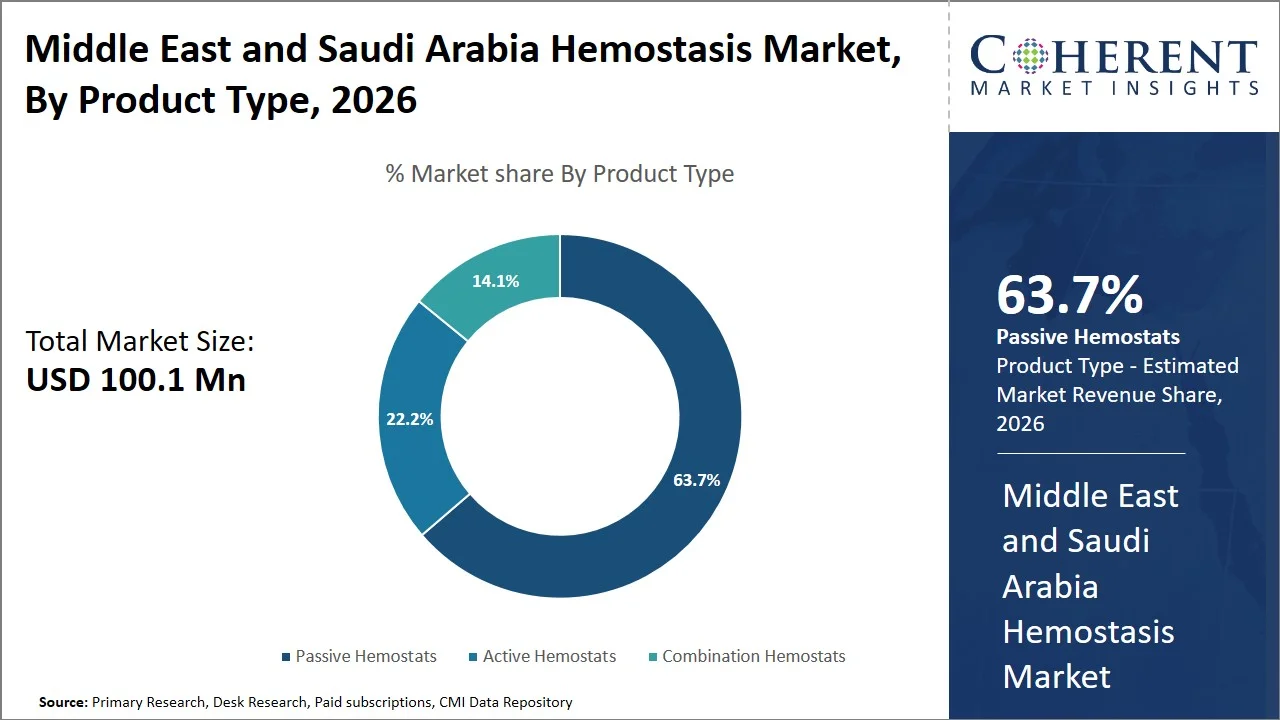
Why Do Passive Hemostats Dominate the Middle East and Saudi Arabia Hemostasis Market?
Passive hemostats are projected to hold a market share of 63.7% in 2026, due to their wide applicability in a number of applications including general surgery, cardiovascular surgery, orthopedic surgery, and many other surgical procedures. In addition, hospitals and surgical teams prefer absorbable passive hemostats as these offers localized application for bleeding control and ease to integrate into surgical workflow. For instance, National Unified Procurement Company (NUPCO) 2025 general consumables (Surgical) tender sought high-volume absorbable collagen-based hemostatic dry patches, with an anticipated demand for 56,370 pieces of the 4.8 X 4.8 cm size and 1,085,168 pieces of the 9.5 X 4.8 cm size. This procurement activity clearly demonstrates institutional interest for passive hemostatic, absorbable products in Saudi Arabia.
- Current Industry Events of 2026
- Market Size Estimation
- Regional Breakdown
- Competitive Landscape
- Customer Intelligence
- Segmental Analysis
- Pricing Analysis
- Key Market Drivers, Challenges & Future Trends
- Customized Insights Section
Why Does Thrombin-Based Represent the Largest Product Class Segment in the Middle East and Saudi Arabia Hemostasis Market?
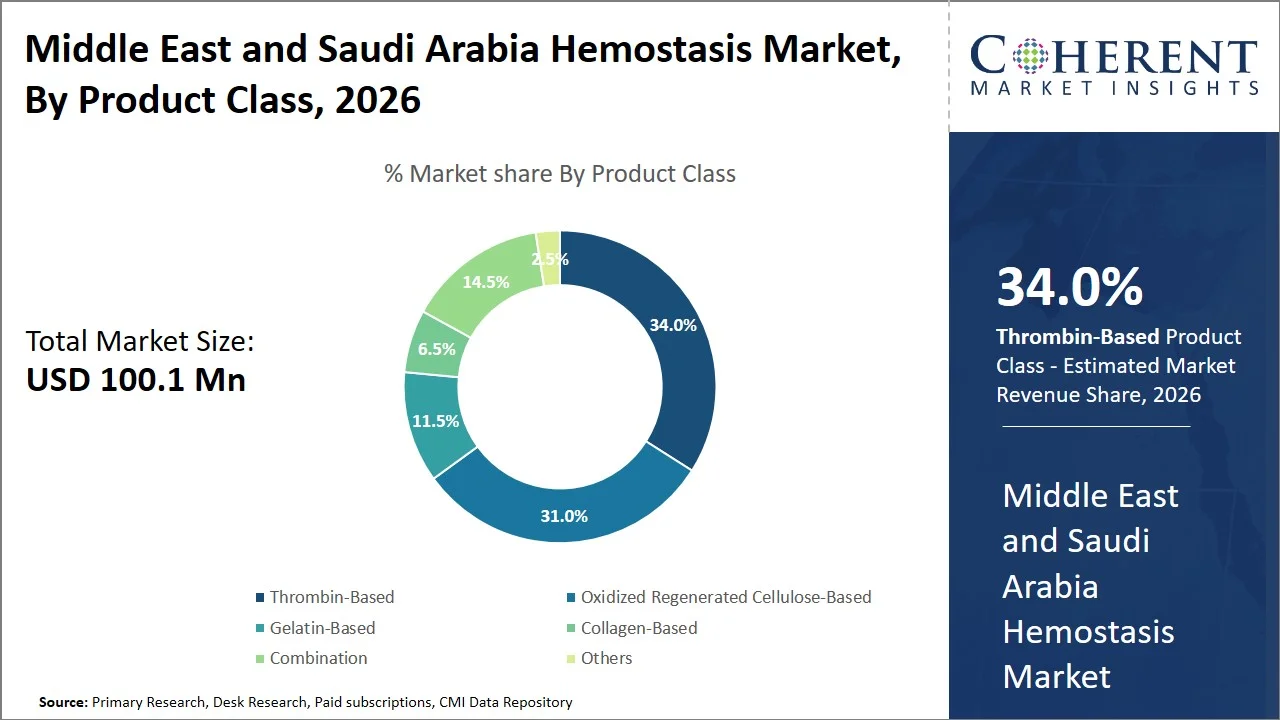
Thrombin-based are projected to hold 34.0% of the market share in 2026, because they enhance the fibrin polymerization directly at the bleeding site resulting in a prompt and localized hemostatic effect when the standard techniques are insufficient. Due to their predictable mechanism of action, these are especially helpful in difficult surgical cases where control of slow oozing is important. For instance, TISSEEL Lyo, the only non- autologous, biphasic fibrin sealant made of human fibrinogen and human thrombin, marketed in Saudi Arabia by the Saudi Food and Drug Authority (SFDA) is approved to enhance hemostasis and tissue sealing when other methods fail in cardiac and vascular surgeries, liver, spleen, gastrointestinal and neurosurgery.
General Surgery Segment Dominates the Middle East and Saudi Arabia Hemostasis Market
General surgery segment is expected to hold 29.8% of the Middle East and Saudi Arabia hemostasis market share in 2026, owing to the vast number and diverse types of procedures that require control over intraoperative blood flow which necessitate dependable hemostatic agents and therefore encourage the continued application of passive, active and combined hemostats within general surgery procedures. The widespread applicability of active, passive, and hybrid hemostats, both for standard and complicated surgeries helps ensure continued product use. For instance, in January 2026, King Salman Humanitarian Aid and Relief Centre (KSrelief) medical team performed 99 general surgical operations at the Al-Ahli Arab Hospital in the Gaza Strip and treated 402 patients within the hospital's general surgery clinic. The surgical volume indicated persistent demand for general surgical services requiring safe and secure care with good management of perioperative bleeding. (Source: Saudi Press Agency)
Current Events and their Impact
Current Events | Description and its Impact |
Saudi Food and Drug Authority (SFDA) Introduces Guidance for Innovative Medical Devices (January 2025) |
|
Saudi Food and Drug Authority (SFDA) Strengthens Saudi-DI Requirements for Medical Devices (June 2025) |
|
Middle East and Saudi Arabia Hemostasis Market Dynamics
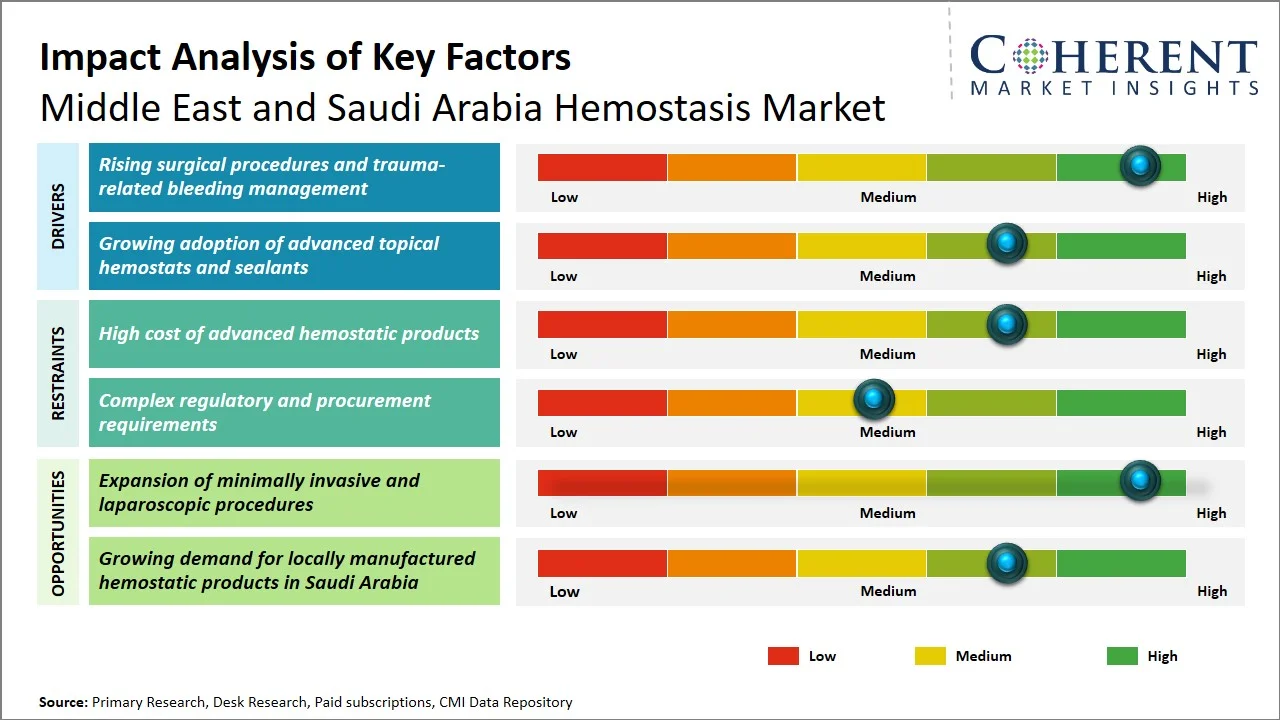
Market Drivers
- Rising surgical procedures and trauma-related bleeding management: The Middle East and Saudi Arabia hemostasis market is supported by rising surgical volumes and expanding access to surgical care, increasing the need for reliable intraoperative bleeding-control Saudi Arabia’s healthcare transformation has substantially increased surgical capacity, while improvements in emergency and trauma care further strengthen demand for rapid hemostatic solutions. For instance, in January 2026, Saudi Arabia’s King Saud Medical City reported more than 25,000 surgical procedures performed during 2025, representing a 20% increase from 2024 and covering both routine and urgent surgeries.
- Growing adoption of advanced topical hemostats and sealants: The market is witnessing growing adoption of advanced topical hemostats and sealants that provide localized bleeding control when conventional methods such as suturing, ligation, or cauterization are insufficient. Fibrin-based sealants and absorbable matrices are gaining relevance across general, cardiovascular, neurological, and other complex surgeries because they can simultaneously support hemostasis and tissue sealing. For instance, Saudi Food and Drug Authority (SFDA) lists TachoSil Sealant Matrix, containing human fibrinogen and human thrombin, for topical use to improve hemostasis and promote tissue sealing during surgery. The product is indicated for adults and children from 1 month of age, including vascular and neurological surgical.
- Rising Adoption of Point-of-Care Coagulation and Hemostasis Management: The Middle East and Saudi Arabia hemostasis market is increasingly supported by faster, real-time assessment of coagulation status, particularly in trauma, emergency, and major surgical settings. Point-of-care coagulation technologies can help clinicians identify bleeding-related abnormalities quickly and guide targeted hemostatic management, increasing the need for advanced coagulation-testing systems and related products. For instance, Saudi Arabia’s national trauma-care standards require hospitals to maintain protocols for hemorrhage control, massive blood transfusion, reversal of anticoagulation, and administration of hemostatic agents for trauma patients. This institutional focus strengthens the clinical infrastructure supporting systematic hemostasis management.
Emerging Trends
- Shift toward advanced hemostatic biomaterials: The market is increasingly moving beyond conventional bleeding-control products toward next-generation biomaterials and multifunctional hemostatic formulations that provide faster clot formation, better tissue conformity, and improved performance in complex surgical environments.
- Greater emphasis on blood-management and bleeding prevention: Healthcare systems in Saudi Arabia are placing greater emphasis on early bleeding-risk identification, coagulation management, and optimization of blood resources, encouraging hospitals to adopt more systematic approaches to perioperative bleeding management. Saudi Arabia’s Ministry of Health has also emphasized strengthening national blood-supply management and access through its 2025 blood-donation initiatives.
- Increasing localization and regulatory focus on medical-device innovation: Saudi Arabia is emerging as a regional base for locally developed surgical technologies, with the Saudi Food and Drug Authority (SFDA) strengthening evaluation of clinical evidence and regulatory pathways for innovative medical devices. In 2025, the Saudi Food and Drug Authority (SFDA) granted marketing authorization to a Saudi-developed surgical device following technical and clinical evaluation, signaling stronger opportunities for locally developed bleeding-control technologies.
Hemostasis Product Categories and Their Clinical & Regulatory Relevance
Hemostasis Product Category | Primary Hemostatic Mechanism | Key Surgical Applications | Relevance to Saudi Arabia Market |
Passive Hemostats | Mechanical/physical barrier or absorption | General, cardiovascular, orthopedic, and neurological surgery | Broadest application base and suitable for diverse surgical bleeding scenarios |
Thrombin-Based Hemostats | Accelerates fibrin clot formation | General, cardiovascular, and trauma surgery | Supports demand for rapid-acting bleeding-control technologies |
Flowable Hemostats | Conformable matrix with physical and/or biochemical clotting action | Complex and irregular bleeding sites | Relevant for minimally invasive and difficult-to-access surgical sites |
Oxidized Regenerated Cellulose-Based | Absorption and mechanical matrix formation | General and cardiovascular surgery | Provides an absorbable option for localized bleeding control |
Gelatin/Collagen-Based | Mechanical tamponade and clot formation support | General, orthopedic, and cardiovascular surgery | Expands product choice for surgical teams requiring adjunctive hemostasis |
Combination Hemostats | Combines physical and active coagulation mechanisms | High-risk and complex surgical procedures | Offers differentiated solutions for difficult-to-control bleeding |
How is the expansion of minimally invasive and laparoscopic procedures creating new growth opportunities in the Middle East and Saudi Arabia hemostasis market?
As robotic-assisted and minimally invasive surgeries become more prevalent, the Middle East and Saudi Arabia hemostasis market will witness increasing traction as these procedures need controlled bleeding. Investments in modern surgery infrastructure, increased adoption of image-guided and robotic surgical platforms, the need for quicker patient recovery, and the desire to reduce patient blood loss will drive market growth. As such, there is demand for flowable, topical and other tailor-made hemostatic devices for minimal access surgery. For instance, in May 2025, a robotic surgical system was launched by Saudi Arabia's Ministry of Health at King Abdullah Medical City in Makkah Health Cluster for complex minimally invasive surgeries in thoracic, urological, gynecological oncology, colorectal, and intestinal surgery. It was mentioned to increase surgical accuracy, speed up recovery, and provide a safe surgery. The system was emphasized for increasing surgical accuracy, minimizing recovery times, and maximizing safety of the patients.
Market Players, Key Development, and Competitive Landscape
Key Developments
- In March 2026, Humacyte received a minimum purchase commitment of USD 1.475 million from a Saudi Arabia-based entity for its Symvess acellular tissue-engineered vessel, supporting clinical evaluation and an outreach program across hospitals in the Kingdom. Humacyte will also train Saudi medical professionals in the use of Symvess, while negotiations continue for a potential Saudi joint venture and commercialization license. The development indicates growing interest in advanced vascular bleeding-control and tissue-engineered solutions within Saudi Arabia.
- In December 2025, Stago, a global specialist in hemostasis diagnostics, entered exclusive negotiations with ARCHIMED for a majority stake, with La Caisse participating as a minority investor. The proposed transaction was intended to accelerate Stago’s growth strategy and strengthen its technological and scientific capabilities. For the Middle East and Saudi Arabia, where Stago has an established presence, the development could support further expansion of advanced coagulation-testing technologies and hemostasis diagnostic solutions.
Competitive Landscape
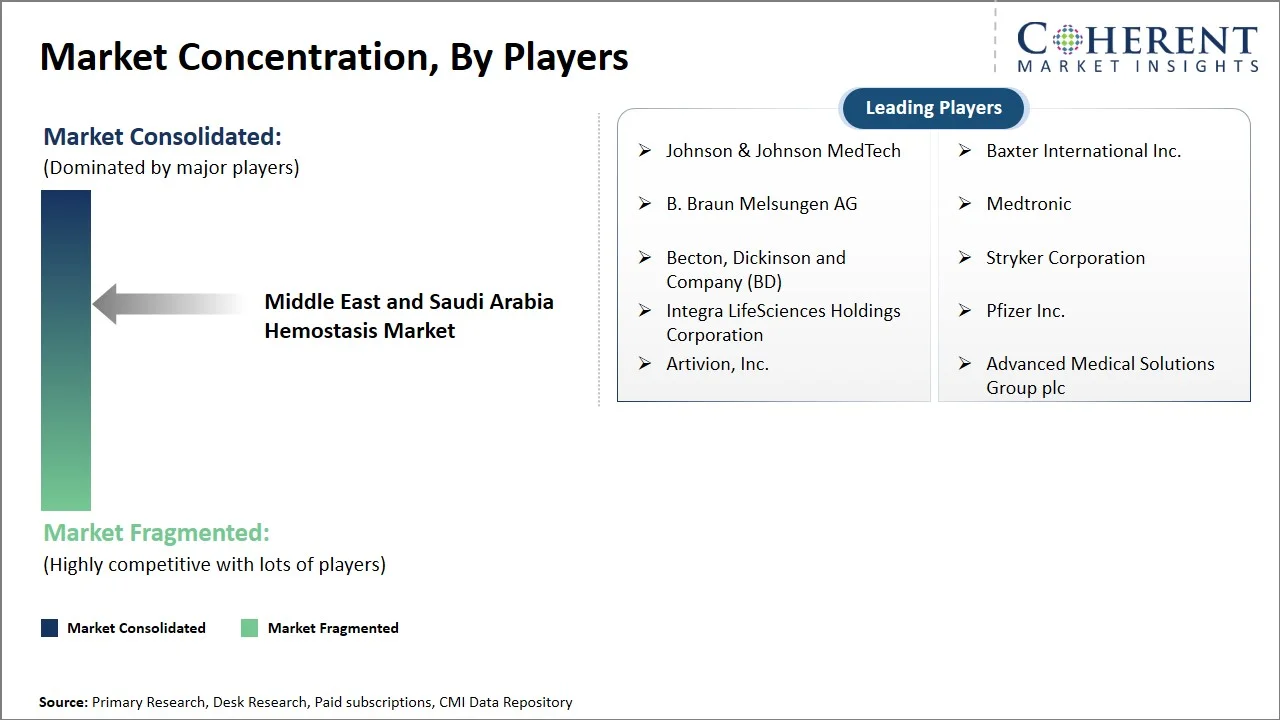
The Middle East and Saudi Arabia hemostasis market is moderately consolidated, with leading players competing through advanced hemostatic formulations, product portfolio expansion, regulatory approvals, and localized distribution networks. Companies are focusing on thrombin-based, oxidized regenerated cellulose, combination, and flowable hemostats, while strengthening hospital and surgical-center access across Saudi Arabia. Key focus areas include:
- Expansion of advanced thrombin-based and combination hemostatic products.
- Strengthening local distribution and SFDA-compliant market access in Saudi Arabia.
- Development of powder, matrix, gel, sponge, and other application-specific formulations.
- Expansion of partnerships with hospitals and surgical centers to improve product availability and clinical adoption.
Market Report Scope
Middle East and Saudi Arabia Hemostasis Market Report Coverage
| Report Coverage | Details | ||
|---|---|---|---|
| Base Year: | 2025 | Market Size in 2026: | USD 100.1 Mn |
| Historical Data for: | 2020 To 2024 | Forecast Period: | 2026 To 2033 |
| Forecast Period 2026 to 2033 CAGR: | 7.4% | 2033 Value Projection: | USD 165.1 Mn |
| Segments covered: |
| ||
| Companies covered: | Johnson & Johnson MedTech, Baxter International Inc., B. Braun Melsungen AG, Medtronic, Becton, Dickinson and Company (BD), Stryker Corporation, Integra LifeSciences Holdings Corporation, Pfizer Inc., Artivion, Inc., Advanced Medical Solutions Group plc | ||
| Growth Drivers: |
| ||
| Restraints & Challenges: |
| ||
Analyst Opinion (Expert Opinion)
- In the coming years, Middle East and Saudi Arabia hemostasis market is expected to increasingly shift toward advanced, rapid-acting, and application-specific bleeding-control technologies, supported by rising surgical volumes and growing adoption of minimally invasive procedures. The expansion of modern surgical infrastructure in Saudi Arabia will further support demand for innovative hemostatic solutions.
- Most opportunities can be foreseen within thrombin-based hemostats for general surgery in Saudi Arabia, where high surgical volumes create recurring demand for rapid control of intraoperative bleeding. Saudi Arabia’s SFDA already lists RECOTHROM, a recombinant human thrombin topical hemostat used during surgery, demonstrating regulatory acceptance of advanced thrombin-based solutions in the Kingdom.
- To strengthen their competitive position, market players should focus on SFDA-compliant product portfolios, localized distribution, hospital partnerships, and differentiated formulations such as flowable, powder, and combination hemostats. Strengthening clinical education and surgeon training can further support product adoption and build competitive advantage in Saudi Arabia.
Speak to the analyst
Want personalized insights?
Take the findings above to one of our principal consultants, or have the report rebuilt around the segments, geographies and competitors you actually track.
Market Segmentation
- Product Type Insights (Revenue, USD Mn, 2021 - 2033)
- Passive Hemostats
- Active Hemostats
- Combination Hemostats
- Product Class Insights (Revenue, USD Mn, 2021 - 2033)
- Thrombin-Based
- Oxidized Regenerated Cellulose-Based
- Gelatin-Based
- Collagen-Based
- Combination
- Others
- Application Insights (Revenue, USD Mn, 2021 - 2033)
- General Surgery
- Cardiovascular Surgery
- Neurological Surgery
- Orthopedic Surgery
- Gynecological Surgery
- Dental Surgery
- Urological Surgery
- Cosmetic Surgery
- Others
- Indication Insights (Revenue, USD Mn, 2021 - 2033)
- Surgical Bleeding
- Wound Closure
- Others
- End User Insights (Revenue, USD Mn, 2021 - 2033)
- Hospitals
- Specialty Clinics
- Ambulatory Surgical Centers
- Home care Settings
- Others
- Key Players Insights
- Johnson & Johnson MedTech
- Baxter International Inc.
- Braun Melsungen AG
- Medtronic
- Becton, Dickinson and Company (BD)
- Stryker Corporation
- Integra LifeSciences Holdings Corporation
- Pfizer Inc.
- Artivion, Inc.
- Advanced Medical Solutions Group plc
Sources
Primary Research Interviews
- Hematologists, transfusion medicine specialists, and coagulation specialists
- General, cardiovascular, orthopedic, neurological, and trauma surgeons
- Hospital operating-room directors and surgical department heads
- Hospital procurement heads and medical-device purchasing managers
- Clinical affairs, regulatory affairs, and medical affairs executives of hemostasis-device companies
- Distributors and regional sales executives specializing in surgical hemostatic products
Stakeholders
- Hemostatic product manufacturers (passive, active, flowable, thrombin-based, and combination products)
- Surgical sealant and hemostatic-device manufacturers
- Hospitals and specialized surgical centers
- Government healthcare institutions and health clusters
- Private hospital groups and specialty clinics
- Medical-device distributors and authorized representatives
- Hospital procurement organizations and healthcare supply-chain companies
- End-use Sectors
- Hospitals
- Specialty Clinics
- Ambulatory Surgical Centers
- Government Healthcare Institutions
- Private Healthcare Facilities
- Trauma and Emergency Care Centers
- Regulatory & Health Bodies
- Saudi Food and Drug Authority (SFDA) – medical-device registration, classification, marketing authorization, and distribution requirements.
- Ministry of Health (MOH), Saudi Arabia – healthcare infrastructure, surgical activity, and health-sector statistics
- Council of Health Insurance (CHI), Saudi Arabia – health-insurance and reimbursement framework
- Health Holding Company (HHC) – transformation of government healthcare delivery and health clusters
- Saudi Commission for Health Specialties (SCFHS) – healthcare-professional licensing and specialization
- World Health Organization (WHO) – Eastern Mediterranean Regional Office (EMRO) – regional health and disease data
- Gulf Cooperation Council (GCC) Standardization Organization (GSO) – applicable regional medical-product and healthcare standards
Databases
- SFDA Medical Devices List – registered medical devices, manufacturers, classifications, and authorization status.
- SFDA Registered Medical Device Database / Ghad System – registered medical-device product information and searches.
- Saudi-DI (UDI Database) – unique-device identification and traceability information for medical devices supplied in Saudi Arabia.
- Saudi Ministry of Health – Statistical Yearbook and Health Statistics
- Council of Health Insurance – health insurance and claims data
- WHO Global Health Observatory – Eastern Mediterranean health statistics
- UN Comtrade – medical-device and surgical-product trade data
Journals
- Saudi Medical Journal
- Annals of Saudi Medicine
- Journal of Thrombosis and Haemostasis
- Research and Practice in Thrombosis and Haemostasis
- Blood Coagulation & Fibrinolysis
- Journal of Vascular Surgery
- Surgical Endoscopy
- International Journal of Surgery
Associations
- Saudi Heart Association
- Saudi Society of Blood Disorders
- Saudi Surgical Society
- Saudi Society of Anesthesia
- International Society on Thrombosis and Haemostasis (ISTH)
- World Federation of Hemophilia (WFH)
- Arab Society for Haematology
Public Domain Sources
- Saudi Food and Drug Authority (SFDA)
- Ministry of Health (MOH), Saudi Arabia
- Council of Health Insurance (CHI)
- Health Holding Company (HHC)
- Saudi Commission for Health Specialties (SCFHS)
- World Health Organization (WHO)
- Gulf Cooperation Council Standardization Organization (GSO)
Proprietary Elements
- CMI Data Analytics Tool, Proprietary CMI Existing Repository of information for last 10 years.
Get access to 250+ pages report
Every segment, forecast, competitor profile and data table behind the analysis above — available for instant download.
- ESOMAR Member
- ISO 9001:2015 Certified
- D-U-N-S Registered
- GDPR & CCPA Compliant
Missing comfort of reading report in your local language? Find your preferred language:
Transform your Strategy with Exclusive Trending Reports
Frequently Asked Questions
The Middle East and Saudi Arabia hemostasis market is estimated to be valued at USD 100.1 Mn in 2026 and is expected to reach USD 165.1 Mn by 2033.
Passive hemostats dominate due to their broad applicability across surgical procedures and ability to provide effective local bleeding control without relying on the body’s coagulation pathway alone.
Hemostasis is the natural physiological process that stops bleeding through coordinated vascular, platelet, and blood-coagulation responses.
The CAGR of Middle East and Saudi Arabia hemostasis market is projected to be 7.4% from 2026 to 2033.
Rising surgical procedures and trauma-related bleeding management, and growing adoption of advanced topical hemostats and sealants are the major factors driving the growth of the Middle East and Saudi Arabia hemostasis market.
High cost of advanced hemostatic products, and complex regulatory and procurement requirements are the major factors hampering the growth of the Middle East and Saudi Arabia hemostasis market.
General surgery is expected to dominate because of its high procedure volume and widespread requirement for intraoperative bleeding control.