

Global Necrotizing Fasciitis Market Size and Forecast – 2026 to 2033
The global necrotizing fasciitis market is estimated to be valued at USD 1.32 Bn in 2026 and is expected to reach USD 2.36 Bn by 2033, exhibiting a compound annual growth rate (CAGR) of 8.7% from 2026 to 2033. This substantial growth reflects increasing awareness, advancements in diagnostic methods, and the rising prevalence of bacterial infections globally, which drive the demand for effective treatment options in this critical and rapidly progressing disease segment.
Key Takeaways of the Global Necrotizing Fasciitis Market
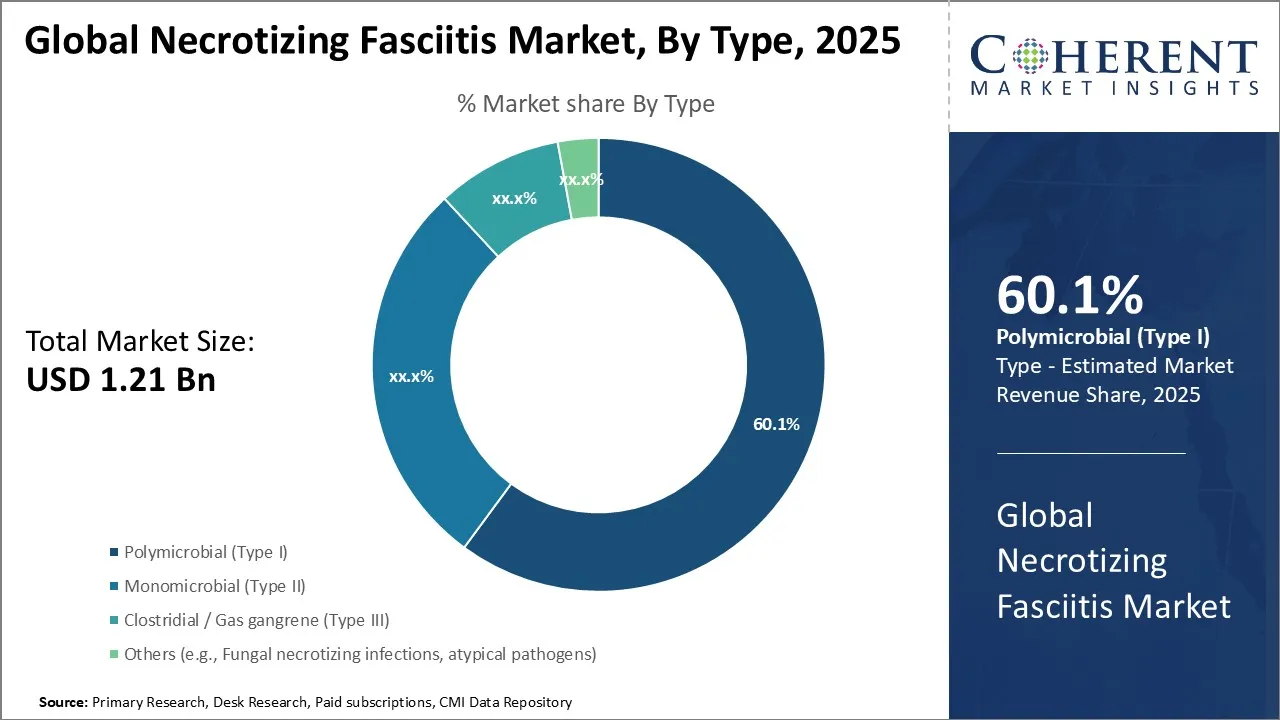
- In the type segmentation, the Polymicrobial (Type I) segment is expected to dominate the global necrotizing fasciitis market, accounting for 61.1% share in 2026.
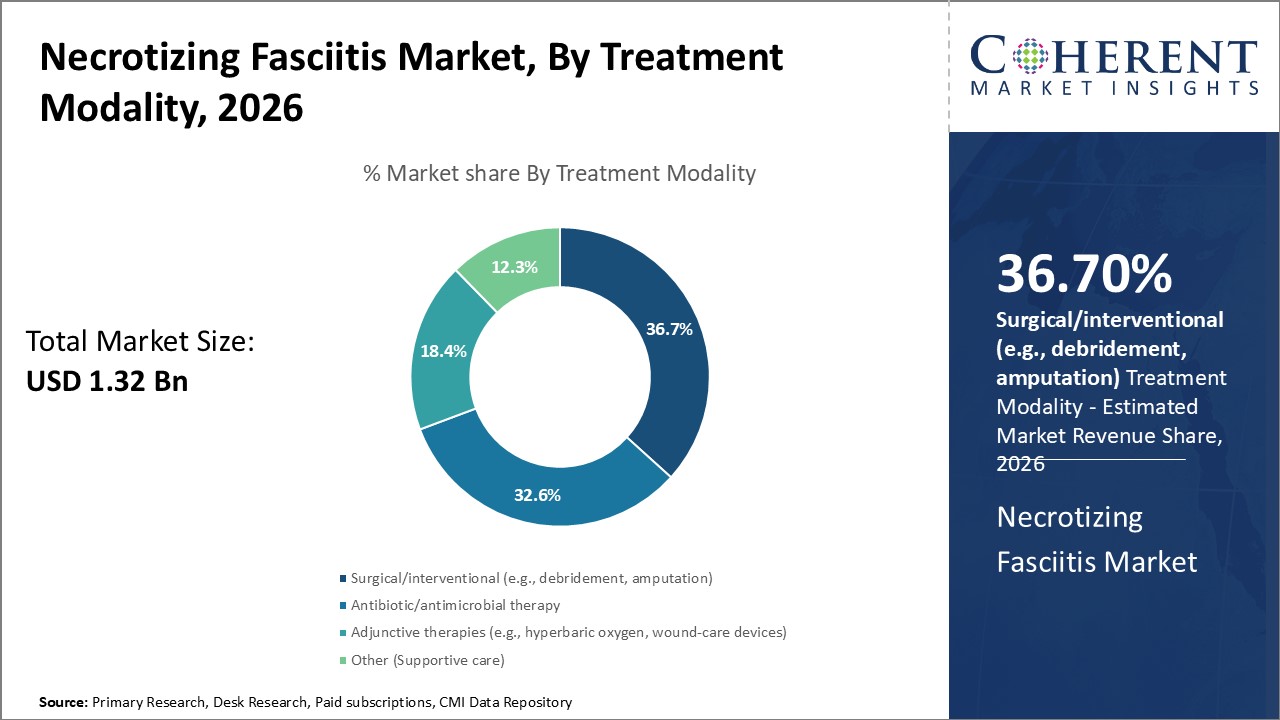
- In the treatment modality segmentation, surgical/interventional (e.g., debridement, amputation) segment is projected to lead the necrotizing fasciitis market with a 36.7% share in 2026.
- By route of administration segment, the parenteral segment is expected to hold the largest share in necrotizing fasciitis market, with 61.8% share in 2026.
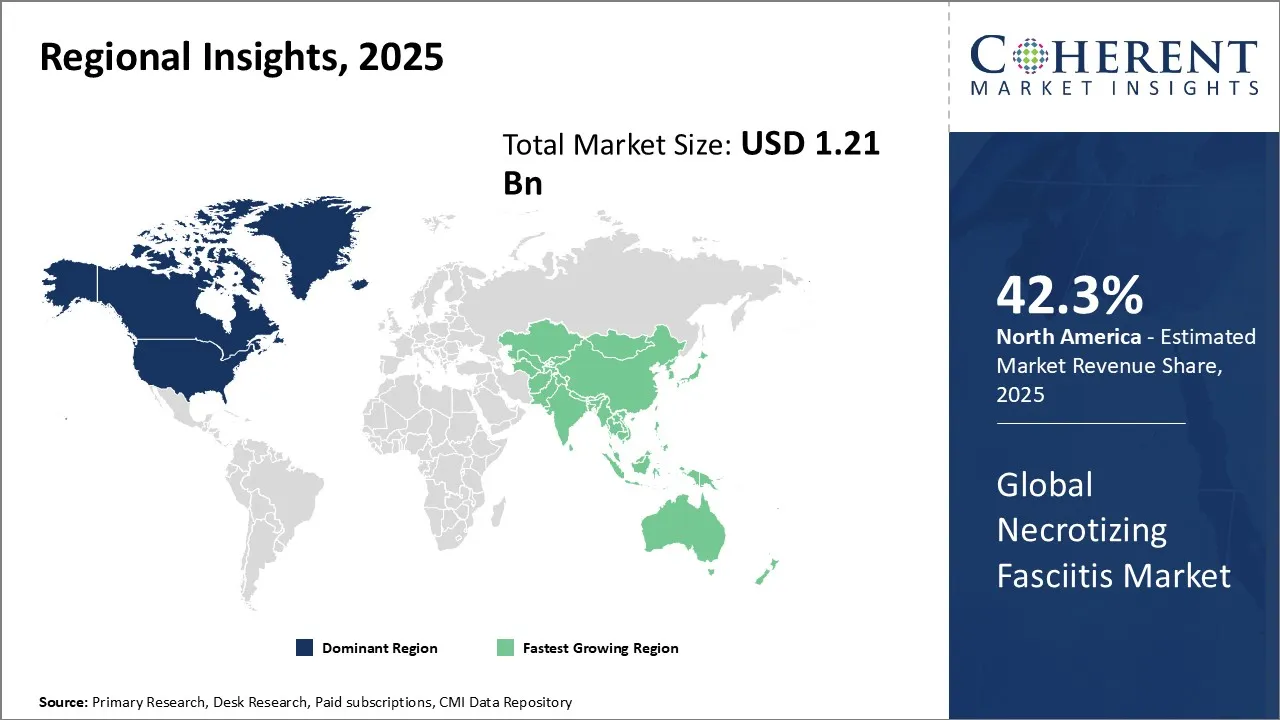
- North America is expected to lead the market, holding a share of 42.3% in 2026. Asia Pacific is anticipated to be the fastest-growing region, with an estimated market share of 24.3% in 2026.
Market Overview
Market trends indicate a strong focus on early diagnosis and minimally invasive treatment approaches, supported by technological innovations such as advanced imaging and molecular diagnostics. Additionally, growing investments in healthcare infrastructure and rising healthcare expenditure in emerging economies are facilitating better management of necrotizing fasciitis. The increasing adoption of targeted therapies and antibiotics, coupled with enhanced patient awareness and preventive care strategies, further contribute to the expanding market landscape.
Currents Events and their Impact
Current Events | Description and its Impact |
Growing Adoption of Negative Pressure Wound Therapy (NPWT) |
|
Rising Antimicrobial Resistance (AMR) |
|
Segmental Insights
- Current Industry Events of 2026
- Market Size Estimation
- Regional Breakdown
- Competitive Landscape
- Customer Intelligence
- Segmental Analysis
- Pricing Analysis
- Key Market Drivers, Challenges & Future Trends
- Customized Insights Section
Necrotizing Fasciitis Market Insights, By Type - Dominance of Polymicrobial (Type I) Segment is Driven by Complex Pathogen Synergy and Diagnostic Challenges
The Polymicrobial (Type I) segment is expected to dominate the market with a 61.1% share in 2026, because of its complicated pathogen profile and the clinical difficulties it causes. Polymicrobial infections that involve the simultaneous presence of different aerobic and anaerobic bacteria, pose great challenges in treatment and thus require the application of broad-spectrum anti-microbial approaches.
Such a situation renders the different pathogen interactions to quite often speed up the process of tissue necrosis and systemic toxicity, thus making it very critical to have a quick diagnosis and intervention. The polymicrobial characteristic of Type I infections is such that standard diagnostic tests have a harder time quickly identifying the specific causative organisms, thus causing a delay in the start of the appropriate treatment.
Necrotizing Fasciitis Market Insights, By Treatment Modality - Surgical/Interventional (e.g., Debridement, Amputation) is Leading Market Share Fueled by Critical Role in Patient Survival
The surgical/interventional (e.g., debridement, amputation) segment is projected to account for 36.7% of the market share in 2026. The overwhelming effect of surgery in managing the rapid tissue destruction associated with necrotizing fasciitis is the primary reason for this leading position.
There is a clear distinction between infections that can be treated with medical therapy only and those that are to be aggressively dealt with through surgical intervention at the very onset of the disease process to begin the removal of necrotic tissue and stopping of disease progression; in fact, surgery is frequently the cornerstone of effective treatment.
Necrotizing Fasciitis Market Insights, By Route of Administration - Parenteral Segment Prevails Due to Need for Rapid Systemic Drug Delivery and Bioavailability
The parenteral segment is expected to capture 61.8% of the necrotizing fasciitis market share in 2026, making it the highest market share for the necrotizing fasciitis treatment. The intensity of this issue is mainly caused by the clinical requirement of quick and effective systemic drug delivery in order to fight the aggressive and rapidly spreading infection which is typical of this disease.
Parenteral delivery which includes intravenous (IV) and intramuscular (IM) routes, gives immediate bioavailability thereby maintaining the requisite therapeutic concentrations of drugs in the infected tissue areas very quickly. This is extremely important in situations where life is at risk, as in necrotizing fasciitis.
Key Bacterial Strains and Common Comorbidities in Necrotizing Fasciitis
Category | Specifics (Example) | Notes/Frequency |
Major Bacterial Strains | Group A Streptococcus (GAS) | Monomicrobial Type II Necrotizing Fasciitis (NF); responsible for significant number of cases. |
Clostridium perfringens / other Clostridium spp. | Common in polymicrobial (Type I) NF, often associated with gas gangrene. | |
Other bacteria (e.g., Staphylococcus aureus, Gram-negative bacteria, anaerobes) | Polymicrobial infections are common, complicating treatment approaches. | |
Common Comorbidities/Risk Factors | Diabetes mellitus | One of the most frequent comorbidities in NF patients; notably increases infection risk. |
Cardiovascular disease/peripheral vascular disease | Frequently present in NF cases; increases mortality risk. | |
Chronic liver disease/cirrhosis | Associated with poorer outcomes and higher mortality in NF patients. | |
Older age (≥ 60–65 years) | Age is a significant risk factor for both increased incidence and mortality. | |
Immunosuppression (cancer, steroids) | Increases vulnerability to infections like necrotizing fasciitis. | |
Trauma/skin breach (surgery, laceration) | Often a precipitating factor for NF, especially in polymicrobial infections. |
Regional Insights
North America Necrotizing Fasciitis Market Analysis and Trends
The global necrotizing fasciitis market largest share in North America, making up an estimated 42.3% share in 2026, is largely accounted for by a well-established healthcare infrastructure, and along with the latter: advanced diagnostic technologies and large-scale investment in medical research. The combination of the top healthcare institutions in the region, along with high patient awareness and government initiatives aimed at improving the management of infectious diseases, helps to reinforce the market in this area.
Moreover, North America enjoys a strong pharmaceutical and biotechnology industry. Among the companies that have major impact in the necrotizing fasciitis area and the development of innovative treatment options and diagnostic tools, are Johnson & Johnson, Pfizer, and Abbott Laboratories.
Asia Pacific Necrotizing Fasciitis Market Analysis and Trends
The fastest growth in the necrotizing fasciitis market will be seen in Asia Pacific with a 24.3% share in 2026. Increased healthcare spending, better medical infrastructure, and a growing prevalence of infectious diseases in countries like India and China are the main factors behind this growth. Moreover, the government initiatives that aim at improving healthcare access and awareness regarding early diagnosis and treatment add to the market growth.
An instance of this is, Sun Pharma and Dr. Reddy’s Laboratories who are important players in the Indian necrotizing fasciitis market, providing inexpensive antibiotics and creative drug formulations that are suitable for the local market. Their work is an essential part of the country's escalating healthcare system and rising infection rates.
Necrotizing Fasciitis Market Outlook for Key Countries
U.S. Necrotizing Fasciitis Market Trends
The necrotizing fasciitis market of the U.S. has been advanced in clinical research facilities and has easy access to modern diagnostic technologies that enable the detection and control of the necrotizing fasciitis cases very early on. Besides, giant healthcare providers and pharmaceutical companies like Johnson & Johnson and Pfizer heavily finance the creation of antimicrobial agents and treatments for supportive care. Government strategies that mainly focus on improving infectious disease protocols and providing funding for rare diseases also play a role in the market strength.
For example, NovaBay Pharmaceuticals: Focuses on advanced wound‑care products; their hypochlorous acid‑based product NeutroPhase is marketed for wound irrigation including for necrotizing fasciitis cases.
U.K. Necrotizing Fasciitis Market Trends
In the U.K. necrotizing fasciitis market, remarkable trends are being observed, which are mainly the result of the technological advancements in diagnostics and the improved treatment methods. The diagnosis of diseases at an early stage is getting more and more attention, and, consequently, the use of innovative imaging and molecular diagnostics is being adopted more and more. Besides that, surgical procedures such as debridement and amputation are still extremely important in treating the disease. The combination of higher infection rates and more awareness through public health campaigns is resulting in a higher demand for effective treatments.
For example, in April 2026, doctors in the U.K. reported a rise in necrotizing fasciitis cases, particularly affecting the vulva. Three cases were documented at Shrewsbury and Telford Hospital NHS Trust, one of which resulted in death. This rare, "flesh-eating" infection, caused by Group A Streptococcus bacterium, is spreading more frequently in both the U.K. and the U.S., with rapid progression that can lead to death within hours.
Australia Necrotizing Fasciitis Market Trends
In Australia, the necrotizing fasciitis market is marked by a continuous rise in the number of cases, which is especially noticeable in the tropical and remote regions where the diseases are influenced by the presence of diabetes and obesity as well as by the patient's being slow to get treated for geographical reasons. Doctors and hospitals are increasingly looking for ways to speed up the diagnostic process and to perform aggressive surgical interventions like debridement. The pressure of healthcare costs and the need for better access to healthcare in rural areas are factors that are promoting the use of telemedicine, advanced systems for wound care, and regional referral networks for speedy treatment.
For example, in November 2022, researchers from the University of Alberta (U of A) and Griffith University in Australia launched the first phase of human clinical trials for a vaccine against Group A streptococcus (strep A), a bacteria responsible for more than 500,000 deaths annually. Strep A can cause severe conditions, including necrotizing fasciitis (flesh-eating disease), rheumatic fever, and neurological disorders.
Germany Necrotizing Fasciitis Market Trends
In Europe, Germany is still the top player because of the healthcare system in the country which is the most developed and has the strictest controls over infection that allow for the early intervention and better prognosis of patients with necrotizing fasciitis. The healthcare system in Germany offers good public health policies and reimbursement schemes that allow patients to access innovative treatments easily. Germany is also advantaged by being part of larger EU health initiatives which promotes the sharing of knowledge and the standardization of regulatory practices.
For instance, B. Braun Melsungen and Fresenius SE are the two main players that together have a large share of the German necrotizing fasciitis market, selling high-tech medical devices and diagnostic tools which not only help but also make the whole process of intervention and treatment more effective.
Investigational Therapies & Ongoing Trials in Necrotizing Fasciitis
Therapy | Trial Phase | Mechanism of Action | Sponsor | Key Notes |
AB103 | Phase III | Immunomodulator aimed at dampening cytokine storms | Unspecified (Clinical trial by AB103) | Promising results in soft tissue infections, efficacy yet to be proven |
IVIG (Intravenous Immunoglobulin) | Phase II/Exploratory | Neutralizes bacterial toxins (Group A Streptococcus, Staphylococcus) | Various hospital/academic sponsors | Early trials show potential, but large RCTs are still lacking |
Bacteriophage Therapy | Phase I/Exploratory | Targeting specific bacterial pathogens (MRSA, Streptococcus) | Locus Biosciences, Armata Pharmaceuticals, BiomX | Early-stage; case reports show potential for MRSA-driven NF |
Hyperbaric Oxygen Therapy (HBOT) | Phase II/Exploratory | Improves oxygenation in infected tissues, supports healing | Various hospital/academic centers | Investigational but not proven effective in NF via large-scale trials |
Antimicrobial Peptides (AMPs) | Phase I/II | Bactericidal peptides targeting various bacteria | Academic research institutions | Experimental phase, studying AMPs as targeted antibiotics for NF treatment |
Market Players, Key Developments, and Competitive Intelligence
Key Developments
- In June 2025, Evaxion A/S, a techbio company specializing in AI-powered vaccines, launched the EVX-B4 vaccine targeting Group A Streptococcus (GAS), which causes severe infections like necrotizing fasciitis. The AI-driven program aims to enhance preclinical development and accelerate target discovery, adding to Evaxion’s growing pipeline of vaccines for infectious diseases and cancer.
- In October 2024, Florida health officials reported a rise in cases of Vibrio vulnificus, the bacteria responsible for "flesh-eating" infections, following Hurricane Helene. According to the Florida Department of Health, several counties, including Citrus, Hernando, and Sarasota, have seen an unusual spike in cases. A total of 74 cases has been reported this year, compared to 46 in 2023, with 13 fatalities.
- In September 2023, the Centers for Disease Control and Prevention (CDC) issued a health advisory due to an increase in necrotizing fasciitis cases, also known as "flesh-eating bacteria" infections. These infections, caused by bacteria like Group A Streptococcus and Vibrio vulnificus, can lead to rapid tissue destruction and potentially fatal outcomes. The rise in cases has been linked to warming ocean temperatures, which expand the habitat of Vibrio vulnificus, as well as the growing vulnerability of individuals with weakened immune systems.
- In August 2021, Madinat Zayed Hospital, part of SEHA, successfully treated a patient with severe necrotizing fasciitis. The patient, Mr. Rameshver, was admitted with sepsis and necrosis in multiple areas. The surgical team, led by Dr. Fadi Bassam Almahameed, performed aggressive debridement and managed the patient's organ failure.
Top Strategies Followed by Global Necrotizing Fasciitis Market Players
- Top-tier firms in the necrotizing fasciitis treatment sector are heavily investing in R&D to develop advanced diagnostic tools and targeted therapies that improve patient outcomes. They are forming strategic alliances with OEMs to enhance products and gain a technological edge. The system uses a saline jet for precise tissue removal, saving healthy tissue and simplifying debridement by integrating multiple instrument functions.
- For example, Organogenesis and MiMedx focus on biologic products for tissue regeneration, while Smith+Nephew has developed multifunctional surgical instruments for improved debridement precision.
- Mid-level market players concentrate on the production of nice and affordable solutions, which means that they make it possible for the customers who are sensitive to price to buy their products and the like, especially those who are in the areas where healthcare budgets are tight. They are doing it by going in together with their partners to boost or increase production, gaining access to new technologies, and broadening the distribution network.
- Mölnlycke Health Care is a company that is considered to be at the level of the mid-tier players in this market. it is the supplier of economical wound care solutions specifically made for places with not so much health care money. Their Mepilex Border series of advanced dressings has been designed to provide effective treatment at a low cost and so is suitable for the poor countries.
- The smallest players on the market are separating themselves from the others by going after the specialized niches with their new products, doing heavy investments in technology and moving into the area of personalized medicine to solve very particular patient problems, thus creating demand among specific customer groups even when their resources are restricted.
- Bioventus, a company that provides advanced biologic and therapeutic solutions for wound care and even the treatment of necrotizing fasciitis, is a good illustration of small-scale players. One of the products that Bioventus highly specializes in is Exogen, a system that utilizes ultrasound for bone healing.
Market Report Scope
Global Necrotizing Fasciitis Market Report Coverage
| Report Coverage | Details | ||
|---|---|---|---|
| Base Year: | 2025 | Market Size in 2026: | USD 1.32 Bn |
| Historical Data for: | 2020 To 2024 | Forecast Period: | 2026 To 2033 |
| Forecast Period 2026 to 2033 CAGR: | 8.7% | 2033 Value Projection: | USD 2.36 Bn |
| Geographies covered: |
| ||
| Segments covered: |
| ||
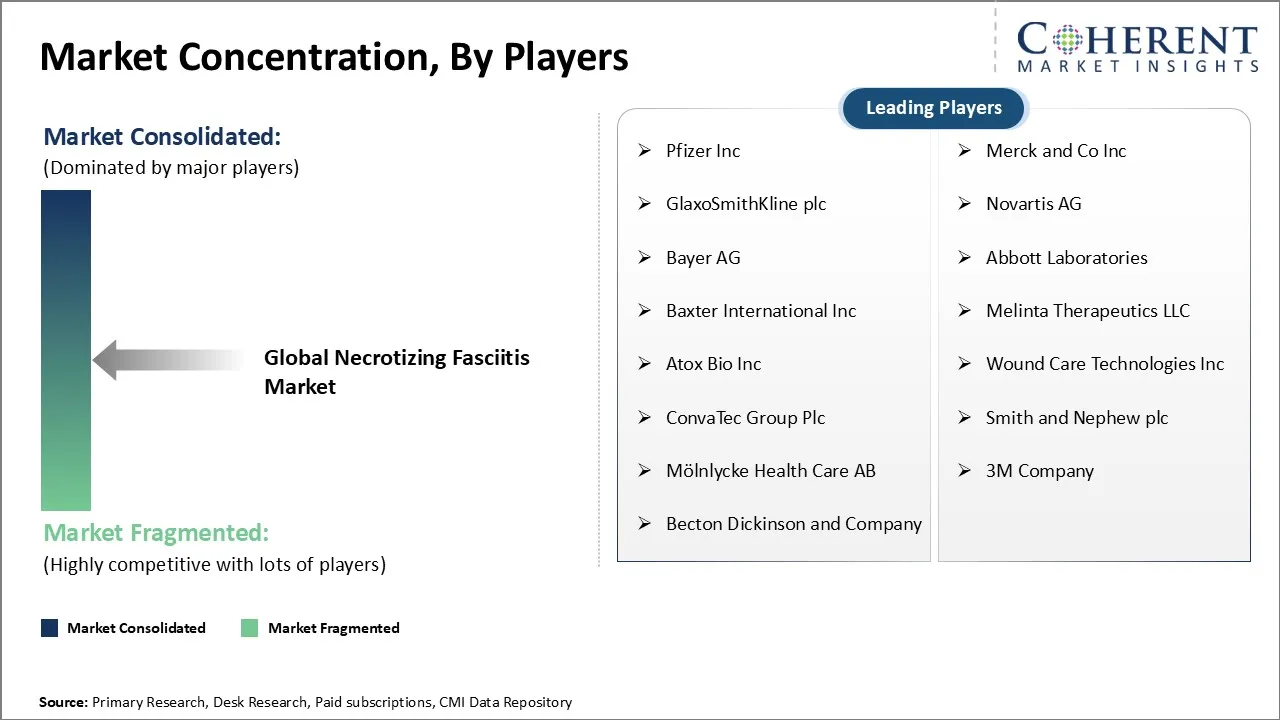
| Companies covered: | Pfizer Inc, Merck and Co Inc, GlaxoSmithKline plc, Novartis AG, Bayer AG, Abbott Laboratories, Baxter International Inc, Melinta Therapeutics LLC, Atox Bio Inc, Wound Care Technologies Inc, ConvaTec Group Plc, Smith and Nephew plc, Mölnlycke Health Care AB, 3M Company, and Becton Dickinson and Company | ||
| Growth Drivers: |
| ||
| Restraints & Challenges: |
| ||
Necrotizing Fasciitis Market Dynamics
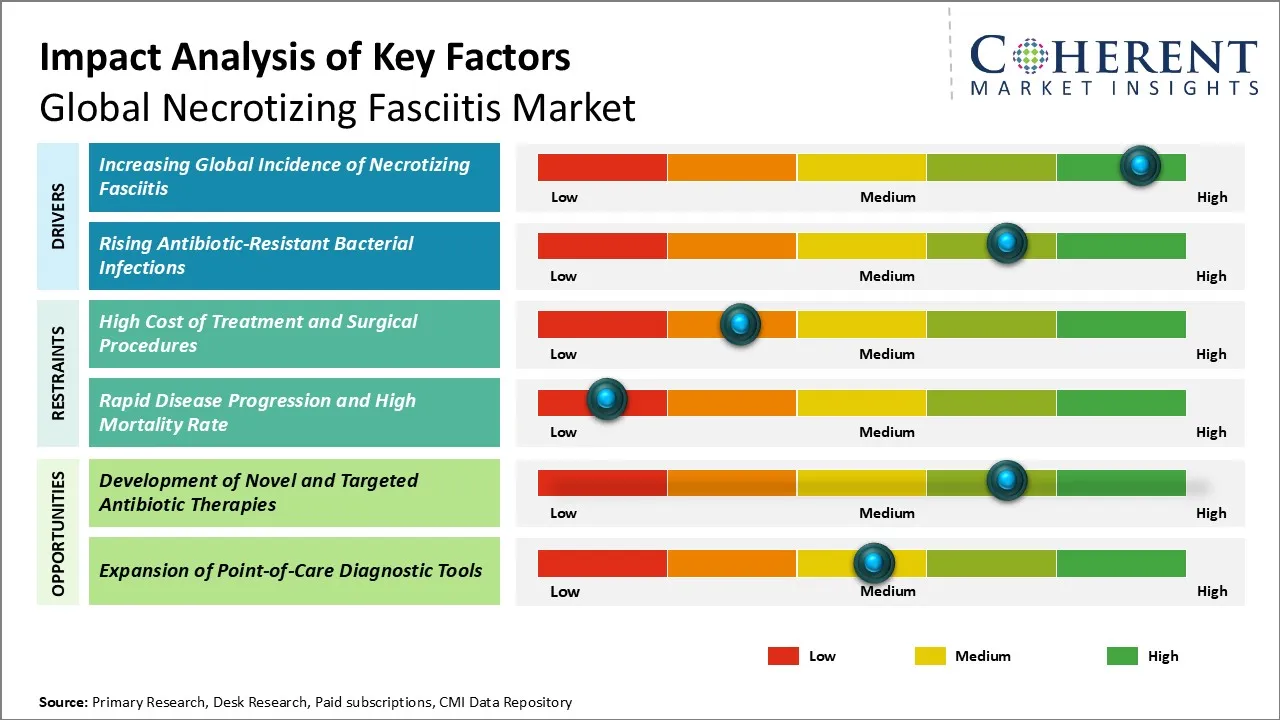
Necrotizing Fasciitis Market Driver - Increasing Global Incidence of Necrotizing Fasciitis
The growing worldwide occurrence of necrotizing fasciitis is highlighted as a major factor driving the trends in the necrotizing fasciitis market. This uncommon but serious infection, caused by bacteria and destroying soft tissues incredibly fast, has been reported more and more among different groups of people and areas of the world. The prevalence of comorbidities like diabetes, immunosuppression, and poor blood flow are the main factors that are making it easier for the infections to spread as they weaken the body’s ability to fight infections.
In September 2020, a study published in National Library of Medicine, at Thailand showed rising necrotizing fasciitis (NF) cases, increasing from 26.08 per 100,000 in 2014 to 32.64 in 2018. Diabetes was a key risk factor for amputation, while older age and conditions like cirrhosis and hypertension raised mortality risks. Medtronic and Smith & Nephew, with innovations like the VERSAJET II Hydrosurgery System, focus on improving NF treatment through advanced surgical and wound care technologies, stressing early intervention to reduce NF's high morbidity and mortality.
Necrotizing Fasciitis Market Opportunity - Development of Novel and Targeted Antibiotic Therapies
The global necrotizing fasciitis market is a big opportunity for the pharmaceutical industry, which can be exploited by the sophisticating and targeting antibiotic therapies. In the case of necrotizing fasciitis, where tissue necrosis and high mortality are the consequences, timely and effective antimicrobial intervention is a must. At present, treatments usually consist of broad-spectrum antibiotics, which complicate the situation due to the development of resistance to antibiotics and because they may not affect the varied bacterial pathogens involved sufficiently. The latest antibiotics, among which are bacteriophage therapy and antimicrobial peptides, provide the uneasy-to-treat infections with the least side effects through targeted action.
For example, Locus Biosciences, this U.S.‑based clinical‑stage biotech develops engineered bacteriophage therapies (CRISPR‑Cas3 enhanced) to target drug‑resistant bacterial infections. Moreover, Peptilogics Inc., company focuses on engineered antimicrobial peptides (eCAPs) as a new class of antibiotics with broad and potent activity, including against difficult‑to‑treat Gram‑negative bacteria.
Analyst Opinion (Expert Opinion)
- The necrotizing fasciitis market is primarily influenced by the development of new diagnostic technologies and surgical methods, in addition to the increased awareness of the disease, particularly in areas with high diabetes and obesity rates. Newer technologies like real-time imaging and targeted antibiotics are letting the doctors treat the patients more effectively, while telemedicine coupled with regulations that favor the use of the technology expands the reach of treatment. On the other hand, problems like the very high costs of treatment and the underdeveloped healthcare infrastructure in rural areas are still around.
- There is a chance offered by next-generation antibiotics and bacteriophage therapies which provide the market with more precise treatments. Recently, partnerships and government-funded programs have been pushing the progress forward, besides the discussions raised at global health events such as the WHO’s Global Health Summit about the application of innovative solutions. These happenings are already very significant for the market’s future, especially in the less favored areas.
Speak to the analyst
Want personalized insights?
Take the findings above to one of our principal consultants, or have the report rebuilt around the segments, geographies and competitors you actually track.
Market Segmentation
- Type Insights (Revenue, USD Bn, 2021 - 2033)
- Polymicrobial (Type I)
- Monomicrobial (Type II)
- Clostridial/Gas gangrene (Type III)
- Others (e.g., Fungal necrotizing infections, atypical pathogens)
- Treatment Modality Insights (Revenue, USD Bn, 2021 - 2033)
- Surgical/interventional (e.g., debridement, amputation)
- Antibiotic/antimicrobial therapy
- Adjunctive therapies (e.g., hyperbaric oxygen, wound-care devices)
- Other (Supportive care)
- Route of Administration Insights (Revenue, USD Bn, 2021 - 2033)
- Parenteral
- Oral
- Anatomical Location Insights (Revenue, USD Bn, 2021 - 2033)
- Upper Extremities
- Lower Extremities
- Perineal and Genital (Fournier's Gangrene)
- Head and Neck
- Torso and Abdominal Wall
- End User Insights (Revenue, USD Bn, 2021 - 2033)
- Hospitals and Clinics
- Ambulatory Surgical Centers
- Rehabilitation Centers
- Diagnostic Centers
- Academic and Research Institutes
- Home Healthcare
- Distribution Channel Insights (Revenue, USD Bn, 2021 - 2033)
- Hospital pharmacies
- Retail pharmacies
- Online/e‑pharmacy
- Risk-factor Insights (Revenue, USD Bn, 2021 - 2033)
- Diabetes mellitus
- Obesity
- Immunocompromised/oncology patients
- Peripheral vascular disease/chronic kidney disease
- Intravenous drug users/alcoholism
- Age Group Insights (Revenue, USD Bn, 2021 - 2033)
- Infants and children (< 18 years)
- Adults (18–64 years)
- Seniors (65+ years)
- Regional Insights (Revenue, USD Bn, 2021 - 2033)
- North America
- U.S.
- Canada
- Latin America
- Brazil
- Argentina
- Mexico
- Rest of Latin America
- Europe
- Germany
- U.K.
- Spain
- France
- Italy
- Russia
- Rest of Europe
- Asia Pacific
- China
- India
- Japan
- Australia
- South Korea
- ASEAN
- Rest of Asia Pacific
- Middle East
- GCC Countries
- Israel
- Rest of Middle East
- Africa
- South Africa
- North Africa
- Central Africa
- North America
- Key Players Insights
- Pfizer Inc
- Merck and Co Inc
- GlaxoSmithKline plc
- Novartis AG
- Bayer AG
- Abbott Laboratories
- Baxter International Inc
- Melinta Therapeutics LLC
- Atox Bio Inc
- Wound Care Technologies Inc
- ConvaTec Group Plc
- Smith and Nephew plc
- Mölnlycke Health Care AB
- 3M Company
- Becton Dickinson and Company
Sources
Primary Research Interviews
Industry Stakeholders
- Hospital infectious‑disease department heads
- Medical device companies' business development leads
End Users
- Surgeons treating necrotizing fasciitis
- Procurement managers at hospitals
Government and International Databases
- Centers for Disease Control and Prevention (CDC)
- European Centre for Disease Prevention and Control (ECDC)
- World Health Organization (WHO)
- National hospital discharge/reimbursement databases
- National infectious‑disease notification systems
- Government health ministry annual reports
Trade Publications
- Global Health Review
- Medical Device & Diagnostics Industry
- Infection Control Today
- Critical Care Technology Journal
- Hospital Management & Procurement
- Healthcare Procurement Insight
Academic Journals
- Scientific Reports
- The British Journal of Surgery
- BMC Infectious Diseases
- Frontiers in Surgery
- Plastic Surgery Global Open
- International Journal of Surgery Research & Practice
Reputable Newspapers
- The New York Times (health section)
- The Guardian (global health)
- Financial Times (healthcare industry)
- The Washington Post (medical‑technology)
- The Hindu (India healthcare)
- South China Morning Post (Asia medical markets)
Industry Associations
- Infectious Diseases Society of America (IDSA)
- European Society of Clinical Microbiology and Infectious Diseases (ESCMID)
- Association of Medical Diagnostics Manufacturers (AMDM)
- International Society for Infectious Diseases (ISID)
- Critical Care Society (CCS)
- Global Alliance for Infections and Diagnostics (GAID)
Public Domain Resources
- Medscape
- NCBI Bookshelf
- WHO open‑access data portals
- NIH PubMed Central
- Official hospital discharge/ICU admission datasets
- Open government procurement portals
Proprietary Elements
- CMI Data Analytics Tool: Proprietary analytics tool to analyze real-time market trends, consumer behavior, and technology adoption in market
- Proprietary CMI Existing Repository of Information for Last 8 Years
Get access to 250+ pages report
Every segment, forecast, competitor profile and data table behind the analysis above — available for instant download.
- ESOMAR Member
- ISO 9001:2015 Certified
- D-U-N-S Registered
- GDPR & CCPA Compliant
Missing comfort of reading report in your local language? Find your preferred language:
Transform your Strategy with Exclusive Trending Reports
Frequently Asked Questions
The global necrotizing fasciitis market is estimated to be valued at USD 1.32 Bn in 2026 and is expected to reach USD 2.36 Bn by 2033.
The CAGR of the global necrotizing fasciitis market is projected to be 8.7% from 2026 to 2033.
Increasing global incidence of necrotizing fasciitis and rising antibiotic-resistant bacterial infections are the major factors driving the growth of the global necrotizing fasciitis market.
High cost of treatment and surgical procedures and rapid disease progression and high mortality rate are the major factors hampering the growth of the global necrotizing fasciitis market.
In terms of type, the Polymicrobial (Type I) segment is estimated to dominate the market revenue share in 2026.
Pfizer Inc, Merck and Co Inc, GlaxoSmithKline plc, Novartis AG, Bayer AG, Abbott Laboratories, Baxter International Inc, Melinta Therapeutics LLC, Atox Bio Inc, Wound Care Technologies Inc, ConvaTec Group Plc, Smith and Nephew plc, Mölnlycke Health Care AB, 3M Company, and Becton Dickinson and Company are the major players.
North America is expected to lead the global necrotizing fasciitis market in 2026.