

Non-Invasive Aesthetic Treatment Market Size and Share Analysis - Growth Trends And Forecasts (2026-2033)
Global non-invasive aesthetic treatment market is estimated to be valued at USD 45.39 Bn in 2026 and is expected to reach USD 108.78 Bn by 2033, exhibiting a compound annual growth rate (CAGR) of 13.3% from 2026 to 2033.
Key Takeaways
- By Procedure Type, the Injectable are projected to dominate the global non-invasive aesthetic treatment market, holding a substantial 36.2% market share in 2026. This dominance is fuelled by the rising popularity of Botox and dermal fillers for wrinkle reduction, lip enhancement, and facial contouring.
- By End User, the Specialty clinics are anticipated to lead the end-user segment, commanding a dominant 50.2% share in 2026. The growth of this segment is primarily driven by the convenience, personalized care, and expert consultation offered at these facilities.
- North America is expected to maintain its leadership position in the global non-invasive aesthetic treatment market with a commanding 41.7% market share in 2026.
Market Overview
The global Non-Invasive Aesthetic Treatment Market is experiencing strong growth, driven by increasing consumer demand for minimally invasive cosmetic procedures, advancements in aesthetic technologies, and growing social acceptance of beauty enhancements. Injectable like Botox and dermal fillers dominate the procedure landscape, while specialty clinics are emerging as preferred treatment centres due to convenience and personalized care.
Current Events and its Impact on the Non-Invasive Aesthetic Treatment Market
Current Event | Description and its impact |
Technology Commercialization and Product Launches |
|
Strategic Investments and Collaborations |
|
Technology Commercialization and Product Launches |
|
Pipeline Analysis: Non-Invasive Aesthetic Treatment Market
The pipeline for non-invasive aesthetic treatments is rapidly expanding, driven by consumer demand for safer, quicker, and more effective cosmetic solutions. Leading companies such as Allergan Aesthetics, Revance Therapeutics, and Evolus are actively developing next-generation botulinum toxins and dermal fillers with improved efficacy, longer-lasting results, and fewer side effects.
Innovations in energy-based devices such as laser, radiofrequency (RF), and ultrasound systems are also gaining momentum, with new launches focusing on skin tightening, fat reduction, pigmentation correction, and treatments specifically targeting enlarged pores. The demand for Non-Invasive Aesthetic Treatment with Enlarged Pores has notably risen, especially among younger demographics seeking smoother, refined skin textures without downtime.
Additionally, AI integration for personalized treatment planning and real-time skin diagnostics is an emerging trend in development pipelines. Companies are increasingly targeting underserved skin types in Asia Pacific and Latin America. With clinical trials focused on enhancing safety, recovery time, and patient satisfaction, the evolving product pipeline is expected to significantly broaden the scope and appeal of non-invasive aesthetic procedures in the coming years.
- Current Industry Events of 2026
- Market Size Estimation
- Regional Breakdown
- Competitive Landscape
- Customer Intelligence
- Segmental Analysis
- Pricing Analysis
- Key Market Drivers, Challenges & Future Trends
- Customized Insights Section
Patent Landscape: Non-Invasive Aesthetic Treatment Market
The patent landscape for the non-invasive aesthetic treatment market is highly active, reflecting intense innovation and competition among global players. Major companies such as Allergan (AbbVie), Cynosure, Lumenis, and Revance Therapeutics are leading in patent filings related to injectables, laser technologies, radiofrequency devices, and ultrasound-based treatments.
Recent patent trends indicate a focus on next-generation botulinum toxins, long-lasting dermal fillers, and multi-modal energy platforms that combine skin tightening, fat reduction, and rejuvenation functionalities.
There is also a growing number of patents integrating artificial intelligence for personalized aesthetic assessments and smart device interfaces for improved procedural control and accuracy. Asia, particularly China and South Korea, is becoming a key region for emerging patents due to a rise in local R&D and government-supported innovation in medical aesthetics. As companies prioritize IP protection to secure market advantage, the global patent landscape continues to expand across device, formulation, and software segments.
Reimbursement Scenario: Non-Invasive Aesthetic Treatment Market
The reimbursement landscape for non-invasive aesthetic treatments remains limited, as most procedures are categorized as elective and cosmetic rather than medically necessary. Treatments such as Botox for wrinkle reduction, dermal fillers, laser resurfacing, and body contouring are generally not covered by public or private health insurance plans.
However, exceptions exist when these treatments serve a medical purpose for instance, Botox may be reimbursed when used for chronic migraines or hyperhidrosis, pending clinical documentation and prior approval.
In markets like the United States, patients often utilize Health Savings Accounts (HSAs) or Flexible Spending Accounts (FSAs) for select eligible procedures. Additionally, many clinics partner with financing providers to offer instalment payment options, easing the financial burden on consumers. In developing countries such as India, coverage is virtually non-existent, with treatments being fully out-of-pocket. Overall, the market is largely self-pay, and limited reimbursement hinders access for price-sensitive consumers.
Prescribers’ Preference: Non-Invasive Aesthetic Treatment Market
Prescribers in the non-invasive aesthetic treatment market—primarily dermatologists, plastic surgeons, and aesthetic physicians are increasingly favouring procedures that offer minimal downtime, high safety profiles, and predictable results. Injectables, particularly Botox and dermal fillers, remain the top choice due to their ease of administration, quick results, and strong patient satisfaction.
Physicians also prefer energy-based devices like laser, radiofrequency (RF), and ultrasound systems for skin tightening, pigmentation, and body contouring because of their versatility and multi-functional capabilities.
There is a growing inclination toward combination therapies, where practitioners use a blend of injectable and device-based treatments to achieve more comprehensive aesthetic outcomes. Additionally, prescribers value customizable platforms that allow for precise control and tailored treatments based on individual skin types and conditions.
Ease of use, strong clinical backing, and support from manufacturers in terms of training and after-sales service significantly influence product selection. Ultimately, safety, efficacy, and patient demand guide prescriber preferences in this market.
Market Concentration and Competitive Landscape
Non-Invasive Aesthetic Treatment Market Trends
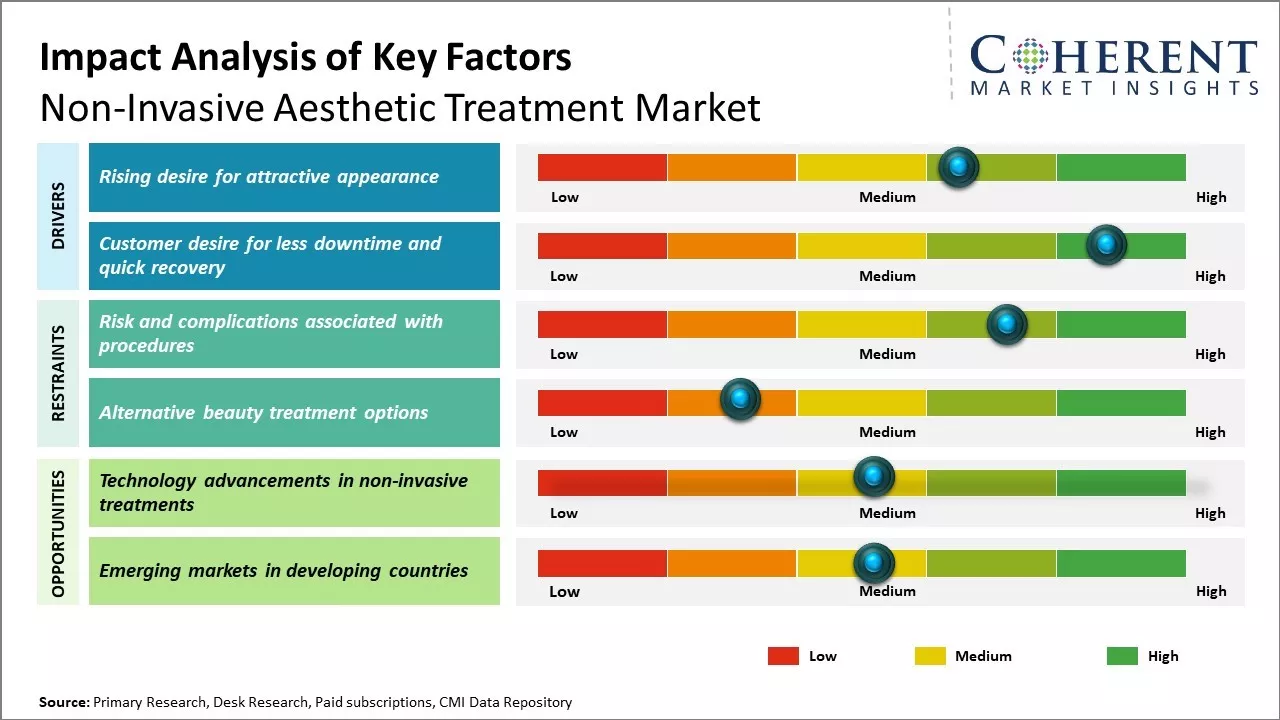
- Rising desire for attractive appearance
One of the key drivers fuelling growth in the non-invasive aesthetic treatment market is the rising focus on physical appearance across the world. With growing interconnectedness and popularity of social media, physical appearance has become an important part of social and professional lives. People are connecting more visually through video calls and wanting to portray the best version of themselves.
Additionally, greater emphasis on looks in popular culture and media through celebrities, movies and fashion campaigns is elevating beauty standards. This is driving individuals, especially millennial and generation Z to seek non-surgical treatments to address imperfections and achieve a desirable aesthetic look. Anti-aging has become an increasing concern and consumers want to deal with signs of aging such as wrinkles and fine lines through non-invasive procedures.
Moreover, a growing acceptance of aesthetic treatments has reduced the stigma around undergoing such treatments. More and more people are openly discussing their treatments, normalizing the culture of enhance physical appearance. This rising emphasis on appearances and new cultural norms will continue driving the non-invasive aesthetic treatment industry in the coming years.
In June 2025, The Times of India reported that Gen Z in Hyderabad increasingly opt for injectable like Botox and dermal fillers, driven by social media and the desire for “eternal youth.” This shift reflects a broader trend toward non‑invasive aesthetic treatments among younger consumers.
- Customer desire for less downtime and quick recovery
Another important growth driver for the non-invasive aesthetic treatment market is increasing customer demand for treatments promising minimal to no downtime. Busy lifestyles and careers leave little time for extensive recovery periods that traditional surgical treatments require.
Additionally, many people want to avoid risks and side effects that may come with surgery. This has boosted the popularity of non-invasive options which promise quick procedures followed by a short recovery time. Some non-invasive techniques take just 30 minutes to perform and allow individuals to resume regular activities immediately. This offers a major advantage for those having limited time off from work or other commitments.
With treatments being affordable and convenient, consumers can now concentrate on superficial issues and tweak problem areas for special occasions like weddings or vacations. The ability to schedule treatments during lunch hours or over the weekends without needing significant time off has also grown attractiveness of non-invasive aesthetic services. As more advanced formulations and technologies yield subtle yet visible results, customer inclination towards minimal downtime treatments will remain a cornerstone of industry expansion.
In April 2025, The Times of India covered the rise of non-invasive skin-tightening procedures like Ultherapy and PRX-Plus across India. These treatments leveraging ultrasound and radio-frequency stimulate collagen and elastin, offering rejuvenation without downtime, and signal rising consumer demand in the aesthetic treatment market.
Opportunities in the Non-Invasive Aesthetic Treatment Market
- Technology advancements in non-invasive treatments
Advancements in non-invasive treatment technologies provide immense opportunities in the non-invasive aesthetic treatment market. The development of energy-based non-invasive devices that target muscle and fat through the use of laser, light, radiofrequency and ultrasound is revolutionizing the industry. These highly innovative technologies allow for treatments to be performed without surgery or anaesthesia, thereby reducing risks and enabling faster recovery times for patients.
Some of the most exciting new technologies use hybrid energy sources that combine two or more modalities for more effective and long-lasting aesthetic results. For instance, certain laser and radiofrequency combination devices can precisely heat tissue to induce collagen remodelling and fat cell reduction, leading to skin tightening and body contouring without surgery.
Segmental Insights
Non-Invasive Aesthetic Treatment Market Insights, By Procedure Type
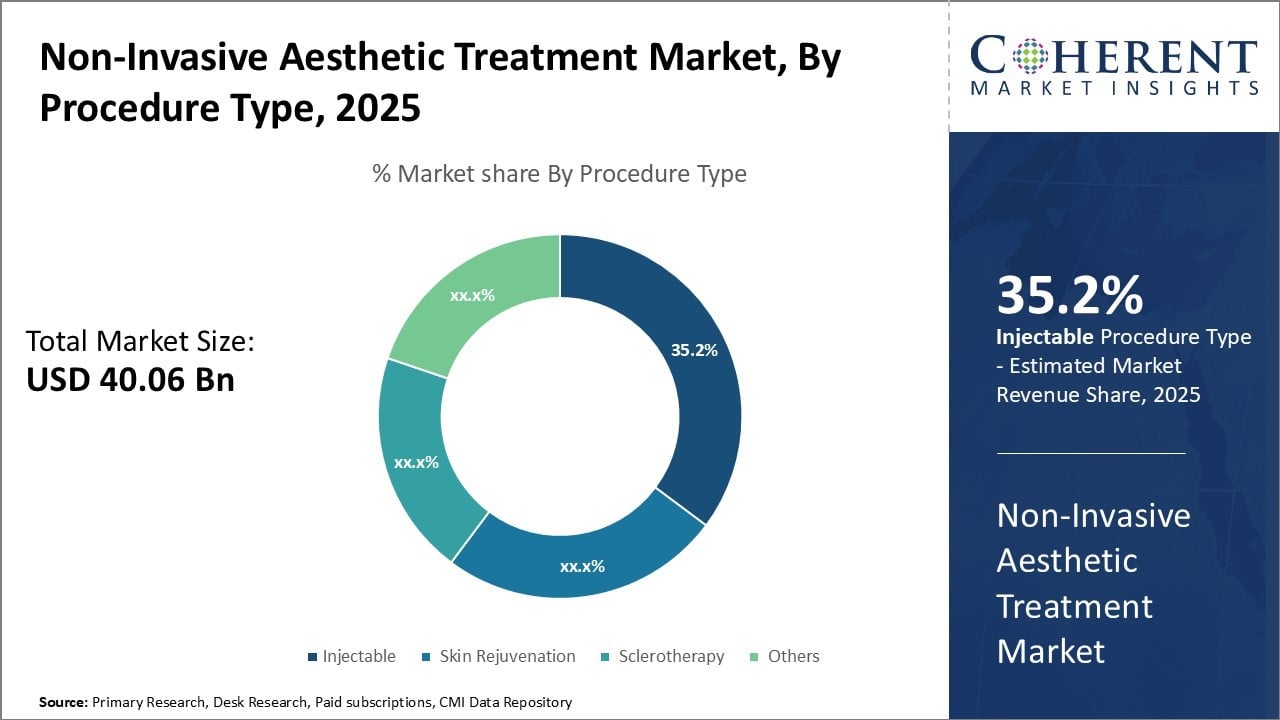
The injectable segment is projected to dominate the global non-invasive aesthetic treatment market with a significant 36.2% share in 2026. This leadership is driven by the rising demand for Botox and dermal fillers, which are widely used for wrinkle reduction, lip enhancement, and facial contouring. The appeal of quick, minimally invasive procedures with minimal downtime has broadened the consumer base across various age groups.
Technological advancements in formulation, improved safety profiles, and the influence of social media trends have accelerated consumer interest. As the aesthetic industry continues to evolve toward convenient, results-driven solutions, injectable are expected to remain the most popular and accessible option for facial rejuvenation and enhancement.
Non-Invasive Aesthetic Treatment Market Insights, By End User
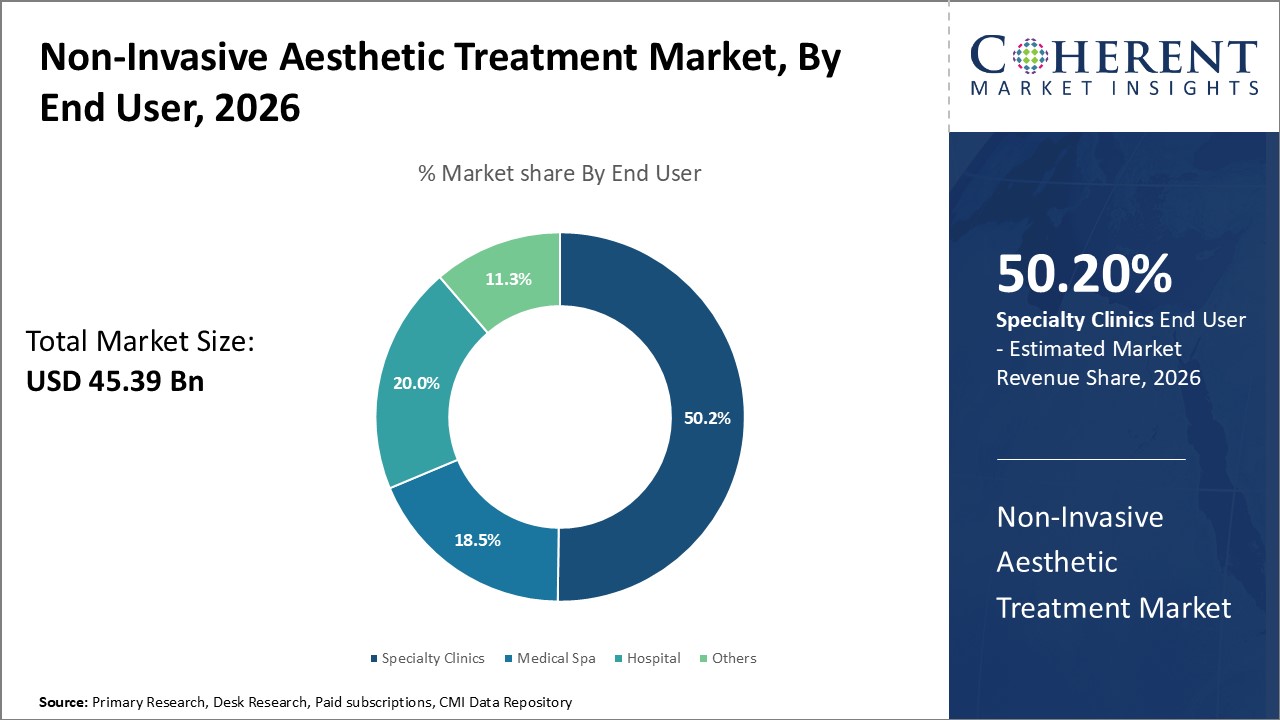
Specialty clinics are anticipated to lead the end-user segment, capturing a dominant 50.2% market share in 2026. Their growth is attributed to the convenience, personalized treatment plans, and expert consultations they provide. Compared to hospitals or general healthcare settings, specialty clinics offer shorter wait times and focus exclusively on aesthetic procedures, enhancing patient satisfaction.
The rapid proliferation of boutique and chain aesthetic clinics, particularly in urban centres, has improved accessibility and built stronger consumer trust. As more patients prioritize quality, comfort, and confidentiality, specialty clinics continue to reinforce their position as the primary destination for non-invasive cosmetic treatments.
Regional Insights
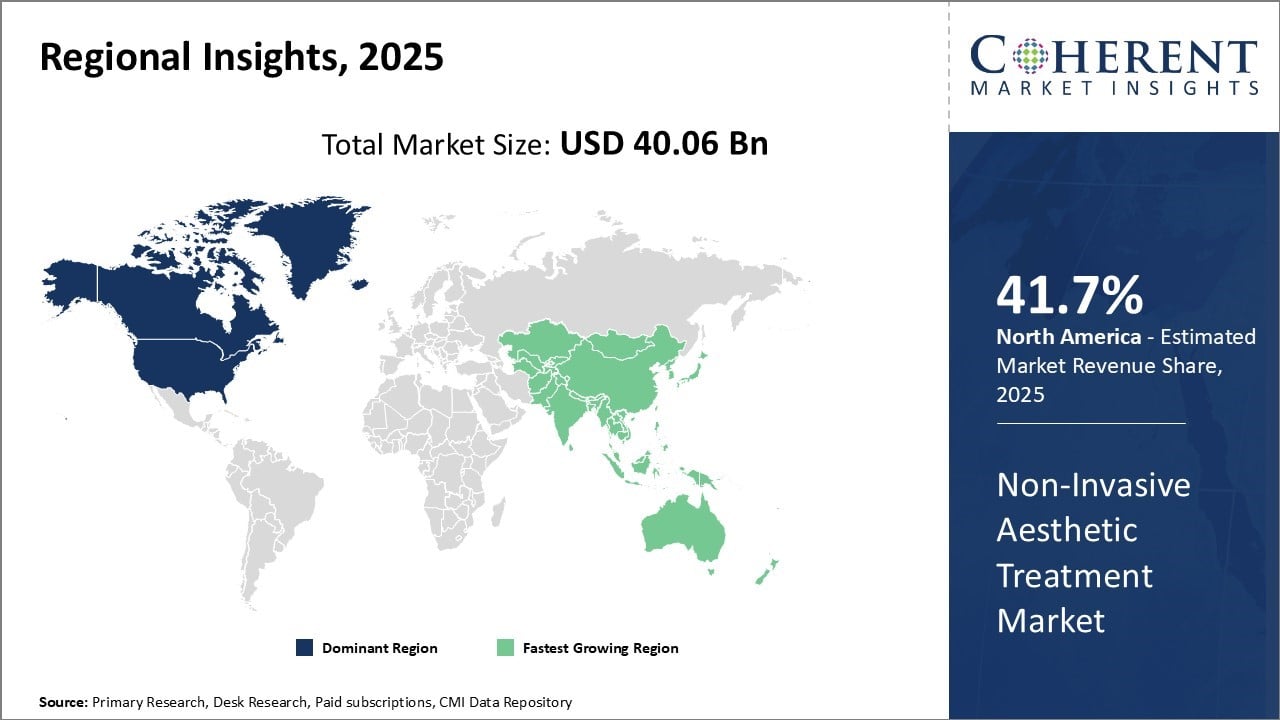
North America Non-Invasive Aesthetic Treatment Market Trends and Analysis
North America is expected to maintain its leadership position in the global non-invasive aesthetic treatment market, accounting for an estimated 41.7% market share in 2026. This dominance is driven by high consumer spending on cosmetic procedures, an advanced healthcare infrastructure, and the strong presence of leading aesthetic companies such as Allergan Aesthetics, AbbVie, and Bausch Health. The region also benefits from widespread acceptance of aesthetic enhancements, bolstered by strong cultural and media influence.
The United States continues to set global trends in aesthetic medicine, supported by a well-established regulatory environment and continuous innovation in non-invasive technologies such as injectable, laser therapies, and body contouring devices.
Rising awareness about self-care, a growing aging population, and increased demand for youthful appearances are further fuelling procedure volumes. With increasing accessibility through specialty clinics and med spas, North America remains the most mature and influential market for aesthetic treatments worldwide.
Asia Pacific Non-Invasive Aesthetic Treatment Market Trends and Analysis
Asia Pacific has emerged as the fastest-growing region in the global non-invasive aesthetic treatment market, driven by a surge in beauty consciousness, rising disposable incomes, and growing demand for personalized aesthetic solutions. Countries like China, South Korea, Japan, and India are witnessing a rapid rise in non-invasive procedure adoption, supported by an expanding urban population and cultural emphasis on appearance.
The region is experiencing significant investment from both international and local aesthetic brands seeking to tap into the growing middle-class market. Additionally, government support for healthcare infrastructure development and increased medical tourism in countries like South Korea and Thailand are strengthening regional capabilities.
With a growing preference for minimally invasive procedures and rapid digital marketing trends influencing consumer behaviour, Asia Pacific is poised to become a key engine of global growth in the non-invasive aesthetic treatment industry.
Non-Invasive Aesthetic Treatment Market Dominating Countries
United States and Canada
The United States stands as the undisputed leader in the global non-invasive aesthetic treatment market, driven by high consumer demand, a well-established cosmetic dermatology industry, and continuous product innovation. Backed by major market players such as Allergan Aesthetics, AbbVie, and Bausch Health, the U.S. consistently pioneers new trends in injectable treatments, laser technologies, and energy-based devices.
A strong regulatory framework ensures product safety and quality, while cultural acceptance and media influence further normalize and encourage aesthetic enhancements. With an aging population and increasing demand for youthful appearance, the U.S. remains a powerhouse in shaping global aesthetic preferences.
Canada complements this leadership with growing consumer interest in non-invasive procedures and a robust healthcare infrastructure that supports medical aesthetics. The country is witnessing an increase in medical spas and specialty clinics offering a wide range of advanced treatments.
Government oversight, rising wellness awareness, and affordability are contributing to strong market growth. Together, the U.S. and Canada anchor North America’s commanding 41.7% market share and continue to define innovation, accessibility, and consumer trust in the global non-invasive aesthetic treatment landscape.
Market Report Scope
Non-Invasive Aesthetic Treatment Market Report Coverage
| Report Coverage | Details | ||
|---|---|---|---|
| Base Year: | 2025 | Market Size in 2026: | USD 45.39 Bn |
| Historical Data for: | 2020 To 2024 | Forecast Period: | 2026 To 2033 |
| Forecast Period 2026 to 2033 CAGR: | 13.3% | 2033 Value Projection: | USD 108.78 Bn |
| Geographies covered: |
| ||
| Segments covered: |
| ||
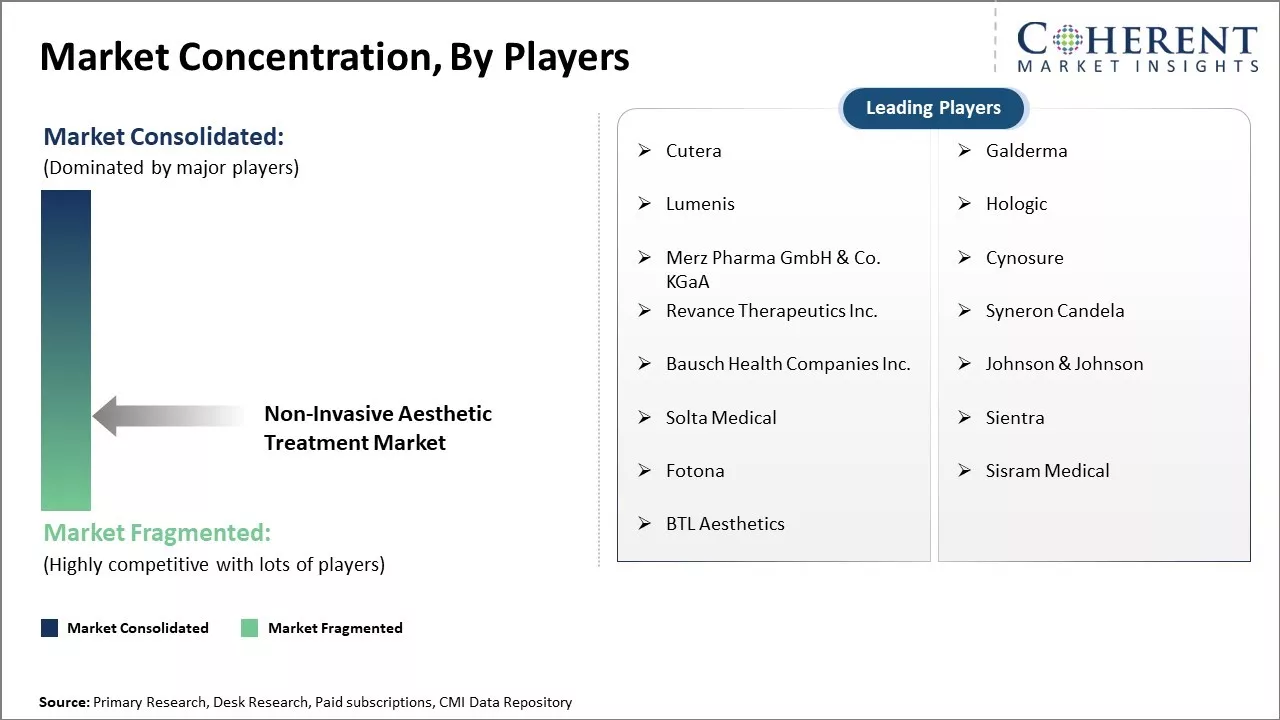
| Companies covered: | Cutera, Galderma, Lumenis, Hologic, Merz Pharma GmbH & Co. KGaA, Cynosure, Revance Therapeutics Inc., Syneron Candela, Bausch Health Companies Inc., Johnson & Johnson, Solta Medical, Sientra, Fotona, Sisram Medical, BTL Aesthetics | ||
| Growth Drivers: |
| ||
| Restraints & Challenges: |
| ||
Analyst Viewpoint – Non-Invasive Aesthetic Treatment Market
- The global non-invasive aesthetic treatment market, fuelled by growing consumer preference for minimally invasive procedures, advancements in aesthetic technologies, and rising awareness around personal wellness and appearance. The market is expected to witness sustained growth across diverse demographics, especially among younger populations and aging individuals seeking natural-looking enhancements.
- Experts identify injectable as the leading procedure type, owing to their high efficacy, quick recovery, and broad application in facial rejuvenation and contouring. Specialty clinics are set to dominate the end-user segment due to their convenience, customization, and specialized expertise.
- North America retains its leadership position, backed by a mature aesthetic ecosystem, high consumer spending, and innovation by key players like Allergan Aesthetics and AbbVie. Meanwhile, Asia Pacific emerges as the fastest-growing region, driven by rising disposable incomes, beauty consciousness, and expanding medical tourism hubs in countries like South Korea, India, and Thailand.
- Looking ahead, analysts anticipate that the integration of AI-driven diagnostics, personalized treatment planning, and multi-technology platforms will reshape the competitive landscape. Strategic partnerships between device manufacturers, aesthetic practitioners, and medtech firms will continue to drive product innovation and broaden market access globally.
Non-Invasive Aesthetic Treatment Market: Key Development
- In May 2025, The UK Royal Air Force began deploying StormShroud, a Tekever AR3 unmanned platform equipped with Leonardo UK’s BriteStorm jammer, designed to fly ahead of Typhoons and F-35s to jam enemy radar and act as a reusable electronic shield. This signals a shift toward unmanned “wingman” drones in modern air combat, enhancing mission survivability while easing crew risk.
- In January 2025, The U.S. Air Force delivered two F‑15E Strike Eagles fitted with the Eagle Passive/Active Warning and Survivability System (EPAWSS) to RAF Lakenheath, marking the first operational deployment of this advanced EW suite in Europe. Enhances crew safety and threat detection capabilities, improving interoperability among NATO allies.
- In January 2025, The Viper Shield all‑digital EW suite made its maiden flight aboard a Block 70 F‑16 at Edwards AFB, significantly upgrading jamming and situational awareness capabilities for F‑16 fleets, including export variants like the Bahraini Air Force’s jets. Boosts electronic defence and exportability of F‑16 platforms globally, underscoring digital EW modernization.
- In May 2024, At SOF Week, Anduril Industries unveiled Pulsar a compact, AI-driven electronic warfare system designed to detect and counter threats, including hostile drones. Demonstrates how AI-enhanced EW can enable rapid, adaptive responses in contested environments.
- In April 2024, BAE Systems released an AI-based cognitive electronic warfare suite capable of autonomously identifying and countering evolving signals threats. Marks a strategic advance toward autonomous EW, reducing operator workload and enhancing real-time threat resilience.
Market Segmentation
- By Procedure Type (Revenue, USD Bn, 2021 - 2033)
- Injectable
- Skin Rejuvenation
- Sclerotherapy
- Others
- By End User (Revenue, USD Bn, 2021 - 2033)
- Hospital
- Specialty Clinics
- Medical Spa
- Others
- By Region (Revenue, USD Bn, 2021 - 2033)
- North America
- U.S.
- Canada
- Latin America
- Brazil
- Argentina
- Mexico
- Rest of Latin America
- Europe
- Germany
- U.K.
- Spain
- France
- Italy
- Russia
- Rest of Europe
- Asia Pacific
- China
- India
- Japan
- Australia
- South Korea
- ASEAN
- Rest of Asia Pacific
- Middle East
- GCC Countries
- Israel
- Rest of Middle East
- Africa
- South Africa
- North Africa
- Central Africa
- Key Players Insights
- Cutera
- Galderma
- Lumenis
- Hologic
- Merz Pharma GmbH & Co. KGaA
- Cynosure
- Revance Therapeutics Inc.
- Syneron Candela
- Bausch Health Companies Inc.
- Johnson & Johnson
- Solta Medical
- Sientra
- Fotona
- Sisram Medical
- BTL Aesthetics
Sources
The Stakeholders Consulted
- Dermatologists and aesthetic physicians
- Manufacturers and suppliers of dermal fillers, Botox, and energy-based aesthetic devices
- Medical spa owners and cosmetic clinic managers
- Healthcare regulatory and compliance professionals
- Aesthetic training institutes and certification bodies
- Health and wellness consultants
- End-users across age groups seeking facial rejuvenation, body contouring, and anti-aging solutions
Databases Opened
- U.S. Food and Drug Administration (FDA) – Medical Devices and Aesthetic Procedure Approvals
- American Society of Plastic Surgeons (ASPS) – Procedural Statistics
- International Society of Aesthetic Plastic Surgery (ISAPS) – Global Aesthetic Trends Database
- National Health Service (NHS), UK – Non-Surgical Cosmetic Procedure Insights
- Indian Association of Dermatologists, Venereologists & Leprologists (IADVL) – Clinical Treatment Guidelines
Magazines & Trade Publications
- Aesthetic Medicine Magazine
- Dermatology Times
- MedEsthetics Magazine
- Modern Aesthetics
- Cosmetic Surgery Times
- Becker’s ASC Review – Aesthetic Surgery Section
Scientific and Industry Journals
- Journal of Cosmetic Dermatology
- Aesthetic Surgery Journal
- Lasers in Surgery and Medicine
- Clinical, Cosmetic and Investigational Dermatology
- Dermatologic Surgery
- Journal of Drugs in Dermatology
Newspapers & Media Outlets
- The Wall Street Journal – Healthcare & Wellness
- Bloomberg – Beauty and Medical Technology News
- Reuters – Consumer Health and Medical Innovation
- The Economic Times – Health & Lifestyle
- Business Standard – Healthcare Sector Reports
Associations and Regulatory Bodies
- American Academy of Dermatology (AAD)
- U.S. Food and Drug Administration (FDA) – Center for Devices and Radiological Health
- International Society of Aesthetic Plastic Surgery (ISAPS)
- European Academy of Dermatology and Venereology (EADV)
- Central Drugs Standard Control Organization (CDSCO), India
Public Domain Sources
- World Health Organization (WHO) – Health and Wellness Reports
- U.S. Centers for Disease Control and Prevention (CDC) – Aesthetic Treatment Safety Guidelines
- European Commission – Medical Device Regulation Updates
- Indian Ministry of Health and Family Welfare – Cosmetic Procedure Guidelines
- National Institute of Health (NIH) – Non-Invasive Technology Research
Proprietary Research Elements
- CMI Data Analytics Tool
- Proprietary CMI Repository of Aesthetic Market Data (covering past 8 years)
- CMI Expert Interviews and Transcripts (with dermatologists, aesthetic consultants, and device manufacturers)
Get access to 250+ pages report
Every segment, forecast, competitor profile and data table behind the analysis above — available for instant download.
- ESOMAR Member
- ISO 9001:2015 Certified
- D-U-N-S Registered
- GDPR & CCPA Compliant
Missing comfort of reading report in your local language? Find your preferred language:
Transform your Strategy with Exclusive Trending Reports
Frequently Asked Questions
The Non-Invasive Aesthetic Treatment Market size is estimated to be valued at USD 45.39 Bn in 2026, and is expected to reach USD 108.78 Bn by 2033.
The CAGR of the global Market is projected to be 13.3% from 2026 to 2033.
Rising desire for attractive appearance and customer desire for less downtime and quick recovery are the major factors driving the growth of global market.
Risk and complications associated with procedures and alternative beauty treatment options are the major factors hampering the growth of global market.
In terms of Procedure Type, Injectable is estimated to dominate the market revenue share in 2026.
Cutera, Galderma, Lumenis, Hologic, Merz Pharma GmbH & Co. KGaA, Cynosure, Revance Therapeutics Inc., Syneron Candela, Bausch Health Companies Inc., Johnson & Johnson, Solta Medical, Sientra, Fotona, Sisram Medical, and BTL Aesthetics are the major players.
North America is expected to lead the global market.