

North America Electroencephalogram (EEG) Market Size and Forecast – 2026 To 2033
The North America electroencephalogram (EEG) market is expected to grow from USD 1,118.0 Mn in 2026 to USD 2,147.4 Mn by 2033, registering a compound annual growth rate (CAGR) of 9.8% from 2026 to 2033. The North America electroencephalogram (EEG) market is poised for significant expansion, fueled by the increasing prevalence of neurological disorders, specifically epilepsy, which is driving the demand for accurate and non-invasive brain monitoring technologies.
According to the Epilepsy Foundation, at least 1 million people in the U.S. have uncontrolled epilepsy, highlighting the surging need for advanced EEG technologies that enable continuous brain activity monitoring, timely seizure detection, and improved clinical management of patients with drug-resistant epilepsy.
Key Takeaways of the North America Electroencephalogram (EEG) Market
- Devices are projected to hold 43.7 % of the North America electroencephalogram (EEG) market share in 2026, making it the dominant product and services segment, due to the increasing demand for neurological diagnostics and continuous technological advancements. For instance, the U.S. Food and Drug Administration (FDA) regulates electroencephalograph devices as Class II medical devices under the 510(k) Premarket Notification Program, providing a standardized regulatory pathway that supports the introduction of innovative EEG technologies while ensuring their safety and effectiveness.
- Hospitals are projected to hold 42.0 % of the North America electroencephalogram (EEG) market share in 2026, making it the dominant end user segment, due to the increasing burden of neurological disorders requiring continuous brain monitoring. For instance, the U.S. Centers for Disease Control and Prevention (CDC) reports that approximately 795,000 people experience a stroke each year in the U.S., reinforcing the need for rapid neurological assessment and continuous EEG monitoring in hospital settings.
- Expansion of EEG-Based Brain-Computer Interface (BCI) Applications: The growing adoption of brain-computer interface (BCI) technologies is creating new growth opportunities for EEG manufacturers in North America. Non-invasive EEG systems are increasingly being used for neurorehabilitation, assistive communication for patients with severe motor disabilities, and human-machine interaction research. Continued investments in neurotechnology and digital therapeutics are expected to accelerate the commercialization of advanced EEG-enabled BCI solutions.
- Growing Adoption of Continuous EEG (cEEG) in Critical Care: The increasing use of continuous EEG (cEEG) monitoring in intensive care units is expanding the clinical scope of EEG systems across North America. Continuous brain monitoring enables the early detection of non-convulsive seizures, ischemic events, and neurological deterioration in critically ill patients, improving clinical outcomes. Rising adoption of standardized neurocritical care protocols and increasing availability of remote EEG interpretation services are expected to further drive the demand for cEEG technologies.
Segmental Insights
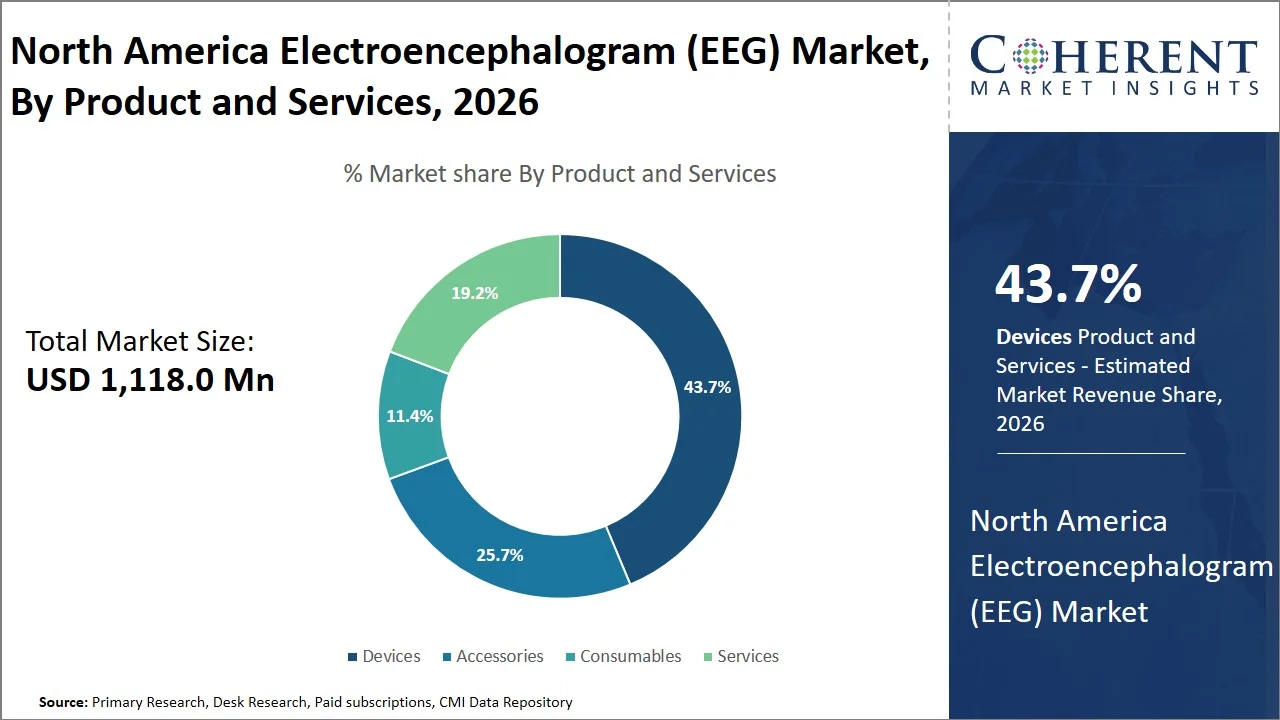
Why Do Devices Dominate the North America Electroencephalogram (EEG) Market?
Devices are projected to hold a market share of 43.7% in 2026, due to consistent advancements in digital, wireless and high-density EEG devices which enhances the accuracy of diagnosis and clinical workflow. High adoption rate in hospitals, neurology clinics and research centers to diagnose epilepsy, sleep disorders, stroke and neurodegenerative disorders fuels the market growth for this segment. Furthermore, widespread adoption of AI-enabled analytics and cloud connectivity to augment the utility of new EEG devices in clinical practice further reinforces the segment's dominance in the North America electroencephalogram (EEG) market. For instance, in May 2025, U.S.-based Natus Medical Incorporated unveiled BrainWatch, a point-of-care, wearable EEG device that is intended for fast detection of seizures in the emergency department and intensive care unit. The launch strengthens the EEG industry in North America by expanding access to portable, rapid-deployment EEG technology that supports faster neurological assessment and improves acute care workflows across healthcare facilities in the region.
- Current Industry Events of 2026
- Market Size Estimation
- Regional Breakdown
- Competitive Landscape
- Customer Intelligence
- Segmental Analysis
- Pricing Analysis
- Key Market Drivers, Challenges & Future Trends
- Customized Insights Section
Why Do Hospitals Represent the Largest End User Segment in the North America Electroencephalogram (EEG) Market?
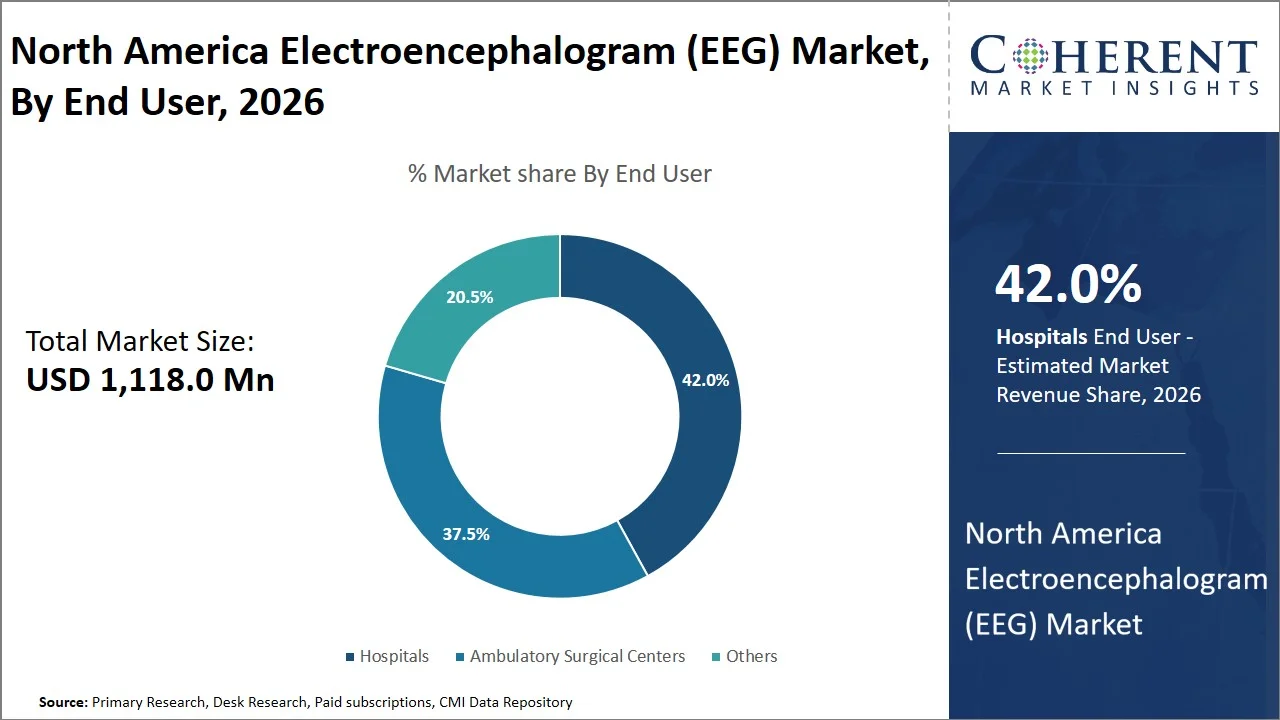
Hospitals are projected to hold 42.0% of the market share in 2026, owing to the increasing number of neurological diagnostic procedures, a large pool of patients who require continuous monitoring of their brain activity and in critical care neuro services for patients who are severely ill in neurologic wards. The presence of established advanced EEG services (such as Routine, Video EEG and cEEG) in hospital care settings as well as the availability of trained staff, diagnostic infrastructure, and tertiary care referral centers for stroke and epilepsy centers has reinforced the segment's dominance in the North America electroencephalogram (EEG) market. For instance, the Accreditation Council for Graduate Medical Education (ACGME) revised its standards for accredited epilepsy training programs in the U.S. The updated requirements mandate that training programs utilize a state-of-the-art EEG laboratory, a hospital-based epilepsy monitoring unit (EMU), and an epilepsy surgery program. These requirements are expected to strengthen hospital-based EEG infrastructure and clinical capabilities across the U.S., reinforcing the dominance of hospitals in the North America electroencephalogram (EEG) market
Current Events and their Impact
Current Events | Description and its Impact |
U.S. FDA Draft Guidance on AI-Enabled Medical Devices (January 2025) |
|
Centers for Medicare & Medicaid Services (CMS) CY 2026 Physician Fee Schedule Final Rule (November 2025) |
|
North America Electroencephalogram (EEG) Market Dynamics
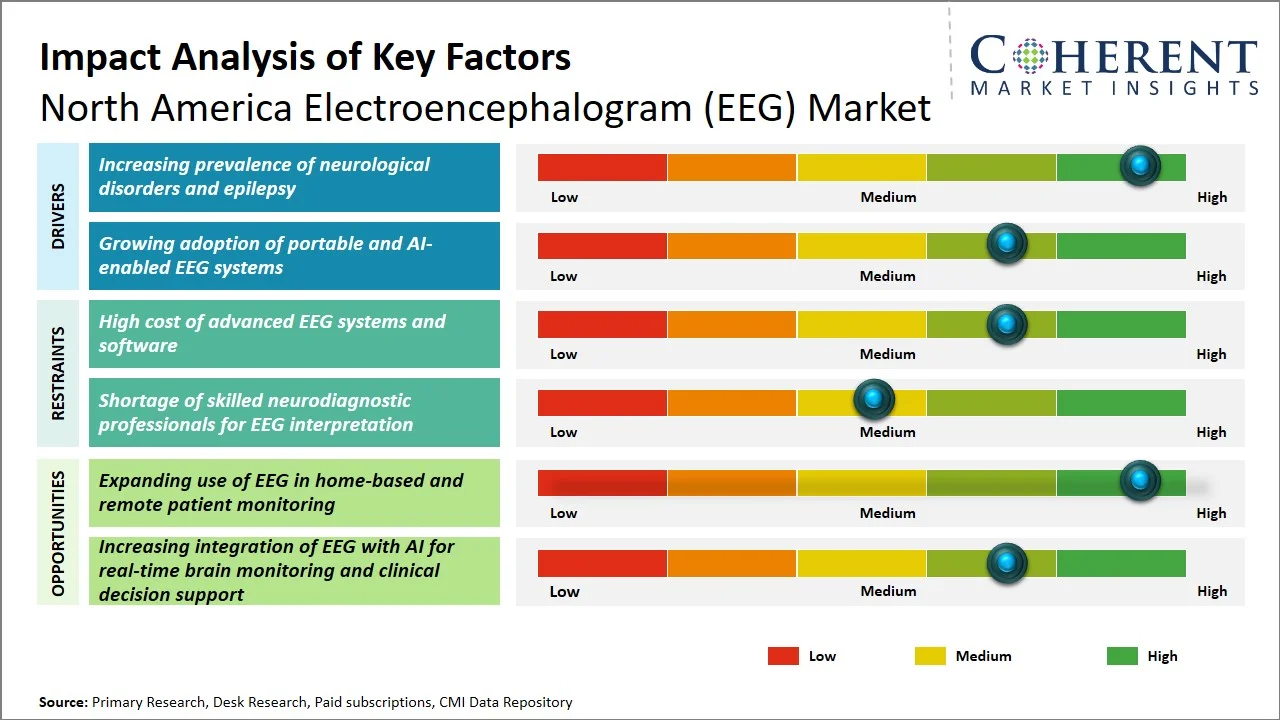
Market Drivers
- Increasing prevalence of neurological disorders and epilepsy: The escalating prevalence of neurological disorders like epilepsy, Alzheimer's disease, Parkinson's disease, and multiple sclerosis is fueling the demand for electroencephalogram (EEG) systems in North America. Prompt detection of disorders and consistent observation of electrical signals of the brain to manage such conditions is paving the way for the high uptake of EEG in the hospitals, neurology clinics and outpatient facilities in the region. The increasing geriatric population and growing emphasis on timely neurological assessment support sustained market growth. For instance, in April 2025, the Alzheimer's Association released its 2025 Alzheimer's Disease Facts and Figures report, estimating that 7.2 million Americans aged 65 and older are living with Alzheimer's disease, highlighting the growing need for neurological diagnostics and monitoring technologies, including EEG.
- Growing adoption of portable and AI-enabled EEG systems: The increasing adoption of portable and AI-enabled electroencephalogram (EEG) systems is driving market growth by enabling rapid neurological assessment across hospitals, emergency departments, and outpatient settings. These advanced systems enhance diagnostic accuracy, reduce interpretation time, and support decentralized care through real-time brain activity monitoring. Their ability to improve clinical workflow efficiency and expand access to neurological diagnostics is accelerating adoption across North America. For instance, in May 2025, the American Clinical Neurophysiology Society (ACNS) published updated Guideline 12: Guidelines for Long-Term Monitoring for Epilepsy, emphasizing the use of advanced digital EEG technologies and standardized long-term monitoring practices to improve diagnostic accuracy and patient care in epilepsy management.
Emerging Trends
- Wearable Dry-Electrode EEG Systems Gaining Clinical Acceptance: The transition from conventional wet-electrode systems to wearable dry-electrode EEG devices is improving patient comfort, reducing setup time, and enabling faster neurological assessments. These systems are increasingly being adopted in emergency care, outpatient clinics, and long-term neurological monitoring.
- Integration of EEG with Multimodal Neurodiagnostic Platforms: Healthcare providers are increasingly integrating EEG with neuroimaging, polysomnography, and other physiological monitoring technologies to obtain comprehensive neurological assessments. This multimodal approach is enhancing diagnostic accuracy for epilepsy, sleep disorders, traumatic brain injuries, and neurodegenerative diseases while supporting more personalized clinical decision-making.
Regulatory and Reimbursement Factors Influencing the North America Electroencephalogram (EEG) Market
Regulatory/Reimbursement Policy | Authority | Key Provision (2025–2026) | Impact on North America EEG Market | Future Outlook |
AI-enabled Medical Device Guidance | U.S. Food and Drug Administration (FDA) | Regulatory framework for AI-enabled medical devices | Accelerates approval of AI-integrated EEG platforms and software | Higher adoption of AI-assisted EEG diagnostics |
Physician Fee Schedule | U.S. Centers for Medicare & Medicaid Services (CMS) | Expanded reimbursement for digital health & remote monitoring | Encourages outpatient and home-based EEG utilization | Increased investment in portable EEG systems |
Medical Device Cybersecurity Requirements | U.S. Food and Drug Administration (FDA) | Stronger cybersecurity expectations for connected devices | Improves trust in cloud-connected EEG systems | Greater deployment of connected neurodiagnostic devices |
Quality System Regulation (QMSR) | U.S. Food and Drug Administration (FDA) | Alignment with ISO 13485 quality management standards | Streamlines compliance for EEG manufacturers | Faster commercialization and improved product quality |
How are the expanding use of EEG in home-based and remote patient monitoring creating new growth opportunities in the North America electroencephalogram (EEG) market?
The growing popularity of remote and home-based monitoring will present tremendous growth avenues to North America electroencephalogram (EEG) market. The development of wearable EEG devices, cloud-based platforms, and AI-driven analytics are permitting continued neurological monitoring outside traditional hospital settings. This enhances patient comfort and permit long-term monitoring of conditions such as epilepsy and various others neurological disorders. For instance, in October 2025, Nihon Kohden Corporation’s EEG-1260A Neurofax System gained U.S. Food and Drug Administration (FDA) 510(k) approval for use in the U.S. The new digital EEG system enhances workflow performance and optimizes neurological monitoring to meet demands in hospitals and ambulatory settings, promoting next-generation EEG.
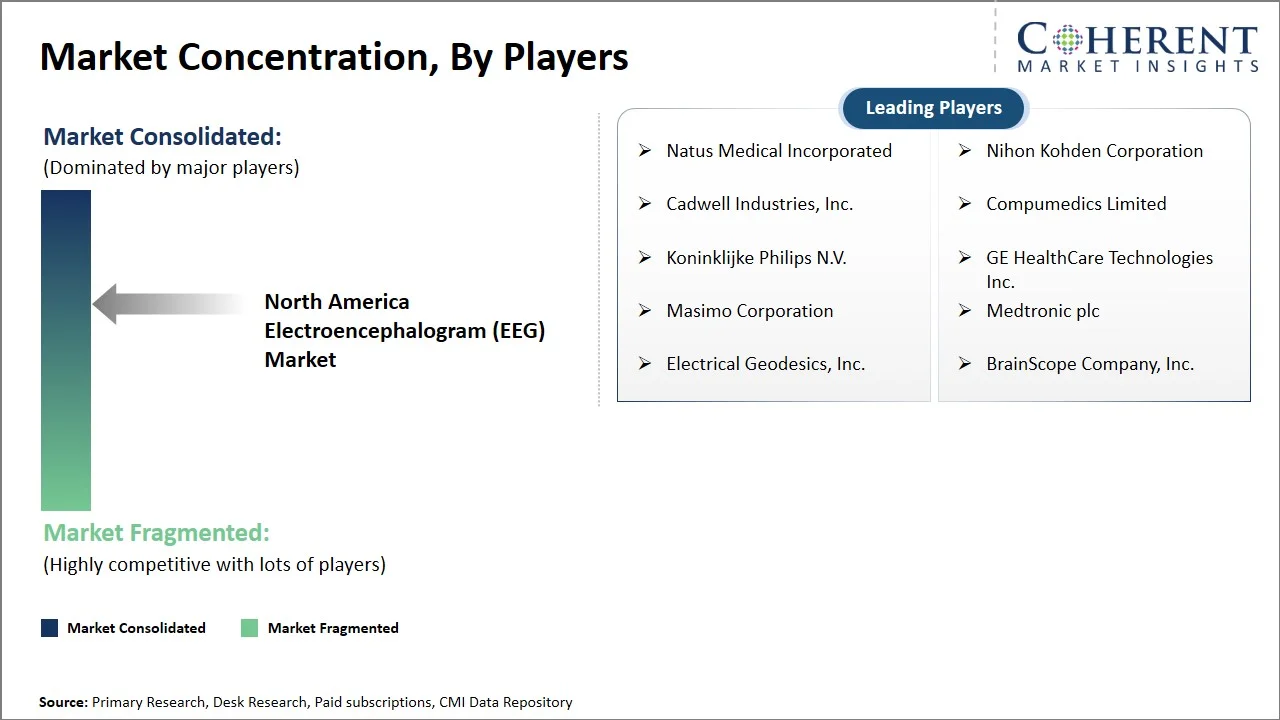
Market Players, Key Development, and Competitive Landscape
Key Developments
- In April 2026, Zeto Inc. received U.S. FDA clearance for its New Wave EEG System, designed to support short-term EEG recordings of up to 2.5 hours in outpatient and acute care settings. The portable, wireless system simplifies EEG acquisition and enables faster neurological assessments, reflecting the growing demand for accessible and efficient EEG solutions in North America.
- In January 2026, Ceribell received U.S. FDA Breakthrough Device Designation for its in-hospital large vessel occlusion (LVO) stroke detection monitor. The designation recognizes the potential of the company's AI-powered EEG platform to enable rapid identification of suspected stroke patients, supporting faster clinical decision-making and reinforcing the growing role of EEG technologies in acute neurological care.
- In October 2024, LVIS Corporation launched NeuroMatch, a cloud-based EEG diagnostics platform designed to enhance EEG interpretation through AI-driven analysis and secure cloud connectivity. The platform enables remote access and real-time collaboration among neurologists, improving diagnostic efficiency and supporting the growing adoption of digital neurodiagnostic solutions across the U.S. healthcare system.
Competitive Landscape
The North America electroencephalogram (EEG) market is characterized by intense competition among established neurodiagnostic device manufacturers focused on expanding their product portfolios through innovation, AI integration, and strategic collaborations. Companies are investing in portable, wireless, and cloud-connected EEG technologies to improve diagnostic efficiency, support remote neurological monitoring, and strengthen their presence across hospitals, ambulatory care centers, and home healthcare settings. Regulatory approvals and software advancements continue to shape competitive differentiation in the market. Key focus areas include:
- Development of portable, wireless, and wearable EEG systems for point-of-care and home-based monitoring
- Integration of artificial intelligence (AI) and cloud-based analytics for automated EEG interpretation
- Expansion of multimodal neurodiagnostic platforms combining EEG with advanced neurological monitoring technologies
- Strengthening regulatory approvals, strategic partnerships, and distribution networks to expand clinical adoption across North America
Market Report Scope
North America Electroencephalogram (EEG) Market Report Coverage
| Report Coverage | Details | ||
|---|---|---|---|
| Base Year: | 2025 | Market Size in 2026: | USD 1,118.0 Mn |
| Historical Data for: | 2020 To 2024 | Forecast Period: | 2026 To 2033 |
| Forecast Period 2026 to 2033 CAGR: | 9.8% | 2033 Value Projection: | USD 2,147.4 Mn |
| Segments covered: |
| ||
| Companies covered: | Natus Medical Incorporated, Nihon Kohden Corporation, Cadwell Industries, Inc., Compumedics Limited, Koninklijke Philips N.V., GE HealthCare Technologies Inc., Masimo Corporation, Medtronic plc, Electrical Geodesics, Inc., and BrainScope Company, Inc. | ||
| Growth Drivers: |
| ||
| Restraints & Challenges: |
| ||
Analyst Opinion (Expert Opinion)
- In the coming years, the North America electroencephalogram (EEG) market is expected to evolve from conventional diagnostic systems toward intelligent, connected neurodiagnostic platforms driven by artificial intelligence (AI), cloud-based analytics, and decentralized care models. Growing demand for early neurological disease detection, continuous brain monitoring, and remote patient management will accelerate the adoption of portable and wireless EEG technologies. Regulatory support for digital health solutions and expanding reimbursement for remote monitoring are expected to further strengthen market growth.
- The maximum growth opportunity lies within portable and AI-enabled EEG systems for epilepsy and critical care applications in the U.S., where the high prevalence of neurological disorders, advanced healthcare infrastructure, and favorable regulatory environment continue to support rapid technology adoption. Additionally, home-based neurological monitoring is anticipated to become a key high-growth segment as healthcare providers increasingly shift toward value-based and outpatient care.
- In order to create an advantage for themselves, the competitors should prioritize the development of AI-assisted EEG interpretation software, lightweight wearable EEG devices, and cloud-integrated neurodiagnostic platforms. Companies should also focus on securing timely regulatory approvals, expanding strategic partnerships with hospitals and tele-neurology providers, and generating robust clinical evidence demonstrating improved diagnostic accuracy and workflow efficiency to differentiate their offerings in an increasingly competitive market.
Speak to the analyst
Want personalized insights?
Take the findings above to one of our principal consultants, or have the report rebuilt around the segments, geographies and competitors you actually track.
Market Segmentation
- Product and Services Insights (Revenue, USD Mn, 2021 - 2033)
- Devices
- Accessories
- Consumables
- Services
- End User Insights (Revenue, USD Mn, 2021 - 2033)
- Hospitals
- Ambulatory Surgical Centers
- Others
- Key Players Insights
- Natus Medical Incorporated
- Nihon Kohden Corporation
- Cadwell Industries, Inc.
- Compumedics Limited
- Koninklijke Philips N.V.
- GE HealthCare Technologies Inc.
- Masimo Corporation
- Medtronic plc
- Electrical Geodesics, Inc.
- BrainScope Company, Inc.
Sources
Primary Research Interviews
- Neurologists – EEG utilization trends for epilepsy, stroke, and neurodegenerative disease diagnosis
- Clinical Neurophysiologists – adoption of continuous EEG (cEEG), AI-assisted interpretation, and workflow optimization
- Epileptologists – long-term EEG monitoring practices and epilepsy management trends
- Neurodiagnostic Technologists – EEG equipment selection, portability, and operational challenges
- Directors of Neurology / Neurodiagnostic Laboratory Managers – procurement strategies and utilization of advanced EEG systems
- Critical Care & ICU Physicians – adoption of continuous EEG monitoring for critically ill patients
- Sleep Medicine Specialists – EEG applications in polysomnography and sleep disorder diagnostics
Stakeholders
- Electroencephalogram (EEG) Device Manufacturers (e.g., Natus Medical Incorporated, Nihon Kohden Corporation, Cadwell Industries, Compumedics Limited, GE HealthCare Technologies Inc.)
- End-use Sectors
- Hospitals
- Neurology Clinics
- Diagnostic & Imaging Centers
- Ambulatory Surgical Centers (ASCs)
- Academic & Research Institutes
- Regulatory & Health Bodies
- U.S. Food and Drug Administration (FDA)
- Health Canada
- Centers for Medicare & Medicaid Services (CMS)
- American Clinical Neurophysiology Society (ACNS)
Databases
- U.S. FDA 510(k) Premarket Notification Database – EEG device approvals, clearances, and device classifications
- CMS Data Repository – reimbursement policies and outpatient neurodiagnostic utilization
- Centers for Disease Control and Prevention (CDC) – neurological disease prevalence and public health statistics
- National Institute of Neurological Disorders and Stroke (NINDS) – neurological research, epilepsy, and brain disorder data
- National Library of Medicine (PubMed) – clinical studies on electroencephalography, AI-enabled EEG, and neurodiagnostics
- ClinicalTrials.gov – ongoing clinical trials involving EEG technologies, epilepsy, stroke, sleep disorders, and neurodegenerative diseases
- American Clinical Neurophysiology Society (ACNS) Clinical Practice Guidelines – EEG standards, long-term monitoring, and reporting guidelines
Magazines
- Neurology Today
- Medical Device and Diagnostic Industry (MD+DI)
- NeuroImage Journal Magazine
- BioMedical Technology World
Journals
- Journal of Clinical Neurophysiology
- Clinical Neurophysiology (Elsevier)
- Brain Topography – Springer Journal
Associations
- American Clinical Neurophysiology Society (ACNS)
- American Academy of Neurology (AAN)
- Neurocritical Care Society (NCS)
- American Epilepsy Society (AES)
Public Domain Sources
- U.S. Food and Drug Administration (FDA)
- National Institutes of Health (NIH)
- Centers for Disease Control and Prevention (CDC)
- U.S. Census Bureau
Proprietary Elements
- CMI Data Analytics Tool, Proprietary CMI Existing Repository of information for last 10 years.
Get access to 250+ pages report
Every segment, forecast, competitor profile and data table behind the analysis above — available for instant download.
- ESOMAR Member
- ISO 9001:2015 Certified
- D-U-N-S Registered
- GDPR & CCPA Compliant
Missing comfort of reading report in your local language? Find your preferred language:
Transform your Strategy with Exclusive Trending Reports
Frequently Asked Questions
The North America electroencephalogram (EEG) market is estimated to be valued at USD 1,118.0 Mn in 2026 and is expected to reach USD 2,147.4 by 2033.
Devices dominate due to their indispensable role in brain activity monitoring, continuous technological advancements in portable and AI-enabled EEG systems, and widespread adoption across hospitals, neurology clinics, and diagnostic centers.
An electroencephalogram (EEG) is a non-invasive neurodiagnostic test that records the brain's electrical activity using electrodes placed on the scalp to diagnose and monitor neurological disorders.
The CAGR of the North America electroencephalogram (EEG) market is projected to be 9.8% from 2026 to 2033.
Increasing prevalence of neurological disorders and epilepsy, and growing adoption of portable and AI-enabled EEG systems are the major factors driving the growth of the North America electroencephalogram (EEG) market.
High cost of advanced EEG systems and software, and shortage of skilled neurodiagnostic professionals for EEG interpretation are the major factors hampering the growth of the North America electroencephalogram (EEG) market.
In terms of end user, hospitals are estimated to dominate the market revenue share in 2026.