

Linear Accelerators For Radiation Market Size and Forecast — 2026 - 2033
The Global Linear Accelerators For Radiation Market size is estimated to be valued at USD 5.8 billion in 2026 and is expected to reach USD 12.4 billion by 2033, exhibiting a compound annual growth rate (CAGR) of 11.2% from 2026 to 2033.
Overview
The Linear Accelerators for Radiation market is driven by the rising global prevalence of cancer and the growing demand for advanced radiotherapy treatments. Increasing adoption of precision oncology, image-guided radiation therapy (IGRT), and intensity-modulated radiation therapy (IMRT) is boosting the use of linear accelerators due to their ability to deliver highly targeted treatment while minimizing damage to healthy tissues. Expanding healthcare infrastructure, greater investments in oncology centers, and favorable government initiatives supporting cancer care further contribute to market growth. Additionally, technological advancements, including AI-enabled treatment planning and adaptive radiotherapy systems, are enhancing treatment outcomes and driving adoption worldwide.
Key Takeaways
Conventional Linear Accelerators dominate the market with a 60% share, driven by widespread clinical adoption, reliability, and proven effectiveness in cancer treatment procedures.
Oncology remains the leading application segment, acquiring 50% share, fueled by rising global cancer incidence and increasing adoption of advanced radiotherapy protocols for improved patient outcomes.
Diagnostic radiology is also expanding steadily, driven by growing use of linear accelerators in tumor imaging, treatment planning, and improved cancer detection support.
North America holds the largest regional share at around 38%, supported by advanced healthcare infrastructure and early adoption of innovative radiotherapy technologies.
Asia Pacific is the fastest-growing region with a CAGR of around 14%, driven by rising healthcare investments, expanding hospital networks, and increasing cancer burden.
Europe remains a key market contributor due to strong regulatory frameworks, advanced oncology centers, and continuous adoption of high-precision radiation therapy systems.
Nanostructured Drug Market Segmentation Analysis
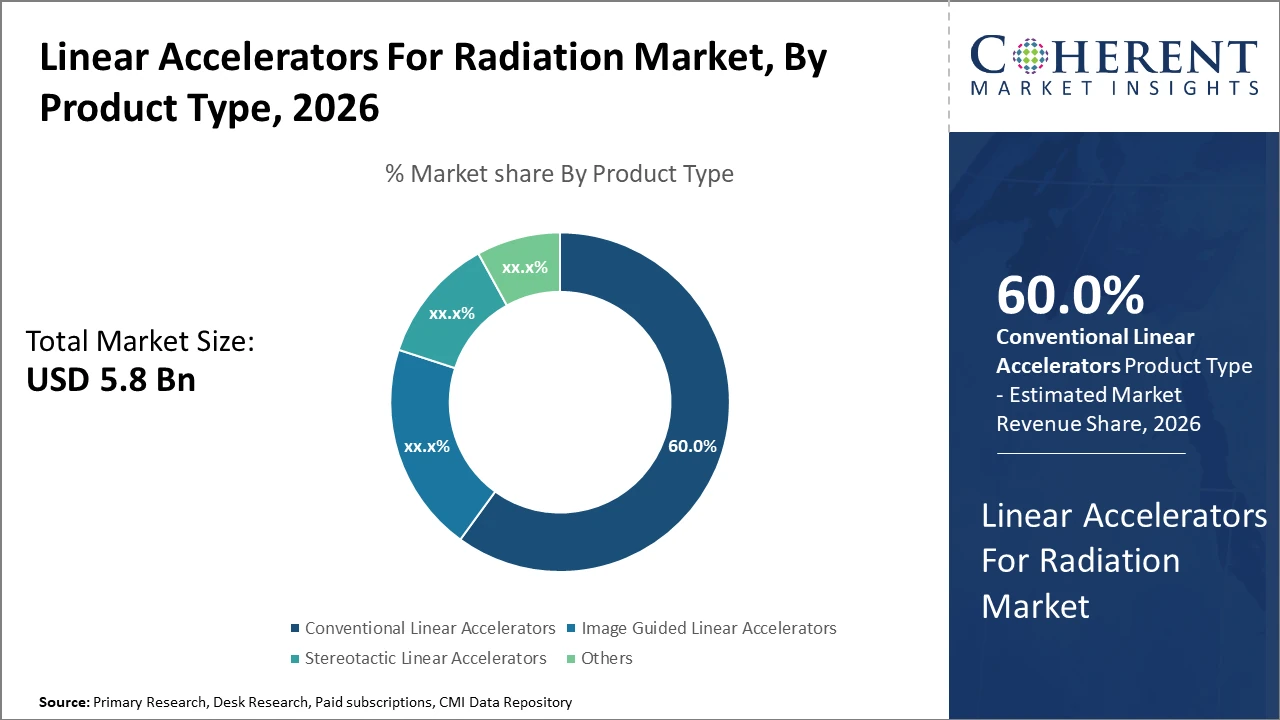
Nanostructured Drug Market Insights, By Product Type
Conventional linear accelerators dominate the market due to their proven reliability, widespread clinical adoption, and cost-effectiveness, making them the foundation of most oncology departments globally. Image guided linear accelerators are the fastest growing segment, supported by increasing demand for precision radiotherapy, real-time tumor tracking, and improved treatment accuracy that reduces damage to surrounding healthy tissues. Stereotactic linear accelerators account for a smaller share but are critical for highly targeted treatments of complex or small tumors, particularly in brain and spine cancer cases. Other systems include emerging hybrid platforms that integrate multiple radiation techniques for specialized and advanced clinical oncology applications worldwide.
Linear Accelerators For Radiation Market Insights, By Application
The oncology segment dominates the linear accelerators for radiation market with a share of 50% due to the rising global cancer burden and the established role of radiotherapy as a primary treatment modality. Continuous advancements in treatment planning systems and personalized radiotherapy approaches further strengthen its leading position. Diagnostic radiology is the fastest-growing subsegment, driven by increasing use of linear accelerators in tumor imaging, treatment planning, and integrated diagnostic workflows that improve treatment accuracy and outcomes. Research and academic institutes contribute to technological innovation and clinical validation of new therapies but account for a smaller share due to limited revenue generation. Other applications include veterinary oncology and experimental therapeutic uses.
Linear Accelerators For Radiation Market Insights, By End User
Hospitals and cancer centers dominate the linear accelerators for radiation market, accounting for over 65% share due to the concentration of advanced oncology treatments and radiotherapy infrastructure within specialized healthcare facilities. These centers serve as primary hubs for cancer diagnosis and treatment, driving consistent demand for high-capacity linear accelerators. Ambulatory surgery centers represent the fastest-growing subsegment, supported by rising adoption of compact systems that offer cost efficiency, shorter patient stays, and improved accessibility. Research laboratories play a key role in clinical trials and innovation but contribute a smaller revenue share. Other facilities include smaller clinics and specialty oncology units expanding access to localized cancer care.
Nanostructured Drug Market Trends
The market is being reshaped by AI-powered treatment delivery systems and growing demand for personalized oncology care, improving precision, efficiency, and adaptive radiotherapy planning.
Image-guided and intensity-modulated radiation therapies are increasingly adopted, with over 40% of treatments in 2025 using these technologies to reduce damage to healthy tissues and enhance clinical outcomes.
A shift toward modular and mobile linear accelerators is expanding access, with over 1,200 mobile units deployed in China in 2026, while integration with immunotherapy is emerging as a key trend in combination cancer treatment approaches.
Linear Accelerators For Radiation Market Insights, By Geography
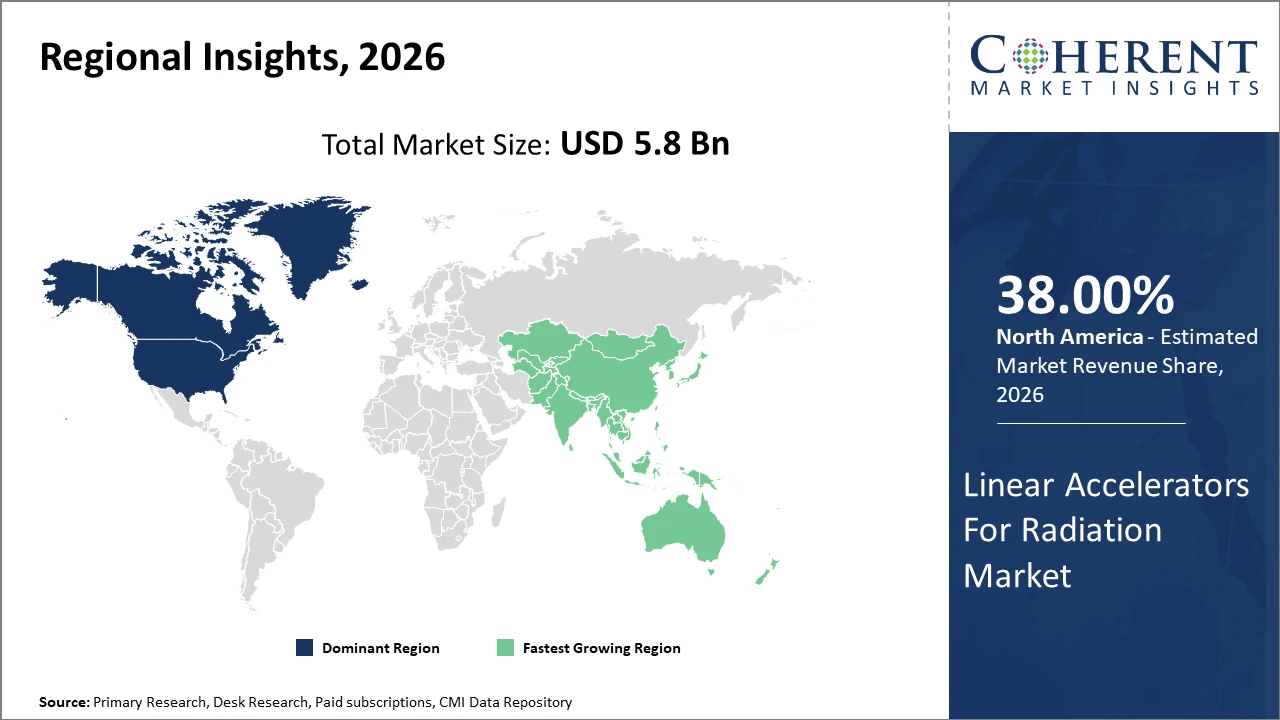
North America Linear Accelerators For Radiation Market Analysis and Trends
North America dominates the linear accelerators for radiation market due to its advanced healthcare infrastructure, strong R&D ecosystem, and favorable reimbursement policies. The region accounts for approximately 38% of the global market share in 2026, reflecting its early adoption of cutting-edge radiotherapy technologies. The presence of leading companies such as Varian Medical Systems and Elekta AB further strengthens its competitive position through continuous innovation in precision oncology solutions. Government initiatives supporting cancer research funding and healthcare modernization also contribute to market expansion. High awareness of early cancer detection and widespread access to advanced treatment facilities further reinforce North America’s leadership in this market.
Asia Pacific Linear Accelerators For Radiation Market Analysis and Trends
Asia Pacific exhibits the fastest growth in the linear accelerators for radiation market, with a CAGR of around 14%, driven by rising cancer prevalence and expanding healthcare infrastructure across countries such as China and India. Increasing government investments in cancer care facilities and supportive reimbursement policies are significantly boosting adoption rates. The region also benefits from growing healthcare expenditure and rapid expansion of hospital networks. Local manufacturing capabilities help reduce equipment costs and improve accessibility. Companies such as United Imaging Healthcare and Neusoft Medical Systems play a key role by offering cost-effective and region-specific solutions, further strengthening market penetration and regional competitiveness.
Linear Accelerators For Radiation Market Outlook for Key Countries
USA Linear Accelerators For Radiation Market Analysis and Trends
The USA is a key market for linear accelerators, contributing nearly 30% of global revenue in 2026. This dominance is supported by advanced healthcare infrastructure, strong research funding, and rapid adoption of innovative radiotherapy technologies. Leading companies such as Varian Medical Systems and Accuray Incorporated have introduced AI-assisted radiation therapy systems and cloud-enabled device management solutions, enhancing treatment precision and operational efficiency. Growing investment in cancer research and increasing use of advanced modalities like proton therapy further strengthen market expansion. Additionally, U.S. hospital networks reported a 12% rise in linear accelerator installations in 2025 due to rising cancer cases and equipment replacement cycles.
Germany Linear Accelerators For Radiation Market Analysis and Trends
Germany’s linear accelerators for radiation market is driven by a highly advanced healthcare infrastructure and strong emphasis on precision oncology. The country benefits from widespread adoption of image-guided radiotherapy and intensity-modulated radiotherapy systems across leading cancer treatment centers. Government-backed healthcare funding and insurance coverage support access to high-cost radiotherapy technologies. Germany is also a hub for medical technology innovation, with manufacturers focusing on AI-integrated treatment planning and adaptive radiotherapy solutions. Increasing cancer incidence and demand for non-invasive treatment options further support market growth. Additionally, strict regulatory standards ensure high-quality equipment usage, reinforcing Germany’s position as a key European market for linear accelerators.
Analyst Opinion
Technological integration, including Adaptive Radiation Therapy (ART) and real-time motion management, is driving market expansion, with over 35% of new linear accelerators in 2025 featuring ART capabilities to improve precision and reduce tissue damage.
Rising cancer incidence, with a 20% global increase from 2024 to 2026, along with a 15% rise in radiotherapy sessions in U.S. hospitals in 2025, is significantly boosting demand for advanced linear accelerators.
Production and export capacities, especially in Asia Pacific, expanded by around 25% between 2024 and 2026, supporting greater affordability, stronger supply chains, and wider global market penetration.
Pricing dynamics show a 5% decline in average equipment costs from 2024 to 2026 due to competitive strategies, improving accessibility and accelerating adoption in mid-sized hospitals and cancer centers.
- Current Industry Events of 2026
- Market Size Estimation
- Regional Breakdown
- Competitive Landscape
- Customer Intelligence
- Segmental Analysis
- Pricing Analysis
- Key Market Drivers, Challenges & Future Trends
- Customized Insights Section
Market Scope
| Report Coverage | Details | ||
|---|---|---|---|
| Base Year: | 2025 | Market Size in 2026: | USD 5.8 billion |
| Historical Data for: | 2020 To 2024 | Forecast Period: | 2026 To 2033 |
| Forecast Period 2026 to 2033 CAGR: | 11.2% | 2033 Value Projection: | USD 12.4 billion |
| Geographies covered: |
| ||
| Segments covered: |
| ||
| Companies covered: | Elekta AB, IBA Group, Brainlab AG, Accuray Incorporated, Hitachi Ltd., ViewRay Inc., Shimadzu Corporation, Quantum Medical Imaging, Varian Medical Systems, Cablon Medical B.V. | ||
| Growth Drivers: |
| ||
Linear Accelerators For Radiation Market Growth Factors
The increasing prevalence of cancer and the aging global population are major drivers of demand for advanced radiation therapy solutions, supporting strong growth in the linear accelerators for radiation market. Government health initiatives and regulatory approvals promoting early cancer diagnosis are expanding treatment access, particularly in developing regions. Technological advancements such as proton therapy-enabled systems, modular designs, and AI-integrated platforms are improving treatment precision, reducing downtime, and enhancing clinical efficiency. Additionally, the growing adoption of precision medicine is enabling patient-specific treatment approaches, further strengthening demand. These factors collectively are encouraging higher investments in research and development and accelerating overall market expansion.
Linear Accelerators For Radiation Market Development
In September 2025, SJMC launched Malaysia’s first ExacTrac Dynamic system, enabling sub-millimetric radiotherapy precision, improved tumor targeting, and expanded treatment capabilities for spine and other cancers.
Key Players
Leading Companies of the Market
Elekta AB
IBA Group
Brainlab AG
Accuray Incorporated
Hitachi Ltd.
ViewRay Inc.
Shimadzu Corporation
Quantum Medical Imaging
Varian Medical Systems
Cablon Medical B.V.
Several market players are actively pursuing product innovation and strategic partnerships to strengthen their market position. In 2025, Varian Medical Systems collaborated with major cancer centers to develop cloud-connected linear accelerators, enabling remote monitoring, improved data integration, and enhanced treatment customization, which helped expand its market share in North America. This advancement also improved operational efficiency and supported the shift toward digitally integrated oncology systems. Similarly, Elekta AB’s acquisition of a precision radiotherapy company in 2024 accelerated its expansion in the Asia Pacific region by strengthening its technological capabilities and distribution network, allowing it to better serve the growing demand for advanced radiation therapy solutions.
Linear Accelerators For Radiation Market Future Outlook
The future outlook for the linear accelerators for radiation market is highly positive, driven by rising global cancer incidence and increasing demand for advanced, precise radiotherapy solutions. Technological innovations such as AI-assisted treatment planning, adaptive radiotherapy, and real-time imaging integration are expected to significantly enhance treatment accuracy and efficiency. Expanding healthcare infrastructure in emerging economies will improve access to linear accelerator systems, supporting market growth. Additionally, growing preference for non-invasive cancer treatments and government investments in oncology care will further boost adoption. Continuous product advancements focused on compact, cost-effective, and automated systems will shape the market’s evolution over the coming years.
Linear Accelerators For Radiation Market Historical Analysis
The historical analysis of the linear accelerators for radiation market shows steady growth driven by increasing global cancer prevalence and advancements in radiotherapy technologies. Early adoption was concentrated in developed regions such as North America and Europe due to high costs and complex infrastructure requirements. Over time, technological improvements in image-guided radiotherapy, intensity-modulated radiotherapy, and treatment planning systems enhanced clinical effectiveness and broadened adoption. Government investments in oncology care and hospital infrastructure further supported expansion. In emerging economies, gradual improvements in healthcare access contributed to increased installations. Overall, continuous innovation and rising demand for precise cancer treatment have shaped the market’s long-term growth trajectory.
Sources
Primary Research Interviews:
Medical device manufacturers, linear accelerator (LINAC) producers, oncology equipment suppliers, radiation therapy system integrators, and hospital procurement managers involved in radiotherapy infrastructure planning and deployment.
Radiation oncologists, medical physicists, oncology researchers, clinical engineers, healthcare administrators, regulatory consultants, and R&D directors specializing in radiotherapy systems, image-guided radiation therapy (IGRT), stereotactic radiosurgery (SRS), and cancer treatment technologies.
Magazines:
Medical Physics International – Coverage of radiotherapy innovations, linear accelerator technologies, and clinical treatment advancements.
Health Management Technology – Insights into hospital technology adoption, oncology equipment trends, and healthcare infrastructure upgrades.
Oncology Times – Updates on cancer treatment methods, radiotherapy developments, and clinical oncology practices.
Journals:
International Journal of Radiation Oncology, Biology, Physics – Research on radiotherapy techniques, LINAC performance, and clinical outcomes.
Radiotherapy and Oncology – Studies on advanced radiation therapy systems, treatment planning, and cancer management innovations.
Medical Physics – Research covering radiation physics, imaging integration, and technological improvements in linear accelerators.
Newspapers:
Financial Times – Coverage of medical technology investments, healthcare infrastructure spending, and oncology market expansion.
Bloomberg – Insights into medical device companies, hospital capital expenditure trends, and global oncology market dynamics.
Reuters – Reporting on medical device approvals, clinical advancements, and healthcare policy changes affecting radiotherapy adoption.
Associations:
American Society for Radiation Oncology (ASTRO) – Guidelines, research, and clinical standards for radiation therapy and LINAC usage.
European Society for Radiotherapy and Oncology (ESTRO) – Research collaboration, training, and innovation in radiotherapy technologies.
International Atomic Energy Agency (IAEA) – Global standards, safety guidelines, and capacity-building programs for radiation therapy systems.
Get access to 250+ pages report
Every segment, forecast, competitor profile and data table behind the analysis above — available for instant download.
- ESOMAR Member
- ISO 9001:2015 Certified
- D-U-N-S Registered
- GDPR & CCPA Compliant
Missing comfort of reading report in your local language? Find your preferred language:
Transform your Strategy with Exclusive Trending Reports
Frequently Asked Questions
Leading market companies include Elekta AB, Varian Medical Systems, Accuray Incorporated, and Hitachi Ltd., recognized for strong innovation capabilities and comprehensive product portfolios in radiotherapy systems.
The market is projected to grow from USD 5.8 billion in 2026 to USD 12.4 billion by 2033, reflecting a compound annual growth rate of 11.2% during the forecast period.
Hospitals and cancer centers dominate the market with around 65% share, offering the largest growth opportunities due to rising cancer incidence and increasing demand for advanced radiotherapy treatments.
Market trends are expected to shift toward AI-driven treatment planning, mobile and compact systems, and hybrid radiotherapy techniques that enhance precision, efficiency, and accessibility.
The market remains highly competitive, with key challenges including high capital costs and system complexity, while companies focus on innovation and strategic partnerships to expand global presence.
Common strategies include mergers and acquisitions, collaborations with hospitals and cancer centers, and strong investment in R&D to develop advanced treatment technologies and reduce overall costs.