

Brain Monitoring Market Size and Forecast – 2026 to 2033
The global brain monitoring market is estimated to be valued at USD 4,458.0 Mn in 2026 and is expected to reach USD 7,300.2 Mn in 2033, exhibiting a compound annual growth rate (CAGR) of 7.3% from 2026 to 2033.
Key Takeaways from the Brain Monitoring Market Report
- Magnetoencephalograph segment is anticipated to grow significantly during the assessment period. This is attributable to its superior ability to provide high temporal and spatial resolution in detecting neural activity.
- Based on application, Parkinson’s disease segment is expected to account for a prominent brain monitoring market share in 2026.
- Hospitals are anticipated to remain leading end users for brain monitoring products during the assessment period.
- North America is projected to lead the global brain monitoring industry, capturing a share of 42.5% in 2026.
- Europe is slated to remain the second-leading market for brain monitoring solutions, owing to increasing incidence of brain disorders and growing geriatric population.
Brain Monitoring Market Overview
The global brain monitoring market is expected to experience strong growth throughout the forecast period. This is mostly due to the increasing incidence of brain disorders and growing geriatric population across the globe.
Moreover, rise in demand for brain monitoring devices and an increase in research & development worldwide are expected to boost market growth. However, factors such as stringent regulatory framework for device approval and lack of skilled personnel to handle monitoring devices might hamper the market growth.
There is a continuous increase in new launches and approvals of advanced brain monitoring solutions globally. For instance, in June 2024, Zeto obtained FDA 510(k) clearance for its groundbreaking next-generation EEG brain monitoring product, ONE, from the U.S. FDA.
Zeto ONE is approved for EEG brain monitoring in homes, hospitals, ambulances, and even during air transport. Such new product launches and approvals are expected to boost the brain monitoring market growth during the projection period.
Current Events and Their Impact on the Brain Monitoring Market
Current Event | Description and its Impact |
AI and Machine Learning Integration in Healthcare Technology |
|
Global Aging Population and Neurological Disease Surge |
|
Role of AI (Artificial intelligence) in Brain Monitoring Industry
AI is transforming the brain monitoring industry by enabling real-time analysis of complex neurological data. It integrates and interprets signals from various sources—such as EEG, ICP, and imaging—to detect patterns, predict complications, and support clinical decision-making. AI algorithms can identify subtle changes in brain activity that may be missed by human observers, allowing for earlier intervention and personalized treatment.
In September 2025, Moberg Analytics launched the Moberg Clinical Platform (MCP), its first product designed to address the complexity of brain function and the evolving nature of brain injury. Debuting at the Neurocritical Care Society Annual Meeting, MCP uses advanced analytics and AI to deliver real-time insights from multimodal data, helping clinicians make faster, more informed decisions in critical care.
- Current Industry Events of 2026
- Market Size Estimation
- Regional Breakdown
- Competitive Landscape
- Customer Intelligence
- Segmental Analysis
- Pricing Analysis
- Key Market Drivers, Challenges & Future Trends
- Customized Insights Section
Segmental Insights
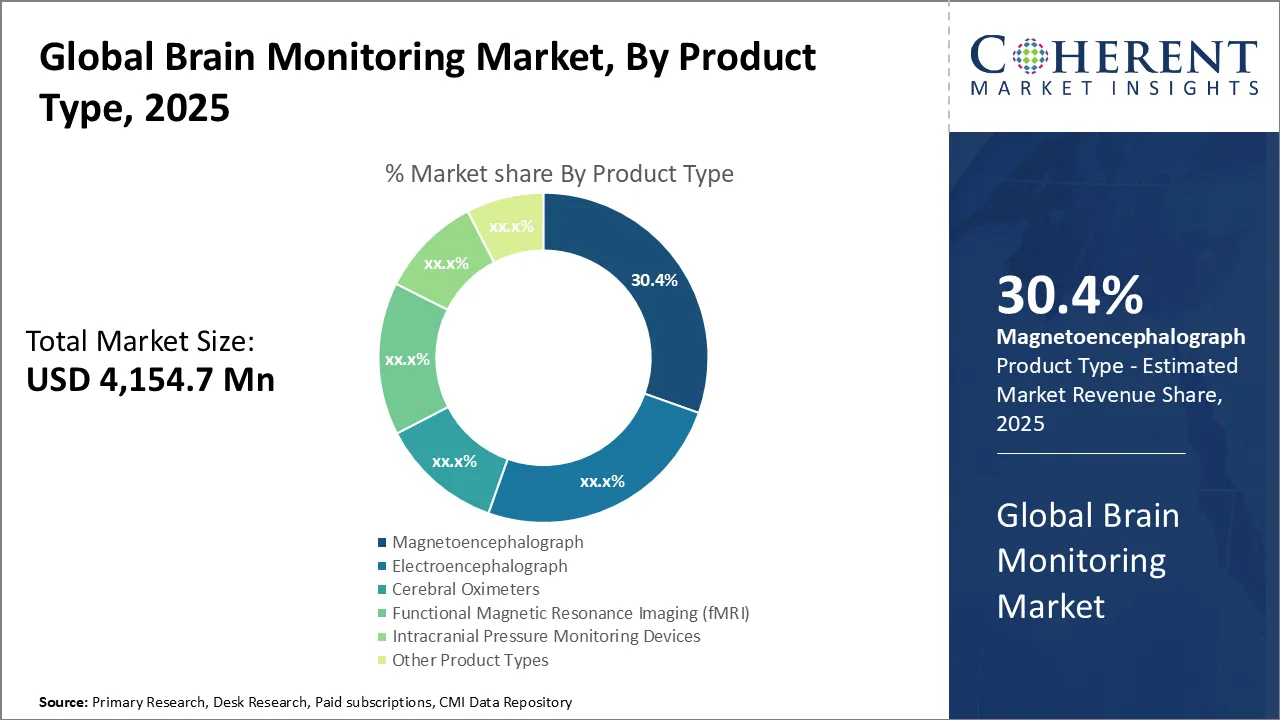
Brain Monitoring Market Insights, By Product Type: High Precision and Real-Time Mapping Making MEG Popular
Magnetoencephalograph segment is poised to exhibit strong growth during the forecast period. This is attributable to the rising use of magnetoencephalography due to its ability to provide highly accurate, real-time mapping of brain activity.
Magnetoencephalography (MEG) is an advanced, non-invasive method used to evaluate and record the brain while it is actively functioning. It is gaining traction due to its high precision as well as ability to capture real-time brain activity.
MEG offers superior spatial and temporal resolution, enabling clinicians to pinpoint abnormal brain activity with greater precision. This makes it especially valuable in diagnosing and managing neurological conditions like epilepsy, brain tumors, and traumatic brain injuries, where accurate brain mapping is critical for treatment planning.
Additionally, growing adoption of MEG in research and clinical settings is further driving segment growth. Its ability to assess functional brain networks non-invasively has expanded its use in neurology and cognitive neuroscience studies.
A recent development highlighting MEG’s growing popularity is the €2 Mn wearable MEG scanner introduced at Trinity College Dublin in September 2025. This innovative system uses optically pumped magnetometers (OPMs) to capture real-time brain activity with high precision, helping detect neurological disorders like epilepsy, dementia, and ADHD early.
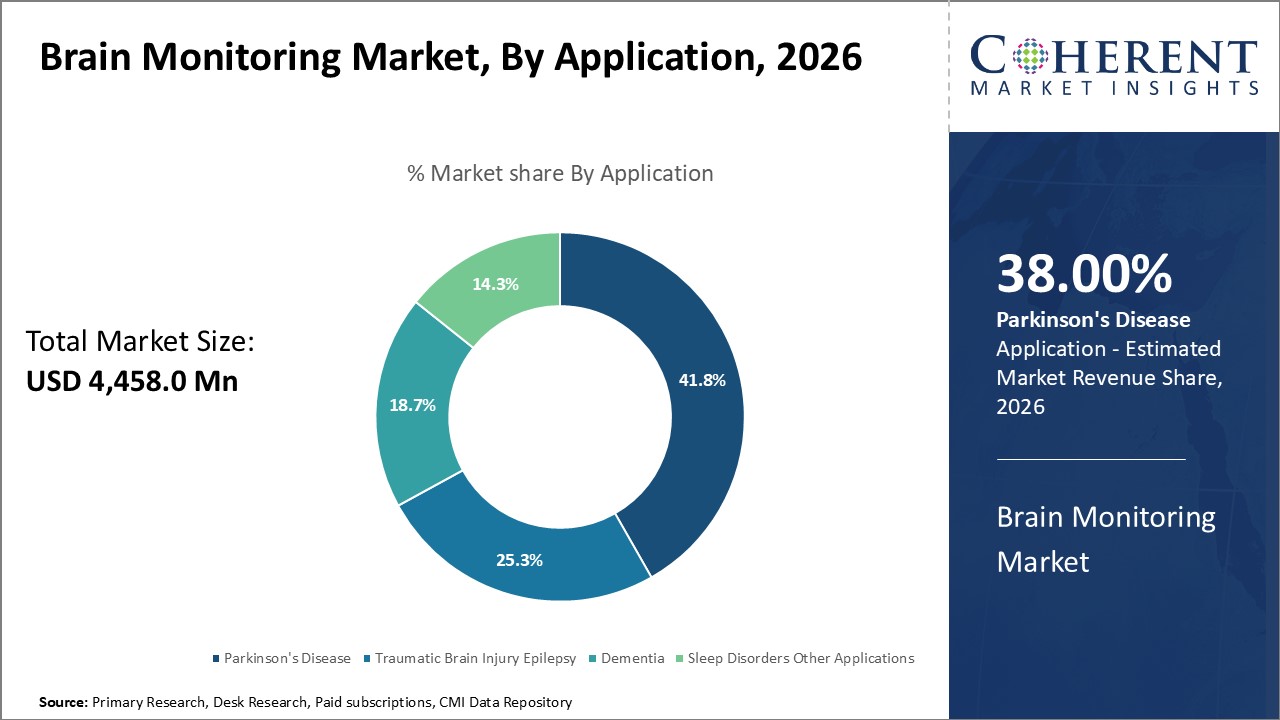
Brain Monitoring Market Insights, By Application: Brain Monitoring Market Sees Parkinson’s Disease at the Forefront
Parkinson’s disease segment is expected to dominate the brain monitoring industry during the assessment period. This can be attributed to increasing prevalence of Parkinson’s disease worldwide.
There is a spike in neurological conditions like Parkinson’s disease globally. These disorders often require continuous and precise brain monitoring for effective diagnosis and management, thereby fueling demand for brain monitoring devices.
According to researchers, the number of people living with Parkinson’s disease is expected to reach about 25.2 million by 2050. This anticipated increase in Parkinson’s disease is slated to boost growth of the brain monitoring market during the assessment period.
Regional Insights
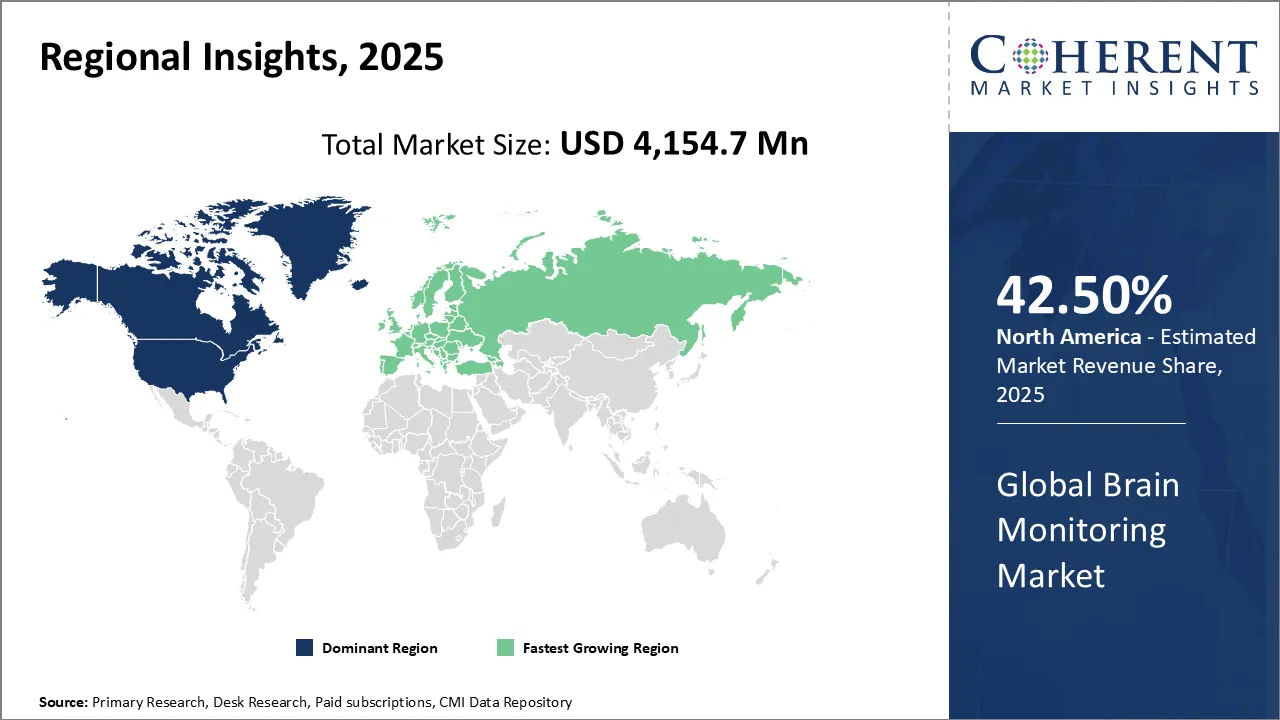
North America Remains at the Epicenter of Brain Monitoring Market Growth
North America currently dominates the global brain monitoring industry, accounting for a prominent market share of 42.5%. This can be attributed to increasing incidence of brain disorders, such as Parkinson’s disease, and advancements in brain monitoring technologies.
According to the Parkinson’s Foundation, nearly one million people in the U.S. are living with PD (Parkinson's disease), and this number is expected to reach 1.2 million by 2032. This high disease burden is expected to uplift demand for brain monitoring solutions in the region.
Brain monitoring techniques allow researchers and physicians to study human activities, brain-computer interfaces, and brain disorders. High demand, along with ongoing technology improvements and more healthcare spending, is set to strengthen North America’s leading position in the brain monitoring market.
Europe Brain Monitoring Market Analysis & Trends
Europe market is poised to witness robust growth during the assessment period. This is due to rising prevalence of brain disorders, growing geriatric population in the region, and increasing support from governments and organizations like Parkinson's Europe.
Parkinson’s disease is highly individual, with symptoms varying from person to person. This necessitates a personalized approach to treatment and care, making brain monitoring essential for effective disease management.
Brain Monitoring Market Outlook – Country-wise
United States Leads in Brain Monitoring Technology Adoption
The U.S. brain monitoring market is expected to grow steadily due to rising awareness about brain health and neurological disorders. Hospitals, clinics, and research centers in the nation are increasingly adopting advanced monitoring technologies.
There is also an increase in government and private initiatives aimed at promoting early diagnosis and treatment of neurological conditions. For instance, in 2026, the U.S. Department of Defense expanded funding for wearable brain-monitoring technologies for traumatic brain injury (TBI) detection in soldiers and veterans. This is slated to boost sales of brain monitoring technologies in the nation during the forecast period.
Technological advancements like wearable brain monitoring devices and AI-based diagnostic tools are gaining traction. Similarly, rising interest in minimally invasive and non-invasive brain monitoring devices will bode well for the market.
United Kingdom Emerging as a Lucrative Market for Brain Monitoring Solutions
The UK market is projected to exhibit strong growth during the assessment period. Increasing focus on patient care, early detection of brain diseases, and growing healthcare research activities are driving demand.
Rising investments in healthcare infrastructure and increasing government funding for neurological research are expected to boost the brain monitoring market growth. Moreover, demand for minimally invasive and home-based brain monitoring solutions is growing in the nation as patients and healthcare providers look for more convenient and efficient care options.
A notable example is the launch of the MinderCare service by Imperial College Healthcare NHS Trust in July 2026. This service offers remote, at-home monitoring for people living with dementia. This shows that the UK is a promising market for home-based brain monitoring solutions.
Brain Monitoring Industry News
- In May 2025, Natus Medical Incorporated launched BrainWatch, a novel point-of-care EEG solution. This new product provides the reliability and trust that people expect from the world’s largest neurodiagnostic company in critical care settings.
- In April 2024, Soterix Medical Inc. launched the MxN-GO EEG System, a wire-free device that combines brain stimulation (HD-tES) with EEG brain activity monitoring. It is designed for research that needs both brain stimulation and brain activity recording, even while people move around in natural settings.
- In September 2024, Nonin Medical and Corscience partnered to co-promote each other’s product offerings. This partnership will help both companies to provide high-quality patient monitoring solutions in European and US markets.
- In February 2024, Royal Philips launched Smart Quant Neuro 3D, a new AI-based quantitative brain imaging solution. It is designed to support diagnosis and therapy assessment of brain disorders like dementia, traumatic brain injury (TBI), and multiple sclerosis (MS).
Market Report Scope
Brain Monitoring Market Report Coverage
| Report Coverage | Details | ||
|---|---|---|---|
| Base Year: | 2025 | Market Size in 2026: | USD 4,458.0 Mn |
| Historical Data for: | 2020 To 2024 | Forecast Period: | 2026 To 2033 |
| Forecast Period 2026 to 2033 CAGR: | 7.3% | 2033 Value Projection: | USD 7,300.2 Mn |
| Geographies covered: |
| ||
| Segments covered: |
| ||
| Companies covered: | Nonin Medical Inc., Koninklijke Philips NV, Cadwell Laboratories, Elekta AB, Masimo Corporation, Nihon Kohden Corporation, Compumedics, Integra LifeSciences, Medtronic PLC, Natus Medical Incorporated, and Advanced Brain Monitoring Inc., among others. | ||
| Growth Drivers: |
| ||
| Restraints & Challenges: |
| ||
Brain Monitoring Market Drivers
Rising Incidence of Brain Disorders
One of the key factors expected to augment growth of the global brain monitoring market over the forecast period is the rising incidence of brain disorders across the world. According to the World Health Organization (WHO), the prevalence of PD has doubled globally in the past 25 years, with global estimates in 2019 showing around 8.5 million individuals living with PD.
This surge in Parkinson’s disease incidence is expected to drive demand for brain monitoring solutions during the assessment period. Brain monitoring is often used to evaluate several types of brain disorders.
Growing Geriatric Population Worldwide
Another factor driving global brain monitoring market growth is the growing geriatric population around the world. According to WHO, more than 20% of adults over the age of 60 suffer from a mental or neurological disorder, and such disorders account for 6.6% of all disability in people over the age of 60.
By 2030, one in six people around the world will be aged 60 years or over, and by 2050, the world’s population of people aged 60 years and older will double (2.1 billion). This, in turn, has increased the demand for brain monitoring solutions worldwide.
Global Brain Monitoring Market Trends
Expanding Therapeutic Applications
Demand for non-invasive and minimally invasive devices is increasing rapidly. This is due to expanding therapeutic applications of brain monitoring devices. For instance, use of wearable brain sensors helps differentiate cognitive states in many neurodegenerative conditions.
Nowadays, wireless headsets allow readings to be done in a completely non-invasive way and, in some cases, assess patients from the comfort of their homes. This trend is expected to continue over the forecast period, driving the growth of the market.
Brain Monitoring Market Opportunity – Growing Demand for Novel Brain Monitoring Devices
Increasing demand for brain monitoring devices across the globe is expected to provide significant growth opportunities for market players. For instance, brain monitoring devices help check brain activity, detect abnormal patterns, and track electrical signals in the brain. This makes them essential for diagnosing and managing neurological conditions.
In January 2022, iMediSync launched its first therapeutic device, iSyncWave, which integrates both EEG brain mapping and light-emitting diode (LED) therapy. The device uses high-quality dry EEG sensors that autofit to various head sizes and shapes, following the international 10–20 system, and is equipped with a sex- and age-matched normative EEG database.
Increasing research and development worldwide is also expected to offer lucrative growth opportunities for companies. For instance, in November 2022, EMOTIV and X-trodes announced a collaboration on a first-of-its-kind solution for simultaneous brain and physiological measurement outside the laboratory setting.
Wearable electrode patches provide improved accuracy and flexibility for researchers measuring brain and physiological signals in real-world environments, expanding possibilities for clinical studies. This, in turn, is expected to aid the growth of the global brain monitoring market.
Analyst Opinion (Expert Opinion)
- The brain monitoring market is growing because of the rising urgency to address neurological disorders early. With over 50 million people worldwide suffering from epilepsy (WHO), and stroke being the second leading cause of death globally, hospitals and research centers cannot afford to delay investment in continuous brain monitoring technologies. Companies that fail to integrate such systems into standard care pathways will fall behind in patient outcomes and regulatory expectations.
- Innovation in wearable EEG headsets and AI-driven neuroanalytics is creating new growth avenues. Startups like Kernel are pushing non-invasive brain monitoring into consumer and research spaces, while established players like Nihon Kohden are embedding AI algorithms into their EEG systems to detect seizure patterns in real time. These breakthroughs are not just incremental—they are redefining what “continuous monitoring” means in both clinical and non-clinical environments.
- Consumer demand for brain health optimization is influencing product design beyond hospitals. With increasing global neurotech investment community funding in brain-related startups, companies are now designing brain monitoring devices for applications ranging from mental health tracking to sleep improvement. For example, Muse’s consumer-grade EEG headbands are gaining traction with wellness-conscious users, showing that brain monitoring is no longer limited to ICUs but is becoming part of everyday life.
Speak to the analyst
Want personalized insights?
Take the findings above to one of our principal consultants, or have the report rebuilt around the segments, geographies and competitors you actually track.
Market Segmentation
- Product Type Insights (Revenue, US$ Mn, 2021 - 2033)
- Magnetoencephalograph
- Electroencephalograph Cerebral Oximeters
- Functional Magnetic Resonance Imaging (fMRI)
- Intracranial pressure Monitoring Devices
- Other Product Types
- Application Insights (Revenue, US$ Mn, 2021 - 2033)
- Parkinson’s Disease
- Traumatic Brain Injury Epilepsy
- Dementia,
- Sleep Disorders
- Other Applications
- End Users Insights (Revenue, US$ Mn, 2021 - 2033)
- Hospitals
- Diagnostic Centers
- Regional Insights (Revenue, US$ Mn, 2021 - 2033)
- North America
- U.S.
- Canada
- Latin America
- Brazil
- Argentina
- Mexico
- Rest of Latin America
- Europe
- Germany
- U.K.
- Spain
- France
- Italy
- Russia
- Rest of Europe
- Asia Pacific
- China
- India
- Japan
- Australia
- South Korea
- ASEAN
- Rest of Asia Pacific
- Middle East
- GCC Countries
- Israel
- Rest of Middle East
- Africa
- South Africa
- North Africa
- Central Africa
- North America
- Key Players Insights
- Nonin Medical Inc.
- Koninklijke Philips NV
- Cadwell Laboratories
- Elekta AB
- Masimo Corporation
- Nihon Kohden Corporation
- Compumedics
- Integra LifeSciences
- Medtronic PLC
- Natus Medical Incorporated
- Advanced Brain Monitoring Inc.
Sources
Primary Research interviews
- Industry experts and key stakeholders from brain monitoring device manufacturing, distribution, and hospital/end-user segments
- Neurologists, neurosurgeons, neurotechnologists, and clinical specialists involved in brain monitoring and diagnostics
- Procurement and supply chain managers from hospitals, clinics, and diagnostic centers
- Academic researchers and R&D teams focused on neuroimaging and brain-computer interface technologies
Databases
- PubMed
- Scopus
- World Health Organization (WHO) Health Data
- Centers for Disease Control and Prevention (CDC) Databases
- ClinicalTrials.gov
- U.S. Food and Drug Administration (FDA) Medical Devices Database
- Eurostat
- National Center for Biotechnology Information (NCBI)
Magazines
- Medical Device Network
- MedTech Insight
- IEEE Spectrum (Healthcare Technology Section)
- BioWorld MedTech
- Nature Medicine News
Journals
- Journal of Neuroscience
- NeuroImage
- Brain Research
- Journal of Neural Engineering
- The Lancet Neurology
- Journal of Clinical Neurophysiology
- Frontiers in Neurology
Newspapers
- The New York Times (Health Section)
- The Guardian (Health)
- The Wall Street Journal (Healthcare & Science)
- Financial Times (Healthcare & Industry)
- The Hindu Business Line (Healthcare)
Associations
- American Clinical Neurophysiology Society (ACNS)
- International Brain Research Organization (IBRO)
- World Federation of Neurology (WFN)
- Alzheimer’s Association
- European Academy of Neurology (EAN)
- International Neuroinformatics Coordinating Facility (INCF)
Public Domain sources
- Government reports and whitepapers (NIH, WHO, OECD Health Statistics, U.S. Census Bureau)
- Regulatory filings and approvals (FDA, EMA)
- Press releases from leading brain monitoring device manufacturers
- Conference proceedings and medical congress presentations on neurotechnology and brain monitoring
Proprietary Elements
- CMI Data Analytics Tool
- Proprietary CMI Existing Repository of information for last 8 years
Get access to 250+ pages report
Every segment, forecast, competitor profile and data table behind the analysis above — available for instant download.
- ESOMAR Member
- ISO 9001:2015 Certified
- D-U-N-S Registered
- GDPR & CCPA Compliant
Missing comfort of reading report in your local language? Find your preferred language:
Transform your Strategy with Exclusive Trending Reports
Frequently Asked Questions
The Brain Monitoring Market is estimated to be valued at USD 4,458.0 Mn in 2026, and is expected to reach USD 7,300.2 Mn by 2033.
The global market size is expected to reach USD 7,300.2 Mn by 2033.
Global demand for brain monitoring products is projected to rise at a CAGR of 7.3%.
Rise prevalence of brain disorders and growing geriatric population worldwide.
Stringent regulatory framework for the device approval and lack of skilled personnel to handle devices.
Major players operating in the market are Nonin Medical Inc., Koninklijke Philips NV, Cadwell Laboratories, Elekta AB, Masimo Corporation, Nihon Kohden Corporation, Compumedics, Integra LifeSciences, Medtronic PLC, Natus Medical Incorporated, and Advanced Brain Monitoring Inc., among others.