

Global Nuclear Bunker Market Size and Forecast – 2026-2033
The Global Nuclear Bunker Market is estimated to be valued at USD 1.95 Bn in 2026 and is expected to reach USD 3.01 Bn by 2033, exhibiting a compound annual growth rate (CAGR) of 6.4% from 2026 to 2033.
Key Takeaways of the Global Nuclear Bunker Market
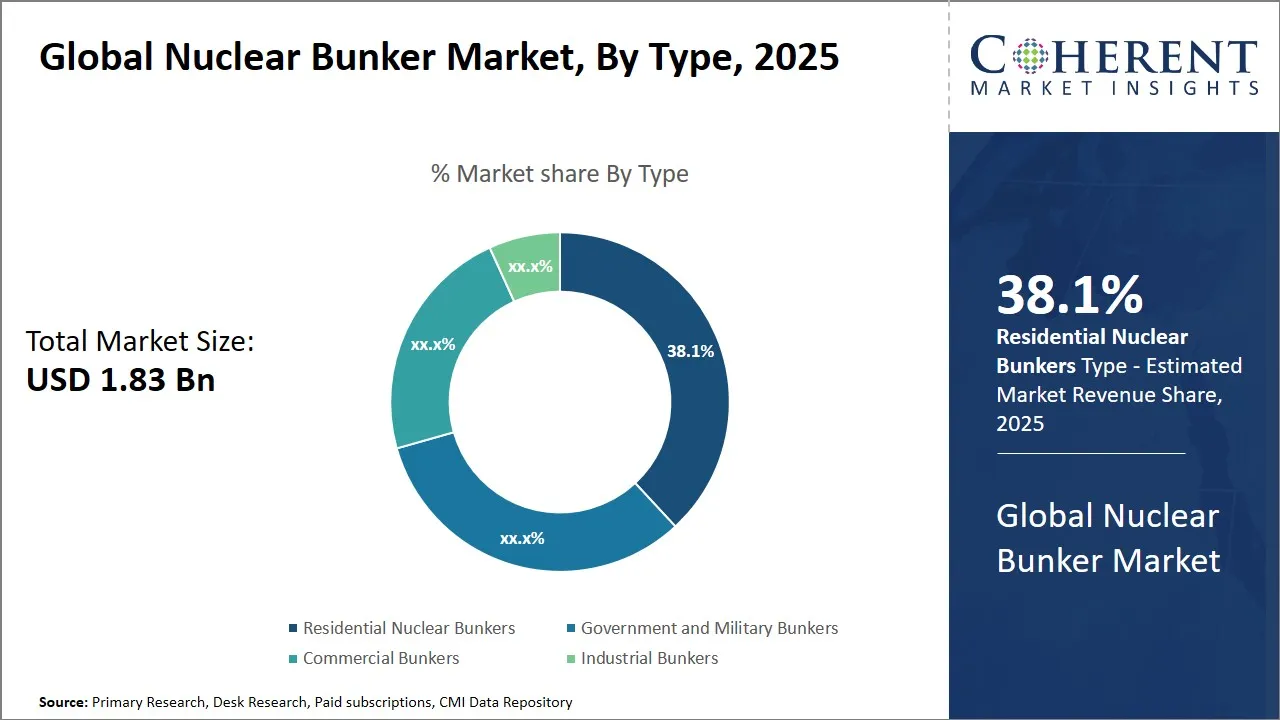
- The residential nuclear bunkers segment leads the market holding an estimated share of 39.1 % in 2026.
- The newly built bunkers segment dominates with an estimated share of 66.8 % in 2026.
- North America, holding a share of 37.1 % in 2026, is expected to dominate the market.
- Asia Pacific, holding a share of 25.2 % in 2026, is projected to show the fastest growth in the market.
Market Overview
The market is seeing a growing demand for advanced nuclear bunkers equipped with state-of-the-art technology for survival and security. Innovations, such as improved radiation shielding, sustainable life-support systems, and integration with smart technologies, are becoming very important. Also, both government and private sector participation is rising, focusing on enhancing resilience against nuclear emergencies, which adds to market expansion.
Current Events and Its Impact
Current Events | Description and its impact |
Geopolitical and Trade Developments |
|
Economic Trends |
|
Segmental Insights
- Current Industry Events of 2026
- Market Size Estimation
- Regional Breakdown
- Competitive Landscape
- Customer Intelligence
- Segmental Analysis
- Pricing Analysis
- Key Market Drivers, Challenges & Future Trends
- Customized Insights Section
Global Nuclear Bunker Market Insights, By Type – Residential Nuclear Bunkers Lead Because of the Growing Demand For Personalized Safety And Privacy
Residential nuclear bunkers are expected to hold 39.1% share in 2026, driven by rising concerns over geopolitical tensions and nuclear threats. Individuals increasingly look for personalized safety solutions that provide privacy, autonomy, and integration with home aesthetics.
Growing awareness about crisis preparedness, coupled with higher disposable incomes and modular construction options, makes private bunkers more attainable for affluent households. Technological advancements—like smart ventilation, CBRN filtration, and self-sustaining energy systems—have made modern residential shelters both functional and comfortable.
Atlas Survival Shelters in Texas, U.S. reported a big rise in private orders in 2024–2025, with clients requesting customized layouts featuring luxury interiors, solar integration, and secure digital monitoring systems.
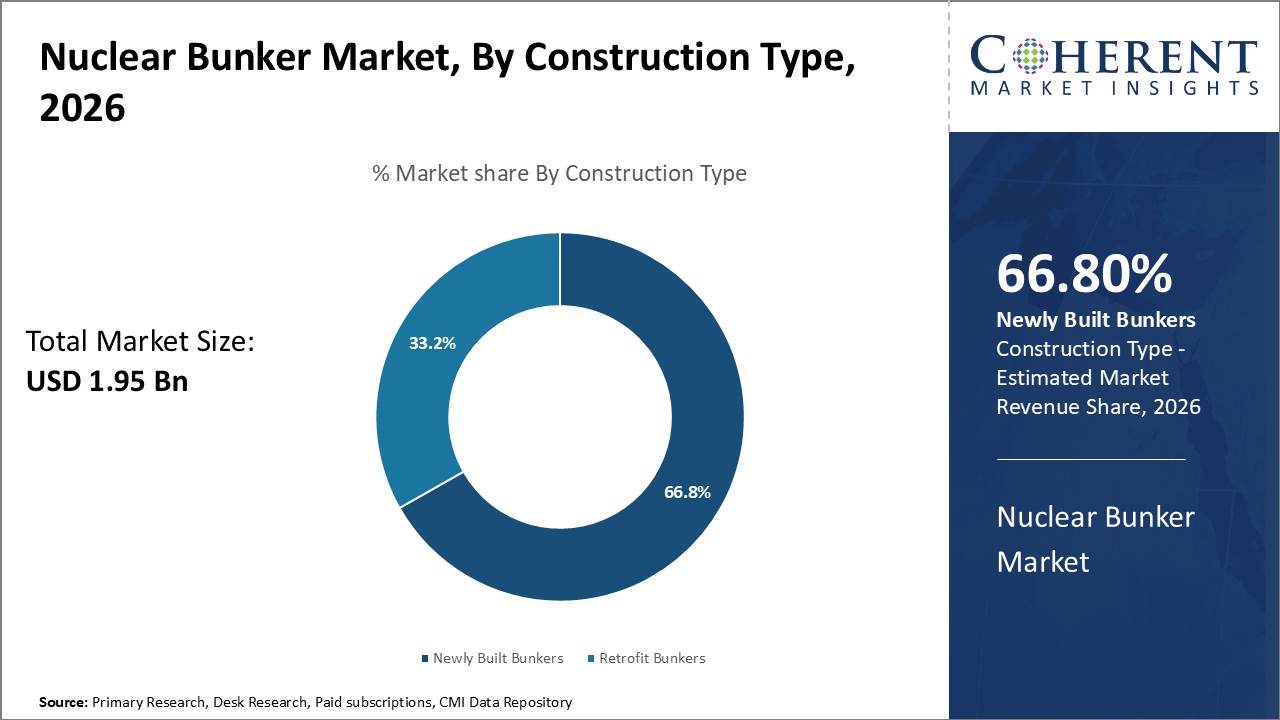
Global Nuclear Bunker Market Insights, By Construction Type – Newly Built Bunkers Lead Because of the Preference For Integrated, Purpose-Built Safety Solutions
Newly built bunkers are projected to dominate with a 66.8% market share in 2026, as clients prefer purpose-engineered designs that integrate structural resilience, radiation protection, and life-support systems from inception. These offer better regulatory compliance, engineering flexibility, and cost-efficiency compared to retrofits.
Governments and private developers are focusing on new construction for long-term durability and design integration, especially in high-risk regions. The scalability and efficiency of new builds make them the go-to option for both military and civilian applications.
Vivos Group’s “Vivos Europa One” project in Germany shows this trend—a purpose-built underground complex engineered with advanced filtration, secure power systems, and luxury amenities designed from the ground up for extended habitation.
Pricing Analysis of the Nuclear Bunker Market
Segment/Item | Typical unit/unit basis | Price (USD) |
Prefabricated/entry-level shelter (e.g., BombNado & similar kits) | Single prefabricated shelter unit (small, fits through garage) | USD 19,000 – USD 80,000 |
Small residential turnkey bunker (mid-range) | Typical family bunker (400–1,000 sq ft), fully outfitted | USD 80,000 – USD 600,000 |
Large/luxury residential bunker (bespoke) | High-end custom underground residence (1,000+ sq ft with luxury finishes & systems) | USD 1,000,000 – USD 20,000,000+ |
Community/shared-bunker plots (e.g., Vivos xPoint style) | Per-bunker reservation/lease or purchase (community site) | USD 10,000 – USD 100,000 (typical ~ USD 55,000) + ongoing fees |
Newly built government/military hardened facility | Cost per sq ft (purpose-built underground facility/hardened room) | USD 500 – USD 2,000/sq ft (project examples vary widely) |
Retrofit/conversion (existing basement → shelter) | Per project (small to mid) | USD 50,000 – USD 500,000 |
Modular/containerized rapid-deploy shelters | Per module (20–40 ft equivalent fully outfitted) | USD 25,000 – USD 200,000/module |
EMP/CBRN air-filtration & life-support system (unit) | Complete system sized for small bunker (includes filtration, overpressure, monitoring) | USD 10,000 – USD 250,000 |
Blast/luxury security door (single heavy door/mantrap) | High-security blast/EMP-rated door | USD 15,000 – USD 200,000+ |
Turnkey “memberships” (ultra-luxury bunkers, per-person/per-residence) | Per membership/residence in luxury vault community | USD 1,000,000 – USD 20,000,000+ |
Example large underground tunnel/multi-tunnel project | Complete two-tunnel project (small government example) | USD 14M – USD 20M+ (project) |
Per-square-foot benchmark (residential average) | Typical market benchmark for residential bunker | USD 200 – USD 400/sq ft |
Regional Insights
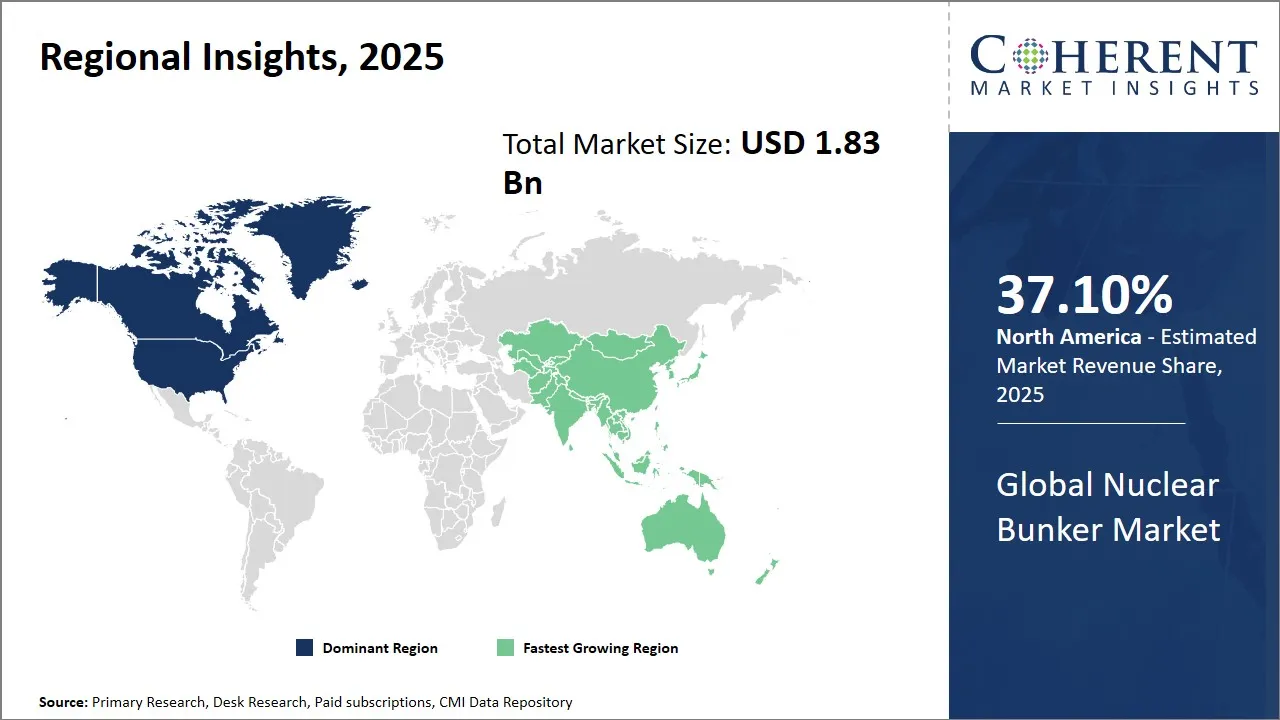
North America Nuclear Bunker Market Analysis and Trends
North America, holding a share of 37.1% in 2026, is expected to dominate the global nuclear bunker market, primarily driven by a mature market ecosystem supported by well-established defense and civil protection infrastructure. The region sees a lot of government investments focused on national security and disaster preparedness, including funding for nuclear bunkers as important components of emergency management. The presence of leading defense contractors and engineering firms adds to innovation and integration of advanced technologies made for nuclear shelter solutions.
Also, strict government policies ensuring safety standards and continuous upgrades of existing bunker facilities add to market stability. Big companies such as Vivos, Atlas Survival Shelters, and Rising S Company are influential in North America, contributing through the development and deployment of high-security bunkers that cater to private, commercial, and government clients alike. The region also sees efficient trade dynamics, giving access to high-quality materials and specialized expertise that reinforce market leadership.
Asia Pacific Nuclear Bunker Market Analysis and Trends
The Asia Pacific region, holding a share of 25.2% in 2026, is expected to shows the fastest growth in the nuclear bunker market because of increasing geopolitical tensions, rapid urbanization, and rising awareness about disaster preparedness across emerging economies. Governments in countries like China, India, and South Korea have recently increased focus on civil defense and infrastructure resilience, because of both natural disaster risks and security concerns.
The market ecosystem here is growing fast, with local manufacturers partnering with international players to develop cost-effective yet sophisticated bunker solutions. Regulatory frameworks are being enhanced, pushing private and public sector investments into nuclear-safe structures. Commodity availability and expanding industrial capabilities make favorable trade dynamics underpinning growth. Companies, such as Huayu Group and Deep Earth Bunker China, have become key contributors, innovating bunker construction to suit the region's dense urban settings and climatic factors.
Nuclear Bunker Market Outlook for Key Countries
U.S. Nuclear Bunker Market Analysis and Trends
The U.S. nuclear bunker market remains the benchmark globally because of its long-standing focus on civil defense and advanced nuclear safety infrastructure. Federal and state governments fund research and incentives for the construction and modernization of bunkers. Key companies like Vivos and Rising S Company contribute a lot by offering cutting-edge, scalable bunkers designed to withstand nuclear and biological threats. The private sector also plays a big role, as demand from high-net-worth individuals for luxury nuclear shelters increases, adding to market depth and diversity.
China Nuclear Bunker Market Analysis and Trends
China nuclear bunker market is growing fast because of the government’s strategic focus on improving national security infrastructure and urban disaster preparedness. The country’s industrial capacity supports large-scale bunker construction projects, often in collaboration with technology firms to use smart monitoring and ventilation systems. Domestic players such as Huayu Group focus on mass production of nuclear shelters, responding to both military and civilian demand. Policy reforms promoting disaster resilience add to market growth and diversification.
India Nuclear Bunker Market Analysis and Trends
India nuclear bunker market development is growing as the government channels resources into civil defense improvements and urban safety initiatives against nuclear threats. Increasing awareness among commercial and residential sectors makes demand for nuclear bunkers. Local companies, often collaborating with international bunker experts, are innovating to address infrastructural and climatic challenges in the region. The regulatory environment pushes safety standards and public-private partnerships, which makes the nuclear bunker ecosystem stronger.
Germany Nuclear Bunker Market Analysis and Trends
Germany continues to lead European nuclear bunker market dynamics because of rigorous government regulations focused on civil protection and emergency preparedness. The country’s engineering expertise and defense technology firms, such as RCT Werkstätten and Spezialbau GmbH, add to innovation in bunker design, pushing sustainability and resilience. Germany’s trade relationships give access to specialized materials necessary for nuclear-grade construction, while public awareness campaigns make steady demand within both public and private sectors.
South Korea Nuclear Bunker Market Analysis and Trends
South Korea nuclear bunker market sees proactive government initiatives aiming to enhance disaster and nuclear threat preparedness amid geopolitical tensions in the region. The government supports infrastructural investments alongside strict policies mandating bunker standards in new urban developments. Local enterprises like KUMHO Industrial and Doosan Heavy Industries contribute to advancing bunker technologies, integrating automation and advanced filtration systems.
Market Players, Key Development, and Competitive intelligence
Key Developments
- On October 24, 2025, a lawsuit was filed in Fall River County Circuit Court, alleging that Vivos xPoint Investment Group, the owner of the Vivos xPoint bunker complex, uses an illegal lease that is unenforceable and violates the rights of the bunker residents.
- On October 1, 2025, Sonan Bunkers opened its first office in the Americas: SONAN ENERGY PANAMA S.A. This new hub reinforces the company’s commitment to global coverage and the transition toward more sustainable fuels.
- In September 2025, the German government announced plans to invest USD 12 billion (10 billion euros) in civil protection and disaster management by 2029. The plans come against the backdrop of growing geopolitical tensions, as well as the threats of extremism and so-called hybrid attacks, that might include attacks on the power grid systems and disinformation campaigns. The Civil Protection Pact foresees sirens to alert the public, digital warning systems for mobile phones, new shelters, and around 1,500 vehicles for fire protection, ambulance services, mobile command centers, and heavy equipment.
- In January 2025, SAFE announced plans to create a luxury doomsday bunker complete with AI-powered healthcare and robotic staff. In the summer of 2026, the company plans to open 'Aerie', a USD 300 million members-only safe haven for the ultra-wealthy.
Top Strategies Followed by Nuclear Bunker Market Players
- Leading companies in this sector invest a lot in research and development (R&D) to design and produce high-performance, technologically advanced nuclear bunkers that meet stringent safety and durability standards.
- Temet Group and Andair AG have expanded R&D on next-generation CBRN air-filtration and overpressure systems, integrating digital monitoring and automated shutoff features for military and civil shelters.
- Mid-level players in the nuclear bunker market adopt a differentiated approach, primarily focusing on cost-effective solutions that strike a balance between quality and affordability.
- Northwest Shelter Systems offers prefabricated concrete and modular shelters that are customizable yet budget-friendly, targeting middle-income households and small enterprises.
- In contrast, small-scale players in the global nuclear bunker market differentiate themselves by concentrating on highly specialized features or niche product segments that larger competitors may overlook.
- The Panic Room Company specializes in bespoke panic rooms and micro-bunkers with discreet architectural integration for urban properties.
Market Report Scope
Nuclear Bunker Market Report Coverage
| Report Coverage | Details | ||
|---|---|---|---|
| Base Year: | 2025 | Market Size in 2026: | USD 1.95 Bn |
| Historical Data for: | 2020 To 2024 | Forecast Period: | 2026 To 2033 |
| Forecast Period 2026 to 2033 CAGR: | 6.4% | 2033 Value Projection: | USD 3.01 Bn |
| Geographies covered: |
| ||
| Segments covered: |
| ||
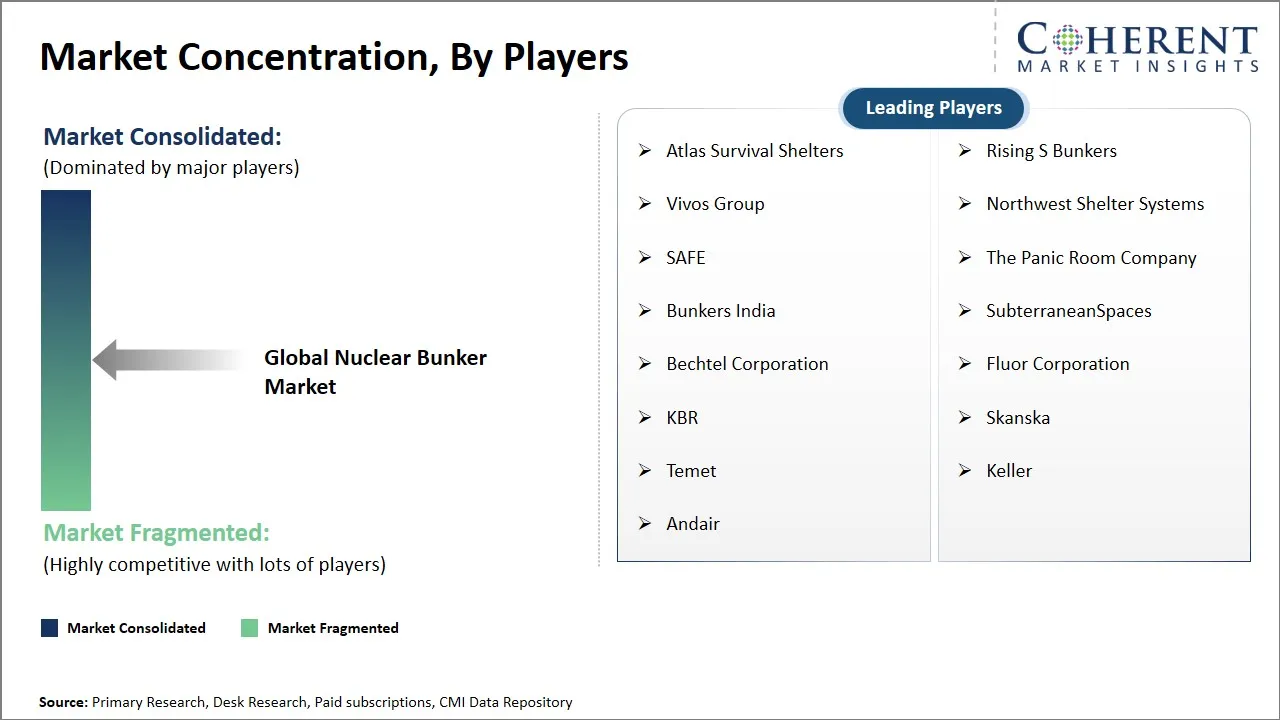
| Companies covered: | Atlas Survival Shelters, Rising S Bunkers, Vivos Group, Northwest Shelter Systems, SAFE, The Panic Room Company, Bunkers India, SubterraneanSpaces, Bechtel Corporation, Fluor Corporation, KBR, Skanska, Temet, Keller, and Andair | ||
| Growth Drivers: |
| ||
| Restraints & Challenges: |
| ||
Market Dynamics
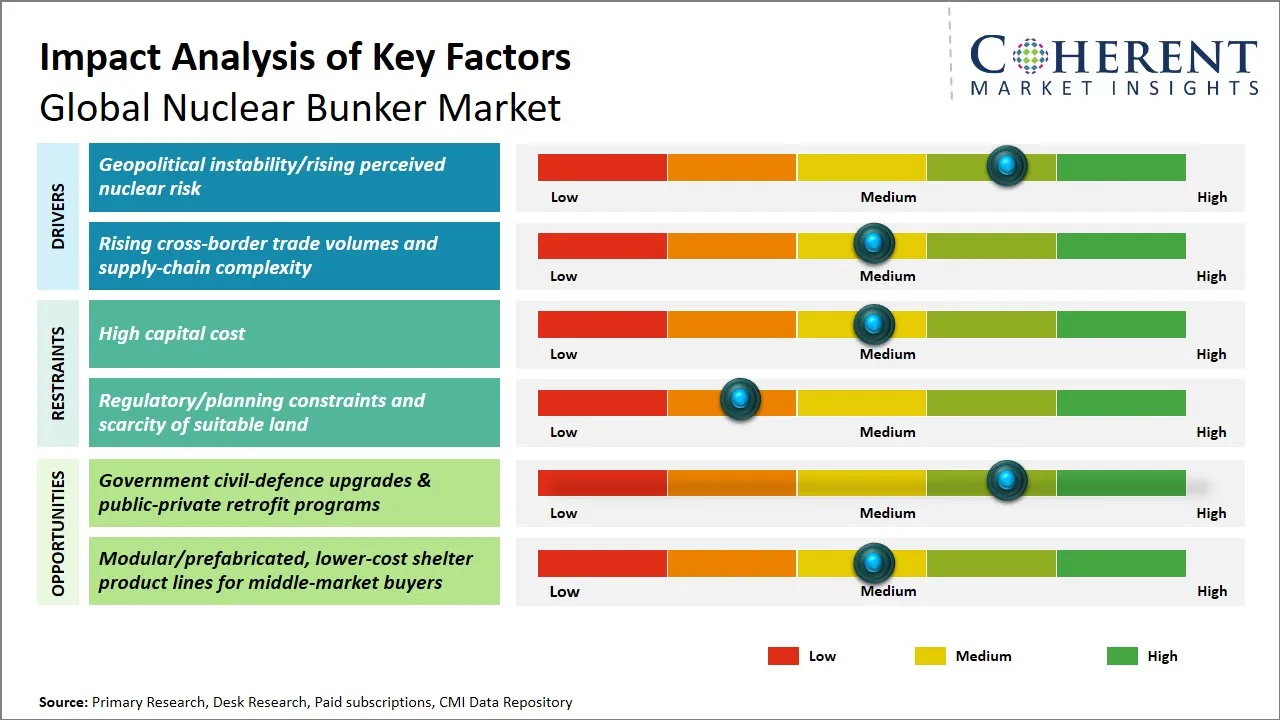
Global Nuclear Bunker Market Driver – Geopolitical Instability/Rising Perceived Nuclear Risk
Rising global tensions and renewed nuclear rhetoric among major powers have intensified public and institutional concern about nuclear conflict and related threats. Events such as the ongoing Russia–Ukraine war, North Korea’s missile tests, and escalating U.S.–China strategic competition have heightened the perceived risk of nuclear incidents, leading to greater investment in protective infrastructure. Individuals, corporations, and governments are increasingly prioritizing self-sufficiency and long-term security, driving demand for modern nuclear bunkers equipped with advanced filtration and communication systems.
Following the 2022 escalation of the Russia–Ukraine conflict, bunker manufacturers such as Temet Group (Finland) and Abris Design Group (Poland) reported surging orders for residential and municipal shelters across Eastern Europe, reflecting renewed emphasis on nuclear preparedness.
Global Nuclear Bunker Market Opportunity – Government Civil-Defense Upgrades and Public-Private Retrofit Programs
Governments worldwide are expanding civil-defense initiatives and partnering with private companies to modernize existing bunker infrastructure. These programs involve retrofitting legacy shelters with advanced life-support systems, environmental controls, and blast-resistant materials. The shift toward public-private collaboration brings innovation and scalability to national preparedness efforts, creating opportunities for contractors and technology suppliers specializing in bunker upgrades.
In 2024, the Swiss Federal Office for Civil Protection launched a large-scale bunker renovation and digital monitoring project in partnership with Andair AG and HRS Real Estate AG, integrating modern CBRN systems and IoT-based air monitoring across over 1,200 public shelters.
Analyst Opinion (Expert Opinion)
- Despite growing interest in personal and institutional safety, the prohibitive cost of building nuclear bunkers—ranging from several hundred thousand to millions of dollars—continues to confine demand to wealthy individuals, defense institutions, and high-net-worth communities. This economic barrier stifles mass-market penetration and limits economies of scale that could otherwise reduce pricing pressures.
- The absence of unified international regulations governing bunker design, safety compliance, and nuclear shielding standards creates major hurdles for manufacturers. Each country enforces distinct guidelines, forcing companies to customize designs and materials for different markets, thereby inflating costs and delaying projects. This lack of standardization ultimately undermines scalability and global competitiveness.
- While security-focused consumers view bunkers as essential investments, a segment of the public perceives them as symbols of inequality or fear-driven consumerism. This perception, coupled with limited transparency from private bunker developers, raises ethical and social concerns that can erode market credibility and hinder policy support for wider deployment initiatives.
Speak to the analyst
Want personalized insights?
Take the findings above to one of our principal consultants, or have the report rebuilt around the segments, geographies and competitors you actually track.
Market Segmentation
- Type Insights (Revenue, USD Bn, 2021 - 2033)
- Residential Nuclear Bunkers
- Government and Military Bunkers
- Commercial Bunkers
- Industrial Bunkers
- Construction Type Insights (Revenue, USD Bn, 2021 - 2033)
- Newly Built Bunkers
- Retrofit Bunkers
- Regional Insights (Revenue, USD Bn, 2021 - 2033)
- North America
- U.S.
- Canada
- Latin America
- Brazil
- Argentina
- Mexico
- Rest of Latin America
- Europe
- Germany
- U.K.
- Spain
- France
- Italy
- Russia
- Rest of Europe
- Asia Pacific
- China
- India
- Japan
- Australia
- South Korea
- ASEAN
- Rest of Asia Pacific
- Middle East
- GCC Countries
- Israel
- Rest of Middle East
- Africa
- South Africa
- North Africa
- Central Africa
- North America
- Key Players Insights
- Atlas Survival Shelters
- Rising S Bunkers
- Vivos Group
- Northwest Shelter Systems
- SAFE
- The Panic Room Company
- Bunkers India
- SubterraneanSpaces
- Bechtel Corporation
- Fluor Corporation
- KBR
- Skanska
- Temet
- Keller
- Andair
Sources
Primary Research Interviews
Stakeholders
- Civil Defense Infrastructure Agencies (e.g., Emergency Preparedness Coordinators, National Safety Officers)
- Nuclear Bunker Construction Companies and Contractors (e.g., Project Managers, Site Engineers)
- Manufacturers and Suppliers of Reinforced Materials & Air Filtration Systems (e.g., radiation shielding, blast doors)
- Architects and Structural Engineers specializing in underground or fortified construction
- Government Agencies and Military Procurement Departments involved in civil protection planning
- Real Estate Developers integrating security bunkers into luxury residential projects
- Disaster-Preparedness Consultants and Risk Management Firms
- Environmental and HVAC System Specialists (for sealed underground environments)
Databases
- Global Infrastructure & Defense Database (GIDD)
- U.S. Department of Homeland Security (DHS) Public Safety Data Archive
- European Civil Protection and Humanitarian Aid Operations (ECHO) Data Portal
- Global Trade Atlas (for materials and bunker components trade data)
- OECD Data Repository
- Construction Global
Magazines
- Civil Defence Review
- Underground Construction World
- Security Architecture Digest
- Construction Today
- Building Design + Construction (BD+C)
- Defense Infrastructure Monthly
Journals
- Journal of Protective Structures and Civil Defence Engineering
- Construction and Building Materials Journal
- Journal of Structural Safety and Resilience
- Automation in Construction Journal
- Journal of Building Engineering
- Defense Technology and Infrastructure Journal
Newspapers
- The Guardian (UK)
- The Economic Times (India)
- Defense News
- Construction Week Online
- The Construction Index
- New York Times – Security & Defense Section
Associations
- International Association for Protective Construction (IAPC)
- American Civil Defense Association (ACDA)
- The Concrete Society (UK)
- National Association of Home Builders (NAHB)
- International Federation for Structural Safety (IFSS)
- American Concrete Institute (ACI)
- World Emergency Shelter Consortium (WESC)
Public Domain Sources
- U.S. Census Bureau
- EUROSTAT
- United Nations Economic Commission for Europe (UNECE)
- World Bank
- Global Shelter Cluster (UN-led initiative)
- ResearchGate
Proprietary Elements
- CMI Data Analytics Tool, Proprietary CMI Existing Repository of information for last 8 years
Get access to 250+ pages report
Every segment, forecast, competitor profile and data table behind the analysis above — available for instant download.
- ESOMAR Member
- ISO 9001:2015 Certified
- D-U-N-S Registered
- GDPR & CCPA Compliant
Missing comfort of reading report in your local language? Find your preferred language:
Transform your Strategy with Exclusive Trending Reports
Frequently Asked Questions
The global nuclear bunker market is estimated to be valued at USD 1.95 billion in 2026 and is expected to reach USD 3.01 billion by 2033.
The CAGR of the global nuclear bunker market is projected to be 6.4% from 2026 to 2033.
Geopolitical instability/rising perceived nuclear risk and rising cross-border trade volumes and supply-chain complexity are the major factors driving the growth of the global nuclear bunker market.
High capital cost and regulatory/planning constraints and scarcity of suitable land are the major factors hampering the growth of the global nuclear bunker market.
Yes, civil-defense modernization programs and public-private retrofit initiatives are expanding opportunities for bunker developers.
Integration of IoT-based monitoring, automated filtration systems, and AI-powered emergency communication tools are gaining traction.
In terms of type, residential nuclear bunkers are estimated to dominate the market revenue share in 2026.