

Peritoneal Dialysis Market Size and Forecast – 2026 to 2033
Global peritoneal dialysis market is estimated to be valued at USD 10.60 Bn in 2026 and is expected to reach USD 16.03 Bn by 2033, exhibiting a compound annual growth rate (CAGR) of 6.1% from 2026 to 2033.
Key Takeaways
- By Product Types, Peritoneal Dialysis Solutions hold the largest market share of 43.6% in 2026 owing to its shift toward home-based dialysis.
- By Application, Automated Peritoneal Dialysis (APD) expected to hold largest market share of 53.6% in 2026 owing to its advancements in technology.
- By End User, Hospital acquired the prominent market share of 33.62% in 2026 owing to the high prevalence of chronic kidney disease (CKD).
- By Region, North America dominates the overall market with an estimated share of 37.7% in 2026 owing to the technological advancements in dialysis equipment.
Market Overview
The increasing prevalence of chronic kidney disease and the rising preference for home-based dialysis treatments are driving rapid growth in the peritoneal dialysis market. Innovations in dialysis solutions and automated systems are enhancing patient outcomes and convenience. Healthcare initiatives and reimbursement policies actively promote broader adoption, especially in developed regions. Growing awareness, technological advancements, and an aging population are also fueling the market by improving accessibility and enabling better management of renal failure globally.
Current Events and their Impact
Current Events | Description and its impact |
Technological Advancements in Dialysis Solutions |
|
Healthcare Policy and Reimbursement Changes |
|
Epidemiological Trends and Patient Demographics |
|
Role of AI (Artificial Intelligence) in Kidney Disease Diagnostics
Artificial Intelligence (AI) is transforming kidney diagnostics by enabling early detection, risk stratification, and personalized treatment planning for chronic kidney disease (CKD). AI algorithms analyze large volumes of patient data—including lab results, medical history, and clinical indicators—to identify patterns that may signal early kidney function decline.
In October 2025, Roche, in partnership with KlinRisk, Inc., received CE-mark approval for the first AI-based tool to assess the risk of progressive kidney function decline. This approval enables the launch of the Chronic Kidney Disease (CKD) algorithm panel on Roche’s navify® Algorithm Suite, supporting care across all CKD stages. The panel features the newly approved Kidney Klinrisk Algorithm for early risk assessment in adults with CKD, diabetes, or hypertension, alongside the already CE-marked Kidney Failure Risk Equation (KFRE) for managing advanced CKD.
- Current Industry Events of 2026
- Market Size Estimation
- Regional Breakdown
- Competitive Landscape
- Customer Intelligence
- Segmental Analysis
- Pricing Analysis
- Key Market Drivers, Challenges & Future Trends
- Customized Insights Section
End-user Feedback and Unmet Needs in the Peritoneal Dialysis Market
- Ease of Use and Training Gaps: Many patients find peritoneal dialysis systems challenging to operate without thorough training. They often express a need for simpler instructions, hands-on support, and more accessible educational resources to build confidence in managing their treatment independently at home.
- Access to Reliable Supplies: Patients and caregivers frequently report issues with inconsistent availability of dialysis supplies, especially in rural or remote areas. Timely delivery and local stocking of essential PD equipment remain a major unmet need for ensuring uninterrupted treatment.
- Limited Support for Emergency Situations: Users often face uncertainty during complications or emergencies due to limited 24/7 support. There’s a growing demand for responsive helplines, real-time guidance, and clearer protocols for handling peritonitis, leaks, or equipment failures at home.
Segmental Insights
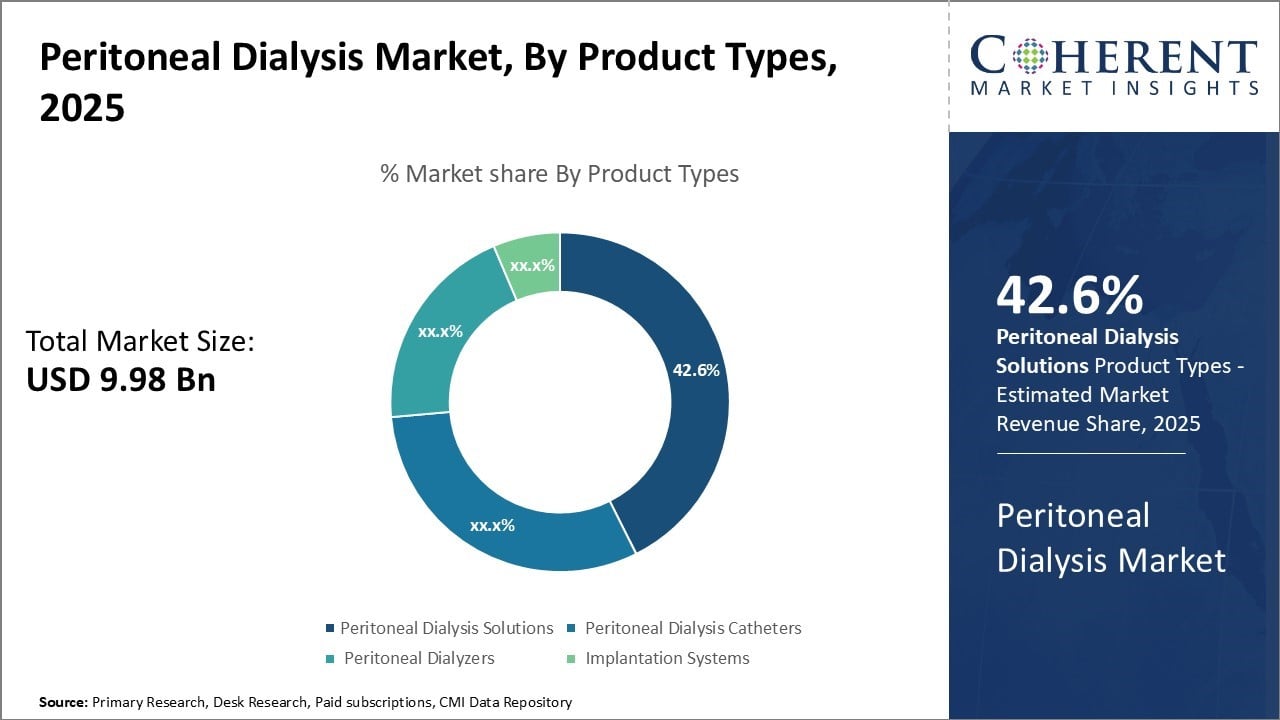
Peritoneal Dialysis Market Insights, by Product Type - Peritoneal Dialysis Solutions contribute the highest share of the market owing to its cost-effectiveness compared to hemodialysis
Peritoneal Dialysis Solutions hold the largest market share of 43.6% in 2026. As more people with chronic renal disease look for effective and flexible treatment choices, the need for peritoneal dialysis solutions grows. Patients and healthcare providers like home-based dialysis better since it is easier and improves their quality of life. Biocompatible solutions and automated delivery methods are always getting better, which makes treatments safer and more effective. Governments also actively encourage these treatments through regulations, and more people are learning about alternatives to dialysis, which is making peritoneal dialysis solutions more popular around the world for treating kidney failure.
For instance, in March 2024, Mitra Industries, a leading R&D-focused name in India’s healthcare sector, launched its innovative triple-chambered peritoneal dialysis (PD) bag featuring a near-neutral pH and low glucose degradation products (GDPs). This advanced PD bag enables treating nephrologists to enhance patient care and achieve better outcomes.
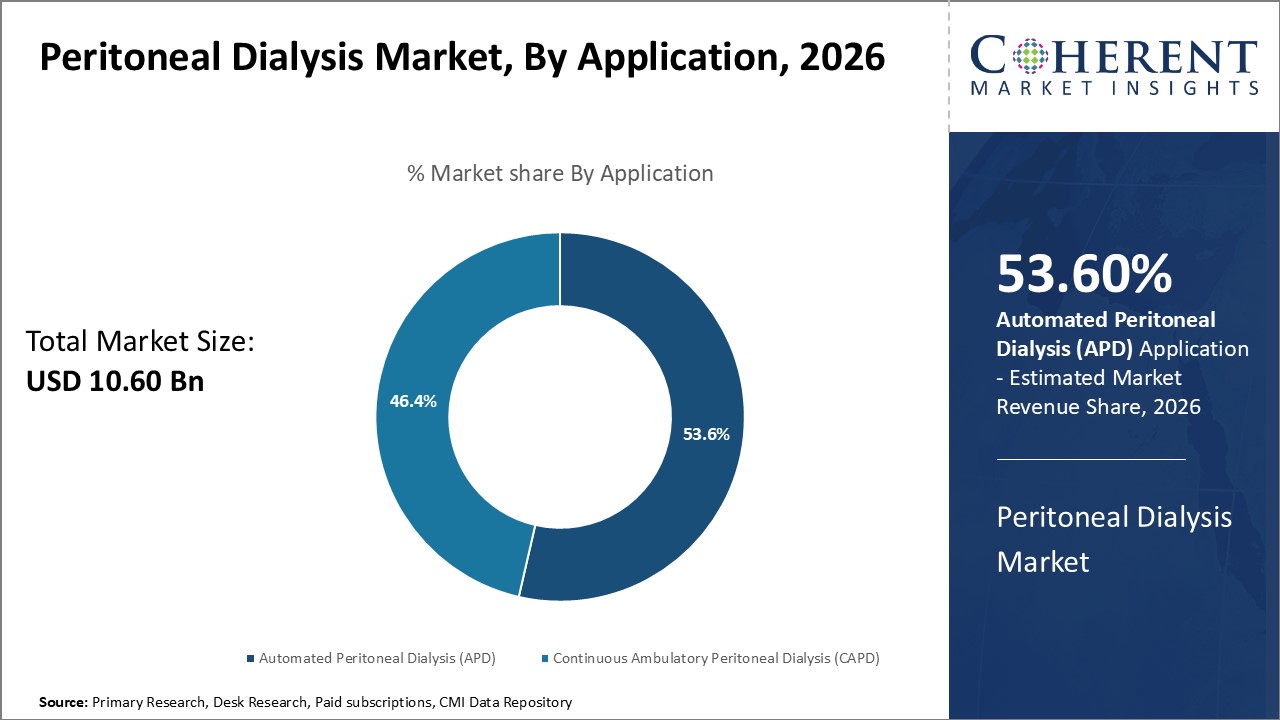
Peritoneal Dialysis Market Insights, by Application - Automated Peritoneal Dialysis (APD) contribute the highest share of the market owing to its shift toward home-based dialysis
Automated Peritoneal Dialysis (APD) expected to hold largest market share of 53.6% in 2026. More and more patients are choosing Automated Peritoneal Dialysis (APD) because it fits their lifestyles and is easy to use. Technological improvements have made APD devices easier to use, easier to carry, and able to be monitored from a distance, which makes it easier to manage treatment. Healthcare providers advocate for APD due to its efficacy in diminishing hospital visits and improving patient adherence. Also, more people are learning about the benefits of home-based care and supporting reimbursement policies, which are both helping to make APD more popular for treating kidney failure.
For instance, Baxter Korea unveiled its new automated peritoneal dialysis (APD) system, Homechoice Claria, designed for patients with chronic kidney disease. The system allows individuals to perform peritoneal dialysis—a form of renal replacement therapy—at home.
Peritoneal Dialysis Market Insights, by End User - Hospitals contribute the highest share of the market owing to its government initiatives and healthcare investments
Hospital acquired the prominent market share of 33.62% in 2026. Hospitals are a big part of the peritoneal dialysis industry since they diagnose patients, start treatments, and keep an eye on them. Hospitals can handle complicated dialysis regimens well because they have skilled medical staff and modern facilities. They also teach patients and healthcare workers how to do PD the right way, which helps keep problems to a minimum. Hospitals are expanding their PD services owing to favorable healthcare regulations and more money being put into dialysis equipment. Together, these measures make hospitals more important in getting more people to use peritoneal dialysis.
For instance, in November 2024, Tree Top Hospital launched peritoneal dialysis as a treatment option for kidney failure, allowing patients to perform the therapy at home or any convenient location.
Reimbursement Policies in the Peritoneal Dialysis Market
Reimbursement policies have a big effect on the peritoneal dialysis business because they make treatments cheaper and easier for patients to get. Governments and insurance companies actively help pay for and cover peritoneal dialysis therapies, which encourages healthcare providers to use these treatments. These regulations help patients save money and encourage them to use home-based dialysis, which is often cheaper than treatments in a center. Because of this, reimbursement mechanisms are actively driving the growth and wider use of peritoneal dialysis around the world.
The Pradhan Mantri National Dialysis Programme (PMNDP), launched in 2016-17, provides free dialysis services to Below Poverty Line (BPL) patients at district hospitals across India. Under the National Health Mission (NHM), States and Union Territories receive support to implement both haemodialysis and peritoneal dialysis services. This support is based on gap assessments carried out by the States/UTs through their annual Programme Implementation Plans (PIPs). As of 31st December 2022, a total of 17.27 lakh beneficiaries have received dialysis treatment under this programme.Top of Form
In April 2023, the government of Kerala launched a peritoneal dialysis scheme to offer free at-home treatment for kidney patients across the State. Health Minister Veena George announced that the program has been implemented in a major health centre in each district.
Regional Insights
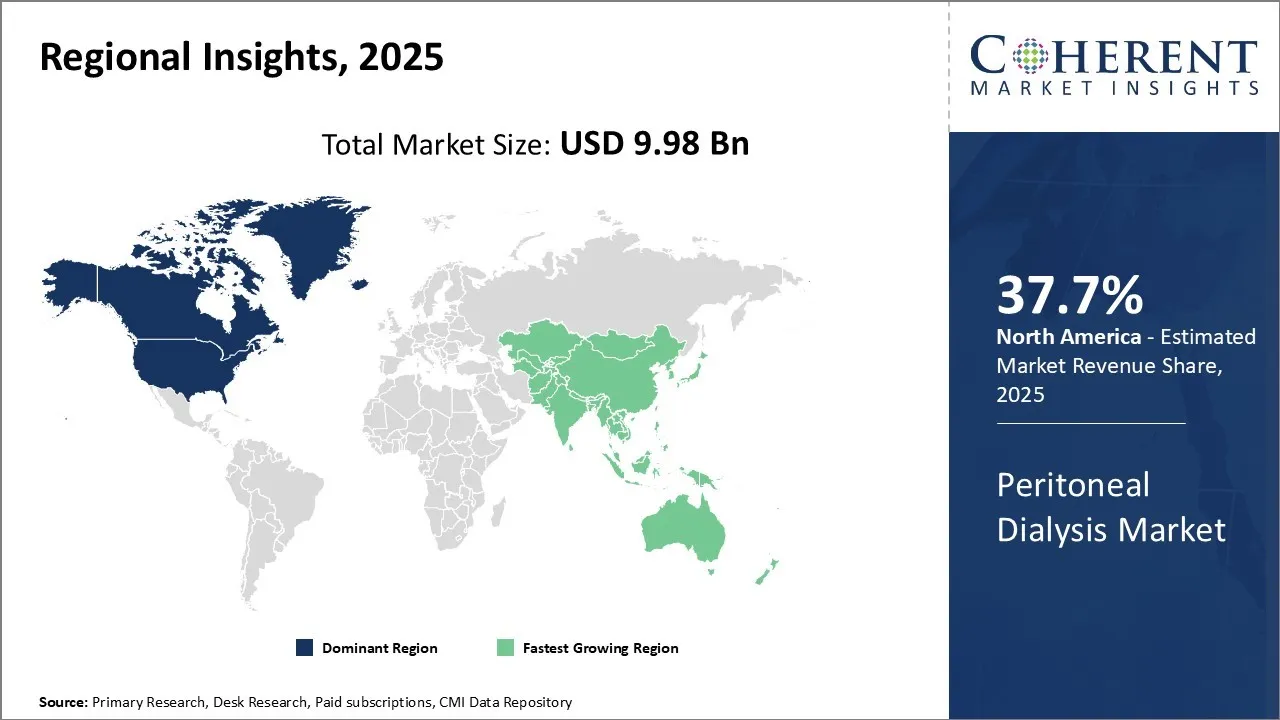
North America Peritoneal Dialysis Market Trends
North America dominates the overall peritoneal market demand with an estimated share of 37.7% in 2026. The peritoneal dialysis market is growing because healthcare providers and patients in North America are using home-based treatment and more modern dialysis systems. Because more people are getting kidney disease, there has been a shift toward easier treatment alternatives such automated peritoneal dialysis. Governments and insurance companies are actively helping this change happen by making it easier for people to get paid for their services. At the same time, advances in technology and more people knowing about early kidney care are changing how we treat people today, making peritoneal dialysis more common in the area.
For instance, Fresenius Medical Care North America announced FDA 510(k) clearance for its upgraded Liberty® Select Cycler, now compatible with the Kinexus® Therapy Management Platform for remote peritoneal dialysis (PD) management.
Asia Pacific Peritoneal Dialysis Market Trends
As the number of people with kidney illness rises, healthcare systems in the Asia Pacific region are working hard to grow the peritoneal dialysis market share. In nations like China and India, governments are starting programs to make it easier for people in both cities and the countryside to get dialysis. Investors are focusing on home-based care solutions, while medical practitioners are raising awareness and expanding healthcare services. Local manufacturers also help by making treatment alternatives more affordable, which makes peritoneal dialysis easier to get to and more useful in the area.
For instance, Baxter Asia Pacific has launched the My Kidney Journey website in Indonesia to support chronic kidney disease patients with information on symptoms, stages, and treatment options like home peritoneal dialysis, in-centre care, and kidney transplant.
United States Peritoneal Dialysis Market Trends
Healthcare providers in the US are making the peritoneal dialysis market revenue grow by using home-based, patient-centered treatment methods. They are putting in place automated dialysis machines that make it easier and more flexible for people with renal disease to take care of themselves at home. This change is being pushed by government agencies and insurance firms who are paying for cheaper options to in-center dialysis. At the same time, more people are aware of peritoneal dialysis and telehealth and remote monitoring technologies are getting better all the time. This is making peritoneal dialysis more widely accepted and used across the country.
For instance, Fresenius Medical Care (FME), a global leader in kidney care, has reached a growth milestone with over 14,000 U.S. patients now using its NxStage systems to perform Home Hemodialysis (HHD) therapy through Fresenius Kidney Care clinics and other providers.
Singapore Peritoneal Dialysis Market Trends
The market for peritoneal dialysis in Singapore is growing gradually as more people are diagnosed with kidney disorders and want to treat themselves at home. Companies that make medical equipment are coming up with new, better ways to do things. At the same time, healthcare practitioners and public awareness campaigns are pushing peritoneal dialysis as a good option to hemodialysis. The government is working to improve healthcare infrastructure and encourage early detection and treatment in a number of ways. The country's need for peritoneal dialysis is also growing because of an aging population and more health problems related to lifestyle.
For instance, The National Kidney Foundation of Malaysia (NKF) launched the country’s first education centre for peritoneal dialysis and chronic kidney disease in Selayang.
Market Dynamics
Peritoneal Dialysis Market Trend
Growth of Home-Based Dialysis Solutions
The market is increasingly shifting towards home-based dialysis treatments as patients seek greater flexibility and control over their therapy schedules. Home dialysis reduces the need for frequent hospital visits and offers improved quality of life. Advances in automated peritoneal dialysis (APD) machines, user-friendly interfaces, and remote monitoring capabilities are empowering patients to manage their care more independently. This trend also aligns with healthcare systems' goals to reduce costs and improve patient outcomes.
Technological Innovations and Automation
Technological advancements are transforming the peritoneal dialysis landscape. The development of more compact, portable, and automated dialysis machines enhances patient convenience and treatment efficiency. Innovations include remote patient monitoring, telehealth integration, and improved biocompatible dialysis solutions that reduce complications. These technologies not only improve clinical outcomes but also encourage patient adherence, making peritoneal dialysis a more attractive option for both patients and providers.
Peritoneal Dialysis Market Opportunity
Expansion of Home-Based Care Models
The shift toward home healthcare offers substantial opportunities for peritoneal dialysis growth. Healthcare systems are promoting home-based treatments to reduce hospital congestion and lower costs. As patients seek convenience and independence, companies that develop user-friendly, portable, and automated PD devices can capture this demand. Additionally, integrating telehealth and remote monitoring with PD treatments opens avenues for improved patient management and expanded market reach.
Market Report Scope
Peritoneal Dialysis Market Report Coverage
| Report Coverage | Details | ||
|---|---|---|---|
| Base Year: | 2025 | Market Size in 2026: | USD 10.60 Bn |
| Historical Data for: | 2020 To 2024 | Forecast Period: | 2026 To 2033 |
| Forecast Period 2026 to 2033 CAGR: | 6.1% | 2033 Value Projection: | USD 16.03 Bn |
| Geographies covered: |
| ||
| Segments covered: |
| ||
| Companies covered: | Baxter International Inc., Fresenius Medical Care AG & Co. KGaA, Medtronic plc, B. Braun Melsungen AG, Nipro Corporation, Cook Medical, Asahi Kasei Medical Co., Ltd., Gambro (part of Fresenius), Dialife SA, Renal Solutions, Inc., Toray Industries, Inc., Nihon Kohden Corporation, Baxter Healthcare Corporation, SWS Hemodialysis Care, Inc., and Astellas Pharma Inc. | ||
| Growth Drivers: |
| ||
| Restraints & Challenges: |
| ||
Peritoneal Dialysis Market News
- In June 2025, The Philippine Health Insurance Corporation (PhilHealth) introduced new benefits for adult and pediatric patients who have received kidney transplants.
- In March 2024, Mitra Industries, a leading R&D-driven healthcare company in India, launched an innovative triple-chambered peritoneal dialysis (PD) bag with near-neutral pH and low glucose degradation products (GDPs). Unlike conventional acidic PD solutions that can damage the peritoneal membrane, this new formulation supports better membrane health, helping nephrologists improve patient care and outcomes.
Analyst Opinion (Expert Opinion)
- The peritoneal dialysis market is at a pivotal juncture, where clinical efficacy meets patient-centric innovation, yet significant challenges remain that could impede widespread adoption if unaddressed. Despite PD’s clear advantages—such as better preservation of residual kidney function and enhanced quality of life through home-based therapy—its penetration remains disproportionately low compared to hemodialysis, especially in developed markets like the U.S. For instance, data from the United States Renal Data System (USRDS) shows that less than 15% of dialysis patients utilize PD, despite the known clinical and economic benefits.
- This gap stems largely from systemic inertia within healthcare delivery models and physician preference, which historically favor in-center hemodialysis due to entrenched reimbursement structures and familiarity. However, the recent “Advancing American Kidney Health” initiative signals a promising shift, aiming to double the use of home dialysis, including PD, by realigning incentives. Countries like New Zealand and Hong Kong exemplify the potential of such policies, where PD utilization surpasses 60%, driven by proactive reimbursement and patient education frameworks.
- Technological innovation also offers a game-changing opportunity. Automated Peritoneal Dialysis (APD) systems integrated with telemonitoring capabilities are revolutionizing care by enabling real-time patient oversight, reducing hospitalizations, and improving adherence. Baxter International’s AMIA APD cycler, with its remote connectivity, is a leading example that has shown measurable reductions in peritonitis rates and improved patient satisfaction.
Speak to the analyst
Want personalized insights?
Take the findings above to one of our principal consultants, or have the report rebuilt around the segments, geographies and competitors you actually track.
Market Segmentation
- Product Types Insights (Revenue, USD Bn, 2021 - 2033)
- Peritoneal Dialysis Solutions
- Peritoneal Dialysis Catheters
- Peritoneal Dialyzers
- Implantation Systems
- Applications Insights (Revenue, USD Bn, 2021 - 2033)
- Automated Peritoneal Dialysis (APD)
- Continuous Ambulatory Peritoneal Dialysis (CAPD)
- End User Insights (Revenue, USD Bn, 2021 - 2033)
- Hospitals
- Home Care Settings
- Dialysis Centers
- Research Institutes
- Regional Insights (Revenue, USD Bn, 2021 - 2033)
- North America
- U.S.
- Canada
- Latin America
- Brazil
- Argentina
- Mexico
- Rest of Latin America
- Europe
- Germany
- U.K.
- Spain
- France
- Italy
- Russia
- Rest of Europe
- Asia Pacific
- China
- India
- Japan
- Australia
- South Korea
- ASEAN
- Rest of Asia Pacific
- Middle East
- GCC Countries
- Israel
- Rest of Middle East
- Africa
- South Africa
- North Africa
- Central Africa
- Key Players Insights
- Baxter International Inc.
- Fresenius Medical Care AG & Co. KGaA
- Medtronic plc
- B. Braun Melsungen AG
- Nipro Corporation
- Cook Medical
- Asahi Kasei Medical Co., Ltd.
- Gambro (part of Fresenius)
- Dialife SA
- Renal Solutions, Inc.
- Toray Industries, Inc.
- Nihon Kohden Corporation
- Baxter Healthcare Corporation
- SWS Hemodialysis Care, Inc.
- Astellas Pharma Inc.
Sources
Primary Research interviews
- Nephrologists and dialysis specialists
- Hospital renal care units
- Peritoneal dialysis equipment manufacturers’ medical affairs teams
- Home healthcare providers specializing in renal care
- Patient advocacy groups and caregivers
Databases
- United States Renal Data System (USRDS)
- World Health Organization (WHO) Global Health Observatory
- Centers for Disease Control and Prevention (CDC) Kidney Disease Statistics
- National Kidney Foundation database
- PubMed Clinical Trials Registry
Magazines
- Renal & Urology News
- Nephrology News & Issues
- Dialysis & Transplantation Magazine
- Kidney International Reports
Journals
- Journal of the American Society of Nephrology (JASN)
- Peritoneal Dialysis International
- Clinical Journal of the American Society of Nephrology
- Nephrology Dialysis Transplantation
Newspapers
- The New York Times Health Section
- The Guardian Health News
- The Wall Street Journal Healthcare & Pharma
- Reuters Health News
Associations
- International Society for Peritoneal Dialysis (ISPD)
- National Kidney Foundation (NKF)
- American Society of Nephrology (ASN)
- European Renal Association – European Dialysis and Transplant Association (ERA-EDTA)
Public Domain sources
- U.S. Food and Drug Administration (FDA) Public Records
- National Institutes of Health (NIH) Research Publications
- Centers for Medicare & Medicaid Services (CMS) Data
- WHO Reports on Noncommunicable Diseases
Proprietary Elements
- CMI Data Analytics Tool, and Proprietary CMI Existing Repository of information for last 8 years
Get access to 250+ pages report
Every segment, forecast, competitor profile and data table behind the analysis above — available for instant download.
- ESOMAR Member
- ISO 9001:2015 Certified
- D-U-N-S Registered
- GDPR & CCPA Compliant
Missing comfort of reading report in your local language? Find your preferred language:
Transform your Strategy with Exclusive Trending Reports
Frequently Asked Questions
The Peritoneal Dialysis Market is estimated to be valued at USD 10.60 Bn in 2026, and is expected to reach USD 16.03 Bn by 2033.
The CAGR of the Peritoneal Dialysis Market is projected to be 6.1% from 2026 to 2033.
Increasing prevalence of end-stage renal disease (ESRD) and growing adoption of home-based dialysis treatments are the major factors driving the growth of global peritoneal dialysis market.
High costs associated with peritoneal dialysis equipment and solutions and risk of infections and complications related to catheter use are the major factors hampering the growth of global peritoneal dialysis market.
In terms of product types, peritoneal dialysis solutions segment is estimated to dominate the market in 2026.
Baxter International Inc., Fresenius Medical Care AG & Co. KGaA, Medtronic plc, B. Braun Melsungen AG, Nipro Corporation, Cook Medical, Asahi Kasei Medical Co., Ltd., Gambro (part of Fresenius), Dialife SA, Renal Solutions, Inc., Toray Industries, Inc., Nihon Kohden Corporation, Baxter Healthcare Corporation, SWS Hemodialysis Care, Inc., and Astellas Pharma Inc. are the major players.
North America is expected to lead the global peritoneal dialysis market in 2026.