

Global Phase II Clear Aligners Market Size and Forecast – 2026 to 2033
The global Phase II clear aligners market is estimated to be valued at USD 4.71 Bn in 2026 and is expected to reach USD 16.21 Bn by 2033, exhibiting a compound annual growth rate (CAGR) of 19.3% during the period from 2026 to 2033. The robust growth is demonstrated by the global adoption of clear aligner technology within the orthodontics segment, driven by advancements in 3D imaging and customization, along with increasing consumption of dental treatments with more aesthetic options, and reduction of discomfort.
Key Takeaways of the Global Phase II Clear Aligners Market
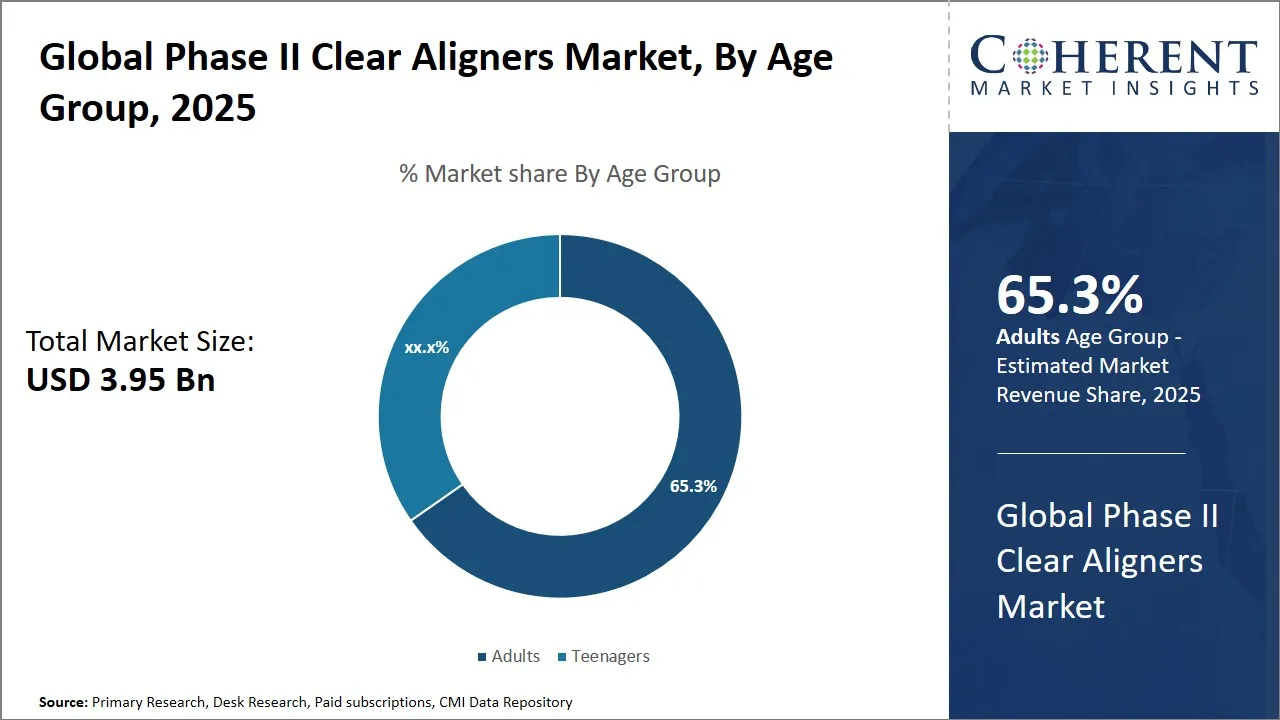
- The adults segment is expected to dominate the Phase II clear aligners market with a 66.3 % share in 2026.
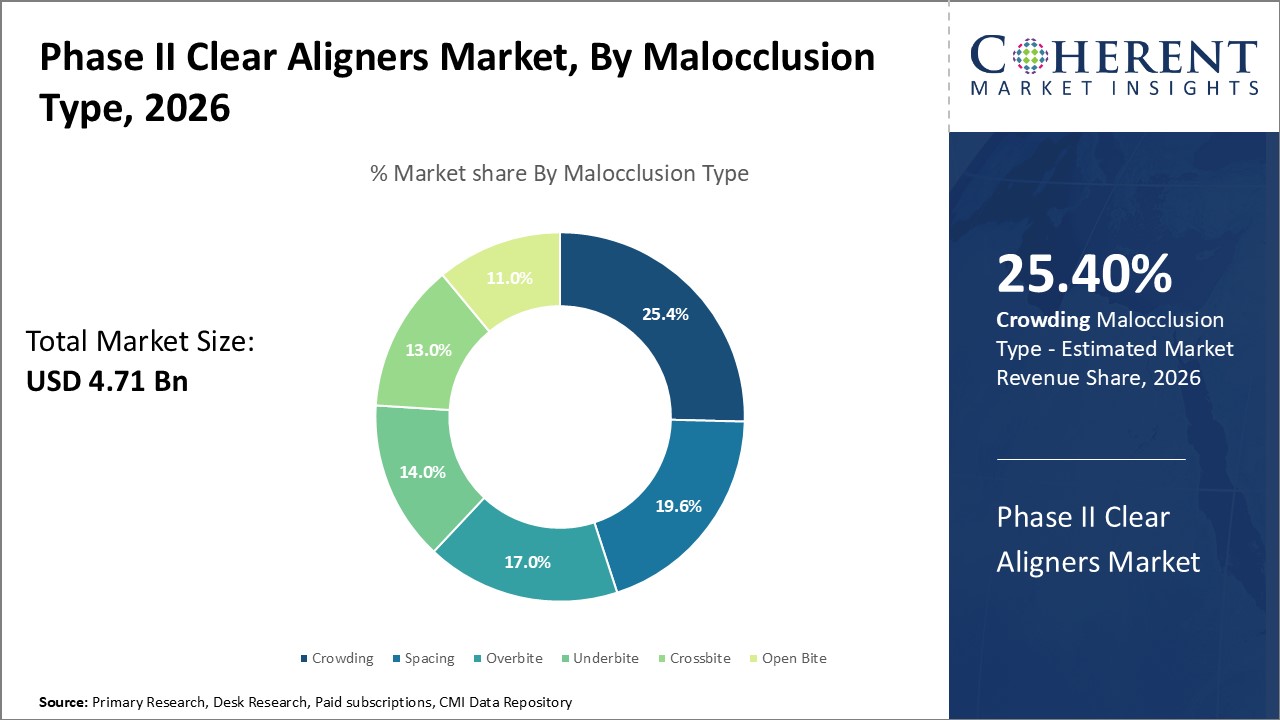
- Crowding segment is projected to account for 25.4 % of the market share in 2026.
- Dental clinics segment is projected to hold 51.3 % share in 2026.
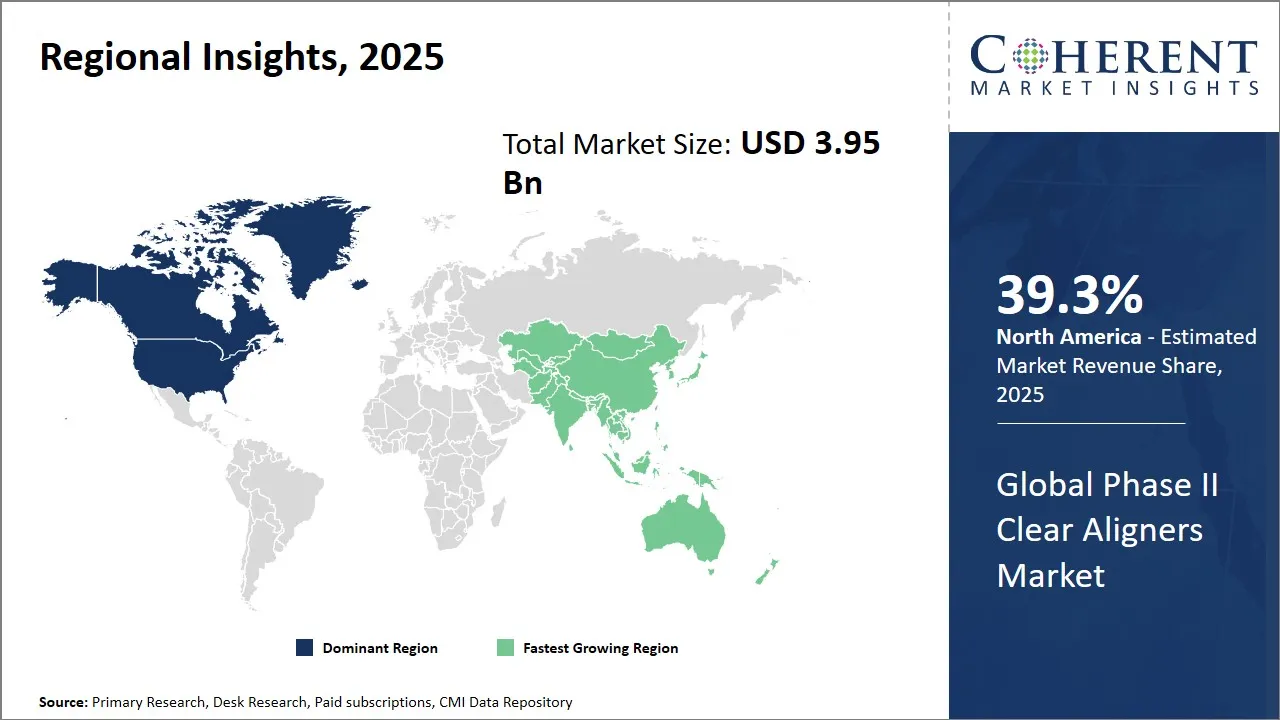
- North America is expected to lead the market, holding a share of 39.3 % in 2026. Asia Pacific is anticipated to be the fastest-growing region, with an estimated market share of 24.5% in 2026.
Market Overview
The key trends in the market show a strong focus on digital orthodontics, the inclusion of artificial intelligence elements, and new material technologies to offer an improve approach to orthodontics to achieve better outcomes for patients. In addition, the increasing awareness of dental health and the demand for less invasive treatment options are enhancing market expansion. The emergence of tele-dentistry alternatives and remote monitoring for outcomes, will also be a driver of increased consumption of clear aligners and remote monitoring. After reviewing the various content, it seems that there is a great amount of growth that will continue for some time into the Phase II clear aligners market.
Current Events and Its Impact
Current Events | Description and its Impact |
Increasing Adoption of Digital Dentistry |
|
Scoping Review by Adelaide Dental School |
|
Segmental Insights
- Current Industry Events of 2026
- Market Size Estimation
- Regional Breakdown
- Competitive Landscape
- Customer Intelligence
- Segmental Analysis
- Pricing Analysis
- Key Market Drivers, Challenges & Future Trends
- Customized Insights Section
Phase II Clear Aligners Market Insights, by Age Group - Adults Segment Contribute the Highest Share of the Market Owing to Increasing Aesthetic Awareness and Lifestyle Changes
The adults segment in the Phase II clear aligners market can be mainly associated with their higher awareness of aesthetics, with a projected share of 66.3% in 2026, professional appearance, and confidence. Unlike adolescents, adults generally seek orthodontic treatment discreetly to avoid the visible bulk of traditional braces. Clear aligners represent an almost invisibly corrective option, which greatly appeals to the adult desire for confidentiality and convenience. Additionally, adults are becoming increasingly aware of their long-term dental health and functionality; thus, adults are concerned with the demand for orthodontic treatment that corrects misalignment while also accommodating their daily lifestyle.
In addition, the working demographics within the adult segment often have the financial capacity to pursue elective dental treatment. This economic ability limits widespread of the newest orthodontic treatment options such as clear aligners, although these options may be more costly than traditional braces, they do offer significant lifestyle advantages.
Phase II Clear Aligners Market Insights, by Malocclusion Type - Crowding Segment Contributes the Highest Share Driven by Prevalence and Treatment Effectiveness with Clear Aligners
The crowding segment is estimated to be the leading segment of the Phase II clear aligners market with 25.4% share in 2026, driven by both its high prevalence across the globe, and clear aligners capability of successfully aligning teeth long term for a significantly high percentage of the population. Crowding takes place when there is not enough space in the jaw for the teeth to line up or be straight, leaving teeth either crooked, or overlapping. Aligners have shown to be quite good at gradually moving crowded teeth into position, as well as being non-invasive and flexible compared to fixed braces, with their numerous pre-arranged trays that allow the teeth to slowly move.
For example, Whistle, a dental care provider in India offering aligner and orthodontic solutions, published an article on teeth crowding treatment with Phase II clear aligners. The company explained that overcrowding, often caused by genetics, jaw size, or early tooth loss, can now be effectively treated with aligners that are discreet, removable, and more comfortable than braces.
Phase II Clear Aligners Market Insights, by End Use Channel - Dental Clinics Segment Hold the Highest Share due to Professional Trust and Accessibility
The dental clinics segment is projected to account for 51.3% share in 2026, due to their widespread access, and the level of trust patients have in dental clinics. Dental clinics are often the first point of contact for people seeking orthodontic treatment, as they play an important role in educating patients about the advantages of clear aligners and implanting the necessary treatment plan. Dental clinics serve as a center for orthodontic care not only because they can provide comprehensive services at that location but also because it allows them to cater to a larger population base, including people who may feel anxious about visiting multiple clinics and specialist appointments.
The presence of experienced dentists who can offer preliminary orthodontic assessments and referrals facilitates early diagnosis and timely intervention, motivating higher patient enrollment in clear aligner treatments. Moreover, dental clinics are increasingly adopting digital scanning, 3D modeling, and tele-dentistry tools that streamline treatment planning for clear aligner therapy, reducing treatment time and increasing convenience for patients. These technological integrations reinforce patient confidence in the efficacy of treatments offered.
Regional Insights
North America Phase II Clear Aligners Market Analysis and Trends
North America region is projected to lead the market with a 39.3% share in 2026, due to an established orthodontic ecosystem, widespread consumer awareness, and recent technology adoption. Benefits from government regulations to ensure the quality and safety of dental devices, and regulations that encourage innovation in conjunction with reimbursement policies are prevalent. The presence of key players such as Align Technology, Inc. (which manufactures Invisalign), Dentsply Sirona, and 3M, further guides the leadership position of the market.
These companies have a strong research and development presence and a wide distribution channel with the U.S. and Canada which contributes to their availability. The advanced healthcare infrastructure in conjunction with high per capita income levels leads to an increasing demand for cosmetic and corrective dental treatments and fortifies their leadership position in the market. Trade flows indicate an import of high-quality dental consumables designing for a relatively capital free supply chain based on high quality manufacturing.
Asia Pacific Phase II Clear Aligners Market Analysis and Trends
The Asia Pacific region is expected to experience the most rapid growth in the Phase II clear aligners market to reach 24.5% share in 2026. Government programs aimed at improving overall oral health standards, as well as increasing private sector participation is further to justify this assumption of rapid growth. Domestic companies like SmileDirectClub, Angelalign, and DGShape, are increasing their presence in regional markets significant such as China, India, Japan, and South Korea.
For example, KiyoClear, the Japanese premium clear aligner brand of SheepMedical offers affordable multi-phase treatments using its Kireilign protocol with expanders and patented materials to improve comfort and results and its Phase II clear aligners are positioned for teenagers and adults seeking comprehensive orthodontic correction worldwide.
Phase II Clear Aligners Market Outlook for Key Countries
U.S. Phase II Clear Aligners Market Analysis and Trends
The U.S. Phase II clear aligners market continues to lead due to well-established orthodontic practices and high consumer demand for cosmetic dental products. Major players like Align Technology have deeply embedded their presence through continuous innovation and effective marketing strategies, fostering widespread adoption. The country benefits from comprehensive insurance frameworks and direct-to-consumer sales models, enhancing patient access. As dental professionals increasingly integrate digital scanning and 3D printing technologies, the market is seeing improvements in treatment precision and customization.
For example, Ahava Orthodontics a U.S based dental practice introduced its Phase II treatment for adolescents focusing on full alignment and bite correction using options such as traditional braces ceramic braces and Invisalign Teen with Phase II clear aligners highlighted as a key solution for long term oral health and confident smiles
China Phase II Clear Aligners Market Analysis and Trends
China Phase II clear aligners market reflects rapid expansion due to rising healthcare awareness and increased dental tourism. Government efforts to improve oral healthcare access and quality have boosted patient inflow to orthodontic clinics adopting clear aligner therapy. Additionally, Chinese consumers’ growing preference for aesthetic dental options supports market momentum. The evolving regulatory landscape also encourages innovation while ensuring patient safety.
Domestic players are making strong contributions Angelalign Technology, one of China’s largest homegrown clear aligner brands, has built a solid presence through AI-driven treatment planning and competitive pricing strategies. GGL (Global Good Luck) has also gained traction by offering affordable alternatives to global brands, making aligners more accessible across tier-2 and tier-3 cities.
Germany Phase II Clear Aligners Market Analysis and Trends
Germany Phase II clear aligners market is supported by a sophisticated healthcare system and high standards for medical devices. The country benefits from strong regulatory frameworks that ensure product efficacy and safety, attracting established players like Align Technology and Straumann to actively operate and innovate here. Germany’s sizable aging population coupled with growing cosmetic dentistry demand fuels market growth. Moreover, the presence of quality dental clinics equipped with advanced imaging and manufacturing technologies enhances patient outcomes and broadens the aligner market reach.
Domestic brands such as Scheu-Dental with its CA Clear Aligner system and K Line Europe are prominent in offering flexible, clinician-controlled treatment options at competitive price points. International players like Straumann’s ClearCorrect and Align Technology also have a strong foothold in the German market, leveraging the country’s established dental infrastructure and high consumer willingness to pay for esthetic treatments.
India Phase II Clear Aligners Market Analysis and Trends
India Phase II clear aligners market exhibits rapid adoption owing to increasing dental awareness and affordability improvements. Rising urbanization combined with expanding dental care services in metropolitan areas drives demand. Government programs geared toward improving oral health insurance coverage and private sector growth are positive contributors. Companies such as ClearDent and Smileneo are penetrating the market by offering cost-effective treatment options tailored to local consumers. Increasing availability of digital orthodontic services and tele-dentistry platforms also facilitates broader access to clear aligner treatments.
For example, Illusion Dental Lab a Mumbai, India based dental technology company known for its global presence introduced its Illusion Aligners made with premium thermoforming sheets and AI driven planning software iMODIFY showcasing how the brand successfully treated a 16 year old patient with severe crowding using 38 aligners over 18 months and emphasized the growing role of Phase II clear aligners in delivering predictable orthodontic outcomes for teenagers and young adults
Feedback from End Users and Unmet Needs – Global Phase II Clear Aligners Market
- Users of Phase II clear aligners, including dental and orthodontic practices and patients within metropolitan and semi-metropolitan markets, have repeatedly relayed a mixture of positive outcomes but unfulfilled needs. Positively, patients have often expressed their desire for improved comfort and aesthetics, especially compared with traditional braces. Specifically, there have been many adult patients involved in occupations with direct public interaction who appreciated that the nearly invisible aligners allowed them to seek treatment without being self-conscious at work or with groups of people. For example, a group of working professionals who were located in North America expressed that they were able to treat with aligners without much disruption to their daily lives, and that the digital monitoring component alleviated excessive travel to the clinic during their treatment.
- From the clinic perspective, neither expense on clinic labor nor time working with the physical products was cited as a complaint, especially with time savings from efficiency compared with baseline treatment, scan solutions and treatment simulations to evaluate course corrections for patients to build confidence with treatment onward. However, as with earlier feedback from orthodontists, the same concerns about predictability have been raised around more complex cases. Some orthodontists in Europe and Asia specifically noted that although aligners are effective in treating mild to moderate crowding in the anterior dentition and in supplying the anterior-posterior correction, finer adjustments on rotational and vertical corrections needed refinement, often extending the treatment cycle and contributing to higher potential costs for patients. The response clearly outlines unmet needs which persist in the clear aligners market with Phase II devices. Patients are still looking for more affordability, especially in developing markets where large cash upfront payments are often a limiting barrier to access.
Market Players, Key Developments, and Competitive Intelligence
Key Developments
- On September 10, 2025, Ormco, a global orthodontics company introduced Spark Junior clear aligners designed for younger patients as part of a two-phase treatment plan where Phase One supports children under 13 and Phase II clear aligners transition patients into Spark Advanced giving up to 3.5 years of care with flexibility for clinicians to choose either phase independently
- On September 02, 2025, Smartee Denti-Technology a global clear aligner manufacturer launched its Smartee Kinder and Smartee Teen products in Australia bringing early orthodontic solutions that combine functional appliances and Disney-licensed designs for children and teens with a focus on comprehensive two-phase care where Phase II clear aligners under the Smartee Teen program include a five-year management plan with refinements treatment pauses and mandibular advancement technology to address complex malocclusions
- In June 2025, Align Technology, a global medical device company known for its Invisalign system launched integrated consumer and professional campaigns called Invisalign for Kids and Growing Patients to educate parents and support doctors with tools and treatment options for children and teens highlighting how Invisalign clear aligners address developmental needs across both early and comprehensive care with Phase II clear aligners positioned as a key stage in creating predictable results and confident smiles for growing patients
- In April 2025, Align Technology a global leader in clear aligner systems introduced the Invisalign System with mandibular advancement and occlusal blocks in North America giving orthodontists a new solution to treat Class II malocclusion in growing patients aged 10 to 16 and positioning Phase II clear aligners as part of this innovation to improve mandibular repositioning and deliver more predictable outcomes during critical growth phases
Top Strategies Followed by Global Phase II Clear Aligners Market Players
- Established companies in the market put a lot of money into research and development (R&D) to come up with new ideas and make clear aligner products that work well and meet changing customer needs. To set themselves apart, these companies focus on technological improvements like better materials, more comfort, and shorter treatment times. In addition, they carefully choose to work with important players in the industry, like Original Equipment Manufacturers (OEMs), dental service providers, and technology vendors.
- In the Phase II clear aligners market, 3M is still gaining ground with its Clarity Aligners, which are widely used for full orthodontic cases. Envista Holdings, on the other hand, has expanded its Spark Aligners through its Ormco division, adding advanced features like mandibular advancement and mixed dentition support. Henry Schein Orthodontics is another big name in the field. Its Reveal Aligners are sold through a wide network of orthodontic professionals around the world.
- Players in the middle of the market, between big companies and niche newcomers, use a strategy that focuses on providing clear aligner solutions that are both affordable and high-quality. These companies focus on streamlining manufacturing processes and optimizing supply chains to keep prices competitive without lowering product quality. They do this by targeting price-sensitive consumers, such as younger people and middle-income groups.
- For instance, Flash Aligners from India, become popular by making cheap aligners with local manufacturing to help them become popular in South Asia. K Line Europe, which is based in Germany, focuses on providing competitively priced solutions with strong clinical support. Gaudi Dental, which is based in China, makes aligner systems that can be used for flexible treatment planning and are affordable for both teens and adults.
- Small companies in the Phase II clear aligners market set themselves apart by making products with unique features and innovations that are made for certain types of customers or clinical needs. These companies are positioning themselves as agile and highly adaptable competitors in a landscape that is changing quickly by using cutting-edge technologies like 3D printing, AI-driven treatment planning, and new biomaterials.
- For instance, Sweden & Martina sells its F22 Aligners in Italy, where they are known for being comfortable and clear across Europe. ClearPath Orthodontics is based in Pakistan and the U.A.E. and is known for helping clinics plan their services and providing aligners to people in South Asia and the Middle East. Another example is Clear Aligners from Turkey, which focuses on personalized aligner solutions and strong clinician involvement in regional markets.
Market Report Scope
Phase II Clear Aligners Market Report Coverage
| Report Coverage | Details | ||
|---|---|---|---|
| Base Year: | 2025 | Market Size in 2026: | USD 4.71 Bn |
| Historical Data for: | 2020 To 2024 | Forecast Period: | 2026 To 2033 |
| Forecast Period 2026 to 2033 CAGR: | 19.3% | 2033 Value Projection: | USD 16.21 Bn |
| Geographies covered: |
| ||
| Segments covered: |
| ||
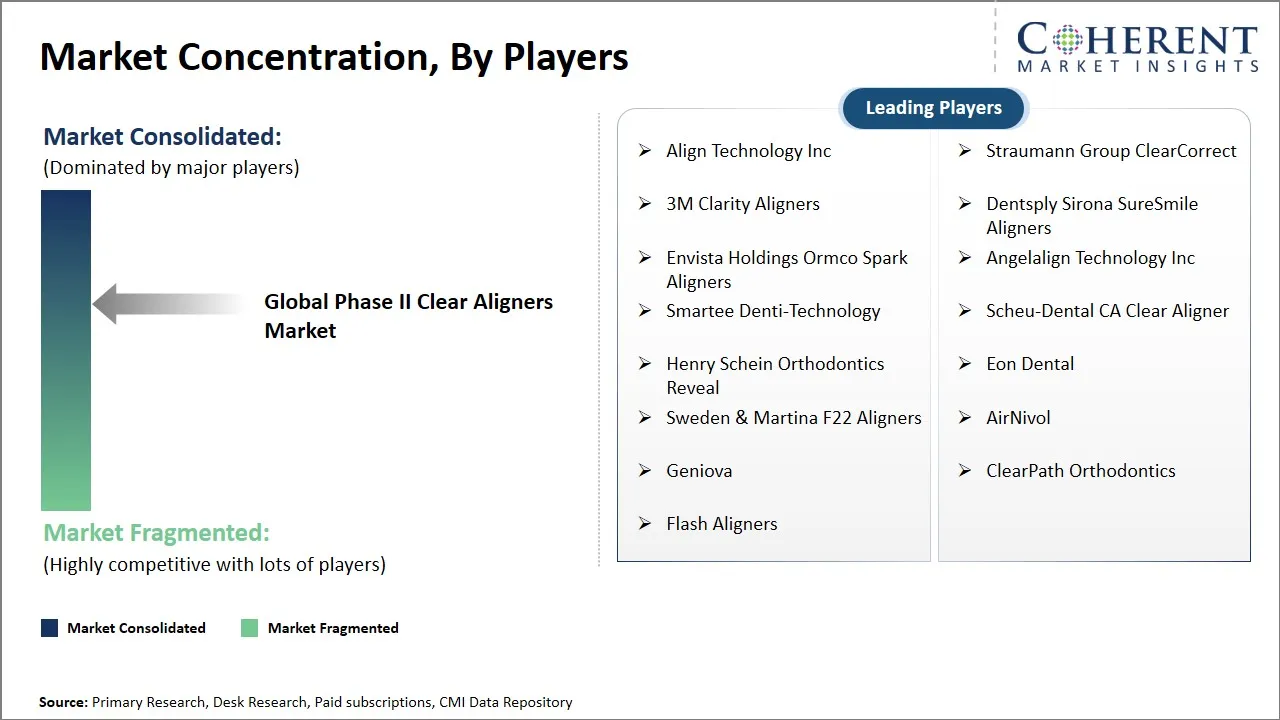
| Companies covered: | Align Technology Inc, Straumann Group ClearCorrect, 3M Clarity Aligners, Dentsply Sirona SureSmile Aligners, Envista Holdings Ormco Spark Aligners, Angelalign Technology Inc, Smartee Denti-Technology, Scheu-Dental CA Clear Aligner, Henry Schein Orthodontics Reveal, Eon Dental, Sweden & Martina F22 Aligners, AirNivol, Geniova, ClearPath Orthodontics, and Flash Aligners | ||
| Growth Drivers: |
| ||
| Restraints & Challenges: |
| ||
Phase II Clear Aligners Market Dynamics
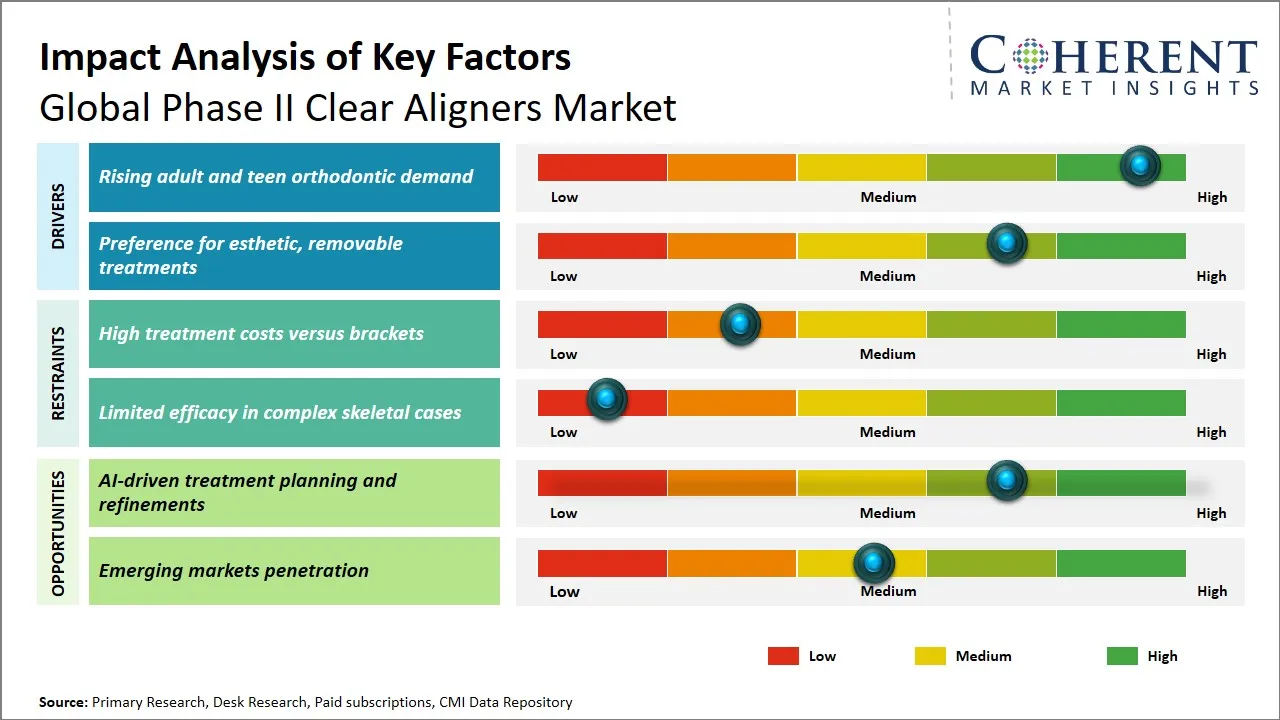
Phase II Clear Aligners Market Driver - Rising Adult and Teen Orthodontic Demand
In recent years, the demand for clear aligners has increased significantly because more adults and teens know about and accept orthodontic treatments. Clear aligners are a discreet and comfortable alternative to traditional braces. This makes them especially appealing to adults who want to improve their appearance while straightening their teeth. More people are also seeking orthodontic care earlier in life due to a growing focus on oral health and advancements in dental technology. Teenagers are choosing clear aligners as well because they are more comfortable, easy to remove, and less painful than traditional braces. They also face more social pressure and desire a confident smile.
In March 2025, Bernstein Orthodontics, a U.S. based orthodontic practice led by Doctor Carl Bernstein highlighted the rising demand for orthodontic care among both adults and teenagers with more patients in their thirties forties and even fifties choosing discreet treatment options such as clear aligners and ceramic braces alongside teenagers beginning comprehensive orthodontic care as a result Phase II clear aligners are becoming a central solution for both groups offering predictable outcomes that meet the dual needs of oral health and aesthetics while supporting the overall trend of growing orthodontic demand across generations
Phase II Clear Aligners Market Opportunity - AI-Driven Treatment Planning and Refinements
The introduction of Artificial Intelligence (AI) in treatment planning and adjustments presents a major opportunity for growth in the global Phase II clear aligners market. AI technologies make orthodontic treatment more precise and customized for each patient by analyzing large amounts of data on dental scans, treatment outcomes, and biomechanical parameters. This improved data processing creates treatment plans that predict tooth movement more accurately, resulting in fewer manual changes and greater overall efficiency. AI-powered software can also simulate different treatment scenarios, providing patients and doctors with visual progress projections that increase their engagement and likelihood of completing their treatment. AI's capability to streamline refinements during Phase II treatment, which often involves making small adjustments after the initial aligner therapy, speeds up the process and reduces costs for both providers and patients.
In December 2021, SoftSmile a New York based dental technology company upgraded its AI-powered orthodontic software VISION showcasing it at the Greater New York Dental Meeting with new features like automatic interproximal reduction group movement and real-time biomechanics planning designed to give doctors more flexibility in creating aligner strategies the company said the platform supports manufacturers and clinicians working with advanced 3D printing and will soon expand to direct doctor use strengthening digital workflows that play a growing role in Phase II clear aligners treatment planning
Analyst Opinion (Expert Opinion)
- The Phase II clear aligners market is gaining strong momentum as more adults and teenagers turn to comprehensive orthodontic solutions that are discreet and effective. The growth is driven by advances in digital workflows such as AI-powered treatment planning and 3D printing, which improve accuracy and shorten treatment times. Regulatory approvals in key markets have broadened access, while raising awareness among patients about the esthetic and lifestyle benefits of aligners is pushing demand. Challenges remain in the form of high treatment costs and the need for strict patient compliance, yet opportunities are expanding in emerging regions where orthodontic infrastructure is improving. Industry gatherings like the Annual American Association of Orthodontists Meeting, the International Dental Show in Cologne, and the World Orthodontic Conference have in recent years created platforms for companies and practitioners to showcase innovation, debate clinical evidence, and set standards that shape the future of aligner therapy.
- Several initiatives illustrate the pace of market development. Ormco’s launch of Spark Junior, Smartee’s introduction of Kinder and Teen solutions in Australia, and Align Technology’s campaigns for Invisalign Kids have broadened access to two-phase treatment models and ensured smoother transitions into Phase II clear aligners. National programs encouraging digital dentistry adoption, alongside collaborations between clinics and tech providers, are further fueling market readiness. These moves reflect how both corporate strategy and supportive policies are working in tandem to expand treatment reach and reinforce confidence in Phase II clear aligners as a mainstream orthodontic option.
Speak to the analyst
Want personalized insights?
Take the findings above to one of our principal consultants, or have the report rebuilt around the segments, geographies and competitors you actually track.
Market Segmentation
- Age Group Insights (Revenue, USD Bn, 2021 - 2033)
- Adults
- Teenagers
- Malocclusion Type Insights (Revenue, USD Bn, 2021 - 2033)
- Crowding
- Spacing
- Overbite
- Underbite
- Crossbite
- Open Bite
- End Use Channel Insights (Revenue, USD Bn, 2021 - 2033)
- Dental Clinics
- Orthodontic Clinics
- Hospitals
- Direct-to-Consumer Providers
- Treatment Complexity Insights (Revenue, USD Bn, 2021 - 2033)
- Mild Cases
- Moderate Cases
- Severe Cases
- Distribution Mode Insights (Revenue, USD Bn, 2021 - 2033)
- Offline (Chairside/Clinic-based)
- Online Platforms (DTC brands)
- Material Type Insights (Revenue, USD Bn, 2021 - 2033)
- Polyurethane-Based Aligners
- Polyethylene Terephthalate Glycol (PETG) Aligners
- Polyvinyl Chloride (PVC) Aligners
- Other Advanced Polymers
- Treatment Duration Insights (Revenue, USD Bn, 2021 - 2033)
- Short-term (<12 months)
- Medium-term (12–18 months)
- Long-term (18 months)
- Regional Insights (Revenue, USD Bn, 2021 - 2033)
- North America
- U.S.
- Canada
- Latin America
- Brazil
- Argentina
- Mexico
- Rest of Latin America
- Europe
- Germany
- U.K.
- Spain
- France
- Italy
- Russia
- Rest of Europe
- Asia Pacific
- China
- India
- Japan
- Australia
- South Korea
- ASEAN
- Rest of Asia Pacific
- Middle East
- GCC Countries
- Israel
- Rest of Middle East
- Africa
- South Africa
- North Africa
- Central Africa
- North America
- Key Players Insights
- Align Technology Inc
- Straumann Group ClearCorrect
- 3M Clarity Aligners
- Dentsply Sirona SureSmile Aligners
- Envista Holdings Ormco Spark Aligners
- Angelalign Technology Inc
- Smartee Denti-Technology
- Scheu-Dental CA Clear Aligner
- Henry Schein Orthodontics Reveal
- Eon Dental
- Sweden & Martina F22 Aligners
- AirNivol
- Geniova
- ClearPath Orthodontics
- Flash Aligners
Sources
Primary Research Interviews
- Industry Stakeholders list
- Orthodontists
- Dental Clinic Owners
- End Users List
- Teen Patients
- Adult Patients
Government and International Databases
- US Food and Drug Administration FDA
- European Medicines Agency EMA
- World Health Organization WHO Oral Health Database
- Centers for Disease Control and Prevention CDC Oral Health Division
- National Health Service NHS UK Dental Statistics
- Australian Institute of Health and Welfare Dental Health
Trade Publications
- Orthodontic Products
- Dental Tribune International
- Inside Dentistry
- Journal of Clinical Orthodontics News Section
- Dental Economics
- OrthoTown Magazine
Academic Journals
- American Journal of Orthodontics and Dentofacial Orthopedics
- European Journal of Orthodontics
- Angle Orthodontist
- Journal of Dental Research
- International Journal of Dentistry
- Australian Orthodontic Journal
Reputable Newspapers
- The New York Times Health Section
- The Guardian Health and Science
- The Wall Street Journal Health and Wellness
- The Times of India Health
- Financial Times Healthcare Coverage
- The Sydney Morning Herald Health
Industry Associations
- American Association of Orthodontists AAO
- World Federation of Orthodontists WFO
- European Orthodontic Society EOS
- British Orthodontic Society BOS
- Indian Orthodontic Society IOS
- Canadian Association of Orthodontists CAO
Public Domain Resources
- National Center for Biotechnology Information NCBI
- Open Access Government Health Portal
- United Nations Statistics Division UNSD Health Data
- National Library of Medicine NLM
- OECD Health Statistics
Proprietary Elements
- CMI Data Analytics Tool: Proprietary analytics tool to analyze real-time market trends, consumer behavior, and technology adoption in market
- Proprietary CMI Existing Repository of Information for Last 8 Years
Get access to 250+ pages report
Every segment, forecast, competitor profile and data table behind the analysis above — available for instant download.
- ESOMAR Member
- ISO 9001:2015 Certified
- D-U-N-S Registered
- GDPR & CCPA Compliant
Missing comfort of reading report in your local language? Find your preferred language:
Transform your Strategy with Exclusive Trending Reports
Frequently Asked Questions
The global Phase II clear aligners market is estimated to be valued at USD 4.71 Bn in 2026 and is expected to reach USD 16.21 Bn by 2033.
The CAGR of the global Phase II clear aligners market is projected to be 19.3% from 2026 to 2033.
Rising adult and teen orthodontic demand and preference for esthetic, removable treatments are the major factors driving the growth of the global Phase II clear aligners market.
High treatment costs versus brackets and Limited efficacy in complex skeletal cases are the major factor hampering the growth of the global Phase II clear aligners market.
In terms of age group, the adults segment is estimated to dominate the market revenue share in 2026.
Align Technology Inc, Straumann Group ClearCorrect, 3M Clarity Aligners, Dentsply Sirona SureSmile Aligners, Envista Holdings Ormco Spark Aligners, Angelalign Technology Inc, Smartee Denti-Technology, Scheu-Dental CA Clear Aligner, Henry Schein Orthodontics Reveal, Eon Dental, Sweden & Martina F22 Aligners, AirNivol, Geniova, ClearPath Orthodontics, and Flash Aligners are the major players.
North America is expected to lead the global Phase II clear aligners market in 2026.