

Bone Densitometers Market Size and Forecast — 2026 - 2033
The Global Bone Densitometers Market size is estimated to be valued at USD 550 million in 2026 and is expected to reach USD 880 million by 2033, exhibiting a compound annual growth rate (CAGR) of 6.8% from 2026 to 2033.
Overview
The bone densitometers market is driven by the rising prevalence of osteoporosis and increasing risk of osteopenia among aging populations. Growing awareness of early diagnosis and preventive healthcare is encouraging routine screening, especially among postmenopausal women. Technological advancements in dual-energy X-ray absorptiometry (DEXA) systems are improving accuracy, speed, and portability, boosting adoption in hospitals and diagnostic centers. Additionally, expanding healthcare infrastructure, government screening initiatives, and increasing healthcare expenditure in emerging markets are supporting growth. The shift toward point-of-care testing and rising demand for non-invasive diagnostic tools further contribute to market expansion.
Key Takeaways
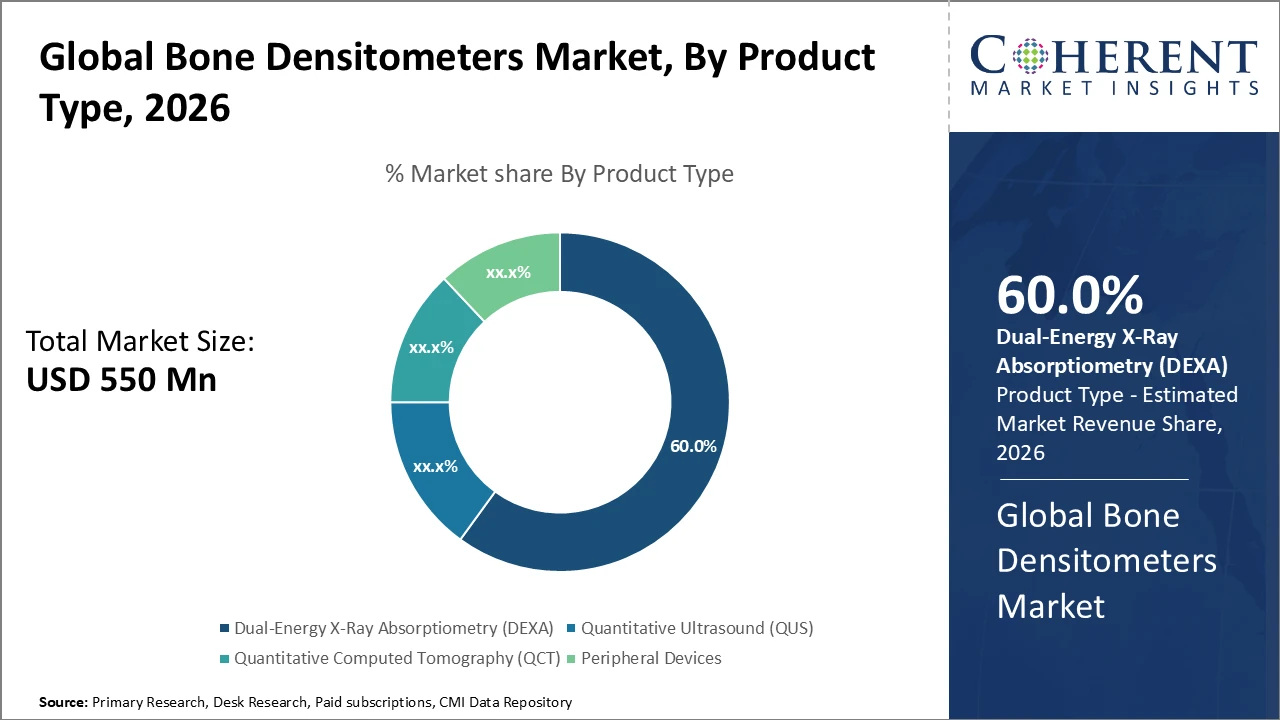
In the product type segment, Dual-Energy X-Ray Absorptiometry (DXA) remains the dominant technology, commanding over 60% of market share due to superior accuracy and widespread clinical acceptance. Quantitative Ultrasound (QUS) shows the fastest growth, driven by portability and cost-effectiveness.
The hospital end-user sector leads the market with over 55% revenue generation, supported by expanded screening programs and increased healthcare infrastructure investments.
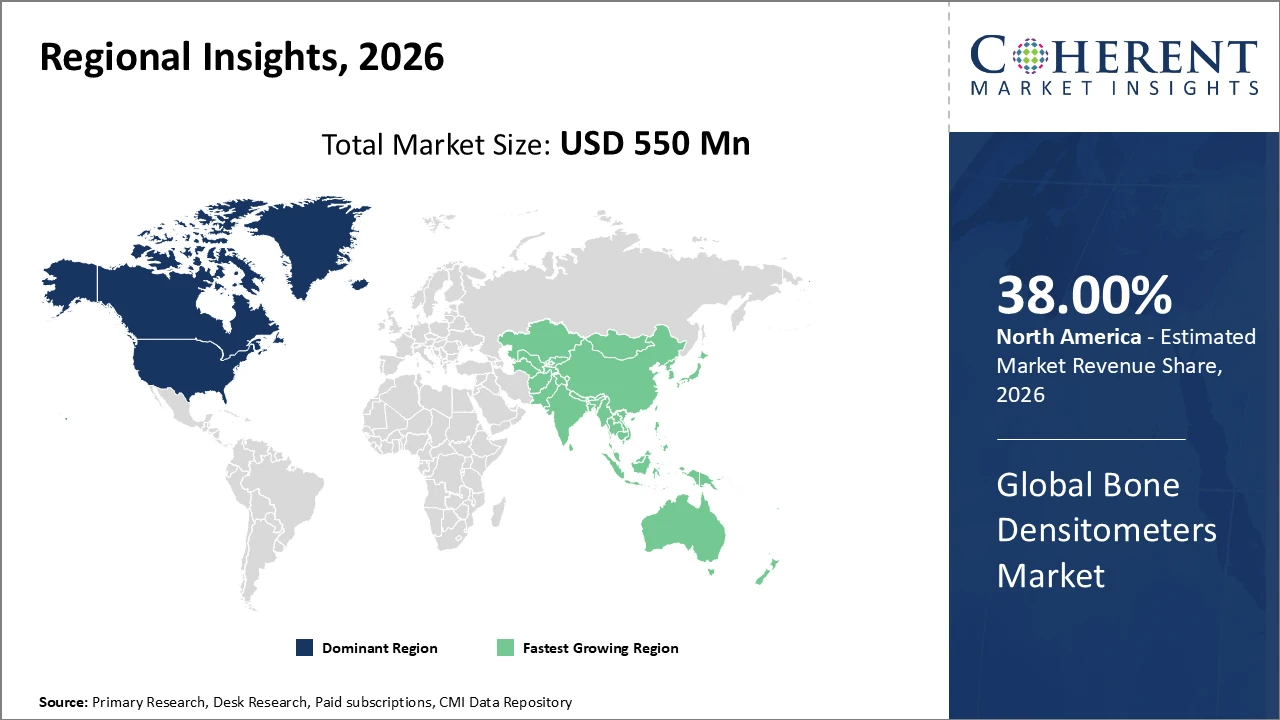
Regionally, North America holds a dominant market share exceeding 38%, driven by high healthcare spending and early adoption of advanced diagnostic technologies.
Asia Pacific exhibits the fastest CAGR, supported by rising osteoporosis awareness, improving healthcare access, and increasing diagnostic adoption in countries such as India and China.
Bone Densitometers Market Segmentation Analysis
Bone Densitometers Market Insights, By Product Type
Dual-Energy X-ray Absorptiometry (DXA) dominates the market share as the gold standard for bone density measurement due to its high accuracy and reliability in diagnosing osteoporosis and fracture risk. Its dominance is further strengthened by continuous technological upgrades such as faster scan times and AI-driven analytics introduced in 2025, supporting global revenue growth. The fastest-growing subsegment is Quantitative Ultrasound (QUS), driven by portability and affordability, especially in cost-sensitive regions. QUS expanded significantly in emerging markets in 2026 through mobile health initiatives. Quantitative Computed Tomography (QCT) remains a niche segment for advanced 3D imaging, while peripheral devices support core diagnostic systems.
Bone Densitometers Market Insights, By Technology
Central DXA holds the largest share due to its use in measuring bone density at critical sites such as the hip and spine, which are most predictive of fracture risk. Technological innovations like AI-driven image processing introduced in 2025 have boosted the diagnostic value of Central DXA systems, strengthening their market leadership. Peripheral DXA is the fastest-growing segment, driven by use in community screening programs and mobile health units enabling early detection at the wrist and heel. Ultrasound technology serves niche demand for radiation-free, low-cost diagnostics, especially in pediatric and rural care. Computed Tomography is used mainly in specialty and research applications.
Bone Densitometers Market Insights, By End User
Hospitals dominate the market share due to their extensive infrastructure and ability to conduct large volumes of bone density tests, particularly for aging populations requiring routine monitoring. The rising prevalence of osteoporosis screening programs in hospitals has significantly increased equipment adoption during 2025 and 2026. Diagnostic centers represent the fastest-growing segment, driven by the expansion of outpatient services offering faster and more convenient testing, especially in urban areas across North America and Europe. Orthopedic clinics serve a niche role, focusing on fracture and trauma-related bone assessments, while research institutes contribute to innovation in bone health diagnostics and therapeutic development.
Bone Densitometers Market Trends
The bone densitometers market trend shows a strong shift toward digitalization and AI-powered diagnostic tools, improving efficiency and accuracy in bone density analysis.
Enhanced imaging algorithms introduced in 2025 have automated diagnostic processes, reducing clinician workload while improving precision in results.
Growing demand for portable bone densitometers is driving wider adoption, especially in decentralized healthcare systems and rural care settings.
Integration with electronic health records (EHR) and telemedicine platforms is expanding market scope and enabling seamless data sharing.
These trends align bone densitometry with modern healthcare strategies focused on connected, data-driven, and patient-centric diagnostics.
Bone Densitometers Market Insights, By Geography
North America Bone Densitometers Market Analysis and Trends
In North America, dominance in the bone densitometers market is attributed to a highly advanced healthcare ecosystem, a large geriatric population, and strong insurance reimbursement frameworks supporting diagnostic procedures. The United States leads the region, supported by a well-established hospital network that invests heavily in advanced Dual-Energy X-ray Absorptiometry (DXA) systems for osteoporosis screening and fracture risk assessment. Major industry players such as Hologic and GE Healthcare maintain a strong presence, driving continuous innovation and expanding clinical applications. This combination of technological advancement, favorable reimbursement policies, and high awareness of bone health strengthens North America’s leading position in the global market.
Asia Pacific Bone Densitometers Market Analysis and Trends
Meanwhile, Asia Pacific exhibits the fastest growth in the bone densitometers market due to rapidly improving healthcare infrastructure, increasing awareness of osteoporosis, and rising disposable incomes. Countries such as India and China are experiencing accelerated adoption of diagnostic devices, supported by government-led healthcare initiatives and expansion of diagnostic centers. Growing investments in preventive healthcare and early screening programs are further boosting demand for bone density testing solutions. Although the region has a relatively younger population, it is undergoing a demographic transition toward aging, which is increasing long-term demand for osteoporosis diagnosis and management, driving strong market growth across the region.
Bone Densitometers Market Outlook for Key Countries
USA Bone Densitometers Market Analysis and Trends
The USA market retains a dominant position in the bone densitometers industry due to high healthcare expenditures and early adoption of advanced diagnostic technologies. National programs promoting bone health screening among aging populations have significantly increased demand for DXA systems and portable devices. Leading manufacturers have introduced AI-enabled bone densitometers, which are rapidly being adopted in hospitals and outpatient diagnostic centers to improve accuracy and efficiency. In 2026, the United States accounted for approximately 40% of North America’s bone densitometers market revenue, underscoring its central role in driving innovation, adoption, and overall market expansion within the region.
Germany Bone Densitometers Market Analysis and Trends
Germany’s bone densitometers market is driven by a well-developed healthcare system, strong reimbursement policies, and increasing focus on early osteoporosis detection. The country benefits from widespread adoption of DXA systems across hospitals and diagnostic centers, supported by government-backed preventive screening programs. Growing aging population and rising incidence of bone-related disorders are further boosting demand. Technological advancements, including AI-enabled imaging and improved scan efficiency, are enhancing diagnostic accuracy and workflow efficiency. Germany also plays a key role in Europe’s medical device innovation landscape, with steady investments in digital health integration and portable screening solutions supporting long-term market growth and adoption trends.
Analyst Opinion
The surge in demand from aging populations is a key growth driver for bone densitometers, with countries such as Japan and Germany reporting osteoporosis prevalence above 20% in individuals over 60 years. This demographic shift contributed to a 7% increase in market revenue in 2025 due to higher adoption in geriatric care facilities.
Technological advancements in Dual-Energy X-ray Absorptiometry (DXA) scanners have reduced per-test costs and improved measurement accuracy, boosting demand for portable and compact devices. In 2024, faster scanning innovations drove a 12% rise in portable device sales in North America, especially in outpatient and mobile clinics.
Price sensitivity in emerging markets is increasing demand for mid-range bone densitometers with essential features and competitive pricing. Import volumes of such devices grew by 15% in India and Brazil in 2026, reflecting a shift toward affordability and broader accessibility.
Healthcare policies mandating routine bone health screening in Europe and parts of Asia Pacific are encouraging hospital investments. In 2025, improved reimbursement coverage in South Korea led to a 10% increase in DXA device acquisitions.
- Current Industry Events of 2026
- Market Size Estimation
- Regional Breakdown
- Competitive Landscape
- Customer Intelligence
- Segmental Analysis
- Pricing Analysis
- Key Market Drivers, Challenges & Future Trends
- Customized Insights Section
Market Scope
| Report Coverage | Details | ||
|---|---|---|---|
| Base Year: | 2025 | Market Size in 2026: | USD 550 million |
| Historical Data for: | 2020 To 2024 | Forecast Period: | 2026 To 2033 |
| Forecast Period 2026 to 2033 CAGR: | 6.8% | 2033 Value Projection: | USD 880 million |
| Geographies covered: |
| ||
| Segments covered: |
| ||
| Companies covered: | Hologic Inc., GE Healthcare, DMS Imaging, OsteoAid, EchoSens, Norland Products Inc., Medilink-Global, Mirion Technologies, BeamMed Ltd., OsteoSys | ||
| Growth Drivers: |
| ||
Bone Densitometers Market Growth Factors
The increasing incidence of osteoporosis worldwide is a major growth driver for the bone densitometers market, with global fracture risks projected to rise by over 10% through 2026, leading to higher demand for routine bone density screening. Government initiatives focused on preventive healthcare, including reimbursement policies in countries such as the U.S. and South Korea, are supporting early diagnosis and increasing device adoption. Technological improvements in portability and accuracy are enabling mobile screening units, especially in rural areas, expanding market reach. Additionally, rising investments in orthopedic and geriatric healthcare infrastructure in emerging economies are sustaining long-term market growth and adoption.
Bone Densitometers Market Development
In March 2026, BPL Medical Technologies acquired Yozma BMtech Co, strengthening its imaging and diagnostics portfolio in preventive healthcare, bone health, and women’s health.
Key Players
Leading Companies of the Market
Hologic Inc.
GE Healthcare
DMS Imaging
Medilink-Global
OsteoAid
EchoSens
Mirion Technologies
OsteoSys
Norland Products Inc.
BeamMed Ltd.
Several market players have adopted strategic partnerships and product innovation as key growth strategies. For example, Hologic Inc.’s collaboration with leading hospitals in Europe in 2024 led to the rollout of AI-enabled bone densitometers, improving diagnostic accuracy and contributing to a 15% increase in regional market revenue. Similarly, GE Healthcare’s expansion into portable DXA devices designed for outpatient settings in the U.S. has strengthened its market penetration, recording a 20% growth over the past two years. These initiatives highlight the industry’s focus on innovation, digital integration, and accessibility, enabling companies to expand their presence and strengthen competitiveness in the global bone densitometers market.
Bone Densitometers Market Future Outlook
The bone densitometers market is expected to witness steady growth driven by rising osteoporosis prevalence, aging populations, and increasing awareness of early diagnosis. Future demand will be shaped by advancements in AI-enabled imaging, portable DXA systems, and radiation-free ultrasound technologies. Integration with digital health platforms and telemedicine will enhance accessibility and workflow efficiency. Expanding preventive screening programs across developed and emerging economies will further support adoption. Additionally, cost reductions and innovation in compact devices will open new opportunities in outpatient and rural healthcare settings. Overall, the market is set to evolve toward more accessible, accurate, and technology-driven diagnostic solutions.
Bone Densitometers Market Historical Analysis
The bone densitometers market has evolved significantly over the past decades, transitioning from basic X-ray-based systems to advanced digital diagnostic technologies. Initially, adoption was limited to hospital settings due to high costs and low awareness of osteoporosis screening. Between 2015 and 2020, increasing aging populations and rising fracture rates boosted demand for Dual-Energy X-ray Absorptiometry (DXA) systems, establishing them as the clinical standard. From 2021 onward, technological advancements such as AI integration, improved imaging speed, and portable devices expanded accessibility. Growing preventive healthcare initiatives and reimbursement policies further accelerated adoption, making bone densitometers an essential tool in modern diagnostic healthcare systems.
Sources
Primary Research Interviews:
Radiologists, orthopedic specialists, and endocrinologists focusing on osteoporosis diagnosis, bone health assessment, and fracture risk evaluation using bone densitometry
Hospital administrators, diagnostic center managers, and imaging technicians involved in the procurement, operation, and workflow integration of DXA, QUS, and QCT systems
Medical device executives, R&D heads, and product development managers working on bone densitometer innovation, AI-enabled imaging, and portable diagnostic solutions
Databases:
IQVIA – Healthcare utilization data, diagnostic procedure volumes, and hospital procurement trends
Magazines:
Radiology Today – Advances in imaging technologies and bone density diagnostic tools
Diagnostic Imaging – Clinical applications and innovations in DXA and bone health assessment systems
Medical Device Network – Market developments and product launches in bone densitometry equipment
Fierce MedTech – Industry partnerships, acquisitions, and innovation in medical imaging
Journals:
Osteoporosis International – Clinical studies on bone mineral density measurement and fracture risk assessment
Journal of Clinical Densitometry – Research on DXA, QUS, and QCT technologies and applications
Bone – Scientific research on bone metabolism, diagnostics, and imaging techniques
IEEE Transactions on Medical Imaging – Technological advancements in imaging systems and AI-based diagnostics
Newspapers:
The Wall Street Journal – Healthcare technology investments and medical device market trends
Financial Times – Global medical device industry growth and regulatory developments
Reuters Health – Updates on diagnostic approvals and healthcare infrastructure expansion
Bloomberg – Medical technology company strategies and market performance insights
Associations:
International Society for Clinical Densitometry (ISCD) – Standards and guidelines for bone mineral density measurement
International Osteoporosis Foundation (IOF) – Global osteoporosis awareness and prevention initiatives
World Health Organization (WHO) – Global guidelines on osteoporosis and bone health screening
U.S. Food and Drug Administration (FDA) – Regulatory approvals for bone densitometry devices
Get access to 250+ pages report
Every segment, forecast, competitor profile and data table behind the analysis above — available for instant download.
- ESOMAR Member
- ISO 9001:2015 Certified
- D-U-N-S Registered
- GDPR & CCPA Compliant
Missing comfort of reading report in your local language? Find your preferred language:
Transform your Strategy with Exclusive Trending Reports
Frequently Asked Questions
The market is led by companies such as Hologic Inc., GE Healthcare, and Medilink-Global, whose innovations in DXA technology and strategic partnerships have strengthened their market positions.
The market is projected to reach USD 880 million by 2033 from USD 550 million in 2026, growing at a CAGR of 6.8% due to rising osteoporosis prevalence and technological advancements.
Hospitals hold the largest market share, while diagnostic centers and orthopedic clinics present significant growth opportunities driven by increasing demand for specialized bone health assessments.
Key trends include AI integration, increased device portability, and improved reimbursement policies, which are expected to accelerate adoption across both developed and emerging regions.'
The market is highly innovation-driven, but faces challenges such as price sensitivity in emerging economies and regulatory differences that impact market entry and expansion.
Companies primarily focus on partnerships with healthcare providers, strong R&D investment for product innovation, and targeted expansion strategies in emerging geographies.