

Global Phototherapy Lamps Market Size and Forecast – 2026 To 2033
The global phototherapy lamps market is expected to grow from USD 486.3 Mn in 2026 to USD 783.7 Mn by 2033, registering a compound annual growth rate (CAGR) of 7.1% from 2026 to 2033. The market for phototherapy lamps is poised for significant expansion, fueled by the soaring burden of neonatal jaundice globally.
According to Children's Liver Disease Foundation, about 60% of full-term babies and 80% of premature babies develop jaundice in the first week of life, highlighting the substantial need for neonatal phototherapy solutions globally.
(Source: Children's Liver Disease Foundation)
Key Takeaways of the Global Phototherapy Lamps Market
- LED phototherapy lamps are projected to hold 72.4 % of the global phototherapy lamps market share in 2026, making it the dominant product type segment across North America as these lamps offer improved energy efficiency, longer operating life, lower emissions of heat and a higher irradiance stability compared to fluorescent and halogen systems. For instance, the American Academy of Pediatrics (AAP) guidelines for the treatment of neonatal hyperbilirubinemia recognize that contemporary intensive phototherapy is often administered with narrow-band blue light emitting diode (LED) units, which have the advantage of inducing effective bilirubin breakdown with less heat and easier maintenance. (Source: American Academy of Pediatrics) Such clinical and operational benefits have contributed to the increasing implementation of LED-based systems for phototherapy in neonatal units across the region.
- Neonatal jaundice treatment is projected to hold 68.3 % of the global phototherapy lamps market share in 2026, making it the dominant application segment, across Asia Pacific attributable to the region's large neonatal population and expanding newborn screening programs. For instance, the Ministry of Health and Family Welfare of India advocates the provision of newborn care in healthcare facilities by means of Special Newborn Care Units (SNCUs), which offers neonatal care, including that related to hyperbilirubinemia requiring phototherapy. (Source: Ministry of Health and Family Welfare) The expansion of infrastructure around neonatal care services is likely to lead to an increase in the current demand for phototherapy lamps for the management of jaundice.
- Hospitals are projected to hold 61.5 % of the global phototherapy lamps market share in 2026, making it the dominant end user segment across Europe due to the presence of specialized neonatal and dermatology services within hospital settings. For instance, under the U.K.'s National Health Service (NHS), phototherapy is routinely delivered in neonatal units as a standard approach to the treatment of neonatal jaundice, and the pathway dictates hospital-based observation and bilirubin measurements. (Source: National Health Service) This dependence on hospital facilities for delivering phototherapy sustains the segment's position.
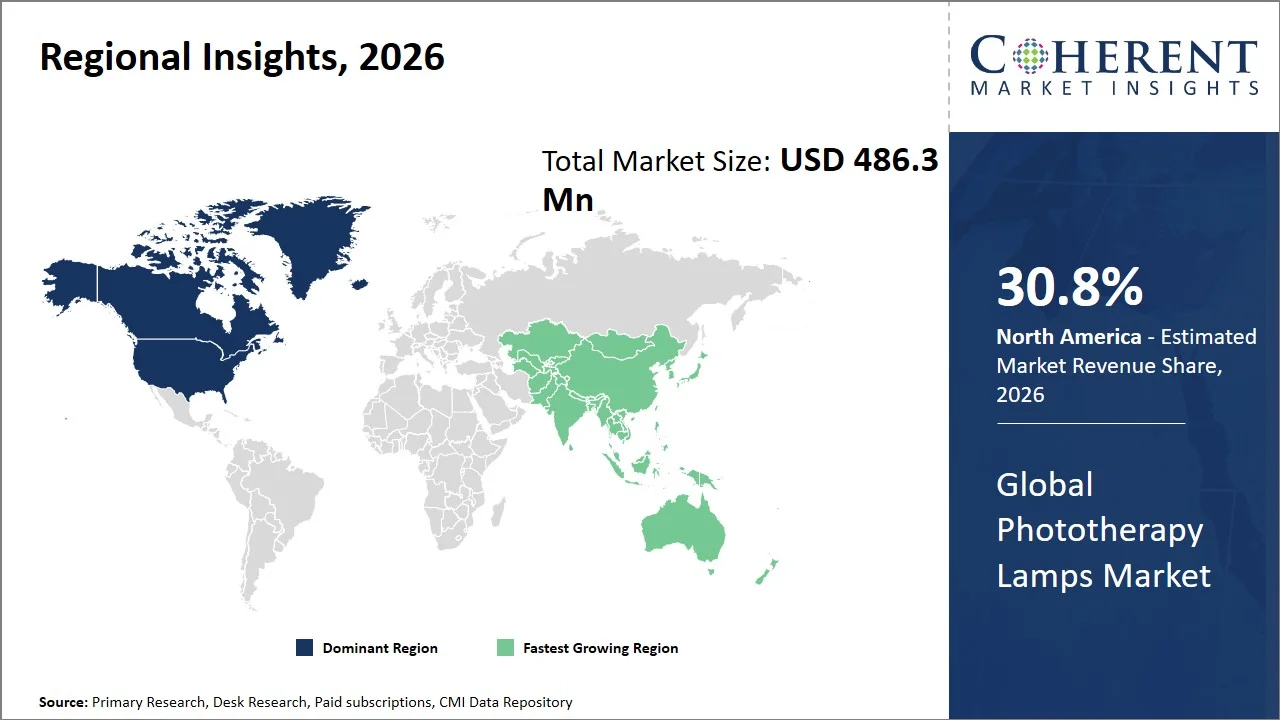
- North America maintains its dominance with an expected share of 30.8% in 2026, bolstered by the region’s advanced neonatal care infrastructure, high adoption of medical technologies, and robust reimbursement framework for hospital-based treatments. For instance, the U.S. Centers for Medicare & Medicaid Services (CMS) offers reimbursement for neonatal intensive care and inpatient care that covers phototherapy of neonatal hyperbilirubinemia. This reimbursement support provides a financial incentive for not only insurers and patients but also hospitals and neonatal care units to support the installation of phototherapy systems. (Source: Centers for Medicare & Medicaid Services)
- Asia Pacific is expected to exhibit the fastest growth with an estimated contribution of 28.9 % share in 2026, driven by expanding healthcare infrastructure, increasing healthcare expenditure, and rising investments in neonatal care services across developing economies. For instance, according to China's National Health Commission, in 2024, the number of hospitals nationwide rose to 38,700, while healthcare workers increased by 4.3% annually to 13 million. (Source: Medical Buyer) The sustained growth of healthcare institutions and the clinical workforces will help to advance the utilization of phototherapy lamps within neonatal and dermatology units.
- Growing Adoption of Home-Based Phototherapy Systems: Due to the growing popularity of home healthcare, there is an increasing market for portable, home-use phototherapy lamps, especially for patients that have chronic skin diseases like psoriasis or vitiligo and need to undergo treatments over a longer period of time. These systems make possible for the patients to undergo therapy at home rather than visiting a hospital every time, which makes treatment easier, hence increasing addressable patient population for phototherapy devices.
- Integration of Smart LED and Connected Phototherapy Technologies: Improvements in LED technology assist in designing phototherapy lamps with intelligent controls, programmable treatment settings, and the capability of remote monitoring. These advancements assist in optimal delivery of treatment, enhanced patient safety, and enable custom therapy and present new opportunities for manufacturers to serve hospitals, clinics and home care market.
Segmental Insights
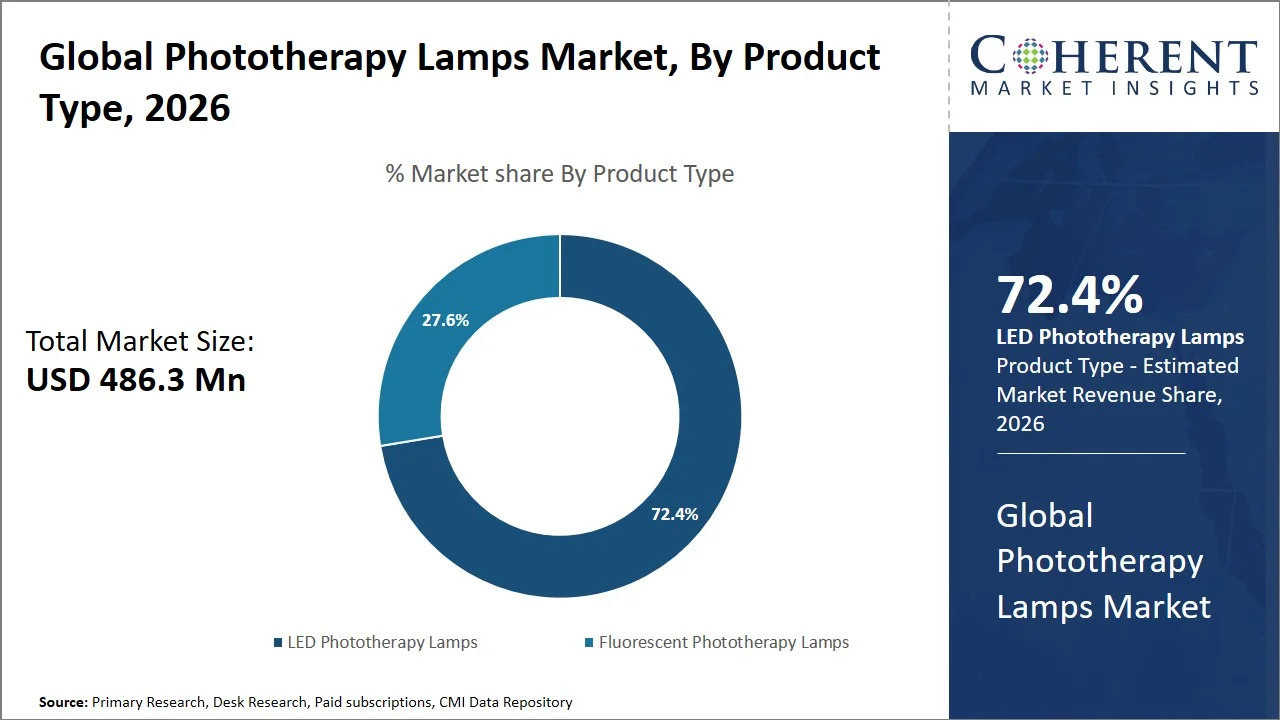
Why Do LED Phototherapy Lamps Dominate the Global Phototherapy Lamps Market?
LED phototherapy lamps are projected to hold a market share of 72.4% in 2026, because of their capability to deliver greater irradiances for faster treatment results, thereby facilitating enhanced outcomes, as compared to older light sources. Their compact design, energy efficiency and integration capability with more advanced monitoring systems make it favorable in neonatal care as well as in dermatology care practices. LED phototherapy lamps also provide higher operational reliability and frequency of replacement, reducing the overall cost of equipment to the medical facilities. For instance, the LiLLY LED Phototherapy system from Delta Medical International features LEDs that last over 60,000 hours and emit high-intensity light at very low power consumption. This reflects the benefits in performance and lifespan, which are leading to the trend towards LED-based phototherapy devices. (Source: Delta Medical International)
- Current Industry Events of 2026
- Market Size Estimation
- Regional Breakdown
- Competitive Landscape
- Customer Intelligence
- Segmental Analysis
- Pricing Analysis
- Key Market Drivers, Challenges & Future Trends
- Customized Insights Section
Why Does Neonatal Jaundice Treatment Represent the Largest Application Segment in the Phototherapy Lamps Market?
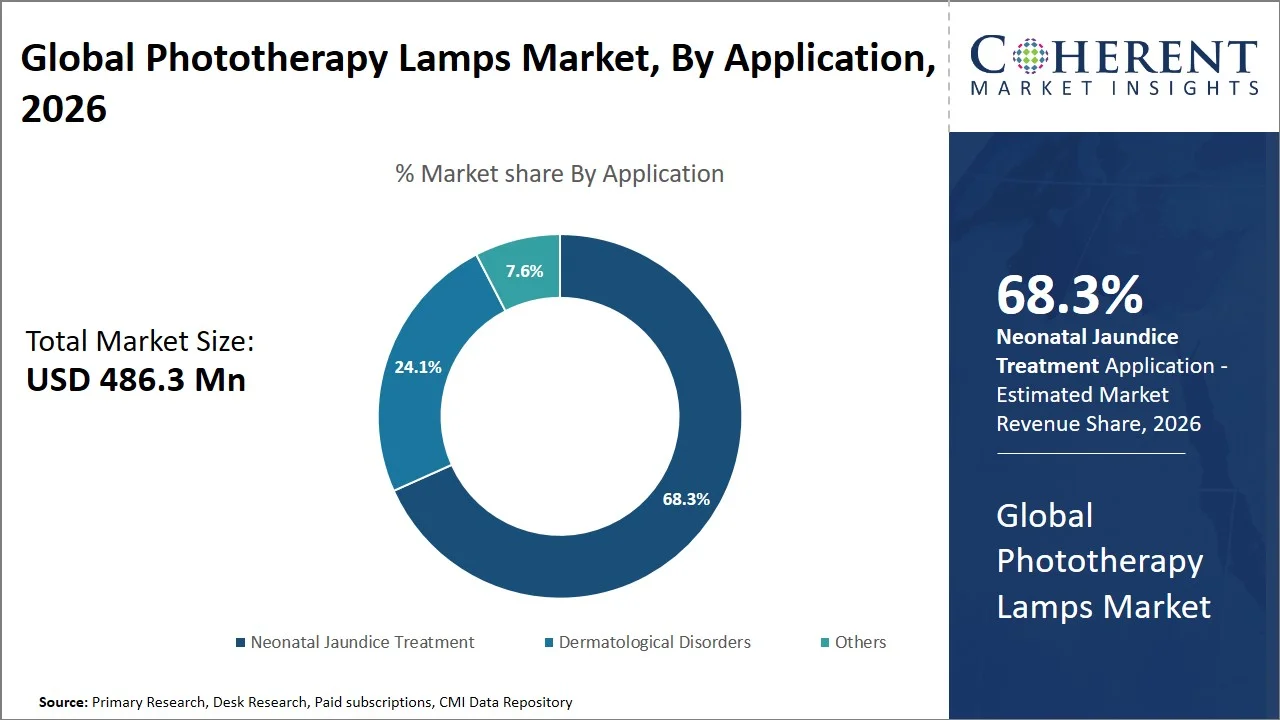
Neonatal jaundice treatment is projected to hold a market share of 68.3% in 2026, by virtue of increasing clinical demand for efficient neonatal hyperbilirubinemia therapy in newborn care. Expanding adoption of neonatal monitoring strategies and early treatment practices in maternity hospitals, also boost the demand for phototherapy equipment. Furthermore, healthcare providers are increasingly investing in state-of-the-art neonatal care devices for better therapeutic outcome and prevention of hyperbilirubinemia associated disorders. For instance, according to the Canadian Paediatric Society, bilirubin measurement screening for hyperbilirubinemia prior to the newborn's discharge is universally recommended to enable the earliest diagnosis of and treatment for neonatal jaundice. (Source: Canadian Paediatric Society) These standardized screening protocols encourage continued use of phototherapy systems in neonatal care.
Hospitals Segment Dominates the Global Phototherapy Lamps Market
The hospitals segment is projected to hold a market share of 61.5% in 2026, owing to the increasing reliance on hospitals in providing highly specific and focused neonatal and dermatological treatments. Hospitals consist of advanced infrastructure, skilled and trained personnel and the monitoring system necessary for the safe and appropriate utilization of phototherapy treatments. Additionally, continued investments in Neonatal Intensive Care Units (NICUs), pediatrics and dermatology departments are also contributing to the uptake of high-tech phototherapy systems. For instance, according to the Centers for Disease Control and Prevention (CDC), Neonatal Intensive Care Unit (NICU) admissions rose between 31% and 37% in 40 U.S. states during 2016–2023. (Source: Centers for Disease Control and Prevention) The increased use of Neonatal Intensive Care Unit (NICU) services is projected to maintain the need for phototherapy units in treating various neonatal conditions, notably hyperbilirubinemia.
Currents Events and their Impact
Current Events | Description and its Impact |
European Union Strengthens Medical Device Regulation (MDR) Implementation (December 2025) |
|
U.S. FDA Implements Quality Management System Regulation (QMSR) Aligned with ISO 13485 (February 2026) |
|
(Source: European Commission, Food and Drug Administration)
Phototherapy Lamps Market Dynamics
Market Drivers
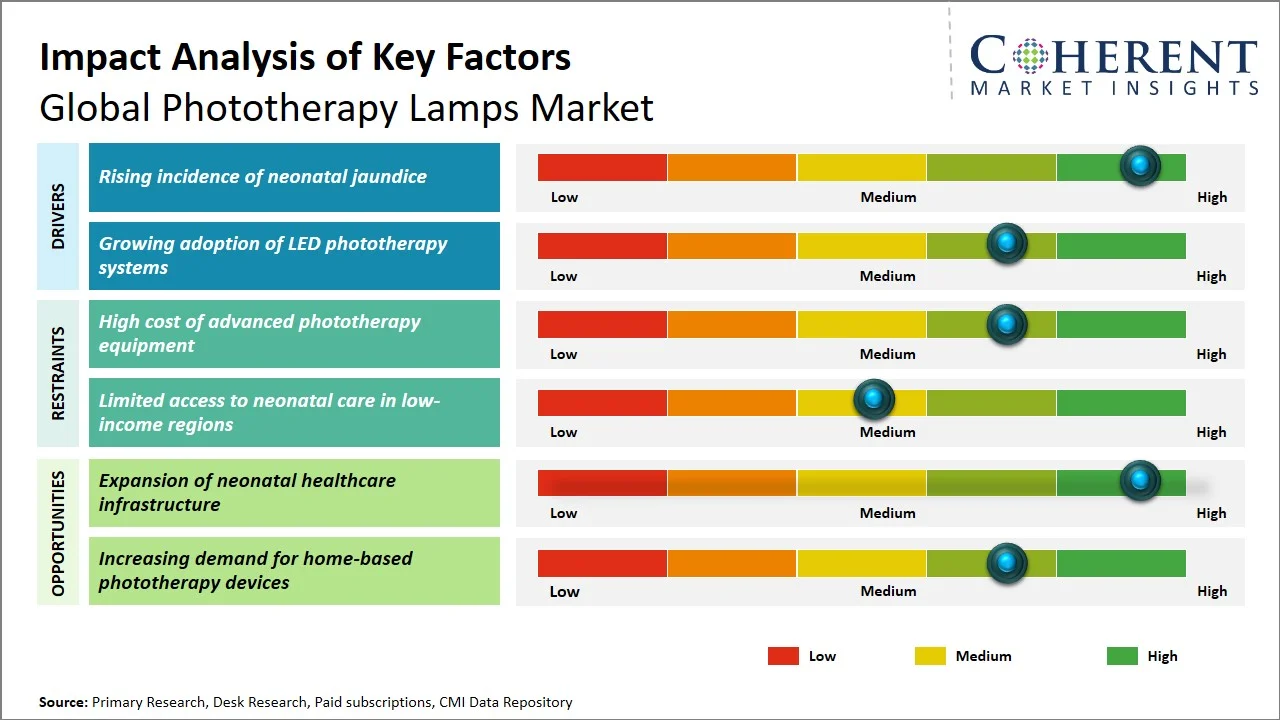
- Rising incidence of neonatal jaundice: The rising incidence of neonatal jaundice globally surges the demand for phototherapy lamps since phototherapy is the most popular treatment for reducing elevated bilirubin levels in newborns. The increased use of phototherapy devices is increasingly driven by the emphasis on early interventions, increased focus on neonatal surveillance, as well as increased availability of specialized services and facilities for care of newborns. The increasing use of phototherapy is also sustained by the non-invasive nature of treatment coupled with proven clinical effectiveness. For instance, the clinical practice guidelines by the Stanford Medicine Newborn Nursery define phototherapy as an essential treatment modality for neonatal hyperbilirubinemia, establishing uniform, bilirubin-based treatment trajectories that demonstrate phototherapy's status as an ordinary aspect of neonatal care. (Source: Stanford University)
- Growing adoption of LED phototherapy systems: The growing shift from conventional fluorescent and halogen phototherapy units to advanced LED phototherapy systems is contributing significantly to market expansion. An LED phototherapy device has increased wavelength precision, lower energy consumption, heat reduction, and long working duration which makes it cost-efficient for the healthcare provider. Additionally, small size and operational efficiency of LED phototherapy units enable their increased use in various neonatal care units as well as dermatological clinics. For instance, the Giraffe Blue Spot PT Lite LED Phototherapy System from GE HealthCare employs high intensity LED blue light for specific treatment of the infant while reducing the heat effect, marking a development for the industry moving toward LED based treatment systems. (Source: GE HealthCare)
Emerging Trends
- Expansion of Fiber-Optic and Wearable Phototherapy Technologies: There is an expanding array of fiber-optic blankets, pads, and portable phototherapy devices being designed by manufacturers that would allow for continuous treatment in a way which enhances the patient's mobility and comfort. For infants, this technology is continually being incorporated into the neonatal environment to provide more targeted therapy in a way that minimizes interruptions in traditional care practices.
- Increasing Preference for Multi-Modal Phototherapy Platforms: Healthcare providers are increasingly interested in multi-purpose phototherapy systems that are suitable for a range of clinical applications (such as, neonatal jaundice, psoriasis, vitiligo and eczema). This is prompting manufacturers to create multiple clinical products on one platform that maximize equipment utilization and therefore increased return on investment.
Regional Insights
Why is North America a Strong Market for Phototherapy Lamps?
North America leads the global phototherapy lamps market, accounting for an estimated 30.8% share in 2026, attributed to the existence of sophisticated healthcare infrastructure, extensive adoption of newer technologies in medical care and support from the government for neonatal care and dermatological treatment. Large number of prominent medical device manufacturers contributes to a robust competitive environment and the regulatory standards by authorities like U.S. FDA assure high quality of the products which has been trusted by medical practitioners. For instance, the U.S. FDA maintains strict pre-market review and quality standards for phototherapy devices through pathways such as 510(k) clearance. Through rigorous regulatory oversight, devices prove themselves safe and effective prior to market launch. This has created a trusted environment in which advanced phototherapy technologies continue to flourish throughout hospitals and specialty care settings. (Source: Food and Drug Administration) Additionally, the presence of prominent companies such as GE Healthcare, Philips Lighting, and Medela continue to invest heavily in the research and development of latest phototherapy systems and expand their product portfolios which ultimately help in the growth of North America in the global market.
Why Does the Asia Pacific Phototherapy Lamps Market Exhibit High Growth?
The Asia Pacific phototherapy lamps market is expected to exhibit the fastest growth with an estimated contribution of 28.9% share to the global market in 2026, attributed to growing investment in maternal and child health care infrastructure, hospital expansion in developed and emerging economies, and growing awareness and use of sophisticated neonatal care equipment. Countries like China, India, Indonesia and Vietnam, are heavily investing in upgrading their neonatal and pediatric treatment facilities as part of nation-wide healthcare modernization initiatives. For instance, India has launched a nation-wide scheme to enhance its health infrastructure-the Pradhan Mantri Ayushman Bharat Health Infrastructure Mission (PM-ABHIM) that will support health systems through the creation of intensive care facilities, an integrated public health laboratory, and a healthcare support system. (Source: Department of Health Research) Moreover, increasing domestic availability of medical devices in Asian nations makes sophisticated phototherapy systems more affordable and accessible throughout the region.
Global Phototherapy Lamps Market Outlook for Key Countries
Why is the U.S. Leading Innovation and Adoption in the Phototherapy Lamps Market?
The U. S. is at the forefront of innovation and adoption in the phototherapy lamps market due to the increasing adoption of technologically advanced equipment for neonatal and dermatology care services in specialty clinics and hospitals. The nation boasts of a mature medical device manufacturing industry concentrating on the development of advanced fiber-optic and LED phototherapy and smart phototherapy systems with higher treatment specificity and monitoring features, coupled with the promptness of healthcare providers to adopt new phototherapy technologies. For instance, Daavlin, a U.S.-based manufacturer of phototherapy devices, provides the 7 Series Full Body phototherapy system for the treatment of psoriasis, vitiligo and eczema-signaling continued innovation in specific UV phototherapy treatment solutions and broader application in patient care beyond the neonate setting. (Source: Daavlin)
Is Japan a Favorable Market for Phototherapy Lamps?
Japan is one of the most promising markets for the phototherapy lamps market owing to the high specialization of neonatal intensive care and the acceptance of medical precision technology. In recent years there has been a growing preference for newer, LED-based phototherapy devices with constant irradiance, a reduced form factor, and improved safety. In addition, the presence of domestic medical device producers (such as Nipro Corporation, Atom Medical Corporation, and Nihon Kohden Corporation), coupled with an emphasis on raising the standard of neonatal therapy through technology driven solutions, contribute to the growth of the market.
Is China Emerging as a Key Growth Hub for the Phototherapy Lamps Market?
China is positioned as a key growth hub in the global phototherapy lamps market driven by significant advancements in neonatal and pediatric care services in the country and growing use of modern technology in healthcare institutions. The country is seeing an increased demand for LED-based phototherapy systems due to upgradation of healthcare institutions in the area of neonatology and dermatological treatment, addition of a powerful domestic medical device industry and increased investment in medical infrastructure and technologies, thus making phototherapy equipment available to even rural hospitals.
Why Does Germany Top the European Phototherapy Lamps Market?
Germany is the leader in the European market for phototherapy lamps due to high prevalence of niche centers for neonatal and dermatological care that routinely employ sophisticated phototherapy technologies. Germany's existing medical device market encourages widespread adoption of high-performance LED and fiber-optic phototherapy equipment within hospitals. German healthcare institutions are more inclined to the use of clinically validated therapeutic devices and this helps in widespread adoption of high-end phototherapy equipment for both neonatal jaundice treatment and dermatological treatments.
Is the Phototherapy Lamps Market Developing in India?
India is emerging as a lucrative market for phototherapy lamps due to growing modernization of neonatal healthcare services and the increasing use of modern technology such as the application of LED-based Phototherapy. The increasing need for better newborn healthcare has motivated medical practitioners to invest in easy to use and efficient LED phototherapy lamps. Moreover, the expansion of the private hospital network and presence of leading domestic manufacturers like Phoenix Medical Systems, Nice Neotech Medical Systems, AVI Healthcare makes phototherapy systems readily available in urban and semi-urban healthcare facilities.
Regulatory Landscape Governing the Global Phototherapy Lamps Market
Region | Authority & Classification | Approval Pathway | Key Regulatory Insight |
North America | U.S. Food and Drug Administration (FDA); Phototherapy lamps are regulated as medical devices under the Federal Food, Drug, and Cosmetic Act. | Most phototherapy systems are marketed through the 510(k) Premarket Notification process by demonstrating substantial equivalence to a legally marketed predicate device. | FDA Quality Management System Regulation (QMSR), effective February 2026, aligns U.S. device quality requirements with ISO 13485:2016, increasing emphasis on product quality, risk management, and post-market surveillance. |
Europe | European Commission / Competent Authorities under EU MDR 2017/745; Phototherapy lamps are generally classified as CE-marked medical devices. | Manufacturers must undergo conformity assessment under the EU Medical Device Regulation (MDR) and obtain CE marking before commercialization. | EU MDR imposes stricter clinical evaluation, technical documentation, and post-market monitoring requirements, raising regulatory standards for phototherapy device manufacturers. |
Asia Pacific | NMPA (China), PMDA/MHLW (Japan), CDSCO (India), TGA (Australia); Phototherapy systems are regulated as medical devices. | Registration and market authorization are required through country-specific medical device approval frameworks. | Governments across Asia Pacific are strengthening medical device regulations and encouraging local manufacturing, while expanding maternal and neonatal healthcare infrastructure that supports phototherapy device adoption. |
Latin America | ANVISA (Brazil), COFEPRIS (Mexico); Classified as medical devices subject to risk-based regulation. | Product registration, technical dossier review, and compliance with applicable quality standards are required before commercialization. | Regulatory agencies are increasingly harmonizing requirements with international standards, improving device quality oversight and facilitating regional market access. |
Middle East & Africa | SFDA (Saudi Arabia), UAE Ministry of Health & Prevention, SAHPRA (South Africa); Phototherapy lamps are regulated as medical devices. | Market authorization generally requires device registration, quality documentation, and recognition of approvals from major reference markets such as the U.S. or EU. | Ongoing modernization of medical device regulations and investments in neonatal care infrastructure are improving access to phototherapy technologies across the region. |
How is the expansion of neonatal healthcare infrastructure creating new growth opportunities in the phototherapy lamps market?
The increasing investments in new born care services, pediatric care centers and hospital modernization programs is creating ample opportunities for the phototherapy lamps market. Maternal and child health systems are improving the accessibility of advanced new born care technologies and also augmenting the access to the best pediatric neonatal care. The improved capabilities of healthcare providers to handle neonatal complications are projected to drive the demand for phototherapy equipment. For instance, in November 2025, the Andhra Pradesh Medical and Health Department, sanctioned an amount of USD 0.50 million (INR 4.8 crore) for setting up 8 Special Newborn Care Units (SNCUs) across government hospitals, in addition with the deployment of 80 radiant warmers. (Source: Medical Dialogues) Such infrastructure setup will likely facilitate extensive usage of phototherapy lamps.
Market Players, Key Development, and Competitive Intelligence
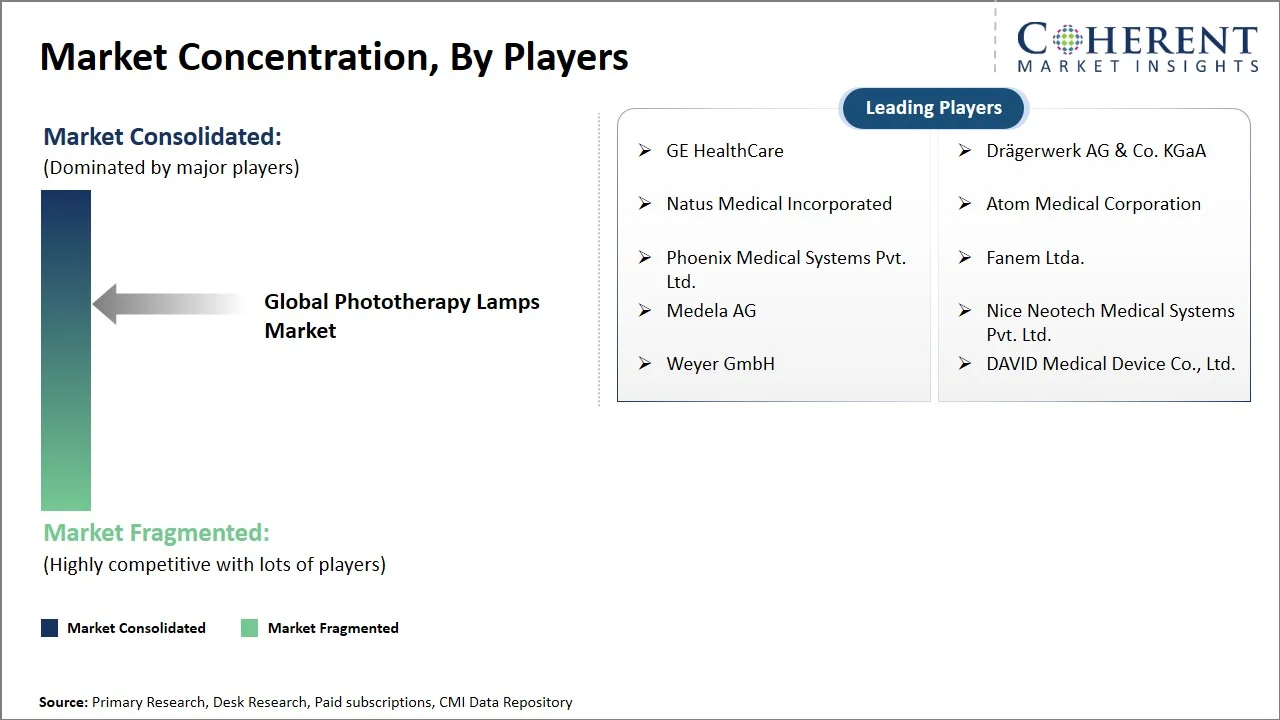
Key Developments
- In February 2026, Natus Sensory acquired Thera B Medical to expand its portfolio in the area of neonates and further propel innovation in in neonatal phototherapy. This acquisition enhances Natus’ capabilities to innovate and enhance the development of advanced phototherapy products for treatment of hyperbilirubinemia in term and pre-term neonates and further reinforce its established position in the neonatal care equipment segment.
- In July 2025, Gunze Medical, a subsidiary of Gunze Limited, launched the UV therapeutic device "CAREVEAM" in Japan for the treatment of various dermatological diseases. The release further supplements the company's phototherapy product portfolio and reinforces its footprint in the medical light therapy sector.
Competitive Landscape
The global phototherapy lamps market is moderately competitive, with traditional medical device companies that differentiate themselves based on product performance, technological sophistication and market reach. Companies are actively developing advanced LED-based phototherapy systems with better energy efficiency, increased portability and enhanced treatment specificity. Companies are establishing their footprint in emerging markets through distributor tie-ups, by collaborating on healthcare infrastructure and also broadening product range specifically for neonatal and dermatological needs. Key focus areas include:
- Development of high-intensity LED and fiber-optic phototherapy systems
- Expansion into emerging markets through hospital and neonatal care partnerships
- Integration of smart monitoring, treatment tracking, and connected device capabilities
- Enhancement of portable and home-use phototherapy solutions for broader patient access
Market Report Scope
Phototherapy Lamps Market Report Coverage
| Report Coverage | Details | ||
|---|---|---|---|
| Base Year: | 2025 | Market Size in 2026: | USD 486.3 Mn |
| Historical Data for: | 2020 To 2024 | Forecast Period: | 2026 To 2033 |
| Forecast Period 2026 to 2033 CAGR: | 7.1% | 2033 Value Projection: | USD 783.7 Mn |
| Geographies covered: |
| ||
| Segments covered: |
| ||
| Companies covered: | GE HealthCare, Drägerwerk AG & Co. KGaA, Natus Medical Incorporated, Atom Medical Corporation, Phoenix Medical Systems Pvt. Ltd., Fanem Ltda., Medela AG, Nice Neotech Medical Systems Pvt. Ltd., Weyer GmbH, and DAVID Medical Device Co., Ltd. | ||
| Growth Drivers: |
| ||
| Restraints & Challenges: |
| ||
Analyst Opinion (Expert Opinion)
- The future outlook for the global market for phototherapy lamps is anticipated to remain positive owing to the increasing burden of neonatal jaundice and prevalence of skin disorders coupled with rapid transition to energy efficient LED based treatments. New features such as smart monitoring systems, portable devices, and fiber optic phototherapy solutions are expected to play significant role in expanding the application of phototherapy lamps across various hospitals and outpatient centers.
- The maximum opportunities will probably exist within neonatal jaundice applications in Asia Pacific (specifically India and the Southeast Asian nations), as a rise in birth rates and the improvements in neonatology care centers combined with greater investment in maternal and child health services will boost demand for phototherapy devices. Portable and LED-based phototherapy systems specifically designed for the developing markets are also likely to grow steadily.
- In order to obtain a competitive advantage, market participants will need to develop next generation LED phototherapy devices that offer precise irradiance control, better energy efficiency, and in-built monitoring systems. Partnerships with hospitals, neonatal care units, and public health programs as well as growth in emerging markets where demand is high will be pivotal. Firms with superior product innovation, compliance with regulations and low-cost solutions designed for specific regional requirements are expected to solidify their position in the market.
Speak to the analyst
Want personalized insights?
Take the findings above to one of our principal consultants, or have the report rebuilt around the segments, geographies and competitors you actually track.
Market Segmentation
- Product Type Insights (Revenue, USD Mn, 2021 - 2033)
- LED Phototherapy Lamps
- Fluorescent Phototherapy Lamps
- Application Insights (Revenue, USD Mn, 2021 - 2033)
- Neonatal Jaundice Treatment
- Dermatological Disorders
- Others
- End User Insights (Revenue, USD Mn, 2021 - 2033)
- Hospitals
- Specialty Clinics
- Homecare Settings
- Others
- Regional Insights (Revenue, USD Mn, 2021 - 2033)
- North America
- U.S.
- Canada
- Latin America
- Brazil
- Argentina
- Mexico
- Rest of Latin America
- Europe
- Germany
- U.K.
- Spain
- France
- Italy
- Russia
- Rest of Europe
- Asia Pacific
- China
- India
- Japan
- Australia
- South Korea
- ASEAN
- Rest of Asia Pacific
- Middle East
- GCC Countries
- Israel
- Rest of Middle East
- Africa
- South Africa
- North Africa
- Central Africa
- North America
- Key Players Insights
- GE HealthCare
- Drägerwerk AG & Co. KGaA
- Natus Medical Incorporated
- Atom Medical Corporation
- Phoenix Medical Systems Pvt. Ltd.
- Fanem Ltda.
- Medela AG
- Nice Neotech Medical Systems Pvt. Ltd.
- Weyer GmbH
- DAVID Medical Device Co., Ltd.
Sources
Primary Research Interviews
- Neonatologists and pediatricians involved in neonatal jaundice diagnosis and treatment
- Neonatal Intensive Care Unit (NICU) directors and newborn care specialists
- Hospital procurement managers responsible for neonatal and phototherapy equipment purchasing
- Biomedical engineers and clinical technicians overseeing phototherapy device deployment and maintenance
- Dermatologists utilizing phototherapy systems for psoriasis, vitiligo, and eczema management
- Medical device manufacturers and product development managers specializing in phototherapy technologies
Stakeholders
- Phototherapy lamp manufacturers and medical device companies
- End-use Sectors
- Hospitals and Neonatal Intensive Care Units (NICUs)
- Maternity hospitals and pediatric healthcare centers
- Dermatology clinics and specialty treatment centers
- Medical device distributors and healthcare equipment suppliers
- Regulatory & Health Bodies: U.S. Food and Drug Administration (FDA), European Commission Medical Device Regulation (EU MDR), Medicines and Healthcare products Regulatory Agency (MHRA), National Medical Products Administration (NMPA), China, Central Drugs Standard Control Organization (CDSCO), India, World Health Organization (WHO)
Databases
- WHO Global Health Observatory (GHO) – neonatal mortality and maternal-child health statistics
- World Bank Data – healthcare expenditure and healthcare infrastructure indicators
- UNICEF Data Warehouse – newborn health and neonatal care indicators
- OECD Health Statistics – hospital infrastructure and healthcare utilization data
- Global Health Data Exchange (GHDx) – disease burden and neonatal health statistics
Magazines
- Medical Device Network
- MedTech Dive
- Healthcare Purchasing News
- Biomedical Instrumentation & Technology
- Medical Product Outsourcing (MPO)
Journals
- Journal of Perinatology
- Pediatrics
- Neonatology
- BMC Pediatrics
- Pediatric Research
- Journal of Clinical Neonatology
Newspapers
- Financial Times – healthcare technology and medical device industry developments
- The Wall Street Journal – healthcare policy and medical technology trends
- The New York Times (Health Section) – neonatal and pediatric healthcare developments
- The Economic Times – healthcare infrastructure and medical device market updates
Associations
- American Academy of Pediatrics (AAP)
- European Society for Paediatric Research (ESPR)
- International Pediatric Association (IPA)
- National Association of Neonatal Nurses (NANN)
- British Association of Perinatal Medicine (BAPM)
Public Domain Sources
- World Health Organization (WHO) – neonatal health and newborn care statistics
- UNICEF – maternal and newborn health programs
- U.S. Centers for Disease Control and Prevention (CDC) – newborn health surveillance data
- National Institutes of Health (NIH) – neonatal and phototherapy-related research publications
- World Bank – healthcare infrastructure and healthcare investment data
Proprietary Elements
- CMI Data Analytics Tool, Proprietary CMI Existing Repository of information for last 10 years.
Get access to 250+ pages report
Every segment, forecast, competitor profile and data table behind the analysis above — available for instant download.
- ESOMAR Member
- ISO 9001:2015 Certified
- D-U-N-S Registered
- GDPR & CCPA Compliant
Missing comfort of reading report in your local language? Find your preferred language:
Transform your Strategy with Exclusive Trending Reports
Frequently Asked Questions
The global phototherapy lamps market is estimated to be valued at USD 486.3 Mn in 2026 and is expected to reach USD 783.7 Mn by 2033.
LED phototherapy lamps dominate due to their higher energy efficiency, longer operational lifespan, lower heat generation, and superior treatment effectiveness compared to conventional phototherapy technologies.
Phototherapy lamps are medical devices that emit specific wavelengths of light to treat conditions such as neonatal jaundice, psoriasis, vitiligo, and other dermatological disorders.
The CAGR of the global phototherapy lamps market is projected to be 7.1%from 2026 to 2033.
Blue light in the wavelength range of approximately 430–490 nm is commonly used for the treatment of neonatal hyperbilirubinemia.
LED phototherapy lamps provide higher irradiance, consume less energy, generate minimal heat, and require less maintenance due to their longer service life.
In terms of application, neonatal jaundice treatment is estimated to dominate the market revenue share in 2026.