

Global Phototherapy Treatment Market Size and Forecast – 2026 to 2033
According to Coherent Market Insights, the global phototherapy treatment market is estimated to be valued at USD 2.23 Bn in 2026 and is expected to reach USD 3.37 Bn by 2033, expanding at a compound annual growth rate (CAGR) of 5.4% from 2026 to 2033. This steady growth is driven by increasing awareness about skin disorders, advancements in phototherapy technologies, and rising healthcare expenditures globally, positioning phototherapy as a preferred non-invasive treatment option.
Key Takeaways of the Phototherapy Treatment Market
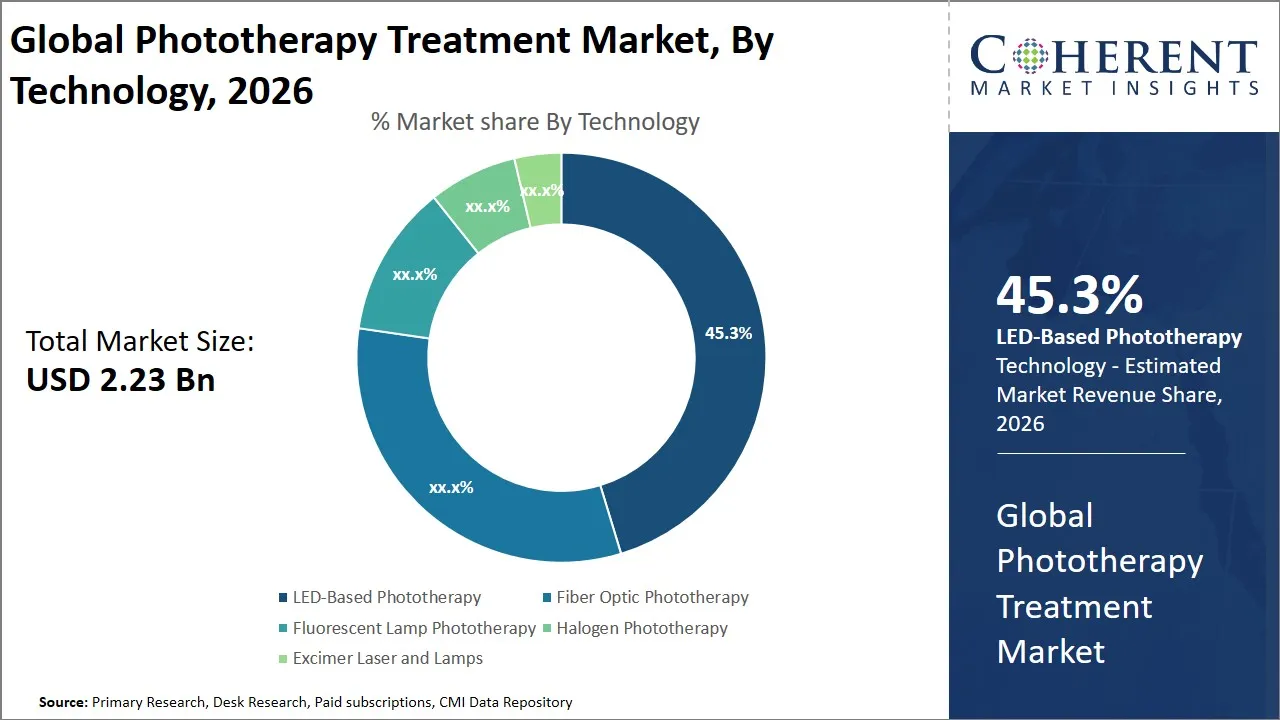
- LED-based phototherapy segment is expected to lead the phototherapy treatment market, capturing a 45.3 % share in 2026.
- Psoriasis segment is estimated to represent 23.5 % of the global phototherapy treatment market share in 2026.
- Phototherapy lamps and lightboxes segment is projected to dominate with 34.5 % of the market share in 2026.
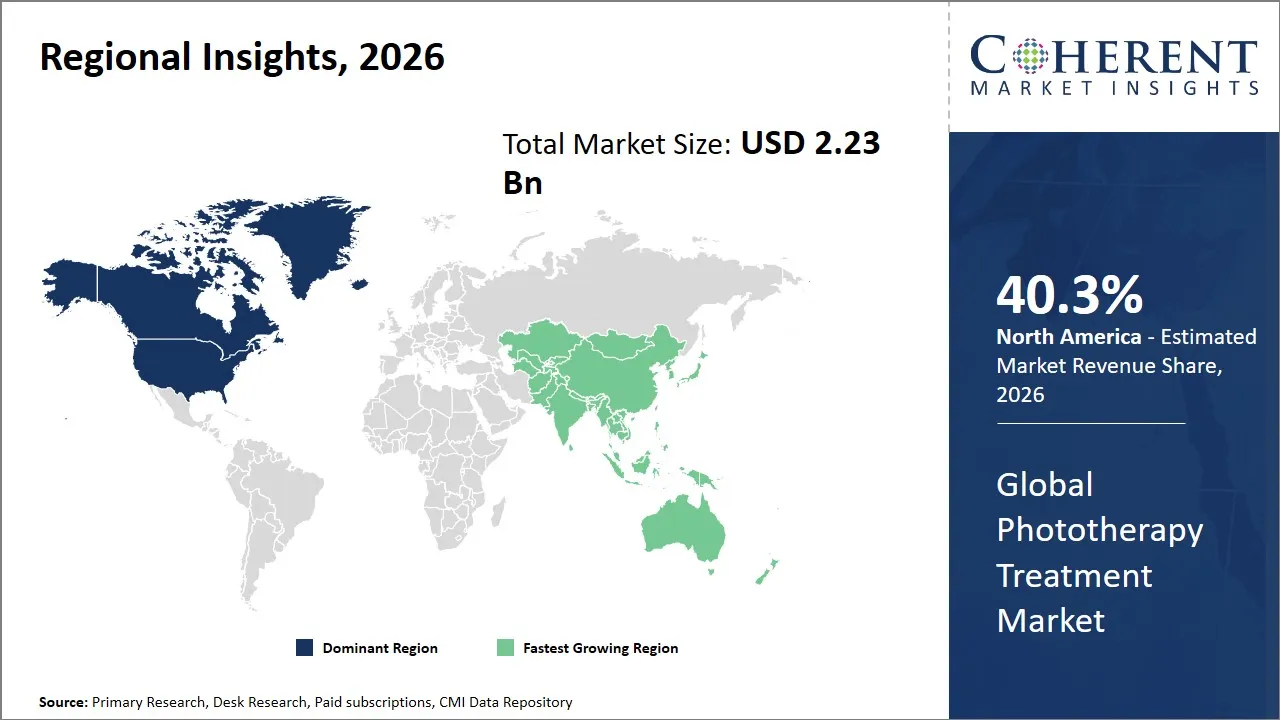
- North America is expected to lead the market, holding a share of 40.3 % in 2026.
- Asia Pacific is anticipated to be the fastest-growing region, with 25.4 % share in 2026.
Market Overview
- Market trends indicate a growing adoption of advanced, portable phototherapy devices and expanding applications beyond dermatology, including oncology and neonatal care.
- Additionally, integration with digital health platforms and increasing collaborations between technology providers and healthcare institutions are accelerating market innovation.
- Rising demand from emerging economies and favorable reimbursement policies are further bolstering growth, making phototherapy treatment a dynamic and evolving sector within the broader healthcare market.
Currents Events and Its Impact
Current Events | Description and its Impact |
Rapid Advancements in LED Technology and Wearable Devices |
|
Clinical guideline reinforcement of phototherapy’s role in psoriasis care (and combination regimens) |
|
Segmental Insights
- Current Industry Events of 2026
- Market Size Estimation
- Regional Breakdown
- Competitive Landscape
- Customer Intelligence
- Segmental Analysis
- Pricing Analysis
- Key Market Drivers, Challenges & Future Trends
- Customized Insights Section
Why Does LED-Based Phototherapy Dominate the Global Phototherapy Treatment Market in 2026?
The LED-based phototherapy segment is expected to capture 45.3% of the market share in 2026, mainly attributed to the superior technological benefits it contains and the increasing use in clinical settings. Its popularity is stipulated by the capability to produce specific light wavelengths that are condition-specific, are more efficient and yield their superior results as compared to the conventional fluorescent or halogen phototherapy systems.
The LED devices have been associated with producing a steady level of light with the least amount of heat generated which in addition to enhancing patient comfort, it minimizes the chances of burns or skin irritation, a major concern with traditional phototherapy units.
For example, Phoenix Medical Systems expanded access to neonatal phototherapy treatment in India. The company offers an LED neonatal phototherapy unit delivering blue light at 455 nm without UV exposure. The phototherapy treatment supports effective jaundice management in NICU and hospital settings with certified safety standards.
(Source: https://www.phoenixmedicalsystems.com/)
What Factors Make Psoriasis the Leading Application in the Phototherapy Treatment Market?
Predominant phototherapy use is in psoriasis which is expected to hold the dominant market share of 23.5% in 2026, due to the high prevalence of the disease worldwide. There is long-term demand in treatment since phototherapy is proven to be effective in treating this chronic autoimmune skin disorder.
Psoriasis is a skin condition which involves rapid growth of the skin cells resulting in scaling, redness and inflammation in such a manner that it may take long management measures. Phototherapy especially narrow band UVB light is highly regarded with regard to its property of slowing hyper proliferation of skin cells and immune responses regulation without the undesirable side effects as seen in the case of systemic drugs.
Phototherapy Treatment Market Insights, By Product Type
The phototherapy lamps and lightboxes segment is projected to dominate with 34.5% of the global phototherapy treatment market share in 2026, due to the fact that these products are used as basic instruments in many phototherapy therapies in a variety of applications.
Their versatility is a major contributor to their market share; these lightboxes and lamps can be utilized successfully with a wide range of skin related ailments such as psoriasis, eczema, and vitiligo. This comprehensive versatility has placed them at the heart of the clinical scene and at home-based treatment
Technology Usage & Performance Differentiation - Phototherapy Treatment Market
Parameter | LED Phototherapy | Narrowband UVB (NB-UVB) | Laser (Excimer/Targeted Laser) |
Typical Usage Setting | Clinics, hospitals, home-care | Hospitals, dermatology clinics | Specialized dermatology clinics |
Operational Benefits | Low energy use, long device life, minimal heat, low maintenance | Established clinical protocols, whole-body coverage | High precision, lesion-specific targeting |
Treatment Scope | Localized to moderate full-body | Full-body and widespread lesions | Small, resistant, localized lesions |
Patient Throughput | High; short session times, fast setup | Moderate; longer sessions, room-based treatment | Low; time-intensive, one-area focus |
Treatment Efficacy Impact | Effective for mild–moderate conditions, maintenance therapy | High efficacy for psoriasis, vitiligo, eczema | Very high efficacy for stubborn plaques |
Safety Profile | No UV exposure, minimal side effects | Controlled UV exposure, cumulative dose monitoring required | Higher erythema risk if misused |
Treatment Frequency | Frequent, short sessions | 2–3 sessions per week | Fewer sessions but longer per visit |
Operational Cost per Session | Low | Medium | High |
Capital Equipment Cost | Low to medium | Medium | High |
Scalability | Highly scalable, home-use viable | Limited to clinical infrastructure | Poor scalability |
Preferred Use Case | Preventive care, chronic management, home phototherapy | Standard of care for widespread disease | Refractory or localized disease |
Regional Insights
North America Phototherapy Treatment Market Analysis and Trends
In North America, the dominance in the global phototherapy treatment market is largely driven by an advanced healthcare infrastructure with an estimated share of 40.3% in 2026, high adoption of innovative medical technologies, and strong presence of leading industry players. The area enjoys good government policies that favor research and developments, and reimbursement systems that provide easy access of phototherapy therapies to the patients.
Other prominent firms like CeramOptec, Koninklijke Philips N. V and Daavlin are also busy offering state of the art phototherapy devices that are used to treat skin and jaundice conditions in children. The already developed healthcare ecosystem and effective partnering activities among manufacturers, medical institutions, and regulatory authorities help to provide the constant market development and dominance.
In July 2025, JMOON, a pioneering beauty tech brand backed by Ulike, launched its flagship NouvelleSkin Facial Toning Device at Cosmoprof North America in Las Vegas. This marks JMOON’s official entry into the US market. Known for delivering phototherapy-based, science-backed anti-aging technologies, JMOON offers products like the NouvelleSkin device, which combines EMS, Red LED, and Near-Infrared technologies for skin lifting and wrinkle reduction.
(Source: https://jmoonglobal.com/products/)
Asia Pacific Phototherapy Treatment Market Analysis and Trends
The Asia Pacific region is expected to exhibit the fastest growth in the market contributing 25.4% share in 2026, due to skin diseases becoming prevalent and healthcare facilities becoming more accessible to developing countries. The quick urbanization and the rising economic standards have resulted in increased expenditure on healthcare and the increased tolerance to the latest methods of treatment such as phototherapy.
China, India, Japan and South Korea are some of the governments that are investing in healthcare infrastructure and making phototherapy equipment importation and local production easier. Presence in the industry is characterized by multinational companies and new local manufacturers, including Biolight, Lutronic and Shenzhen BioLight Meditech Co. Ltd. that are increasing market penetration due to cost-efficient and novel solutions.
Phototherapy Treatment Market Outlook for Key Countries
What are the Current Trends Shaping the U.S. Phototherapy Treatment Market?
The U.S. has been a market leader in the phototherapy treatment industry which has been reinforced by an advanced health care system and effective research centers. Such significant players as CeramOptec and Daavlin have made a contribution by introducing the state-of-the-art UV and LED-based devices of photo-therapy. Moreover, the policy of reimbursement of Medicare and private insurance companies makes patients more accessible.
The existence of a large number of dermatology professionals and neonatal care centers also contributes to the high acceptance of phototherapy interventions in terms of treating psoriasis and neonatal jaundice. The current innovation and partnerships among the hospitals and manufacturing firms have strengthened the leadership of the market.
How are Technological Innovations in Phototherapy Devices Influencing the Market Landscape in Germany?
The phototherapy treatment market of Germany enjoys a strong healthcare support and proactive government policies as part of efforts to support the development of medical technology. The nation has good manufacturing hubs such as Philips Healthcare and smaller special purpose companies dealing with phototherapy equipment.
The established set of regulations provides high levels of safety and effectiveness that results in increased confidence by physicians and by patients. The Germany market also capitalizes on the Europe-wide trade agreements which encourage the availability of the advanced phototherapy treatments.
China Phototherapy Treatment Market Trends
China is a rapidly emerging market in the phototherapy treatment sector due to increasing incidence of skin disorders, expanding medical facilities, and growing awareness regarding advanced treatments. Government policies encouraging domestic healthcare manufacturing and innovation have fostered the establishment of key players such as Shenzhen BioLight Meditech Co. Ltd. and Lutronic.
Urban regions exhibit extensive adoption of phototherapy devices in both public and private hospitals. Moreover, favorable trade policies and initiatives like “Made in China 2025” underpin the production and export of phototherapy technologies.
India Phototherapy Treatment Market Trends
The phototherapy treatment market in India is on a steady development, driven by the increased spending on healthcare, increasing patient awareness and a major increase in the number of dermatological care givers. Although there are problems in the rural access to healthcare services, metropolitan regions record an increase in the utilization of phototherapy in the treatment of psoriasis, eczema, and neonatal jaundice.
The government is also aggressively encouraging digitalization of healthcare and importation of high-tech medical equipment that could lead to increased availability of phototherapy machines by such multinational organizations as Daavlin and Royal Philips. Moreover, the Indian manufacturers are starting to create the low cost phototherapy solutions that would cater to the needs of the local market.
Regional Technology Penetration Readiness: Advanced LED & Home-Based Phototherapy vs Traditional Systems
- North America and Western Europe show the highest readiness for advanced LED and home-based phototherapy devices, supported by strong reimbursement systems, high patient awareness, and mature regulatory frameworks. These regions favor LED technologies due to safety, convenience, and rising demand for outpatient and home-care phototherapy, especially for chronic dermatological conditions.
- In contrast, Asia Pacific, Latin America, and parts of Eastern Europe remain more reliant on traditional narrowband UVB systems due to cost sensitivity and hospital-centric treatment models. However, improving healthcare infrastructure, rising dermatology caseloads, and gradual regulatory alignment are accelerating LED technology adoption in urban and private care settings.
Market Players, Key Developments, and Competitive Intelligence
Key Developments
- On January 12, 2026, NHS Greater Glasgow and Clyde, Scotland’s largest health board, expanded home phototherapy treatment for newborn jaundice. The Royal Hospital for Children, Glasgow’s leading pediatric hospital, introduced light emitting sleeping bags for at home care. The phototherapy treatment allows clinically eligible jaundiced babies to avoid hospital stays while receiving effective care.
- In June 2025, Phlecs, a Dutch dermatology technology company, announced a major eczema phototherapy treatment breakthrough. Clinical data presented in Berlin showed blue light phototherapy treatment matched UV therapies without UV-related risks. Phlecs also secured USD 1.17 million OP-Zuid grant to develop a next-generation home blue light phototherapy device. The UV-free phototherapy treatment supports safer, accessible eczema care ahead of the EU UV lamp ban.
- In October 2024, Dermalux hosted the global launch of its Tri-Wave MD phototherapy treatment in London. The new LED phototherapy device delivers three clinically proven wavelengths for treating acne, eczema, psoriasis, and skin ageing. The event highlighted Dermalux’s continued leadership in advanced, non-invasive phototherapy treatment education and technology.
- In September 2024, PhotoPharmics, a U.S.-based neurotherapeutics developer, achieved a key clinical milestone. The company announced the first subject completed its FDA pivotal trial for the Celeste phototherapy treatment. Celeste is a non-invasive phototherapy treatment designed to manage Parkinson’s disease symptoms. The six-month trial completion advances regulatory approval and validates phototherapy’s role in neurological care.
Top Strategies Followed by Global Phototherapy Treatment Market Players
Player Type | Strategic Focus | Examples |
Established Market Leaders | Continuous innovation in LED spectrum control dose automation and safety compliance integration of digital controls data logging and clinical protocol standardization long term contracts with hospital chains and neonatal care centers expansion through regulatory approvals and localized manufacturing | Leading companies introduce smart phototherapy systems with dose tracking for hospitals secure bulk procurement contracts with neonatal ICUs and set up regional assembly units to support faster market penetration |
Mid-Level Players | Modular and scalable phototherapy devices tailored for small clinics and outpatient centers focus on reducing total cost of ownership selective technology licensing instead of in house R&D distributor led regional expansion | Mid-tier manufacturers launch modular phototherapy cabins and tabletop units license LED control technology from specialists and rely on regional distributors to penetrate secondary healthcare markets |
Small-Scale Players | Hyper focus on single indication or use case rapid prototyping and customization limited batch manufacturing direct to clinic or direct to consumer sales models strong emphasis on design portability and ease of use | Niche players develop indication specific devices such as acne focused blue light systems sell directly to dermatology clinics or consumers and customize device form factors based on practitioner feedback |
Market Report Scope
Global Phototherapy Treatment Market Report Coverage
| Report Coverage | Details | ||
|---|---|---|---|
| Base Year: | 2025 | Market Size in 2026: | USD 2.23 Bn |
| Historical Data for: | 2020 To 2024 | Forecast Period: | 2026 To 2033 |
| Forecast Period 2026 to 2033 CAGR: | 5.4% | 2033 Value Projection: | USD 3.37 Bn |
| Geographies covered: |
| ||
| Segments covered: |
| ||
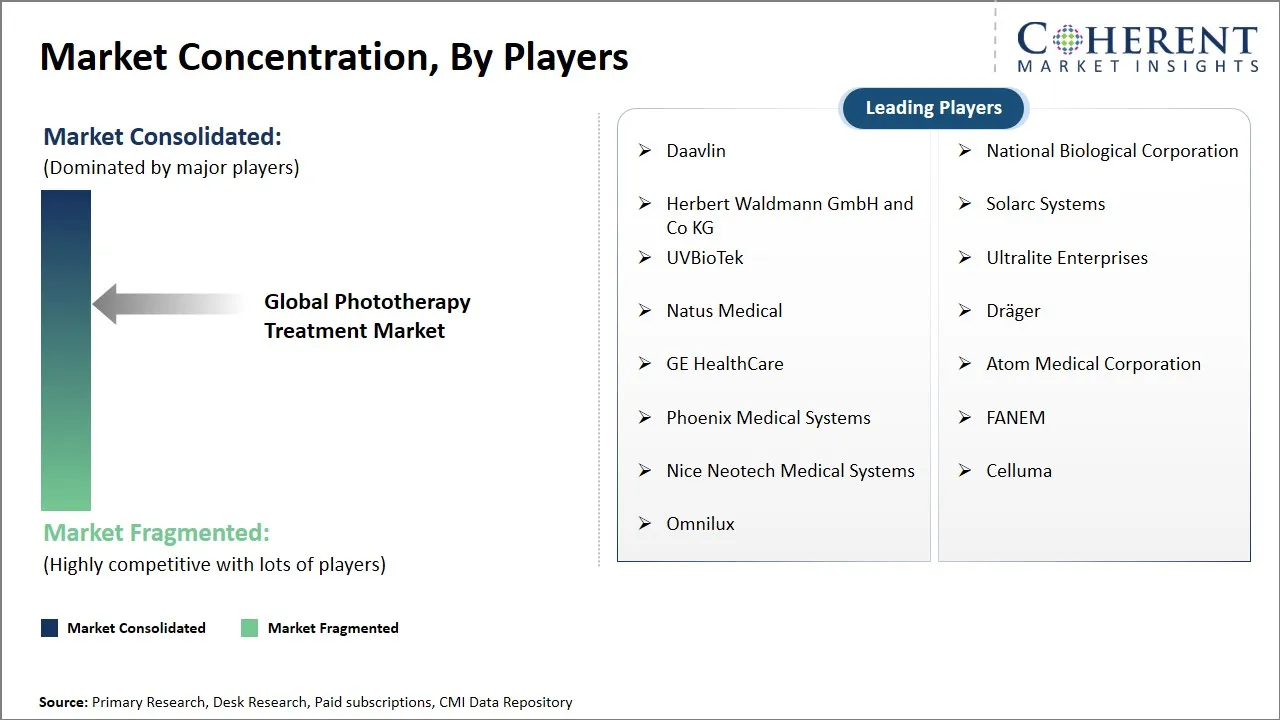
| Companies covered: | Daavlin, National Biological Corporation, Herbert Waldmann GmbH and Co KG, Solarc Systems, UVBioTek, Ultralite Enterprises, Natus Medical, Dräger, GE HealthCare, Atom Medical Corporation, Phoenix Medical Systems, FANEM, Nice Neotech Medical Systems, Celluma, and Omnilux | ||
| Growth Drivers: |
| ||
| Restraints & Challenges: |
| ||
Phototherapy Treatment Market Dynamics
Phototherapy Treatment Market Driver - Rising Prevalence of Psoriasis Vitiligo Atopic Dermatitis and Acne
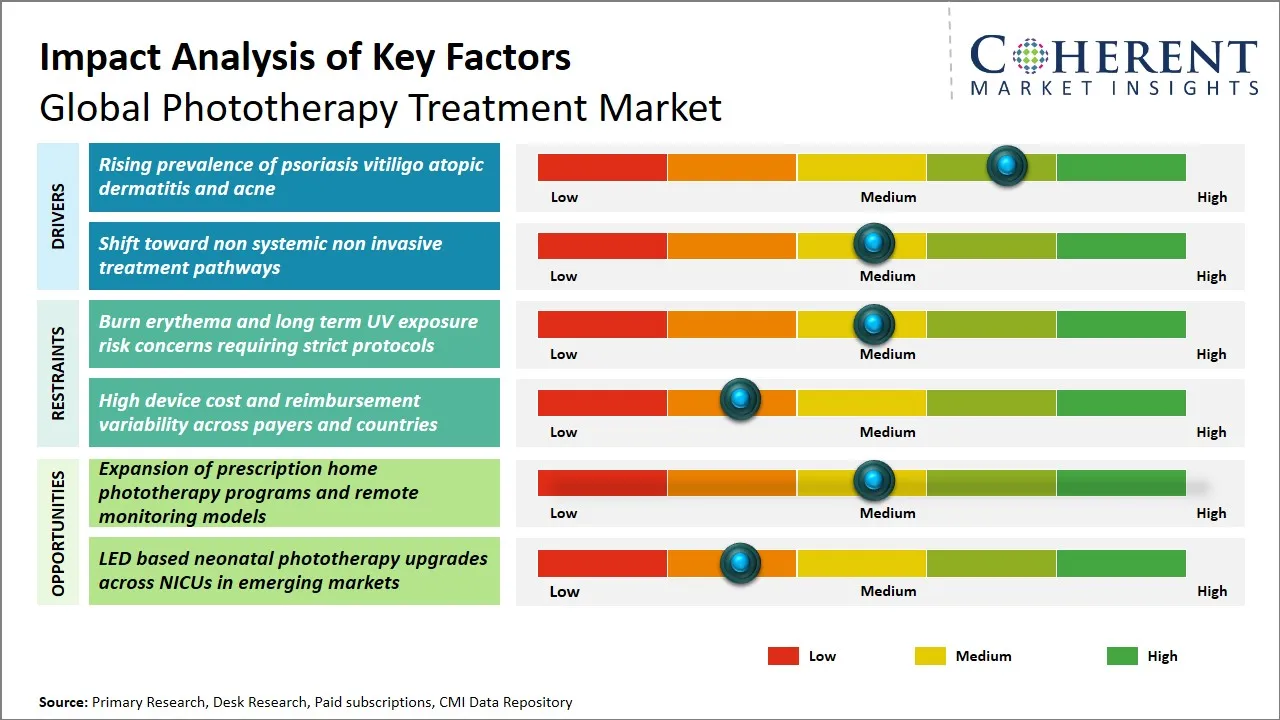
Increase in the prevalence of chronic skin disorders that include psoriasis, vitiligo, atopic dermatitis, and acne is also playing a major role in increasing the demand of phototherapy treatments among all parts of the world. The diseases are usually long-term management based dermatological diseases and the phototherapy has become a desirable mode of therapy as it is not an invasive treatment method and can specifically be applied into the areas it is required. Ultraviolet light-based therapies are highly effective to psoriasis and vitiligo, specifically, and they assist in the reduction of inflammation and skin re-pigmentation.
On the same note, patients of atopic dermatitis and acne are also resorting to phototherapy to sooth the symptoms and reduce dependence on systemic drugs that can produce side effects. Environmental influences, genetic predisposition, and lifestyle modification are the factors that have caused the recent increase in the instances of such skin diseases and ultimately have led to an increase in awareness and the rate of diagnosis.
In March 2022, the Centers for Disease Control, a U.S. public health authority, highlighted gaps in psoriasis burden data. Explorys, a large U.S. health records platform aggregating 60 million patients, enabled a nationwide prevalence analysis. Northwell Health, a major nonprofit healthcare system, led the study through dermatologist Amit Garg. Researchers estimated adult psoriasis prevalence at 1.39%, rising steadily with age and varying by race.
(Source: https://www.jaad.org/article/S0190-9622(21)00559-4/fulltext)
Phototherapy Treatment Market Opportunity - Expansion of Prescription Home Phototherapy Programs and Remote Monitoring Models
The growing popularity of prescription home phototherapy program is a sizeable opportunity that the global phototherapy treatment market is currently experiencing with the growing demand of convenient and personalized treatment solutions to patients with chronic dermatological conditions like psoriasis, eczema, and vitiligo. Home phototherapy machines allow the patients to enjoy treatment at the comfort of their homes instead of having to visit hospitals frequently, and this benefit is particularly beneficial in the post-pandemic world where telehealth and remote care have become significant.
Moreover, the combination of remote monitoring models with these home treatments helps to boost the adherence of patients and their safety because healthcare providers are able to monitor the patterns of use, the treatment effectiveness, and possible side effects via the digital platform.
In July 2024, MD Revolution, a U.S. remote care management platform provider, partnered with PatchRx, a medication adherence technology company. The integration adds PatchRx smart-cap adherence data into MD Revolution’s remote care programs. Clinicians can now monitor medication use, set reminders, and support patients remotely.
Analyst Opinion (Expert Opinion)
- Phototherapy is still in the same upward trend as it provides predictable clinical results in skin and neonatal disorders without extensive dependence on systemic medications. The development of narrowband UVB and focused systems using LED is enhancing accuracy, reliability and efficiency of operation with home phototherapy increasingly popular due to the lower barriers to access by chronic patients. Reimbursement friction, patient compliance issues throughout the course of long-term treatment, and high-safety standards all continue to moderate growth.
- Industry drive is also strengthened by the forums like the American Academy of Dermatology Annual Meeting, EADV Congress, and ASLMS whereby the latest protocols, use of devices and the latest advances in photodynamic therapy are hotly debated. In neonatology, more definitive bilirubin management advice is pushing hospitals towards standardized high intensity LED systems, which are influencing the buying decisions. Hybrid care models of in clinic initiation with home continuation are increasingly becoming influential in the market and so are the increased use of photodynamic therapy in the treatment of the skin at the field.
Speak to the analyst
Want personalized insights?
Take the findings above to one of our principal consultants, or have the report rebuilt around the segments, geographies and competitors you actually track.
Market Segmentation
- Technology Insights (Revenue, USD Bn, 2021- 2033)
- LED-Based Phototherapy
- Fiber Optic Phototherapy
- Fluorescent Lamp Phototherapy
- Halogen Phototherapy
- Excimer Laser and Lamps
- Application Insights (Revenue, USD Bn, 2021- 2033)
- Psoriasis
- Vitiligo
- Atopic Dermatitis or Eczema
- Acne Vulgaris
- Neonatal Jaundice
- Cutaneous T Cell Lymphoma
- Other Dermatological Disorders
- Product Type Insights (Revenue, USD Bn, 2021- 2033)
- Phototherapy Lamps and Lightboxes
- Phototherapy Units
- Phototherapy Eye Protection
- Dermatology Handheld Devices
- Device Type Insights (Revenue, USD Bn, 2021- 2033)
- Whole Body Phototherapy Units
- Partial Body Phototherapy Units
- Targeted or Localized Phototherapy Devices
- Handheld or Portable Phototherapy Devices
- End User Insights (Revenue, USD Bn, 2021- 2033)
- Hospitals
- Specialty Dermatology Clinics
- Neonatal and Pediatric Clinics
- Home Care Settings
- Rehabilitation Centers
- Patient Group Insights (Revenue, USD Bn, 2021- 2033)
- Neonates
- Pediatric Patients
- Adult Patients
- Geriatric Patients
- Regional Insights (Revenue, USD Bn, 2021- 2033)
- North America
- U.S.
- Canada
- Latin America
- Brazil
- Argentina
- Mexico
- Rest of Latin America
- Europe
- Germany
- U.K.
- Spain
- France
- Italy
- Russia
- Rest of Europe
- Asia Pacific
- China
- India
- Japan
- Australia
- South Korea
- ASEAN
- Rest of Asia Pacific
- Middle East
- GCC Countries
- Israel
- Rest of Middle East
- Africa
- South Africa
- North Africa
- Central Africa
- North America
- Key Players Insights
- Daavlin
- National Biological Corporation
- Herbert Waldmann GmbH and Co KG
- Solarc Systems
- UVBioTek
- Ultralite Enterprises
- Natus Medical
- Dräger
- GE HealthCare
- Atom Medical Corporation
- Phoenix Medical Systems
- FANEM
- Nice Neotech Medical Systems
- Celluma
- Omnilux
Sources
Primary Research Interviews
Industry Stakeholders
- American Academy of Dermatology
- European Academy of Dermatology and Venereology
- American Society for Laser Medicine and Surgery
- British Association of Dermatologists
- Society for Pediatric Dermatology
- International Society for Photobiology
End Users
- National Health Service
- Mayo Clinic
- Cleveland Clinic
- All India Institute of Medical Sciences
- Charité – Universitätsmedizin Berlin
- Singapore General Hospital
Government and International Databases
- World Health Organization
- U.S. Food and Drug Administration
- Centers for Disease Control and Prevention
- National Institutes of Health
- European Medicines Agency
- Organization for Economic Co-operation and Development
Trade Publications
- Dermatology Times
- The Hospitalist
- MedTech Dive
- Healthcare Purchasing News
- Aesthetic Surgery Journal News
- MDedge Dermatology
Academic Journals
- Journal of the American Academy of Dermatology
- British Journal of Dermatology
- Photodermatology Photoimmunology and Photomedicine
- The Lancet
- JAMA Dermatology
- Pediatric Research
Reputable Newspapers
- The New York Times
- The Guardian
- The Washington Post
- Financial Times
- The Hindu
- Nikkei Asia
Industry Associations
- International Federation of Societies of Cosmetic Chemists
- Advanced Medical Technology Association
- Medical Device Manufacturers Association
- European Medical Technology Industry Association
- Association of Medical Device Reprocessors
- Global Medical Technology Alliance
Public Domain Resources
- ClinicalTrials.gov
- OpenGrey
- European Union Open Data Portal
- Data.gov
- World Bank Open Data
Proprietary Elements
- CMI Data Analytics Tool: Proprietary analytics tool to analyze real-time market trends, consumer behavior, and technology adoption in market
- Proprietary CMI Existing Repository of Information for Last 8 Years
Get access to 250+ pages report
Every segment, forecast, competitor profile and data table behind the analysis above — available for instant download.
- ESOMAR Member
- ISO 9001:2015 Certified
- D-U-N-S Registered
- GDPR & CCPA Compliant
Missing comfort of reading report in your local language? Find your preferred language:
Transform your Strategy with Exclusive Trending Reports
Frequently Asked Questions
The global phototherapy treatment market is estimated to be valued at USD 2.23 Bn in 2026 and is expected to reach USD 3.37 Bn by 2033.
The CAGR of global phototherapy treatment market is projected to be 5.4% from 2026 to 2033.
Rising prevalence of psoriasis vitiligo atopic dermatitis and acne and shift toward non systemic non invasive treatment pathways are the major factors driving the growth of the global phototherapy treatment market.
Burn erythema and long term UV exposure risk concerns requiring strict protocols and high device cost and reimbursement variability across payers and countries are the major factors hampering the growth of the global phototherapy treatment market.
In terms of technology, LED-based phototherapy is estimated to dominate the market revenue share in 2026.
Daavlin, National Biological Corporation, Herbert Waldmann GmbH and Co KG, Solarc Systems, UVBioTek, Ultralite Enterprises, Natus Medical, Dräger, GE HealthCare, Atom Medical Corporation, Phoenix Medical Systems, FANEM, Nice Neotech Medical Systems, Celluma, and Omnilux are the major players.
North America is expected to lead the global phototherapy treatment market in 2026.