

Global Pill Timer Market Size and Forecast – 2026 to 2033
The Global Pill Timer Market is estimated to be valued at USD 1.51 Bn in 2026 and is expected to reach USD 2.85 Bn by 2033, exhibiting a compound annual growth rate (CAGR) of 9.5% from 2026 to 2033. This steady growth reflects increasing consumer awareness of medication adherence and the rising prevalence of chronic diseases, driving demand for reliable pill timing and reminder solutions worldwide.
Key Takeaways of the Global Pill Timer Market
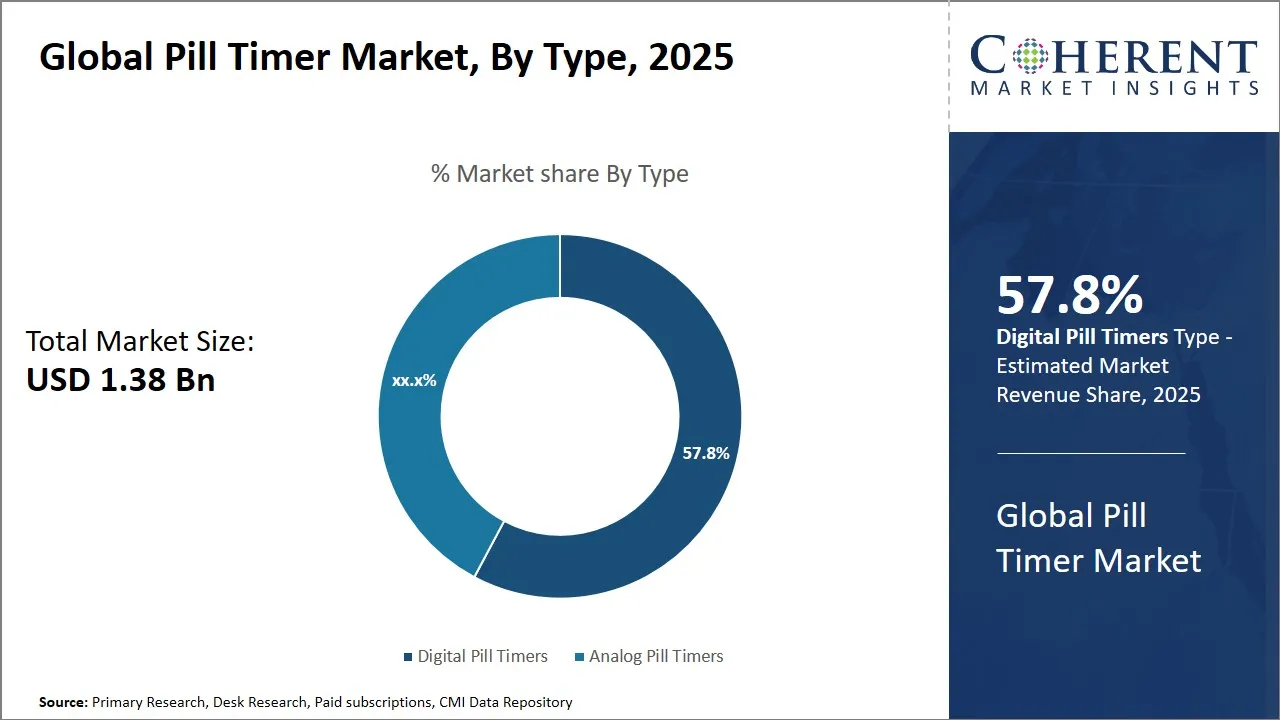
- Digital Pill Timers are expected to hold the largest share of the global pill timer market, accounting for 58.8 % in 2026.
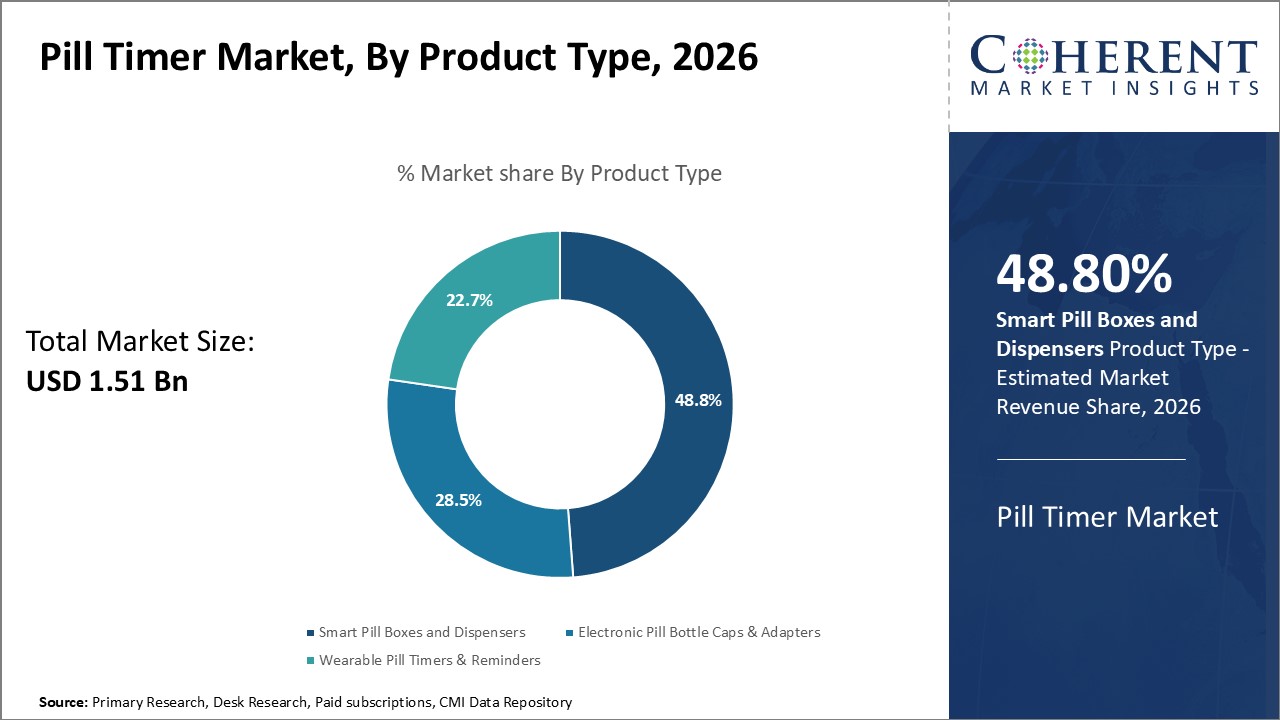
- Within the product type category, Smart Pill Boxes and Dispensers dominate the market, capturing a projected 48.8 % of the share in 2026.
- In the end user segmentation, the Geriatric Population is set to represent the largest share, making up 35.3 % of the global pill timer market in 2026.
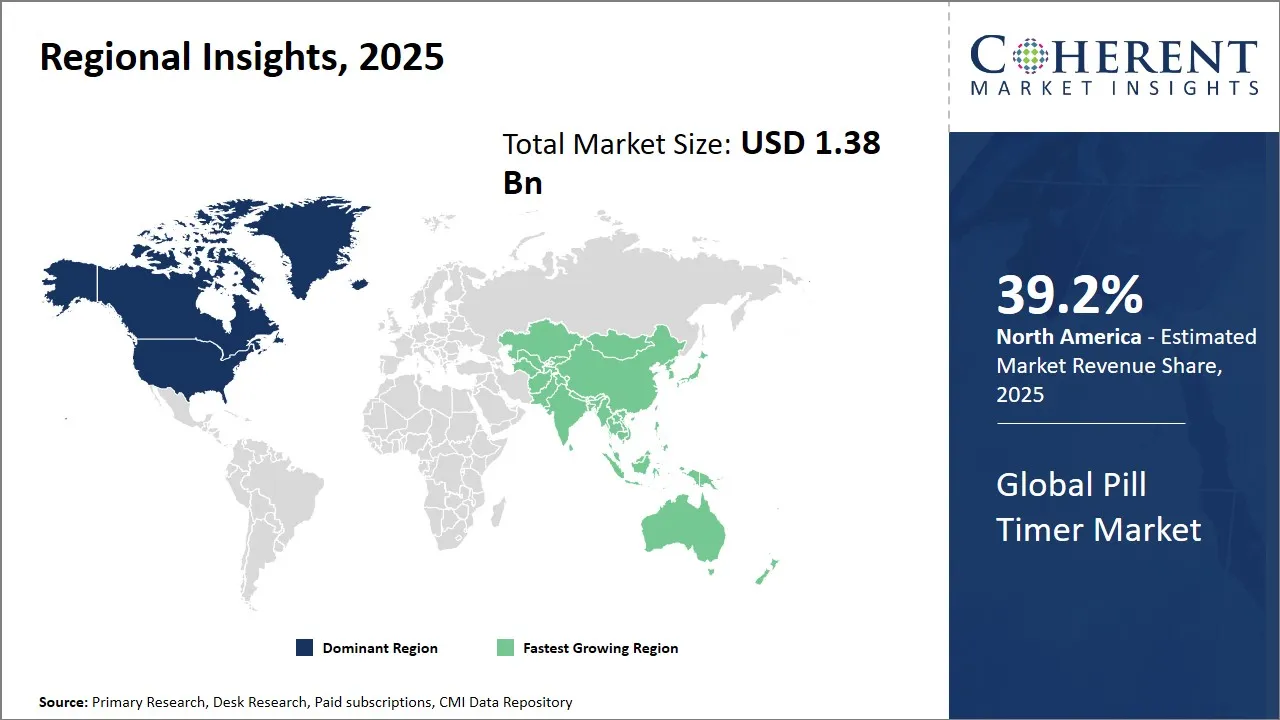
- North America is expected to lead the market, holding a share of 39.2 % in 2026. Asia Pacific is anticipated to be the fastest-growing regional market, with 24.5% share in 2026.
Market Overview
- Key trends influencing the pill timer market include the integration of smart technology and IoT-enabled devices, enhancing user experience through connectivity and automation.
- Additionally, the expanding elderly population and a surge in digital health initiatives are propelling innovation in pill timer designs, making them more user-friendly and accessible.
- These trends are expected to foster further market penetration across healthcare and consumer electronics sectors.
Current Events and Its Impact
Current Events | Description and its Impact |
Digital Health & IoT Integration in Medication Management |
|
Increased Healthcare Digitalization & Patient‑Centric Care Models |
|
Segmental Insights
- Current Industry Events of 2026
- Market Size Estimation
- Regional Breakdown
- Competitive Landscape
- Customer Intelligence
- Segmental Analysis
- Pricing Analysis
- Key Market Drivers, Challenges & Future Trends
- Customized Insights Section
What drives the dominance of digital pill timers?
By Type, Digital Pill Timers have the largest contribution to the worldwide pill timer market, with 58.8% share in 2026, because they are more accurate, convenient, and can be easily integrated with other digital health products. In comparison to analog pill timers, which use mechanical count down and only a few alerts, digital pill timers use electronic displays, programmable alarms, and in many cases, customizable reminders that fit the patients’ medication schedule.
This would greatly minimize the risk of not taking or wrong dosage which is highly important to patients with complicated medication schedules. Increased smart phone penetration and connectivity also enable most of the digital pill timers to be connected to mobile applications where users can receive the notifications when away and caregivers can monitor adherence in real time.
In September 2025, Everylife Technologies, the leading digital care management platform provider, launched PASS in Ireland. PASS combines care planning, medication management, rostering, and AI-powered insights through PASSgenius. The platform helps care providers streamline operations, improve compliance, and manage staffing more efficiently. By integrating pill timers and real-time medication tracking, PASS enhances patient safety and reduces risks. This launch, developed with input from Irish carers, addresses the increasing need for effective, compliant care solutions in Ireland.
(Source: https://www.everylifetechnologies.com/content-hub/pass-by-everylife-launches-in-ireland/)
Why are smart pill boxes and dispensers leading the pill timer market?
Within the product type segmentation, Smart Pill Boxes and Dispensers represent the highest share in the global pill timer market with 48.8% in 2026 due to their comprehensive approach to medication management that goes beyond simple timing alerts. These devices combine automated pill dispensing mechanisms with timing features, ensuring that patients not only receive timely reminders but also have physical access to the exact medication required at the right moment.
One of the key drivers is the automation of the dispensing process which minimizes human error or forgetfulness. For patients who need to take multiple pills at staggered intervals, smart pill boxes allocate the appropriate dosage for each time slot and lock them until the scheduled dosing time arrives. This reduces the chance of double dosing or missed medication, which can be dangerous in chronic disease management
Pill Timer Market Insights, By End User - Geriatric Population Segment Leads Fueled by Rising Elderly Care Needs and Medication Complexity
Geriatric Population is expected to account for the largest share of the worldwide pill timer market of 35.3% in 2026 with rising healthcare demands of ageing communities in the developed world. Elderly people are often exposed to a variety of chronic disorders that involve complicated and lifelong medication interventions with increased susceptibility to non-adherence and medication errors.
Pill timers solve these problems by giving prompt reminders and making the administration of dosages easy. An increase in the cases of age-related illnesses like cardiovascular conditions, diabetes, osteoporosis, and neurological conditions add to the size and complexity of medication of elderly.
Integration of Pill Timers with Digital Health Platforms
- The pill timer market is increasingly integrating with digital health platforms, offering enhanced features for medication management. These platforms facilitate real-time monitoring, personalized reminders, and data tracking, improving patient adherence to prescribed regimens. The integration of smart pill timers with mobile health apps enables users to track medication schedules, receive notifications, and access health data, fostering more effective chronic disease management. As digital health adoption grows, this integration provides a seamless experience for patients and healthcare providers alike.
- The shift towards digital health platforms in the pill timer market also boosts the adoption of advanced technologies like AI and IoT. These innovations enable remote patient monitoring, offering predictive insights and automatic medication adjustments based on user behavior. By enhancing the overall patient experience, these integrated systems offer new opportunities for personalized healthcare, opening avenues for partnerships between pharmaceutical companies, healthcare providers, and tech developers.
- In April 2025, Ypsomed, a provider of drug delivery systems, and Sidekick Health, a digital health innovator, launched a collaborative digital solution to support obesity management. The solution integrates Ypsomed's SmartPilot with Sidekick’s app to help patients using GLP-1 therapies manage their treatment effectively. It provides real-time injection data and includes patient education, lifestyle support, and an injection guide.
Regional Insights
North America Pill Timer Market Analysis and Trends
The leadership of the pill timer market globally is attributed to North America's well-established healthcare ecosystem, which is expected to account for 39.2% of the market share in 2026. This is supported by the widespread adoption of advanced medical technologies and favorable government initiatives aimed at improving medication adherence and patient outcomes. The USFDA and other regulatory organizations offer a clear approval process, which attracts new market entrants and innovation.
Also, the existence of effective partnerships among healthcare providers, insurers, and technology companies spurs integrated solutions to facilitate the market growth. MedMinder, Philips, and AdhereTech are notable companies, which have contributed significantly because they present high-tech versions of the pill timer systems that are now widely used in the field of homecare and the clinical setting.
For instance, PillDrill, a company that provides a smart pill management system, offers a unique solution by combining automated reminders with real-time tracking, enhancing patient compliance. Another key player, Tespo, has developed a platform that integrates pill timers with telehealth services, enabling healthcare professionals to monitor patient adherence remotely and adjust treatment plans as needed.
(Source: https://www.pilldrill.com/)
Asia Pacific Pill Timer Market Analysis and Trends
Asia Pacific exhibits the fastest growth in the pill timer market with a projected share of 24.5% in 2026, largely due to rapidly improving healthcare infrastructure, increased healthcare spending by governments, and growing awareness about medication adherence in emerging economies. Factors such as rising geriatric population, expanding middle-class population, and the rising prevalence of chronic diseases contribute significantly to the market growth.
The region is witnessing enhanced government policies supporting digital health initiatives and telemedicine, which integrate pill timers into broader patient management frameworks. Companies such as Omron (Japan), Xiaomi (China), and local startups are contributing by launching innovative, cost-effective devices tailored for regional needs.
Global Pill Timer Market Outlook for Key Countries
What are the Key Trends Shaping the U.S. Pill Timer Market?
The pill timer market in the U.S. can be defined by the high level of penetration of new technologically advanced pill timer models that are connected to mobile applications and built-in health care systems. Other key industry players like MedMinder and Philips dominate and specialize in smart medication management so as to help reduce hospital readmissions and enhance compliance in chronic disease management programs. The utilization of such devices is supported by governmental health care programs and insurance benefits, and distribution of the devices is simplified by a robust network of retail pharmacy. There is also cross-boundary cooperation between healthcare providers and technology companies which speeds up innovation.
Germany Pill Timer Market Trends
Germany is still the top market in Europe because of its strong healthcare sector and government initiatives towards the use of digital health care. The country enjoys widespread clinical trials and research and development efforts by firms such as Siemens Healthineers and B.Braun which have been making progress on smart medical devices, including pill timers with patient monitoring systems. The Digital Healthcare Act by German government stimulates digital solutions, which will increase the promotion of smart pill timers. In addition, an effective reimbursement system is well-designed, facilitating its implementation in the home and hospital environments.
What are the Key Trends Shaping the China Pill Timer Market?
Pill timer industry in China is supported by large population and aging demographic and rising chronic diseases. The Healthy China 2030 initiative implemented by the government encourages the use of digital health, which includes medication management tools. Xiaomi and other domestic firms were able to use their knowledge in consumer electronics to create low-end, IoT-connected pill timers with high levels of user engagement. This fast-evolving market is also triggered by the existence of international players that enhances competition and innovation.
Japan Pill Timer Market Trends
Japan is still a major force in the Asia Pacific market by virtue of its high level of technology and fast aging market. Companies such as Omron have been the pioneers in producing easy-to-use, robust-looking pill timers that are specifically designed to be used by older customers, usually featuring a reminder capability with a health monitoring device. Government policies are also in support of health technology remedies to decrease care costs incurred by the elderly and enhance compliance towards medication. Adoption is also supported by the high population of hospitals and long-term care facilities.
India Pill Timer Market Trends
The pill timer market is developing at a high rate in India because of growing healthcare awareness and the spread of chronic illnesses. The market can be described as the influx of many startups and middle-sized businesses that provide affordable and easy pill timers that are adjusted to meet the needs of the diverse population of the country. The Digital India movement and the telemedicine push initiated by the Indian government creates a good environment in terms of market development. Individual companies like 1mg and local manufacturers have introduced the integration of pill timers with larger digital health platforms serving both rural and urban populations.
Regulatory Impact on the Pill Timer Market
- The regulatory landscape plays a crucial role in shaping the pill timer market, with varying standards across regions. In markets like the U.S. and Europe, strict regulations from bodies such as the FDA and CE mark ensure that pill timers meet safety, quality, and efficacy standards. Compliance with these regulations is essential for manufacturers to ensure market entry, consumer trust, and product liability protection.
- As the digital health sector grows, regulatory frameworks are evolving to address the integration of pill timers with digital health platforms. These include data privacy and security regulations, such as HIPAA in the U.S. and GDPR in Europe. Adherence to these regulations not only safeguards patient data but also ensures that pill timers remain an effective tool in medication management and chronic disease monitoring.
Market Players, Key Developments, and Competitive Intelligence
Key Developments
- In November 2024, DEFI (Don't Ever Forget It), a healthcare brand, announced the launch of its innovative DEFI Smart Pill Bottle on Kickstarter. Designed to improve medication adherence, the bottle features real-time alerts, last-dose tracking, and smartphone integration, allowing users to manage their medication schedules seamlessly. The bottle tracks the last time it was closed, sends notifications for timely doses, and offers custom reminders for missed doses.
- In October 2024, Samsung, one of the largest consumer electronics brands, introduced a Medications tracking feature in the Samsung Health app in India. This feature helps users manage their medication schedules and improve adherence, especially for chronic conditions like hypertension, diabetes, and PCOS. Users can track medications, set customizable alerts, and receive detailed information on drug interactions and side effects.
- In April 2024, Qinux launched Nisqa, a smart digital pill organizer designed to simplify medication management. This innovative pill box features seven compartments for daily medication organization and four programmable alarms, ensuring timely doses. Its compact design makes it easy to use at home or on the go, while the intuitive interface and customizable alarm settings help users adhere to their medication regimens.
Top Strategies Followed by Global Pill Timer Market Players
Player Type | Strategic Focus | Example |
Established Market Leaders | Heavy R&D investment for advanced pill timer features, strategic alliances with OEMs, global distribution expansion, and innovation in smart connectivity and user interfaces | Companies like Med‑E‑Lert, Philips, and MedMinder invest in R&D to enhance product features, partner with healthcare providers, and expand globally in emerging markets. |
Mid-Level Players | Cost-effective pill timer solutions with a balance of affordability and quality, collaborations with larger firms and technology providers, regional distributor partnerships | Firms such as TabTime, LiveFine, and Tricella focus on reliable, affordable products, optimize production efficiency through partnerships, and expand in price-sensitive regions. |
Small-Scale Players | Niche innovation targeting specific user needs (elderly, visually impaired), use of IoT, app integration, and AI-driven features, local partnerships for market penetration | Companies like Hero Health, PillDrill, and TimerCap focus on specialized devices for niche markets and partner with local firms to meet unique market demands and regulatory environments. |
Market Report Scope
Pill Timer Market Report Coverage
| Report Coverage | Details | ||
|---|---|---|---|
| Base Year: | 2025 | Market Size in 2026: | USD 1.51 Bn |
| Historical Data for: | 2020 To 2024 | Forecast Period: | 2026 To 2033 |
| Forecast Period 2026 to 2033 CAGR: | 9.5% | 2033 Value Projection: | USD 2.85 Bn |
| Geographies covered: |
| ||
| Segments covered: |
| ||
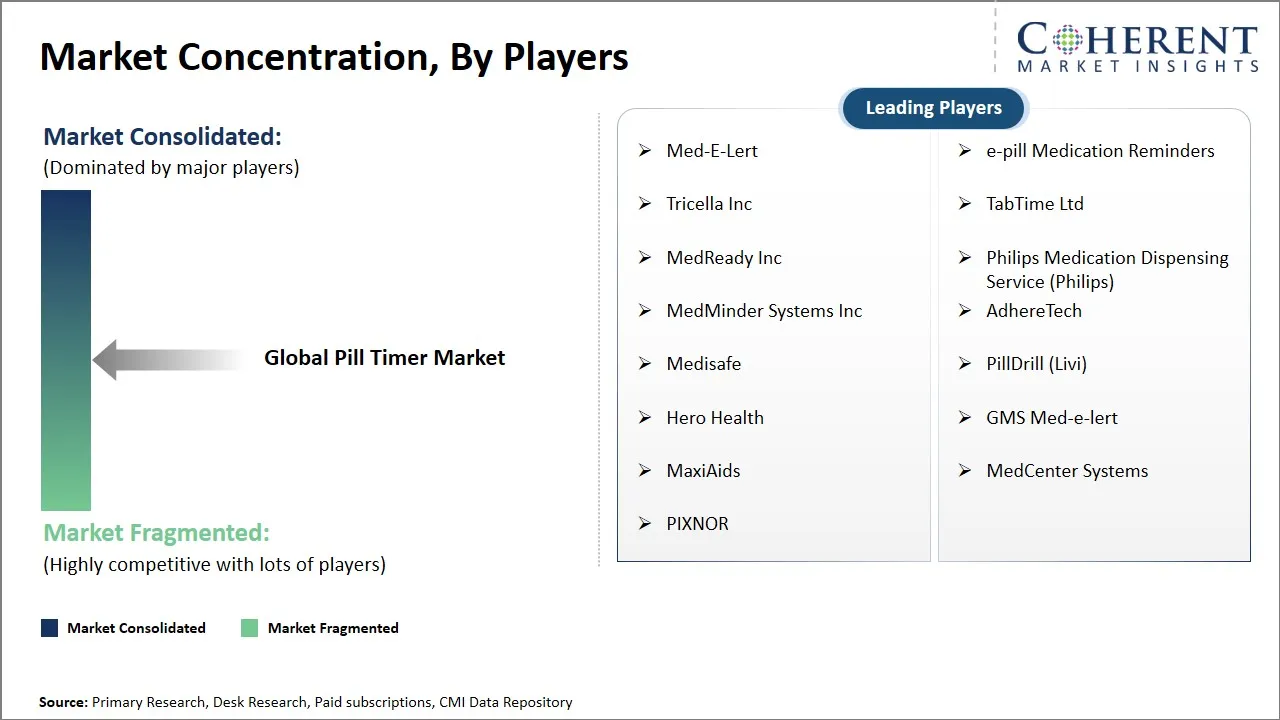
| Companies covered: | Med‑E‑Lert, e‑pill Medication Reminders, Tricella Inc, TabTime Ltd, MedReady Inc, Philips Medication Dispensing Service (Philips), MedMinder Systems Inc, AdhereTech, Medisafe, PillDrill (Livi), Hero Health, GMS Med‑e‑lert, MaxiAids, MedCenter Systems, and PIXNOR | ||
| Growth Drivers: |
| ||
| Restraints & Challenges: |
| ||
Pill Timer Market Dynamics
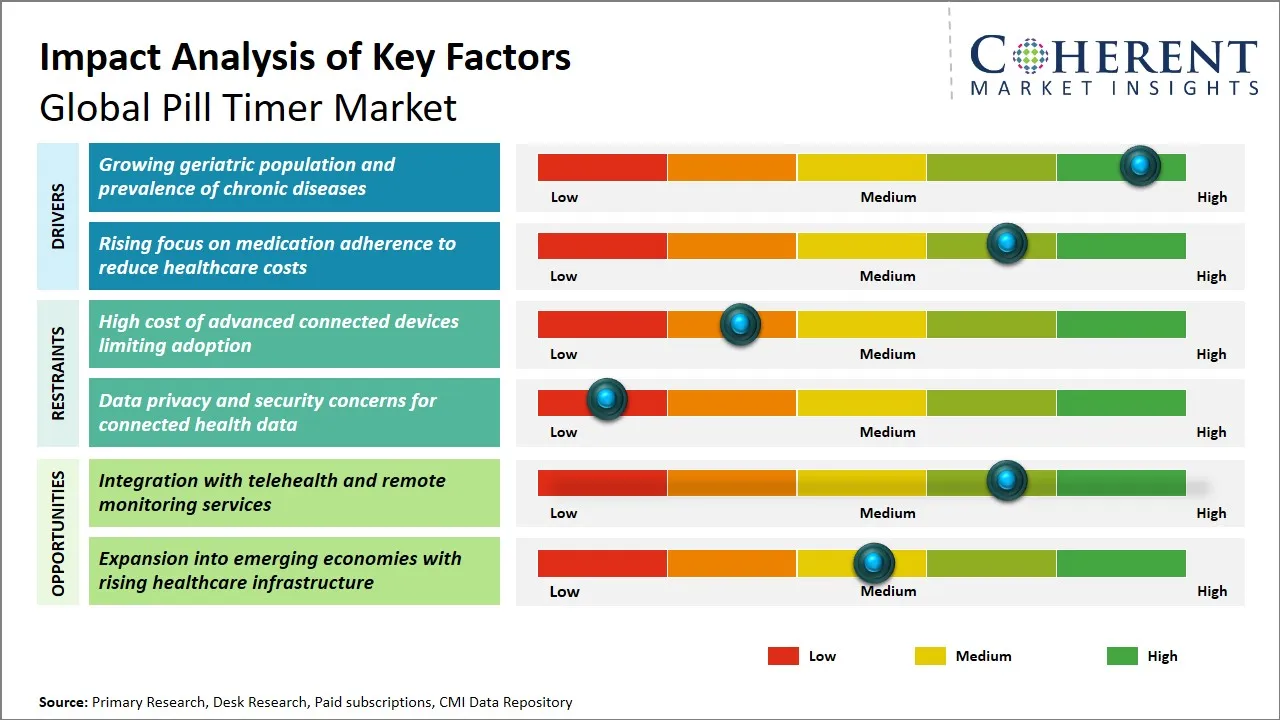
Pill Timer Market Driver - Growing geriatric population and prevalence of chronic diseases
The growing elderly population around the world is one of the key drivers of the demand for pill timers since the elderly people are generally characterized by various health conditions that demand rigorous medication. As one grows older, the risk of developing chronic diseases like diabetes, heart diseases, arthritis, and high blood pressure rises with their tendency to require one to take different prescription medications at a specific time of the day. The complexity of medication management equally becomes a challenge to the elderly who might experience memory loss or cognitive decline thus increasing the risk of missing or taking the wrong dosage. Pill timers are convenient and easy to use and help in taking medications properly without any possible complications of non-compliance.
In September 2025, the World Health Organization (WHO) reported a sharp rise in the global burden of chronic or noncommunicable diseases, which claimed around 43 million lives in 2021—accounting for 75% of non-pandemic-related deaths. The data highlighted cardiovascular diseases, cancers, chronic respiratory conditions, and diabetes as the leading causes, with 80% of premature deaths occurring in low- and middle-income countries.
(Source: https://www.who.int/news-room/fact-sheets/detail/noncommunicable-diseases)
Pill Timer Market Opportunity: Integration with Telehealth and Remote Monitoring Services
The adoption of pill timers alongside the telehealth and remote monitoring services has become another potential opportunity of growth in the global pill timer market. With more technological integration into healthcare, the integration of pill timers with telehealth systems will enable better adherence to medication and real-time health management. Through this integration, the continuous monitoring of patients becomes possible, and healthcare professionals are able to monitor the intake of some medication remotely, which results in timely interventions and adjustments to the care according to the needs of the patient. Moreover, the increasing prevalence of chronic illnesses and ageing effects on the world population exacerbates the need to find solutions that will enable people to live independently and minimize the number of visits to hospitals.
In July 2025, Pillbox Health, a leader in medication adherence technology, launched a new Remote Therapeutic Monitoring (RTM) feature via its PillPal app. This feature allows pharmacies, providers, and caregivers to track medication adherence in real-time, improving patient outcomes and offering new revenue opportunities. The app includes automated alerts, compliance tracking, and integrates with CMS RTM codes for reimbursement.
(Source: https://www.tenovi.com/musculoskeletal-and-respiratory-specialists-rtm-medication-tracking/)
Analyst Opinion (Expert Opinion)
- The pill timer market is increasing at a high rate supported by the development of digital health and the need to manage medications individually. Patient adherence is being improved by the use of pill timers with mobile applications and smart devices particularly among the aging populations. Nevertheless, there are still data privacy standardization issues and compatibility problems of the devices on the regional level.
- Most recent conferences such as the Digital Health Summit and MedTech Conference have played a major role in furthering innovation and policy creation. AI-powered pill timer products are being developed through collaborations between health tech startups and pharmaceutical companies. Pilot projects focused on improving medication management, especially for chronic diseases, are already in progress. These initiatives are expected to significantly impact the future of the market.
Speak to the analyst
Want personalized insights?
Take the findings above to one of our principal consultants, or have the report rebuilt around the segments, geographies and competitors you actually track.
Market Segmentation
- Type Insights (Revenue, USD Bn, 2021 - 2033)
- Digital Pill Timers
- Analog Pill Timers
- Product Type Insights (Revenue, USD Bn, 2021 - 2033)
- Smart Pill Boxes and Dispensers
- Electronic Pill Bottle Caps and Adapters
- Wearable Pill Timers and Reminders
- End User Insights (Revenue, USD Bn, 2021 - 2033)
- Geriatric Population
- Individuals with Chronic Conditions
- Hospital Inpatients and Clinical Trial Participants
- General Population
- Technology Insights (Revenue, USD Bn, 2021 - 2033)
- Wi-Fi/Bluetooth Connected Devices
- Cellular (IoT) Connected Devices
- Standalone (Non-Connected) Devices
- Distribution Channel Insights (Revenue, USD Bn, 2021 - 2033)
- Online
- Offline
- Regional Insights (Revenue, USD Bn, 2021 - 2033)
- North America
- U.S.
- Canada
- Latin America
- Brazil
- Argentina
- Mexico
- Rest of Latin America
- Europe
- Germany
- U.K.
- Spain
- France
- Italy
- Russia
- Rest of Europe
- Asia Pacific
- China
- India
- Japan
- Australia
- South Korea
- ASEAN
- Rest of Asia Pacific
- Middle East
- GCC Countries
- Israel
- Rest of Middle East
- Africa
- South Africa
- North Africa
- Central Africa
- North America
- Key Players Insights
- Med‑E‑Lert
- e‑pill Medication Reminders
- Tricella Inc
- TabTime Ltd
- MedReady Inc
- Philips Medication Dispensing Service (Philips)
- MedMinder Systems Inc
- AdhereTech
- Medisafe
- PillDrill (Livi)
- Hero Health
- GMS Med‑e‑lert
- MaxiAids
- MedCenter Systems
- PIXNOR
Sources
Primary Research Interviews
Industry Stakeholders
- Hospital pharmacy directors
- Geriatric care facility managers
- Clinical pharmacologists
- Medical device procurement officers
- Community pharmacy owners
- Home healthcare agency heads
End Users
- Chronic illness patients using medication reminders
- Elderly medication caregivers
- Caregivers for Alzheimer’s/dementia patients
- Disabled users requiring adherence support
- Family members managing multi‑drug regimens
- Health coaches / patient support specialists
Government and International Databases
- World Health Organization (WHO)
- U.S. Food and Drug Administration (FDA) device databases
- European Medicines Agency (EMA)
- CDC (Centers for Disease Control and Prevention)
- National Center for Health Statistics (NCHS)
- Indian Ministry of Health and Family Welfare (MoHFW)
Trade Publications
- Journal of Medical Devices (ASME)
- Pharmacy Times
- International Journal of Pharmaceutical Compounding
- Medical Device & Diagnostic Industry (MD+DI)
- Journal of Patient Safety & Risk Management
- The Lancet Digital Health
Academic Journals
- Journal of the American Medical Informatics Association (JAMIA)
- BMC Medical Informatics and Decision Making
- Journal of Pharmaceutical Health Services Research
- IEEE Journal of Biomedical and Health Informatics
- Patient Preference and Adherence
- International Journal of Medical Informatics
Reputable Newspapers
- New York Times – Health Section
- The Guardian – Health & Science
- Washington Post – Health
- Financial Times – Healthcare
- Hindustan Times – Health
- The Economist – Science & Tech (health tech coverage)
Industry Associations
- International Society for Pharmacoeconomics and Outcomes Research (ISPOR)
- American Pharmacists Association (APhA)
- European Federation of Pharmaceutical Industries and Associations (EFPIA)
- Healthcare Information and Management Systems Society (HIMSS)
- National Community Pharmacists Association (NCPA)
- International Alliance of Patients’ Organizations (IAPO)
Public Domain Resources
- ClinicalTrials.gov
- WHO Global Health Observatory
- OpenFDA (public device/event data)
- World Bank health statistics
- United Nations data (health indicators)
Proprietary Elements
- CMI Data Analytics Tool: Proprietary analytics tool to analyze real-time market trends, consumer behavior, and technology adoption in market
- Proprietary CMI Existing Repository of Information for Last 8 Years
Get access to 250+ pages report
Every segment, forecast, competitor profile and data table behind the analysis above — available for instant download.
- ESOMAR Member
- ISO 9001:2015 Certified
- D-U-N-S Registered
- GDPR & CCPA Compliant
Missing comfort of reading report in your local language? Find your preferred language:
Transform your Strategy with Exclusive Trending Reports
Frequently Asked Questions
The global pill timer market is estimated to be valued at USD 1.51 Bn in 2026 and is expected to reach USD 2.85 Bn by 2033.
The CAGR of global pill timer market is projected to be 9.5% from 2026 to 2033.
Growing geriatric population and prevalence of chronic diseases and rising focus on medication adherence to reduce healthcare costs are the major factors driving the growth of global pill timer market.
High cost of advanced connected devices limiting adoption and data privacy and security concerns for connected health data are the major factors hampering the growth of global pill timer market.
In terms of Type, Digital Pill Timers segment is estimated to dominate the market revenue share in 2026.
The market is expected to continue growing with the increasing use of AI, wearable devices, and continued innovation in medication management solutions.
AI enhances pill timers by providing personalized medication reminders, dosage management, and real-time tracking for patients.