
Flat 45% off this market research report
Nov 26 – 29 · Direct purchase only · Not applicable to customized reports

Plant Based Protein Supplements Market Size and Share Analysis- 2026 To 2033
The Global Plant Based Protein Supplements Market size is estimated to stand at USD 3.85 Bn in 2026 and is poised to reach USD 6.98 Bn by 2033, following a CAGR of 8.87% during the forecast period 2026-2033. The primary growth drivers in this sector include the increasing demand for dairy-free protein supplementation, expanding participation in fitness & recreational sports, advancements in multi-source protein formulations, and the growing availability of convenient protein-enriched nutritional products. Improvements in plant protein extraction, amino acid optimization, and flavor-masking technologies are further enabling manufacturers to develop supplements that appeal to consumers beyond traditional vegan and vegetarian populations.
Showing how advanced extraction and purification technologies improve protein concentration and sensory acceptability, in August 2025, Burcon NutraScience Corporation announced the first commercial production and launch of a fava bean protein isolate, FavaPro, containing more than 90% protein. Developed using the company’s proprietary protein extraction and purification process, FavaPro offers a neutral flavor profile and light color, making it suitable for nutritional beverages, dairy alternatives, and other protein-fortified foods.
Key Takeaways of the Global Plant Based Protein Supplements Market
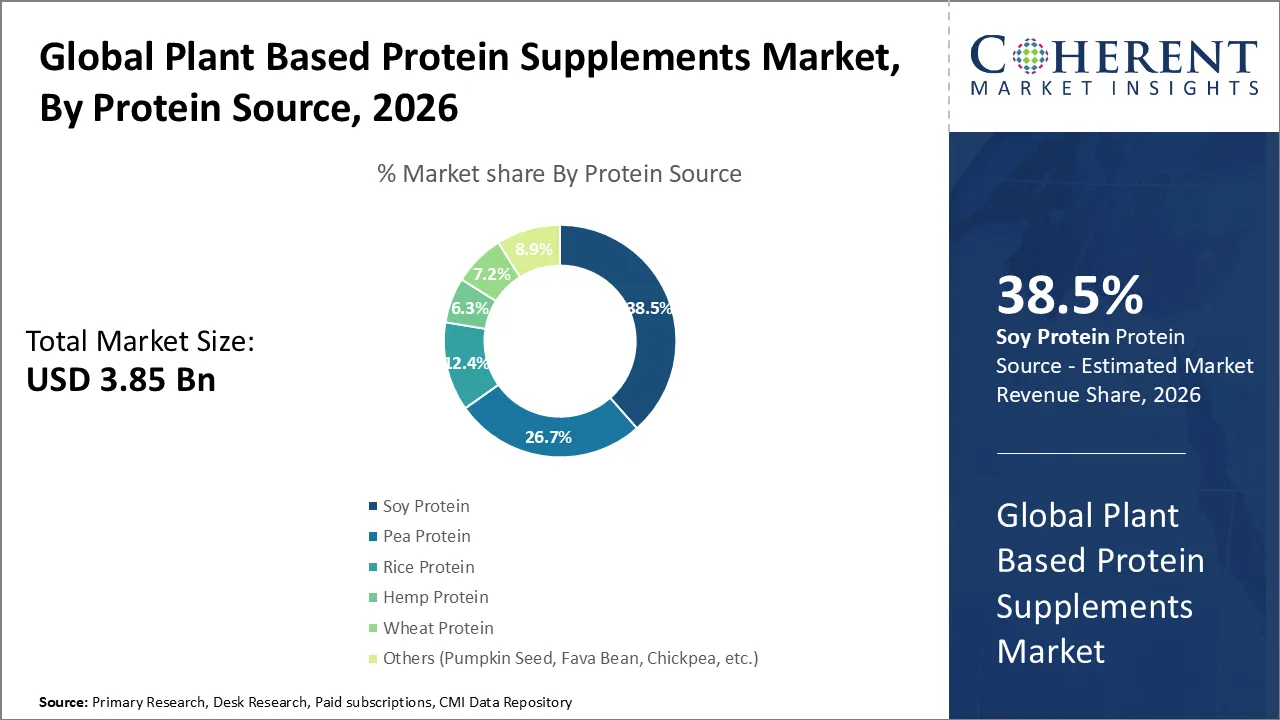
- The Soy Protein segment is expected to account for 38.5% of the global plant based protein supplements market share in 2026. Its established agricultural supply chain, balanced essential amino acid composition, and suitability for concentrated nutritional formulations solidify its position. According to the USDA Foreign Agricultural Service's November 2026 Oilseeds: World Markets and Trade report, global soybean production is projected to reach 442.50 million metric tons in 2026/27, compared with 429.26 million metric tons in 2025/26.
- The Protein Powder segment is anticipated to hold 46.2% of the market share in 2026. Flexible serving sizes and extended shelf life, along with favorable protein content relative to packaging and transportation costs, contribute to its dominance. A 2025 NLM research study analyzed shelf-life data of over 1.4 thousand nutritional formulations, including those in forms of liquid and powder. The results concluded that the ones in powder form can maintain low water activity and no or minimal nutrient losses in airtight packaging for 2 years or longer under the tested storage conditions of 20-37°C.
- The Functional Nutrition segment is expected to capture 53.4% of the market share in 2026. The growing incorporation of supplemental protein into everyday nutritional routines is expanding the category beyond professional athletes and bodybuilding communities. Displaying the sustained growth in this category, the global industry value of functional foods grew from USD 170 Bn to USD 300 Bn between 2018 and 2025, according to an estimated made by the NLM analysis.
- The Online Retail segment is projected to acquire 35.8% of the market share in 2026. Availability of subscription-based purchasing option, early access to specialized formulations, and well-established direct-to-consumer (D2C) distribution network are collectively strengthening digital sales in this sector. The National Restaurant Association of India unveiled that, between 2023 and 2025, Swiggy 's quick commerce division recorded 3x increase in spending on protein products, which then encouraged the company to expand its protein catalogue to nearly 10 thousand stock keeping units (SKUs) across categories.
- North America is expected to dominate the global plant based protein supplements market with a 41.8% share in 2026. Established nutrition brands, specialized supplement retailers, and consumer familiarity with protein-enriched products consolidate the region’s leadership. According to the International Food Information Council (IFIC) 2026 Food & Health Survey, around 70% of American consumers were found actively trying to include protein in their diet.
- Asia Pacific is anticipated to emerge as the fastest-growing regional market during 2026-2033, accounting for 19.6% of global revenue in 2026. Increasing discretionary spending on nutritional products, regional protein ingredient availability, and the development of locally tailored formulations support this acceleration in APAC’s growth.
Asia-Pacific Import & Export Data - Protein Concentrates & Textured Protein Substances (2024)
Country/Economy | Exports (US$ Mn) | Imports (US$ Mn) |
China | 328.0 | 41.8 |
South Korea | 12.5 | 96.2 |
Australia | 20.7 | 69.5 |
Japan | 16.9 | 54.1 |
Taiwan (Chinese Taipei) | 16.7 | 53.7 |
Philippines | 8.28 | 52.1 |
Singapore | 23.6 | 46.7 |
Indonesia | 0.504 | 40.9 |
Vietnam | 2.14 | 40.3 |
Malaysia | 11.6 | 27.2 |
Thailand | 7.39 | 23.9 |
New Zealand | 49.8 | 21.7 |
Hong Kong | 0.843 | 19.6 |
India | 52.6 | 14.7 |
Segmental Insights
- Current Industry Events of 2026
- Market Size Estimation
- Regional Breakdown
- Competitive Landscape
- Customer Intelligence
- Segmental Analysis
- Pricing Analysis
- Key Market Drivers, Challenges & Future Trends
- Customized Insights Section
The soy protein segment is expected to capture 38.5% of the global plant based protein supplements market share in 2026.
Soy protein isolates and concentrates provide manufacturers with established formulation characteristics, relatively consistent nutritional composition, and commercial-scale ingredient availability. Besides, their essential amino acid profile allows applications in muscle maintenance, nutritional supplementation, and protein-enriched meal replacement products.
Established soybean processing infrastructure further enables manufacturing scalability and product affordability. This is because, manufacturers can incorporate soy protein into flavored powders, nutrition bars, and liquid supplements, while maintaining comparatively high protein concentrations. As evidence, a randomized clinical trial published in 2025 and indexed by the NLM evaluated a combined soy and pea protein formulation against whey protein over a 12-week resistance training program. Participants receiving the plant protein blend recorded an average increase of 2.4 kg in whole-body lean mass, compared with 2.5 kg in the animal protein group, without a statistically significant between-group difference.
The protein powder segment is anticipated to account for 46.2% of global market revenue in 2026.
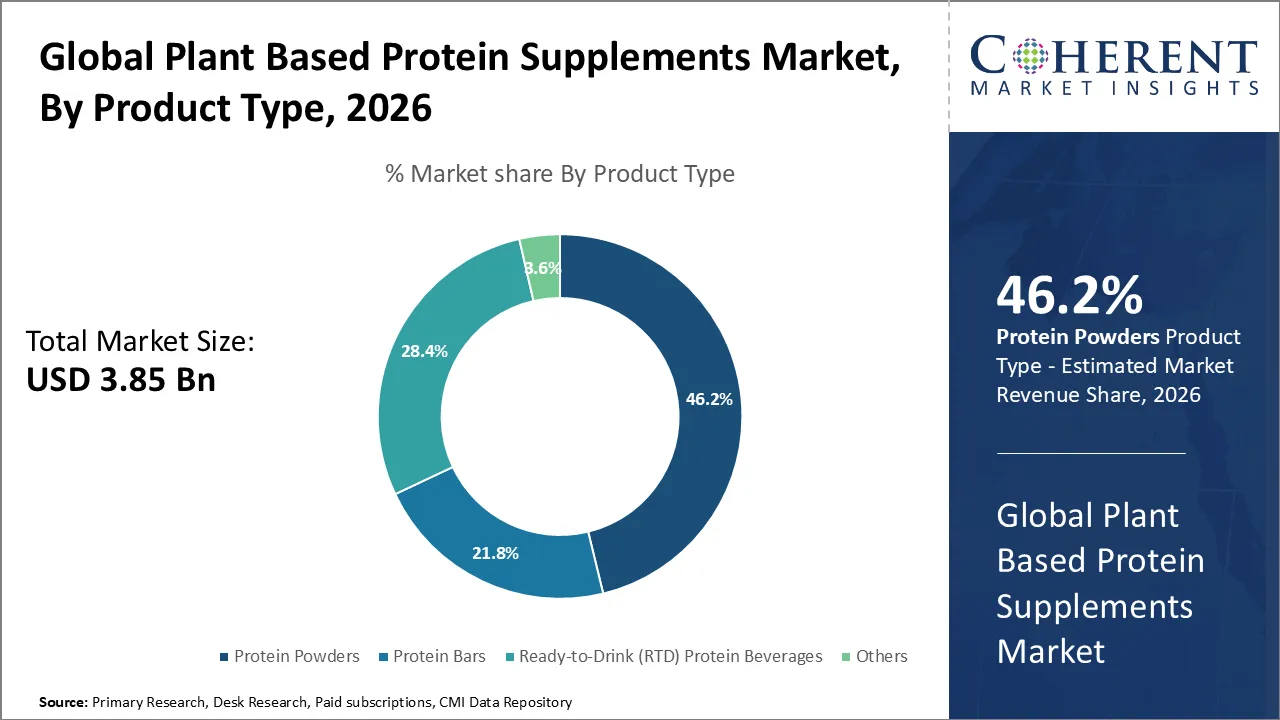
This is due to powdered supplements offering greater flexibility in protein dosage, flavor selection, and consumption methods than pre-portioned nutritional products. Demonstrating how relatively small powder servings can deliver substantial protein quantities, a 28-day study on rats, published by the NLM in 2026, documented a commercial soy protein powder containing 21.95 g of protein in a 25 g serving. This is equivalent to approximately 87.8% protein by weight, compared to 80.2% for whey.
Additionally, their comparatively low moisture content extends product stability and simplifies inventory management, making their distribution, retailing, and storage compatible with the current surge. This form also allows consumers to incorporate protein into smoothies, breakfast bowls, baked products, and post-exercise beverages. Aligning with such a diverse demand base, manufacturers are differentiating their pipelines through improved dispersibility, micronutrient fortification, and organic ingredient sourcing. Growth in the broader protein supplements industry is also encouraging brands to introduce specialized dairy-free powder formulations.
The functional nutrition segment is anticipated to hold 53.4% of the global plant based protein supplements market share in 2026.
The penetration of supplemental protein into routine dietary enrichment, convenient meal planning, and nutritional maintenance helping this sector move beyond exclusive use in athletic performance. Plant-derived supplements are particularly becoming attractive to individuals trying to avoid dairy ingredients or following predominantly plant-based diets. The growing demand for age-specific nutritional products is also creating opportunities for formulations designed around the needs of older adults, who are often prescribed with restricted dietary intake.
To capitalize on this shift in use cases and consumer food preference, food manufacturers are developing products that is filled with dietary fiber, vitamins, minerals, and complementary functional ingredients to address multiple nutritional objectives within a single serving. For instance, in July 2025, Kate Farms introduced its High Protein Nutrition Shake to expand its plant-based nutritional product portfolio and address consumers seeking nutritional support for muscle health, weight management, or assist in GLP-1 treatment.
Current Events and Their Impact on the Plant Based Protein Supplements Market
Current Event | Description and its Impact |
USDA Pulse Crop Health Initiative - FY 2024 Research Funding |
|
India's BioE3 Policy for High-Performance Biomanufacturing - August 2024 |
|
Plant Based Protein Supplements Market Dynamics
Market Drivers
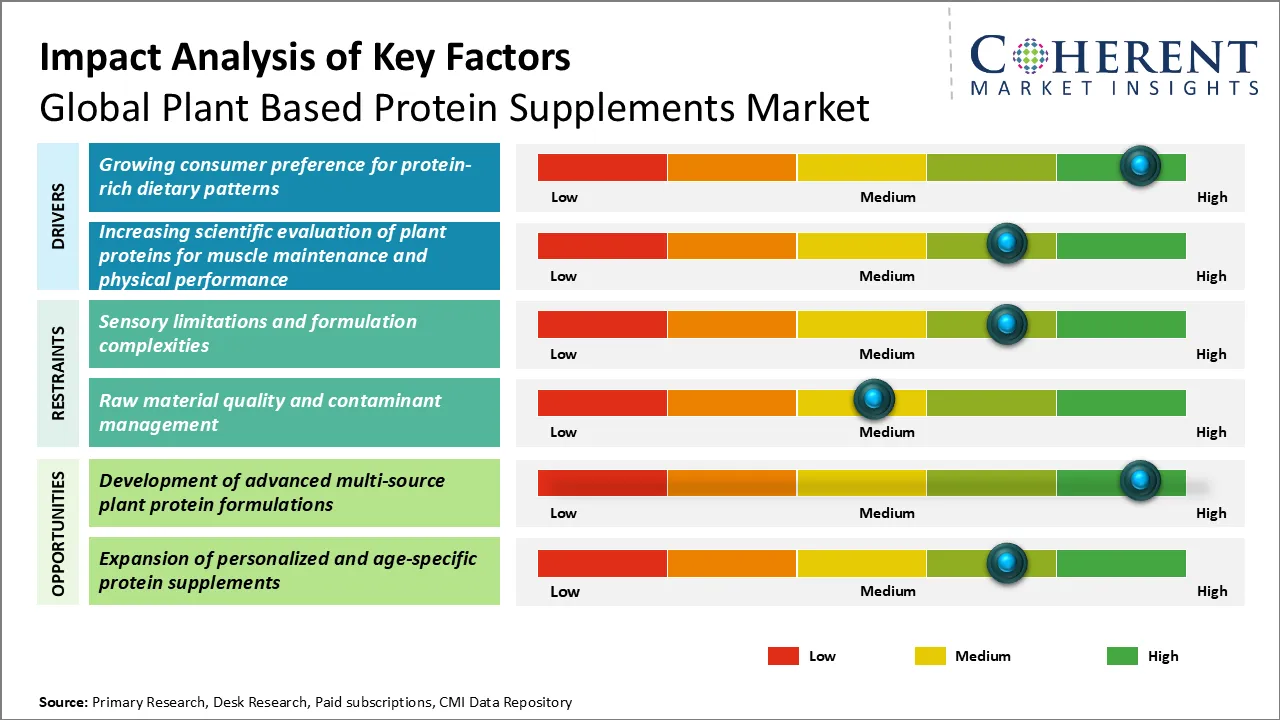
- Growing consumer preference for protein-rich dietary patterns: Consumers are placing increasing importance on the level of protein within the foods that they consume. People will often make decisions about what they eat with reference to both preserving and optimally maintaining their musculature and ensuring good general health. As a result, there is continued growth in the worldwide market for plant based protein supplements. This is due to the fact that such supplements can be used by consumers to further add variety to their protein consumption, whilst simultaneously minimizing deviation from their current diet.
- Testifying to such suitability of plant-based protein pipeline with changing consumer preferences, in October 2025, a systematic review was published by the NLM on therapeutic efficacy of soy-derived bioactives. It ultimately found that soy protein provides all nine essential amino acids, accompanied by 6.4 g of lysine per 100 g of protein.
- Scientific evidence of plant proteins adding value in muscle maintenance & physical health: The increasing availability of scientific research comparing plant-derived and animal-derived protein supplementation is helping manufacturers in this sector back their commercialization strategy for nutritional formulations with adequate evidence. Besides, detailed evaluation of amino acid availability, protein digestibility, and long-term muscle adaptation is assisting supplement developers in decision-making for raw material selection to optimize serving sizes and ingredient combinations. This increases consumer confidence on both existing and newly launched product portfolios, while attaining greater engagement from the broader sports nutrition industry.
- A randomized controlled trial on 27 adults aged 50-70 years compared the effect of supplementation with plant-focused pea protein (group – A) and animal-focused whey protein (group – B) over a 10-day intervention, where the daily consumption rate was 1.0 g of protein per kg of body weight. Group – A demonstrated muscle protein synthesis rates of 1.50% per day in the exercised leg, compared with 1.34% per day in the untrained leg. The corresponding rates in group – B were 1.44% and 1.29% per day, respectively, as cited by the NLM in an April 2025 article.
Plant Based Protein Supplements Market Trends
- Increasing adoption of complementary plant protein blends: Manufacturers are combining legume, cereal, and seed-derived proteins to improve amino acid balance and develop differentiated nutritional profiles, under the influence of recent developments in the pea protein category. For instance, in March 2025, ACI Group expanded its plant-based protein portfolio by adding a concentrate blend containing fava bean, yellow pea, sunflower, and wheat proteins.
- Growing commercialization of performance-oriented ready-to-drink supplements: Brands are developing shelf-stable protein beverages with controlled viscosity, improved suspension stability, and convenient packaging to address the growing surge for immediate consumption following physical activity. Exemplifying the transition of pipelines towards convenient RTD formats, in February 2025, VEGA incorporated a new ready-to-drink plant-based protein shake into its performance nutrition portfolio. The beverage delivers 21 g of plant protein, 6 g of fiber including prebiotic fiber, and 3 g of sugar per serving.
- Emergence of women-specific plant protein formulations: Supplements combining plant proteins with selected micronutrients and dietary fiber are being introduced to meet specific nutritional preferences and consumption requirements of the female population. Displaying rapid commercialization of women-specific plant protein supplements, in May 2025, EatProtein launched a vegan supplement, Plant-Based Wellness Protein Powder, for women seeking formulation support for strength, vitality, gut health, and overall nutritional well-being.
Regional Insights
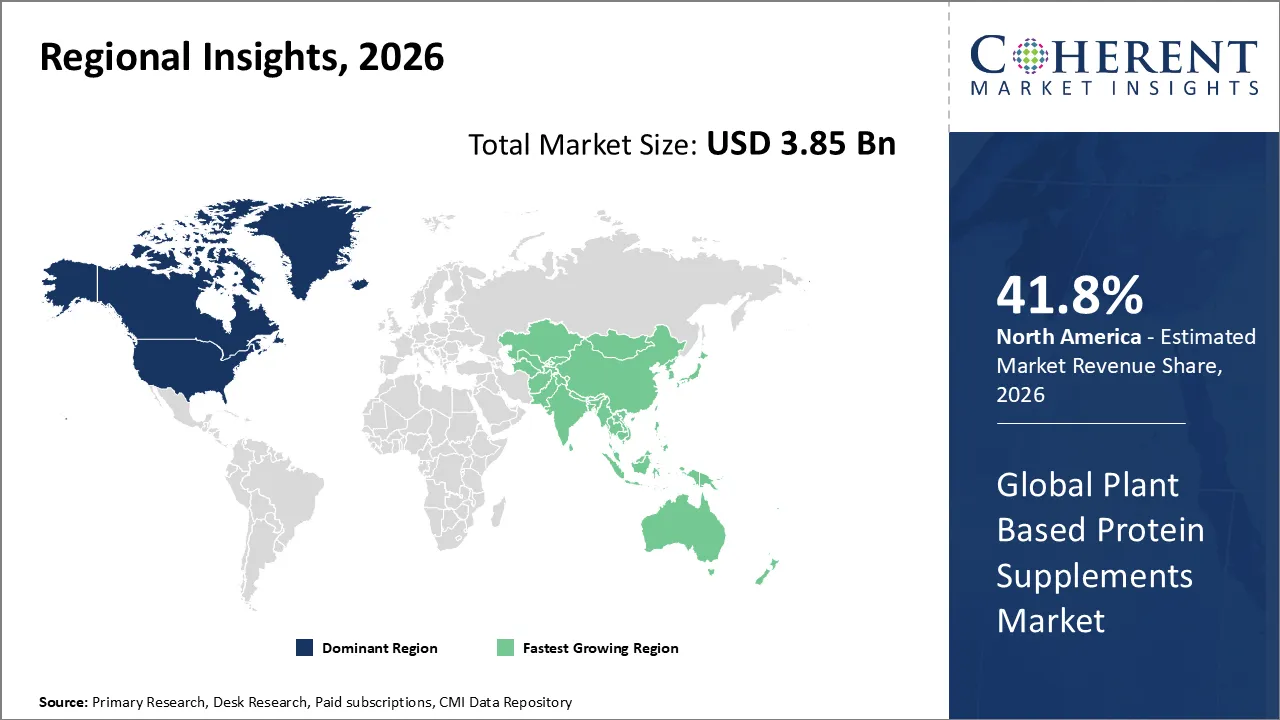
North America is expected to dominate the global plant based protein supplements market, accounting for 41.8% of global revenue in 2026.
The region benefits from established supplement manufacturing capabilities, developed natural-product distribution networks, and the commercial presence of specialized nutritional brands. Testifying to North America’s familiarity with product and sustained brand performance, in 2024, plant-based products accounted for 35% of sales in their respective product category of protein powders and liquids within the U.S. natural retail channel, according to the Good Food Institute (GFI) 2023-2025 analysis.
The target consumer base of the region is now set to concentrate among distinct consumer groups, where premium organic products, allergen-conscious formulations, and independently tested performance supplements are highly preferred. Whereas large grocery retailers and dedicated nutrition outlets provide multiple avenues for product commercialization, with contract manufacturing infrastructure supporting emergence of brands seeking scalable production capabilities.
Asia Pacific is expected to register the fastest growth in the global plant based protein supplements market during the forecast period.
Regional augmentation is closely anchored to the wide consumer base for soybean, rice, and pulse-based ingredients. As evidence, till 2025, Asia, in particular China, contributed to 60% of global soybean imports, making it the world’s largest consumer in this category, according to the year’s October article of the NLM. The increasing urban population across China, India, South Korea, and Japan is fostering a wider demand base due to the residents carrying comparatively higher awareness about food intake and wellness.
As a result, companies developing localized flavors, smaller packaging formats, and competitively priced products are better aligned to regional purchasing patterns. Seeing the region’s potential, in January 2026, Nutricircle Limited introduced its Next Generation of Plant-Based Proteins, with concentrations ranging between 28% and 95%, at Gulfood Dubai 2026. The new pipeline of protein concentrates and isolates is derived from indigenous Indian crops, including foxtail millet, pearl millet, amaranth, chickpea, horse gram, lentils, and rice.
Global Plant Based Protein Supplements Market Outlook for Key Countries
Why Is the U.S. Becoming a Hub for Premium Plant Based Protein Supplement Innovation?
The U.S. plant based protein supplements market is moving ahead of global competition through a wide network of nutrition companies, specialist vegan brands, and digitally native supplement manufacturers. This concentration of key players comes from the strong raw material production base of the country, where the 2025 NLM study identified America as the center of worldwide soybean output.
U.S.-based Export Data for Key Plant-Based Protein Sources (2025)
Protein Source | Export Value (in USD) |
Lentils (Dried/Shelled) | 165 million |
Wheat | 6.36 billion |
Edible Fruits, Nuts & Fruit Peels | 18 billion |
Soybeans | 16.2 billion |
Cereals (Millet, Seed) | 10.5 million |
These figures indicate that domestic consumers have access to a broad selection of formulations across specialty retailers, mass merchandisers, and healthcare-oriented distribution networks. To survive in such a fragmented business environment, manufacturers in this sector are inclining towards corporate acquisitions to enter specialized plant protein categories and expand their consumer reach. For instance, in June 2024, The Simply Good Foods Company acquired Only What You Need (OWYN) to strengthen its branded nutrition portfolio with addition of an established plant-based protein shake business.
How Is India Building a Distinct Plant Based Protein Supplements Ecosystem?
The India plant based protein supplements market is outstretching its capabilities around domestic crop diversity, vegetarian dietary traditions, and expanding demand for specialized nutritional products. Portraying this such a favorable dietary pattern among potential consumers in the country, a 2026 Faunalytics survey on 801 Indian Gen Z adults aged 18-28 years found that almost 60% of them identified themselves vegan, vegetarian, pescetarian, or reducetarian.
Thus, manufacturers in this sector are adopting to this consumer behavior by exploring chickpea, brown rice, mung bean, and other locally available agricultural ingredients to develop protein concentrates and differentiated supplement formulations specified to Indian taste buds. On the other hand, emerging brands are positioning through ingredient transparency, affordability, and compatibility with familiar dietary practices. Besides, small-format packaging and digital distribution are helping manufacturers reach consumers outside metropolitan fitness communities.
Germany Plant Based Protein Supplements Market Analysis and Trends
The plant based protein supplements market in Germany is thriving on the its entrenched organic food retailing, specialized sports nutrition brands, and consumer interest in ingredient transparency. Long-standing acceptance of these products among nationwide residents can be seen in the 39% of the total adult population that expressed themselves to be flexitarians, who are slowly moving towards being vegan by reducing the amount of meat from their daily diet, as updated by a 2025 GIF survey conducted on 4,827 people.
This testifies to the fact that differentiating pipelines through European-grown protein crops, minimal-ingredient formulations, and environmentally conscious product designing can earn a better positioning for manufacturers in this country. Domestic brands are following this clue by exploring fermentation-based processing with intention to improve the functional characteristics of their offered proteins. As a case in point, in December 2025, vly introduced a new pipeline of legume-based fermented protein drinks, with each 330 ml bottle carrying 20 g of plant protein.
U.K. Plant Based Protein Supplements Market Analysis and Trends
The convergence of sports nutrition, lifestyle wellness, and specialized dietary products is propelling the commercial viability of the plant based protein supplements market in the country. The strong emphasis on formulations blending nutritional functionality with convenience and recognizable ingredients is becoming the first point of competitive participation for domestic brands.
Competition among subscription-based nutrition companies, established supplement manufacturers, and independent wellness pipelines is also credibly strong, ensuring widespread adoption across different consumer demographics. The country also offers prospects for novel products designed around specific dietary preferences. This pattern of strategic operation can be testified by an acquisition-led portfolio diversification, where Pluckk took possession of a direct-to-consumer (D2C) nutrition brand, Upnourish, against a transaction of USD 1.4 million in September 2024.
Japan Plant Based Protein Supplements Market Analysis and Trends
The plant based protein supplements market is also gaining traction in Japan on account of its proven soy processing technologies, sophisticated functional nutrition manufacturing, and a domestic demand base for compact, convenient retail products. In this regard, a 2024 scientific study, based on the estimations of the NLM, the country’s functional food industry generated an impressive value of USD 13 billion, accompanied by USD 6 billion worth of dietary supplements trade.
Such a well-established business environment allows Japanese manufacturers to focus on smoothening texture, moderating sweetness, improving efficiency in powder dissolution, and diversifying product formats for routine consumption. On this occasion, in September 2025, Meiji launched a banana-flavored SAVAS Soy Protein 100 supplement, derived 100% from a plant-based sweetener, stevia.
How Is the Development of Advanced Multi-Source Protein Formulations Creating Growth Opportunities in the Plant Based Protein Supplements Market?
The development of advanced multi-source protein formulations is creating new avenues in the global plant based protein supplements market. Interest is increasing in formulating products utilizing blends of legume, cereal and seed proteins which aim to complement each other so that the final product has a more nutritionally complete amino acid profile. Formulators are also investigating ways to further optimize protein solubility and reduce off-flavors through enzyme action, fermentation and fractionation.
This trail of developing application-specific blends helps manufacturers target endurance athletes, recreational fitness enthusiasts, older consumers, and individuals with specific dietary restrictions. The innovation culture is further spreading across the broader alternative protein industry, imposing progress in curating more novel protein ingredients. For instance, in April 2025, Silver Star Nutrition unveiled a vegan supplement, Select Proformance ELITE Plant Protein, amalgamating fava bean, rice, and chickpea proteins and providing 30-31g of protein per serving.
Market Players, Key Development, and Competitive Intelligence
Key Developments
- In September 2026, Beyond Meat, Inc. launched a new pipeline of products, named Phytosphere, marking its strategic expansion beyond conventional plant-based meat alternatives.
- In September 2026, Agrocorp International debuted in the South Asian in the plant-based protein powder industry by introducing a combination of pea & rice proteins with digestive enzymes, Herbyvore Protein Powder.
Competitive Landscape
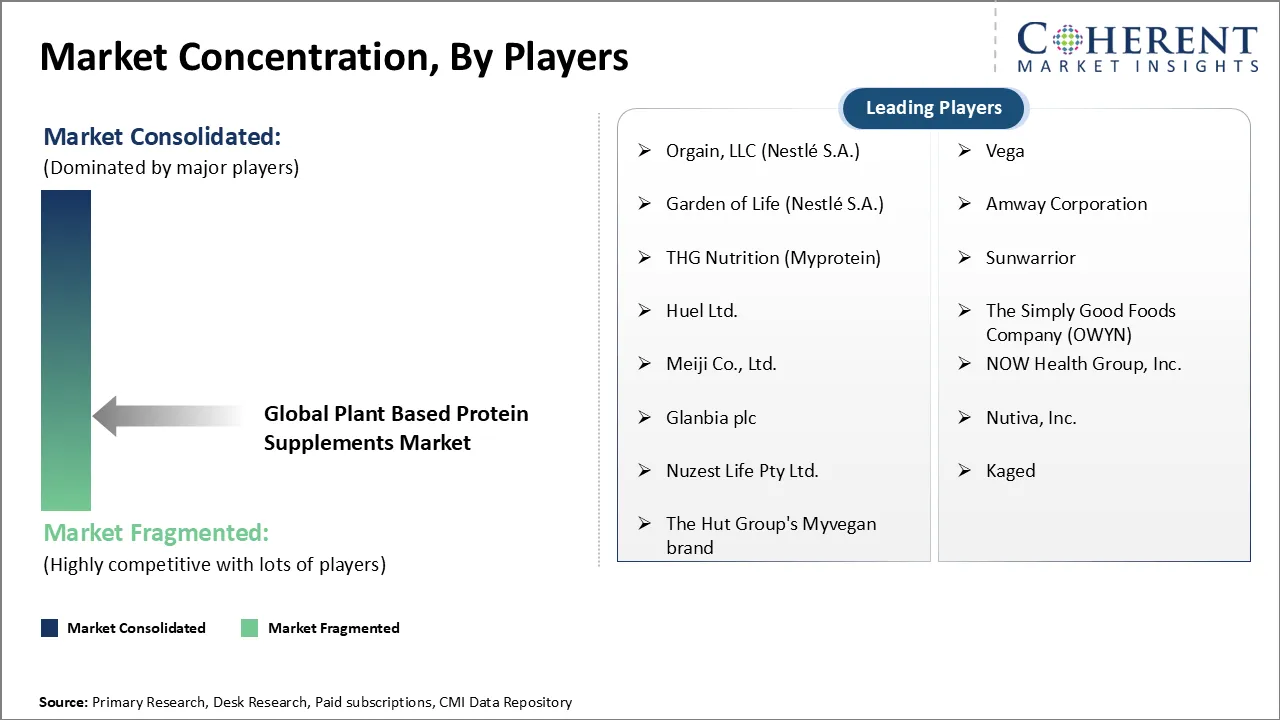
Across the world there are a number of organisations involved in the provision of plant-based protein such as multi-national nutrition companies, dedicated plant protein brands, sports nutrition and even new D2C brands. Within Nestlé’s nutrition range, Orgain uses both plant protein powder and drink formats. Vega places an emphasis on sports nutrition using plant sources and Garden of Life utilises organic nutrition. Amway Corporation uses its DTC business model to sell Nutrilite’s plant proteins to global customers.
Myprotein (THG Nutrition), provides plant based fitness nutrition. Sunwarrior is known for its plant protein products and Huel specialises in vegan enhanced nutrition. The Simply Good Foods Company also engages within this industry via its OWYN plant protein drinks. Meiji further intensifies competition through its sport nutrition line-up that includes soy protein. Within this sector, companies are striving to compete on the basis of the protein type, price, supply chain transparency, sensory attributes, production capacity and customer loyalty.
Top Manufacturers and Notable Products/Solutions in the Plant Based Protein Supplements Market
Company/Manufacturer | Notable Product/Brand | Key Features |
Orgain, LLC (Nestlé) | Organic Protein Plant Based Protein Powder | Organic multi-source plant protein, dairy-free formulation, multiple flavors |
Vega | Vega Sport Premium Protein | Performance-focused plant protein blend, amino acid-rich formulation |
Garden of Life (Nestlé) | RAW Organic Protein | Organic plant proteins, digestive enzymes, vegan formulation |
Amway Corporation | Nutrilite All Plant Protein | Combination of soy, wheat, and yellow pea proteins |
THG Nutrition | Myprotein Vegan Protein Blend | Pea and fava bean protein isolates, multiple flavor options |
Sunwarrior | Warrior Blend Protein | Plant-derived protein blend, organic formulations, sports nutrition applications |
Huel Ltd. | Huel Complete Protein | Plant protein, essential amino acids, vitamins and minerals |
The Simply Good Foods Company | OWYN Plant-Based Protein Shakes | Ready-to-drink plant protein beverages, dairy-free nutritional formulations |
Meiji Co., Ltd. | SAVAS Soy Protein 100 | Soy-derived protein powder, vitamin fortification, fitness-oriented formulation |
NOW Health Group, Inc. | NOW Sports Pea Protein | Pea protein isolate, unflavored and flavored formulations |
Market Report Scope
Plant Based Protein Supplements Market Report Coverage
Report Coverage | Details | ||
Base Year: | 2025 | Market Size in 2026: | USD 3.85 Bn |
Historical Data for: | 2020 to 2024 | Forecast Period: | 2026 to 2033 |
CAGR: | 8.87% | 2033 Value Projection: | USD 6.98 Bn |
Geographies covered: |
| ||
Segments covered: |
| ||
Companies covered: | Orgain, LLC (Nestlé), Vega, Garden of Life (Nestlé), Amway Corporation, THG Nutrition, Sunwarrior, Huel Ltd., The Simply Good Foods Company, Meiji Co., Ltd., NOW Health Group, Inc., Glanbia plc, The Hut Group's Myprotein, and other relevant manufacturers. | ||
Growth Drivers: |
| ||
Restraints & Challenges: |
| ||
Analyst Opinion (Expert Opinion)
- The market for plant protein nutritional supplements is anticipated to shift from product composition to demonstrable nutrition benefits. Businesses which can effectively define, quantify and deliver proteins, as well as manage good production performance, are likely to benefit. Good nutrition should be at the forefront of new product innovation; however, cost and customer appeal must still be maintained.
- Excellent business potential is likely to result from successfully combining ease-of-use, niche markets and context-led protein utilization. Businesses can increase their customer coverage by designing products for specific usage scenarios. Rather than solely promoting plant protein supplements as substitutes for whey, businesses can design products for various contexts of use. In July 2026, Danone started extending the Silk range to include plant based protein drinks and high protein yoghurt. Drinks have been launched in both vanilla and chocolate and are now available in stores nationwide in the USA. This continues to build on Danone’s presence within easy access plant based protein and functional food and drink.
- Businesses should seek to minimize differences in suppliers’ raw materials, maximize production effectiveness and further develop quality controls. Maintaining long term business success will center on a business’s capacity to consistently provide high quality nutrition at cost-effective pricing. Collaborations may also be established between agricultural processing, ingredient and supplement manufacturing and retail organizations to enhance supply chain processes and speed up product launches. Univar Solutions on November 2026, announced an enhanced distribution agreement with Roquette for delivering plant based protein and fibre products to North America. This includes Roquette’s NUTRALYS pea protein which is derived from non-GMO yellow peas and produced using Roquette’s proprietary aqueous technology. It will be distributed through Univar Solutions’ distribution network and logistics services.
Speak to the analyst
Want personalized insights?
Take the findings above to one of our principal consultants, or have the report rebuilt around the segments, geographies and competitors you actually track.
Market Segmentation
- By Protein Source (Revenue, USD Bn, 2021-2033)
- Soy Protein
- Pea Protein
- Rice Protein
- Hemp Protein
- Wheat Protein
- Others (Pumpkin Seed, Fava Bean, Chickpea, etc.)
- By Product Type (Revenue, USD Bn, 2021-2033)
- Protein Powders
- Protein Bars
- Ready-to-Drink (RTD) Protein Beverages
- Others
- By Application (Revenue, USD Bn, 2021-2033)
- Functional Nutrition
- General Health & Wellness
- Weight Management
- Specialized Nutritional Support
- Sports Nutrition
- Muscle Development
- Exercise Recovery
- Athletic Performance Nutrition
- Functional Nutrition
- By Distribution Channel (Revenue, USD Bn, 2021-2033)
- Online Retail
- Supermarkets & Hypermarkets
- Specialty Nutrition Stores
- Pharmacies & Drugstores
- Others
- Global Plant Based Protein Supplements Market, By Region (Revenue, USD Bn, 2021-2033)
- North America
- U.S.
- Canada
- Latin America
- Brazil
- Mexico
- Argentina
- Rest of Latin America
- Europe
- Germany
- U.K.
- France
- Italy
- Spain
- Russia
- Rest of Europe
- Asia Pacific
- China
- India
- Japan
- Australia
- South Korea
- ASEAN
- Rest of Asia Pacific
- Middle East
- GCC
- Israel
- Rest of Middle East
- Africa
- South Africa
- Central Africa
- North Africa
- North America
- Key Players
- Orgain, LLC (Nestlé S.A.)
- Vega
- Garden of Life (Nestlé S.A.)
- Amway Corporation
- THG Nutrition (Myprotein)
- Sunwarrior
- Huel Ltd.
- The Simply Good Foods Company (OWYN)
- Meiji Co., Ltd.
- NOW Health Group, Inc.
- Glanbia plc
- Nutiva, Inc.
- Nuzest Life Pty Ltd.
- Kaged
- The Hut Group's Myvegan brand
Sources
Primary Research Interviews
- Plant-based protein supplement manufacturers and brand owners
- Plant protein isolate and concentrate manufacturers
- Sports nutrition and functional nutrition product development specialists
- Nutritional supplement contract manufacturers
- Agricultural raw material suppliers and protein processing specialists
- Food scientists and nutritional supplement formulation experts
- Sports nutritionists and registered dietitians
- Nutritional supplement distributors, retailers, and e-commerce platform representatives
- Quality assurance and regulatory affairs specialists
- Key opinion leaders (KOLs) in plant-based nutrition, dietary supplementation, and functional foods
Databases
- U.S. Department of Agriculture (USDA)
- USDA Foreign Agricultural Service (FAS) – Oilseeds: World Markets and Trade
- National Library of Medicine (NLM) – PubMed and PubMed Central (PMC)
- National Institutes of Health (NIH) – Dietary Supplement Label Database (DSLD)
- Observatory of Economic Complexity (OEC)
- International Food Information Council (IFIC) – Food & Health Survey
- The Good Food Institute (GFI) – Plant-Based Market Research
- The Good Food Institute Europe – Consumer Research
- Faunalytics – Consumer Research Database
- National Restaurant Association of India (NRAI)
Magazines
- NutraIngredients
- Nutraceuticals World
- Nutritional Outlook
- Nutrition Business Journal
- Food Business News
- FoodBev Media
- Natural Products Insider
- Indian Retailer
- BevNET
- Food Ingredients First
Journals
- The Journal of Nutrition
- The American Journal of Clinical Nutrition
- Nutrients
- British Journal of Nutrition
- Journal of the International Society of Sports Nutrition
- Journal of Dietary Supplements
- Food Chemistry
- Journal of Functional Foods
- Journal of Food Science
- International Journal of Sport Nutrition and Exercise Metabolism
- Plant Foods for Human Nutrition
- Food Research International
Newspapers
- The New York Times
- The Wall Street Journal
- Financial Times
- The Guardian
- The Economic Times
- Business Standard
- The Japan Times
Associations and Research Organizations
- The Good Food Institute (GFI)
- The Good Food Institute Europe
- International Food Information Council (IFIC)
- Plant Based Foods Association (PBFA)
- Plant Based Foods Industry Association (PBFIA)
- American Society for Nutrition (ASN)
- International Society of Sports Nutrition (ISSN)
- Council for Responsible Nutrition (CRN)
- Natural Products Association (NPA)
- European Specialist Sports Nutrition Alliance (ESSNA)
- International Alliance of Dietary/Food Supplement Associations (IADSA)
- National Restaurant Association of India (NRAI)
Public Domain Sources
- Company Annual Reports and Investor Presentations
- USDA Foreign Agricultural Service – Oilseeds: World Markets and Trade Reports
- USDA Agricultural Research Service – Pulse Crop Health Initiative Funded Projects
- Government of India – BioE3 Policy for High-Performance Biomanufacturing
- Observatory of Economic Complexity – International Trade Statistics
- International Food Information Council – Food & Health Survey 2026
- Good Food Institute – Plant-Based Retail Market and Consumer Preference Reports
- Faunalytics – Plant-Based Dietary Preferences Among Indian Gen Z Consumers
- National Library of Medicine – Plant Protein Supplementation and Nutritional Research Publications
- Burcon NutraScience Corporation – FavaPro Commercial Production and Launch Announcement
- Kate Farms – High Protein Nutrition Shake Launch Announcement
- ACI Group – Plant-Based Protein Portfolio Expansion Announcement
- Vega – Performance Nutrition Portfolio Expansion Announcement
- EatProtein – Plant-Based Wellness Protein Powder Launch Announcement
- Nutricircle Limited – Next Generation of Plant-Based Proteins Launch Announcement
- The Simply Good Foods Company – OWYN Acquisition Announcement
- vly – Fermented Plant-Based Protein Drinks Launch
- Pluckk – Upnourish Acquisition Announcement
- Meiji Co., Ltd. – SAVAS Soy Protein 100 Product Launch Announcement
- Silver Star Nutrition – Select Proformance ELITE Plant Protein Launch Announcement
- Beyond Meat, Inc. – Phytosphere Portfolio Launch Announcement
- Agrocorp International – Herbyvore Protein Powder Launch Announcement
- Danone – Silk Plant-Based Protein Portfolio Expansion Announcement
- Univar Solutions – Expanded Plant-Based Ingredient Distribution Agreement with Roquette
- Official Company Websites, Product Catalogues, and Technical Specifications
Proprietary Elements
- CMI Data Analytics Tool
- Proprietary CMI Existing Repository of Information for the Last 10 Years
Get access to 250+ pages report
Every segment, forecast, competitor profile and data table behind the analysis above — available for instant download.
- ESOMAR Member
- ISO 9001:2015 Certified
- D-U-N-S Registered
- GDPR & CCPA Compliant
Frequently Asked Questions
The global plant based protein supplements market is expected to reach USD 6.98 Bn by 2033, compared with USD 3.85 Bn in 2026.
Major players include Orgain, LLC, Vega, Garden of Life, Amway Corporation, THG Nutrition, Sunwarrior, Huel Ltd., The Simply Good Foods Company, Meiji Co., Ltd., NOW Health Group, Inc., and Glanbia plc.
Unfavorable taste and texture characteristics, complex formulation requirements, agricultural raw material variability, premium product pricing, and stringent quality control requirements are the major factors hampering market growth.
Increasing demand for dairy-free nutritional supplements, growing protein consumption awareness, expanding fitness participation, and advancements in plant protein formulation technologies are driving market growth.
The global plant based protein supplements market is anticipated to grow at a CAGR of approximately 8.87% between 2026 and 2033.
North America is expected to dominate the global market, accounting for an estimated 41.8% revenue share in 2026, while Asia Pacific is anticipated to register the fastest growth.
Plant based protein supplements are concentrated nutritional products manufactured using proteins derived from legumes, grains, seeds, and other botanical sources. They are available in powdered, liquid, bar, and other supplemental formats.