

Sports Nutrition Market Size and Trends
The sports nutrition market is estimated to be valued at USD 61.48 Bn in 2026 and is expected to reach USD 113.84 Bn by 2033, growing at a compound annual growth rate (CAGR) of 9.2% from 2026 to 2033.
Key Takeaways
- Based on product Type, Sports Drinks Products are expected to hold 47.6% shares in the global sports nutrition market in 2026.
- Regionally, North America is projected to hold dominating position with 41.7% shares in 2026.
Market Overview
The sports nutrition market has been witnessing significant growth over the past few years. The demand for healthy and nutrition-rich dietary supplements among athletes and sports enthusiasts to enhance physical performance and speed up the recovery process has been driving the market growth. Moreover, increasing sports participation and growing awareness about fitness and wellness are some of the key factors expected to boost the sales of sports nutrition products during the forecast period. However, stringent regulations associated with the advertising and promotion of sports supplements may restrain the market growth to some extent. But growing millennial population's inclination towards fitness is likely to unlock new opportunities for market players in the coming years.
Current Events and their Impact on the Sports Nutrition Market
Current Event | Description and its Impact |
Rising Inflation and Supply Chain Disruptions |
|
Technological Innovation in Personalized Nutrition |
|
Pricing Analysis
Protein Products
- Whey Protein Isolate: $25-85 per 2lb container
- Whey Protein Concentrate: $18-65 per 2lb container
- Casein Protein: $28-75 per 2lb container
- Plant-Based Proteins: $22-80 per 2lb container
- Protein Bars: $1.50-4.50 per bar
Pre-Workout Supplements
- Stimulant-based: $25-65 per 30-serving container
- Non-stimulant: $22-55 per 30-serving container
- Natural/Organic: $35-75 per 30-serving container
Post-Workout Recovery
- BCAA Supplements: $18-55 per 30-serving container
- Glutamine: $15-45 per 300g container
- Recovery Drinks: $2.50-6.00 per serving
- Current Industry Events of 2026
- Market Size Estimation
- Regional Breakdown
- Competitive Landscape
- Customer Intelligence
- Segmental Analysis
- Pricing Analysis
- Key Market Drivers, Challenges & Future Trends
- Customized Insights Section
Market Drivers
Growing health consciousness
The rising awareness about the importance of good health and fitness is one of the key drivers of the sports nutrition market. People are realizing that maintaining a healthy lifestyle helps in preventing various chronic diseases and improves overall quality of life. They are understanding the role of proper nutrition in boosting physical performance and aiding muscle development. With busy schedules, many lack time to cook nutritious meals on a daily basis.
Consumers thus rely on convenient nutrition products like sports drinks, supplements and bars to fulfill their nutritional needs, especially on busy days. Protein supplements in particular see strong demand as youngsters aspire for a toned physique. The prioritization of health has become a way of life for both fitness enthusiasts and casual exercisers. With more people joining gyms and taking up sports, the uptake of performance-enhancing foods and beverages is bound to rise further in the coming years.
Growing popularity of active lifestyles
Another major factor creating a conducive environment for the sports nutrition market is the popularity of active lifestyles. Gone are the days when people led a largely sedentary existence glued to desks and screens. There is now a significant cultural shift towards living an energetic lifestyle involving some form of physical activity on a regular basis. More individuals have started recognizing the mental and emotional benefits of routine workouts in addition to its physical perks.
The rising health consciousness has also channelled this trend. The growing accessibility of fitness facilities and the promotion of sports at community levels have further spurred participation. From marathon running to soccer to CrossFit, there is no dearth of options for exercisers to choose from.
The competitive spirit also drives many to push boundaries and achieve superior results through scientific training and nutritional interventions. As keeping up with strenuous workout routines demands proper nourishment and recovery, the requirement for sports foods and supplements is multiplying.
Segmental Insights
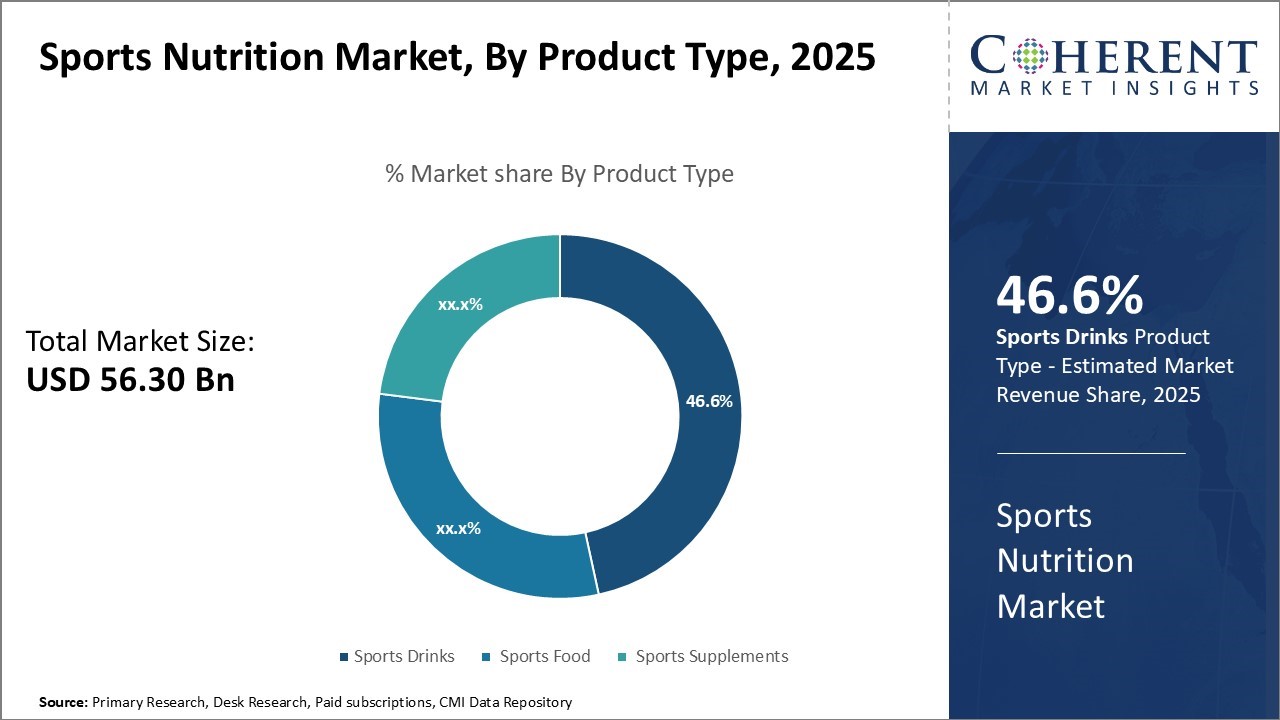
Sports Nutrition Market Insights, By Product Type: Sports Drinks Dominates the Sports Nutrition Product Segment Due to Convenience and Hydration
In the sports nutrition market, the product segment is led by sports drinks, which contributes 47.6% share of the overall market. Several key factors have driven the popularity and demand for sports drinks. Sports drinks are extremely convenient for both casual and serious athletes. Their liquid format allows for easy consumption during or after physical activity without disrupting an athlete's routine.
Sports drinks can be tossed back quickly to replenish fluids and minerals lost through sweat. This makes them ideal for on-the-go hydration. Moreover, sports drinks are designed specifically for proper hydration during exercise. They contain electrolytes like sodium and potassium that are lost through perspiration. Regular water cannot adequately replace both fluids and electrolytes at the same time.
Many athletes have learned through experience that sports drinks prevent dehydration and muscle cramping more effectively than water alone. The flavor varieties available also appeal to different tastes. Popular options like Gatorade come in fruit punch, orange, and lemon-lime flavors that taste more pleasant than plain water when athletes are pushing their limits. The addition of carbohydrates in many sports drinks further improves absorption of fluids and supports energy levels during intense workouts or games.
Apart from this, strong marketing by leading sports drink brands has increased awareness of their performance-enhancing and recovery benefits. High-profile sponsorship of major sporting events and athletes help validate the role of sports drinks in supporting an active lifestyle. As exercise habits increase worldwide, dependence on sports drinks for convenient and effective hydration will likely continue dominating their product segment. Growing strategic initiatives by key players is expected to drive the segment growth.
For instance, in September 2023, Coca-Cola introduced the Limca Sportz ION4 sports drink in India. Such innovations are accelerating the sports nutrition market demand.
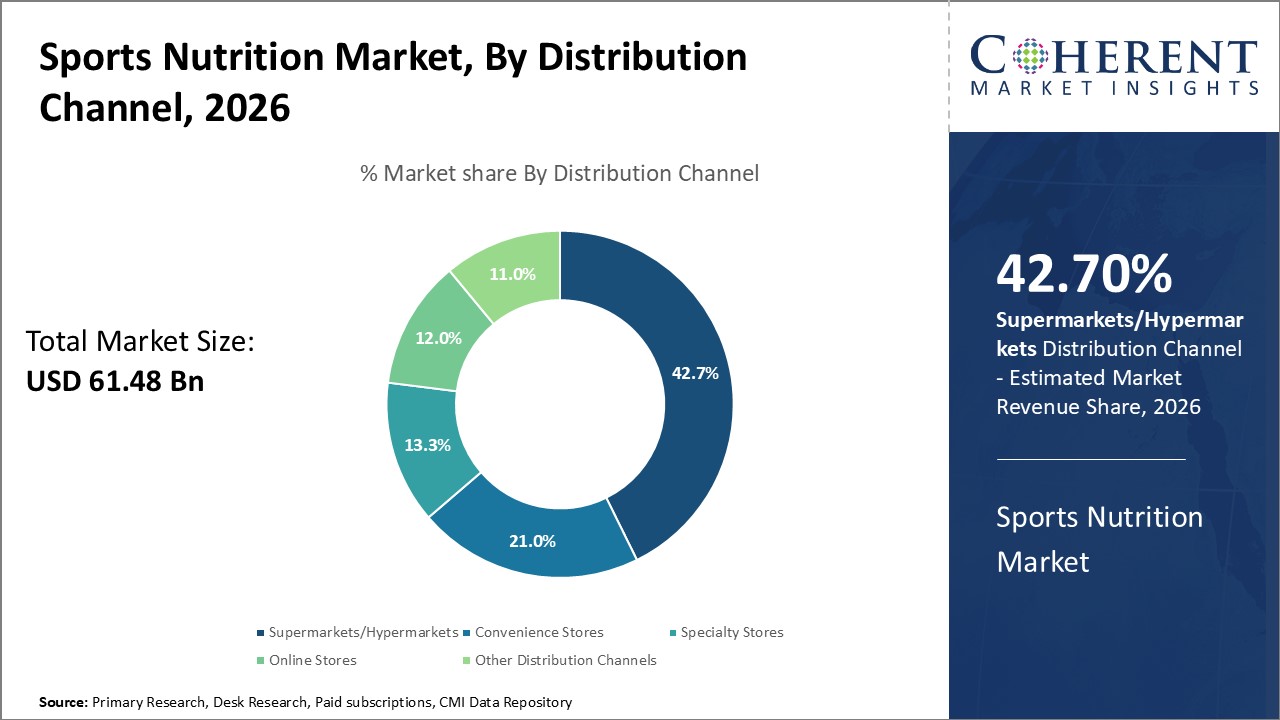
Sports Nutrition Market Insights, By Distribution Channel: Supermarkets Dominate Sports Nutrition Distribution through Product Selection and Price
Among the distribution channel segment in the sports nutrition market, supermarkets/hypermarkets accounts for 42.7% of the market share. This is driven primarily by their size advantages in terms of product selection and price competitiveness. Larger stores devote more space to sporting goods departments where they can stock the full range of sports nutrition products from various brands.
Customers can easily compare nutrients facts, flavors and value sizes all under one roof. This makes supermarkets a one-stop-shop for their shopping needs. Their vast scale also enables negotiations for better bulk purchase deals from manufactures. Cost savings are passed on through regular promotional pricing that beats specialty wellness stores.
Studies show price influences sports consumers' shopping decisions strongly. Greater foot traffic in supermarkets increases product visibility and trial. Clever product placement by shelves, fridges and checkouts induces impulse buys. Sports promotions, loyalty points for sports gear complement studio-sponsor deals to engage customers.
Finally, 24x7 store formats match athletes' schedules, while reaching mainstream crowds for easy weekday top-ups. Effective digital media targets new audiences via delivery slots. With continued private label expansion, supermarkets will leverage scale further to strengthen leadership online and in-stores.
Regional Insights
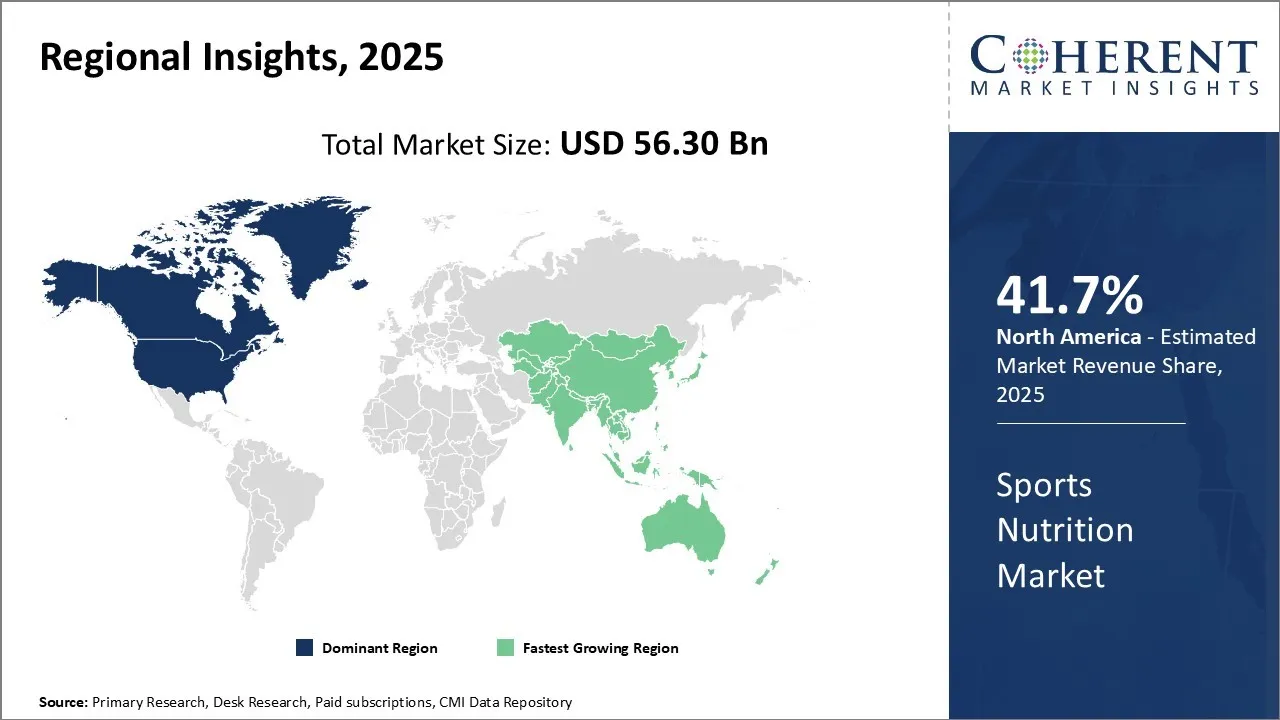
North America Sports Nutrition Market Analysis and Trends
North America has established itself as the dominant region in the global sports nutrition market with 41.7% of the market share. With the growing health and fitness trends in the U.S. and Canada, there is immense popularity around protein powders, energy bars, pre-workout supplements, and other sports nutrition products. Leading brands from the region like GNC, Optimum Nutrition, Warrior Lab, and EAS have strong market presence both within North America as well as globally.
The presence of major sports leagues in the region and fitness obsessed population has boosted the consistent demand for high-quality sports nutrition over the years. Moreover, several private label brands available at large retail chains like Walmart, Target, and Costco, etc. have further widened the consumer reach.
International players trying to enter the North American market also face stringent regulations and certification requirements pertaining to product quality, labelling, and safety. This acts as a barrier for new entrants and protects the market share of existing domestic brands.
For instance, in October 2026, Bloom Nutrition proudly announced its international retail debut in Canada. Bloom’s best-selling Greens & Superfoods Powder became available at the majority of Walmart stores across Canada, marking a significant milestone in the brand’s mission to make fun and functional wellness essentials accessible worldwide.
Asia Pacific Sports Nutrition Market Analysis and Trends
Asia Pacific is witnessing the fastest growth in the global sports nutrition market landscape. Countries like China, India, Thailand, and Indonesia are touted to be major growth drivers on the back of rising health awareness, proliferation of gyms and fitness centers as well as flourishing sports culture in the urban centers. Young population with increasing disposable incomes are willing to spend on specialized supplements that promise fitness goals.
E-commerce has given tremendous boost to product visibility and availability in the otherwise fragmented APAC markets. Domestic brands are upgrading themselves and garnering sizeable revenues through strong online sales while global brands are also ramping up sponsorships and visibility campaigns catering to regional consumer preferences.
Simultaneously, private label brands manufactured by regional players as per international standards are finding wider acceptance amid price-sensitive buyers. Overall, economic development, changing consumer habits, and supportive distribution environment make Asia Pacific an attractive and high potential sports nutrition market of the future.
For instance, in October 2026, G.O.A.T Fit, India’s leading fitness and sports nutrition brand, unveiled two creatine products designed to deliver exceptional flavor, solubility, and potency. Breaking industry monotony, G.O.A.T Fit combined cutting-edge formulations with nostalgic, refreshing tastes to make creatine not only effective but also enjoyable.
Sports Nutrition Market – Dominating Countries
The U.S. Sports Nutrition Market Trends
The U.S. is considered as dominating country in the global sports nutrition market, owing to its well-established fitness culture, high consumer awareness, strong presence of key market players, and widespread availability of sports nutrition products.
For instance, in October 2026, Glanbia’s lifestyle protein brand Isopure launched its whey protein and collagen products in the UK following its success in the U.S. market.
China Sports Nutrition Market Trends
China is considered as dominating country in the global sports nutrition market, due to its rapidly growing middle class, increasing health awareness, expanding fitness culture, and rising disposable incomes.
For instance, in July 2026, China dairy giant Mengniu Dairy explored bone and joint health, as well as antioxidant properties, while expanding its sports nutrition product range.
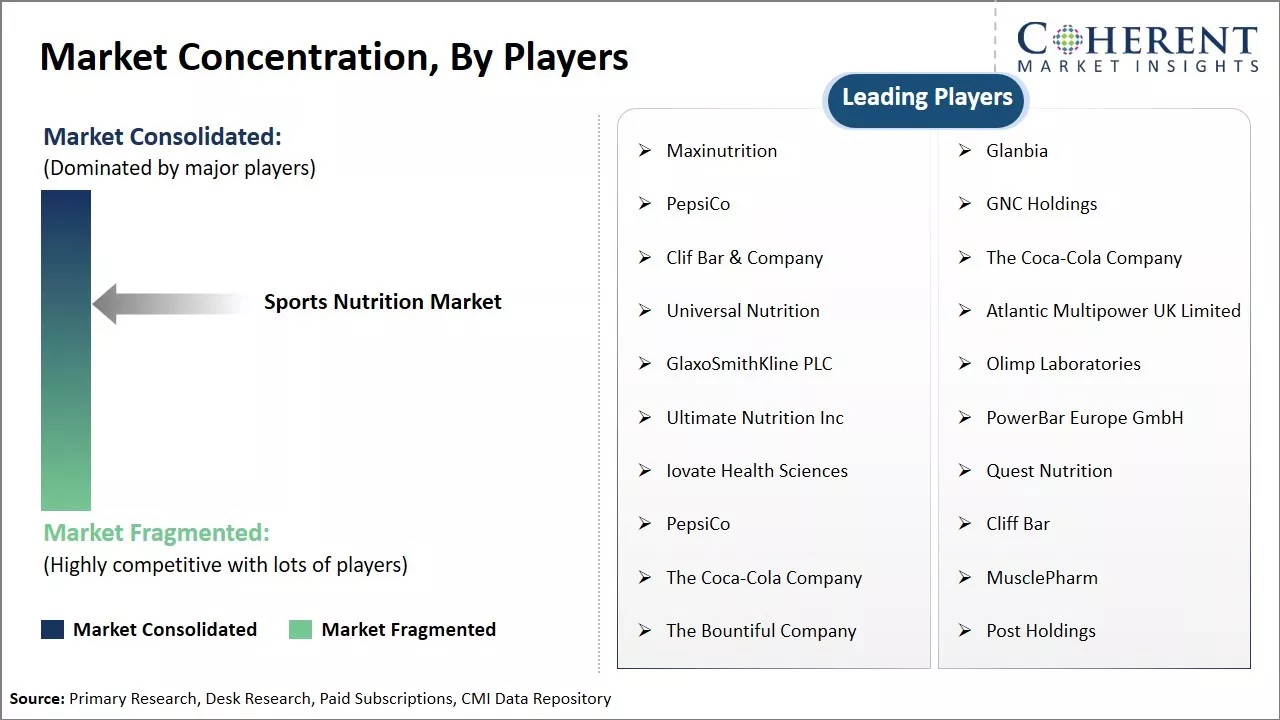
Market Concentration and Competitive Landscape
Analyst Opinion
- The global sports nutrition market continues to witness solid growth driven by rising health awareness and focus on fitness among consumers. The market has steadily shifted from traditional sports supplements towards ingestible focused on active lifestyles.
- Protein powder retain dominance due to convenient dosage and versatile usage occasions. Meanwhile, pre-workout drinks are emerging as the fastest growing segment by increasing participation in gym activities and appetite for performance enhancement products.
- Geographically, North America remains the dominant region but Asia Pacific displays the highest growth momentum led by prosperous economies of China, India, and Others.
Speak to the analyst
Want personalized insights?
Take the findings above to one of our principal consultants, or have the report rebuilt around the segments, geographies and competitors you actually track.
Sports Nutrition Industry News
- In July 2024, Danone UK & Ireland launched a new initiative at the annual European College of Sports Science’s (ECSS) congress in Glasgow, which was aimed at sports nutritionists looking to work with athletes and people of all fitness levels.
- In June 2024, dsm-firmenich, the leading innovator in nutrition, health, and beauty, announced that it co-created a groundbreaking new line of up4® sports nutrition products in collaboration with the Team dsm-firmenich PostNL cycling team. This innovative partnership aimed to revolutionize sports nutrition, offering a range of tailored products designed to enhance both performance and health.
Market Report Scope
Sports Nutrition Market Report Coverage
| Report Coverage | Details | ||
|---|---|---|---|
| Base Year: | 2025 | Market Size in 2026: | USD 61.48 Bn |
| Historical Data for: | 2020 To 2024 | Forecast Period: | 2026 To 2033 |
| Forecast Period 2026 to 2033 CAGR: | 9.2% | 2033 Value Projection: | USD 113.84 Bn |
| Geographies covered: |
| ||
| Segments covered: |
| ||
| Companies covered: | Maxinutrition, Glanbia, PepsiCo, GNC Holdings, Clif Bar & Company, The Coca-Cola Company, Universal Nutrition, Atlantic Multipower UK Limited, GlaxoSmithKline PLC, Olimp Laboratories, Ultimate Nutrition Inc, PowerBar Europe GmbH, Iovate Health Sciences, Quest Nutrition, PepsiCo, Cliff Bar, The Coca-Cola Company, MusclePharm, The Bountiful Company, and Post Holdings | ||
| Growth Drivers: |
| ||
| Restraints & Challenges: |
| ||
Market Opportunities: The growing popularity of fitness and wellness
The sports nutrition market also provides several opportunities for companies who are able to leverage them. The growing popularity of fitness and wellness has expanded the potential customer base beyond serious athletes. Customers are more willing to experiment with different product types and forms like gummies and spreads.
Market Segmentation
- Product Type Insights (Revenue, USD Bn, 2021 - 2033)
- Sports Food
- Sports Drinks
- Sports Supplements
- Distribution Channel Insights (Revenue, USD Bn, 2021 - 2033)
- Supermarkets/Hypermarkets
- Convenience Stores
- Specialty Stores
- Online Stores
- Other Distribution Channels
- Regional Insights (Revenue, USD Bn, 2021 - 2033)
- North America
- U.S.
- Canada
- Latin America
- Brazil
- Argentina
- Mexico
- Rest of Latin America
- Europe
- Germany
- U.K.
- Spain
- France
- Italy
- Russia
- Rest of Europe
- Asia Pacific
- China
- India
- Japan
- Australia
- South Korea
- ASEAN
- Rest of Asia Pacific
- Middle East & Africa
- GCC Countries
- Israel
- Rest of Middle East & Africa
- Key Players Insights
- Maxinutrition
- Glanbia
- PepsiCo
- GNC Holdings
- Clif Bar & Company
- The Coca-Cola Company
- Universal Nutrition
- Atlantic Multipower UK Limited
- GlaxoSmithKline PLC
- Olimp Laboratories
- Ultimate Nutrition Inc
- PowerBar Europe GmbH
- Iovate Health Sciences
- Quest Nutrition
- PepsiCo
- Cliff Bar
- The Coca-Cola Company
- MusclePharm
- The Bountiful Company
- Post Holdings
Sources
Primary Research interviews
- Sports Nutrition Brand Manufacturers and Product Managers
- E-commerce Platform Executives and Digital Marketing Specialists
- Fitness Coaches and Personal Trainers
- Professional Athletes and Sports Performance Specialists
- Others
Databases
- Euromonitor International
- Others
Magazines
- Nutritional Outlook Magazine
- Sports Business Journal
- Nutraceuticals World
- Natural Products Insider
- Others
Journals
- International Journal of Sport Nutrition and Exercise Metabolism
- Journal of Sports Sciences
- Nutrients Journal
- Others
Newspapers
- The Wall Street Journal
- Financial Times
- Forbes Business News
- Bloomberg Business
- Others
Associations
- International Society of Sports Nutrition (ISSN)
- Council for Responsible Nutrition (CRN)
- Natural Products Association (NPA)
- Sports & Fitness Industry Association (SFIA)
- Others
Public Domain sources
- U.S. Food and Drug Administration (FDA) Guidelines
- European Food Safety Authority (EFSA) Reports
- World Health Organization (WHO) Publications
- National Institutes of Health (NIH) Data
- Others
Proprietary Elements
- CMI Data Analytics Tool
- Proprietary CMI Existing Repository of information for last 8 years
*Definition: The sports nutrition market involves the manufacturing and sale of nutritional products targeted towards sports enthusiasts and athletes. This includes sports and energy drinks, sports food and supplements containing vitamins, minerals, proteins, and other nutrients that help improve athletic performance, stamina, muscle building, and recovery. The products aim to provide hydration and energy before, during, and after workouts or competitive sports. Popular categories are sports bars, gels, powders, and shakes consumed as meal replacements or supplements to regular diet.
Get access to 250+ pages report
Every segment, forecast, competitor profile and data table behind the analysis above — available for instant download.
- ESOMAR Member
- ISO 9001:2015 Certified
- D-U-N-S Registered
- GDPR & CCPA Compliant
Missing comfort of reading report in your local language? Find your preferred language:
Transform your Strategy with Exclusive Trending Reports
Frequently Asked Questions
The Sports Nutrition Market is estimated to be valued at USD 61.48 Bn in 2026, and is expected to reach USD 113.84 Bn by 2033.
The CAGR of the Sports Nutrition Market is projected to be 9.2% from 2026 to 2033.
Growing health consciousness and growing popularity of active lifestyles are the major factors driving the growth of the sports nutrition market.
Increasing difficulty for companies to keep up with the demand for new product innovations and side effects of excessive consumption are the major factors hampering the growth of the sports nutrition market.
In terms of product type, sports drinks are estimated to dominate the market revenue share in 2026.
Maxinutrition, Glanbia, PepsiCo, GNC Holdings, Clif Bar & Company, The Coca-Cola Company, Universal Nutrition, Atlantic Multipower UK Limited, GlaxoSmithKline PLC, Olimp Laboratories, Ultimate Nutrition Inc, PowerBar Europe GmbH, Iovate Health Sciences, Quest Nutrition, PepsiCo, Cliff Bar, The Coca-Cola Company, MusclePharm, The Bountiful Company, and Post Holdings are the major players.
North America is expected to lead the sports nutrition market.