

Food Flavor Market Size and Forecast – 2026 to 2033
Food Flavor Market is estimated to be valued at USD 20.27 Bn in 2026 and is expected to reach USD 28.14 Bn in 2033, exhibiting a compound annual growth rate (CAGR) of 4.8% from 2026 to 2033.
Key Takeaways
- By Category, Synthetic hold the largest market share in 2026 owing to the changing consumer preferences: health, wellness & clean-label trends.
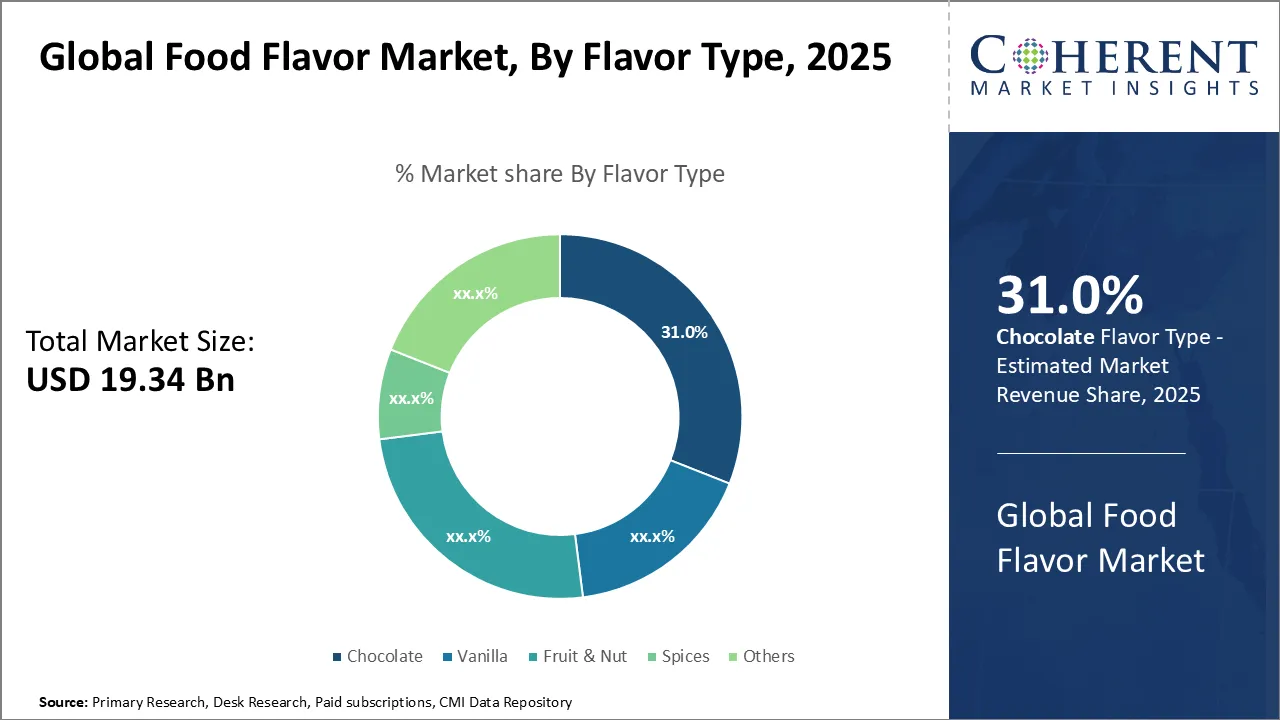
- By Flavor type, Chocolate expected to hod largest market share of 32% in 2026 owing to its rising disposable income & urbanization.
- By Application, Beverage acquired the prominent market share in 2026 owing to its health, wellness & clean-label trends.
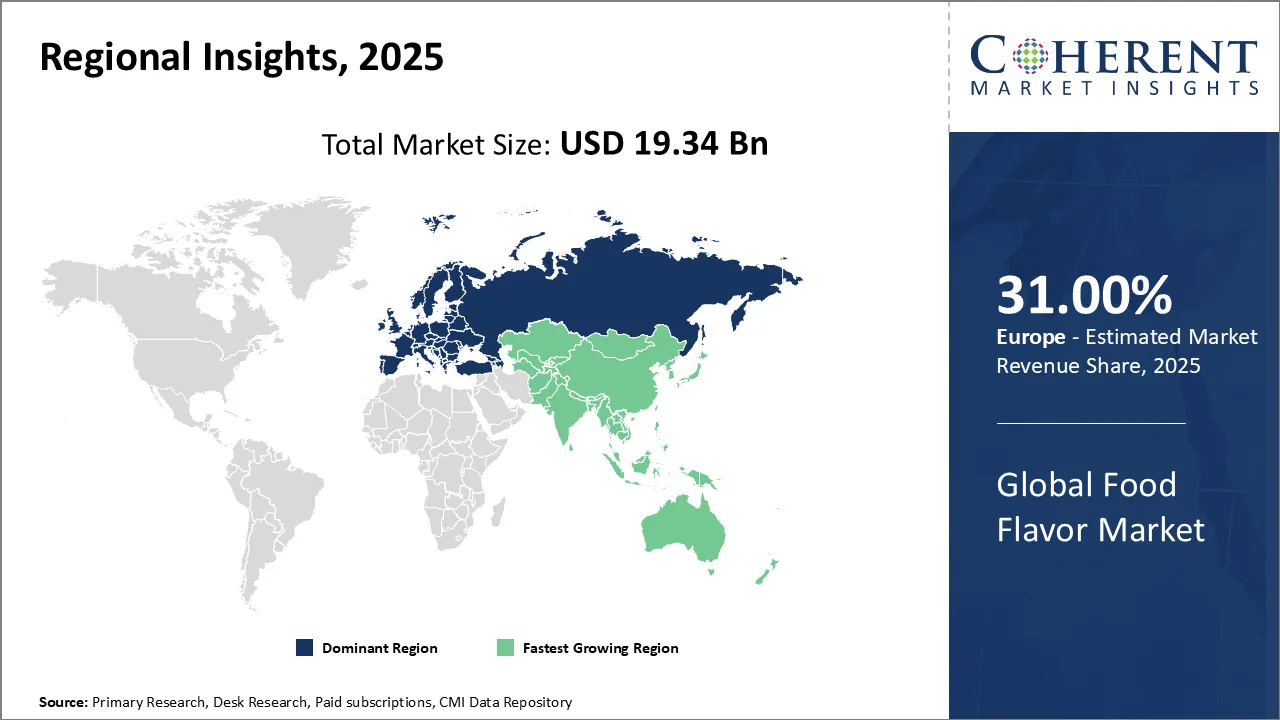
- By Region, Europe dominates the overall market with an estimated share of 31% in 2026 owing to the strong consumer demand for natural / clean-label.
Market Overview
The food flavor market continues to expand as consumers actively look for diverse, authentic, and innovative taste experiences across food and beverage products. Growing interest in processed, convenient, and functional foods is boosting the use of natural and synthetic flavor formulations. Clean-label demands, the rise of plant-based options, and global culinary trends are directly shaping new product development. Manufacturers are prioritizing natural ingredients, advanced flavor technologies, and tailored solutions to meet evolving consumer needs, positioning flavor innovation as a key competitive driver.
Current Events and Its Impact on the Food Flavor Market
Current Events | Description and its impact |
Geopolitical Tensions in Key Agricultural Regions |
|
Economic Inflation and Raw Material Price Volatility |
|
Technological Advances in Flavor Development |
|
Segmental Insights
- Current Industry Events of 2026
- Market Size Estimation
- Regional Breakdown
- Competitive Landscape
- Customer Intelligence
- Segmental Analysis
- Pricing Analysis
- Key Market Drivers, Challenges & Future Trends
- Customized Insights Section
Food Flavor Market Insights, By Flavor Type: Chocolate contributes the highest share of the market owing to its diversification and innovation.
Chocolate expected to hod largest market share of 32% in 2026. Chocolate flavors continue to gain momentum in the food flavor market as consumers actively seek indulgent, comforting, and recognizable taste experiences across various food and beverage products. Manufacturers increasingly incorporate chocolate notes into bakery, dairy, dessert, and beverage items due to their broad appeal. Ongoing innovation in premium, dark, and fusion chocolate profiles fuels interest in richer and more distinctive flavors. Growing snacking habits, festive consumption, and demand for artisanal offerings further reinforce chocolate’s position as a versatile and highly favored flavor option. For instance, in July 2025, OSF Flavors, a maker of natural and organic custom flavors, unveiled Angel Hair Chocolate Flavor, allowing non-chocolate foods and beverages to join the confectionery social media trend.
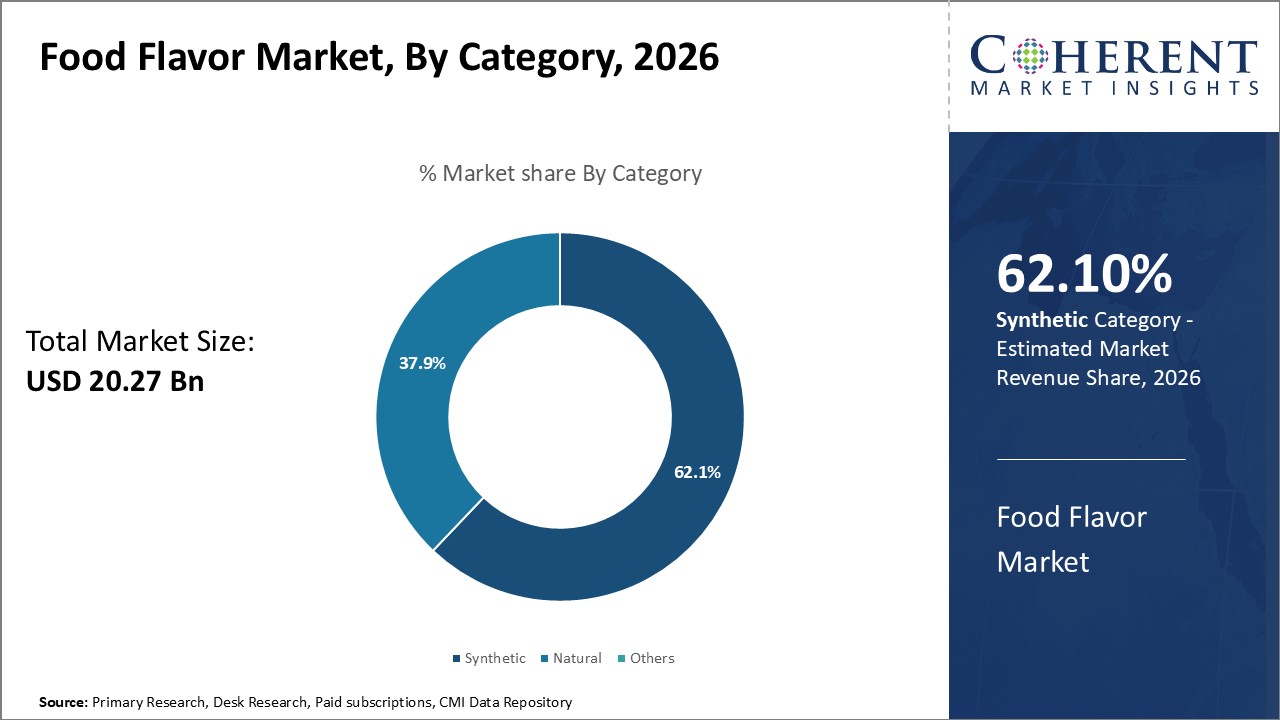
Food Flavor Market Insights, By Category: Synthetic contribute the highest share of the market owing to its rising demand for processed, packaged & convenient foods.
Synthetic flavors continue to gain traction in the food flavor market because they offer cost-efficient production, steady quality, and dependable availability compared to natural alternatives. Food manufacturers use them to maintain consistent taste in large-scale processed and packaged products. Their ability to work across beverages, snacks, bakery, and dairy items broadens their usefulness. Ongoing progress in flavor chemistry allows producers to create realistic and customizable flavor profiles. These advantages position synthetic flavors as a practical choice for many mass-market food brands.
Food Flavor Market Insights, By Application: Beverage contributes the highest share of the market owing to its demographic & socioeconomic trends.
Beverage flavors are gaining momentum in the food flavor market as consumers actively seek refreshing, flavorful, and functional drinks. Manufacturers respond to the growing popularity of ready-to-drink, health-focused, and plant-based beverages by creating innovative flavors that mask bitterness and enhance taste. Consumers’ curiosity for exotic, natural, and unique flavor combinations drives experimentation in juices, teas, energy drinks, and dairy-based beverages. Advances in flavor technology enable producers to deliver consistent and stable taste, making beverage flavors essential for crafting appealing and distinctive drinks. For instance, in August 2025, Ingredients supplier T. Hasegawa introduced a new technology that helps beverage makers create clean-label citrus drinks with longer shelf life.
Regional Insights
Europe Food Flavor Market Trends
Europe dominates the overall market with an estimated share of 31% in 2026. Manufacturers in Europe are driving the food flavor market with bold, authentic taste profiles and clean‑label formulations. Consumers are seeking globally inspired spice blends and natural extracts that bring the comfort of home cooking or the excitement of exotic cuisines. The demand for plant‑based, low‑sugar, and reduced‑salt flavor solutions is rising as health-conscious choices gain importance. Companies are focusing on layering subtle taste nuances, such as umami richness or citrus brightness, to enhance dishes without overwhelming them, delivering versatility and culinary sophistication. For instance, in September 2026, Kemin Food Technologies expanded its Olessence natural flavorings with Olessence P Dry for meat and poultry and Olessence G Liquid for sauces and dips, responding to rising demand for fresh, clean-label foods in Europe.
Asia Pacific Food Flavor Market Trends
Asia Pacific manufacturers are actively shaping the food flavor industry by creating vibrant, culturally rich taste profiles and emphasizing clean‑label ingredients. Consumers are seeking traditional spice blends and aromatic natural extracts that highlight regional heritage or introduce exciting global flavors. Rising health and wellness awareness is driving demand for plant‑based, reduced‑sugar, and lower‑salt flavor options. Producers are innovating with layered taste experiences — from gentle sweetness to smoky depth or citrus zing — to enhance dishes subtly while adding versatility and culinary appeal across various cuisines. For instance, U.S. grain merchant Archer-Daniels-Midland Co. (ADM) opened a new flavor production facility in China to meet rising demand for beverages and healthy foods.
United Kingdom Flavor Market Trends
United Kingdom food flavor developers are actively meeting the rising demand for locally inspired, nostalgic tastes infused with global influences. Consumers are seeking blends that combine comforting British classics with vibrant international spices. Interest in natural, clean‑label seasonings is growing. Producers are creating layered taste experiences — from rich umami to gentle sweetness — enabling home cooks to elevate everyday dishes into subtly flavorful creations. This trend highlights increasing culinary curiosity and a desire for versatile, innovative flavor options. For instance, in May 2026, Coca-Cola Europacific Partners (CCEP) launched Relentless Guava to boost the energy drink category and tap into strong demand for guava-flavored drinks, especially among Gen Z in the UK.
India Food Flavor Market Trends
Indian food flavor makers are actively transforming the market by combining traditional, spice-rich heritage with modern, health-conscious preferences. Consumers are increasingly choosing clean‑label, plant-based, and natural flavorings, often derived from native herbs, fruits, and botanicals instead of synthetic additives. Producers are reviving regional and ethnic flavor profiles, celebrating cultural diversity and nostalgia. At the same time, urban and younger consumers are embracing fusion and globally inspired tastes, frequently featuring spicy or savory twists that bring excitement to everyday dishes. For instance, in January 2026, PepsiCo India partnered with Tata Consumer Products’ Ching’s Secret to introduce a new flavor of the popular crunchy snack Kurkure.
End-user Feedback and Unmet Needs in the Food Flavor Market
- Taste Authenticity: End-users increasingly demand flavors that feel genuine and true to their cultural or regional roots. Many feel current products lean toward generic or overly artificial profiles. They seek authentic, nuanced tastes that replicate home-cooked meals or traditional recipes, emphasizing depth, richness, and natural ingredient integrity over mere novelty.
- Clean-Label Transparency: Consumers express a strong desire for clear labeling, avoiding chemical-sounding ingredients and artificial additives. Many feel existing products hide complexity behind long ingredient lists. End-users want honest, easy-to-read packaging that assures safety, natural sourcing, and minimal processing while maintaining flavor intensity, making clean-label options a key market gap.
- Health-Conscious Alternatives: There’s growing interest in flavors that support wellness, such as low-sugar, low-sodium, and plant-based options. End-users often find limited variety that balances health with taste satisfaction. They want innovative solutions that allow indulgent flavor experiences without compromising dietary goals, driving demand for functional yet enjoyable culinary offerings.
Food Flavor Market Trend
Rising Demand for Natural and Clean-Label Flavors
Consumers are increasingly favoring flavors made from natural ingredients, free from artificial additives or preservatives. This trend reflects a broader health-conscious mindset, where end-users associate transparency with trust and quality. Manufacturers are responding by developing extracts, essential oils, and botanical-derived flavorings. Clean-label demand is driving innovation in sourcing, processing, and labeling, ensuring that products not only taste authentic but also align with growing consumer expectations for safety, simplicity, and sustainable practices in the food sector.
Plant-Based and Health-Oriented Innovations
The shift toward plant-based diets and functional foods is shaping flavor development. Consumers seek taste experiences that support wellness, including low-sugar, low-salt, and nutrient-enriched options. Manufacturers are blending health-conscious formulations with bold, satisfying flavors to maintain indulgence without compromising dietary goals. This trend fuels creative experimentation with natural extracts, protein-based enhancers, and alternative seasonings, enabling products that meet nutritional needs while appealing to taste preferences, particularly among urban, younger, and fitness-oriented populations.
Food Flavor Market Opportunity
Expansion of Natural and Organic Flavors
The growing consumer preference for clean-label, natural, and organic products presents a significant opportunity for flavor manufacturers. Brands can capitalize by creating flavors derived from herbs, fruits, and botanicals, avoiding synthetic additives. This trend allows companies to differentiate through transparency, sustainability, and ingredient quality. Opportunities also exist in developing certifications and traceable sourcing, building consumer trust while meeting demand for healthier, environmentally conscious food options that deliver authentic, high-quality taste experiences across snacks, beverages, and processed foods.
Market Report Scope
Food Flavor Market Report Coverage
| Report Coverage | Details | ||
|---|---|---|---|
| Base Year: | 2025 | Market Size in 2026: | USD 20.27 Bn |
| Historical Data for: | 2020 To 2024 | Forecast Period: | 2026 To 2033 |
| Forecast Period 2026 to 2033 CAGR: | 4.8% | 2033 Value Projection: | USD 28.14 Bn |
| Geographies covered: |
| ||
| Segments covered: |
| ||
| Companies covered: | Givaudan SA, International Flavors & Fragrances Inc., Firmenich SA, Symrise AG, Takasago International Corporation, Sensient Technologies Corporation, T. Hasegawa Co., Ltd., Kerry Group, Mane SA, and Huabao International Holdings Limited | ||
| Growth Drivers: |
| ||
| Restraints & Challenges: |
| ||
Food Flavor Market News
- In March 2025, BASF Aroma Ingredients’ biotechnology brand Isobionics® unveiled two new natural flavors, beta-Sinensal 20 and alpha-Humulene 90, made with an innovative fermentation process, introducing a novelty to the flavor industry.
- In November 2025, Griffith Foods launched Flavour Glaze 3.0 in a ready-to-use, shelf-stable format, offering sauces an alternative to water-based sauces and dry seasonings.
- In May 2025, Chunk Nibbles, a family-owned snack brand, launched its new Toffee flavor, a buttery blend that won the 2025 Most Innovative New Product Award in the Sweets Category at the Sweets & Snacks Expo.
Analyst Opinion (Expert Opinion)
- The current state of the food‑flavor market suggests a pivotal moment of transformation — one driven by shifting consumer values and evolving product innovation. Demand for natural and clean‑label flavorings has surged globally: in 2024, the market for “natural food flavors” was estimated around USD 15.8 billion, with more than two‑thirds of buyers reportedly preferring products made from natural ingredients rather than synthetic ones.
- At the same time, traditional synthetic‑based flavoring remains dominant overall, accounting for a substantial portion of global flavor usage. This dichotomy reveals a significant opportunity for flavor houses able to bridge the gap — offering natural, clean-label alternatives that match the intensity and consistency of synthetic variants, while catering to regulatory pressures and consumer health concerns.
- Particularly noteworthy is the growing role of plant-based, botanical, fruit, and spice-derived flavors: new product introductions in botanical or spice profiles reportedly rose sharply in recent years, reflecting rising interest in botanical notes, exotic spices, and functional flavor attributes. Forward‑looking firms investing in R&D for extraction efficiency, heat-stable natural compounds, and flavor consistency stand to lead this shift.
- Moreover, changes in consumption patterns — especially increased urbanization, rising demand for convenience foods, ready-to-eat meals, and processed foods — are expanding applications of flavorings beyond traditional bakery or confectionery. In markets like India, rising processed‑food demand and domestic spice-culture heritage offer fertile ground for natural and ethnic flavor innovations.
Speak to the analyst
Want personalized insights?
Take the findings above to one of our principal consultants, or have the report rebuilt around the segments, geographies and competitors you actually track.
Market Segmentation
- Global Food Flavor Market, By Category
- Synthetic
- Natural
- Global Food Flavor Market, By Flavor Type
- Chocolate
- Vanilla
- Fruit & Nut
- Spices
- Others
- Global Food Flavor Market, By Application
- Beverages
- Food
- Regional Insights (Revenue, USD Bn, 2021 - 2033)
- North America
- U.S.
- Canada
- Latin America
- Brazil
- Argentina
- Mexico
- Rest of Latin America
- Europe
- Germany
- U.K.
- Spain
- France
- Italy
- Russia
- Rest of Europe
- Asia Pacific
- China
- India
- Japan
- Australia
- South Korea
- ASEAN
- Rest of Asia Pacific
- Middle East & Africa
- GCC Countries
- Israel
- Rest of Middle East
- South Africa
- North Africa
- Central Africa
- North America
- Key Players Insights
- Givaudan SA
- International Flavors & Fragrances Inc.
- Firmenich SA
- Symrise AG
- Takasago International Corporation
- Sensient Technologies Corporation
- Hasegawa Co., Ltd.
- Kerry Group
- Mane SA
- Huabao International Holdings Limited
Sources
Primary Research Interviews
- Interviews with flavor manufacturers, ingredient suppliers, and product developers
- Discussions with R&D experts in food and beverage formulation
- Interviews with procurement managers from food processing companies
- Conversations with regulatory officers from food safety authorities
- Insights from distributors and retailers involved in flavor products
Databases
- FAOSTAT (Food and Agriculture Organization Statistical Database)
- USDA Economic Research Service (ERS) Database
- UN Comtrade International Trade Database
- FoodData Central (USDA)
- Eurostat Food & Beverage Statistics
- National Center for Biotechnology Information (NCBI) Food Science Datasets
Magazines
- Food Technology Magazine
- Prepared Foods Magazine
- Food & Beverage Insider
- Flavor & The Menu
- Food Processing Magazine
Journals
- Journal of Food Science
- Food Chemistry
- Journal of Agricultural and Food Chemistry
- Trends in Food Science & Technology
- International Journal of Food Properties
Newspapers
- The Wall Street Journal – Food & Beverage Section
- Financial Times – Consumer Goods Coverage
- The Guardian – Food Industry Section
- The New York Times – Food Business
- Business Standard / Economic Times – FMCG & Food Industry
Associations
- International Organization of the Flavor Industry (IOFI)
- Flavor and Extract Manufacturers Association (FEMA)
- Institute of Food Technologists (IFT)
- European Flavour Association (EFFA)
- Food and Drink Federation (FDF)
- American Society of Baking (ASB)
Public Domain Sources
- World Health Organization (WHO) Food Safety Publications
- Codex Alimentarius
- U.S. Food & Drug Administration (FDA) – GRAS & Flavor Regulations
- European Food Safety Authority (EFSA) Reports
- Open-access academic repositories (PubMed Central, ResearchGate open articles)
- Government food safety and trade portals
Proprietary Elements
- CMI Data Analytics Tool
- Proprietary CMI Existing Repository of Information for Last 8 Years
Get access to 250+ pages report
Every segment, forecast, competitor profile and data table behind the analysis above — available for instant download.
- ESOMAR Member
- ISO 9001:2015 Certified
- D-U-N-S Registered
- GDPR & CCPA Compliant
Missing comfort of reading report in your local language? Find your preferred language:
Transform your Strategy with Exclusive Trending Reports
Frequently Asked Questions
The Food Flavor Market is estimated to be valued at USD 20.27 Bn in 2026, and is expected to reach USD 28.14 Bn by 2033.
The CAGR of the Food Flavor Market is projected to be 4.8% from 2026 to 2033.
Growing demand from food and beverage sector and rising demand for natural food ingredients are fuelling growth of the market.
The Chocolate segment is the leading segment in the market, in flavor type
Strict government regulations is the major factors restraining growth of the market.
Givaudan SA, International Flavors & Fragrances Inc., Firmenich SA, Symrise AG, Takasago International Corporation, Sensient Technologies Corporation, T. Hasegawa Co., Ltd., Kerry Group, Mane SA, and Huabao International Holdings Limited