

Chocolate Market Size and Trends - 2026 to 2033
The chocolate market is estimated to be valued at USD 137.04 Bn in 2026 and is expected to reach USD 191.55 Bn by 2033, exhibiting a compound annual growth rate (CAGR) of 4.9% from 2026 to 2033.
Key Takeaways
- Based on Type, the Milk Chocolate segment is expected to contribute 51.2% share of the market in 2026, due to its broad consumer appeal, creamy texture, and sweet flavor that resonates across age groups.
- Based on Distribution Channel, the Supermarket/Hypermarket segment is projected to account for the 40.3% share of the market in 2026, due to their wide selection, seasonal promotions, and convenience for bulk and impulse buying.
- Based on Region, North America, holing a share of 37% in 2026, is projected to dominate the market. While, Asia Pacific is projected to share the fastest growth in the market.
Market Overview
The rising demand for premium chocolates among consumers is driving the market growth. Premium chocolate products made from high-quality ingredients are gaining popularity worldwide. Moreover, the launch of new flavors and innovative packaging solutions by leading manufacturers is expanding the consumer base. Increased health awareness has also boosted the demand for dark chocolates that offer various health benefits. However, volatility in cocoa bean prices remains a key challenge. But the growing adoption of sustainable cocoa sourcing practices by major players is expected to ensure long term price stability. Overall, the increased consumption of chocolates as a gifting item or self-indulgence product will continue supporting the market growth over the forecast period.
Current Events and their Impacts on the Chocolate Market
Current Event | Description and its Impact |
West African Cocoa Production Crisis and Climate-Driven Supply Disruptions |
|
EU Deforestation Regulation (EUDR) Implementation and Sustainability Compliance |
|
Global Cocoa Production in the Chocolate Market
- Improved Output in Ecuador and Southeast Asia
Countries like Ecuador, Indonesia, and Vietnam are expanding cocoa cultivation, helping offset supply disruptions in West Africa. These regions are gaining attention for their high-quality beans and sustainable farming practices. - West Africa Remains Volatile
Ghana and Côte d’Ivoire, which together produce over 60% of the world’s cocoa, are still facing structural issues such as aging trees, limited access to fertilizers, and labor shortages. While weather conditions have improved in 2025, long-term risks persist. - Global Surplus Forecast for 2025/26 Season
The International Cocoa Organization (ICCO) reports a more optimistic supply outlook, with a potential global surplus due to increased output and slower demand recovery following previous price spikes.
- Current Industry Events of 2026
- Market Size Estimation
- Regional Breakdown
- Competitive Landscape
- Customer Intelligence
- Segmental Analysis
- Pricing Analysis
- Key Market Drivers, Challenges & Future Trends
- Customized Insights Section
Segmental Insights
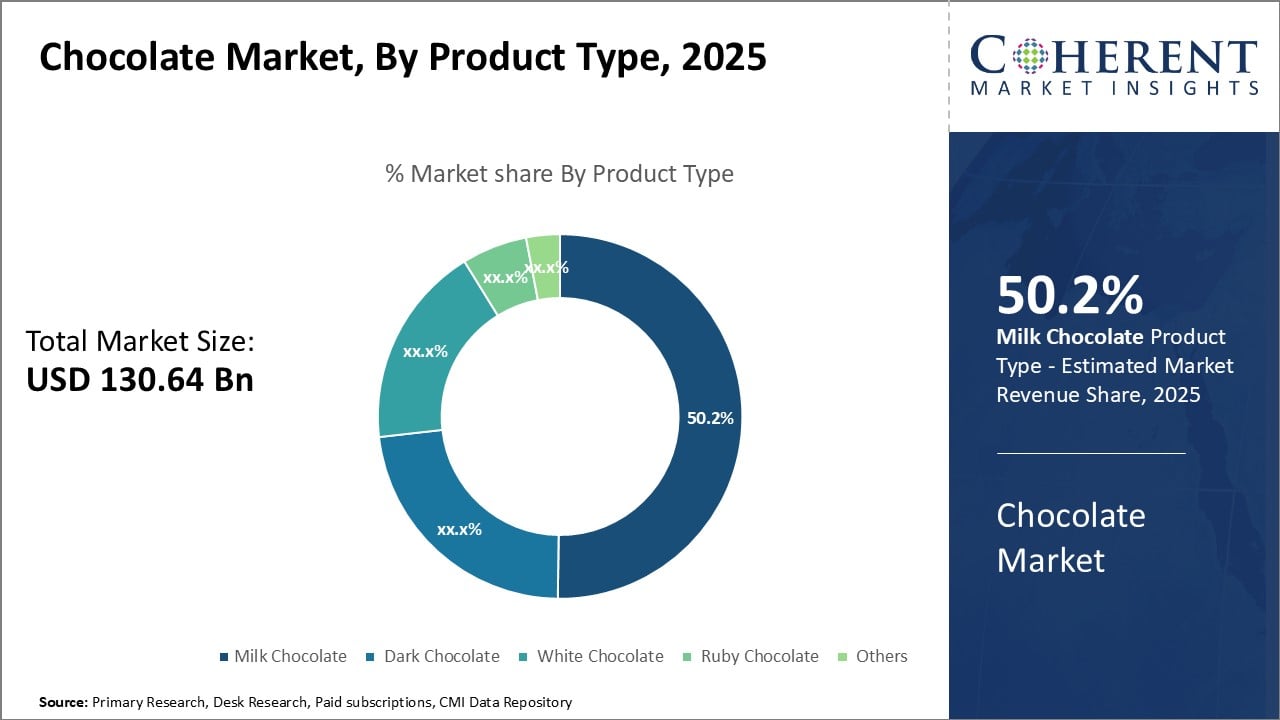
Chocolate Market Insights, By Product Type: Milk Chocolate Is on Tops Demand for Its Creamy Taste, Affordability, And Universal Appeal Across Age Groups
Within the product type segment, milk chocolate is expected to claim 51.2% share of the market in 2026, due to its broad consumer appeal, creamy texture, and sweet flavor that resonates across age groups. It’s more affordable than premium varieties, making it accessible for everyday indulgence. Its versatility in formats including, bars, truffles, and coated snacks, keeps it relevant across occasions. Strong visibility in supermarkets and convenience stores boosts impulse purchases, while emotional ties to comfort and gifting traditions enhance seasonal demand. Aggressive marketing by top brands and its presence in both mass and premium segments further solidify its dominance, making milk chocolate the most demanded product type globally in 2025.
For instance, in September 2025, Cadbury Dairy Milk introduced Milkinis, a new crème-filled chocolate bar, to the Indian market. Designed to offer a smooth and indulgent experience, Milkinis combines rich milk chocolate with a creamy center. The launch aims to expand Cadbury’s product portfolio and cater to evolving consumer preferences for novel and indulgent treats.
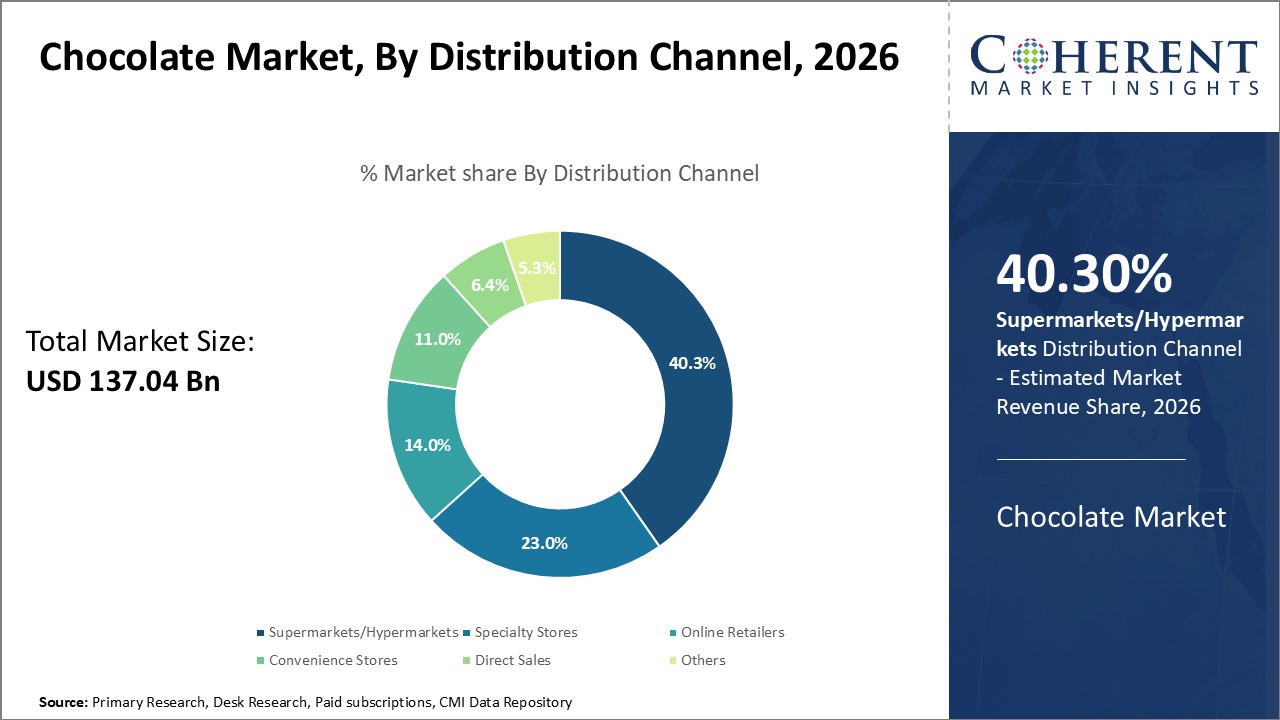
Chocolate Market Insights, By Distribution Channel: Supermarkets/Hypermarkets Lead Due To Their Wide Selection, Seasonal Promotions, And Convenience for Bulk and Impulse Buying
Within the distribution channel segment, supermarkets/hypermarkets segment is expected to claim 40.3% share of the market in 2026 due to their convenience, variety, and strategic retail presence. These stores offer a wide range of chocolate products, from budget to premium, catering to diverse consumer preferences. Their large shelf space allows for attractive displays and seasonal promotions, boosting impulse purchases. Consumers prefer these outlets for bulk buying and easy access during regular grocery trips. Additionally, supermarkets often run discounts and bundle offers, making them ideal for price-sensitive shoppers. Their high foot traffic and established brand partnerships make them key launchpads for new products, reinforcing their role as the leading distribution channel.
For instance, in July 2025, Cadbury Bournville launched new chocolate bars and introduced a bold packaging redesign to refresh its brand identity. The update aims to attract modern consumers while celebrating Bournville’s rich heritage. With innovative flavors and eye-catching visuals, the brand seeks to strengthen its premium positioning in the competitive chocolate market share.
Regional Insights
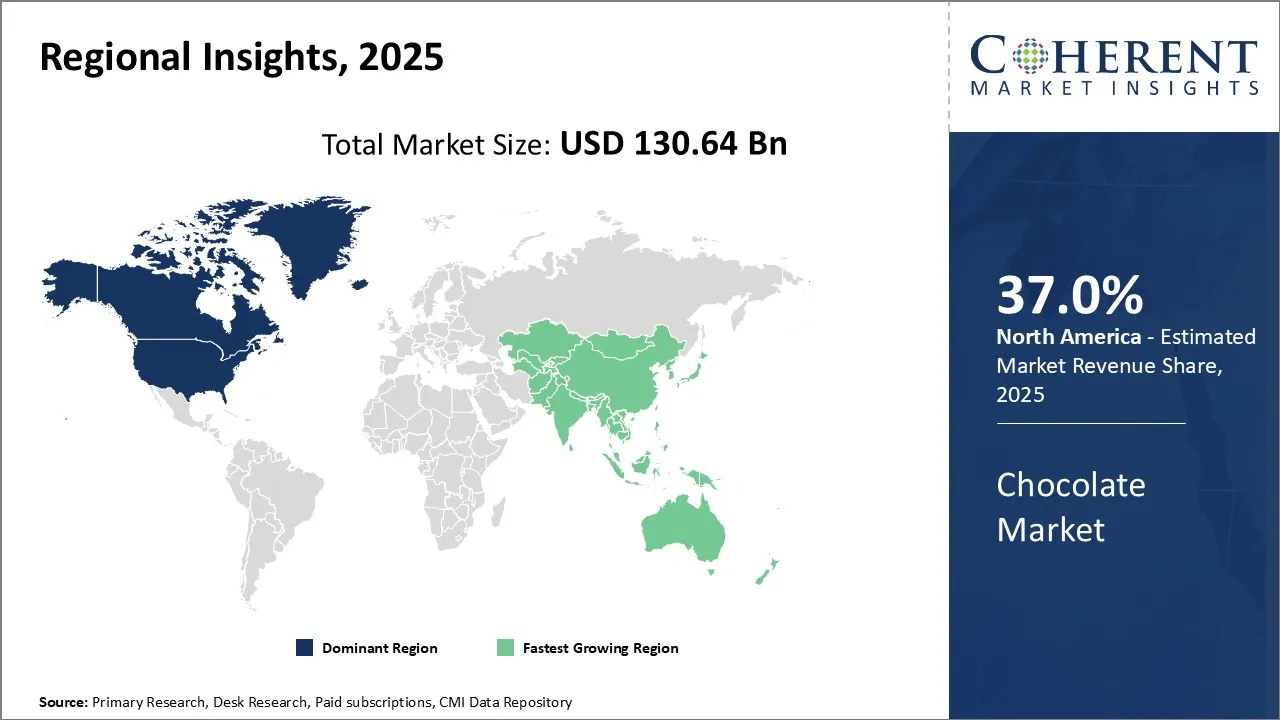
North America Chocolate Market Analysis & Trends
The North America region has emerged as the dominant market for chocolate over the past decade. The region is expected to hold 37.0% of the market share in 2026. With the U.S. as the single largest consumer market globally, chocolate manufacturers have established strong production and distribution presence in the region. Some of the key factors contributing to North America's prominence include the widespread popularity of chocolate confectionery products among consumers across demographics and a well-developed retail landscape catering to both impulse as well as planned chocolate purchases. Additionally, the regional market is characterized by aggressive marketing strategies launched by major brands to promote new product innovations as well as line extensions.
For instance, in September 2026, Ferrero North America unveiled a white chocolate version of its classic Crunch bar, just in time for Halloween. This fan-favorite twist combines creamy white chocolate with crispy rice, offering a festive treat for seasonal celebrations. The limited-edition release aims to delight consumers seeking new flavors during the holiday
Asia Pacific Chocolate Market Analysis & Trends
The Asia Pacific market, shows promising signs of becoming the fastest growing regional market for chocolate in the coming years. Factors such as rapid economic development, growing spending power of middle-income groups, and evolving dietary preferences of young, urban populations are driving significant interest in chocolate and Western snacks. Additionally, Southeast Asian countries like Indonesia, Thailand, and Vietnam present relatively untapped opportunities for international chocolate brands given currently low per capita consumption compared to more mature markets. Local manufacturers are also enhancing their capabilities to cater to the burgeoning domestic demand.
For instance, in January 2026, Muji introduced three new lime-fermented chocolate products crafted from Indonesian cacao. This innovative launch highlights Muji’s commitment to unique flavor profiles and sustainable sourcing. The products aim to offer a refined taste experience while promoting Indonesian cacao, appealing to health-conscious and adventurous chocolate lovers across Asia.
The U.S. Chocolate Market Trends
In 2026, the U.S. chocolate market sees strong demand driven by premiumization, health-conscious choices, and seasonal gifting. Consumers favor artisanal, low-sugar, and ethically sourced chocolates, while innovation in flavors and formats boosts appeal. Wide retail access and e-commerce growth further support rising consumption, making the U.S. a dominant force in global chocolate market share.
For instance, in October 2026, A.J. Chocolate House opened its second U.S. location in Houston, Texas, marking a significant step in its expansion strategy. Known for its handcrafted Belgian chocolates and luxurious offerings, the brand aims to bring premium chocolate experiences to more American consumers, reinforcing its presence in the growing artisanal chocolate market.
China Chocolate Market Trends
China’s chocolate market is growing due to rising disposable incomes, urbanization, and evolving consumer tastes. Demand is driven by premiumization, health-conscious choices, and gifting culture. Younger consumers favor artisanal and imported chocolates, while e-commerce and retail expansion boost accessibility. Strategic partnerships and local flavor innovations also contribute to increased chocolate market share in China.
For instance, in October 2024, Ferrero launched a full range of products under its Nutella brand in China, including spreads, biscuits, and B-ready bars. This strategic expansion aims to tap into China’s growing demand for premium chocolate and hazelnut products. The move strengthens Ferrero’s presence in the region and caters to evolving consumer tastes.
Market Report Scope
Chocolate Market Report Coverage
| Report Coverage | Details | ||
|---|---|---|---|
| Base Year: | 2025 | Market Size in 2026: | USD 137.04 Bn |
| Historical Data for: | 2020 To 2024 | Forecast Period: | 2026 To 2033 |
| Forecast Period 2026 to 2033 CAGR: | 4.9% | 2033 Value Projection: | USD 191.55 Bn |
| Geographies covered: |
| ||
| Segments covered: |
| ||
| Companies covered: | Mars, Mondelēz International, Blommer Chocolate Company, Scharffen Berger, MARICH CONFECTIONERY, Ghirardelli Chocolate Company, Theo Chocolate, Inc., Animas Chocolate Company, Bar & Cocoa, Whitakers Chocolates Ltd, Dark Forest Chocolate, Astorchocolate, Beacon Hill, PHILLIPSCHOCOLATES, ChocAllure, Chocolate Springs, Boston General Store., Loveland Chocolate Company., Uncover Colorado, and Moksha Chocolate | ||
| Growth Drivers: |
| ||
| Restraints & Challenges: |
| ||
Chocolate Market Drivers
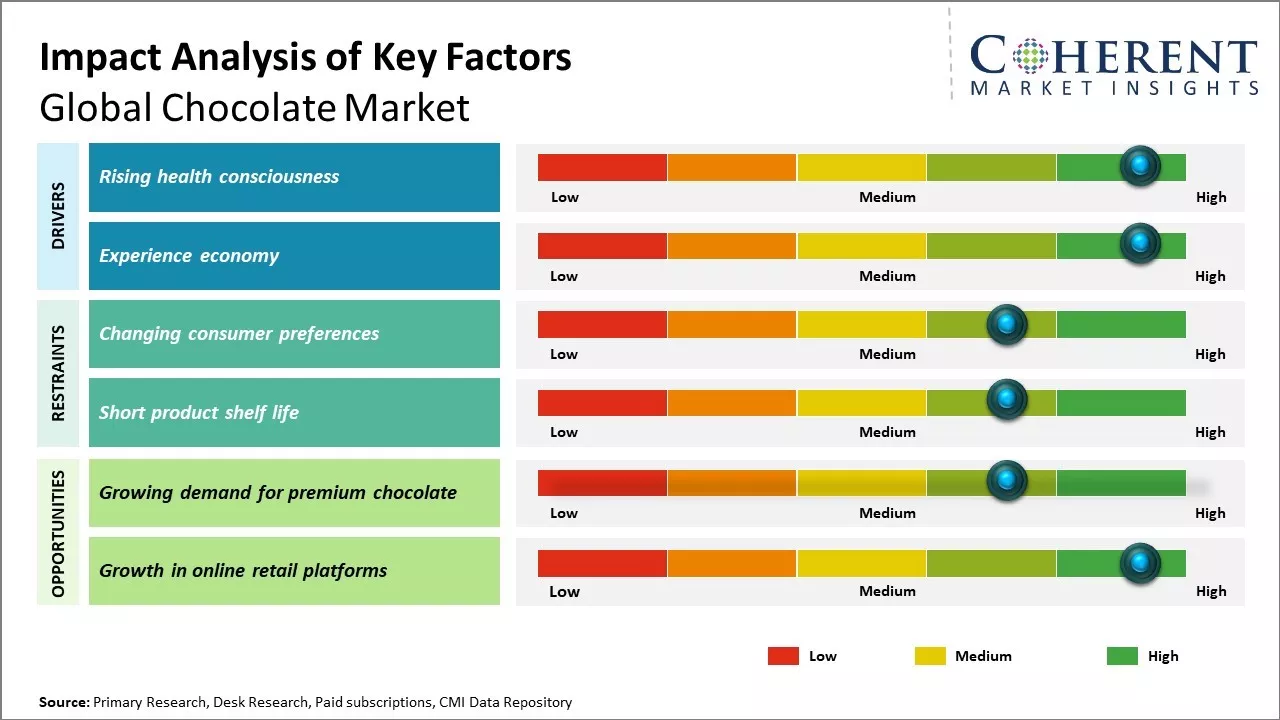
Rising Health Consciousness
Health consciousness is rising globally, contributing significantly to chocolate market growth in 2025. As obesity and diabetes rates climb, consumers are increasingly mindful of their diets and seek healthier indulgences. Chocolate, once seen as a high-sugar treat, is evolving to meet these preferences. Many now opt for low-sugar, low-calorie variants or those enriched with nuts and dried fruits for added nutrition. In response, brands are launching products with no added sugar and functional ingredients. This shift is driving steady demand for guilt-free chocolate that retains taste appeal. Health-focused offerings are expanding the consumer base and fueling overall chocolate market growth.
For instance, Oobli launched a new line of low-sugar chocolate bars, including Oobli Milk and dark chocolate varieties, made without artificial sweeteners. Unveiled at Bakery China, the products cater to health-conscious consumers seeking indulgence with reduced sugar
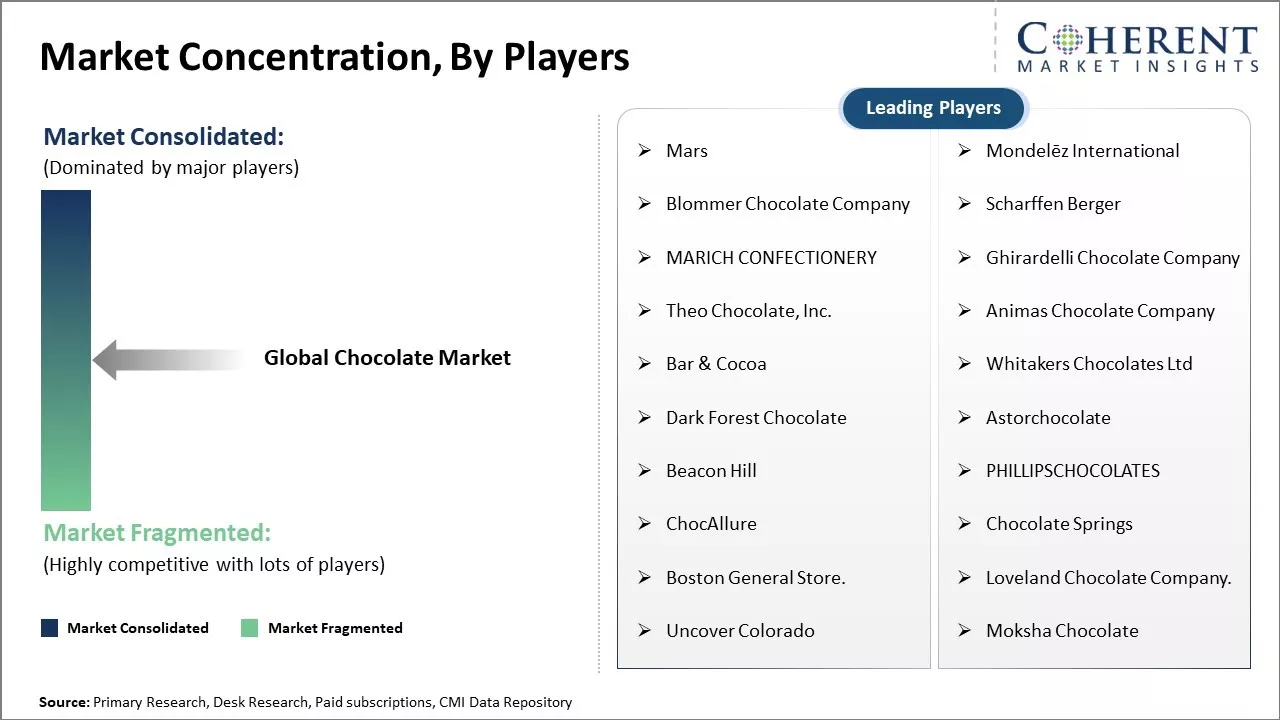
Market Concentration and Competitive Landscape
Experience economy
In 2025, the rise of the experience economy is reshaping consumer behavior and influencing chocolate market share. Consumers now seek more than just taste, they desire uniqueness, personalization, and multisensory engagement. This trend drives demand for artisanal, luxury, and premium chocolates that offer unusual flavors, elegant packaging, and compelling brand stories. Craft chocolate makers and experiential formats like chocolate cafes and home-based workshops are gaining popularity. People want to explore chocolate-making or try rare ingredients firsthand. This shift presents opportunities for brands to deepen consumer connections through immersive experiences, driving premiumization and expanding chocolate market share through experiential consumption.
Chocolate Market Opportunities
Growing demand for premium chocolate
The premium and artisanal chocolate segment is driving notable expansion in chocolate market share. While overall chocolate sales may stagnate due to evolving consumer preferences, demand for high-quality, ethically sourced chocolate is rising. Consumers are willing to pay more for niche flavors, unique recipes, and brands that share compelling stories about their origins. This segment offers higher margins and growing international appeal, especially for craft chocolate. Established brands are launching premium sub-lines to capture this opportunity. However, success depends on consistent quality, innovation, and the ability to scale without losing artisanal authenticity, making it vital for chocolate market share growth.
For instance, in June 2025, Colombia’s leading premium chocolate brand, Cacao Hunters, launched in the U.S. market. Known for its ethically sourced cacao and distinctive flavor profiles, the brand aims to introduce American consumers to high-quality, artisanal chocolate. This expansion reflects growing demand for premium, sustainable chocolate experiences in the U.S. specialty food sector.
Analyst Opinion (Expert Opinion)
The global chocolate market is undergoing a structural transformation driven by ethical sourcing, health-focused formulations, and premiumization. Consumers are no longer guided solely by indulgence but by values of sustainability and wellness. Over 60% of global buyers now prefer chocolates made with ethically sourced cocoa, according to Barry Callebaut’s 2024 Future of Indulgence report. This has prompted initiatives such as Nestlé’s “Income Accelerator” and Barry Callebaut’s “Cocoa Horizons,” making traceability and farmer welfare integral to brand identity.
Health consciousness is also redefining product portfolios. Dark chocolate accounts for nearly one-third of global product launches, as consumers seek lower sugar and higher antioxidant options. Brands like Lindt and Hu Chocolate are successfully merging wellness with luxury through organic and low-sugar variants.
Premiumization, meanwhile, is shaping consumption as an experience rather than a commodity. Artisanal and bean-to-bar makers such as Valrhona and Meiji are leveraging origin-specific sourcing and craftsmanship to attract discerning consumers. In Asia-Pacific, especially India and China, growing middle-class affluence is accelerating demand for premium imported chocolates
Speak to the analyst
Want personalized insights?
Take the findings above to one of our principal consultants, or have the report rebuilt around the segments, geographies and competitors you actually track.
Chocolate Industry News
- In October 2025, Fabelle, ITC’s luxury chocolate brand, launched a Kunafa-inspired chocolate, blending Middle Eastern dessert flavors with premium Indian craftsmanship. The creation features layers of crunchy kataifi, cream cheese mousse, and rich chocolate, offering a unique sensory experience. This innovation reflects Fabelle’s commitment to artisanal excellence and global flavor fusion.
- In June 2024, Nestlé unveiled a groundbreaking version of its iconic KitKat chocolate bar, made with fully traceable cocoa ingredients sourced directly from farming families that the company supports. This initiative is part of Nestlé's broader commitment to sustainability and ethical sourcing, aiming to enhance transparency in its supply chain while positively impacting cocoa farming communities.
- In May 2024, Hershey India expanded its chocolate portfolio with the introduction of HERSHEY’S Choco Delights. This new product line aims to cater to the growing demand for innovative and indulgent chocolate experiences among Indian consumers, reinforcing Hershey's commitment to delivering high-quality chocolate products.
- In June 2024, Nestlé launched an innovative new chocolate brand specifically designed for global travelers. This brand focuses on sustainably sourced ingredients, reflecting Nestlé's commitment to environmental responsibility and ethical sourcing practices. The initiative aims to provide travelers with delicious, high-quality chocolate that aligns with their values of sustainability and social responsibility.
Market Segmentation
- Product Type Insights (Revenue, USD Bn, 2026 - 2033)
- Milk Chocolate
- Dark Chocolate
- White Chocolate
- Ruby Chocolate
- Others
- Distribution Channel Insights (Revenue, USD Bn, 2026 - 2033)
- Supermarkets/Hypermarkets
- Specialty Stores
- Online Retailers
- Convenience Stores
- Direct Sales
- Others
- Regional Insights (Revenue, USD Bn, 2026 - 2033)
- North America
- U.S.
- Canada
- Latin America
- Brazil
- Argentina
- Mexico
- Rest of Latin America
- Europe
- Germany
- U.K.
- Spain
- France
- Italy
- Russia
- Rest of Europe
- Asia Pacific
- China
- India
- Japan
- Australia
- South Korea
- ASEAN
- Rest of Asia Pacific
- Middle East & Africa
- GCC Countries
- Israel
- Rest of Middle East & Africa
- Key Players Insights (Revenue, USD Bn, 2021 - 2033)
- Mars
- Mondelēz International
- Blommer Chocolate Company
- Scharffen Berger
- MARICH CONFECTIONERY
- Ghirardelli Chocolate Company
- Theo Chocolate, Inc.
- Animas Chocolate Company
- Bar & Cocoa
- Whitakers Chocolates Ltd
- Dark Forest Chocolate
- Astorchocolate
- Beacon Hill
- PHILLIPSCHOCOLATES
- ChocAllure
- Chocolate Springs
- Boston General Store.
- Loveland Chocolate Company.
- Uncover Colorado
- Moksha Chocolate
Sources
Primary Research Interviews from the following stakeholders
Stakeholders
- Interviews with chocolate manufacturers, confectionery processors, cocoa suppliers, packaging technologists, quality assurance managers, brand marketing heads, and retail category managers across leading global markets.
Specific stakeholders
- Procurement and sustainability managers at major chocolate producers (e.g., Mondelez International, Ferrero, Hershey, Nestlé, Mars, Lindt & Sprüngli)
- Sourcing heads and quality managers at cocoa cooperatives and processing plants in West Africa, Latin America, and Southeast Asia
- Brand and product innovation managers at premium and artisanal chocolate brands (e.g., Godiva, Ghirardelli, Guylian, Hotel Chocolat)
- Packaging engineers and technologists at flexible and rigid packaging suppliers catering to confectionery applications
- Category and merchandising managers at supermarkets and retail chains (e.g., Walmart, Carrefour, Tesco, Reliance Retail)
- Sustainability and fair-trade certification officials (e.g., Rainforest Alliance, Fairtrade International)
- Research and development experts from flavor and ingredient suppliers (e.g., Barry Callebaut, Cargill Cocoa & Chocolate, Olam Food Ingredients)
- E-commerce and digital marketing lead from online confectionery platforms
Databases
- International Cocoa Organization (ICCO) Statistics
- UN Comtrade Database
- Food and Agriculture Organization (FAO) Statistics
- World Trade Organization (WTO) Trade Data
- Eurostat – Food and Beverage Sector Data
- U.S. Department of Agriculture (USDA) – Cocoa and Confectionery Reports
- International Monetary Fund (IMF) Commodity Price Database
- Ministry of Commerce and Industry (India) – Food Processing Data
- National Confectioners Association (U.S.) – Industry Data Portal
- China Customs Statistics
Magazines
- Confectionery Production
- Food Business News
- Bakery & Snacks Magazine
- Food Navigator
- Candy Industry Magazine
- Dairy Reporter (Chocolate Ingredient Coverage)
- Packaging Strategies – Confectionery Section
- European Confectionery Review
Journals
- Journal of Food Science and Technology
- Food Research International (Elsevier)
- Journal of Agricultural and Food Chemistry
- International Journal of Food Microbiology
- Journal of Food Engineering
- Journal of Sensory Studies
- Food Quality and Preference
- Journal of Retailing and Consumer Services
Newspapers
- The Wall Street Journal – Food & Consumer Goods Section
- The Economic Times – FMCG and Retail Section
- The Hindu Business Line – Food Processing & Agribusiness
- Financial Times – Consumer Brands & Retail
- Nikkei Asia – Food Industry Supply Chain
- South China Morning Post – Agribusiness and Commodity Markets
Associations
- International Cocoa Organization (ICCO)
- National Confectioners Association (NCA)
- European Cocoa Association (ECA)
- World Cocoa Foundation (WCF)
- Federation of Cocoa Commerce (FCC)
- International Food & Beverage Alliance (IFBA)
- All India Confectionery Manufacturers Association (AICMA)
- American Association of Candy Technologists (AACT)
Public Domain Sources
- Ministry of Food Processing Industries (Government of India)
- Food Safety and Standards Authority of India (FSSAI)
- European Food Safety Authority (EFSA)
- U.S. Food and Drug Administration (FDA) – Chocolate and Confectionery Regulations
- Department for Environment, Food & Rural Affairs (DEFRA), U.K.
- National Confectioners Association (NCA) Annual Reports
- Reserve Bank of India (RBI) – Food Sector Credit and Trade Reports
- UN Development Programme (UNDP) – Sustainable Cocoa Initiatives
- World Bank – Agribusiness and Value Chain Reports
Proprietary Elements
- CMI Data Analytics Tool
- Proprietary CMI Existing Repository of information for last 8 years
Get access to 250+ pages report
Every segment, forecast, competitor profile and data table behind the analysis above — available for instant download.
- ESOMAR Member
- ISO 9001:2015 Certified
- D-U-N-S Registered
- GDPR & CCPA Compliant
Missing comfort of reading report in your local language? Find your preferred language:
Transform your Strategy with Exclusive Trending Reports
Frequently Asked Questions
The Chocolate Market is estimated to be valued at USD 137.04 Bn in 2026, and is expected to reach USD 191.55 Bn by 2033.
The CAGR of the Chocolate Market is projected to be 4.9% from 2026 to 2033.
Rising health consciousness and experience economy are the major factors driving the growth of the global chocolate market.
Changing consumer preferences and short product shelf life are the major factors hampering the growth of the global chocolate market.
In terms of product type, milk chocolate is estimated to dominate the market revenue share in 2026.
Mars, Mondelēz International, Blommer Chocolate Company, Scharffen Berger, MARICH CONFECTIONERY, Ghirardelli Chocolate Company, Theo Chocolate, Inc., Animas Chocolate Company, Bar & Cocoa, Whitakers Chocolates Ltd, Dark Forest Chocolate, Astorchocolate, Beacon Hill, PHILLIPSCHOCOLATES, ChocAllure, Chocolate Springs, Boston General Store., Loveland Chocolate Company., Uncover Colorado, and Moksha Chocolate are the major players.
North America is expected to lead the global chocolate market.