

Aquafeed Market Size and Share Analysis – Growth Trends and Forecasts (2026–2033)
The global aquafeed market size is expected to grow at a CAGR of 5.2% from USD 53.8 Bn in 2026 to around USD 76.82 Bn by 2033. The key growth drivers include growing global seafood consumption, rising commercial aquaculture production, growing demand for premium and nutritionally balanced aquafeed, and increased adoption of sustainable feed ingredients. The OECD-FAO Agricultural Outlook 2026-2035 projects global consumption of aquatic animal foods to grow by 12% to 194 million tons by 2035, with aquaculture production projected to grow by 18% to 121 million tons.
Key Takeaways
- The pellet segment is estimated to hold the largest share of the global aquafeed market in 2026. Growth in this segment is attributed to the ease of storage and transportation, standardized nutrient delivery, efficient handling of feed and its widespread acceptance in commercial aquaculture. According to the State of World Fisheries and Aquaculture 2026 of FAO, global production of aquatic animals from aquaculture totaled 103 million tons in 2024, indicating the growing aquaculture production base supporting the demand for formulated feed.
- Fishes segment is estimated to dominate the market with an estimated share of 63.5% in 2026. Growth is supported by expanding farming of tilapia, carp, salmon and other species of commercial importance, as well as rising demand for nutritionally optimized feeds. According to the OECD–FAO Agricultural Outlook 2026–2035, aquaculture is projected to supply 62% of aquatic animal products for human consumption in 2035, up from 59% in the 2023–2025 base period.
- The soybean meal segment is expected to hold 30.0% share of the market by 2026. The protein content, established global supply chain, and the increasing use of plant-based ingredients to partially substitute marine-derived proteins support demand. The OECD–FAO Agricultural Outlook 2026–2035 projects that oilseed meal use in aquaculture feed will rise by 26% to 11 million tons by 2035, driven by growing demand for plant-based feed proteins.
- The direct distribution channel is projected to hold 65.0% of the market in 2026, provisionally. This is backed by demand from bulk buying arrangements and direct supply contracts between feed producers and large aquaculture farms, improved coordination in procurement and customized feed formulations. The FAO’s 2026 SOFIA report estimated that international trade in aquatic animal products was around USD 184 Bn, demonstrating that aquatic food supply chains are commercially large in scale and increasingly interconnected.
- Asia Pacific is expected to dominate the global aquafeed market with an estimated share of approximately 64.0% in 2026. In China, India, Vietnam, Indonesia and other Asian countries, large-scale aquaculture operations, rising seafood consumption and investments in feed production are fueling growth in the region. According to the OECD–FAO Agricultural Outlook 2026–2035, Asia is projected to account for 75% of apparent global consumption of aquatic animal foods by 2035, with China making up about 39% of the global total.
Market Drivers
Rapid Expansion of Shrimp Aquaculture in India Is Strengthening Demand for Specialized Aquafeed
The aquafeed market is growing due to export-oriented shrimp farming, particularly in India and other major aquaculture producing countries in Asia. Demand for high-protein formulated feeds, disease-management nutrition and feeds designed to improve survival rates and harvest yields is being driven by increasing commercial cultivation of Pacific whiteleg shrimp and black tiger shrimp.
According to the Marine Products Export Development Authority (MPEDA), Government of India, Pacific whiteleg shrimp (Litopenaeus vannamei) production grew from 11,86,266 metric tons in FY 2024-25 to 13,04,779 metric tons in FY 2025-26, registering nearly 9.99% year-on-year growth. Black tiger shrimp (Penaeus monodon) production in FY 2025–26 was 69,072 metric tons, showing the continued commercial importance of high-value shrimp species.
In June 2026, India’s Ministry of Commerce and Industry also stated that frozen shrimp exports in FY 2025-26 were 792,647 metric tons, representing 66.52% of India’s seafood export revenues in U.S. dollar terms. This strong export orientation has encouraged shrimp farmers to invest in reliable high quality feed formulations to maintain production consistency and competitiveness in the international markets.
Increasing Adoption of Sustainable and Alternative Feed Ingredients Is Supporting Aquafeed Market Growth
The global aquafeed market is on the rise due to the increasing adoption of sustainable feed ingredients such as plant-based proteins, fish processing by-products, and alternative marine ingredients. Fishmeal derived from whole fish is a source that feed manufacturers are trying to reduce their reliance on, and to create nutritionally balanced formulations that help fish health and production efficiency.
According to the Marine Ingredients Organization (IFFO), in its industry update for March 2026, an estimated 42% of the raw materials used in the global production of marine ingredients are sourced from fish-processing by-products. These are heads, frames, offal, skins and other processing residues which can be made into fishmeal and fish oil.
Current Events and Their Impact on the Aquafeed Market
Current Event | Description and its Impact |
India's Union Budget Expands Fisheries and Aquaculture Development Funding (February 2026) |
|
Vietnam Implements Updated National Aquafeed Safety Regulations (May 2026) |
|
- Current Industry Events of 2026
- Market Size Estimation
- Regional Breakdown
- Competitive Landscape
- Customer Intelligence
- Segmental Analysis
- Pricing Analysis
- Key Market Drivers, Challenges & Future Trends
- Customized Insights Section
Segmental Insights
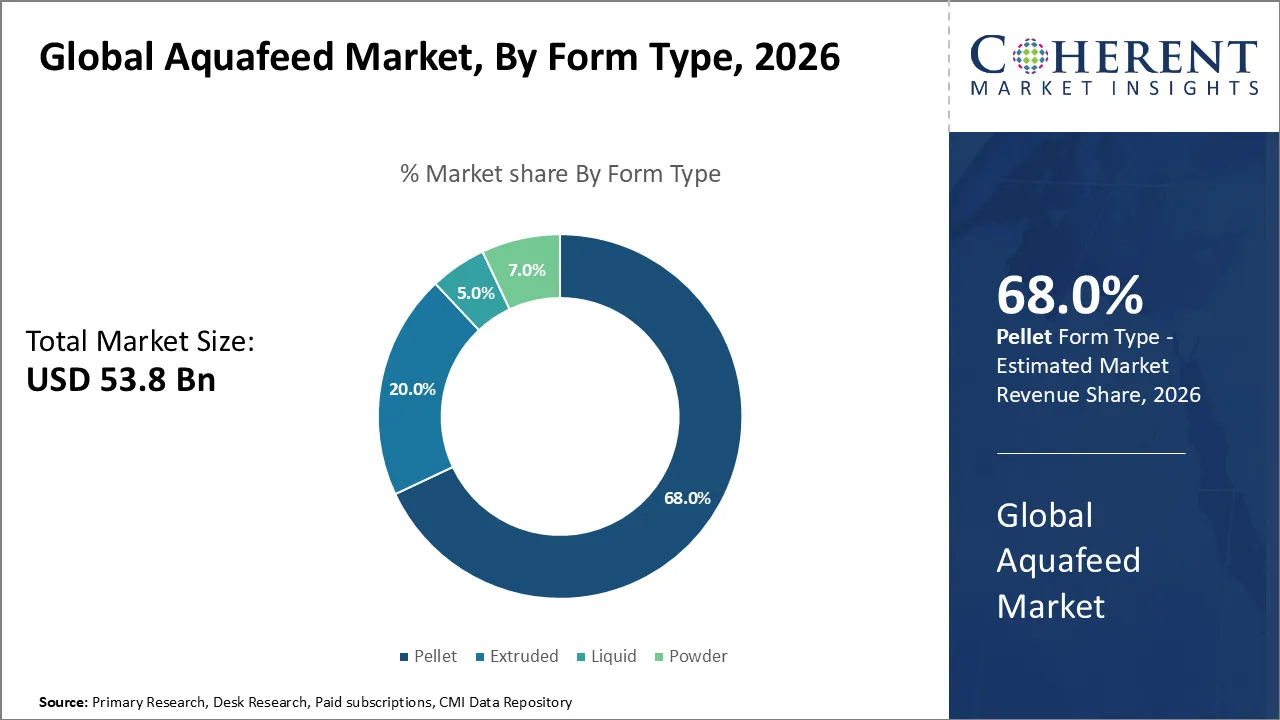
Why Is the Pellet Segment Acquiring the Largest Market Share?
Based on form type, the pellet segment is predicted to hold the largest share of 68.0% of the global aquafeed market in 2026. The segment is driven by consistent nutrient delivery, easy storage and transportation, improved feeding efficiency and high commercial fish and shrimp farming application. Pelleted aquafeed allows the producer to control the size, nutritional make-up and sinking properties of the feed to meet the feeding needs of a specific species.
According to Alltech’s 2026 Agri-Food Outlook report, global aquafeed production rose by 4.7% to 55.47 million metric tons in 2025, an increase of approximately 2.5 million tons year-on-year. Such growth demonstrates the increasing commercial feed production base that supports demand for processed aquafeed including pelletized formulations.
Why Is the Fishes Segment Leading the Global Aquafeed Market?
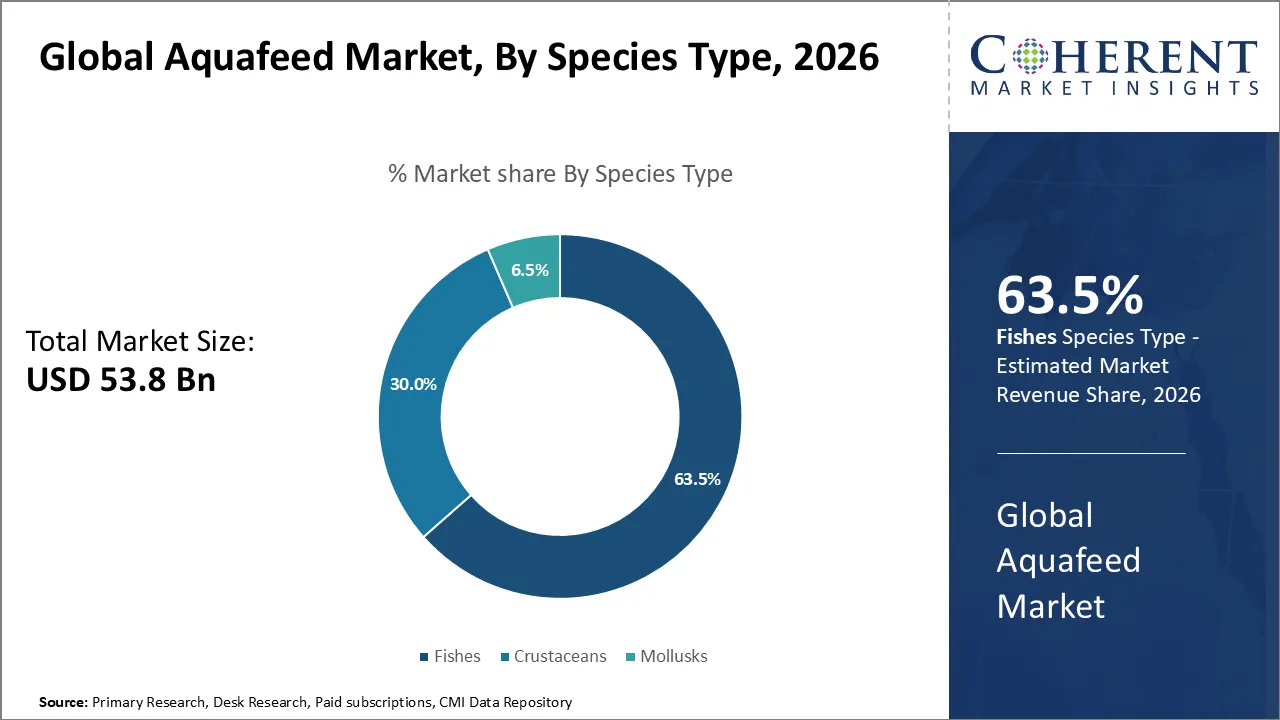
Based on species type, the fishes segment is anticipated to lead the global aquafeed market with a projected share of 63.5% in 2026. The large-scale cultivation of carp, tilapia, salmon, catfish and other commercially important fish species supports its leading position. The increased use of intensive farming systems, floating feeds and species-specific nutritional formulations is driving the increased use of commercially manufactured aquafeed.
According to the FAO State of World Fisheries and Aquaculture 2026, global aquaculture production including algae was valued at about USD 391 billion in 2024, with total production amounting to 141 million tons. The large economic scale of aquaculture indicates the importance of a reliable supply of feed to support commercial fish farming operations.
Why Is Soybean Meal Gaining a Significant Share in the Aquafeed Market?
On the basis of ingredient type, the soybean meal segment is projected to account for a tentative share of 30.0% of the global aquafeed market in 2026. The segment’s growth is propelled by high protein content, cost competitiveness, wide availability, and increasing substitution for fishmeal in aquaculture feed formulations. Soybean meal is more commonly used in diets for commercial species such as tilapia, carp and shrimp, but the inclusion levels vary by species, processing methods and nutritional requirements.
According to the OECD–FAO Agricultural Outlook 2026–2035, world consumption of protein meal is projected to grow at roughly 1.0% per year up to 2035. Soybean processing produces approximately 80% protein meal by weight, versus 50–60% for other major oilseeds. These figures reinforce the traditional role of soybeans as a source of feed protein and help underpin their importance in aquafeed ingredient supply chains.
The IFFO industry update for October 2026 stated that cumulative fishmeal production in its monitored countries was 45% behind the corresponding 2025 period. As supply disruptions arise, aquafeed manufacturers may look to alternative protein sources such as suitably processed soybean meal, while maintaining nutritional performance.
Why Is the Direct Distribution Channel Holding a Major Market Share?
On the basis of distribution channel, the direct distribution segment is provisionally estimated to hold 65.0% of the global aquafeed market in 2026. Demand for direct distribution is supported by the increasing scale of commercial aquaculture operations, long-term manufacturer–farmer supply agreements, customized feed formulations, and technical support services. Direct procurement can help large aquaculture producers improve supply reliability, coordinate feed purchases with farming cycles, and reduce dependence on intermediaries.
According to PT Japfa Comfeed Indonesia's May 2026 offering circular, the company operated five aquafeed mills in Indonesia as of December 31, 2025, producing fish and shrimp feeds for sale directly to farmers as well as through independent distributors. The company reported that approximately 85% of its aquafeed production consisted of fish feed, while shrimp feed accounted for the remaining 15%.
Additionally, FEED ONE's 2025 Integrated Report highlighted improvements in feed distribution and inventory management, reporting a reduction in average inventory turnover time by 2.5 days to 16.2 days. These operational improvements illustrate the growing importance of supply-chain efficiency, inventory planning, and coordinated sales operations in feed manufacturing.
Aquafeed Market Trends
- The rising adoption of sustainable and alternative protein ingredients is encouraging aquafeed manufacturers to incorporate plant-based proteins, algae, insect meal, and marine processing by-products into feed formulations. According to the OECD–FAO Agricultural Outlook 2026–2035, fish-processing by-products are projected to contribute 30% of global fishmeal production by 2035, compared with 25% during the 2023–2025 base period, highlighting the growing focus on resource-efficient aquafeed ingredients.
- The increasing emphasis on cost-effective feed formulations and raw material optimization is encouraging producers to diversify protein sources and improve ingredient procurement strategies. According to the OECD–FAO Agricultural Outlook 2026–2035, real fishmeal prices are projected to decline by approximately 10% by 2035, while real fish oil prices are expected to decrease by 16%, reflecting changing supply-demand conditions and competition from alternative feed ingredients. These developments are expected to influence aquafeed formulation economics and purchasing strategies.
- Increasing adoption of precision feeding technologies and advanced aquaculture nutrition is resulting in improved feed conversion efficiency, reduced feed wastage and optimized aquatic animal growth. The EU Aquaculture Assistance Mechanism, a program run by the European Commission, states that farmed fish diets typically need 35-50% highly digestible protein, depending on species and nutritional requirements. This underscores the significance of accurate feed formulation and nutritional management in intensive aquaculture systems.
Regional Insights
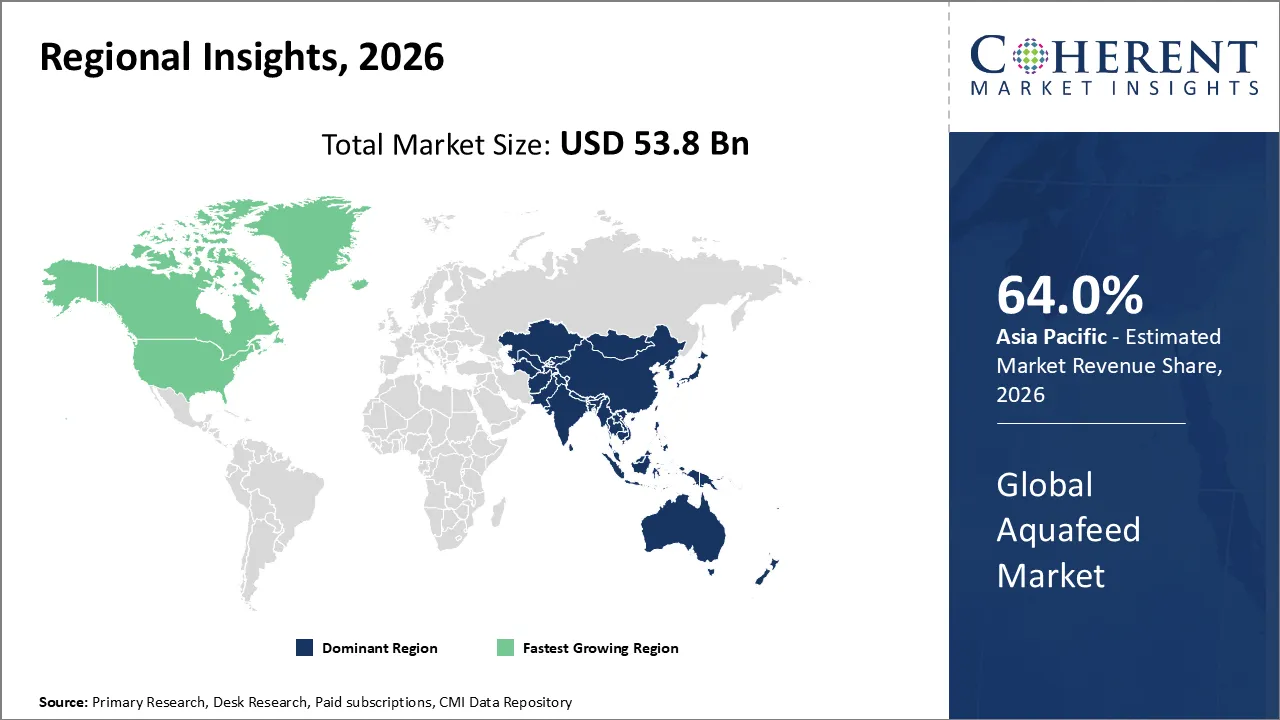
Asia Pacific Dominates Owing to Large-Scale Aquaculture Production and Expanding Commercial Feed Manufacturing
The Asia Pacific region is projected to account for about 64.0% share of the global aquafeed market by 2026. The region’s dominance is propelled by large fish and shrimp farming operations, growing seafood consumption, accelerating commercialization of aquaculture, and the increasing capacity of aquafeed manufacturing in China, India, Vietnam, Indonesia and Thailand.
According to Alltech’s 2026 Agri-Food Outlook, in 2025, Asia produced 38.02 million metric tons of aquafeed, which represents about 68.5% of the world’s aquafeed production by volume. Production in the region increased 2.4% year on year, or some 894,000 metric tons. This indicates the large base of aquafeed manufacturing in Asia and its importance in the nutrition of aquatic animals worldwide.
According to the same report, aquafeed production in India increased by approximately 5.5% in 2025 to 2.89 million metric tons as inland aquaculture was commercialized and the use of manufactured feeds increased. Such developments are likely to fuel the demand of nutritionally optimized aquafeed formulations in the region.
North America Aquafeed Market Trends
North America is expected to see growth in the aquafeed market during the forecast period, driven by increasing adoption of precision aquaculture technologies, demand for high-performance fish feeds, development of land-based recirculating aquaculture systems, and investments in sustainable feed ingredients. The Business Research Company identifies North America as the fastest-growing regional market, although other industry forecasts identify Asia Pacific as the fastest-growing region.
According to Statistics Canada, in its November 28, 2025 release, Canadian farmed finfish production increased by 11.6% year over year to 122,280 metric tonnes in 2024. The production value increased by 8.4% to approximately CAD 1.2 billion, indicating strengthening commercial fish farming activity and supporting demand for specialized aquafeed formulations.
Additionally, according to the Canadian Aquaculture Industry Alliance, Canada's aquaculture sector generated approximately CAD 2.27 billion in GDP and CAD 6.0 billion in economic activity in 2024. These figures highlight the industry's established economic base and potential for higher-value feed solutions, including precision nutrition, sustainable protein formulations, and specialized salmonid feeds.
Expansion of Commercial Aquaculture and Demand for Specialized Nutrition Are Supporting the U.S. Aquafeed Market
The U.S. aquafeed market is witnessing growing demand for specialized fish and shrimp feed formulations, supported by commercial aquaculture operations, technological improvements in aquatic animal nutrition, and increasing focus on domestic seafood production. The adoption of high-performance pelletized feeds, sustainable protein ingredients, and precision feeding practices is creating opportunities for aquafeed manufacturers to improve nutritional efficiency and support intensive aquaculture farming.
According to the National Oceanic and Atmospheric Administration (NOAA), Fisheries of the United States 2024 report, released in 2026, U.S. marine and freshwater aquaculture producers generated approximately 561 million pounds of farmed seafood valued at USD 1.3 billion in 2024. Aquaculture accounted for approximately 26% of the value of U.S. seafood products, reflecting the commercial importance of high-value farmed aquatic species and supporting demand for specialized feed formulations.
China Aquafeed Market Trends
China is expected to remain a major growth market for aquafeed during the forecast period, supported by its extensive freshwater and marine aquaculture operations, expanding adoption of industrially manufactured feeds, and government initiatives encouraging sustainable aquaculture development. Increasing focus on feed conversion efficiency, high-quality aquatic nutrition, and environmentally responsible farming practices is encouraging manufacturers to develop advanced feed formulations for carp, tilapia, shrimp, and other commercially cultivated species.
According to China's Ministry of Agriculture and Rural Affairs, in July 2026, the country's freshwater aquaculture production reached approximately 36.75 million tonnes in 2025, while marine aquaculture production totaled 26.51 million tonnes. The same report indicated that cultivated fish production reached approximately 31.74 million tonnes, highlighting the significant production base for commercial fish feeds.
Who are the Major Companies in Aquafeed Industry
Some of the major key players in Aquafeed Market are Archer-Daniels-Midland Company, Land O'Lakes, Inc., Nutreco N.V., Cargill, Incorporated, De Heus Animal Nutrition BV, Biomin Holding GmbH, Alltech Inc., Sonac Burgum B.V., Zeigler Bros., Inc. (ZBI), BENEO GmbH, Koninklijke DSM N.V., and Nutriad International NV.
Key News
- In September 2026, Archer-Daniels-Midland Company (ADM) inaugurated its Tianjin Early Nutrition Aqua Feed Facility in China, with an annual design capacity of approximately 5,000 metric tonnes. The facility manufactures specialized hatchery and nursery feeds for fish and shrimp, including MeM and MeM Prime, strengthening the company's aquaculture nutrition capabilities across Asia Pacific.
- In October 2026, Nutreco's aquaculture nutrition business, Skretting, announced three specialized shrimp nutrition solutions, InVita, Ignis, and Optiline Starters, under its LifeStart innovation portfolio. The products are designed to support shrimp nutrition during larval, nursery, and early grow-out stages, improving nutritional management and farming performance.
Market Report Scope
Aquafeed Market Report Coverage
Report Coverage | Details | ||
Base Year: | 2025 | Market Size in 2026: | USD 53.8 Bn |
Historical Data for: | 2020 to 2024 | Forecast Period: | 2026 to 2033 |
CAGR: | 5.2% | 2033 Value Projection: | USD 76.82 Bn |
Geographies covered: |
| ||
Segments covered: |
| ||
Companies covered: | Archer-Daniels-Midland Company, Land O'Lakes, Inc., Nutreco N.V., Cargill, Incorporated, De Heus Animal Nutrition BV, Biomin Holding GmbH, Alltech Inc., Sonac Burgum B.V., Zeigler Bros., Inc. (ZBI), BENEO GmbH, Koninklijke DSM N.V., and Nutriad International NV. | ||
Growth Drivers: |
| ||
Restraints & Challenges: |
| ||
Analyst Opinion
- The global aquafeed market is expected to witness steady growth with increasing commercialization of aquaculture, growing seafood consumption and higher adoption of nutritionally balanced feed formulations. According to Alltech’s 2026 Agri-Food Outlook, global aquafeed production rose by 4.7% in 2025 to 55.47 million metric tons, or 2.47 million tons more than in 2024, the report said in April 2026. The growth underscores the increasing demand for commercially produced aquafeed, and opportunities for feed producers to increase production capacity and distribution networks.
- The rising transition to intensive and technology-based aquaculture farming is expected to increase the demand for high-performance, species-specific aquafeed products. In June 2026, the FAO State of World Fisheries and Aquaculture 2026 report was released that showed that in 2024 aquaculture contributed 53% of global aquatic animal production, surpassing capture fisheries. The increasing contribution of farmed aquatic species to global seafood supplies is expected to encourage investments in precision feeding, improved feed conversion efficiency, and specialized nutritional solutions.
- Sustainable feed ingredient innovation is expected to become an important competitive factor in the aquafeed market as manufacturers seek to reduce reliance on conventional marine proteins and optimize feed formulation costs. According to the OECD–FAO Agricultural Outlook 2026–2035, published in June 2026, global fishmeal consumption in aquaculture is projected to increase by 20% to 5.3 million tonnes by 2035, while oilseed meal utilization is forecast to grow by 26% to 11 million tonnes. These developments indicate growing opportunities for plant-based proteins, alternative ingredients, and sustainable feed formulations while maintaining aquatic animal growth and nutritional performance.
Speak to the analyst
Want personalized insights?
Take the findings above to one of our principal consultants, or have the report rebuilt around the segments, geographies and competitors you actually track.
Market Segmentation
- By Form Type (Revenue, USD Bn, 2021-2033)
- Extruded
- Pellet
- Liquid
- Powder
- By Species Type (Revenue, USD Bn, 2021-2033)
- Fishes
- Crustaceans
- Mollusks
- By Ingredient Type (Revenue, USD Bn, 2021-2033)
- Fish Meal
- Corn Gluten Meal
- Soybean Meal
- Wheat Meal
- Fish Oil
- Additives
- By Distribution Channel (Revenue, USD Bn, 2021-2033)
- Direct
- Indirect
- By Region (Revenue, USD Bn, 2021-2033)
- North America
- U.S.
- Canada
- Latin America
- Brazil
- Mexico
- Argentina
- Rest of Latin America
- Europe
- Germany
- U.K.
- France
- Italy
- Spain
- Russia
- Rest of Europe
- Asia Pacific
- China
- India
- Japan
- Australia
- South Korea
- ASEAN
- Rest of Asia Pacific
- Middle East
- GCC
- Israel
- Rest of Middle East
- Africa
- South Africa
- Central Africa
- North Africa
- North America
Sources
Primary Research Interviews
- Aquafeed manufacturers and formulation specialists
- Fishmeal, fish oil, and plant-based protein ingredient suppliers
- Aquaculture nutritionists and aquatic feed scientists
- R&D heads from aquafeed manufacturing companies
- Commercial fish and shrimp farming operators
- Aquafeed distributors and supply chain managers
- Procurement managers from commercial aquaculture companies
- Key opinion leaders (KOLs) in aquaculture nutrition and sustainable feed development
Databases
- Food and Agriculture Organization of the United Nations (FAO) – FishStatJ
- Organisation for Economic Co-operation and Development (OECD)
- World Bank – World Development Indicators
- United Nations Comtrade Database (UN Comtrade)
- International Trade Centre (ITC) – Trade Map
- National Oceanic and Atmospheric Administration (NOAA) – Fisheries Statistics
- U.S. Department of Agriculture (USDA) – National Agricultural Statistics Service
- European Commission – Eurostat Fisheries and Aquaculture Statistics
Magazines
- Aquafeed: Advances in Processing & Formulation
- International Aquafeed
- Aquaculture Magazine
- Hatchery International
- Global Seafood Alliance – Responsible Seafood Advocate
- Feed & Additive Magazine
Journals
- Aquaculture
- Aquaculture Reports
- Aquaculture Nutrition
- Reviews in Aquaculture
- Aquaculture International
- Journal of the World Aquaculture Society
- Fish & Shellfish Immunology
- Animal Feed Science and Technology
Newspapers
- Financial Times
- The Economic Times
- The Hindu BusinessLine
- Reuters
- The Guardian
- The Wall Street Journal
Associations
- World Aquaculture Society (WAS)
- Global Seafood Alliance (GSA)
- IFFO – The Marine Ingredients Organisation
- Aquaculture Stewardship Council (ASC)
- European Aquaculture Society (EAS)
- American Feed Industry Association (AFIA)
- European Feed Manufacturers' Federation (FEFAC)
- Marine Products Export Development Authority (MPEDA), India
Public Domain Sources
- Company Annual Reports and Investor Presentations
- FAO Fisheries and Aquaculture Statistical Publications
- OECD–FAO Agricultural Outlook Reports
- Government Fisheries and Aquaculture Development Reports
- National Aquaculture Production and Seafood Trade Statistics
- Publicly Available Aquafeed Manufacturing and Capacity Expansion Announcements
- Aquafeed Ingredient Pricing and Import–Export Statistics
- Regulatory Publications on Aquafeed Safety, Quality, and Sustainability
- University Research Publications on Aquatic Animal Nutrition
- Aquaculture Feed Certification and Sustainability Standards
Proprietary Elements
- CMI Data Analytics Tool
- Proprietary CMI Existing Repository of Information for the Last 10 Years
Get access to 250+ pages report
Every segment, forecast, competitor profile and data table behind the analysis above — available for instant download.
- ESOMAR Member
- ISO 9001:2015 Certified
- D-U-N-S Registered
- GDPR & CCPA Compliant
Missing comfort of reading report in your local language? Find your preferred language:
Transform your Strategy with Exclusive Trending Reports
Frequently Asked Questions
Asia Pacific is expected to account for the largest market share in the global aquafeed market, with an estimated 64.0% share in 2026, supported by extensive fish and shrimp farming operations in China, India, Vietnam, and Indonesia.
Aquafeed is a specially formulated feed designed to provide essential nutrients, including proteins, fats, vitamins, and minerals, to farmed aquatic species such as fish, shrimp, and mollusks.
The commonly used ingredients include fishmeal, soybean meal, corn gluten meal, wheat meal, fish oil, and nutritional additives that support aquatic animal growth, health, and feed conversion efficiency.
Aquafeed is extensively used in commercial fish farming, shrimp aquaculture, mollusk cultivation, and intensive aquaculture systems to support healthy growth, improve nutritional efficiency, and optimize production yields.
The fishes segment is estimated to dominate the global aquafeed market with approximately 63.5% share in 2026, supported by large-scale cultivation of carp, tilapia, salmon, and catfish.
The global aquafeed market is projected to grow from USD 53.8 billion in 2026 to approximately USD 76.82 billion by 2033, exhibiting a CAGR of approximately 5.2%. Increasing seafood consumption, expansion of commercial aquaculture, advancements in feed formulation, and adoption of sustainable feed ingredients are expected to support market growth.