

Acai Berry Market Size and Forecast — 2026-2033
The Global Acai Berry Market size is estimated to be valued at USD 1.32 billion in 2026 and is expected to reach USD 2.52 billion by 2033, exhibiting a compound annual growth rate (CAGR) of 9.7% from 2026 to 2033.
Overview
Açaí berry products are derived from the fruit of the Euterpe oleracea palm, native to the Amazon region, and are widely recognized for their high antioxidant content, omega fatty acids, and essential nutrients. These products are available in various forms, including frozen pulp, powders, juices, dietary supplements, and cosmetic formulations. Processing technologies focus on preserving the fruit’s delicate bioactive compounds through freeze-drying, cold pressing, and spray drying.
The growing demand for natural superfoods has driven innovation in ready-to-drink beverages, smoothie blends, and functional snacks infused with açaí extracts. Additionally, the fruit’s anthocyanin-rich composition has made it a sought-after ingredient in anti-aging skincare products. Premium-grade sourcing, organic certification, and sustainable harvesting practices remain central to product differentiation and consumer appeal.
Key Takeaways
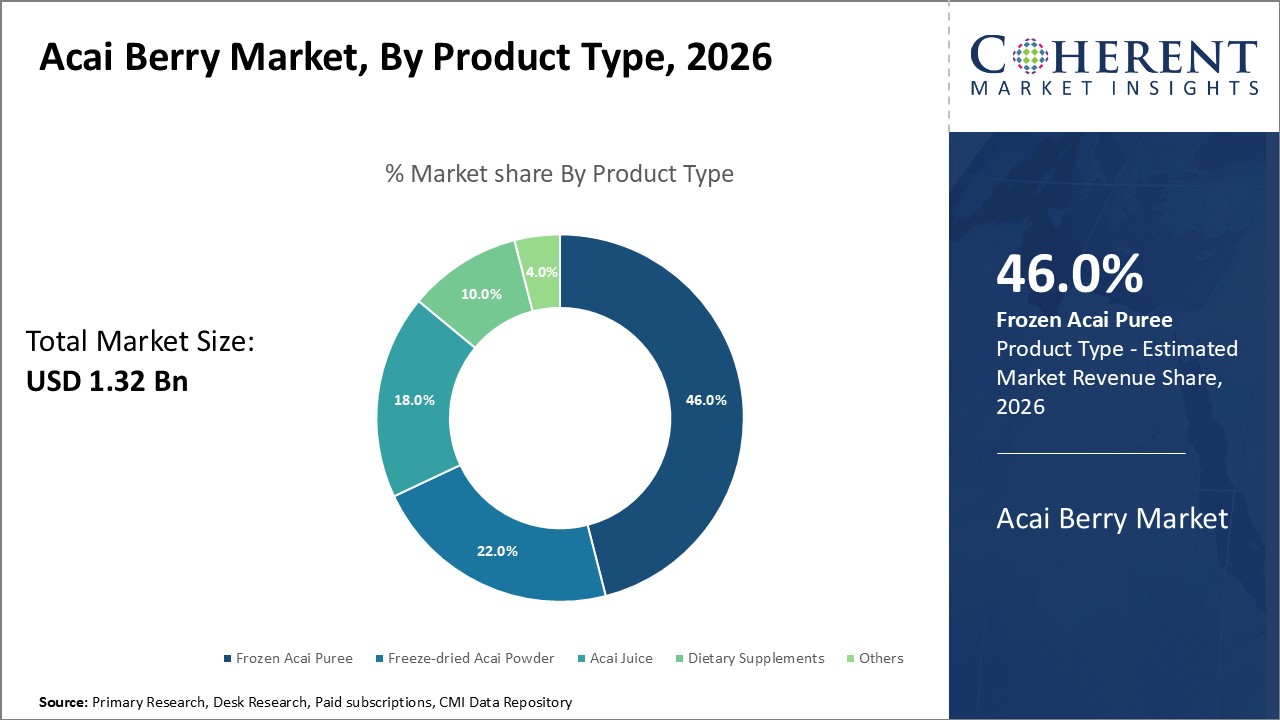
The Frozen Acai Puree segment remains dominant within the product type category, controlling 46% market share thanks to its versatility and longer shelf life, making it a favored choice for manufacturers.
Functional foods & beverages lead application adoption due to significant health-driven demand; this segment offers the largest opportunity for innovative acai berry integration based on recent market insights.
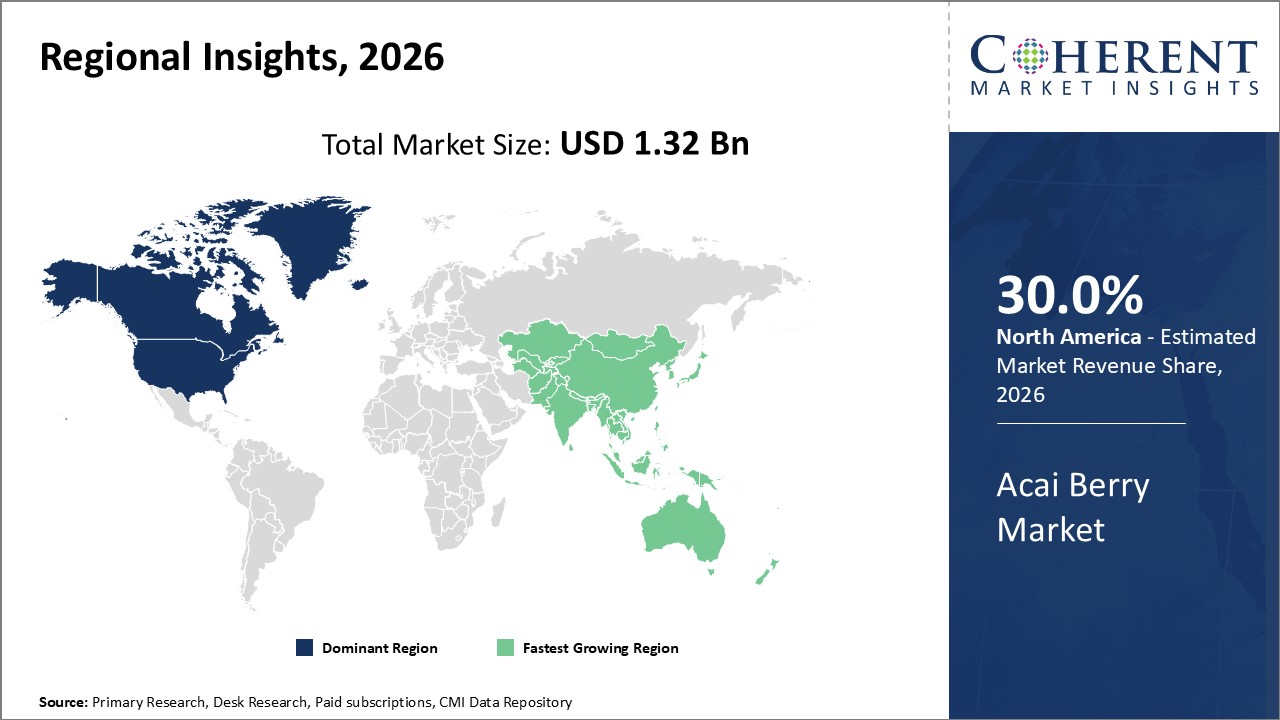
North America holds a commanding industry share driven by rising consumer health awareness and established nutraceutical industries, controlling over 30% of the global market.
The Asia Pacific region, exhibiting the fastest CAGR, benefits from increasing urbanization and disposable income, alongside growing e-commerce platforms facilitating wider product access.
Acai Berry Market Segmentation Analysis
Acai Berry Market Insights, By Product Type
Frozen Acai Puree dominates the market share at 46%. This segment leads due to its extended shelf life and versatility in food and beverage manufacturing. The puree's consistency retains nutritional value, making it a preferred base for smoothie bowls, functional drinks, and desserts. The fastest-growing subsegment is Freeze-dried Acai Powder, gaining traction for its convenience and suitability in supplement formulations, increasing demand in dietary powders and capsules. Acai Juice, while niche, serves as an innovative product in the beverage segment, and Dietary Supplements remain vital for therapeutic applications.
Acai Berry Market Insights, By Application
Functional Foods & Beverages dominate this segment, driven by the marketplace’s rapid incorporation of acai into antioxidant-rich smoothies, juices, and wellness drinks. This dominance stems from the growing consumer demand for convenient, health-promoting food options with clinically backed benefits. The fastest-growing application is Personal Care Products, where acai berry extracts are increasingly used in skin care and cosmetics formulations for their natural anti-aging and moisturizing properties.
Acai Berry Market Insights, By Distribution Channel
Supermarkets and hypermarkets currently hold the largest market share, benefiting from their established supply chains and mass-market appeal. However, Online Retail is the fastest-growing channel, bolstered by digital commerce expansion, especially across the Asia Pacific and North America. This channel appeals to younger, tech-savvy consumers who prefer direct-to-consumer purchasing and value extensive product variety, customization, and convenient home delivery. Specialty Stores maintain a niche presence targeting premium and organic acai products, while the Others category covers health food stores and direct farm markets, contributing modestly to volume.
Acai Berry Market Trends
Current market trends demonstrate a significant surge in demand for organic and ethically sourced acai products, spurred by consumers’ increasing focus on wellness.
In 2025 and 2026, major brands introduced traceability and sustainability frameworks, resulting in stronger consumer trust and premium pricing capability.
Additionally, functional beverage innovations incorporating acai berry with other superfoods have bolstered product diversification, evidenced by a 22% rise in new product launches across North America and Asia Pacific.
Digital transformation in e-commerce and AI-powered marketing has facilitated market penetration into untapped urban markets, particularly in the Asia Pacific, where millennial and Gen Z consumers drive demand.
Acai Berry Market Insights, By Geography
North America Acai Berry Market Analysis and Trends
In North America, the acai berry market commands the largest industry share, accounting for over 30% of the global revenue. This dominance is due to a mature health and wellness ecosystem, advanced retail infrastructure, and rising consumer inclination towards natural supplements. Moreover, U.S.-based companies focusing on organic certification and sustainable sourcing have strengthened market dynamics.
Asia Pacific Acai Berry Market Analysis and Trends
Meanwhile, the Asia Pacific region leads with the fastest CAGR of approximately 11%, propelled by urbanization, rising disposable incomes, and expanding e-commerce penetration. Countries like China and India exemplify this growth through substantial investments in superfood product lines and infrastructure improvements within cold chain logistics. Local companies collaborating with South American suppliers also foster market expansion.
Acai Berry Market Outlook for Key Countries
USA Acai Berry Market Analysis and Trends
The U.S. acai berry market is a critical revenue contributor, supported by rising consumer focus on antioxidant-rich foods and plant-based diets. Market players such as Sambazon and Califia Farms have bolstered their presence through strategic branding and product diversification into snack bars, smoothies, and supplements. In 2025, U.S. sales of acai-based functional foods grew over 14%, reflecting both increasing consumer awareness and stronger retail partnerships.
Brazil Acai Berry Market Analysis and Trends
Brazil stands as the primary raw material supplier and an emerging consumer market for acai berry. Local companies like Organic Brazil and Amaz Fruits continue to invest in sustainable cultivation practices to meet both domestic and export demands. The Brazilian government’s rural development policies and export incentives improved production efficiency by 12% in 2025, enhancing competitiveness. Brazil’s market is also witnessing increased consumption driven by urban health trends, with acai berry products gaining popularity beyond traditional regional usage.
Analyst Opinion
The rising demand from the dietary supplement sector is a prime driver behind market size expansion. The surge in health-conscious consumers preferring natural antioxidant sources led to a 15% increase in acai berry product launches in 2025, especially in North America and Europe. For instance, market data from 2026 shows over 40% of new nutraceutical products include acai berry extracts.
Supply-side indicators such as expanded production capacity in Brazil have been crucial. Brazil's acai berry harvesting volume grew by 11% in 2025, supported by improved agricultural practices and better harvesting technologies that stabilize raw material availability, reducing price volatility by 6%.
The increasing adoption of acai berries in functional beverages has created a significant market niche. In 2026, functional beverage launches containing acai berry formulations grew at 20%, spurred by consumer preference for natural energy drinks, as exemplified by leading beverage companies expanding their product portfolio in the Asia Pacific region.
Export volumes of acai berry products from South American countries to the U.S. and Europe increased by approximately 12% in 2025, indicating widening international demand. This trend is indicative of global market revenue growth and increased market share for companies investing in export infrastructure.
- Current Industry Events of 2026
- Market Size Estimation
- Regional Breakdown
- Competitive Landscape
- Customer Intelligence
- Segmental Analysis
- Pricing Analysis
- Key Market Drivers, Challenges & Future Trends
- Customized Insights Section
Market Scope
| Report Coverage | Details | ||
|---|---|---|---|
| Base Year: | 2025 | Market Size in 2026: | USD 1.32 billion |
| Historical Data for: | 2020 To 2024 | Forecast Period: | 2026 To 2033 |
| Forecast Period 2026 to 2033 CAGR: | 9.7% | 2033 Value Projection: | USD 2.52 billion |
| Geographies covered: |
| ||
| Segments covered: |
| ||
| Companies covered: | Sambazon, Acai Roots International LLC, Organic Brazil, Amaz Fruits, Natura, Joanne's Health, Califia Farms, Terrasoul Superfoods, Selva 360, Amazon Power. | ||
| Growth Drivers: |
| ||
Acai Berry Market Growth Factors
The market growth is primarily driven by various factors. The accelerated awareness of acai berries’ health benefits, supported by clinical studies indicating a 20% rise in antioxidant capacity compared to other berries, is propelling consumer adoption. Secondly, the expansion of the functional food and beverage industry, especially in developed economies, is setting the stage for acai berry integration into multiple product lines. Additionally, e-commerce penetration, particularly in the Asia Pacific, enables wider consumer access and faster market revenue growth. Furthermore, sustainability trends and ethical sourcing have enhanced brand value and consumer loyalty, with certified organic acai products growing 15% annually since 2023.
Acai Berry Market Development
In January 2025, Sambazon launched a new line of organic Açaí bowls, introducing highly accessible, certified-organic, and Fair Trade Açaí bowl options aimed at health-conscious consumers. The rollout included customized toppings, granola, and fruit combinations, reinforcing Sambazon’s position as a leader in the premium super-food segment.
In April 2026, OAKBERRY released its new “Signature Bowl” menu, featuring six layered Açaí bowls designed for personalization and premium appeal. The menu includes new flavors with toppings such as matcha chia pudding, collagen, whey protein, and more, offering consumers enhanced variety and customization in the quick-service Açaí market.
Key Players
Leading Companies of the Market
Sambazon
Acai Roots International LLC
Organic Brazil
Amaz Fruits
Natura
Joanne's Health
Califia Farms
Terrasoul Superfoods
Selva 360
Amazon Power
Competitive strategies predominantly revolve around product innovation and geographic expansion. For example, Sambazon’s launch of organic, Fair Trade Certified acai-based beverages in North America increased its market presence by 9% in 2025. Simultaneously, Organic Brazil’s direct sourcing from the Amazon and investment in sustainable farming enhanced its supply chain reliability, enabling 11% YoY revenue growth.
Acai Berry Market Future Outlook
The future of açaí berry products lies in innovation across food, nutraceutical, and cosmetic sectors. Manufacturers will expand their product lines with fortified and blended formulations that target immunity, energy, and anti-aging benefits. Technological developments in encapsulation and fermentation will improve bioavailability and shelf stability. Transparent labeling and blockchain-based traceability will enhance consumer trust and sustainability credentials. Increasing collaborations with beauty and wellness brands will lead to new applications in topical antioxidants and natural skincare. Premiumization and plant-based diet trends will continue to drive product diversification and global market penetration.T
Acai Berry Market Historical Analysis
Açaí berry products originated as frozen pulp and traditional juices from South America before expanding globally as superfood items. With growing consumer interest in natural antioxidant products, manufacturers developed açaí-based powders, capsules, energy bars, and skincare formulations. Advances in freeze-drying and cold-press extraction helped preserve nutritional content and bioactive compounds. Health and wellness trends drove strong adoption in functional beverages and supplements. As demand rose, producers focused on sustainable sourcing and organic certification to ensure ethical supply chain practices, strengthening the credibility and premium positioning of açaí products in international markets.
Sources
Primary Research Interviews:
Food Technologists
Nutrition Experts
Beverage Product Developers
Organic Product Distributors
Retail Chain Managers
Databases:
FAO Food Commodity Data
GlobalData Superfood Reports
USDA Nutrient Database
Mintel Food & Drink Insights
Magazines:
Food Business News
Beverage Industry
Nutrition Insight
Natural Products Insider
Journals:
Journal of Functional Foods
Food Chemistry
Nutrients
Plant Foods for Human Nutrition
Newspapers:
The Guardian (Food)
The Hindu (Lifestyle)
The Wall Street Journal (Wellness)
The Times (Food Business)
Associations:
International Food Information Council (IFIC)
American Botanical Council
Organic Trade Association
Food and Agriculture Organization (FAO)
Get access to 250+ pages report
Every segment, forecast, competitor profile and data table behind the analysis above — available for instant download.
- ESOMAR Member
- ISO 9001:2015 Certified
- D-U-N-S Registered
- GDPR & CCPA Compliant
Missing comfort of reading report in your local language? Find your preferred language:
Transform your Strategy with Exclusive Trending Reports
Frequently Asked Questions
The Acai Berry market is led by companies such as Sambazon, Organic Brazil, and Califa Farms, which have established strong supply chains and product innovation strategies contributing to their leading industry share.
The Acai Berry market size is expected to grow from USD 1.32 billion in 2026 to USD 2.52 billion by 2033, reflecting a CAGR of 9.7%, driven by rising health-conscious consumer trends globally.
Functional Foods & Beverages represent the largest growth opportunity, fueled by increasing demand for natural antioxidants and superfood-infused products in both developed and emerging markets.
The market will see a strong shift towards clean-label, organic, and plant-based acai berry products, with increased integration into personalized nutrition enabled by advanced data analytics and consumer insights.
The competitive landscape is characterized by innovation in product formulations and sustainable sourcing. Key challenges include supply chain complexities and price fluctuations influenced by raw material availability.
Market players focus on product innovation, direct sourcing partnerships, and expansions in online retail channels to enhance reach. Additionally, certifications for organic and fair-trade acai berries support brand differentiation.