

Cider Market Size and Trends - 2026 to 2033
The cider market is estimated to be valued at USD 5.60 Bn in 2026 and is expected to reach USD 7.07 Bn by 2033, exhibiting a compound annual growth rate (CAGR) of 3.5% from 2026 to 2033.
Key Takeaways
- Based on Source, the Apple segment is expected to lead the market with 54.9% share in 2026, driven by tradition, authenticity, and health-conscious demand.
- Based on Product Type, the Sparkling segment is expected to hold 37.1% share in 2026, driven by effervescence, health appeal, and flavor innovation.
- Based on Region, Europe is expected to lead the cider market with 43.8% share in 2026. While, North America is anticipated to be the fastest growing region.
Market Overview
The global cider market has seen steady growth over the past few years and this trend is expected to continue during the forecast period from 2026 to 2033. Cider remains a popular alcoholic beverage choice around the world. While traditional cider-producing regions continue to account for a substantial portion of the global demand, other areas are starting to develop a taste for cider as well. Hard ciders and new premium product launches are boosting the category. Craft ciders are gaining popularity as consumers seek out locally-produced and more premium options.
Current Events and Its Impacts on the Cider Market
Current Event | Description and its Impact |
Evolving Consumer Health and Wellness Trends |
|
Regulatory Changes in the Alcohol Industry |
|
Import and Export of Cider Market
Export Trends
- Traditional apple cider from the UK and Spain is highly sought after internationally.
- Premium artisanal brands are expanding into North America and Asia, riding the farm-to-table and craft beverage trends.
- Non-alcoholic cider is emerging as a new export category, especially from Germany and the UK, appealing to health-conscious markets.
Import Trends
- United States: Imports European ciders to complement domestic craft offerings, especially premium sparkling and flavored varieties.
- Japan & China: Rising demand for Western alcoholic beverages boosts cider imports, particularly flavored and sparkling types.
- Australia: Imports cider from Europe while also growing its domestic production for regional trade.
- Current Industry Events of 2026
- Market Size Estimation
- Regional Breakdown
- Competitive Landscape
- Customer Intelligence
- Segmental Analysis
- Pricing Analysis
- Key Market Drivers, Challenges & Future Trends
- Customized Insights Section
Segmental Insights
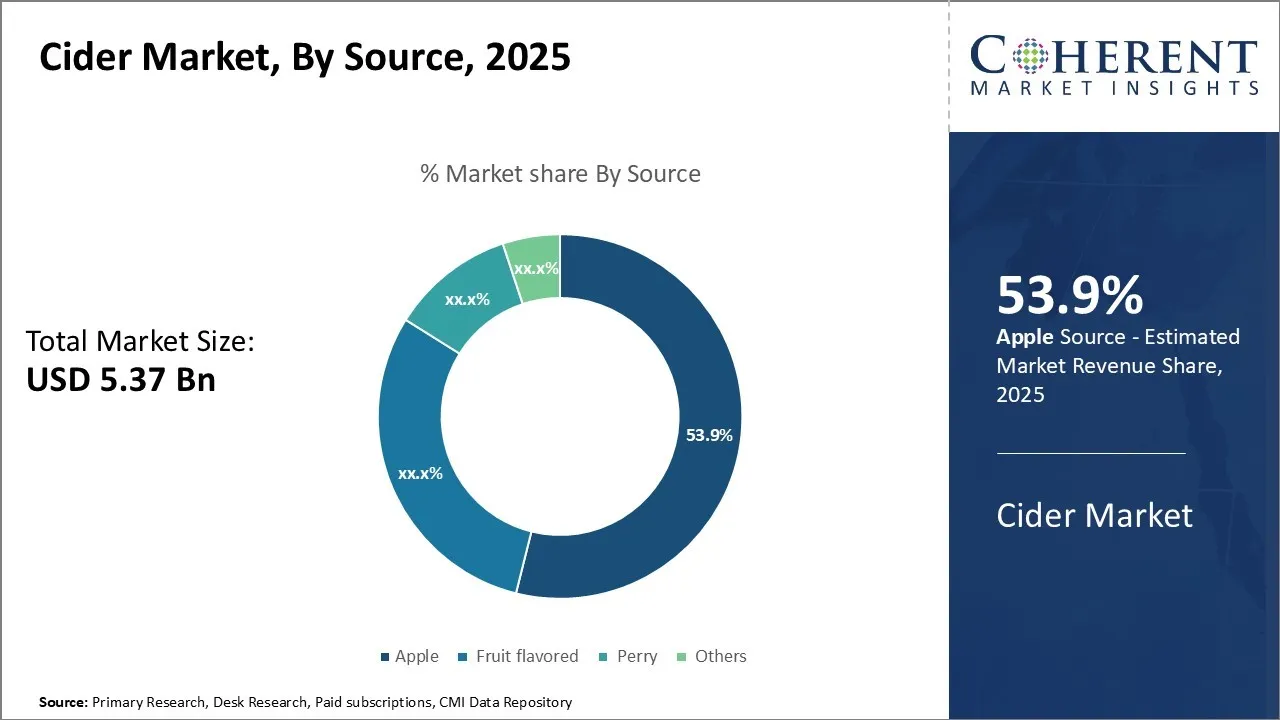
Cider Market Insights By Source: Popularity of Homemade Cider Drives the Apple Segment Growth
The apple segment is expected to contribute 54.9% share of the global cider market in 2026, owing to consumers' preference for homemade and authentic cider. Apples have long been used to make cider at home, imparting the drink with a natural, artisanal quality that consumers find appealing. Many view homemade apple cider as a more traditional beverage choice compared to ciders made from other fruits.
The farm-to-table and artisanal food trends have further boosted the demand for apple cider that resembles what people make at home. Many consumers see apple cider as reminiscent of simpler times and want to support local orchards and farms. The perception of apple cider being a more wholesome beverage choice compared to other alcohol options also appeals to health-conscious consumers.
Additionally, many foodservice establishments have incorporated apple cider into their menus to cater to this consumer preference for naturally-brewed beverages seen as healthier indulgences. Recent years have witnessed a rise in small, independent cider makers that specialize exclusively in apple varieties and fermentation methods similar to homemade recipes.
For instance, in December 2025, Squeeze Beer released "The Sets," a certified apple cider made with apples grown in Chuncheon which is distributed under the SETZ brand. Each can have one whole apple in it, which gives it a sweet, refreshing taste. A small "Home Party Pack" with Naegedamda rice cakes shows how cider is becoming more popular in South Korea's high-end lifestyle drink market.
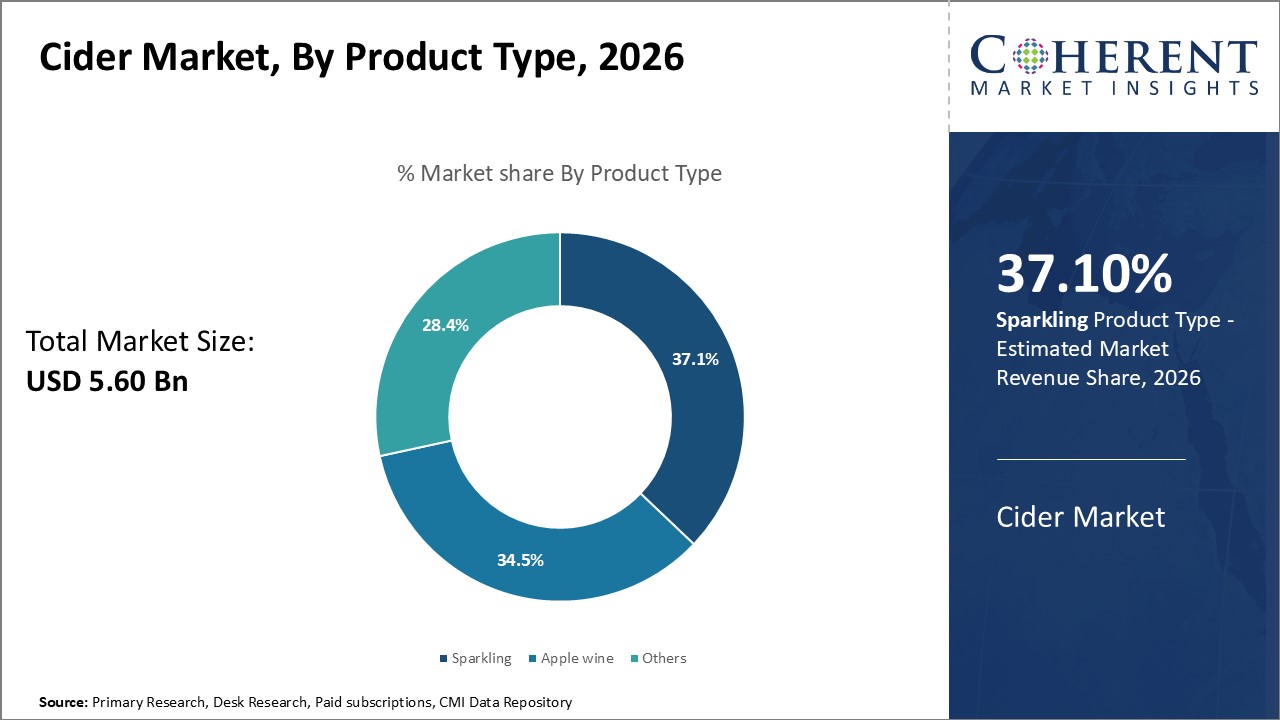
Cider Market Insights By Product Type: Sparkling Cider Takes the Top Spot in the Product Type Segment
Within the product type segment, sparkling cider is expected to claim the leading position with 37.1% of the market share in 2026. Sparkling varieties afford the refreshing effervescence and lower alcohol by volume that appeal to a wide consumer base including families and health-conscious individuals. The lightly carbonated nature of sparkling cider makes it suitable for social occasions as an alternative to beer or other alcoholic drinks.
Sparkling ciders are particularly popular as an affordable and lower-calorie choice for outdoor gatherings and events during summer months. Their fruity yet refreshing profile provides an enjoyable beverage that fits well with seasonal activities and cuisine. Many sparkling ciders are also gluten-free and vegan-friendly, further expanding their potential customer pool.
Additionally, sparkling ciders present opportunities for experimentation through flavor innovation that has helped boost the category in recent years. New flavor varieties like pear, grape and berry have added excitement while retaining cider's approachable qualities. Ready-to-drink canned options especially appeal to young consumers seeking convenient beverages for on-the-go consumption. As such, sparkling cider shows no signs of slowing down as the leading product type within the global cider market.
For instance, in August 2025, Cornish Orchards released a new Peach & Apple cider that is light gold and has a soft sparkle. The 3.4% ABV drink adds to the brand's line of flavored drinks. It comes in 500ml bottles and is aimed at the growing demand for high-quality, fruit-flavored sparkling ciders in the UK.
Regional Insights
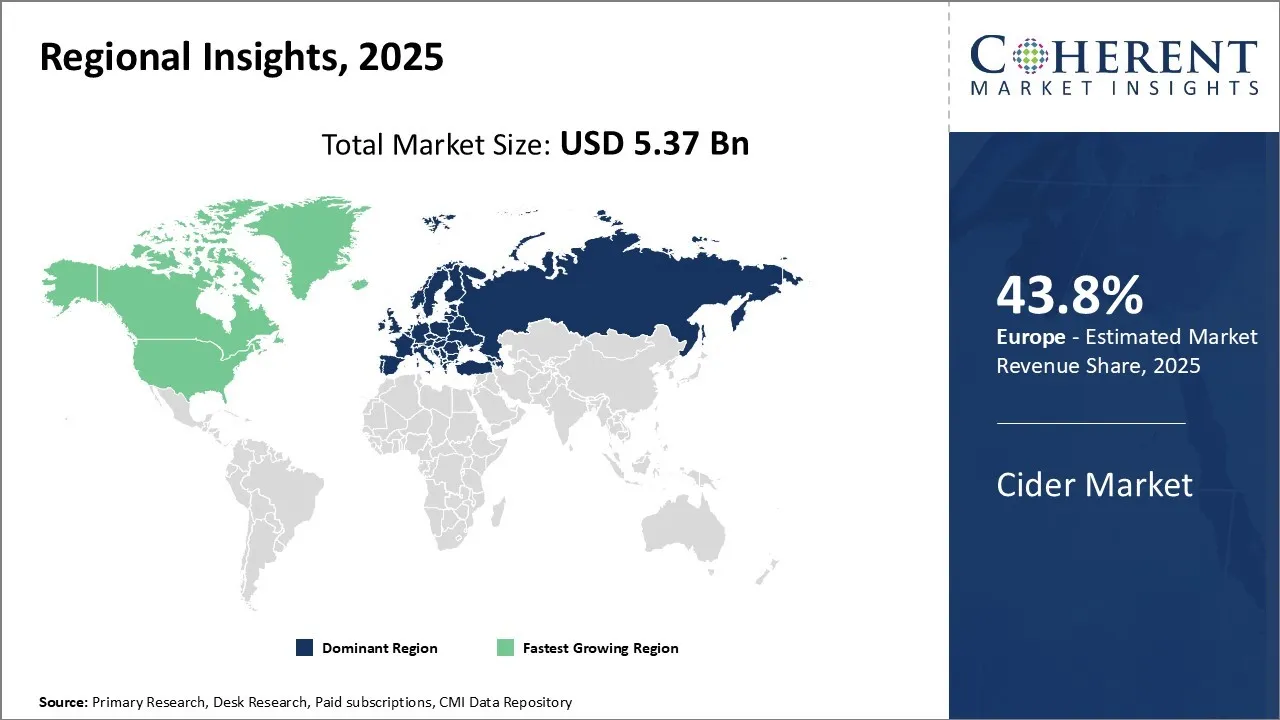
Europe Cider Market Analysis & Trends
The Europe region, particularly Western Europe, dominates the global cider market. Countries such as the U.K., Spain, France and Germany have a long history of cider production and consumption. Cider forms an important part of these countries' drinking culture and traditions. Europe is expected to account for over 43.8% share of the global cider market in 2026, due to strong domestic demand and a culture where cider is consumed widely on social and casual occasions. Major cider producing companies like Aspall, Strongbow and Bulmers are based in the U.K. and have a stronghold in their home markets as well as worldwide exports. The availability of domestic crab apples and pears, suitable production methods and establishment of cider houses over centuries has led to the region's dominance.
For instance, in February 2026, Carlsberg Group launched Somersby Zero in Germany, the world’s first cider with zero alcohol, sugar, and calories. The new product is aimed at health-conscious customers and adds to Carlsberg's non-alcoholic line. Somersby Zero is an enormous advancement forward in the cider market due to the meets the growing demand for healthier drinks while still tasting like cider.
North America Cider Market Analysis & Trends
North America has emerged as the fastest growing regional market for cider globally. Major drivers of growth include the rising popularity of craft beverages and shift towards low alcohol drinks with variety in flavors. The U.S. is spearheading the North American cider renaissance led by growth in the micro-cider segment. Emerging craft producers are innovating with diverse ingredients beyond traditional apple and pear to cater to new consumers. Cideries in the Pacific Northwest region of the U.S. have gained prominence. Meanwhile, imports of European ciders like Strongbow and Magners are also rising in the U.S. and Canada due to increased availability and exposure. Growing cider fests and pub culture have boosted the category alongside collaborative initiatives between producers and distributors. The demand for unique packaged cider experiences is fueling growth across price segments in grocery aisles and liquor stores.
For instance, in December 2026, Sincere Cider, which is based in California, has released a limited-edition Blueberry Lavender cider in the U.S. The release has a refreshing, fragrant profile attributed to the mix of blueberries, lavender botanicals, and its apple base. This seasonal launch highlights innovation in flavored sparkling ciders, appealing to consumers seeking premium, fruit-forward experiences.
Cider Market Outlook Country-wise
Germany Cider Market Trends
The cider market in Germany in 2026 is expected to be driven by people drinking less lager, more people wanting premium and flavored ciders, and trends that focus on health. People like new, creative options that come in eco-friendly packaging. Apple and fruit-flavored sparkling ciders are the most popular types of ciders, which is in line with the trend toward more varied, refreshing, and healthier alcoholic drinks.
For instance, in February 2026, Somersby Zero is the world's first cider with no alcohol, sugar, or calories. Carlsberg Group has brought it to Germany. The launch adds to Carlsberg's non-alcoholic line and is aimed at health-conscious customers. Somersby Zero is a breakthrough in the cider industry due to its gives people what they want: a refreshing cider that is also better for them.
The U.S. Cider Market Trends
The U.S. cider market is doing strongly through 2026 as consumers want flavored sparkling ciders, care about their health, and want high-quality craft innovations. Growth is driven by more disposable income and people's desire for a wider range of refreshing alcoholic drinks. Apple-based and fruit-flavored kinds are the most popular, making cider a quickly growing part of the beverage market.
For instance, in November 2026, The Iowa State University has opened a cidery run by students. They make several hard ciders using apples from the area. The project includes learning by doing, research in agriculture, and starting a business. These new types of cider show how much the university cares about hands-on learning and add to Iowa's growing craft beverage scene with unique flavors made by students.
Market Report Scope
Cider Market Report Coverage
| Report Coverage | Details | ||
|---|---|---|---|
| Base Year: | 2025 | Market Size in 2026: | USD 5.60 Bn |
| Historical Data for: | 2020 To 2024 | Forecast Period: | 2026 To 2033 |
| Forecast Period 2026 to 2033 CAGR: | 3.5% | 2033 Value Projection: | USD 7.07 Bn |
| Geographies covered: |
| ||
| Segments covered: |
| ||
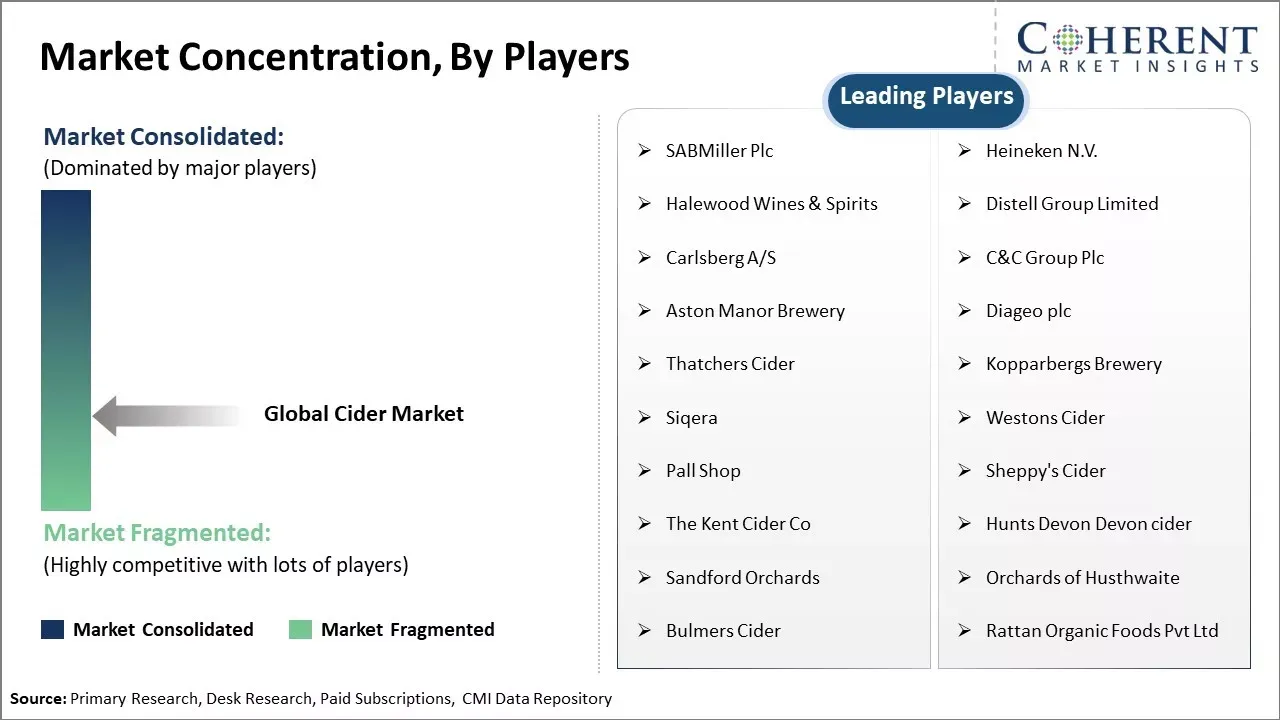
| Companies covered: | SABMiller Plc, Heineken N.V., Halewood Wines & Spirits, Distell Group Limited, Carlsberg A/S, C&C Group Plc, Aston Manor Brewery, Diageo plc, Thatchers Cider, Kopparbergs Brewery, Siqera, Westons Cider, Pall Shop, Sheppy's Cider, The Kent Cider Co, Hunts Devon Devon cider, Sandford Orchards, Orchards of Husthwaite, Bulmers Cider, and Rattan Organic Foods Pvt Ltd | ||
| Growth Drivers: |
| ||
| Restraints & Challenges: |
| ||
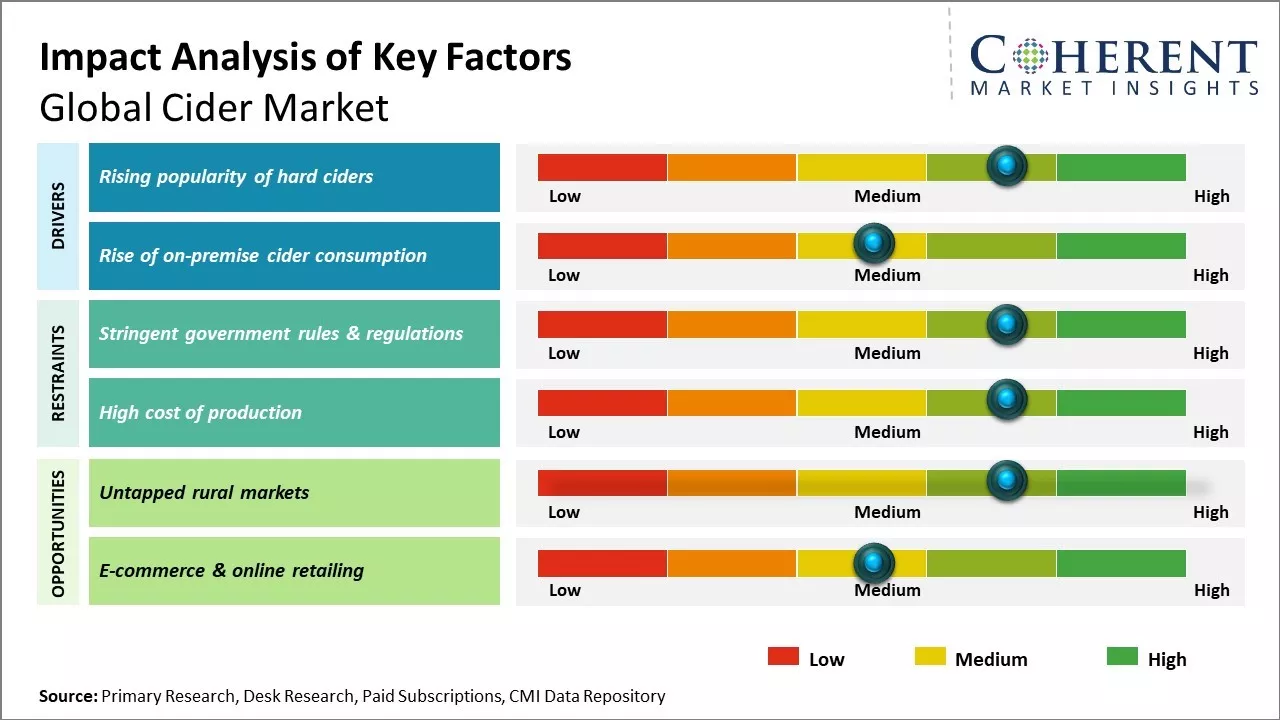
Cider Market Driver
Rising Popularity of Hard Ciders
In recent years, there has been growing interest in hard ciders among consumers in many countries. Where cider was once considered primarily as a regional drink, it is now gaining wider popularity and recognition as a premium beverage. Several trends have contributed to this increasing popularity of ciders.
There is a trend where consumers are more interested in exploring different types of drinks beyond the standard beer and wine offerings. Many young adults in particular see ciders as a refreshing alternative to beers that still offers an alcoholic beverage. The variety of flavors now available in ciders appeals to those seeking new tastes. Cider producers have innovated with flavors like pear, cherry, and even spiced or seasonal varieties. This has helped distinguish ciders from other categories and attract new customers.
Evolving health and wellness trends also favor ciders. While still alcoholic, ciders are often lower in calories, carbohydrates, and gluten compared to many beers. Some perceive ciders as a healthier indulgence. This benefits the category especially as more health-conscious consumers continue to emerge. Moreover, growing interest in locally produced and artisanal beverages has supported smaller craft cider producers. Customers like learning about different varieties made with distinct recipes and local ingredients. Regional ciders have become a point of local pride in the communities where they originate from.
Changing regulations have aided growth as well. In places where cider production was once heavily restricted, new rules allow greater access and commercial production. This helps address earlier supply constraints and encourages new cideries to form. Improved distribution networks further help expose customers to ciders beyond their initial region of popularity. Overall, ciders appear well-positioned to continue appealing to the broadening preferences of modern consumers seeking lower-alcohol beverages with variety, adventure, and local character.
Rise of On-Premise Cider Consumption
While off-premise retail sales remain important for the cider market, on-premise consumption in restaurants and bars has shown strong gains in recent times. This could be another driver for future growth. Exposure to ciders through the on-premise channel helps boost awareness, trial and repeat purchasing. It also highlights ciders’ versatile pairing abilities with food in a social setting. On-premise establishments are recognizing cider’s rising popularity among customers and adding more options to their beverage menus.
Cider Market Opportunities
Untapped rural markets
Untapped rural markets in developing nations present a great opportunity for growth in the global cider market. With large agricultural populations and a growing middle class with rising disposable incomes, rural consumers in these regions are increasingly experimenting with new beverages. However, most commercial cider brands have traditionally focused their marketing and distribution efforts only within urban areas. There is now a unique chance for cider companies to enter new rural geographies and capture an emerging customer base. These consumers have traditionally consumed locally brewed alcoholic drinks. However, health awareness is increasing in villages and people are looking for commercially packaged beverage options with clearer quality standards and assurance. Cider's light taste makes it appeal to those shifting from heavy drinks. Its packaging in bottles or cartons also gives it an advantage over products sold in loose formats.
Market Concentration and Competitive Landscape
Analyst Opinion (Expert Opinion)
The cider market is still growing steadily, owing to changing consumer tastes, a wider range of products, and easier access to stores. Europe is still the largest and most developed region, with a large share of global consumption. This is due to high per-capita intake and a well-established on-trade and off-trade ecosystem. North America is the second-largest regional market, thanks to its premium, craft, and flavored cider options. Asia-Pacific and Latin America are becoming incremental demand centers as modern retail grows and drinking habits change.
Off-trade channels, including supermarkets, specialty liquor stores, and online platforms, dominate sales volumes, reflecting convenience-driven purchasing behavior and competitive pricing. On-trade consumption is growing thanks to premium positioning, seasonal menus, and experiential formats. Packaging trends indicate a clear shift toward cans, favored for portability, shelf efficiency, and suitability for outdoor and social occasions, while glass bottles continue to support premium and traditional branding.
From a product point of view, fruit-flavored and infused ciders make up a large part of new products, which brings in customers who don't usually drink apple cider. Premium and low-alcohol variants are increasingly used to address moderation trends and attract health-conscious consumers. But the market is still affected by changes in agricultural yields, raw material prices, and alcohol tax systems, which can affect the cost of production and the price of goods sold. Overall, differentiation through innovation and optimizing channels are likely to stay at the center of how cider companies compete with each other.
Speak to the analyst
Want personalized insights?
Take the findings above to one of our principal consultants, or have the report rebuilt around the segments, geographies and competitors you actually track.
Cider Industry News
- In November 2025, Aston Manor Cider started the UK's first brand of non-alcoholic cider, which is a response to the growing demand for alcohol-free options. The new product gives cider it’s refreshing taste without the alcohol, that is ideal for people who care about their health. This milestone makes Aston Manor a leader in bringing cider to the low- and no-alcohol market.
- In November 2025, Angry Orchard Hard Cider released "The World's Angriest Cider," a bold new addition to its line of products. The brand is known for being creative in the U.S. cider market, and it focuses on strong flavors and unique branding. This launch makes Angry Orchard a stronger leader by appealing to adventurous customers who want unique, high-quality hard cider experiences.
Market Segmentation
- Source Insights (Revenue, USD Bn, 2026 - 2033)
- Apple
- Fruit flavored
- Perry
- Others
- Product Type Insights (Revenue, USD Bn, 2026 - 2033)
- Sparkling
- Apple wine
- Others
- Regional Insights (Revenue, USD Bn, 2026 - 2033)
- North America
- U.S.
- Canada
- Latin America
- Brazil
- Argentina
- Mexico
- Rest of Latin America
- Europe
- Germany
- U.K.
- Spain
- France
- Italy
- Russia
- Rest of Europe
- Asia Pacific
- China
- India
- Japan
- Australia
- South Korea
- ASEAN
- Rest of Asia Pacific
- Middle East & Africa
- GCC Countries
- Israel
- Rest of Middle East & Africa
- Key Players Insights (Revenue, USD Bn, 2021 - 2033)
- SABMiller Plc
- Heineken N.V.
- Halewood Wines & Spirits
- Distell Group Limited
- Carlsberg A/S
- C&C Group Plc
- Aston Manor Brewery
- Diageo plc
- Thatchers Cider
- Kopparbergs Brewery
- Siqera
- Westons Cider
- Pall Shop
- Sheppy's Cider
- The Kent Cider Co
- Hunts Devon Devon cider
- Sandford Orchards
- Orchards of Husthwaite
- Bulmers Cider
- Rattan Organic Foods Pvt Ltd
Sources
Primary Research Interviews
- Cider Manufacturers & Brand Owners
- Apple Growers & Orchard Operators
- Fermentation & Beverage Processing Experts
- Alcoholic Beverage Distributors & Importers
- On-trade (Bars, Pubs) and Off-trade (Retail) Buyers
- Others
Databases
- Euromonitor International
- Statista
- IWSR Drinks Market Analysis
- GlobalData
- Mintel GNPD
- Others
Magazines
- Drinks International
- Beverage Industry Magazine
- The Cider Review
- Brewbound
- Beverage Daily
- Others
Journals
- Journal of the Institute of Brewing
- Food Chemistry
- Journal of Food Science & Nutrition
- International Journal of Food & Beverage Manufacturing
- Others
Newspapers
- Financial Times
- The Wall Street Journal
- The Guardian
- Reuters
- Bloomberg News
- Others
Associations
- UK Cider Makers Association (UKCMA)
- American Cider Association
- Brewers Association
- European Cider & Fruit Wine Association (AICV)
- International Organisation of Vine and Wine (OIV)
- Others
Public Domain Sources
- Food and Agriculture Organization (FAO)
- United States Department of Agriculture (USDA)
- Eurostat
- UK Department for Environment, Food & Rural Affairs (DEFRA)
- National Statistics Offices (Country-wise)
- Others
Proprietary Elements
- CMI Data Analytics Tool
- Proprietary CMI Existing Repository of Information for the Last 8 Years
Definition: The cider market caters to customers looking to purchase hard cider beverages. This market offers a variety of cider products made from fermented apple juice and other fruits. Popular options include traditional ciders made solely from apples as well as flavored ciders infused with berries, tree fruits, herbs, or spices. Products range from dry to sweet styles. Beyond alcoholic ciders, the cider market also carries non-alcoholic cider varieties, cider accessories like glasses and openers, as well as gift sets and merchandise related to the cider-making process and cider culture.
Get access to 250+ pages report
Every segment, forecast, competitor profile and data table behind the analysis above — available for instant download.
- ESOMAR Member
- ISO 9001:2015 Certified
- D-U-N-S Registered
- GDPR & CCPA Compliant
Missing comfort of reading report in your local language? Find your preferred language:
Transform your Strategy with Exclusive Trending Reports
Frequently Asked Questions
The Cider Market is estimated to be valued at USD 5.60 Bn in 2026, and is expected to reach USD 7.07 Bn by 2033.
The CAGR of the Cider Market is projected to be 3.5% from 2026 to 2033.
Rising popularity of hard ciders and rise of on-premise cider consumption are the major factors driving the growth of the global cider market.
Stringent government rules & regulations and high cost of production are the major factors hampering the growth of the global cider market.
In terms of source, apple is estimated to dominate the market revenue share in 2026.
SABMiller Plc, Heineken N.V., Halewood Wines & Spirits, Distell Group Limited, Carlsberg A/S, C&C Group Plc, Aston Manor Brewery, Diageo plc, Thatchers Cider, Kopparbergs Brewery, Siqera, Westons Cider, Pall Shop, Sheppy's Cider, The Kent Cider Co , Hunts Devon Devon cider, Sandford Orchards, Orchards of Husthwaite, Bulmers Cider, and Rattan Organic Foods Pvt Ltd are the major players.
Europe is expected to lead the global cider market.