

Alcoholic Beverages Market Size and Forecast — 2026 - 2033
The Global Alcoholic Beverages Market is projected to be valued at USD 1,175 billion in 2026 and is expected to reach USD 1,675 billion by 2033, registering a compound annual growth rate (CAGR) of 5.1% from 2026 to 2033.
Overview
The alcoholic beverages market includes a wide range of products such as beer, wine, and spirits. Beer is the most widely consumed category, available in variants like lager, ale, stout, and craft beer, catering to diverse consumer preferences. Wine includes red, white, and sparkling varieties, often associated with premium and lifestyle consumption. Spirits comprise whisky, vodka, rum, gin, brandy, and tequila, known for higher alcohol content and strong brand positioning. Additionally, ready-to-drink (RTD) cocktails and flavored alcoholic beverages are gaining popularity due to convenience and innovation. These products are driven by evolving consumer tastes, premiumization trends, and expanding global distribution channels.
Key Takeaways
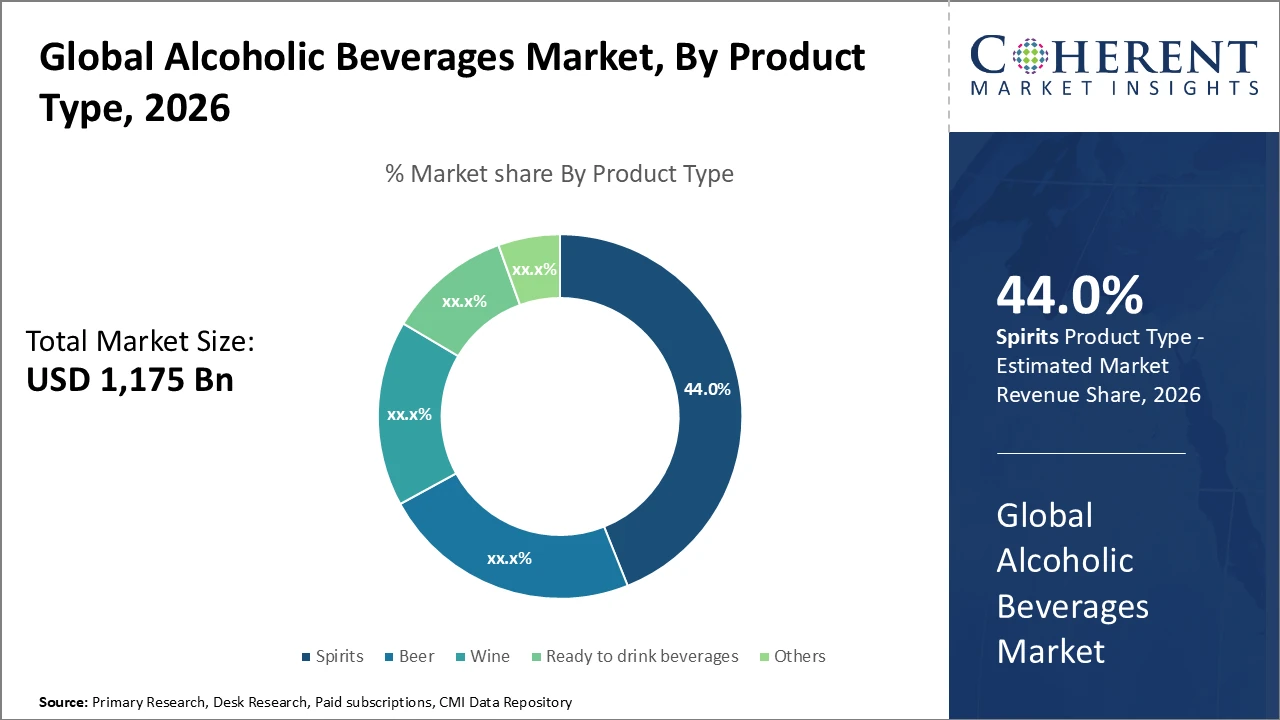
Spirits segment dominates with 44% industry share, driven by premium and craft innovations, while RTD beverages emerge as the fastest-growing subsegment globally.
Bottled packaging leads with 60% market share, favored for its premium connotation and preservation of product integrity, whereas cans gain traction for convenience and sustainability.
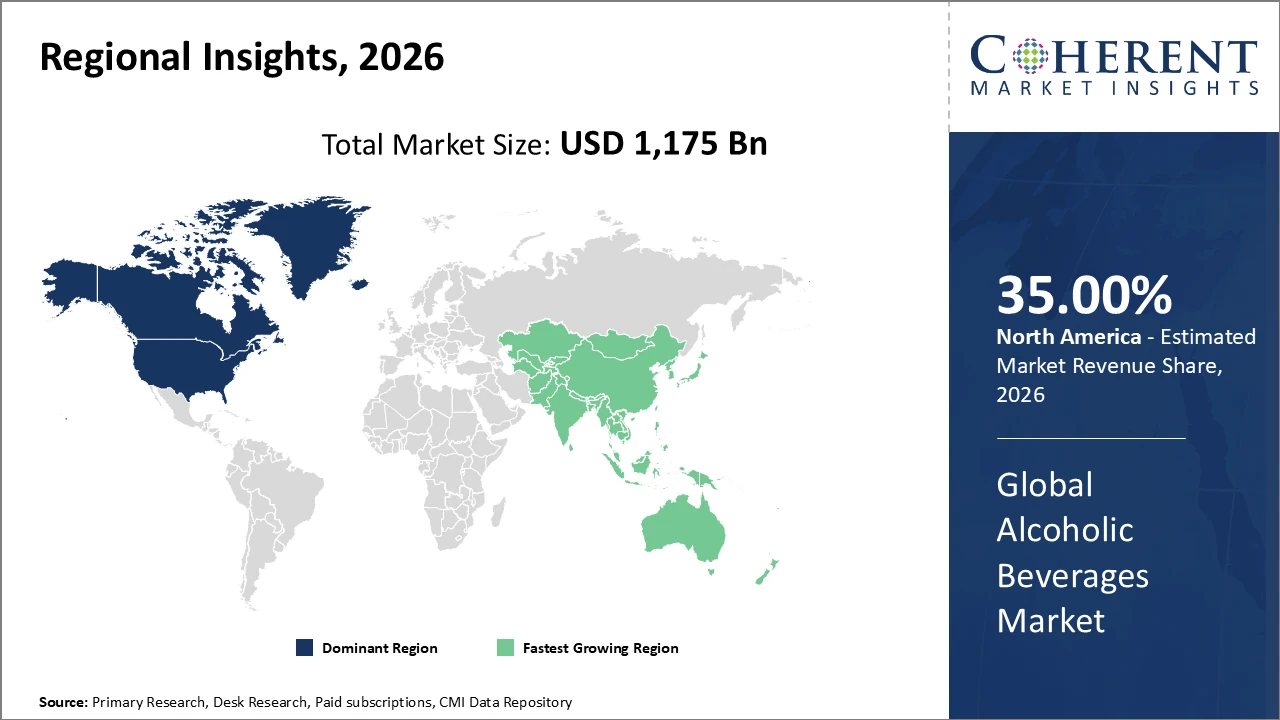
North America holds the dominant regional market share, accounting for approximately 35% of market revenue, buoyed by strong demand for premium products and robust retail infrastructure.
Asia Pacific is the fastest-growing region, with a CAGR exceeding 7%, fueled by rising disposable incomes, urbanization, and evolving consumer preferences for diverse beverage portfolios.
Alcoholic Beverages Market Segmentation Analysis
Alcoholic Beverages Market Insights, By Product Type
Spirits dominate the alcoholic beverages market with a 44% share, driven by strong demand for premium and craft liquors that command higher price points and foster brand loyalty. Craft spirits recorded around 12% growth in 2025, supported by rising consumer interest in artisanal and heritage-inspired products. RTD beverages represent the fastest-growing subsegment, fueled by convenience, innovative flavors, and modern packaging that appeal to younger and on-the-go consumers. Beer maintains a stable position with consistent demand, particularly in light and craft variants, while wine shows moderate growth supported by premiumization. The ‘Others’ category includes niche regional alcoholic beverages with growing appeal.
Alcoholic Beverages Market Insights, By Distribution Channel
On-Trade holds a dominant 45% market share, driven by strong demand for experiential and premium consumption in bars, pubs, and restaurants. This channel has rebounded strongly post-pandemic and plays a key role in brand discovery and premium product positioning. Online sales represent the fastest-growing segment, supported by rising digital adoption and convenience, accounting for around 22% of total alcoholic beverage sales in 2024, with personalized engagement further boosting growth. Off-Trade channels, including supermarkets and convenience stores, maintain a significant share due to everyday purchasing needs and competitive pricing. Other channels such as travel retail and specialty stores serve niche demand.
Alcoholic Beverages Market Insights, By Packaging
Bottles dominate the alcoholic beverages packaging market with a commanding 60% share, as they effectively preserve product integrity and reinforce a premium brand image widely preferred by consumers. Innovations such as lightweight glass and eco-friendly bottle designs have further strengthened their adoption across global markets. The cans segment is the fastest growing, driven by sustainability concerns, convenience, and portability, recording nearly 10% year-over-year growth. Kegs primarily cater to on-trade consumption channels, maintaining steady demand supported by bars and craft breweries. Other packaging formats, including bag-in-box and tetra packs, serve niche markets focused on affordability, convenience, and bulk consumption needs.
Alcoholic Beverages Market Trends
The alcoholic beverages market is increasingly focused on sustainability and product innovation as key growth drivers.
In 2025, organic wine production increased by 18%, supported by rising environmental awareness among younger consumers in Europe and North America.
RTD beverages gained strong momentum, particularly in North America, recording a 14% rise in market revenue due to growing demand for convenience and innovative drinking experiences.
Digital marketing and e-commerce adoption are accelerating, enabling companies to enhance consumer engagement, gather insights, and effectively target diverse demographic segments.
Alcoholic Beverages Market Insights, By Geography
North America Alcoholic Beverages Market Analysis and Trends
North America holds a dominant position in the alcoholic beverages market, accounting for approximately 35% share, supported by strong consumer purchasing power and well-established distribution networks. The region’s growth is driven by high demand for premium spirits, alongside steady consumption across beer and wine categories. Regulatory frameworks in several states allowing broader alcohol sales further support market expansion. The recovery of on-premise consumption in bars and restaurants has also strengthened overall demand. Leading companies such as Diageo and Constellation Brands play a key role in driving innovation, expanding premium portfolios, and maintaining stability within the competitive North American market landscape.
Asia Pacific Alcoholic Beverages Market Analysis and Trends
Meanwhile, Asia Pacific is the fastest-growing region in the alcoholic beverages market, with a CAGR exceeding 7%. Rapid urbanization, rising disposable incomes, and expanding middle-class populations are key growth drivers. Evolving consumer preferences, along with liberalizing alcohol policies in countries such as India and China, are further supporting market expansion. The increasing demand for imported wines and spirits highlights a strong shift toward premiumization and diversified consumption habits. Leading companies like Pernod Ricard and Suntory Holdings are actively expanding their footprint in the region through localized marketing strategies, partnerships, and product innovations tailored to regional taste preferences and cultural trends.
Alcoholic Beverages Market Outlook for Key Countries
USA Alcoholic Beverages Market Analysis and Trends
The USA remains the powerhouse of the alcoholic beverages market, representing the largest single-country revenue contributor globally. Growth is primarily driven by premium spirits and craft beer segments, supported by strong consumer demand for high-quality and innovative products. The country benefits from advanced supply chain systems and a highly developed omnichannel distribution network, including a robust e-commerce sector that accounted for over 25% of sales in 2024. Regulatory reforms encouraging responsible consumption, along with targeted marketing toward millennials and Gen Z, have further boosted demand. Leading companies such as Brown-Forman and Anheuser-Busch continue to drive innovation, sustainability, and market expansion.
Germany Alcoholic Beverages Market Analysis and Trends
Germany’s alcoholic beverages market is well-established, driven by strong beer culture, premium spirits demand, and a growing preference for low- and no-alcohol products. Beer remains the dominant category, supported by renowned brewing traditions and a large number of local breweries. However, craft beer and premiumization trends are reshaping consumer choices. Wine consumption is steady, with increasing interest in organic and imported varieties. Spirits, particularly whisky and gin, are gaining traction among younger consumers. Sustainability and eco-friendly packaging are key trends influencing production and branding. Strict regulations and responsible drinking initiatives further shape market dynamics, ensuring stable but evolving industry growth.
Analyst Opinion
Consumer preferences toward premiumization are a key growth driver, with 2025 data showing premium and super-premium spirits accounting for over 35% of total market revenue in North America, boosting average selling prices and overall market value.
Production capacity expansion is rising, especially in craft breweries and distilleries, with global craft segment capacity increasing by around 12% by 2026, supporting diversification and meeting growing demand across Europe and Asia.
Import-export dynamics highlight Asia Pacific emerging as a net importer of premium wines and spirits, with imports growing at an 8.7% CAGR during 2024–2026, intensifying competition and expanding international brand presence.
Digital transformation is reshaping the industry, with e-commerce accounting for 22% of total sales in 2024, up from 17% in 2022, driven by personalization and improved consumer accessibility.
- Current Industry Events of 2026
- Market Size Estimation
- Regional Breakdown
- Competitive Landscape
- Customer Intelligence
- Segmental Analysis
- Pricing Analysis
- Key Market Drivers, Challenges & Future Trends
- Customized Insights Section
Market Scope
| Report Coverage | Details | ||
|---|---|---|---|
| Base Year: | 2025 | Market Size in 2026: | USD 1,175 billion |
| Historical Data for: | 2020 To 2024 | Forecast Period: | 2026 To 2033 |
| Forecast Period 2026 to 2033 CAGR: | 5.1% | 2033 Value Projection: | USD 1,675 billion |
| Geographies covered: |
| ||
| Segments covered: |
| ||
| Companies covered: | Diageo plc, Heineken NV, Campari Group, Carlsberg Group, Constellation Brands, Treasury Wine Estates, Asahi Group Holdings, Boston Beer Company | ||
| Growth Drivers: |
| ||
Alcoholic Beverages Market Growth Factors
Increasing urbanization and rising disposable incomes across emerging economies are significantly expanding the consumer base, especially in Asia Pacific. By 2026, urban middle-class populations in India and China are expected to grow by over 10 million annually, directly boosting alcoholic beverage consumption. Regulatory liberalization in several emerging markets, including relaxed import duties and eased advertising restrictions in parts of Latin America, is further supporting growth. On the supply side, advancements in fermentation and distillation technologies are improving product quality, consistency, and variety, attracting premium consumers. Additionally, post-pandemic recovery in on-trade consumption across North America and Europe continues to strengthen market revenue.
Alcoholic Beverages Market Development
In November 2025, Varun Beverages Ltd (VBL), PepsiCo’s largest bottling partner outside the US, collaborated to include alcoholic beverages in India.
Key Players
Leading Companies of the Market
Diageo plc
Heineken NV
Campari Group
Carlsberg Group
Constellation Brands
Treasury Wine Estates
Asahi Group Holdings
Boston Beer Company
Several leading companies in the alcoholic beverages market have increasingly pursued mergers and acquisitions to strengthen their competitive position and expand product portfolios. For instance, in 2025, Diageo’s acquisition of a leading craft distillery contributed to a 7% revenue increase in its super-premium spirits segment, reinforcing its premiumization strategy. Similarly, Pernod Ricard has focused on expanding its presence through significant investments in digital marketing initiatives and sustainable packaging solutions. These efforts have enhanced brand visibility, improved consumer engagement, and strengthened loyalty, particularly in high-growth regions such as Asia Pacific, supporting deeper market penetration and long-term business expansion.
Alcoholic Beverages Market Future Outlook
The alcoholic beverages market is expected to witness steady growth driven by premiumization, innovation, and expanding global consumer bases. Rising demand for craft spirits, RTD beverages, and low- or no-alcohol alternatives will reshape product portfolios. Sustainability will play a key role, with companies adopting eco-friendly packaging and responsible sourcing practices. Digital transformation, including e-commerce expansion and personalized marketing, will further enhance consumer engagement. Emerging economies in Asia Pacific and Latin America will remain major growth engines due to urbanization and rising incomes. Overall, the market will continue evolving toward diversified, health-conscious, and experience-driven consumption patterns across all major regions.
Alcoholic Beverages Market Historical Analysis
The alcoholic beverages market has evolved significantly over time, shaped by cultural traditions, regulatory changes, and shifting consumer preferences. Historically, beer dominated consumption due to its affordability and widespread availability, while spirits and wine were associated with premium segments. Over the past few decades, globalization and trade liberalization expanded product diversity and brand accessibility worldwide. The rise of multinational beverage companies accelerated consolidation and innovation across categories. In the 2000s and 2010s, premiumization trends gained momentum, particularly in spirits and craft beer. More recently, health awareness and sustainability concerns have influenced demand for low-alcohol, organic, and responsibly produced beverage options globally.
Sources
Primary Research Interviews:
Brewers, distillers, and winemakers focusing on production processes, quality control, and innovation in alcoholic beverages
Supply chain managers, distributors, wholesalers, and retail managers across liquor stores, bars, restaurants, and e-commerce platforms
Mixologists, sommeliers, and beverage consultants specializing in consumer preferences, premiumization trends, and product development
Magazines:
Beverage Industry – Innovations, product launches, and alcohol consumption trends
The Spirits Business – Premium spirits, brand strategies, and global market insights
Drinks International – Industry rankings, bar trends, and global consumption patterns
Wine Spectator – Wine industry developments, reviews, and consumer preferences
Journals:
Journal of Studies on Alcohol and Drugs – Consumption patterns, health impacts, and behavioral studies
Food Quality and Preference – Sensory analysis, taste preferences, and consumer behavior
Beverages – Production technologies, formulation, and product innovation
Newspapers:
The Wall Street Journal – Alcohol industry investments, mergers, and premiumization trends
Financial Times – Global beverage market expansion and corporate strategies
Business Insider – Consumer trends, brand performance, and retail insights
Reuters – Supply chain updates, regulations, and market forecasts
Associations:
Distilled Spirits Council of the United States (DISCUS) – Policy, market data, and advocacy for spirits
Brewers Association – Craft beer production, trends, and industry statistics
International Organisation of Vine and Wine (OIV) – Global wine standards, production, and consumption data
Wine Institute – Regulatory updates, market research, and export data
Get access to 250+ pages report
Every segment, forecast, competitor profile and data table behind the analysis above — available for instant download.
- ESOMAR Member
- ISO 9001:2015 Certified
- D-U-N-S Registered
- GDPR & CCPA Compliant
Missing comfort of reading report in your local language? Find your preferred language:
Transform your Strategy with Exclusive Trending Reports
Frequently Asked Questions
Leading market players include Diageo plc, Boston Beer Company, and Constellation Brands, which collectively hold significant market shares driven by expansive brand portfolios and strategic acquisitions.
The market size is forecast to grow from USD 1,175 billion in 2026 to USD 1,675 billion by 2033, at a CAGR of 5.1%, supported by evolving consumption patterns and premiumization trends.
The on-trade channel, including bars and restaurants, presents major growth opportunities due to experiential consumption trends, while off-trade (retail and e-commerce) continues to expand with online purchasing
Market development will focus on premium and craft product innovation, sustainability efforts, and digital marketing engagement, with RTD and low-alcohol options expected to drive significant change.
The market is highly competitive with challenges such as regulatory changes, supply chain disruptions, and market saturation in mature economies, prompting companies to adopt agile growth strategies.
Strategies include product portfolio diversification, acquisitions, geographic expansion, digital sales platform deployment, and focus on sustainable sourcing and packaging to appeal to modern consumers.