

Beer Market Size and Forecast — 2026 - 2033
The Global Beer Market size is estimated to be valued at USD 700 billion in 2026 and is expected to reach USD 1,020 billion by 2033, exhibiting a compound annual growth rate (CAGR) of 5.6% from 2026 to 2033.
Overview
The beer market is driven by rising global demand, supported by changing consumer lifestyles and increasing social consumption. Growth in urbanization and disposable income, particularly in emerging economies, is boosting beer consumption. The expanding popularity of craft beer and premium variants is attracting younger consumers seeking diverse flavors and experiences. Innovation in low-alcohol and non-alcoholic options is also widening the consumer base. Additionally, strong distribution networks, marketing strategies, and the growth of bars, pubs, and online retail channels are enhancing accessibility.
Key Takeaways
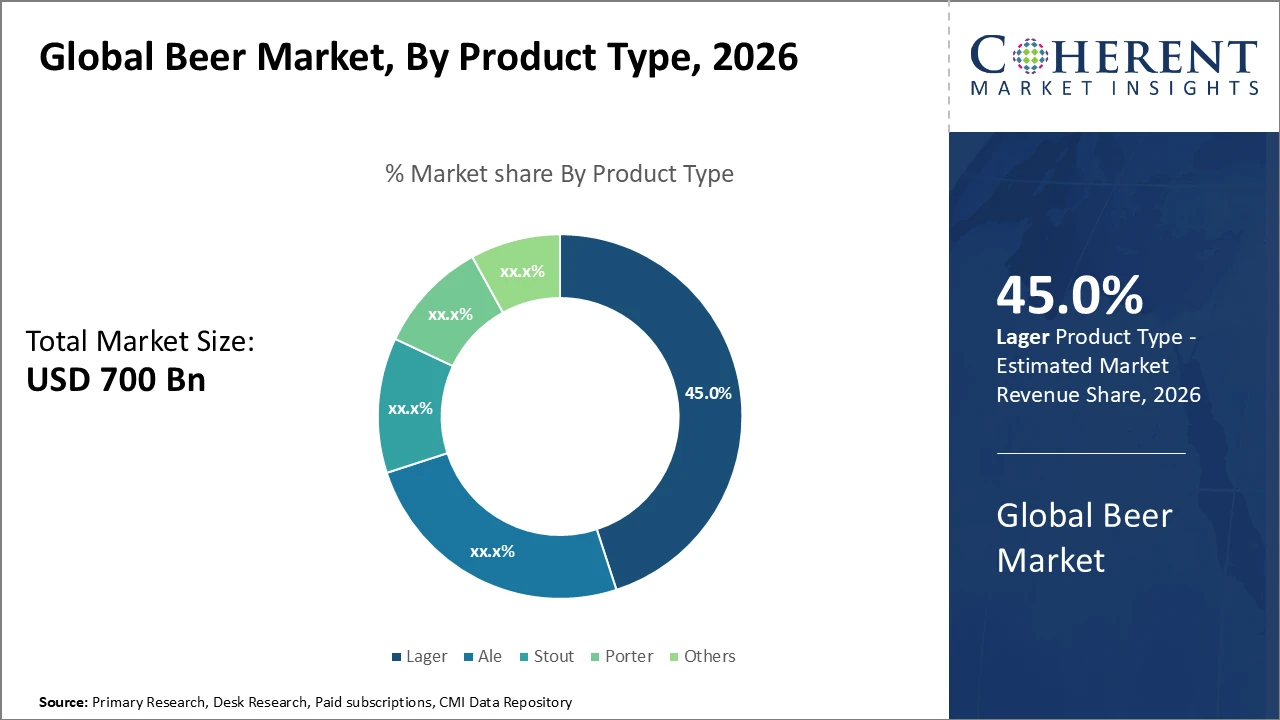
The Lager segment dominates the Beer Market with a 45% share, driven by consumer preference for traditional flavors and widespread distribution networks.
Ale is the fastest-growing segment, fueled by diverse flavors and craft beer popularity among niche consumer groups seeking unique taste experiences.
Bottled beer accounts for 55% of revenue, favored for convenience and longer shelf life, while canned beer is growing faster due to portability and cost-effectiveness.
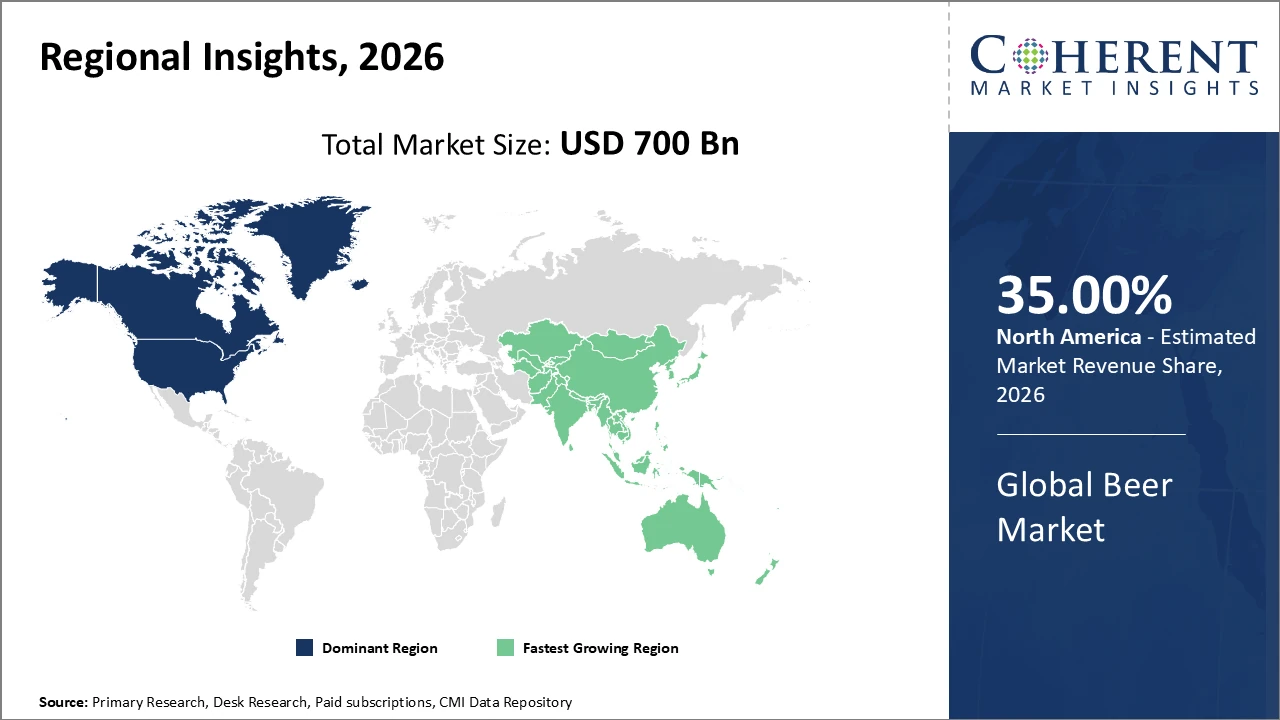
North America leads regionally, with the U.S. holding the largest share supported by a mature retail network and advanced production technologies.
Asia Pacific is the fastest-growing region with a CAGR over 7%, driven by urbanization and rising beer consumption in India and China.
Europe exhibits steady growth, boosted by premiumization trends and regulatory encouragement of sustainable production practices.
Beer Market Segmentation Analysis
Beer Market Insights, By Product Type
Lager dominates the Beer Market with a 45% share, driven by its traditional appeal, wide distribution, and consistent consumer preference. Its mild, smooth taste ensures popularity across both mature and emerging markets. Ale is the fastest-growing subsegment, fueled by the craft beer movement and experimental flavor offerings that attract younger, experience-seeking consumers. Stout and Porter maintain steady demand, particularly in North America and Western Europe, valued for their full-bodied profiles, while growth remains moderate due to niche appeal. Other subsegments, including flavored and specialty beers, are gaining traction through innovative brewing techniques and limited-edition releases, creating new market opportunities.
Beer Market Insights, By Packaging
Bottled beer leads the market with a 55% share, favored for its perceived quality, extended shelf life, and premium consumer experience, maintaining dominance in both retail and on-trade channels. Cans represent the fastest-growing subsegment, driven by portability, lighter weight, environmental benefits, and cost-efficient production, expanding rapidly in North America and Asia Pacific. Kegs remain focused on the on-trade sector, supporting bars, restaurants, and event venues with bulk-serving needs. Other packaging formats, including flexible and innovative containers, are emerging to meet convenience trends, although they currently hold a smaller share, gradually carving out niche opportunities in the evolving beer market.
Beer Market Insights, By Distribution Channel
On-Trade channels, including bars and restaurants, dominate with a 48% market share, driven by social drinking habits, experiential consumption, and the rising popularity of craft and premium beers. These venues also serve as key platforms for new product launches and consumer trials. Off-Trade, comprising supermarkets, convenience stores, and online retail, is the fastest-growing segment, fueled by increasing e-commerce adoption and demand for at-home consumption, evidenced by a 20% global growth in online beer sales. The Others segment, covering direct brewery sales and specialty outlets, is smaller but expanding steadily due to direct-to-consumer initiatives and niche market targeting.
Beer Market Trends
Premiumization drives the market, with artisanal and craft beers boosting both volume and revenue through unique flavors and brand positioning.
Sustainability trends are rising, with eco-friendly packaging and energy-efficient brewing processes gaining consumer preference in 2026.
Digital retail channels are expanding, enabling direct-to-consumer sales and broader market accessibility, especially in North America and Europe.
Consumer environmental awareness is shaping purchasing decisions, influencing breweries to adopt greener practices and transparent sourcing.
Market dynamics are increasingly influenced by lifestyle trends, where social experiences, at-home consumption, and convenience drive segment growth.
Beer Market Insights, By Geography
North America Beer Market Analysis and Trends
In North America, the Beer Market maintains dominance, with the U.S. representing the largest share due to its mature brewing industry and high consumer demand for craft, premium, and specialty beers. The region accounts for roughly 35% of global market revenue, supported by technological advancements in brewing processes, efficient distribution networks, and widespread retail penetration. Consumer trends favor quality, flavor diversity, and artisanal products, boosting segment growth. Additionally, craft breweries and innovative marketing strategies have strengthened brand loyalty, while regulatory frameworks ensure product safety and standardization, collectively sustaining North America’s leadership in the global beer industry.
Asia Pacific Beer Market Analysis and Trends
Asia Pacific represents the fastest-growing region in the Beer Market, with a CAGR exceeding 7%, driven by rising disposable incomes, urbanization, and a growing young consumer base in countries such as India and China. Expanding brewery investments and modernization of production facilities support increased supply to meet escalating demand. Government incentives and favorable regulatory reforms have encouraged market entry and growth, while evolving consumer preferences toward craft and premium beers are diversifying offerings. Additionally, rising exposure to global beer culture through digital media and international tourism is accelerating adoption, positioning Asia Pacific as a critical growth engine in the global beer industry.
Beer Market Outlook for Key Countries
USA Beer Market Analysis and Trends
The USA continues to be a key contributor to the Beer Market, accounting for approximately 20% of global market revenue in 2026. Major players such as Anheuser-Busch and Boston Beer Company drive growth through innovation, sustainability initiatives, and expansion of craft beer offerings, which represent over 30% of domestic consumption. Increasing adoption of digital platforms in both on-trade and off-trade channels has accelerated market reach, while consumer demand for low-alcohol, organic, and premium beers further supports market expansion. Strong retail infrastructure, coupled with evolving taste preferences, reinforces the United States as a cornerstone of global beer industry growth.
Germany Beer Market Analysis and Trends
Germany holds a significant position in the Beer Market, driven by its rich brewing heritage, mature production infrastructure, and strong consumer preference for traditional lagers and pilsners. The market benefits from established craft and specialty beer segments, which attract both domestic and international consumers seeking premium, artisanal offerings. On-trade channels, including bars, beer gardens, and restaurants, account for the largest revenue share, while off-trade retail and e-commerce are steadily growing, supported by convenience-driven buying habits. Sustainability initiatives and eco-friendly packaging have gained traction among consumers. Overall, Germany maintains steady growth, fueled by innovation, export demand, and adherence to high-quality brewing standards.
Analyst Opinion
Increasing production capacity in emerging markets provides strong supply-side momentum. Breweries in countries like India and Brazil expanded facilities by nearly 18% in 2025 to meet rising domestic and export demand, improving supply chain efficiency and supporting overall market growth.
Pricing strategies by key companies influence market dynamics, with premium and value offerings. In 2024, premium beers captured about 42% of Western Europe’s market share, reflecting consumer preference for quality and unique flavors, positively impacting revenue.
Demand-side drivers include diversified use cases in hospitality and e-commerce, which grew 25% in 2025 in North America, enhancing market accessibility.
Microbrewery and craft beer segments gained significant penetration, driven by local flavors and ethical production, with Asia Pacific craft beer sales growing over 15% year-on-year in 2026, boosting segmental share and shaping market trends.
- Current Industry Events of 2026
- Market Size Estimation
- Regional Breakdown
- Competitive Landscape
- Customer Intelligence
- Segmental Analysis
- Pricing Analysis
- Key Market Drivers, Challenges & Future Trends
- Customized Insights Section
Market Scope
| Report Coverage | Details | ||
|---|---|---|---|
| Base Year: | 2025 | Market Size in 2026: | USD 700 billion |
| Historical Data for: | 2020 To 2024 | Forecast Period: | 2026 To 2033 |
| Forecast Period 2026 to 2033 CAGR: | 5.6% | 2033 Value Projection: | USD 1020 billion |
| Geographies covered: |
| ||
| Segments covered: |
| ||
| Companies covered: | Diageo plc, Grupo Modelo, Heineken N.V., Carlsberg Group, SABMiller, Boston Beer Company, Vietnam Brewery Limited, Efes Beverage Group, San Miguel Corporation, Kirin Holdings | ||
| Growth Drivers: |
| ||
Beer Market Growth Factors
The rising demand for premium and craft beers is a key market driver, with consumers favoring diverse and sophisticated flavor profiles. The craft beer segment grew rapidly, recording a 14% year-on-year increase in North America in 2026. Technological advancements in brewing processes enhanced production efficiency, with automation adoption in 2025 boosting output by 17%. Expanding e-commerce penetration widened distribution, allowing previously underserved markets to access varied beer products and contributing to a 20% revenue increase in 2026. Additionally, favorable regulatory policies in emerging economies stimulated foreign direct investment, strengthening local brewing capacities in Latin America and Asia Pacific.
Beer Market Development
In March 2026, Beer Cartel expanded its monthly subscription service with two new options—IPA and dark beer packs—targeted at craft beer enthusiasts with specific preferences.
Key Players
Leading Companies of the Market
SABMiller
Diageo plc
Boston Beer Company
Efes Beverage Group
San Miguel Corporation
Grupo Modelo
Kirin Holdings
Carlsberg Group
Heineken N.V.
Vietnam Brewery Limited
Several leading beer makers intensified their portfolio diversification by launching low-alcohol and non-alcoholic variants in 2025, catering to health-conscious demographics. For example, Heineken’s introduction of Heineken 0.0 led to a 5% increase in market share in Europe within its first year. In parallel, companies like Anheuser-Busch leveraged digital marketing strategies and direct-to-consumer sales models, resulting in a 22% rise in e-commerce sales through 2026. These initiatives highlight the dual impact of product innovation and digital engagement in expanding market reach, strengthening brand presence, and responding effectively to evolving consumer preferences across global markets.
Beer Market Future Outlook
The Beer Market is expected to witness steady growth from 2026 to 2033, driven by premiumization, craft beer expansion, and evolving consumer preferences toward low- and non-alcoholic options. Increasing adoption of innovative brewing technologies and sustainable practices, including eco-friendly packaging, will enhance operational efficiency and appeal to environmentally conscious consumers. E-commerce and digital retail channels will continue to expand market reach, particularly in emerging regions. Additionally, rising disposable incomes and urbanization in Asia Pacific and Latin America will create new growth opportunities. The convergence of health trends, premiumization, and digitalization is projected to shape the market’s future trajectory.
Beer Services Market Historical Analysis
The Beer Services Market has evolved significantly over the past decade, shaped by changing consumer behaviors, technological advancements, and expanding distribution networks. Historically, on-trade services such as bars, pubs, and restaurants dominated revenue generation due to social consumption patterns and experiential marketing. Off-trade channels, including supermarkets and specialty retailers, gained prominence with convenience-driven purchases and the rise of packaged beer sales. Craft and microbrewery services began influencing market dynamics around 2018–2020, catering to niche taste preferences. Technological integration in production, storage, and logistics improved service efficiency, while sustainability initiatives started to influence both operational practices and consumer perception, laying the groundwork for future growth.
Sources
Primary Research Interviews:
Brewery operations managers, production supervisors, and quality assurance specialists across large-scale and craft breweries
Distribution and logistics managers in retail and wholesale beer supply chains
Beverage industry analysts and market consultants focusing on consumption trends, regulatory impacts, and market expansion strategies
Databases:
MarketsandMarkets – Global and Regional Beer Market Reports
Allied Market Research – Beer Production, Packaging, and Distribution Insights
Technavio – Market Adoption Trends, Consumption Forecasts, and Retail Demand Analysis
Grand View Research – Beer Market Segmentation, Revenue Analysis, and Competitive Landscape
Magazines:
Beverage Industry – Brewing Innovations, Product Launches, and Market Trends
Brewbound – Craft Beer News, Consumer Insights, and Operational Updates
The Brewers Journal – Production Techniques, Sustainability Practices, and Global Beer Trends
Modern Brewery Age – Market Developments, Technology Integration, and Industry Reports
Journals:
Journal of the Institute of Brewing – Research on Brewing Technology, Fermentation, and Product Quality
Food Research International – Trends in Beverage Ingredients, Shelf Life, and Sensory Studies
Journal of Beverage Science – Innovations, Consumer Behavior, and Product Formulation
Newspapers:
The Wall Street Journal – Global Beer Market Developments, Investments, and M&A News
Financial Times – Beer Industry Economic Insights and Market Trends
BeverageDaily – Company Expansions, New Product Launches, and Regulatory Updates
Business Insider – Competitive Analysis and Beer Sector Insights
Associations:
Brewers Association – Craft Beer Research, Standards, and Advocacy
World Brewers Association – Global Market Insights, Guidelines, and Training
American Society of Brewing Chemists (ASBC) – Certification, Research, and Operational Standards
Get access to 250+ pages report
Every segment, forecast, competitor profile and data table behind the analysis above — available for instant download.
- ESOMAR Member
- ISO 9001:2015 Certified
- D-U-N-S Registered
- GDPR & CCPA Compliant
Missing comfort of reading report in your local language? Find your preferred language:
Transform your Strategy with Exclusive Trending Reports
Frequently Asked Questions
The dominant players include Anheuser-Busch InBev, Heineken, Carlsberg Group, and China Resources Snow Breweries, noted for their extensive product portfolios and global reach.
The Beer Market is projected to reach USD 1,020 billion by 2033, growing at a CAGR of 5.6% from 2026, reflecting expanding consumer demand and innovative market trends.
On-trade sectors such as bars and restaurants continue to drive growth, accounting for nearly 48% of distribution channel market share, with emerging growth in off-trade online retailers.
Market trends will see a significant pivot towards craft beers, low-alcohol variants, sustainable packaging, and technological integration in production and supply chain operations.
The competitive landscape is marked by portfolio diversification and premiumization strategies, while challenges include fluctuating raw material prices and regulatory constraints impacting market dynamics.
Leading companies are adopting multi-channel distribution, digital marketing, product innovation, and sustainability initiatives to enhance market penetration and consumer engagement.