

Microgreens Market Size and Forecast – 2026 to 2033
Global microgreens market is estimated to be valued at USD 4.50 Bn in 2026 and is expected to reach USD 9.25 Bn by 2033, exhibiting a compound annual growth rate (CAGR) of 10.7% from 2026 to 2033.
Key Takeaways
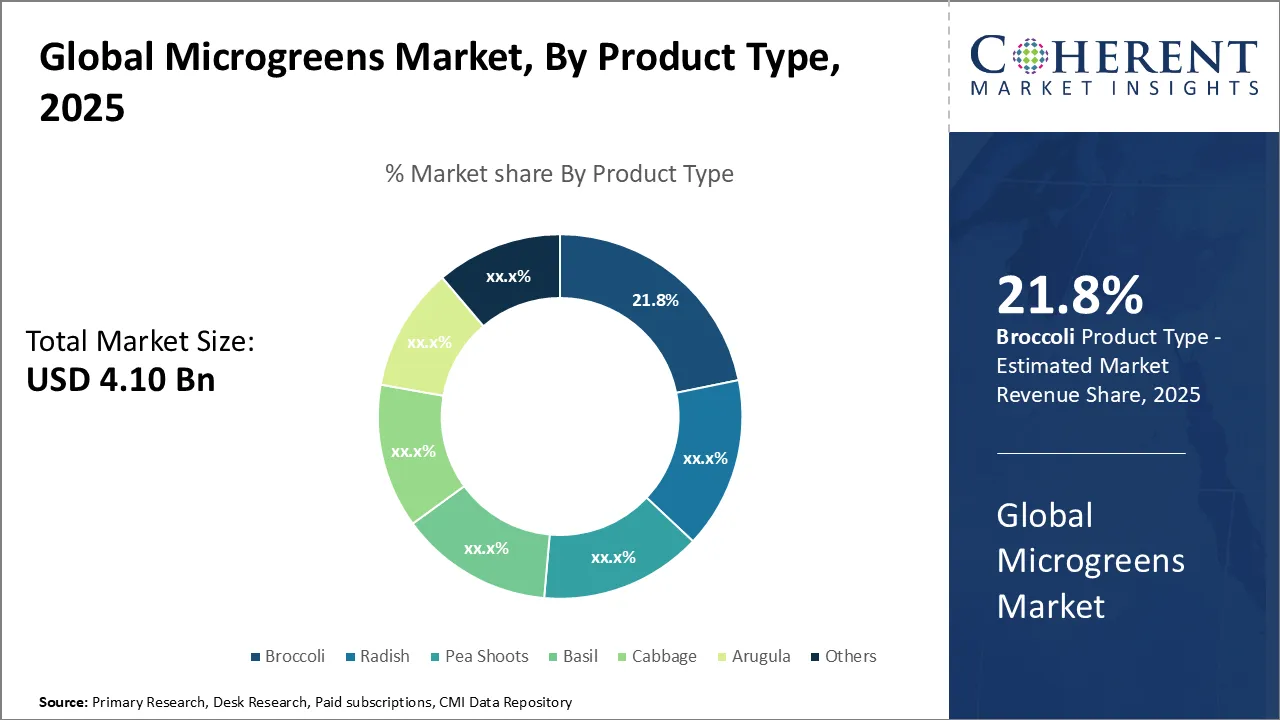
- By Product Type, Broccoli holds the largest market share of 22.8% in 2026 owing to the growing health consciousness.
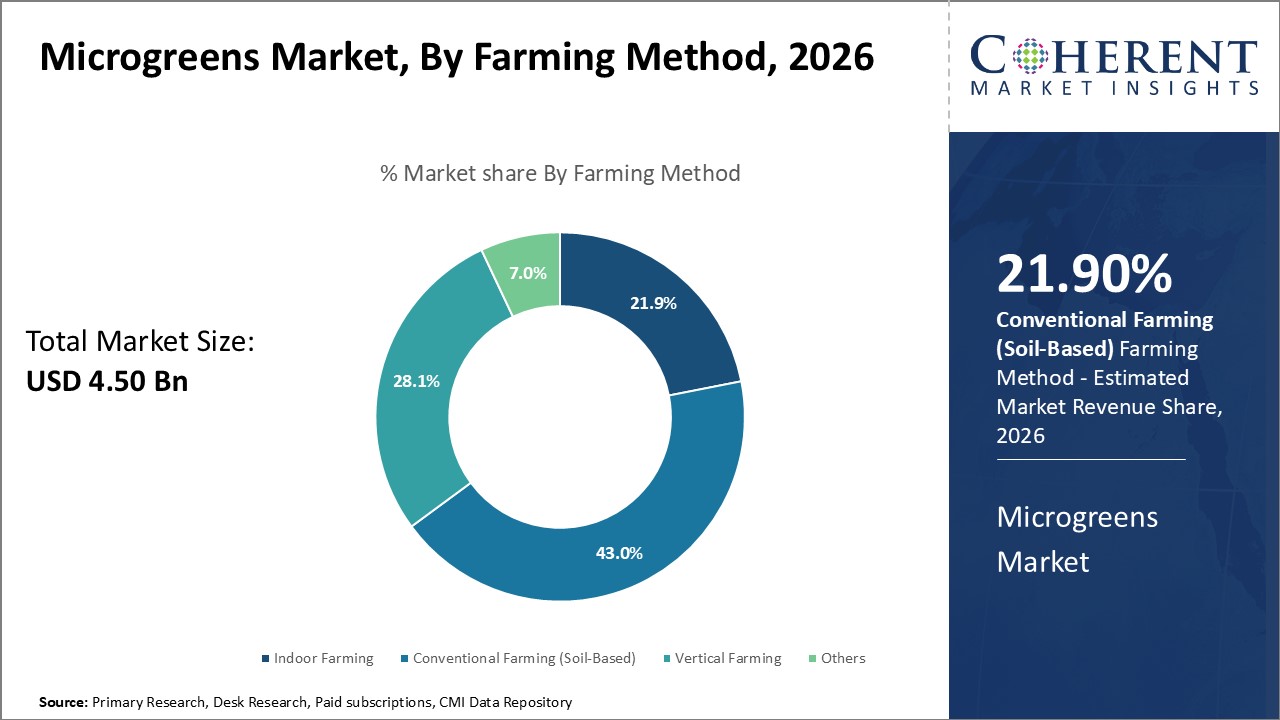
- By Farming Method, Indoor Farming expected to hold largest market share of 21.9% in 2026 owing to its controlled environment & year-round production.
- By Distribution Channel, Retail acquired the prominent market share of 33.7% in 2026 owing to the increased consumer access & availability.
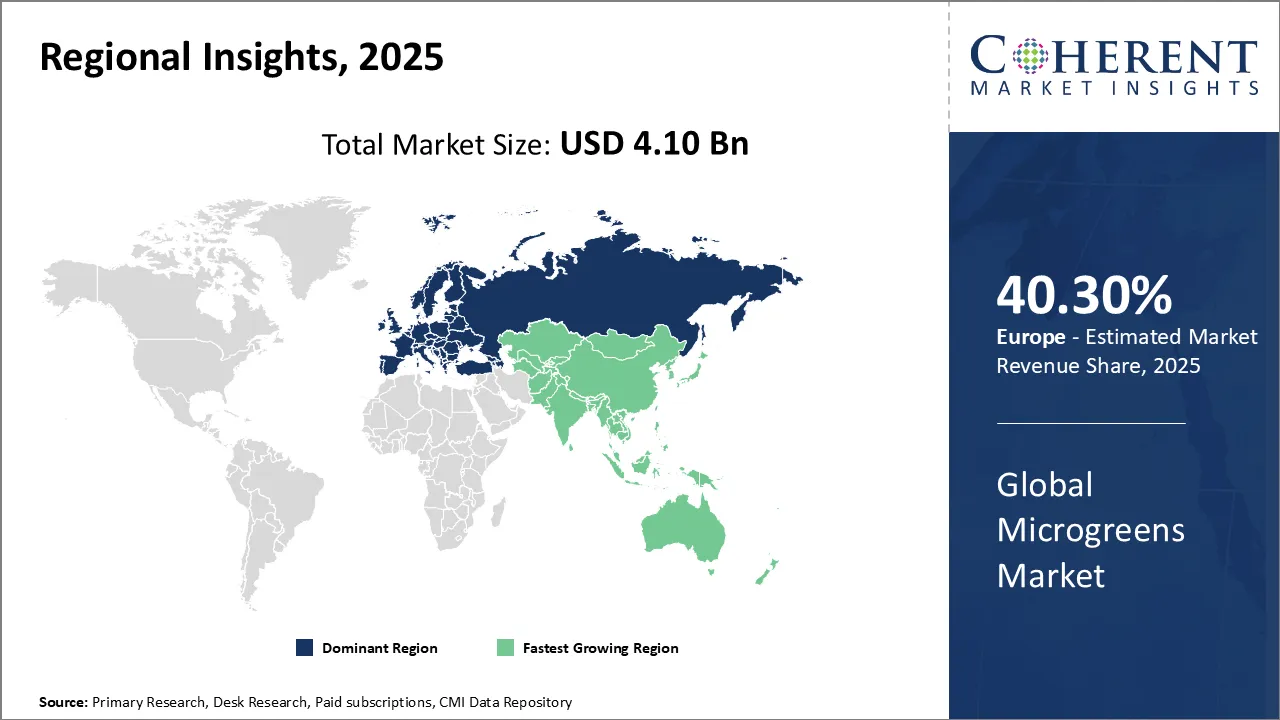
- By Region, Europe dominates the overall market with an estimated share of 40.3% in 2026 owing to the rising health & nutrition awareness.
Market Overview
The microgreens market continues to grow as consumers increasingly seek nutrient-dense, fresh, and sustainably produced foods. Retailers, foodservice providers, and households actively use microgreens for their bold flavor, visual appeal, and health benefits. Indoor and urban farming practices are accelerating production, while wider retail distribution and strong interest from health-conscious and plant-based consumers are further driving demand, especially in developed regions with well-established food distribution networks.
Current Events and Its Impact on the Microgreens Market
Current Events | Description and its impact |
Global Supply Chain Disruptions Due to Ongoing Geopolitical Tensions |
|
Increasing Urbanization and Demand for Sustainable, Local Food Sources |
|
Economic Inflation and Rising Input Costs Globally |
|
Segmental Insights
- Current Industry Events of 2026
- Market Size Estimation
- Regional Breakdown
- Competitive Landscape
- Customer Intelligence
- Segmental Analysis
- Pricing Analysis
- Key Market Drivers, Challenges & Future Trends
- Customized Insights Section
Microgreens Market Insights, By Product Type - Broccoli contributes the highest share of the market owing to its urban & indoor farming expansion
Broccoli holds the largest market share of 22.8% in 2026. Broccoli microgreens are gaining strong traction in the microgreens market as consumers recognize them as a functional superfood rich in antioxidants and nutrients. Health-focused buyers actively choose broccoli microgreens for their perceived immune-supporting and wellness benefits. Growers favor them for their short cultivation cycle and suitability for indoor farming systems. At the same time, increasing use in gourmet cuisine, health-oriented retail outlets, and home growing practices continues to expand their adoption across the market. For instance, in May 2024, Wild About Sprouts, a leading brand under Ra Foods, has expanded its health food portfolio with the launch of a 3oz Alfalfa, Broccoli, and Kale Blend. The new offering brings together the crisp freshness of alfalfa, the robust texture of kale, and the nutty flavor of broccoli sprouts.
Microgreens Market Insights, By Farming Method - Indoor Farming contribute the highest share of the market owing to its higher yields & resource efficiency
Indoor Farming expected to hold largest market share of 21.9% in 2026. Indoor farming fuels growth in the microgreens market by allowing growers to cultivate crops year-round under controlled conditions, ensuring consistent quality and higher yields. Farmers actively manage light, temperature, and humidity to minimize risks from weather and pests. Urban and vertical farming techniques enable production in limited spaces, delivering fresh microgreens closer to consumers. Strong demand from health-conscious buyers, restaurants, and retailers drives investment in indoor systems, establishing this approach as a central force in expanding the microgreens market. For instance, in June 2025, A Canadian-built indoor farm is providing fresh food to refugees and local families in Rîșcova, Moldova, delivering a sustainable solution during ongoing conflict and food insecurity.
Microgreens Market Insights, By Distribution Channel - Retail contributes the highest share of the market owing to its product variety & packaging innovation
Retail acquired the prominent market share of 33.7% in 2026. Retailers are driving growth in the microgreens market by providing consumers with easy access to fresh, nutrient-rich greens through supermarkets, specialty stores, and online platforms. Consumers actively choose microgreens for their health benefits, vibrant appearance, and convenience, promoting repeat purchases. Creative packaging, ready-to-eat options, and a variety of products increase their attractiveness. Rising interest in plant-based diets and functional foods prompts retailers to broaden offerings, while collaborations with local growers and urban farms enhance supply chains and boost market expansion. For instance, in May 2025, AeroFarms, a supplier of microgreens to the U.S. retail market, has launched its newest product, micro bok choy. This addition to the FlavorSpectrum lineup offers a versatile option with a mild, sweet taste suited for everyday meals.
Regional Insights
Europe Microgreens Market Trends
Europe dominates the overall market with an estimated share of 40.3% in 2026. European consumers are actively driving the microgreens market by seeking healthy, fresh, and locally grown produce, incorporating microgreens into their daily meals. Retailers and foodservice providers are introducing a variety of microgreens to satisfy evolving tastes and support culinary innovation. Growers increasingly adopt sustainable farming practices and indoor cultivation to ensure consistent supply and reduce reliance on imports. Rising interest in plant-based nutrition and eco-friendly consumption motivates producers and retailers to broaden their offerings, boosting the market’s presence across Europe. For instance, Dutch microgreens specialist Koppert Cress has launched an English Mix of living microgreens for UK chefs. Developed with input from restaurant kitchens, the mix includes eight small punnets designed to lower costs and reduce waste.
North America Microgreens Market Trends
The market for microgreens is being actively driven by customers in North America who are looking for organic, fresh, and nutrient-dense foods to include in their everyday meals and dishes at restaurants. Even in urban locations, growers use cutting-edge indoor and vertical farming technologies to guarantee consistent, local production. Supermarkets, farmers' markets, and specialized shops are ways that retailers increase accessibility. Adoption is further encouraged by culinary innovation and an emphasis on sustainability, making North America a leader in the production and consumption of microgreens. For instance, in December 2026, John Crutchfield founded Sproutstanding after overcoming chronic gut health issues and inflammation by incorporating microgreens—especially broccoli microgreens—into his diet, inspiring him to share high-quality microgreens with others.
United Kingdom Microgreens Market Trends
British consumers are actively driving growth in the United Kingdom’s microgreens market by demanding nutritious, locally grown, and environmentally friendly foods, increasing usage at home and in retail. Urban growers and agritech startups are expanding controlled environment agriculture to overcome land limitations and climate challenges, ensuring consistent supply and freshness. Restaurants and foodservice providers are incorporating microgreens for their visual appeal and health benefits. These trends collectively promote production innovation and solidify microgreens’ presence in the UK food market.
United States Microgreens Market Trends
American consumers are actively driving the microgreens market by embracing fresh, nutrient-rich, and sustainable foods, incorporating microgreens into daily meals and restaurant dishes. Growers use advanced indoor and vertical farming technologies to deliver consistent, year-round, locally produced supplies. Retailers and direct-to-consumer platforms expand access through supermarkets, farmers’ markets, and online channels. Regional demand, particularly in the West Coast and Northeast, further influences market dynamics, fostering diverse growth and increasing the prominence of microgreens across the United States. For instance, New York City–based indoor grower Square Roots has launched two new salad mixes, marking its entry into the packaged salads and greens market. The mixes combine microgreens and crisp baby leaves grown in the company’s climate-controlled, cloud-connected indoor farms.
End-user Feedback and Unmet Needs in the Microgreens Market
- Flavor and Variety Preferences: Consumers appreciate microgreens for their taste and nutritional value but often seek a broader variety of flavors beyond popular options like broccoli or radish. Many end-users desire exotic or mixed microgreens blends that offer new culinary experiences, encouraging producers to innovate with diverse seeds and flavor profiles.
- Freshness and Shelf Life: Shoppers value microgreens’ freshness but note that limited shelf life can reduce convenience. Retailers and home growers express a need for improved packaging or preservation methods that maintain crispness and nutrients longer, ensuring microgreens remain appealing and usable for several days after purchase or harvest.
- Accessibility and Availability: End-users report that microgreens are not consistently available in all regions, limiting daily consumption. There is demand for wider distribution across supermarkets, online channels, and local markets, as well as affordable options, enabling more consumers to integrate microgreens into regular meals without geographic or price constraints
Microgreens Market Trend
Rising Health and Wellness Focus
Consumers are increasingly prioritizing nutrient-dense and functional foods, boosting microgreens’ popularity for their high vitamin, mineral, and antioxidant content. Health-conscious buyers incorporate them into daily meals, smoothies, and salads, while fitness enthusiasts and wellness communities actively promote their benefits. This trend drives producers to highlight nutritional value, adopt organic practices, and create educational campaigns, positioning microgreens as essential components of a balanced, modern diet that appeals to both individuals and families seeking long-term health benefits.
Expansion of Indoor and Urban Farming
Urbanization and limited arable land are pushing producers toward indoor farming, vertical systems, and controlled environment agriculture. These methods allow year-round cultivation, consistent quality, and minimal use of water and space. Growers leverage technology like LED lighting, hydroponics, and automation to optimize yields, reduce environmental impact, and supply local markets. This trend strengthens urban food networks, reduces transportation needs, and encourages smaller producers and startups to enter the microgreens market, promoting innovation and sustainability.
Microgreens Market Opportunity
Growth in Urban and Indoor Farming
The rising adoption of indoor, vertical, and hydroponic farming creates opportunities for efficient, localized production. Entrepreneurs can invest in small-scale urban farms, rooftop gardens, or automated growth systems to meet city demand. Retailers and restaurants increasingly prefer locally sourced, fresh microgreens, reducing transportation costs and enhancing supply chain sustainability. Innovations in farming technology, including IoT sensors, LED lighting, and climate-controlled environments, allow consistent quality, higher yields, and year-round production, offering new entrants a profitable, scalable business model.
Market Report Scope
Microgreens Market Report Coverage
| Report Coverage | Details | ||
|---|---|---|---|
| Base Year: | 2025 | Market Size in 2026: | USD 4.50 Bn |
| Historical Data for: | 2020 To 2024 | Forecast Period: | 2026 To 2033 |
| Forecast Period 2026 to 2033 CAGR: | 10.7% | 2033 Value Projection: | USD 9.25 Bn |
| Geographies covered: |
| ||
| Segments covered: |
| ||
| Companies covered: | AeroFarms, Fresh Origins, Gotham Greens, Good Leaf Farms, Living Earth Farms, Farmbox Greens, Chef’s Garden, Bowery Farming, Teshuva Agricultural Projects Ltd., Madar Farms, and Metro Microgreens | ||
| Growth Drivers: |
| ||
| Restraints & Challenges: |
| ||
Microgreens Market News
- In December 2024, An innovative vertical greenhouse for growing microgreens like lettuce, arugula, and basil has launched in the Almaty Industrial Zone, and journalists toured the facility during a press event organized by the city’s Department of Entrepreneurship and Investments with regional communication partners.
- In November 2024, BrightFresh Microgreens has expanded its Southern California distribution by launching its Supergreens Micro Medley at 43 Costco locations. The 6-ounce pack offers a versatile option for salads, sandwiches, pasta, smoothies, and more.
Analyst Opinion (Expert Opinion)
- The microgreens market has moved beyond niche wellness hype into a structurally significant segment of specialty produce, evidenced by more than 35% adoption growth in recent years and broccoli, basil, and arugula comprising roughly half of global cultivation types — a clear signal that consumers are choosing these greens for specific nutritional and culinary value rather than faddish appeal.
- Controlled‑environment production is not experimental — it is foundational. Indoor vertical farming now accounts for nearly half of microgreens output globally, with facility counts rising sharply, enabling growers to consistently deliver product every 7–14 days instead of grappling with the seasonality and loss rates typical of open‑field crops. This precision agriculture shift has materially improved supply reliability and reduced spoilage, directly addressing one of the sector’s most persistent operational constraints.
- Retail and foodservice channels are not just ancillary — they are central to market expansion. Restaurant demand alone accounts for a majority of end‑user volume, pushing producers toward premium mix offerings that justify price premiums and elevate microgreens beyond garnish status. Furthermore, microgreens’ penetration into mainstream grocery aisles and boutique health stores — supported by innovative packaging and branding — reflects consumer willingness to pay for freshness and perceived functional benefits.
- Finally, market structure and competitive dynamics remain complex. While leading agritech players have consolidated a significant share of sales, the broader industry is still fragmented, with quality and pricing inconsistencies limiting scalability for smaller growers. This underscores a pivotal near‑term opportunity: standardization of quality, logistics innovation, and strategic channel partnerships will determine which producers transition from niche operators to category leaders.
Speak to the analyst
Want personalized insights?
Take the findings above to one of our principal consultants, or have the report rebuilt around the segments, geographies and competitors you actually track.
Market Segmentation
- Product Type Insights (Revenue, USD Bn, 2021 - 2033)
- Broccoli
- Radish
- Pea Shoots
- Basil
- Cabbage
- Arugula
- Others
- Farming Method Insights (Revenue, USD Bn, 2021 - 2033)
- Indoor Farming
- Conventional Farming (Soil-Based)
- Vertical Farming
- Others
- Distribution Channel Insights (Revenue, USD Bn, 2021 - 2033)
- Retail
- Direct Sales (Farmers' Markets)
- Others
- Regional Insights (Revenue, USD Bn, 2021 - 2033)
- North America
- U.S.
- Canada
- Latin America
- Brazil
- Argentina
- Mexico
- Rest of Latin America
- Europe
- Germany
- U.K.
- Spain
- France
- Italy
- Russia
- Rest of Europe
- Asia Pacific
- China
- India
- Japan
- Australia
- South Korea
- ASEAN
- Rest of Asia Pacific
- Middle East
- GCC Countries
- Israel
- Rest of Middle East
- Africa
- South Africa
- North Africa
- Central Africa
- North America
- Key Players Insights
- AeroFarms
- Fresh Origins
- Gotham Greens
- Good Leaf Farms
- Living Earth Farms
- Farmbox Greens
- Chef’s Garden
- Bowery Farming
- Teshuva Agricultural Projects Ltd.
- Madar Farms
- Metro Microgreens
Sources
Primary Research interviews
- Microgreens growers and urban farm operators in North America, Europe, and the UK
- Retail buyers and category managers from supermarkets, specialty stores, and online platforms
- Chefs and foodservice professionals using microgreens in restaurants and catering
- Nutritionists and dieticians focusing on functional and plant-based foods
Databases
- FAO (Food and Agriculture Organization) statistics
- USDA National Nutrient Database
- Eurostat Agricultural Statistics
- United Nations Comtrade Database
Magazines
- Fresh Produce Journal
- Modern Farmer
- Greenhouse Grower
- VegNews
Journals
- Journal of Food Science and Technology
- International Journal of Agricultural Sustainability
- HortScience
- Journal of Functional Foods
Newspapers
- The Guardian – Food & Environment section
- The New York Times – Food section
- Financial Times – Agriculture & Retail section
- The Telegraph – Food & Lifestyle section
Associations
- Specialty Produce Association (SPA)
- American Horticultural Society
- British Growers Association
- European Indoor Farming Association
Public Domain sources
- Government reports on agriculture and nutrition
- Research publications from universities and public institutes
- Open-access studies on hydroponics, vertical farming, and microgreens cultivation
Proprietary Elements
- CMI Data Analytics Tool
- Proprietary CMI Existing Repository of information for last 8 years
Get access to 250+ pages report
Every segment, forecast, competitor profile and data table behind the analysis above — available for instant download.
- ESOMAR Member
- ISO 9001:2015 Certified
- D-U-N-S Registered
- GDPR & CCPA Compliant
Missing comfort of reading report in your local language? Find your preferred language:
Transform your Strategy with Exclusive Trending Reports
Frequently Asked Questions
The Microgreens Market is estimated to be valued at USD 4.50 Bn in 2026, and is expected to reach USD 9.25 Bn by 2033.
The CAGR of the Microgreens Market is projected to be 10.7% from 2026 to 2033.
Organic and sustainable farming and popularity of plant-based diets are the major factors driving the market growth of the microgreens.
Limited distribution networks and seasonality of demand are the major factors hampering the market growth of the microgreens.
In terms of product type, broccoli segment is estimated to dominate the market in 2026.
AeroFarms, Fresh Origins, Gotham Greens, Good Leaf Farms, Living Earth Farms, Farmbox Greens, Chef’s Garden, Bowery Farming, Teshuva Agricultural Projects Ltd., Madar Farms, and Metro Microgreens are the major players.
Europe is expected to lead the global microgreens market in 2026.