

U.S. Nutraceuticals Market Size and Trends
The U.S. Nutraceuticals Market is estimated to be valued at USD 186.70 Bn in 2026 and is expected to reach USD 271.59 Bn by 2033, exhibiting a compound annual growth rate (CAGR) of 5.5% from 2026 to 2033.
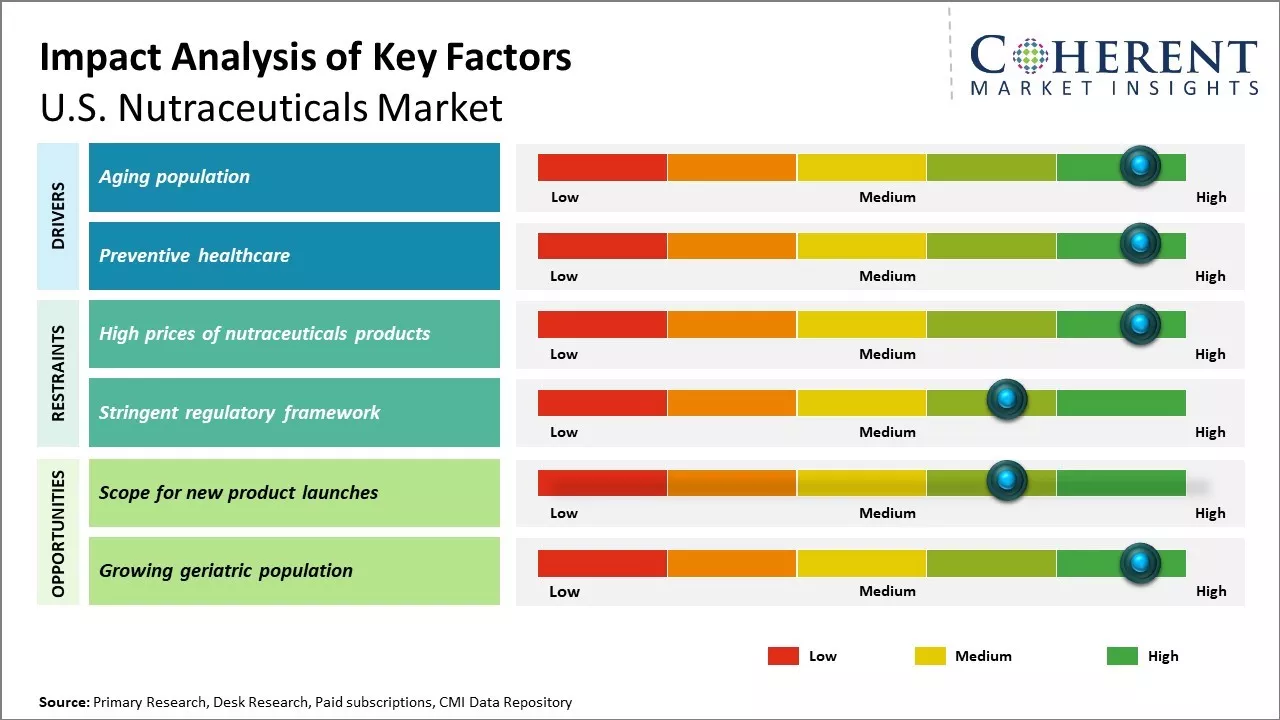
Key Takeaways
- Based on Product Type, the Functional Food segment is projected to hold the largest market share of 40.6% in 2026, owing to its rising health awareness among consumers.
- Based on Product Form, the Tablet & Capsules segment is projected to lead with 38.5% market share in 2026 due to its widespread popularity and convenience.
Market Overview
The U.S. nutraceuticals market is experiencing a Robust growth over the coming years due to rising health consciousness among consumers and increasing preference for dietary supplements to meet daily nutrition requirements. The nutraceuticals market in the U.S. is witnessing strong growth driven by increasing consumer awareness about health and wellness. There is a rising demand for functional foods and beverages claiming various health benefits such as immunity boost, digestive health, heart health, sports nutrition, and weight management.
Current Events and Its Impact
Current Event | Description and its Impact |
Environmental Supply Disruptions |
|
Economic & Consumer Behavior Shifts |
|
Role of Artificial Intelligence (AI) in the U.S. Nutraceuticals Market
The integration of artificial intelligence in the U.S. nutraceuticals helps in functional ingredients and dietary supplements. In the nutraceutical industry AI is specifically used for ingredient developers, supplement providers, marketers and quality testers. Along with that, AI enables personalized nutrition plans, accelerate product development and improves research and development process.
In February 2025, Nutrify launched Dealsphere, an AI-powered platform set to transform the global nutraceutical industry. Dealsphere offers an instant commerce model, streamlining the in-licensing and commercialization process for science-backed nutrition products. The platform provides businesses with access to validated formulas, scientific dossiers, stability data, and mapped supply chains, enabling product launches in as little as 15 to 30 days, eliminating traditional barriers, accelerating market entry and boosting innovation responsible nutrition.
- Current Industry Events of 2026
- Market Size Estimation
- Regional Breakdown
- Competitive Landscape
- Customer Intelligence
- Segmental Analysis
- Pricing Analysis
- Key Market Drivers, Challenges & Future Trends
- Customized Insights Section
Segmental Insights
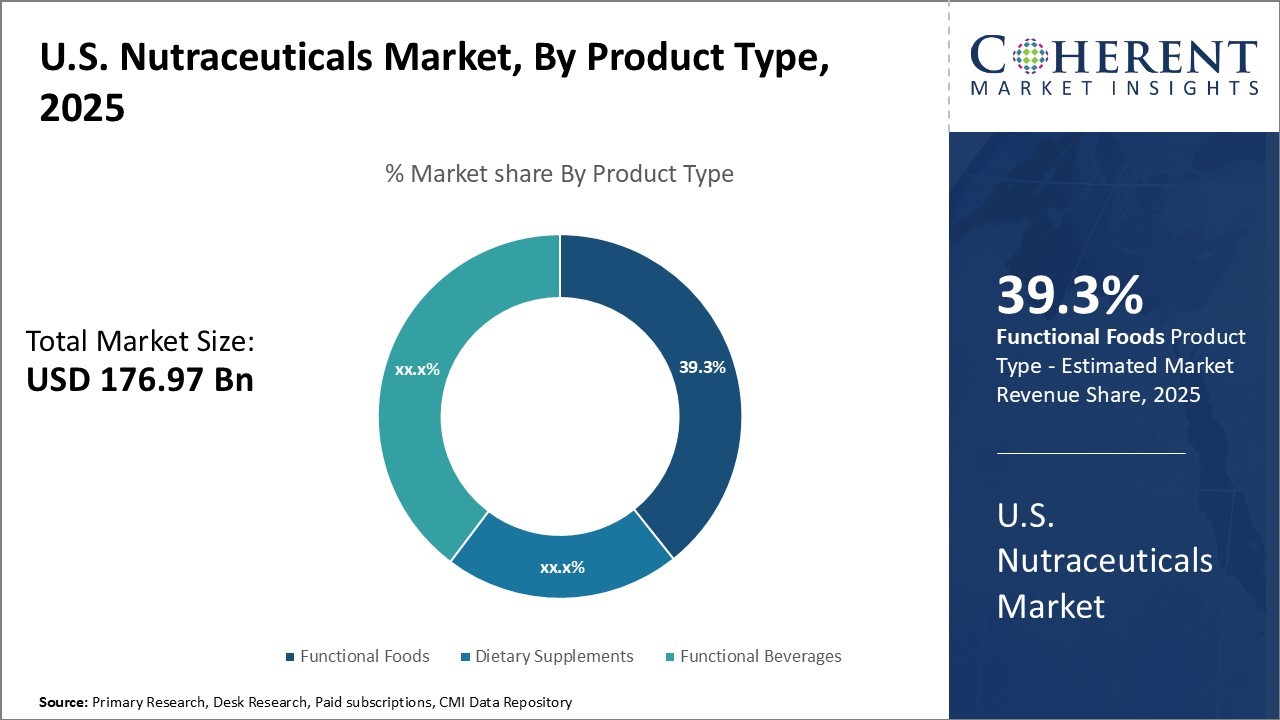
U.S. Nutraceuticals Market Insights, By product type - Increasing health consciousness is Driving the Functional Foods Demand
In terms of product type, the functional foods segment is expected to hold 40.3% share of the market in 2026. Functional foods have seen tremendous growth in the U.S. nutraceuticals market due to rising health awareness among consumers. These types of foods are designed to provide extra health benefits beyond basic nutrition. As people become more focused on proactively managing their health and reducing risk of diseases, functional foods have emerged as a popular option. A major factor driving the growth of functional foods is the ability to easily incorporate health benefits into an everyday diet. People can gain antioxidants, vitamins, minerals, prebiotics and probiotics through common food items like cereal, yogurt, bread and juice without having to remember to take supplements. Busy lifestyle has made functional foods appealing as they allow getting nutrition on-the-go. Product innovations catering to different health needs and tastes have further boosted popularity.
Another key driver has been marketing and promotion by manufacturers highlighting precise health attributes. Conditions such as heart health, bone health, digestive health and immune support have resonated strongly with consumers. Promotions through nutrition labels, packaging information as well as digital and social media ads have helped raise awareness. Some products have also strategically targeted the expanding wellness and disease prevention space beyond basic treatment and cure. Strong demand from health-conscious demographics like millennials and baby boomers also contribute to growth. Rising health insurance and medical costs have driven interest in preventive approaches and disease risk reduction through diet. The growing senior population additionally favors functional foods for general well-being and aid with aging concerns.
In January 2025, the Department of Science and Technology (DOST) and the University of San Agustin (USA) inaugurated the Kasanggang NICER in Functional Food Excellence (KNIF2E) Laboratory in Iloilo City. This state-of-the-art facility aims to transform local crops—sugarcane, legumes, lagundi, and cacao—into health-promoting functional foods. Under the SPC-FUEL for Health program, key projects include Project ASUCAR, PULSES, and CHOCO CARE, developed in collaboration with industry partners like Pharma GalenX, Herbanext Laboratories, and Malagos Chocolates.
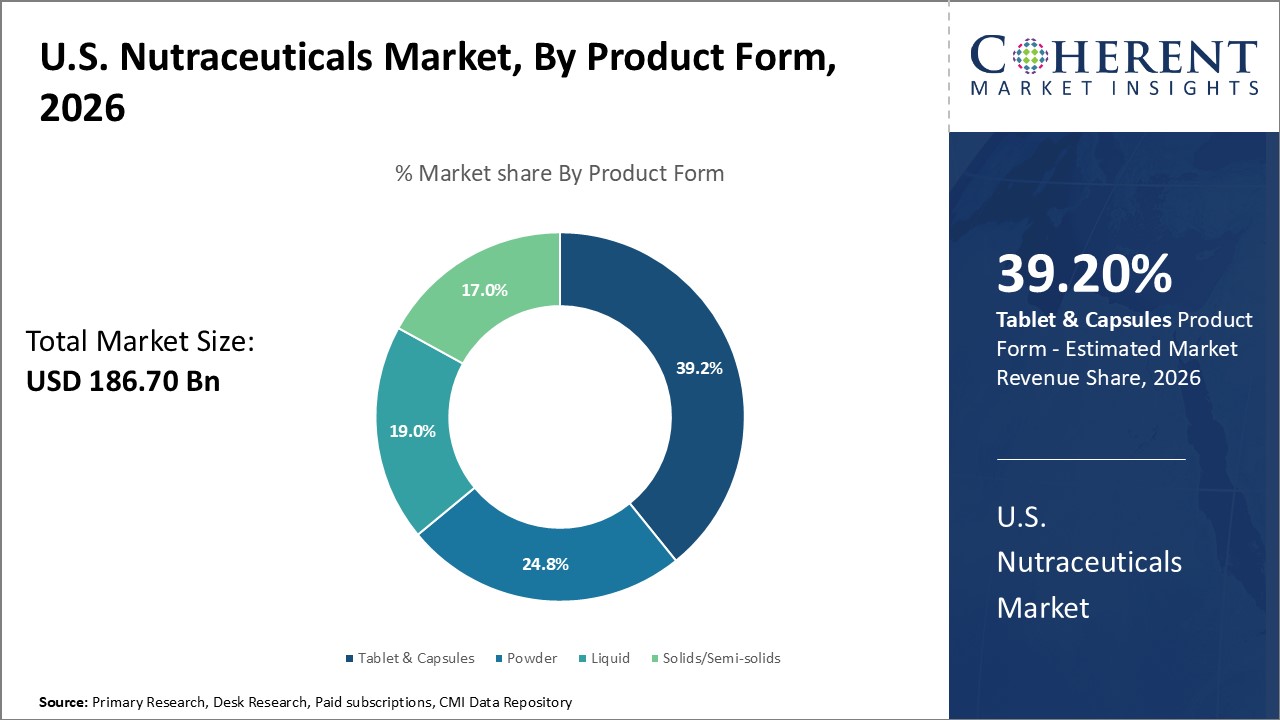
U.S. Nutraceuticals Market Insights, By product form - Convenience and popularity is Driving the Tablet & Capsules Segment Growth
Tablet & Capsules segment contributes the 39.2% share of the market in 2026. Tablet and capsule formulations dominate the US nutraceutical products market owing to the widespread popularity and convenience they offer consumers. Their easy-to-take and compact nature makes them a preferred delivery method for supplement intake compared to alternatives like powders. The convenience of tablets and capsules to complement fast-paced lifestyles through "pop and go" usage has been a significant factor driving their sales. Busy Americans prefer the simple convenience they provide over other options requiring additional prep steps. Their portability further allows consumption on the go without mess.
The popularity of tablet/capsule forms also arises due to familiarity and existing healthcare habits. Americans are conditioned to tablets/pills from pharmaceutical usage and see them as the standard delivery method. Supplement companies leverage this familiarity and shape preferences toward same for hassle-free transitions between healthcare and wellness products. Additionally, wide applicability across various supplement categories like vitamins, minerals, herbals, etc. favors their choice. The standardization and dosage control they provide compared to semi-solids additionally builds trust for consistent results. This contributes significantly to the sales leadership of tablets/capsules versus alternatives in different supplement types.
For instance, Lonza launched DRcaps® designed release liquid-filled capsules, utilizing Capsugel® LEMS® fusion technology to protect acid-sensitive ingredients and ensure targeted release, aligning with the trend towards specialized delivery systems in nutraceuticals.
U.S. Nutraceuticals Market Driver
Aging population
As life expectancy increases in the U.S., the population of older adults is growing at a significant rate. According to the latest census data, there are over 55 million people aged 65 years or older currently living in the country, and this number is expected to double to over 95 million by the year 2060. The nutraceuticals industry recognizes that as people age, their needs for supporting their health and wellness also increases. Many older consumers are actively looking for natural products that can help promote joint health, cognitive function, heart health, and more. Nutraceutical formulations for senior citizens have become quite sophisticated, moving beyond basic supplements to address multiple age-related health concerns through a single product. This has spurred robust demand from the baby boomer generation that wants to continue enjoying an active lifestyle well into their retirement years through the support of targeted nutrients and herbs. Leading companies have focused considerable resources on clinical research to validate ingredient and product efficacy for older demographics, giving consumers greater confidence in items designed specifically for their needs as they grow older.
For instance, data from Lightspeed/Mintel reports show that only 50% of those aged 55 and over are thinking seriously about how nutrition can prevent illness and extend their healthy life term. This is a huge opportunity for the FMCG sectors, and nowhere is this opportunity greater than in the food and nutraceutical market.
Preventive healthcare
In recent years, the issues of rising healthcare costs and growing chronic disease rates have dominated policy discussions in the U.S. There is widespread agreement that more emphasis needs to be placed on preventive measures and lifestyle modifications to address underlying risk factors for conditions like diabetes, heart disease, and obesity. Nutraceuticals present an appealing option for consumers who want to proactively support their wellness without reliance on prescription drugs.
Products containing antioxidants, anti-inflammatory compounds, omega-3 fatty acids, and other research-backed ingredients are being embraced for their possible disease preventive qualities. As the costs of Western medical treatment skyrocket with each passing year, individuals and families are strongly motivated to implement low-cost lifestyle strategies to avoid illness in the first place. Nutraceuticals have positioned themselves as an important first-line of defense against chronic disease development through supporting immune function, metabolic regulation, cardiovascular health, and other core foundations of good preventive health. This has significantly boosted demand across all major product categories within the industry.
In May 2025, the American College of Preventive Medicine (ACPM) commenced its annual conference, Preventive Medicine 2025, in Seattle, Washington. With the theme “Moving the Needle for Preventive Medicine and Public Health,” the event gathers nearly 500 physicians and public health leaders to discuss innovative strategies for disease prevention and health promotion.
U.S. Nutraceuticals Market Opportunities
Scope for new product launches
The U.S. nutraceuticals market presents significant scope for new product launches that can help address rising health and wellness needs of the population. With increasing lifestyle diseases and health issues such as obesity, diabetes and cardiovascular problems, there is growing awareness and demand for dietary supplements and functional foods among Americans. According to projections by the Centers for Disease Control and Prevention, by 2030, nearly half of the entire U.S. adult population will suffer from some form of preventable chronic disease if current trends continue. This presents a major U.S. nutraceuticals market opportunity for innovative nutraceutical products targeting specific health conditions or concerns.
Moreover, products offering benefits for immunity, gut health, brain health, bone and joint health etc., could see strong demand. Customized nutrigenomic and personalized nutrition options tailored to individuals' genetic makeup and needs are an emerging area with scope. Products targeting elderly health as the U.S. population ages are also projected to rise. The market is also evolving in terms of delivery systems - newer formats such as gummies, bites, coconut water-based options etc. are gaining traction among young, health-conscious consumers compared to traditional pills and powders.
Market Report Scope
U.S. Nutraceuticals Market Report Coverage
| Report Coverage | Details | ||
|---|---|---|---|
| Base Year: | 2025 | Market Size in 2026: | USD 186.70 Bn |
| Historical Data for: | 2020 To 2024 | Forecast Period: | 2026 To 2033 |
| Forecast Period 2026 to 2033 CAGR: | 5.5% | 2033 Value Projection: | USD 271.59 Bn |
| Segments covered: |
| ||
| Companies covered: | BASF S.E., BioNeutra Global Corporation, Botaneco Inc., Cargill Inc., Ceapro Inc., DowDuPont Inc., GrainFrac Inc., Ingredion Incorporated, InovoBiologic Inc., Jamieson Laboratories Ltd., Koninklijke DSM N.V., Lallemand Inc., Radient Technologies Inc., SunOpta Inc., The Nature’s Bounty Co., Groupe Danone, Abbott Laboratories, Chobani LLC, and Pfizer Inc. | ||
| Growth Drivers: |
| ||
| Restraints & Challenges: |
| ||
Recent Developments
- In May 2025, Huel, a producer of high-protein, nutritionally complete meals, announced its first-ever retail launch of the brand’s Black Edition High-Protein Complete Meal, exclusively at GNC stores across the U.S. and online.
- In April 2025, Lubrizol has launched a strategic distribution partnership with Palmer Holland, Inc. to enhance the availability of its innovative nutraceutical ingredient solutions across the Northeastern United States. This collaboration aims to meet the growing demand for Lubrizol’s microencapsulation technology, which improves ingredient delivery and bioavailability in nutraceutical, dietary supplement, and food and beverage products.
- In December 2024, Nitches Inc. launched its InTheZone Labs brand on Amazon, marking a significant step in its online expansion strategy. The first product, InTheZone Focused Extreme, with two additional supplements—InTheZone Focused Youth for cognitive support and InTheZone Passion for men's vitality. All products are manufactured in FDA-compliant, GMP-certified facilities in the United States. This move positions Nitches to tap into the growing nutraceuticals market.
Analyst Opinion (Expert Opinion)
- The U.S. nutraceuticals market holds strong growth potential over the next five years. Some of the key drivers behind this include an increased health and wellness focus among American consumers and a growing recognition of the health benefits of nutraceutical products. However, regulatory hurdles still pose a challenge to industry growth. The FDA has yet to establish a clear pathway for product classification and approval. This results in much uncertainty regarding legal and advertising issues.
- The west coast, particularly California and Washington, has emerged as the dominant region in the U.S. nutraceuticals space. This can be attributed to greater health awareness on the west coast and the presence of several startups and innovative nutraceutical companies based in these states. Similarly, dietary supplements focused on cognitive health and memory support are seeing the fastest uptake in the country. An aging population as well as increasing prevalence of lifestyle diseases is driving much of this demand.
- With appropriate regulatory frameworks and further education around product efficacy, the industry has room for accelerated expansion in the coming years. International players may consider entering the lucrative U.S. market through tie-ups or acquisitions. Overall, nutraceuticals demonstrate solid potential to benefit Americans’ health while driving revenues for innovative firms.
Speak to the analyst
Want personalized insights?
Take the findings above to one of our principal consultants, or have the report rebuilt around the segments, geographies and competitors you actually track.
Market Segmentation
- By Product Type (Revenue, USD Bn, 2021 - 2033)
- Dietary supplements
- Functional foods
- Functional beverages
- By Product Form (Revenue, USD Bn, 2021 - 2033)
- Tablet & Capsules
- Powder
- Liquid
- Solids/Semi-solids
- Company Profiles
- BASF S.E.
- BioNeutra Global Corporation
- Botaneco Inc.
- Cargill Inc.
- Ceapro Inc.
- DowDuPont Inc.
- GrainFrac Inc.
- Ingredion Incorporated
- InovoBiologic Inc.
- Jamieson Laboratories Ltd.
- Koninklijke DSM N.V.
- Lallemand Inc.
- Radient Technologies Inc.
- SunOpta Inc.
- The Nature’s Bounty Co.
- Groupe Danone
- Abbott Laboratories
- Chobani LLC
- Pfizer Inc.
Sources
Primary Research Interviews from the following stakeholders
Stakeholders
- Interviews with nutraceutical manufacturers, dietary supplement formulators, regulatory affairs managers, ingredient suppliers, retail category managers, nutritionists, pharmacists, and supply chain lead across U.S. regions.
Databases
- National Center for Biotechnology Information (NCBI) – Nutraceuticals and functional food research
- U.S. Food and Drug Administration (FDA) – Dietary Supplement Labeling Database
- U.S. Department of Agriculture (USDA) FoodData Central
- Bureau of Economic Analysis (BEA)
- UN Comtrade – Ingredient and supplement trade flows
- National Institutes of Health (NIH) Office of Dietary Supplements
- U.S. International Trade Commission (USITC)
- Centers for Disease Control and Prevention (CDC) – Health supplement consumption trends
- Economic Research Service (ERS) – USDA commodity-based supplement data
Magazines
- Nutritional Outlook
- WholeFoods Magazine
- NutraIngredients-USA
- Food Business News – Functional Food Section
- Natural Products Insider
- SupplySide Stories
- Food Technology Magazine (IFT)
- Natural Products News
Journals
- Journal of Functional Foods
- Journal of Dietary Supplements
- Nutrients (MDPI)
- Phytotherapy Research
- International Journal of Food Sciences and Nutrition
- Journal of Nutrition, Health & Aging
- American Journal of Clinical Nutrition
Newspapers
- The Wall Street Journal – Health & Pharma
- The New York Times – Wellness and Nutrition
- USA Today – Health & Lifestyle
- The Washington Post – Consumer Health Section
- Financial Times – Global Wellness Business Reports
Associations
- Council for Responsible Nutrition (CRN)
- American Herbal Products Association (AHPA)
- Institute of Food Technologists (IFT)
- United Natural Products Alliance (UNPA)
- Natural Products Association (NPA)
- Academy of Nutrition and Dietetics
- U.S. Pharmacopeial Convention (USP)
Public Domain Sources
- FDA – Dietary Supplement Current Good Manufacturing Practices (cGMP)
- USDA Economic Research Service Reports
- CDC – National Health and Nutrition Examination Survey (NHANES)
- NIH – Office of Dietary Supplements Fact Sheets
- U.S. Census Bureau – Manufacturing and Retail Trade Statistics
- U.S. Department of Health & Human Services (HHS) Reports
- Environmental Protection Agency (EPA) – Regulatory Guidelines for Functional Ingredients
Proprietary Elements:
- CMI Data Analytics Tool, and Proprietary CMI Existing Repository of information for last 8 years
*Definition: The U.S. Nutraceuticals Market consists of food, beverages, and dietary supplements infused with added health benefits, most commonly vitamins, herbs, botanicals, amino acids, probiotics, and omega-3s. These products are consumed by health-conscious Americans and are thought to provide medical or health benefits, including the prevention and treatment of diseases. Common nutraceutical products found in this large and growing market include vitamins and dietary supplements, functional foods, herbal products, sports nutrition and weight management items.
Get access to 250+ pages report
Every segment, forecast, competitor profile and data table behind the analysis above — available for instant download.
- ESOMAR Member
- ISO 9001:2015 Certified
- D-U-N-S Registered
- GDPR & CCPA Compliant
Missing comfort of reading report in your local language? Find your preferred language:
Transform your Strategy with Exclusive Trending Reports
Frequently Asked Questions
The U.S. Nutraceuticals Market is estimated to be valued at USD 186.70 Bn in 2026, and is expected to reach USD 271.59 Bn by 2033.
The CAGR of the U.S. Nutraceuticals Market is projected to be 5.5% from 2026 to 2033.
Aging population and preventive healthcare are the major factors driving the growth of the U.S. nutraceuticals market.
High prices of nutraceuticals products and stringent regulatory framework are the major factors hampering the growth of the U.S. nutraceuticals market.
In terms of Product Type, the Functional foods segment is estimated to dominate the market in 2026.
BASF S.E., BioNeutra Global Corporation, Botaneco Inc., Cargill Inc., Ceapro Inc., DowDuPont Inc., GrainFrac Inc., Ingredion Incorporated, InovoBiologic Inc., Jamieson Laboratories Ltd., Koninklijke DSM N.V., Lallemand Inc., Radient Technologies Inc., SunOpta Inc., The Nature’s Bounty Co., Groupe Danone, Abbott Laboratories, Chobani LLC, and Pfizer Inc. are the major players.
Educated consumers drive demand for scientifically backed products, prompting brands to improve transparency, labeling, and health benefit communication.