

Functional Beverage Market Size and Forecast – 2026 to 2033
Functional Beverage Market is estimated to be valued at USD 245.78 Bn in 2026 and is expected to reach USD 443.55 Bn in 2033, exhibiting a compound annual growth rate (CAGR) of 8.8% from 2026 to 2033.
Key Takeaways
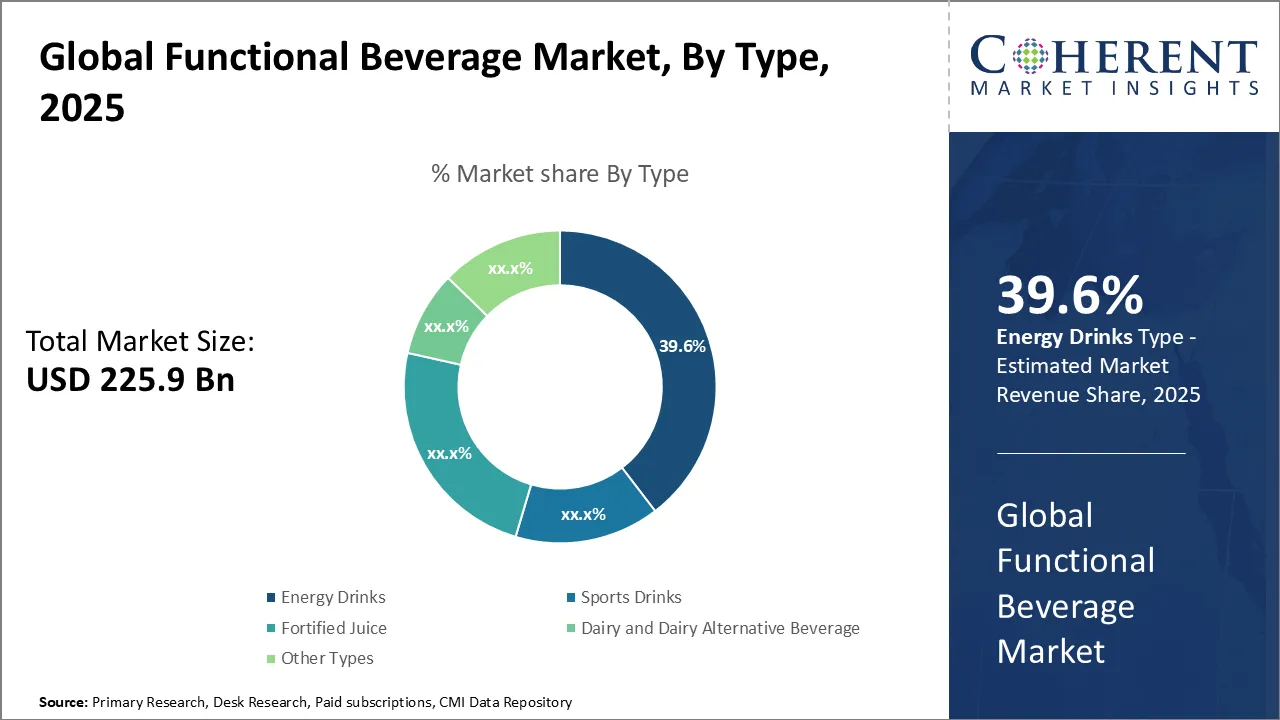
- By Type, Energy Drinks hold the largest market share of 40.6% in 2026 owing to the rising health & fitness awareness.
- By Distribution Channel, Supermarket/hypermarket expected to hold largest market share in 2026 owing to the wide product assortment & variety under one roof.
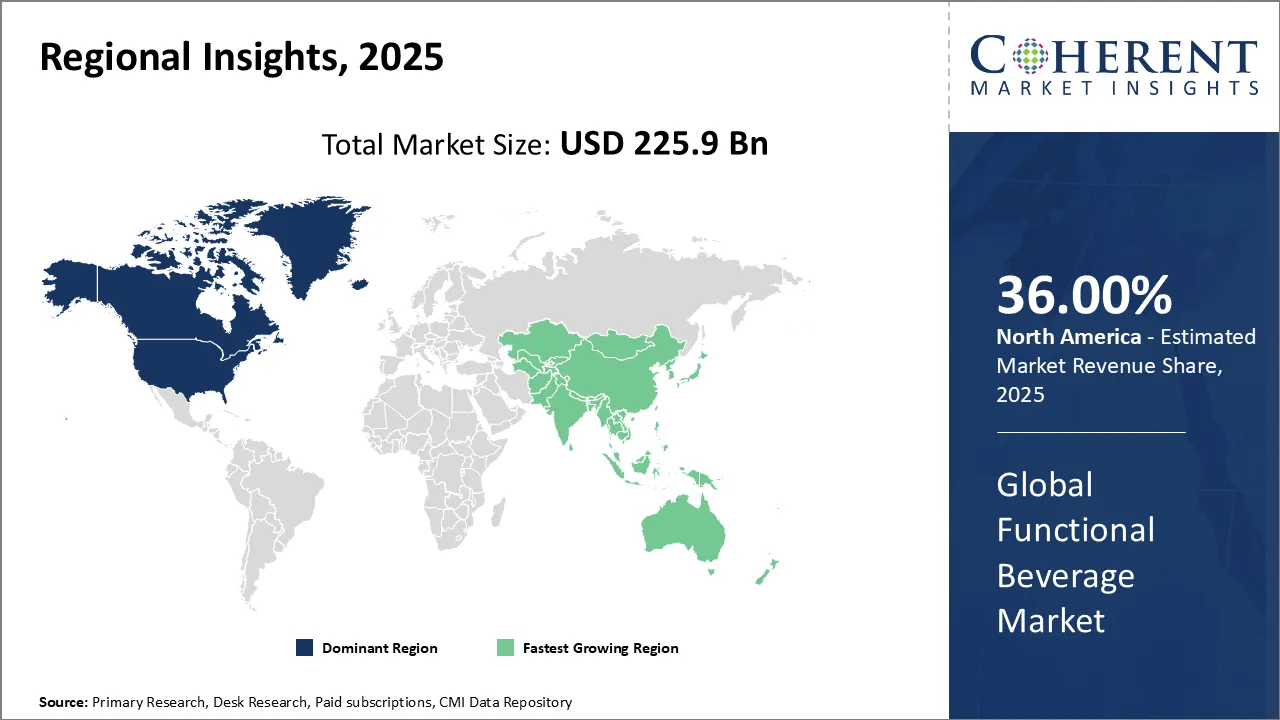
- By Region, North America dominates the overall market with an estimated share of 36% in 2026 owing to the strong health & wellness focus among consumers.
Market Overview
The functional beverage market includes drinks that actively provide health benefits beyond basic nutrition, such as energy drinks, fortified waters, sports drinks, and plant-based beverages. Consumers increasingly seek these products to support immunity, digestion, hydration, and energy, driven by growing health awareness, active lifestyles, and the need for convenience. Manufacturers continually innovate with new flavors, natural ingredients, and ready-to-drink formats, while expanding distribution through retail and e-commerce channels, making functional beverages a popular choice among health-conscious, busy consumers worldwide.
Current Events and Its Impact on the Functional Beverage Market
Current Events | Description and its impact |
Geopolitical and Economic Instabilities |
|
Technological Innovations and Digital Transformation |
|
Consumer Behavior and Societal Trends |
|
Segmental Insights
- Current Industry Events of 2026
- Market Size Estimation
- Regional Breakdown
- Competitive Landscape
- Customer Intelligence
- Segmental Analysis
- Pricing Analysis
- Key Market Drivers, Challenges & Future Trends
- Customized Insights Section
Functional Beverage Market Insights, By Type: Energy Drinks contribute the highest share of the market owing to its product innovation & diversification.
Energy Drinks hold the largest market share of 40.6% in 2026. Energy drinks actively propel the functional beverage market by providing quick energy, improved focus, and enhanced physical performance. Consumers rely on these convenient, ready-to-drink products to support busy lifestyles, long work hours, and active routines. They also seek additional benefits from vitamins, electrolytes, and natural ingredients. Manufacturers drive adoption through product innovations such as new flavors, low-sugar options, and herbal formulations, while ensuring wide availability across retail and e-commerce channels, establishing energy drinks as a vital segment in the health-focused beverage market. For instance, in December 2025, HELL ENERGY DRINK, one of the world’s fastest-growing energy drink brands, unveiled the first-ever HELL ENERGY DRINK Intercollegiate Cricket Turf Championship 2025 in Mumbai, showcasing the city’s college cricket talent in a thrilling celebration of sport and youth energy.
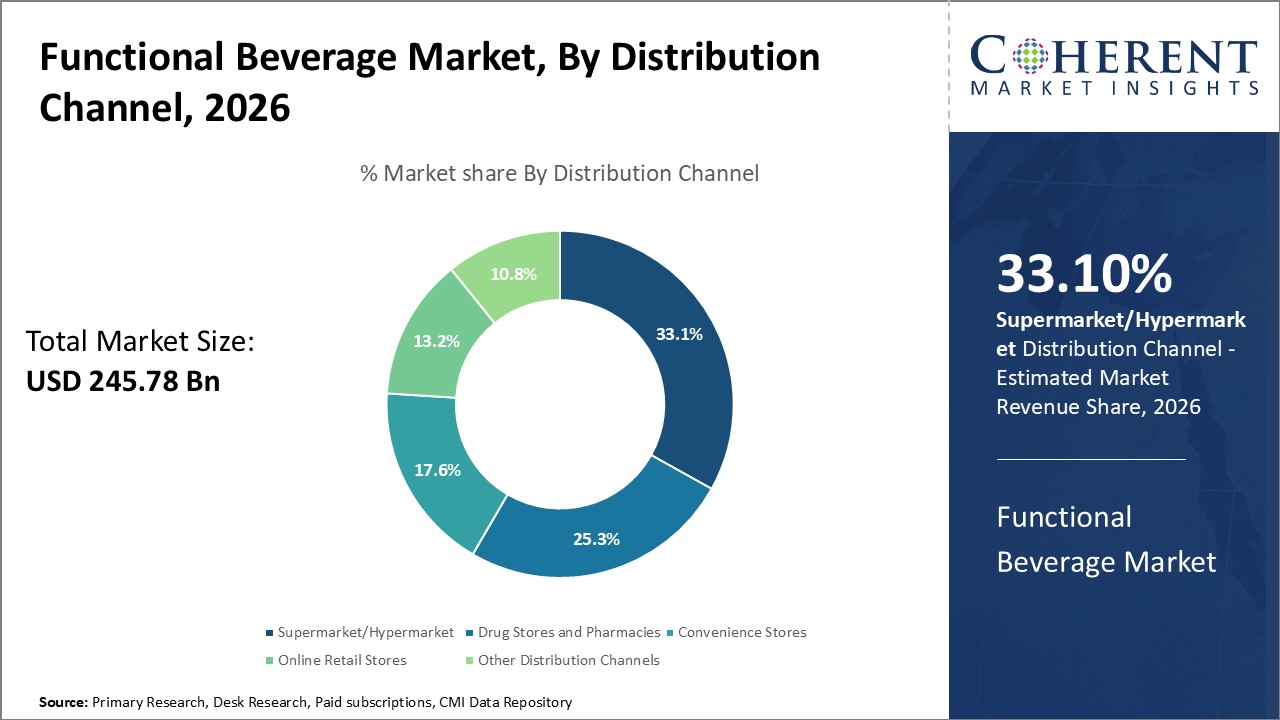
Functional Beverage Market Insights, By Distribution Channel: Supermarket/hypermarket contribute the highest share of the market owing to its convenience & “one‑stop shopping” for consumers.
Supermarkets and hypermarkets actively propel the functional beverage market by providing a wide variety of products, convenient one-stop shopping, and competitive pricing that appeals to diverse consumers. They enhance product visibility and encourage trial through prominent shelf placement, in-store promotions, and dedicated health sections. Efficient supply chains maintain consistent availability, while organized retail infrastructure and urban expansion ensure easy access for a growing customer base. By meeting consumer demand for convenience and reliability, these channels significantly boost functional beverage adoption. For instance, in April 2025, Pickle Juice®, the brand with a scientifically proven formula to stop muscle cramps at the neurological source, launched at 348 Coles Supermarkets across Australia. Consumers can buy 75mL Extra Strength Shots in the International aisle, especially in New South Wales and Victoria.
Regional Insights
North America Functional Beverage Market Trends
North America dominates the overall market with an estimated share of 36% in 2026. In North America, consumers are rapidly shaping the functional‑beverage market as they prioritize health and convenience. They are increasingly seeking products that provide benefits beyond hydration, such as energy, electrolytes, gut health (probiotics/prebiotics), and nutrient‑fortified water or juices. On‑the‑go lifestyles are boosting demand for ready‑to‑drink and single‑serve options, while manufacturers drive innovation with plant‑based ingredients, clean labels, and fortified formulations. Online retail and direct‑to‑consumer platforms are also broadening access, enabling more people to embrace these functional drinks. For instance, in February 2026, Coca-Cola entered the fast-growing prebiotic soda market with Simply Pop, a new functional beverage for health-conscious consumers. Although still niche, the category has doubled in size over the past year, yet makes up only 2% of the $42.4 billion U.S. soft drink market.
Asia Pacific Functional Beverage Market Trends
In the Asia‑Pacific region, consumers are driving rapid growth in the functional‑beverage market as they prioritize health and wellness amid busy lifestyles. They are increasingly opting for ready‑to‑drink energy drinks, sports drinks, fortified waters, and dairy or plant‑based beverages that support hydration, immunity, digestion, and energy. Manufacturers are innovating with clean‑label formulations, natural and herbal ingredients, and reduced-sugar options. Urbanization, rising middle-class incomes, and the growth of retail and e-commerce channels are also helping more people access these functional beverages. For instance, in November 2026, Ghodawat Consumer Limited (GCL) unveiled Coolberg Diet, India’s first zero-sugar malt beverage, aiming to meet the growing demand for functional, guilt-free drinks among consumers seeking a balanced and smarter way to enjoy their favorite beverage.
United States Functional Beverage Market Trends
In the United States, health- and wellness-conscious consumers are driving the functional‑beverage market as they seek drinks that deliver energy, immunity support, digestive benefits, mental focus, and overall wellness. They increasingly choose energy drinks, sports drinks, fortified waters, probiotic or gut‑health beverages, and plant‑based alternatives. Companies are responding by developing clean-label, low- or zero-sugar formulas, incorporating adaptogens, probiotics, and nutrient fortification. Busy lifestyles and demand for convenience are boosting ready‑to‑drink sales, while expanded retail and online channels are making these beverages widely accessible. For instance, in July 2026, PepsiCo has launched its first prebiotic cola, targeting growing interest in gut health and functional beverages among Gen Z and health-conscious consumers.
India Functional Beverage Market Trends
In India, consumers are driving growth in the functional‑beverage market as they focus on health, wellness, and preventive nutrition rather than just hydration. They are increasingly choosing herbal and Ayurvedic-inspired drinks containing tulsi, ashwagandha, turmeric, and giloy, reflecting a preference for natural remedies and immunity support. Demand is also rising for energy drinks, digestive- and gut-health beverages (probiotic/prebiotic), and low-sugar or clean-label options. Urbanization, higher disposable incomes, and busy lifestyles are boosting ready-to-drink consumption, while expanding retail, e-commerce, and distribution are making these beverages widely accessible across the country. For instance, in August 2026, GOONDA launched a dual beverage line, emphasizing bold branding and a distinct Indian identity. Co-founded by industry veterans and actor-entrepreneur Karan Tacker, the brand aims to disrupt India’s alco-beverage and functional drink markets.
End-user Feedback and Unmet Needs in the Functional Beverage Market
- Taste and Flavor Preferences: Consumers often appreciate functional benefits but report that many beverages taste artificial or overly bitter. They seek balanced flavors that mask strong herbal, vitamin, or probiotic notes while maintaining natural sweetness. There is a growing demand for beverages that are both enjoyable and healthy, encouraging daily consumption.
- Product Variety and Customization: End users express a need for more diverse functional options tailored to specific health goals, such as immunity, energy, or mental focus. They desire flexibility in flavors, ingredients, and formats, including plant-based, low-sugar, or fortified beverages, allowing them to select products aligned with personal lifestyle and dietary preferences.
- Transparency and Clean Labeling: Consumers increasingly demand transparency regarding ingredients, sourcing, and health claims. Many reports difficulty verifying nutritional benefits or understanding complex labels. There is unmet need for clear, trustworthy, and simple labeling that communicates functional benefits while reassuring users about quality, safety, and natural composition.
Functional Beverage Market Trend
Rising Health & Wellness Demand
Consumers around the world increasingly view drinks as tools for wellness rather than mere hydration. Functional beverages offering immune support, digestive health, cognitive benefits and energy — through vitamins, minerals, antioxidants, probiotics, or adaptogens — are becoming staples in wellness‑focused lifestyles. This shift reflects growing awareness of chronic health issues and preventative nutrition, driving demand for beverages that support overall health and functional needs.
Plant‑Based, Clean‑Label & Low‑Sugar Formulations
Manufacturers are responding to consumer preferences for clean, natural ingredients by increasing plant‑based, low- or zero-sugar, and minimally processed functional beverages. Many products now use botanical extracts, natural sweeteners, or superfoods instead of artificial flavors, colors, or preservatives. This lean toward transparency and “clean” nutrition resonates with health‑conscious, vegan, lactose‑intolerant, and flexitarian consumers seeking gentler, more natural dietary choices.
Functional Beverage Market Opportunity
Health & Preventive Wellness Positioning
As consumers increasingly value preventive healthcare and overall wellness, functional beverages have a strong opportunity to position themselves as daily health boosters. Drinks that support immunity, hydration, nutrient intake, digestion, joint health, or healthy aging can appeal to people seeking to proactively manage lifestyle‑related health risks. With rising awareness about chronic conditions and the benefits of micronutrients, there is growing demand for beverages offering tangible wellness benefits in place of or alongside traditional diets.
Market Report Scope
Functional Beverage Market Report Coverage
| Report Coverage | Details | ||
|---|---|---|---|
| Base Year: | 2025 | Market Size in 2026: | USD 245.78 Bn |
| Historical Data for: | 2020 To 2024 | Forecast Period: | 2026 To 2033 |
| Forecast Period 2026 to 2033 CAGR: | 8.8% | 2033 Value Projection: | USD 443.55 Bn |
| Geographies covered: |
| ||
| Segments covered: |
| ||
| Companies covered: | PepsiCo Inc., Red Bull GmbH, The Coca-Cola Company, Danone SA, Monster Beverage Corporation, JAB Holdings Company, General Nutrition Centers Inc., The Hain Celestial Group Inc., Fonterra Co-operative Group, and Amway Corporation | ||
| Growth Drivers: |
| ||
| Restraints & Challenges: |
| ||
Functional Beverage Market News
- In November 2025, Tetra Pak has launched sunflower protein, a plant-based ingredient that enables food and beverage producers to expand into plant-based and functional products while optimizing their existing production infrastructure.
- In July 2025, O’Neill Vintners & Distillers, a Certified B Corporation, entered the functional beverage market with Catalyst, an energy drink for health-conscious consumers, expanding its portfolio beyond wine and spirits.
- In October 2025, Health and wellness brand Productive Health Co has launched Autofocus, a functional beverage offering a cleaner alternative to energy drinks and coffee, with natural ingredients that boost mental clarity and provide sustained energy.
Analyst Opinion (Expert Opinion)
- The functional‑beverage market presents a compelling opportunity to realign the very definition of what a drink can achieve — not merely refreshment, but measurable wellness support. Recent data shows that in the US alone, functional drinks generated nearly US$48.5 billion in revenue in 2024, with energy drinks and nutraceutical beverages leading demand. Meanwhile, globally, energy drinks continue to dominate demand, supported by rising interest in antioxidant‑fortified water, sports drinks, and plant‑based alternatives.
- Several dynamics frame where future upside lies. Firstly, the shift toward health‑conscious and preventive nutrition has elevated demand for beverages delivering tangible benefits — gut health, immunity, hydration, recovery, mental focus — beyond what traditional soft drinks offer. Secondly, consumers increasingly expect “clean‑label,” plant‑based, low‑sugar, or naturally‑sweetened formulations; the rising popularity of plant‑based dairy alternatives and herbal extracts underscores this trend.
- Moreover, changing lifestyles — characterized by busy schedules, urban living, and on‑the‑go habits — are making ready‑to‑drink formats, single-serve packs and protein- or nutrient‑enriched drinks especially attractive. This convenience factor, coupled with wider distribution via supermarkets, convenience stores, and e‑commerce, significantly expands the potential customer base.
Speak to the analyst
Want personalized insights?
Take the findings above to one of our principal consultants, or have the report rebuilt around the segments, geographies and competitors you actually track.
Market Segmentation
- Global Functional Beverage Market, By Product Type
- Energy Drinks
- Sports Drinks
- Fortified Juice
- Dairy and Dairy Alternative Beverage
- Other Types
- Global Functional Beverage Market, By Distribution Channel
- Supermarket/Hypermarket
- Drug Stores and Pharmacies
- Convenience Stores
- Online Retail Stores
- Other Distribution Channels
- Regional Insights (Revenue, USD Bn, 2021 - 2033)
- North America
- U.S.
- Canada
- Latin America
- Brazil
- Argentina
- Mexico
- Rest of Latin America
- Europe
- Germany
- U.K.
- Spain
- France
- Italy
- Russia
- Rest of Europe
- Asia Pacific
- China
- India
- Japan
- Australia
- South Korea
- ASEAN
- Rest of Asia Pacific
- Middle East
- GCC Countries
- Israel
- Rest of Middle East
- Africa
- South Africa
- North Africa
- Central Africa
- North America
- Key Players Insights
- PepsiCo Inc.
- Red Bull GmbH
- The Coca-Cola Company
- Danone SA
- Monster Beverage Corporation
- JAB Holdings Company
- General Nutrition Centers Inc.
- The Hain Celestial Group Inc.
- Fonterra Co-operative Group
- Amway Corporation
Sources
Primary Research interviews
- Industry experts
- Beverage manufacturers
- Retailers and distributors
- Nutritionists and dietitians
Databases
- FAOSTAT (Food and Agriculture Organization of the United Nations)
- USDA National Nutrient Database
- UN Comtrade Database
- WHO Global Health Observatory
Magazines
- Beverage Industry Magazine
- FoodNavigator
- Nutrition Insight
- Healthy Beverages Today
Journals
- Journal of Functional Foods
- Food & Function
- Nutrients
- International Journal of Food Sciences and Nutrition
Newspapers
- The New York Times (Food Section)
- The Guardian (Health & Wellness Section)
- Financial Times (Consumer Products Section)
- The Wall Street Journal (Food & Beverage Section)
Associations
- International Food & Beverage Association (IFBA)
- American Beverage Association (ABA)
- Institute of Food Technologists (IFT)
- European Fruit Juice Association (AIJN)
Public Domain sources
- Government health and nutrition reports
- WHO reports on dietary trends
- FAO publications on global beverage consumption
- National health databases
Proprietary Elements
- CMI Data Analytics Tool
- Proprietary CMI Existing Repository of information for last 8 years
Get access to 250+ pages report
Every segment, forecast, competitor profile and data table behind the analysis above — available for instant download.
- ESOMAR Member
- ISO 9001:2015 Certified
- D-U-N-S Registered
- GDPR & CCPA Compliant
Missing comfort of reading report in your local language? Find your preferred language:
Transform your Strategy with Exclusive Trending Reports
Frequently Asked Questions
The Functional Beverage Market is estimated to be valued at USD 245.78 Bn in 2026, and is expected to reach USD 443.55 Bn by 2033.
The CAGR of the Functional Beverage Market is projected to be 8.8% from 2026 to 2033.
Growing demand for plant-based and lactose-free products and increasing number of merger and acquisition in the market are fuelling growth of the market.
The Energy Drinks segment is the leading Product type segment in the market.
Ingredient-level health concern and varying regulations and labelling framework is the major factors restraining market.
PepsiCo Inc., Red Bull GmbH, The Coca-Cola Company, Danone SA, Monster Beverage Corporation, JAB Holdings Company, General Nutrition Centers Inc., The Hain Celestial Group Inc., Fonterra Co-operative Group, and Amway Corporation