

Chia Seeds Market Size and Forecast – 2026 to 2033
The chia seed market is estimated to be valued at USD 1,958.4 Mn in 2026 and is expected to reach USD 4,494.5 Mn by 2033, exhibiting a compound annual growth rate (CAGR) of 12.6% from 2026 to 2033.
Key Takeaways
- By Origin, Organic chia seed is leading the chia seeds market, accounting for a dominant 77% share in 2026.
- By Seed Type, Black Chia Seed acquired the prominent share of 41.4% in 2026 as it is Perceived Superior Nutritional Profile.
- By Application, Food & Beverages dominates the overall market with an estimated share of 37% in 2026 as Innovative Product Development.
- By Region, North America hold the largest market share of 40% in 2026 as Consumer Education and Marketing Initiatives.
Market Overview
Chia seeds are gaining popularity among health-conscious consumers as a superfood. The nutrients in chia seeds provide several health benefits such as high fiber content, protein, antioxidants, and omega-3 fatty acids. The increasing awareness about the nutritional profile of chia seeds is driving its demand from the food and beverage industry. Major market players are investing in research and development to find new applications of chia seeds in various product categories such as bakery, cereals, beverages, and others. New product launches incorporating chia seeds are expanding globally which is expected to push the market revenue higher over the forecast period.
Current Events and Its Impact
Current Events | Description and its impact |
Regulatory Shifts Impacting Market Access |
|
Consumer Preference Evolution |
|
Climate Adaptation Investments
|
|
End-user Feedback and Unmet Needs in the Chia Seeds Market
End-user Feedback and Unmet Needs
- Inconsistent Quality and Purity of Chia Seeds: Consumers frequently complain about the inconsistent quality and purity of chia seeds available in the market. They notice variations in color, texture, and taste, and often find impurities like stones or husks mixed in. These issues concern health-conscious buyers, who demand standardized quality assurance and improved packaging practices.
- Limited Product Formats and Usage Convenience: Consumers struggle to include chia seeds in their daily diets due to the need for preparation, such as soaking. Despite their versatility, chia seeds rarely appear in convenient product formats like ready-to-drink beverages, portable snacks, or supplements. This lack of innovation limits their adoption, especially among urban consumers and working professionals with fast-paced lifestyles.
- Lack of Awareness About Nutritional Benefits and Usage Methods: Many consumers lack proper knowledge about the nutritional value and culinary versatility of chia seeds. They often don’t know how to consume them or what health benefits they offer, such as improving digestion, supporting heart health, or providing plant-based omega-3 ingredients. When companies communicate benefits and usage ideas effectively, they empower consumers to make informed dietary choices.
- Current Industry Events of 2026
- Market Size Estimation
- Regional Breakdown
- Competitive Landscape
- Customer Intelligence
- Segmental Analysis
- Pricing Analysis
- Key Market Drivers, Challenges & Future Trends
- Customized Insights Section
Pricing Analysis
The global chia seeds market is priced between $3–50/kg, influenced by certification, branding, and geography. Budget labels sell at $3–8/kg, while premium organic brands reach $25–50/kg. In the U.S., prices average $15–35/kg, with e-commerce offering 10–20% lower rates. Canada and the UK face higher premiums due to import costs. Companies are innovating, for instance, Navitas Organics positions its chia seeds at $26–33/kg, targeting health-conscious buyers. New applications, such as chia seeds in frankfurters (e.g., Marks & Spencer’s chia sausages) and chia seeds in animal feed, reflect growing demand.
Export Import Analysis of Chia Seeds
Between October 2023 and September 2024, India exported a total of 1,157 shipments of chia seeds. These exports were carried out by 345 Indian exporters to 526 different buyers, representing a 32% increase compared to the previous twelve-month period.
In September 2024 alone, India shipped 102 consignments of chia seeds, reflecting a 29% year-on-year growth compared to September 2023, and a 19% increase from August 2024.
The primary destinations for India’s chia seed exports are Bangladesh, the United States, and the United Arab Emirates.
On a global scale, the leading chia seed exporters are India, Vietnam, and Mexico. India tops the list with 4,075 shipments, followed by Vietnam with 2,477 shipments, and Mexico in third place with 2,439 shipments.
Segmental Insights
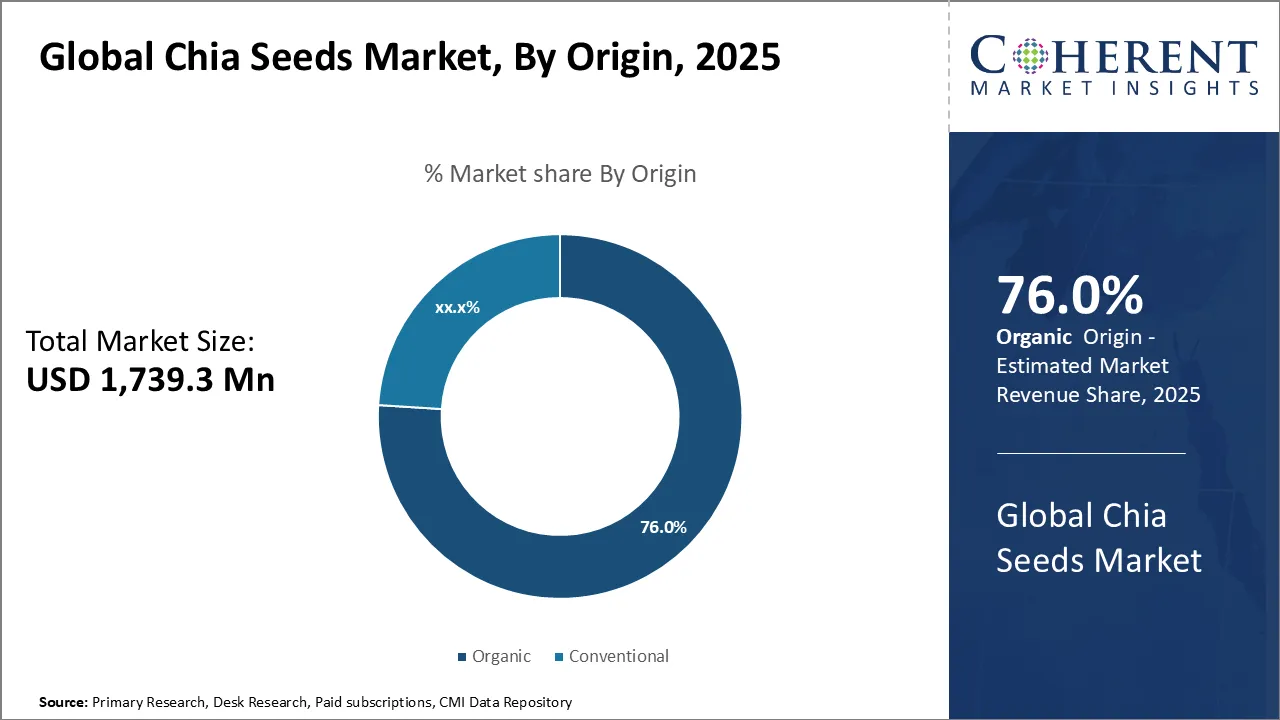
Chia Seeds Market Insights, By Origin – Dominance of Organic Chia Seeds Driven by Health Awareness and Clean Label Preference
Organic chia seed is leading the chia seeds market, accounting for a dominant 77% share in 2026. The rising preference for clean-label, chemical-free, and sustainably sourced food products has positioned organic chia seeds as the top choice among consumers. For example, in 2024, Navitas Organics expanded its organic chia seed product line in North America and Europe to meet growing demand from health-conscious consumers. Increasing awareness of wellness and the shift toward natural, environmentally responsible ingredients have made organic chia seeds the top choice in the market. The organic chia seed segment has gained significant traction as it aligns with the ongoing shift toward healthier diets and environmentally responsible farming practices.
The expansion of distribution channels—including supermarkets, hypermarkets, health food stores, and e-commerce platforms, which has further accelerated the adoption of organic chia seeds. Additionally, several food and beverage brands are integrating organic chia seeds into functional products such as energy bars, plant-based beverages, and breakfast cereals.
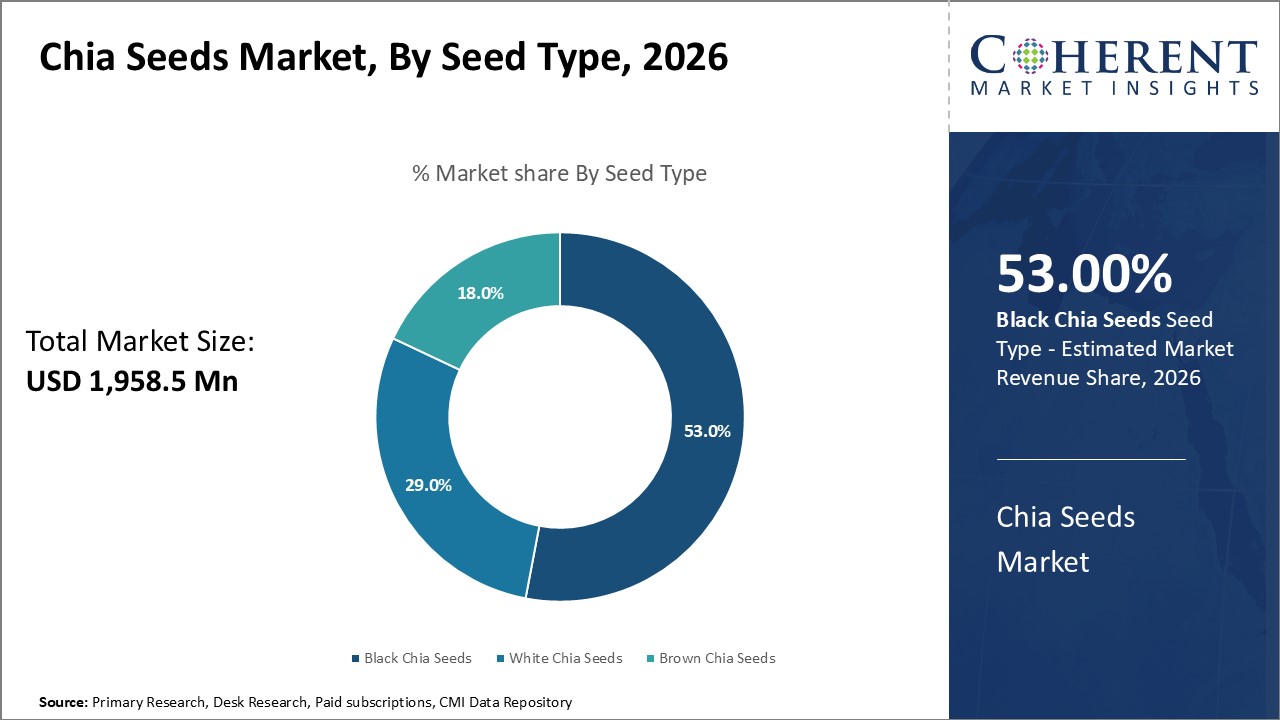
Chia Seeds Market Insights, By Seed Type - Black Chia Seed contribute the highest share of the market as Alignment with Health and Wellness Trends
Consumers believe black chia seeds offer greater nutritional benefits than white and brown varieties. Many perceive them as richer in antioxidants like anthocyanins, which give the seeds their dark color and contribute to their health-promoting properties. These anthocyanins may help protect cells from damage linked to conditions such as diabetes and heart disease. As health concerns rise, more people are adding superfoods like black chia seeds to their diets to support wellness. Food companies have leveraged these perceived advantages by emphasizing the color and nutrient density of black chia seeds in their products. For instance, on average, chia seeds provide about 0.17 ounces of protein per ounce. Black chia seeds typically have a bit more protein than white chia seeds, but the difference is very small. This is further adding to the Chia seeds market share.
Chia Seeds Market Insights, By Application - Food & Beverages contribute the highest share of the market owing to Clean Label and Organic Preferences
Food and beverage manufacturers are increasingly incorporating chia seeds into energy bars, breakfast cereals, baked goods, puddings, and other snacks to meet the preferences of health-conscious consumers. These seeds provide protein, fiber, and omega-3 fatty acids, while their gel-forming ability enhances texture and acts as a natural binder. This functionality helps companies create nutritious, convenient grab-and-go options. Manufacturers also use chia seeds in beverages—as mix-ins for infused waters and as thickeners in non-dairy milks and juices—thanks to their mild flavor and versatility.
To expand consumer choices, brands are launching innovative products like frozen desserts, dips, and spreads containing chia seeds. Rising demand for plant-based, clean label, and nutrient-rich packaged foods continues to fuel growth in the food and beverage segment. In April 2025, Mercadona launched the ultimate summer refresher! Introducing the passion fruit and chia juice from Mercadona’s own Hacendado brand—a standout addition to the Spanish supermarket’s beverage lineup. This exciting new drink blends the exotic, vibrant taste of passion fruit with the nourishing benefits of chia seeds.
Regional Insights
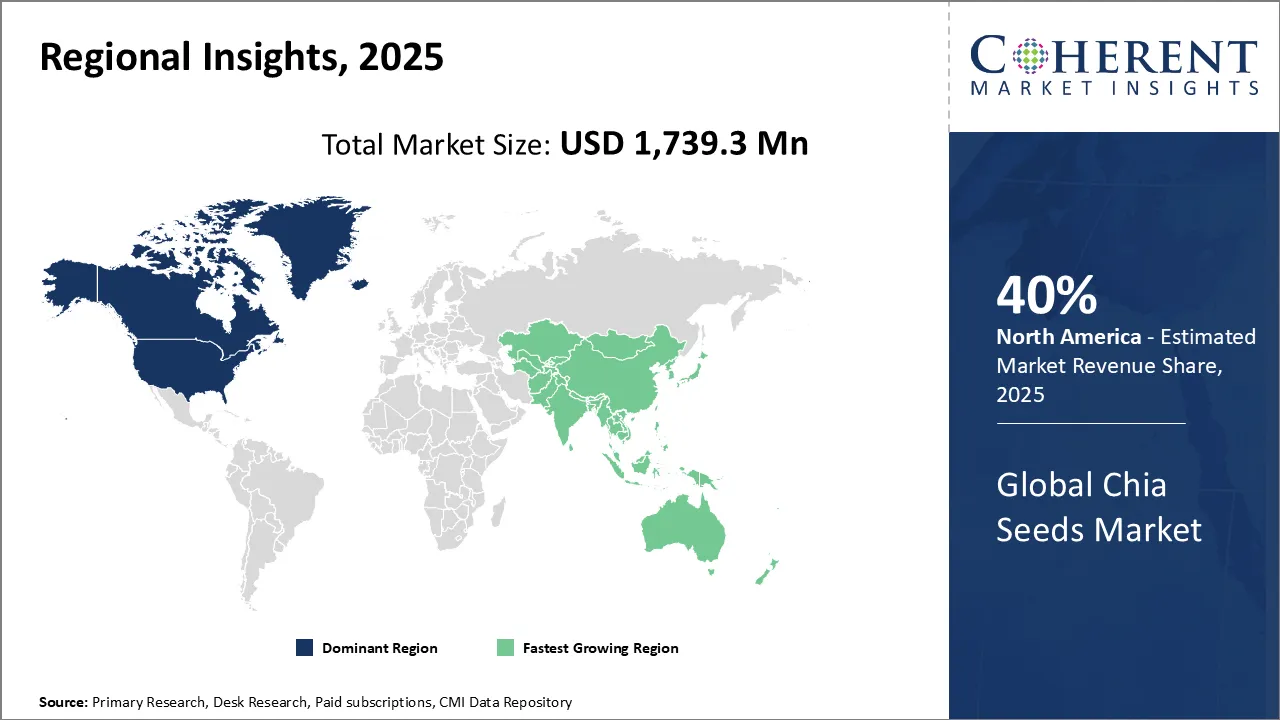
North America Chia Seeds Market Trends
The North American chia seed market acquires the largest market share with 40% as consumers increasingly prioritize wellness and health. Consumers are using chia seeds—rich in protein, fiber, and omega-3 fatty acids—in baked goods, energy bars, and smoothies. The rising popularity of plant-based and gluten-free diets is further driving demand. Whole chia seeds currently dominate the market; however, chia oil is growing at the fastest rate due to its health benefits and applications in personal care products. The U.S. leads the regional market, but Canada offers significant growth opportunities. As nutritional preferences evolve, retailers and food producers are actively incorporating chia seed-based products into their offerings.
In May 2026, Happy Belly Food Group Inc. innaugrated its 21st Heal Wellness location in Grand Bend, Ontario. Heal Wellness is a quick-serve restaurant specializing in fresh smoothie and acai bowls made with real fruit and superfoods like acai, pitaya, goji berries, and chia seeds.
Asia Pacific Chia Seeds Market Trends
Growing health consciousness, rising disposable incomes, and a growing desire for natural and organic products are driving the strong rise of the Asia Pacific chia seed market. Australia leads the world in both production and consumption, while countries with large populations and changing eating habits, such as China, Japan, and India, are emerging as key markets. The nutritional benefits and versatility of chia seeds in food and beverage applications further boost their appeal across the region. For Instance, India Gate Basmati Rice, the world’s largest basmati rice miller and exporter, and India’s first integrated rice brand with a full product chain, announced two new products for the domestic market: "Wholesome Health Special Chia Seeds" and "Active Heart Special Roasted Flax Seeds."
United States Chia Seeds Market Trends
The growing popularity of plant-based diets and increasing health consciousness are driving significant development in the US chia seed market. Consumers are demanding chia seeds more as their adaptability allows incorporation into various culinary products such as baked goods, energy bars, and smoothies. The rising demand for clean-label and organic products also fuels market growth, as customers actively seek natural and minimally processed ingredients.
However, price volatility and limited domestic production may pose challenges that could impact the market’s growth trajectory. For Instance, in March 2026, Benexia, a manufacturer of chia-based products, introduced a new plant-based milk substitute called Seeds of Wellness Chia Milk in the United States. The company reports that the product provides 740 mg of plant-based omega-3 fats per 8 oz serving and is the first plant-based milk made from whole chia seeds.
India Chia Seeds Market Trends
Gen Z and millennials in cities are increasingly popularizing chia seeds, using them in baked goods, energy bars, and smoothies. Retailers are expanding chia seed availability through tier-2 and tier-3 city retail channels, health food stores, and online marketplaces. Packaging innovations, such as single-serving pouches and resealable bags, are enhancing consumer accessibility and convenience. However, higher costs compared to other seeds and low awareness in rural areas could limit wider adoption. Despite these challenges, the growing middle class and rising demand for functional foods continue to drive the market’s growth potential.
For Instance, In March 2023, Well-known actor Samantha Ruth Prabhu invested in Nourish You, a company that promotes sustainable and locally sourced supermarket foods. As the first retailer of domestically cultivated quinoa and chia seeds in India, Nourish You continues to lead the chia seed industry.
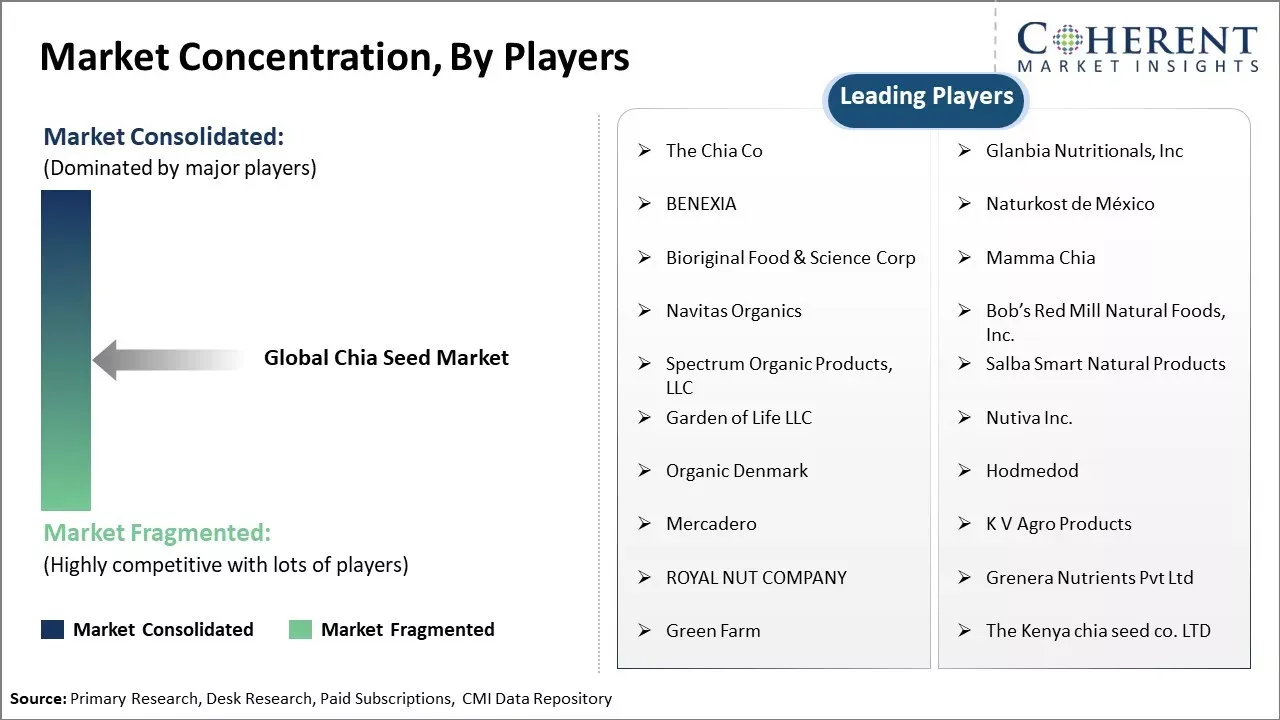
Market Concentration and Competitive Landscape
Market Report Scope
Chia Seed Market Report Coverage
| Report Coverage | Details | ||
|---|---|---|---|
| Base Year: | 2025 | Market Size in 2026: | USD 1,958.4 Mn |
| Historical Data for: | 2020 To 2024 | Forecast Period: | 2026 To 2033 |
| Forecast Period 2026 to 2033 CAGR: | 12.6% | 2033 Value Projection: | USD 4,494.5 Mn |
| Geographies covered: |
| ||
| Segments covered: |
| ||
| Companies covered: | The Chia Co, Glanbia Nutritionals, Inc, BENEXIA, Naturkost de México, Bioriginal Food & Science Corp, Mamma Chia, Navitas Organics, Bob’s Red Mill Natural Foods, Inc., Spectrum Organic Products, LLC, Salba Smart Natural Products, Garden of Life LLC , Nutiva Inc., Organic Denmark, Hodmedod , Mercadero, K V Agro Products, ROYAL NUT COMPANY, Grenera Nutrients Pvt Ltd, Green Farm, and The Kenya chia seed co. LTD. | ||
| Growth Drivers: |
| ||
| Restraints & Challenges: |
| ||
Chia Seeds Market Trends
- Innovation in Product Forms and Distribution Channels
Manufacturers are actively innovating in product forms and delivery methods to meet diverse consumer preferences. They offer chia seeds in various forms—whole, pre-hydrated, milled/ground, and oil—to cater to different nutritional needs and culinary uses. Additionally, the rise of e-commerce and online retail platforms has expanded access, allowing customers to conveniently purchase a wide range of chia-based products.
- Sustainability and Ethical Sourcing as Market Differentiators
Consumers are increasingly driving demand for sustainability and ethical sourcing in the chia seed sector. Chia production supports this shift, as it uses less water and thrives under organic farming methods. In response, businesses are actively adopting sustainable agricultural practices and ensuring transparent sourcing to align with consumers' ethical and environmental values.
Chia Seeds Market Opportunities
- Untapped regional markets
There are significant opportunities for chia seed producers and sellers to tap into new regional markets that have seen little chia seed cultivation or consumption to date. Many South American and African nations have ideal growing conditions for chia but lack widespread production infrastructure. With education and support, farmers in countries like Brazil, Colombia, Nigeria and Ethiopia could efficiently cultivate chia, giving their populations and export markets new access to this nutrient-dense seed. As awareness of health benefits grows globally, demand will rise beyond traditional markets. If production networks develop in underutilized areas, they will help meet demand and provide economic opportunities for small-scale growers.
Chia Seeds Market News
- In March 2025, the Jalgaon district administration established a "spice cluster" to enhance the standard of living for tribal families benefiting under the Forest Rights Act. Through this Public-Private Partnership with Jain Irrigation, the program will provide farmers with marketing assistance and training.
- In March 2025, Benexia introduced first milk alternative made from whole chia seeds.
- In January 2025, Flowers Foods launched organic snack bites featuring chia seeds and grains under its Dave’s Killer Bread brand. Available in six flavors, these snacks can be enjoyed alone or used as a topping for salads, parfaits, and soups.
- In January 2025, Cooper Street, a Michigan-based, family- and woman-owned BFY brand, launched Banana Bread Granola Bake. Inspired by homemade banana bread, it blends real bananas with ancient grains like quinoa, chia seeds, and flax for a wholesome snack.
- In June 2024, sisters Lucille and Emilie Battafarano combined their artisanal skills and innovation to create Ancrée, a 100% plant-based caviar made from chia seeds from Île-de-France and seaweed from Brittany.
- In August 2017, Mysuru farmers plan to introduce packed "ready-to-use" chia seeds—a "super food" with South American origins—into the retail market. With scientific support from the Central Food Technological Research Institute (CFTRI), many farmers across the district are cultivating the crop.
Analyst Opinion (Expert Opinion)
- The chia seeds market has moved beyond its early adoption phase and is rapidly evolving from a health fad into a mainstream dietary staple. Industry players are driving this shift by aggressively integrating chia into diverse product portfolios, rather than relying on rising consumer health awareness alone. At the heart of this transformation lies the commoditization of “superfoods,” and chia is a prime example of how functional ingredients are transitioning into everyday use.
- Market participants are accelerating this evolution by embedding chia into a wide variety of consumer goods—from baked products and breakfast cereals to smoothies and sports nutrition items. Instead of promoting chia solely as a health-centric novelty, brands now treat it as a functional staple that enhances texture, nutrition, and product appeal.
- Product developers are actively reshaping chia’s future through ingredient convergence. They are combining chia with gut-health ingredients like inulin, adaptogens, and high-performance plant proteins to address growing consumer demand for multifunctional wellness products. Supporting this trend, Mintel’s 2023 Global Food & Drink Trends Report revealed a 31% year-over-year increase in global product launches containing both chia and plant protein—clearly positioning chia as a bridge ingredient in complex health formulations.
- Leading companies have begun diversifying their supply chains to address the market’s major vulnerability—its geographic concentration. Over 80% of global chia production still comes from Latin America, mainly Argentina and Paraguay. Facing tightening land-use regulations and increasing climate volatility, companies like The Chia Co. have strategically expanded their operations in Western Australia to reduce reliance on South American sources and strengthen procurement resilience.
- In my view, companies that treat chia as a performance-enhancing ingredient—rather than merely a marketing tool—will dominate the market over the next three to five years. These leaders will pair product innovation with full supply chain traceability and robust sustainability agreements. On the other hand, companies that fail to invest in sourcing diversification and intelligent product embedding will struggle to maintain shelf presence in an increasingly saturated and competitive functional foods market.
Speak to the analyst
Want personalized insights?
Take the findings above to one of our principal consultants, or have the report rebuilt around the segments, geographies and competitors you actually track.
Market Segmentation
- By Nature (Revenue, USD Mn, 2021 - 2033)
- Organic
- Coventional
- By Seed Type (Revenue, USD Mn, 2021 - 2033)
- White Chia Seeds
- Black Chia Seeds
- Brown Chia Seeds
- By Application (Revenue, USD Mn, 2021 - 2033)
- Food & Beverages
- Breakfast Cereals
- Bakery Products & Snacks
- Energy Bars
- Ready-to-eat Meals
- Others (Energy Drinks, etc.)
- Animal Feed
- Nutraceuticals
- Others (Personal Care, etc.)
- Food & Beverages
- By Region (Revenue, USD Mn, 2021 - 2033)
- North America
- U.S.
- Canada
- Latin America
- Brazil
- Argentina
- Mexico
- Rest of Latin America
- Europe
- Germany
- U.K.
- Spain
- France
- Italy
- Russia
- Rest of Europe
- Asia Pacific
- China
- India
- Japan
- Australia
- South Korea
- ASEAN
- Rest of Asia Pacific
- Middle East
- GCC Countries
- Israel
- Rest of Middle East
- Africa
- South Africa
- North Africa
- Central Africa
- North America
- Company Profiles
- The Chia Co.
- Glanbia Nutritionals, Inc.
- BENEXIA
- Naturkost de México
- Bioriginal Food & Science Corp.
- Mamma Chia
- Navitas Organics
- Bob’s Red Mill Natural Foods, Inc.
- Spectrum Organic Products, LLC
- Salba Smart Natural Products
- Garden of Life LLC
- Nutiva Inc.
- Organic Denmark
- Hodmedod
- Mercadero
- K V Agro Products
- ROYAL NUT COMPANY
- Grenera Nutrients Pvt Ltd.
- Green Farm
- The Kenya chia seed co. LTD.
Sources
Primary Research Interviews
- Export managers from chia seed processing companies in Paraguay and Argentina
- Procurement heads at organic food retailers in the U.S. and Europe
- R&D leads at functional food and beverage companies
- Agronomists from chia cultivation farms in Australia
- Sustainability officers from agricultural cooperatives in Latin America
Databases
- UN Comtrade Database
- FAOSTAT (Food and Agriculture Organization Statistics)
- USDA Foreign Agricultural Service (FAS)
- ITC Trade Map
- Eurostat
- Global Biodiversity Information Facility (GBIF)
Magazines
- Food Ingredients First
- Natural Products Insider
- AgriBusiness Global
- Snack Food & Wholesale Bakery
- The Grocer
Journals
- Journal of Functional Foods
- Food Chemistry
- Plant Foods for Human Nutrition
- Journal of Agricultural and Food Chemistry
- Journal of Food Science and Technology
Newspapers
- The Guardian (Sustainable Food section)
- Financial Times (Agriculture and Commodities section)
- La Nación (Argentina)
- The Sydney Morning Herald
- The Times of India (Agri-business section)
Associations
- Organic Trade Association (OTA)
- Australian Oilseeds Federation
- Latin American and Caribbean Agroecology Movement (MAELA)
- American Botanical Council
- Food and Agriculture Organization of the United Nations (FAO)
Public Domain Sources
- World Bank Open Data
- World Health Organization (WHO) – Nutrition and Food Safety Division
- OECD iLibrary – Agriculture and Trade
- U.S. FDA Food Labeling and Guidance Documents
- Government agricultural reports from Argentina, Paraguay, and Australia
- International Trade Centre (ITC) Market Access Map
Proprietary Elements
- CMI Data Analytics Tool, and Proprietary CMI Existing Repository of information for last 8 years
Get access to 250+ pages report
Every segment, forecast, competitor profile and data table behind the analysis above — available for instant download.
- ESOMAR Member
- ISO 9001:2015 Certified
- D-U-N-S Registered
- GDPR & CCPA Compliant
Missing comfort of reading report in your local language? Find your preferred language:
Transform your Strategy with Exclusive Trending Reports
Frequently Asked Questions
The Chia Seeds Market is estimated to be valued at USD 1,958.4 Mn in 2026, and is expected to reach USD 4,494.5 Mn by 2033.
The CAGR of the Chia Seeds Market is projected to be 12.6% from 2026 to 2033.
Health benefits of chia seeds and popularity of plant-based lifestyles are the major factors driving the growth of the global chia seed market.
High price and limited production capabilities are the major factors hampering the growth of the Global Chia Seed Market.
In terms of nature, organic is estimated to dominate the market revenue share in 2026.
Bioriginal Food & Science Corp, Glanbia Plc , The Chia Co., Bora Foods Private Limited, Grain Millers, Inc. are the major players.
North America is expected to lead the Global Chia Seed Market.