

Still Drinks Market Size and Forecast — 2026 - 2033
The Global Still Drinks Market size is estimated to be valued at USD 45.2 billion in 2026 and is expected to reach USD 72.8 billion by 2033, exhibiting a compound annual growth rate (CAGR) of 7.1% from 2026 to 2033.
Overview
The Still Drinks market comprises a diverse range of non-carbonated beverages, including fruit juices, flavored water, functional drinks, and ready-to-drink teas and coffees. Fruit juices dominate due to widespread consumer preference for natural flavors and perceived health benefits, while flavored waters are gaining traction with added vitamins and low-calorie formulations. Functional drinks, enriched with electrolytes, antioxidants, or probiotics, cater to the growing wellness-oriented segment. Ready-to-drink teas and coffees offer convenience and premium appeal, especially among urban consumers. Other products include plant-based beverages and infusions that address niche demands for natural, sustainable, and clean-label options, reflecting evolving consumer lifestyles and health consciousness.
Key Takeaways
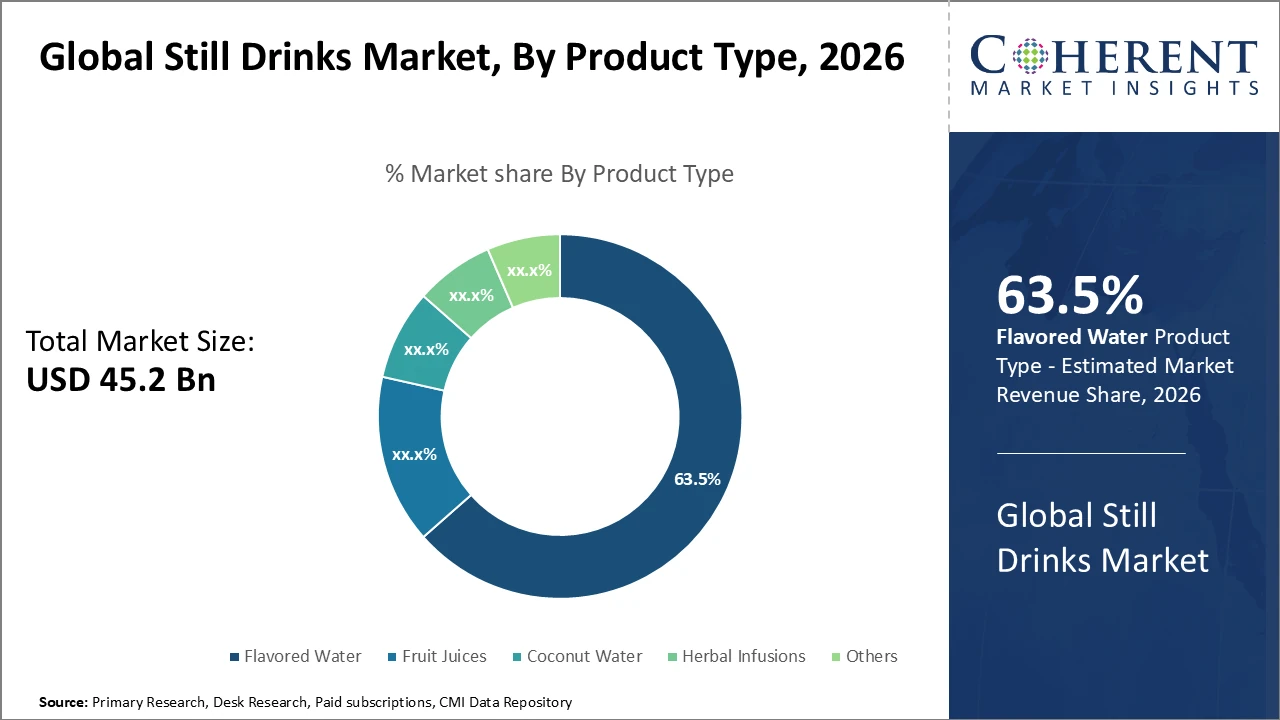
The Flavored Water segment dominates the market with a share of 63.5%, driven by rising adoption among health-conscious consumers seeking low-calorie alternatives.
Packaging innovations, particularly in PET bottles, enhance convenience and portability, supporting growth in the Supermarkets/Hypermarkets distribution channel.
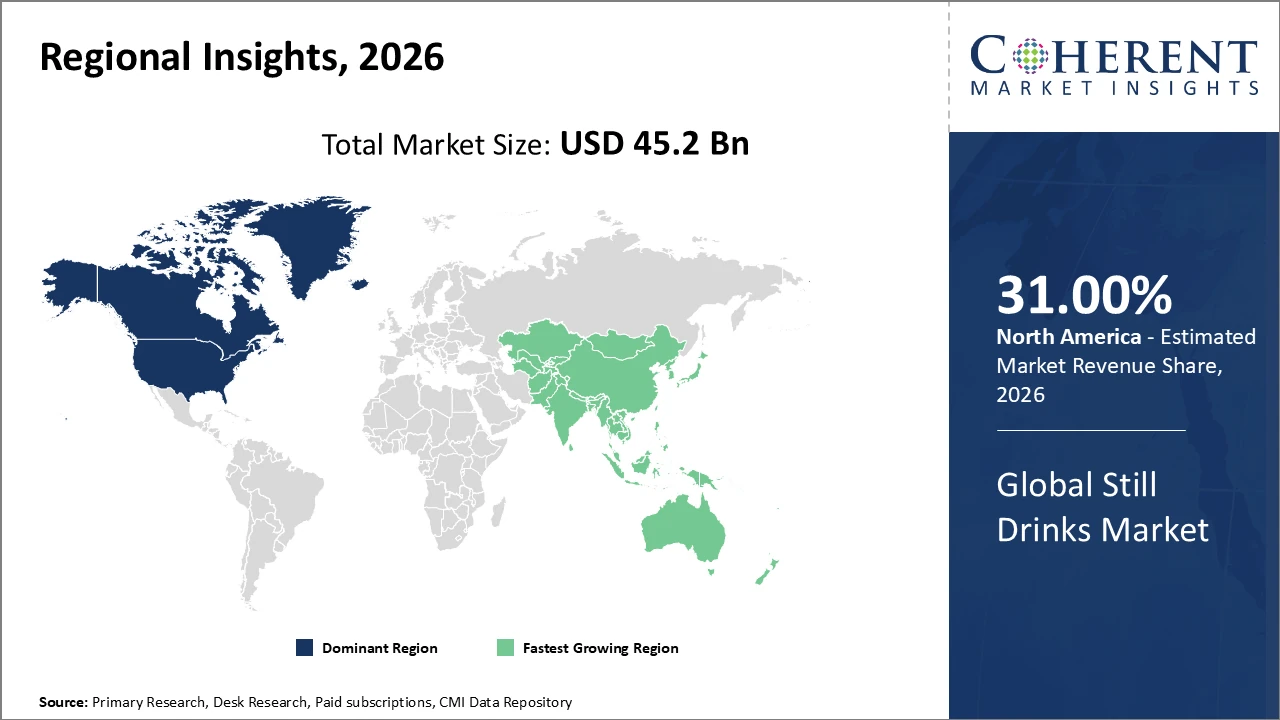
North America remains the dominant regional market due to high consumer awareness and well-established distribution networks.
Asia Pacific exhibits dynamic growth, fueled by increasing disposable incomes and urbanization, with a CAGR surpassing other regions.
Europe provides mature market stability, emphasizing premium product offerings that cater to niche and health-focused consumer segments.
Still Drinks Market Segmentation Analysis
Still Drinks Market Insights, By Product Type
Flavored Water dominates the market share due to strong consumer preference for low-calorie, flavorful hydration solutions, particularly among millennials and health-conscious segments. Its rapid urban adoption is fueled by continuous flavor innovation, premium packaging, and marketing emphasizing wellness. Coconut Water is the fastest-growing subsegment, prized for natural electrolytes and health benefits, gaining traction in tropical regions and specialty health stores. Fruit Juices sustain steady growth through organic and cold-pressed varieties that appeal to authenticity-seeking consumers. Herbal Infusions occupy niche markets, offering functional benefits such as relaxation or detoxification, supported by small but highly loyal consumer bases.
Still Drinks Market Insights, By Distribution Channel
Supermarkets and Hypermarkets dominate the market share due to their wide reach, bulk stocking capacity, and efficiency in introducing new product lines to large consumer bases. They serve as the primary purchase point for still drinks consumers seeking variety and promotional offers. Online Retail is the fastest-growing channel, expanding rapidly with rising internet penetration, mobile commerce, and post-pandemic shifts in shopping behavior. Convenience Stores drive impulse purchases and support urban, on-the-go consumption, while Specialty Stores cater to niche markets, offering organic, functional, and premium beverage options, appealing to health-conscious and trend-focused consumer segments.
Still Drinks Market Insights, By Packaging Type
PET Bottles lead the market share due to their affordability, lightweight design, and convenience, making them the preferred choice for manufacturers and consumers seeking portable solutions. They also enhance supply chain efficiency and extend product shelf life on retail shelves. Glass Bottles cater to premium and environmentally conscious segments but are limited by higher costs and fragility. Cartons are popular for juice products, offering sustainable packaging advantages and ease of storage. Cans occupy a niche segment, primarily used for carbonated or energy-infused still drink variants, appealing to crossover products seeking both convenience and novelty in packaging.
Still Drinks Market Trends
Growing consumer demand for functional beverages with natural ingredients is shaping market trends, especially in Asia Pacific and North America.
Asia Pacific reported a 15% increase in functional beverage consumption in 2025, driven by urbanization and rising wellness awareness.
North America continues to see premiumization of flavored water products, fueled by high disposable incomes and advanced retail infrastructure.
Sustainability practices, including biodegradable packaging, are increasingly integrated across the industry, influencing product development and market strategies.
Overall, the market reflects a shift towards health-focused, convenient, and environmentally responsible still drink options.
Still Drinks Market Insights, By Geography
North America Still Drinks Market Analysis and Trends
In North America, the still drinks market is dominated by strong consumer preference for low-calorie, functional, and flavored beverages. The region accounts for approximately 31% of global market share, supported by well-established distribution networks, high brand recognition, and widespread retail penetration. Regulatory focus on nutritional transparency has encouraged product innovation, prompting companies like PepsiCo and Coca-Cola to launch sugar-reduced and fortified beverage lines, which have generated notable revenue growth in recent years. Additionally, the premiumization trend and increasing health consciousness among millennials and urban populations continue to drive demand for convenient, high-quality, and value-added still drink products across the region.
Asia Pacific Still Drinks Market Analysis and Trends
The Asia Pacific still drinks market is experiencing the fastest growth, with a CAGR of approximately 9.5%, fueled by rapid urbanization, rising disposable incomes, and a growing young population. Government initiatives promoting nutrition awareness in countries like India and China further stimulate demand for healthier beverage options. Retail digitalization, including e-commerce and mobile ordering platforms, enhances product accessibility and convenience, driving higher consumption. Key industry players are expanding region-specific flavor portfolios and establishing localized production facilities to cater to diverse consumer preferences, improve supply chain efficiency, and strengthen market presence, ensuring sustained growth and competitive advantage across the Asia Pacific region.
Still Drinks Market Outlook for Key Countries
USA Still Drinks Market Analysis and Trends
The USA’s still drinks market plays a pivotal role in global revenue, representing over 25% of the total market share in 2026. In 2025, innovations emphasizing organic, clean-label, and low-sugar beverages intensified competition, with The Coca-Cola Company and PepsiCo leading product reformulations. The rise of e-commerce platforms significantly boosted market penetration, with online sales growing by 30%, enabling wider consumer access and enhancing brand engagement. Additionally, premium flavored water and functional beverages gained traction, supported by health-conscious trends and lifestyle-driven consumption. These factors collectively reinforce the USA’s position as a key growth driver in the global still drinks market.
Germany Still Drinks Market Analysis and Trends
Germany’s still drinks market is experiencing steady growth, underpinned by rising demand for healthier, non‑carbonated beverages such as flavored waters, fruit juices, and functional drinks as consumers increasingly prioritize wellness and low‑sugar options. Non‑carbonated soft drinks generate significant revenue, with projected growth in both at‑home and out‑of‑home consumption through 2025 and beyond. Fruit beverages, a key still drinks category, are forecast to expand at a solid pace through 2033, driven by consumer preference for natural and fruit‑based flavors. Functional non‑carbonated drinks, including electrolyte and vitamin‑fortified formulations, are gaining traction as wellness trends strengthen in Germany. Sustainability and clean‑label preferences are also shaping product development and packaging choices in the market.
Analyst Opinion
Shifting Consumer Preferences Towards Health-Conscious Products: Rising demand for sugar-free and natural ingredient beverages drives market revenue. In 2025, global launches of low-sugar still drinks increased by 23%, expanding brand portfolios into wellness-focused offerings.
Distribution Channel Expansion and E-Commerce Growth: Online sales of still drinks grew over 27% in 2024, enhancing market size by improving accessibility and acquiring new consumers, highlighting the importance of digital platforms.
Innovation in Flavors and Functional Ingredients: New flavored drinks with added vitamins, minerals, and electrolytes surged by 18% in 2026, boosting competitiveness and revenue streams.
Regional Demand Variability Fueling Production Adjustments: Asia Pacific consumption rose 15% in 2025, prompting a 12% increase in regional production capacity to meet growing demand.
- Current Industry Events of 2026
- Market Size Estimation
- Regional Breakdown
- Competitive Landscape
- Customer Intelligence
- Segmental Analysis
- Pricing Analysis
- Key Market Drivers, Challenges & Future Trends
- Customized Insights Section
Market Scope
| Report Coverage | Details | ||
|---|---|---|---|
| Base Year: | 2025 | Market Size in 2026: | USD 45.2 billion |
| Historical Data for: | 2020 To 2024 | Forecast Period: | 2026 To 2033 |
| Forecast Period 2026 to 2033 CAGR: | 7.1% | 2033 Value Projection: | USD 72.8 billion |
| Geographies covered: |
| ||
| Segments covered: |
| ||
| Companies covered: | Nestle S.A., Danone S.A., Britvic plc, PepsiCo Inc., The Coca-Cola Company, Kraftz Heinz Company, Red Bull GmbH, Refresco Group, Ocean Spray Cranberries Inc. | ||
| Growth Drivers: |
| ||
Still Drinks Market Growth Factors
The still drinks market growth is driven by rising health and wellness awareness, with consumers preferring beverages free from artificial additives, sugars, and preservatives. Urban lifestyles have increased demand for convenient, portable products, supported by innovations in packaging that enhance shelf life and ease of use. Higher disposable incomes in emerging economies are boosting purchases of premium and functional beverages, expanding market revenue. Additionally, sustainability initiatives, including biodegradable and recyclable packaging, appeal to environmentally conscious consumers, shaping purchasing behavior. These combined factors—health focus, convenience, premiumization, and ecological responsibility—are key drivers influencing global market expansion and evolving dynamics.
Still Drinks Market Development
In March 2026, So Good entered the Indian market with two offerings—Still Craft Soju and Sparkling Inspired Soju Drinks—introducing a locally adapted take on Korea’s iconic spirit, tailored to India’s evolving tastes.
Key Players
Leading Companies of the Market
Nestle S.A.
The Coca-Cola Company
PepsiCo Inc.
Danone SA
Red Bull GmbH
Kraft Heinz Company
Refresco Group
Britvic plc
Ocean Spray Cranberries Inc
Several leading companies have pursued competitive strategies including portfolio diversification and region-specific product launches. For instance, The Coca-Cola Company’s 2025 introduction of enhanced flavored water lines resulted in a 9% increase in regional revenue, strengthening its foothold in the functional beverage segment. Simultaneously, Nestlé’s strategic acquisition of regional beverage startups in Asia Pacific expanded its market presence, allowing the company to better align offerings with local tastes and consumer preferences. These approaches highlight how major players are leveraging innovation and targeted expansion to capture emerging opportunities and drive growth in the still drinks market.
Still Drinks Market Future Outlook
The still drinks market is poised for sustained growth, driven by rising consumer preference for health-oriented and functional beverages. Innovations in low-sugar, vitamin-enriched, and naturally flavored products are expected to dominate new launches, particularly in North America and Asia Pacific. E-commerce and direct-to-consumer channels will further expand accessibility, enhancing revenue potential. Sustainability will remain a key focus, with biodegradable and recyclable packaging gaining traction. Additionally, emerging markets will contribute significantly to volume growth due to increasing disposable incomes and urbanization. Overall, the market outlook reflects a blend of product innovation, digital expansion, and eco-conscious strategies shaping future dynamics.
Still Drinks Market Historical Analysis
The still drinks market has experienced steady growth over the past decade, driven by evolving consumer preferences for healthier, low-sugar, and naturally flavored beverages. Between 2016 and 2025, flavored water and functional drinks witnessed the highest adoption, particularly in North America and Europe, supported by premiumization and urban lifestyle trends. PET bottle packaging became dominant due to convenience and cost-effectiveness, while supermarkets and hypermarkets emerged as primary distribution channels. Innovation in functional ingredients, such as added electrolytes and vitamins, along with early e-commerce adoption, contributed to expanding market reach. These historical trends laid the foundation for robust growth from 2026 onwards.
Sources
Primary Research Interviews:
Beverage category managers, product development specialists, and marketing heads across global soft drink companies
Retail managers, e-commerce leads, and distribution professionals in supermarkets, convenience stores, and online beverage platforms
Consumer insights experts and nutrition advisors focusing on functional and low-sugar beverage trends
Magazines:
Beverage Daily – Innovations, Product Launches, and Market Trends in Non-Alcoholic Beverages
Food Navigator – Functional Ingredients, Health Claims, and Flavored Drinks Trends
Beverage Industry Magazine – Distribution, Packaging, and Consumer Preferences
Drinks International – Market Insights and Global Beverage Brand Strategies
Journals:
Journal of Food Science – Research on Beverage Formulations, Functional Ingredients, and Consumer Preferences
International Journal of Food and Beverage Manufacturing – Trends, Innovations, and Market Dynamics
Nutrition & Food Science Journal – Health-Oriented Beverage Consumption and Adoption Patterns
Journal of Consumer Marketing – Beverage Brand Adoption, Packaging Influence, and Market Behavior
Newspapers:
The Wall Street Journal – Beverage Industry Developments, Consumer Trends, and Product Innovations
Financial Times – Retail and E-Commerce Growth of Still Drinks
TechCrunch – Beverage Startups, Technology Integration, and Packaging Innovations
Business Insider – Market Updates, Consumer Behavior, and Competitive Analysis in Beverages
Associations:
International Bottled Water Association (IBWA) – Standards, Market Data, and Best Practices
Beverage Industry Environmental Roundtable (BIER) – Sustainability Guidelines and Research in Non-Alcoholic Drinks
Global Beverage Alliance – Advocacy, Industry Standards, and Professional Development
Get access to 250+ pages report
Every segment, forecast, competitor profile and data table behind the analysis above — available for instant download.
- ESOMAR Member
- ISO 9001:2015 Certified
- D-U-N-S Registered
- GDPR & CCPA Compliant
Missing comfort of reading report in your local language? Find your preferred language:
Transform your Strategy with Exclusive Trending Reports
Frequently Asked Questions
The Still Drinks market is led by major companies including Nestlé S.A., The Coca-Cola Company, and PepsiCo, Inc., which maintain strong market positions through continuous product innovation, flavor diversification, and strategic global expansions.
The market is projected to grow from USD 45.2 billion in 2026 to USD 72.8 billion by 2033, reflecting a CAGR of 7.1%, driven by rising consumer demand for functional, low-sugar, and flavored beverages.
The PET bottles segment offers the largest growth potential.
Trends indicate rising adoption of clean-label formulations, sustainable packaging solutions, diversified flavors, and expanding e-commerce distribution, enhancing market accessibility and consumer engagement.
The market is highly competitive, driven by product innovation and regional customization. Key challenges include supply chain disruptions, raw material availability, and compliance with evolving food and beverage regulations.
Companies focus on mergers and acquisitions, region-specific product launches, digital marketing campaigns, and partnerships with retail and e-commerce platforms to strengthen brand visibility and expand consumer reach.