

Licorice Extract Market Size and Share Analysis: (2026-2033)
The Licorice Extract Market size is anticipated to grow at a CAGR of 6.2% with USD 1,020 Mn in 2026 and is expected to reach USD 1,550 Mn in 2033. The primary drivers are largely defined by rising demand for natural flavoring, herbal supplements, and sugar-reduction ingredients across food, beverages, pharmaceuticals, and tobacco. Some other factors include increasing use in digestive and respiratory wellness products, clean-label formulation trends, and FDA-recognized flavoring applications. WHO reported about 830 million people have diabetes globally, supporting demand for natural sweetening ingredients such as licorice extract.
Key Takeaways
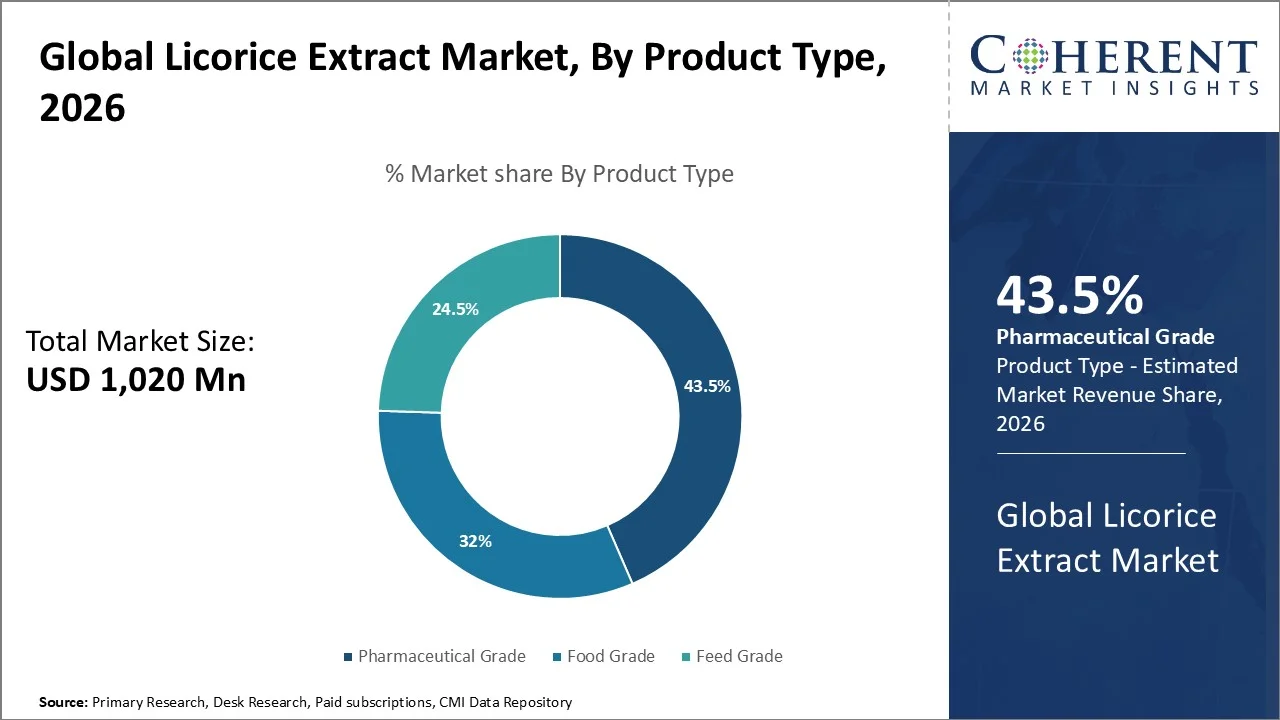
- The pharmaceutical grade segment is likely to dominate the market with 43.5% in 2026. The segment’s growth is owing to its standardized purity, controlled active content, and wider use in herbal medicinal formulations. WHO states that traditional, complementary, and herbal medicine is used across 170 countries, while 124 Member States have laws or regulations for herbal medicines.
- The powder segment is set to lead with 60.5% in 2026. The segment’s growth is owing to the easy blending of licorice extract powder in tablets, capsules, sachets, dry mixes, beverages, and nutraceutical formulations. FDA lists Licorice Extract Powder (Glycyrrhiza spp.) as a recognized food substance used as a flavoring agent/adjuvant and non-nutritive sweetener, supporting its use in commercial formulations.
- The pharmaceutical segment is set to lead with 44.8% in 2026. The segment’s growth is owing to the increasing use of licorice extract in digestive relief products, cough/cold formulations, herbal medicines, and therapeutic supplements. EMA recognizes Glycyrrhiza radix as a traditional herbal medicinal product for digestive symptom relief, including burning sensation and dyspepsia.
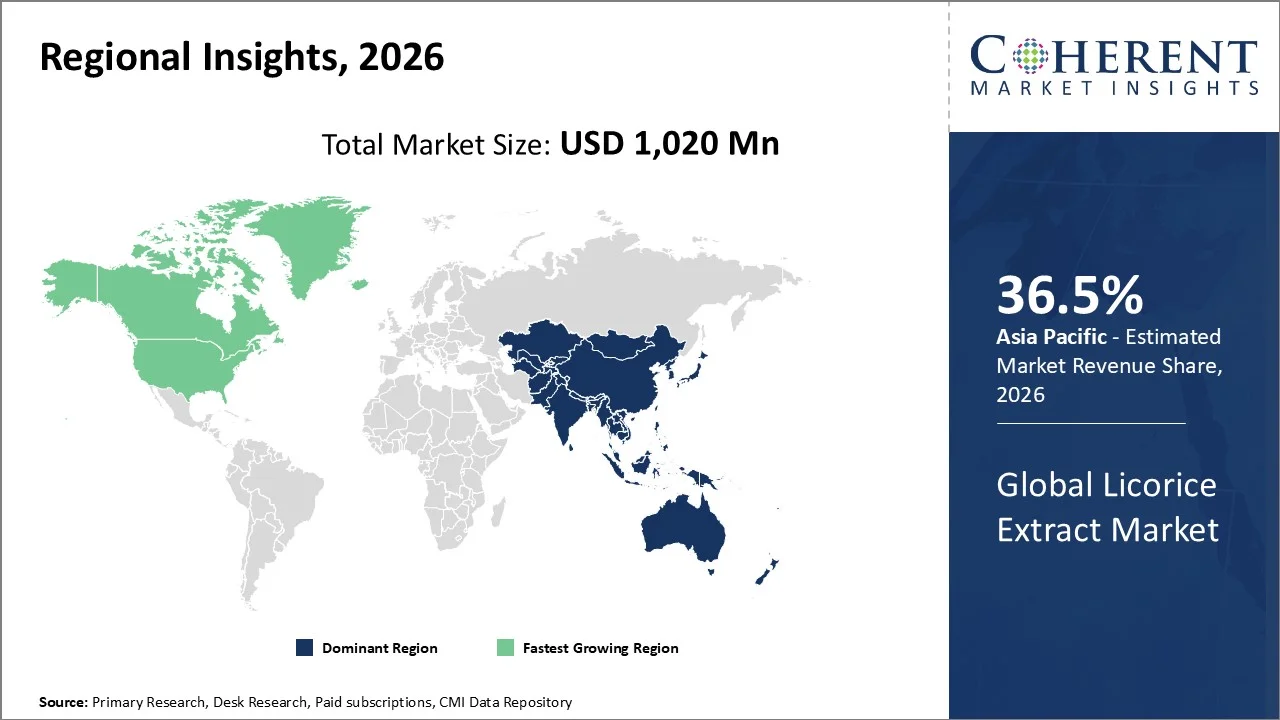
- Asia Pacific is expected to acquire the prominent share of 36.5% in 2026. The region’s growth is owing to the strong presence of Ayurveda, traditional Chinese medicine, herbal drug manufacturing, and high consumer acceptance of plant-based remedies. India’s PIB reported in December 2024 that the Ayush market reached USD 43.4 billion in 2023, with exports doubling to USD 2.16 billion.
Segmental Insights
Why is Pharmaceutical Grade Acquiring the Largest Share?
The pharmaceutical grade segment is projected to account for the largest Licorice Extract Market share of 43.5% in 2026. The segment’s growth is owing to the preference for standardized, high‑purity extracts which meet pharmacopeia standards (BP/EP/USP) for use in antitussives, anti‑inflammatory, and gastroprotective formulations, which enhances formulation reliability and regulatory compliance.
The pharmaceutical grade extracts are also prioritized in clinical research owing to their consistent glycyrrhizin and other bioactive profiles, thereby facilitating accurate efficacy assessments. A current clinical trial (NCT07422883), first posted on ClinicalTrials.gov in February 2026, is evaluating licorice extract as an adjunctive therapy in stage II periodontitis. This underscores ongoing research interest in the therapeutic applications.
The National Center for Complementary and Integrative Health (NCCIH) recognized licorice root’s historical use in Assyrian, Egyptian, Greek, Arab, Chinese, Tibetan, and Indian cultures. Traditionally, it was applied for coughs, asthma, wound healing, and ailments of the lungs, liver, and arteries, thereby highlighting its longstanding medicinal significance.
- Current Industry Events of 2026
- Market Size Estimation
- Regional Breakdown
- Competitive Landscape
- Customer Intelligence
- Segmental Analysis
- Pricing Analysis
- Key Market Drivers, Challenges & Future Trends
- Customized Insights Section
Powder hold the Largest Market Share
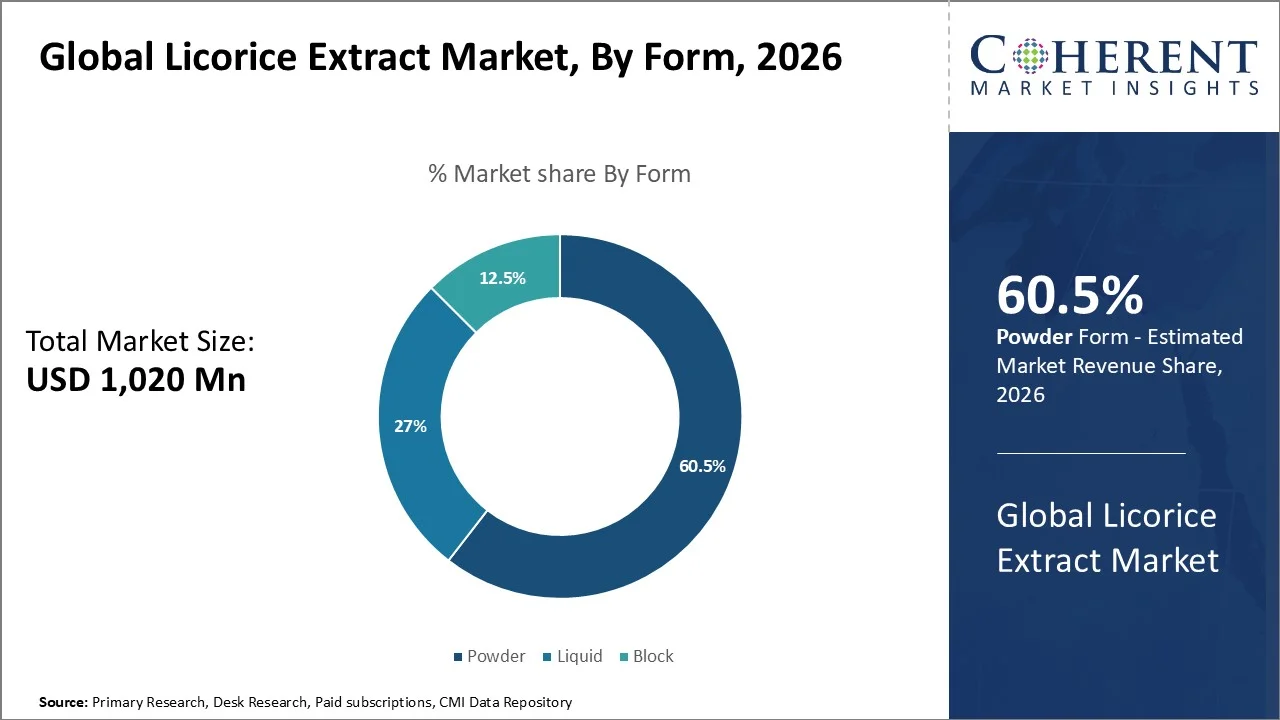
The powder segment lead with a major 60.5% share in 2026. The segment’s growth is owing to the easy incorporation of licorice extract powder into capsules, tablets, sachets, functional food mixes, confectionery, and beverage premixes. Powdered extracts also offer better shelf stability, transport efficiency, and dosage standardization compared to liquid extracts, making them more suitable for large-scale commercial formulations. The versatility also facilitates a wider use in dietary supplements, functional beverages, herbal formulations, and food products.
The dietary supplements like licorice extract are classified as foods in the U.S. and do not need FDA approval before marketing. The FDA estimates that more than 29,000 dietary supplements are available to consumers, thereby highlighting the broad formulation base which supports the demand for licorice extract powder.
In April 2026, Rohto Group unveiled a new ingredient named Licorice Extract Powder (Lyconin), which contains Gliasperin B. It has been recognized as Japan’s first approved functional food for managing body fat. This milestone expands opportunities for ingredient innovation and product development in the body fat reduction sector.
Market Drivers
Rising Demand for Natural & Clean ‑Label Ingredients is Transforming the Licorice Extract Market in the US
The global licorice extract market is witnessing accelerated growth as consumers increasingly prefer natural and clean-label ingredients across food, beverages, nutraceuticals, and pharmaceutical products. Licorice extract is gaining relevance because it is a plant-derived ingredient used for flavoring, sweetness, soothing properties, as well as functional formulation benefits.
The USDA Economic Research Service reported that the natural-labeled products accounted for 16% of the U.S. food purchases. This reflects a broader shift toward botanical as well as minimally processed ingredients. Similar clean-label preferences are also strengthening in Europe and Asia, where consumers are showing higher interest in herbal, traditional, and naturally sourced ingredients.
According to the CDC/NCHS, 57.6% of the U.S. adults used at least one , thereby supporting the demand for botanical ingredients in nutraceutical applications. The regulatory acceptance also supports the market growth, as the U.S. FDA permits licorice extract powder for use in food and supplement applications.
Advanced Extraction & Purification Technologies: A Major Breakthrough in the Licorice Extract Market
The recent advances in extraction and purification technologies are driving a major breakthrough in the Licorice Extract Market. Supercritical CO2 removal, filtration and membrane cleaning are just some of the processes today’s manufacturers can use to produce licorice extracts with very consistent levels of glycyrrhizin and low levels of impurities. These changes help in improving safety as well as effectiveness in food, pharmaceutical, and nutraceutical uses.
According to the United States FDA, the glycyrrhizin levels are limited to 0.05% in baked goods, 0.15% in nonalcoholic beverages, 1.1% in chewing gum, 3.1% in soft candy, and 16.0% in hard candy, which strengthens the need for precise purification. In addition, the heavy metals are restricted to a maximum of 40 ppm, and arsenic is limited to 3 ppm, thus compelling adherence to validated purification methods.
A recent clinical trial conducted in June 2024 investigated licorice root powder in women with PCOS‑related metabolic syndrome. This highlights the growing demand for traceable, high‑purity botanical extracts which were produced through cutting edge technologies
Current Events and Their Impact on the Licorice Extract Market (regulatory shifts, government policies)
Current Event | Description and its Impact |
U.S. FDA GRAS Status for Licorice Extract under 21 CFR 184.1408 |
|
EU Mandatory Labelling Rules for Glycyrrhizin-Containing Liquorice Foods |
|
Licorice Extract Market Trends
- The rising demand for functional and herbal products supports the licorice extract adoption in throat-soothing products, digestive health formulations, immunity-support supplements, and traditional wellness products.
- The regulatory clarity is strengthening the manufacturer confidence. The FDA recognizes licorice extract from Glycyrrhiza spp. as GRAS under 21 CFR 184.1408 for use in both foods as well as flavoring applications.
- The clinical research on licorice-derived compounds is growing, especially for anti-inflammatory and anticancer applications. In 2024, the University of Illinois Chicago started a clinical trial to test a compound from licorice root on prostate cancer patients who were waiting for surgery.
- Stable international supply is also contributing to the market growth. The U.S. import records show regular shipments of Glycyrrhiza glabra and licorice extract from India under HSN codes 13021919 and 13021200 during 2024–2025.
- The product diversification is widening the market footprint, as licorice extract is used in confectionery, beverages, cosmetics, personal care products, herbal teas, and standardized dietary supplements.
- R&D investment in high-purity extracts, flavonoid-rich formulations, and standardized powder formats is increasing to meet the demand from nutraceutical, cosmetic, and functional food manufacturers.
Regional Insights
Asia Pacific Dominates Owing to the Strong Traditional Medicine Use and Functional Ingredient Integration
The Asia Pacific region accounts for 36.5% of the market share in 2026. The region’s growth is owing to the long-standing use of licorice in traditional Chinese, Japanese, Korean, and Ayurvedic herbal practices and increasing adoption of standardized plant extracts in pharmaceuticals, nutraceuticals, confectionery, and oral care products.
According to the China National Medical Products Administration, the traditional Chinese medicine institutions provided approximately 1.28 billion diagnoses and treatments in 2023. This shows that herbal ingredients like licorice extracts are widely used by both patients and consumers. According to the India’s AYUSH survey, between July 2022 and June 2023, nearly 46% of rural people and 53% of urban people used AYUSH therapies for prevention or treatment. This indicates that the traditional herbal remedies are widely accepted.
In May 2025, a registered clinical study (KCT0006998) showed that a mouthwash containing Glycyrrhiza uralensis extract significantly reduced periodontal indices and bacterial levels, underscoring the therapeutic potential of licorice extract in oral care.
North America Licorice Extract Market Trends
North America is expected to witness strong growth in Licorice Extract Market over the forecast period. The region’s growth is owing to the rising demand for natural sweeteners, herbal ingredients, clean-label food additives, and plant-based dietary supplements. The region benefits from clear regulatory acceptance, which supports wider use of licorice extract across food, beverage, nutraceutical, and personal care applications.
In the U.S., the federal regulations permit licorice extract in liquid, paste/block, and spray-dried powder forms, thereby enabling manufacturers to develop diverse formulations. In Canada, the Health Canada’s Natural Health Products Ingredients Database recognizes Glycyrrhiza glabra (Licorice) Root Extract as an approved herbal substance in dry, standardized dry, liquid, along with standardized liquid extract forms. This strengthens product accessibility as well as formulation flexibility.
In May 2024, the University of Illinois Chicago launched a clinical trial to evaluate a licorice root–derived compound for its potential effects on prostate cancer. This study represents the first assessment of the natural product’s anti-cancer activity in patients awaiting surgical treatment.
Demand For Medicinal and Functional Food Applications is Accelerating the Licorice Extract Market in China
In China’s Licorice Extract Market, the growth is driven by the strong domestic demand for medicinal and functional food applications, alongside the expanding export opportunities backed by government regulatory frameworks.
The domestic supply–demand data show that China produced approximately 7,060.7 tons of licorice extract in 2023, while domestic demand was around 7,755 tons. This highlights a tight balance between both local production as well as usage and indicates constrained processing capacity.
In December 2024, Qinghai Beili Licorice Technology Development Co., Ltd. made a new batch of licorice extract cream. The batch was prepared for international shipment from their warehouse in Gonghe County, Qinghai Province.
United States Licorice Extract Market Trends
In the United States, growth in the Licorice Extract Market is driven by rising demand for natural sweeteners, herbal ingredients, and clean-label flavoring solutions across food, beverage, nutraceutical, and dietary supplement applications.
Licorice extract and licorice extract powder are listed in the FDA’s Substances Added to Food inventory as GRAS for use as flavoring agents or adjuvants under 21 CFR 184.1408. This regulatory clarity strengthens their lawful use in food as well as beverage formulations.
In addition, Volza’s Glycyrrhiza import data shows regular shipments of Glycyrrhiza glabra/licorice extract into the U.S., particularly from India, under HSN codes 13021919 and 13021200 during 2024–2025, thereby indicating sustained international supply and demand.
Who are the Major Companies in Licorice Extract Industry
Some of the major key players in Licorice Extract Market are Norevo GmbH, MAFCO Worldwide LLC, FC Licorice, Zagros Licorice Co., Ransom NaturalsLtd., Aushadhi Herba, VPL Chemicals, Sepidan Osareh Co.
Key News
- In April 2025, Swisseutic announced a strategic distribution partnership with Qinghai Lake Pharmaceutical Co., Ltd. (QHL), a leading global manufacturer of licorice derivatives. This collaboration enables Swisseutic to bring QHL’s high-quality licorice-based ingredients, including Ammonium Glycyrrhizinate, Dipotassium Glycyrrhizinate, Enoxolone, Glabridin, and Licochalcone A, to the European market. These ingredients are widely used in pharmaceuticals, nutraceuticals, food, as well as cosmetics.
- In September 2024, Uncover, a Pan‑African skincare brand, launched its I Am Enough Licorice Root Dark Spot Serum, developed specifically to address hyperpigmentation concerns common among women with melanin‑rich skin.
Market Report Scope
Licorice Extract Market Report Coverage
| Report Coverage | Details | ||
|---|---|---|---|
| Base Year: | 2025 | Market Size in 2026: | USD 1,020 Mn |
| Historical Data for: | 2020 To 2024 | Forecast Period: | 2026 To 2033 |
| Forecast Period 2026 to 2033 CAGR: | 6.2% | 2033 Value Projection: | USD 1,550 Mn |
| Geographies covered: |
| ||
| Segments covered: |
| ||
| Companies covered: | Norevo GmbH, MAFCO Worldwide LLC, FC Licorice, Zagros Licorice Co., Ransom NaturalsLtd., Aushadhi Herba, VPL Chemicals, Sepidan Osareh Co. | ||
| Growth Drivers: |
| ||
| Restraints & Challenges: |
| ||
Analyst Opinion
- Licorice extract is driven by broad ingredient utility, not only by herbal product trends. FDA rules recognize licorice extract in liquid, paste/block, and spray‑dried powder forms, supporting its use across foods, beverages, confectionery, supplements, and flavor systems. This means the market isn’t “growing” only because of trends — it’s growing because the ingredient is widely needed.
- The market benefits from its dual positioning as a natural sweetening/flavoring ingredient and a botanical wellness ingredient. FDA’s food‑substance listing identifies licorice extract powder as a flavoring agent or adjuvant and non‑nutritive sweetener, enabling clean‑label formulations and broad commercial adoption.
- Advances in biomedical research are extending licorice’s relevance beyond traditional uses. A November 2025 Frontiers in Pharmacology review highlights licorice’s phytochemical components (triterpenoids and flavonoids) and shows how these compounds alleviate nephropathy through anti‑inflammatory, antioxidant, anti‑apoptotic, autophagy‑promoting, and fibrosis‑inhibiting mechanisms. This growing scientific evidence is expected to boost demand across pharmaceutical, nutraceutical, and functional ingredient markets.
Speak to the analyst
Want personalized insights?
Take the findings above to one of our principal consultants, or have the report rebuilt around the segments, geographies and competitors you actually track.
Market Segmentation
- By Product Type (Revenue, USD Mn, 2021-2033)
- Food Grade
- Feed Grade
- Pharmaceutical Grade
- By Form (Revenue, USD Mn, 2021-2033)
- Powder
- Liquid
- Block
- By Application (Revenue, USD Mn, 2021-2033)
- Food & Beverages
- Pharmaceutical
- Tobacco
- Others
- By Region (Revenue, USD Mn, 2021-2033)
- North America
- U.S.
- Canada
- Latin America
- Brazil
- Mexico
- Argentina
- Rest of Latin America
- Europe
- Germany
- U.K.
- France
- Italy
- Spain
- Russia
- Rest of Europe
- Asia Pacific
- China
- India
- Japan
- Australia
- South Korea
- ASEAN
- Rest of Asia Pacific
- Middle East
- GCC
- Israel
- Rest of Middle East
- Africa
- South Africa
- Central Africa
- North Africa
- North America
- Key Players
- Norevo GmbH
- MAFCO Worldwide LLC
- FC Licorice
- Zagros Licorice Co.
- Ransom NaturalsLtd.
- Aushadhi Herba
- VPL Chemicals
- Sepidan Osareh Co.
Sources
Primary Research Interviews
- Licorice Extract Manufacturers
- Botanical Extract Suppliers
- Herbal Supplement Manufacturers
- Food & Beverage Ingredient Formulators
- Pharmaceutical & Nutraceutical Formulation Experts
- Cosmetic & Personal Care Product Manufacturers
- Herbal Raw Material Traders and Distributors
- Importers and Exporters of Licorice Roots and Extracts
- Regulatory and Quality Compliance Consultants
- Others
Databases
- Bloomberg Terminal
- Thomson Reuters Eikon
- Euromonitor International
- S&P Global Market Intelligence
- ITC Trade Map
- UN Comtrade Database
- FAOSTAT
- Mintel Global New Products Database
- Others
Magazines
- Nutraceuticals World
- Natural Products Insider
- Food Business News
- Cosmetics & Toiletries
- Food Ingredients First
- HerbalGram Magazine
- Chemical & Engineering News
- Others
Journals
- Journal of Ethnopharmacology
- Phytochemistry
- Food Chemistry
- Industrial Crops and Products
- Molecules
- Journal of Herbal Medicine
- Frontiers in Pharmacology
- Planta Medica
- Others
Newspapers
- Financial Times
- The Wall Street Journal
- Reuters
- Bloomberg News
- The Economic Times
- Business Standard
- Others
Associations
- American Herbal Products Association (AHPA)
- American Botanical Council (ABC)
- European Botanical Forum
- United Natural Products Alliance (UNPA)
- International Alliance of Dietary/Food Supplement Associations (IADSA)
- Botanical Adulterants Prevention Program
- Others
Public Domain Sources
- U.S. Food and Drug Administration (FDA)
- European Medicines Agency (EMA)
- World Health Organization (WHO)
- Food and Agriculture Organization (FAO)
- United Nations Comtrade Database
- International Trade Centre (ITC) Trade Map
- U.S. Department of Agriculture (USDA)
- European Food Safety Authority (EFSA)
- National Center for Complementary and Integrative Health (NCCIH)
- Others
Proprietary Elements
- CMI Data Analytics Tool
- Proprietary CMI Existing Repository of Information for the Last 8 Years
Get access to 250+ pages report
Every segment, forecast, competitor profile and data table behind the analysis above — available for instant download.
- ESOMAR Member
- ISO 9001:2015 Certified
- D-U-N-S Registered
- GDPR & CCPA Compliant
Missing comfort of reading report in your local language? Find your preferred language:
Transform your Strategy with Exclusive Trending Reports
Frequently Asked Questions
The Licorice Extract Market is expected to reach USD 1,550 Million in 2033.
Major players operating in the global Licorice Extract Market include Norevo GmbH, MAFCO Worldwide LLC, FC Licorice, Zagros Licorice Co., Ransom NaturalsLtd., Aushadhi Herba, VPL Chemicals, Sepidan Osareh Co.
The health concerns over consumption, supply chain volatility, and, in some regions, lower consumer awareness are the key factors hampering growth of the market.
The rising demand for natural, clean-label ingredients in food/cosmetics, significant use in pharmaceutical products for digestive health, and its application as a natural sweetener and flavoring agent is boosting the demand for Licorice Extract.
The Licorice Extract Market is anticipated to grow at a CAGR of 6.2% between 2026 and 2033.
Among regions, Asia Pacific is expected to account for a largest market share in the global Licorice Extract Market over the forecast period.