

Medium Chain Triglycerides Market Analysis & Forecast: 2026-2033
Medium Chain Triglycerides Market is estimated to be valued at USD 1,033.6 Mn in 2026 and is expected to reach USD 1,533.7 Mn in 2033, exhibiting a compound annual growth rate (CAGR) of 5.8% from 2026 to 2033.
Key Takeaways
- Based on Fatty Acid Type, the Caprylic Acid segment is expected to hold 41% of the market share in 2026, due to its superior ketogenic properties and rapid conversion into energy.
- Based on Application, the Dietary Supplements segment is projected to hold the largest share of the market in 2026, due to the surge in consumer interest in low-carb, high-fat diets.
- Based on Region, North America is set to lead the global medium chain triglycerides market with 58% share in 2026. While, Asia Pacific is expected to be the fastest growing region.
Market Overview
The global medium chain triglycerides market demand is experiencing strong growth due to favorable growth in sports activities across the globe, rising strategic marketing activities by leading manufacturers to build a larger consumer base, and the increasing demand for functional food supplements. Moreover, increasing fitness awareness among people fuelled by government healthcare campaigns is expected to propel the growth of the medium chain triglycerides market over the forecast period. Also, stringent government regulations regarding the quality of dietary supplements, ensures protection against adulteration and identification of banned ingredients. The NSF GMP certification process indicates that a manufacturer has gone through a stringent manufacturing audit process to meet the guidelines set by National Science Foundation. This is expected to regulate the quality of products in the market and may act as a restraining factor for the growth of manufacturers.
Current Events and their Impact
Current Event | Description and its Impact |
Raw Material Supply Chain Disruptions |
|
Regulatory and Policy Changes |
|
Microeconomic And Macroeconomic Factors Influencing the Medium Chain Triglycerides (MCTS) Market
Microeconomic Factors
- Consumer Preferences
- Rising demand for keto, paleo, and clean-label products.
- Increased awareness of functional foods and nutraceuticals.
- Product Innovation
- Development of MCT-infused beverages, powders, and pharmaceuticals.
- Use in cosmetics and clinical nutrition expands product diversity.
- Pricing and Competition
- Price fluctuations due to raw material sourcing (coconut vs. palm kernel oil).
- Competitive landscape with regional and global brands offering differentiated MCT blends.
- Distribution Channels
- Growth of e-commerce, health stores, and direct-to-consumer platforms.
- Strategic partnerships with fitness influencers and wellness brands.
- Supply Chain Efficiency
- Dependence on sustainable sourcing, refining, and transport logistics.
- Impact of certifications (e.g., organic, RSPO) on brand positioning and cost.
Macroeconomic Factors
- Global Health Trends
- Rising prevalence of obesity, diabetes, and metabolic disorders.
- Shift toward preventive healthcare and diet-based interventions.
- Economic Growth & Disposable Income
- Higher spending on premium health products in emerging markets like China, India, and Brazil.
- Economic recovery post-pandemic boosts consumer confidence.
- Trade Policies & Regulations
- Import/export duties on coconut and palm oil derivatives.
- Regulatory frameworks for food safety, pharmaceutical excipients, and labeling standards.
- Environmental Sustainability
- Pressure to reduce deforestation and promote eco-friendly sourcing.
- Demand for carbon-neutral and ethically produced MCTs.
- Technological Advancements
- Innovations in lipid extraction, nanoemulsion delivery, and clinical formulation.
- Improved analytical methods for MCT quality control and traceability.
- Current Industry Events of 2026
- Market Size Estimation
- Regional Breakdown
- Competitive Landscape
- Customer Intelligence
- Segmental Analysis
- Pricing Analysis
- Key Market Drivers, Challenges & Future Trends
- Customized Insights Section
Segmental Insights
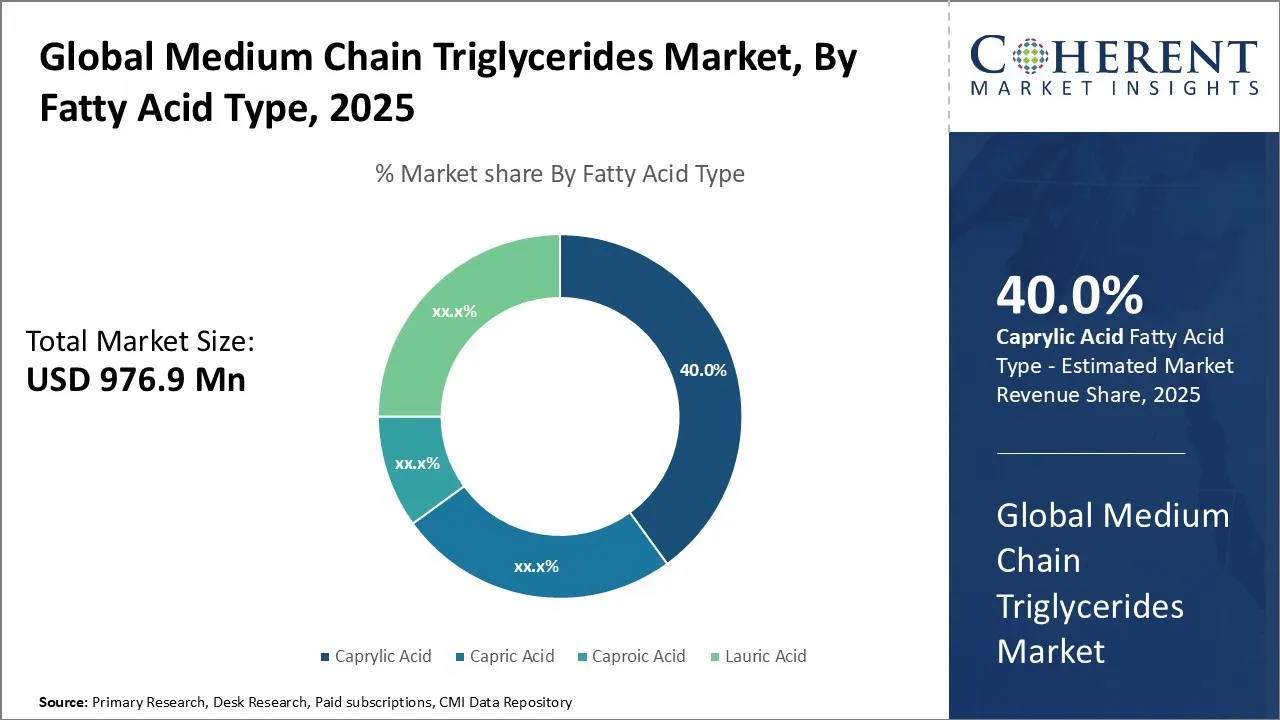
Medium Chain Triglycerides Market Insights, By Fatty Acid Type - Caprylic Acid leads with its rapid energy conversion and superior ketogenic benefits
In terms of fatty acid type, the caprylic acid segment is expected to contribute 41% share of the market in 2026, due to its superior ketogenic properties and rapid conversion into energy. Its popularity is driven by its effectiveness in promoting ketosis, making it a preferred ingredient in products targeting weight management, cognitive enhancement, and athletic performance. Caprylic Acid is also favored for its neutral taste and high purity, which make it ideal for blending into functional foods, beverages, and supplements.
For instance, in February 2025, Gattefossé highlights the versatility of Labrafac™ in nanoemulsion formulations for oral and topical drug delivery. Known for its solubilizing and absorption-enhancing properties, Labrafac™ supports improved bioavailability of lipophilic APIs. The article explores its role in self-emulsifying drug delivery systems (SEDDS), showcasing its potential across pharmaceutical and nutraceutical applications.
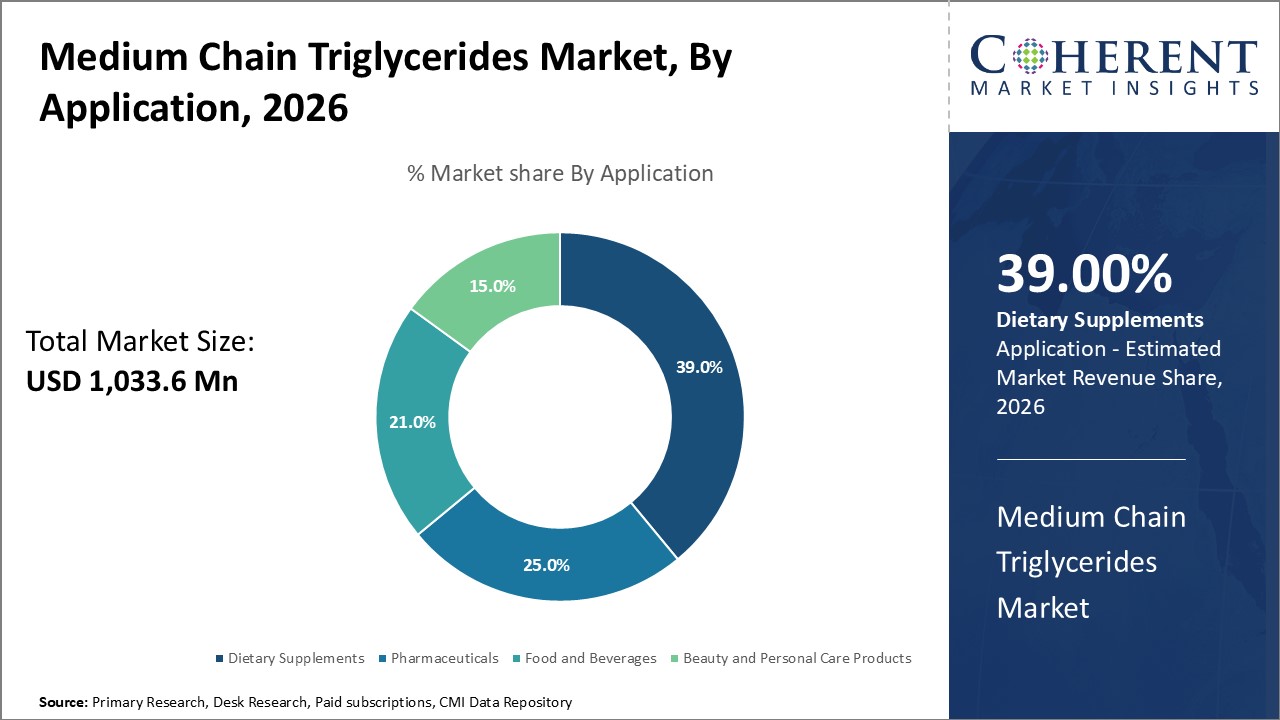
Medium Chain Triglycerides Market Insights, By Application - Dietary Supplement
In terms of application, the dietary supplement segment is expected to lead the market with the largest share in 2026. This is primarily due to the surge in consumer interest in low-carb, high-fat diets such as ketogenic and paleo, which emphasize MCTs for their metabolic benefits. Supplement formulations increasingly feature MCT oils and powders to support energy, mental clarity, and fat burning. These products are widely available through health-focused retail channels, e-commerce platforms, and wellness apps, making them accessible to a broad consumer base.
For instance, in February 2026, a new study suggests that tricaprin, a natural supplement derived from medium chain triglycerides, may help improve heart function in people with a lesser-known type of heart disease called coronary microvascular dysfunction (CMD). Researchers found that tricaprin helped dissolve fat deposits in heart muscle, offering a potential non-invasive treatment option for CMD patients.
Regional Insights
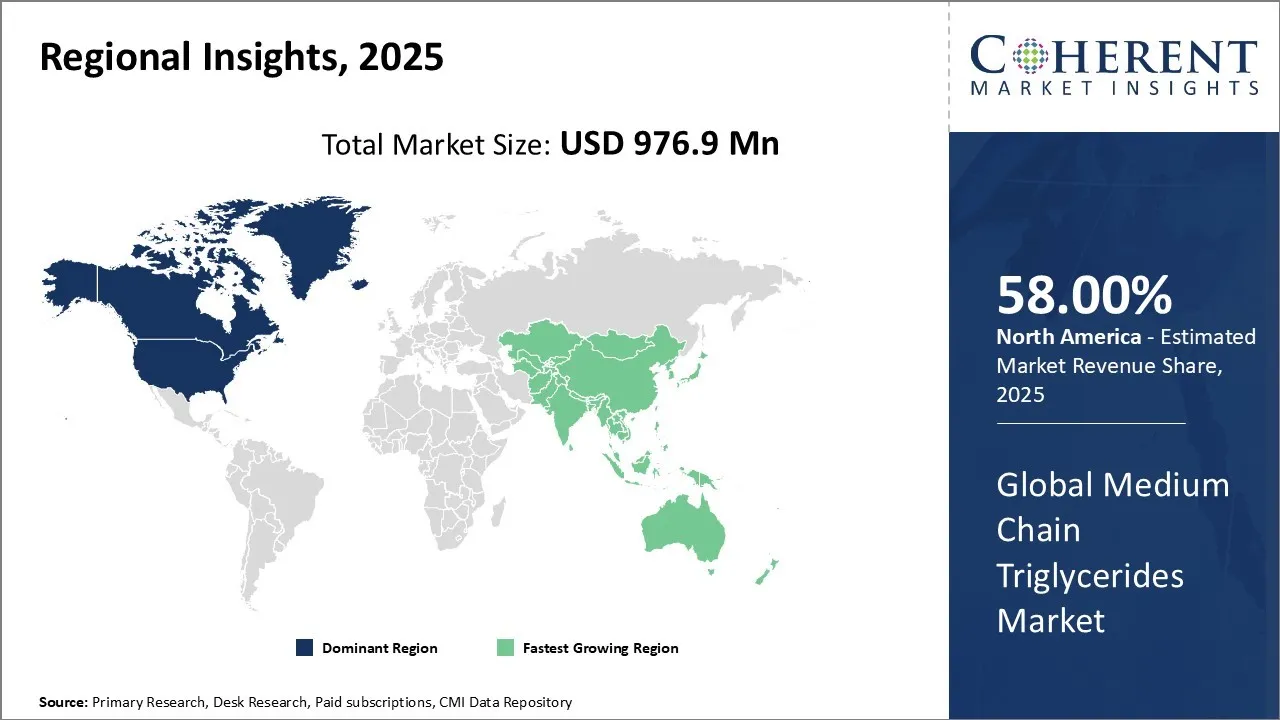
North America Medium Chain Triglycerides Market Analysis & Trends
North America region is projected to lead the market with a 58% share in 2026, driven by a convergence of health trends, consumer awareness, and product innovation. The region has seen widespread adoption of ketogenic, paleo, and low-carb diets, which emphasize MCTs for their ability to support energy metabolism, cognitive function, and weight management. Consumers are increasingly seeking clean-label, functional ingredients, and MCTs, especially those derived from coconut oil, fit seamlessly into this narrative.
For instance, in July 2026, Rare Disease Advisor published an overview of emerging therapies for Long-Chain Fatty Acid Oxidation Disorders (LC-FAOD), highlighting advances in dietary management and pharmacological interventions. The guide explores novel approaches to improve energy metabolism and reduce complications, offering hope for patients with this rare genetic condition affecting fat breakdown and mitochondrial function.
Asia Pacific Medium Chain Triglycerides Market Analysis & Trends
Asia Pacific region is expected to experience significant growth in the medium chain triglycerides market in 2026, driven by a combination of rising health awareness, increasing disposable incomes, and expanding access to functional nutrition across countries like China, India, Japan, and South Korea. Consumers in these markets are rapidly adopting MCT-enriched products for weight management, energy enhancement, and digestive health, especially as ketogenic and low-carb diets gain popularity.
For instance, in February 2026, a multi-institutional research team led by Osaka University has discovered that tricaprin, a natural supplement derived from medium chain triglycerides, significantly improves long-term survival in patients with triglyceride deposit cardiomyovasculopathy (TGCV), a newly identified form of heart disease. TGCV is characterized by the heart’s inability to break down triglycerides, leading to fat accumulation and heart failure.
Medium Chain Triglycerides Market Outlook Country-Wise
The U.S. Medium Chain Triglycerides Market Trends
In 2026, the Medium Chain Triglycerides (MCTs) market in the United States is thriving due to rising health awareness, the popularity of ketogenic and low-carb diets, and expanding applications in sports nutrition, pharmaceuticals, and functional foods. MCTs are widely used for their ability to boost energy, support weight management, and enhance cognitive performance, making them a staple in wellness routines.
For instance, in February 2024, McLean Hospital has launched a clinical trial to evaluate ketogenic therapy as a treatment for bipolar disorder. The study explores how a high-fat, low-carbohydrate diet may stabilize mood and reduce symptoms. Researchers aim to assess its safety and effectiveness as a non-pharmacological option for patients seeking alternatives to traditional psychiatric medications.
China Medium Chain Triglycerides Market Trends
In 2026, China’s demand for Medium Chain Triglycerides (MCTs) is surging due to growing health consciousness, a booming fitness culture, and expanding applications in nutrition and pharmaceuticals. MCTs are increasingly used in premium infant formulas for their digestibility and energy benefits, while sports supplements and weight management products leverage their metabolism-boosting properties. The pharmaceutical sector also favors MCTs for enhancing drug solubility and bioavailability in lipid-based delivery systems. Rising e-commerce penetration and consumer interest in clean-label, plant-based ingredients further fuel market growth.
For instance, Ozempic and the keto diet are gaining traction in Hong Kong as popular weight loss strategies, according to OT&P Healthcare. Residents are increasingly combining the GLP-1 drug with low-carb diets for faster results. Experts caution against unsupervised use, citing risks like nutrient deficiencies and muscle loss when both methods are adopted without medical guidance.
Market Report Scope
Medium Chain Triglycerides Market Report Coverage
| Report Coverage | Details | ||
|---|---|---|---|
| Base Year: | 2025 | Market Size in 2026: | USD 1033.6 Mn |
| Historical Data for: | 2020 To 2024 | Forecast Period: | 2026 To 2033 |
| Forecast Period 2026 to 2033 CAGR: | 5.8% | 2033 Value Projection: | USD 1,533.7 Mn |
| Geographies covered: |
| ||
| Segments covered: |
| ||
| Companies covered: | BASF SE, Wilmar International Limited, Lonza, Koninklijke DSM N.V., Stepan Company, Nutricia, Jarrow Formulas, E. I. du Pont de Nemours and Company, KLK Oleo, and The Procter & Gamble Company | ||
| Growth Drivers: |
| ||
| Restraints & Challenges: |
| ||
Global Medium Chain Triglycerides Market Drivers
Rising Consumer Interest in Ketogenic and Paleo Diets that Emphasize Coconut Oil and MCTs
Rising consumer interest in ketogenic and paleo diets is significantly influencing the global medium chain triglycerides (MCT) market, particularly in the demand for coconut oil-derived MCTs. These diets emphasize high-fat, low-carbohydrate nutrition, positioning MCTs as a preferred energy source due to their rapid absorption and ability to support ketone production. As a result, MCTs are increasingly incorporated into functional foods, beverages, and dietary supplements aimed at enhancing mental clarity, weight management, and athletic performance.
Coconut oil remains a dominant source of MCTs, especially caprylic (C8) and capric (C10) acids, which are prized for their metabolic benefits. The market is also seeing innovation in product formats, such as microencapsulated MCT powders for dry mixes and shelf-stable applications. Beyond nutrition, MCTs are gaining traction in personal care and clinical nutrition due to their digestibility and emollient properties. As health-conscious consumers continue to seek clean-label, performance-enhancing ingredients, MCTs are becoming a cornerstone of modern wellness formulations across global markets.
Increasing Use of MCTs In Various Food, Beverage, and Supplement Products
The global medium chain triglycerides (MCT) market is experiencing robust expansion as MCTs find increasing application across a wide spectrum of food, beverage, and supplement products. Their unique metabolic profile rapid digestion and conversion into energy makes them highly attractive for health-conscious consumers and formulators alike. In the food and beverage sector, MCTs are being incorporated into keto-friendly snacks, meal replacements, coffee creamers, and functional drinks aimed at boosting energy and satiety. Supplement brands are leveraging MCTs in formulations that support cognitive function, weight management, and athletic performance, often pairing them with ingredients like collagen, adaptogens, or nootropics. The versatility of MCTs also extends to powder formats, thanks to advancements in microencapsulation, enabling their use in dry mixes and shelf-stable products. As demand grows for clean-label, performance-enhancing ingredients, MCTs are becoming a staple in modern nutrition, driving innovation and diversification across global markets.
Global Medium Chain Triglycerides Market Opportunities
- Rising Demand for Natural Cosmetic Products: The preference for natural products over artificial chemicals has increased in the beauty and personal care industry. Factors such as the increasing millennial population, specifically in the Asia Pacific region, and use of the Internet, growing per capita income, a rising awareness regarding sustainable and environment-friendly products have together driven the medium chain triglycerides market growth for organic cosmetics and personal care products. This has resulted in an increase in the demand for specialty ingredients, such as palm oil and coconut oil, for use in the beauty and personal care industries in recent years. Citing the significant growth of the organic beauty and personal care markets, some of the key manufacturers are now investing in and developing innovative cosmetic products that serve the requirements of target customers.
- Rising Adoption of MCTs as a Substitute for Coconut Oil- and Palm Oil-Based Fats: The rising adoption of MCTs as a substitute for coconut oil- and palm oil-based fats is a key factor driving growth in the global medium chain triglycerides market. MCTs are increasingly being used in food, beverage, dietary supplement, and personal care applications as a healthier and more sustainable alternative to coconut and palm oils. This is part of a broader consumer trend towards plant-based, sustainable ingredients.
Global Medium Chain Triglycerides Market Trends
- MCTs are popular among athletes and fitness enthusiasts as they provide a quick source of energy and can help improve athletic performance. This trend is driving the demand for MCTs in the sports nutrition industry.
- Furthermore, MCTs are used in a variety of cosmetic products, such as lotions, creams, and hair care products, due to their moisturizing and emollient properties. The growing demand for natural and organic personal care products is driving the demand for MCTs in the cosmetic industry.
Analyst Viewpoint
- The global medium chain triglycerides market is expected to witness steady growth over the forecast period driven by the expanding food and beverage industry. MCTs are widely used in various food applications such as dairy products, bakery, soups and sauces due to their benefits of being absorbed and metabolized easily. Rising demand for low calorie and healthy foods will also spur the adoption of MCTs.
- However, price fluctuations of coconut and palm kernel oil which are the key feedstocks may act as a restraint. Environmental concerns related to palm oil production is another factor that could hamper the market expansion.
- The North America region dominates the global MCT market and is expected to maintain its lead driven by India and China which account for significant consumption. These countries offer immense growth opportunities attributed to rising health awareness, growing middle class and changing dietary patterns. North America is also anticipated to offer lucrative prospects owing to increasing usage of MCTs in nutritional and dietary supplements.
- Suppliers need to focus on developing innovative formulations to enhance MCT properties and expand application scope. They must also emphasize on sustainable sourcing of raw materials and adopt eco-friendly production techniques. Collaborating with end-use industries will help gain insights on evolving needs. Overall, with steady growth projected in key end-use industries and rising
Speak to the analyst
Want personalized insights?
Take the findings above to one of our principal consultants, or have the report rebuilt around the segments, geographies and competitors you actually track.
Global Medium Chain Triglycerides Market: Key Developments
- In February 2025, Researchers have developed a validated UPLC-ELSD method to quantify medium chain triglycerides (MCTs) in Labrafac™ WL 1349, a key excipient for nanoemulsion drug delivery. The method targets caprylic and capric acid triglycerides, enhancing quality control in lipid-based formulations. It meets ICH guidelines and supports pharmaceutical innovation in solubility and bioavailability enhancement.
- In December 2024, Researchers developed a new food-grade, natural solution aimed at tackling obesity by targeting fat metabolism. The formulation enhances lipid breakdown and energy expenditure without synthetic additives, offering a safer alternative to conventional weight-loss drugs. This innovation marks a promising step toward functional nutrition strategies for managing obesity through dietary intervention.
Market Segmentation
- By Fatty Acid Type (Revenue, USD Mn, 2021 - 2033)
- Caproic Acid
- Caprylic Acid
- Capric Acid
- Lauric Acid
- By Application (Revenue, USD Mn, 2021 - 2033)
- Dietary Supplements
- Pharmaceuticals
- Food and Beverages
- Beauty and Personal Care Products
- By Region (Revenue, USD Mn, 2021 - 2033)
- North America
- U.S.
- Canada
- Latin America
- Brazil
- Argentina
- Mexico
- Rest of Latin America
- Europe
- Germany
- U.K.
- Spain
- France
- Italy
- Russia
- Rest of Europe
- Asia Pacific
- China
- India
- Japan
- Australia
- South Korea
- ASEAN
- Rest of Asia Pacific
- Middle East
- GCC Countries
- Israel
- Rest of Middle East
- Africa
- South Africa
- North Africa
- Central Africa
- North America
- Key Players
- BASF SE
- Wilmar International Limited
- Lonza
- Koninklijke DSM N.V.
- Stepan Company
- Nutricia
- Jarrow Formulas
- I. du Pont de Nemours and Company
- KLK Oleo
- The Procter & Gamble Company
Sources
Primary Research
Interviews With the Following Stakeholders
- Manufacturers and contract producers of MCT oils and specialty lipids (edible & pharma grades).
- Upstream fatty-acid feedstock suppliers (coconut oil, palm kernel oil processors) and refiners.
- Ingredient and formulation product managers at major food, beverage, dietary supplement, and pharmaceutical companies.
- R&D and clinical leads at nutraceutical and medical nutrition companies.
- Private-label and co-packing managers at food & supplement contract manufacturers.
- Procurement heads and category managers at large retail chains and pharmacy chains.
- Distribution & logistics managers for specialty oils and chemical distributors.
- Regulatory and quality heads (QA/QC) at ingredient manufacturers and formulators.
- Marketing and innovation lead at consumer brands using MCT (functional beverages, sports nutrition, weight-management products).
- Foodservice and culinary R&D leads (QSRs, cafes) exploring MCT-fortified offerings.
- Clinical nutritionists, dietitians, and gastroenterologists (for medical nutrition and clinical acceptance).
- Key opinion leaders (KOLs) in ketogenic, sports-nutrition, and metabolic health communities.
Specific Stakeholder Interview
- Digital transformation / innovation leads at large retail & pharmacy chains (e.g., Reliance Retail, Carrefour, Walgreens Boots Alliance).
- R&D / innovation heads at major CPG and food ingredient companies (edible oils and specialty ingredients).
- Procurement and supply chain managers at large hospital groups and clinical nutrition providers (e.g., Apollo Hospitals, NHS trusts, major U.S. hospital systems).
- Product managers at nutraceutical platforms and e-commerce supplement retailers.
- Clinical research leads at medical nutrition companies and contract clinical research organizations (CROs) running MCT trials.
- Operations / sourcing managers at coconut/palm kernel oil processors and refiners in leading producing countries.
- Quality & regulatory leads at firms selling MCT in pharma and food applications.
Trade & Trade-statistics Databases
- UN Comtrade Database.
- FAOSTAT (Food and Agriculture Organization) — production & trade of coconut, palm kernel.
- World Trade Organization (WTO) Trade Statistics.
- U.S. Department of Agriculture (USDA) — production, trade & commodity reports.
- Eurostat — trade statistics for EU markets.
- China Customs Statistics.
- Directorate General of Commercial Intelligence & Statistics (DGCIS), India.
- Korea Customs Service Data Portal.
- Japan External Trade Organization (JETRO).
Regulatory & Governmental Sources
- U.S. Food and Drug Administration (FDA) — GRAS notices, food ingredient regulations.
- European Food Safety Authority (EFSA) — scientific opinions and food additive/novel food guidance.
- Food Safety and Standards Authority of India (FSSAI).
- Ministry of Health / Food Safety agencies in major markets (e.g., Health Canada, Australia’s FSANZ).
- World Health Organization (WHO) / Codex Alimentarius (where relevant for international standards).
- Reserve Bank of India / Directorate General of Commercial Intelligence & Statistics (for trade/sectoral economic context).
- National standards bodies (e.g., Bureau of Indian Standards, Japanese METI publications where relevant).
Industry & Trade Magazines / Online Trade Media
- FoodNavigator / FoodNavigator-Asia.
- Nutraceuticals World.
- NutritionInsignt.
- Specialty Food Magazine.
- Food Technology (IFT).
- Oils & Fats International (and other edible-oils trade titles).
- New Food Magazine.
- Chemical Week / ICIS (for feedstock & commodity oil pricing context).
Academic Journals & Scientific Literature
- Journal of Lipid Research.
- Food Chemistry.
- Journal of Nutritional Biochemistry.
- European Journal of Lipid Science and Technology.
- International Journal of Food Sciences and Nutrition.
- Clinical Nutrition / Journal of Parenteral and Enteral Nutrition (for clinical MCT use).
- Nutrients (open access) — clinical and mechanistic studies on MCTs and medium-chain fatty acids.
Newspapers & General Business Press
- The Wall Street Journal — Food & Health / Markets sections.
- Financial Times — commodities, food & nutrition features.
- The Economic Times — industry & retail coverage (India).
- Nikkei Asia — supply chain and ingredient manufacturing in Asia.
- South China Morning Post — China market & trade news.
- The Hindu Business Line — food industry and agribusiness reporting.
Industry Associations & Standards Bodies
- American Oil Chemists’ Society (AOCS).
- International Society for the Study of Fatty Acids and Lipids (ISSFAL).
- Institute of Food Technologists (IFT).
- International Dairy Federation (IDF) — where MCTs intersect with dairy-based nutrition.
- Global Organization for EPA and DHA Omega-3s (GOED) — analogous trade/advocacy model (for reference on ingredient advocacy).
- Confederation of Indian Industry (CII) — Foods & Agro / Chemicals divisions.
- National nutraceutical / supplement trade associations in key markets (e.g., CRN in the U.S.).
Public-Domain Technical & Standards Resources
- U.S. Pharmacopeia (USP) and pharmacopeial monographs (where MCTs are used in pharmaceutical formulations).
- NIST (measurement & reference methods, where relevant).
- Codex Alimentarius technical documents.
- National laboratory/standards publications on analytical methods for fatty-acid profiling and purity.
*Definition: Medium Chain Triglycerides (MCTs) are a type of saturated fatty acids that are commonly used in the food and beverages industry, as well as in the healthcare and personal care sectors. MCTs are composed of medium chain fatty acids, which are fatty acids with a chain length of 6 to 12 carbon atoms. MCTs are typically derived from natural sources, such as coconut oil and palm kernel oil, and are known for their unique properties including their ability to get easily digested and metabolized by the body.
Get access to 250+ pages report
Every segment, forecast, competitor profile and data table behind the analysis above — available for instant download.
- ESOMAR Member
- ISO 9001:2015 Certified
- D-U-N-S Registered
- GDPR & CCPA Compliant
Missing comfort of reading report in your local language? Find your preferred language:
Transform your Strategy with Exclusive Trending Reports
Frequently Asked Questions
The Medium Chain Triglycerides Market is estimated to be valued at USD 1,033.6 Mn in 2026, and is expected to reach USD 1,533.7 Mn by 2033.
The CAGR of the Medium Chain Triglycerides Market is projected to be 5.8% from 2026 to 2033.
Rising Consumer Interest in Ketogenic and Paleo Diets that Emphasize Coconut Oil and MCTs and Increasing Use of MCTs in Various Food, Beverage and Supplement Products are some key factors driving the market growth.
The caprylic acid segment is the leading segment in the market.
Fluctuating prices of raw materials is hampering the growth of the market.
The major players operating in the market are BASF SE, Wilmar International Limited, Lonza, Koninklijke DSM N.V., Stepan Company, Nutricia, Jarrow Formulas, E. I. du Pont de Nemours and Company, KLK Oleo, and The Procter & Gamble Company.