

Lipid Nutrition Market Size and Share Analysis- Growth Trends and Forecasts (2026-2033)
The Lipid Nutrition Market size is anticipated to grow at a CAGR of 9.6% with USD 15.6 Bn in 2026 and is expected to reach USD 29.63 Bn in 2033. The primary drivers are largely defined by the growing awareness of health benefits associated with omega fatty acids and structured lipids. Some of the other factors are rising demand for functional foods and nutraceuticals, increasing prevalence of chronic diseases such as cardiovascular disorders, and growing consumer preference for plant-based and marine-derived lipid supplements. The World Health Organization reported that cardiovascular diseases account for over 17.9 million deaths annually, supporting demand for lipid-based nutrition products aimed at heart health and wellness.
Key Takeaways
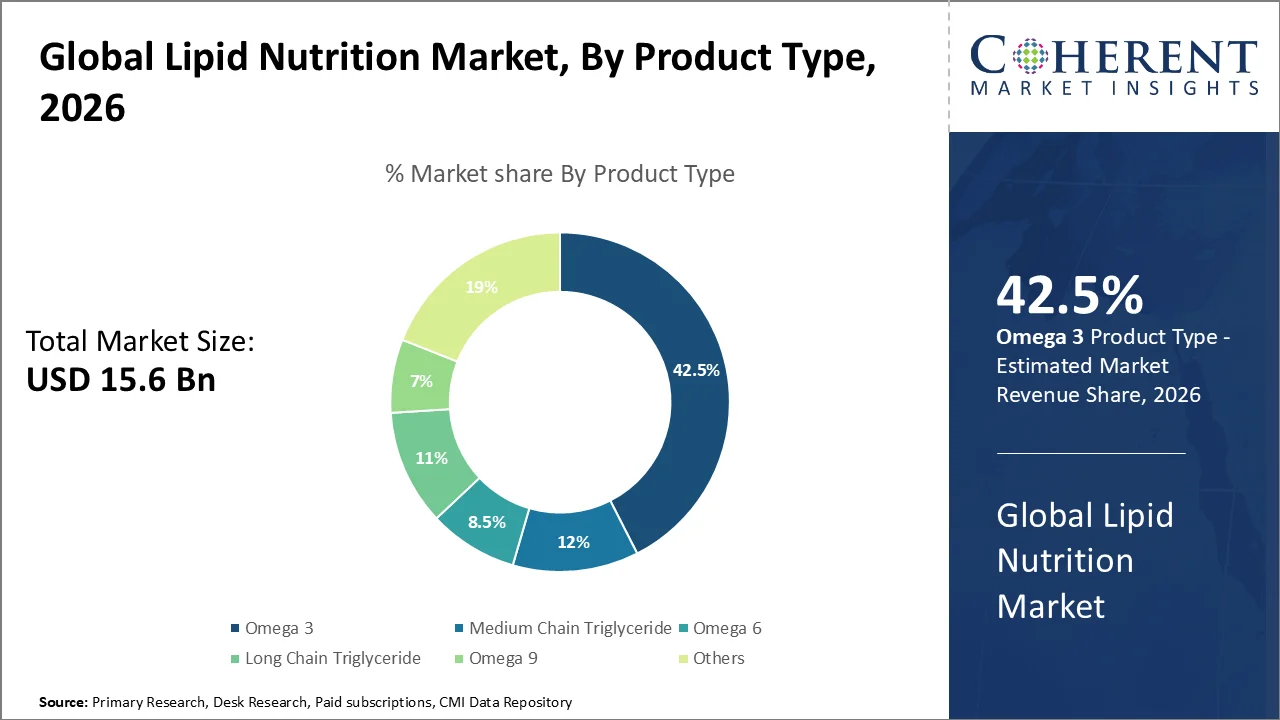
- The Omega 3 segment is likely to dominate the market with 42.5% in 2026. The segment’s growth is owing to the high consumer awareness, widespread incorporation in functional foods and beverages, as well as the demand for premium nutritional supplements targeting heart, brain, and eye health.
- The liquid segment is set to lead with 58.2% in 2026. The segment’s growth is owing to the higher bioavailability, ease of formulation in beverages and syrups, and increasing use in clinical nutrition and fortified foods.
- The marine source extract segment is set to lead with 56.8% in 2026. The segment’s growth is owing to the rising consumer preference for sustainably sourced marine oils, including fish, krill, and algae extracts, along with their extensive use in dietary supplements, functional beverages, as well as nutraceuticals.
- The food & beverages segment is set to lead with 38.4% in 2026. The segment’s growth is owing to the increasing incorporation of lipid-based nutrition in bakery, confectionery, dairy, beverages, and ready-to-eat food products, along with the rising consumer demand for functional and fortified food options.
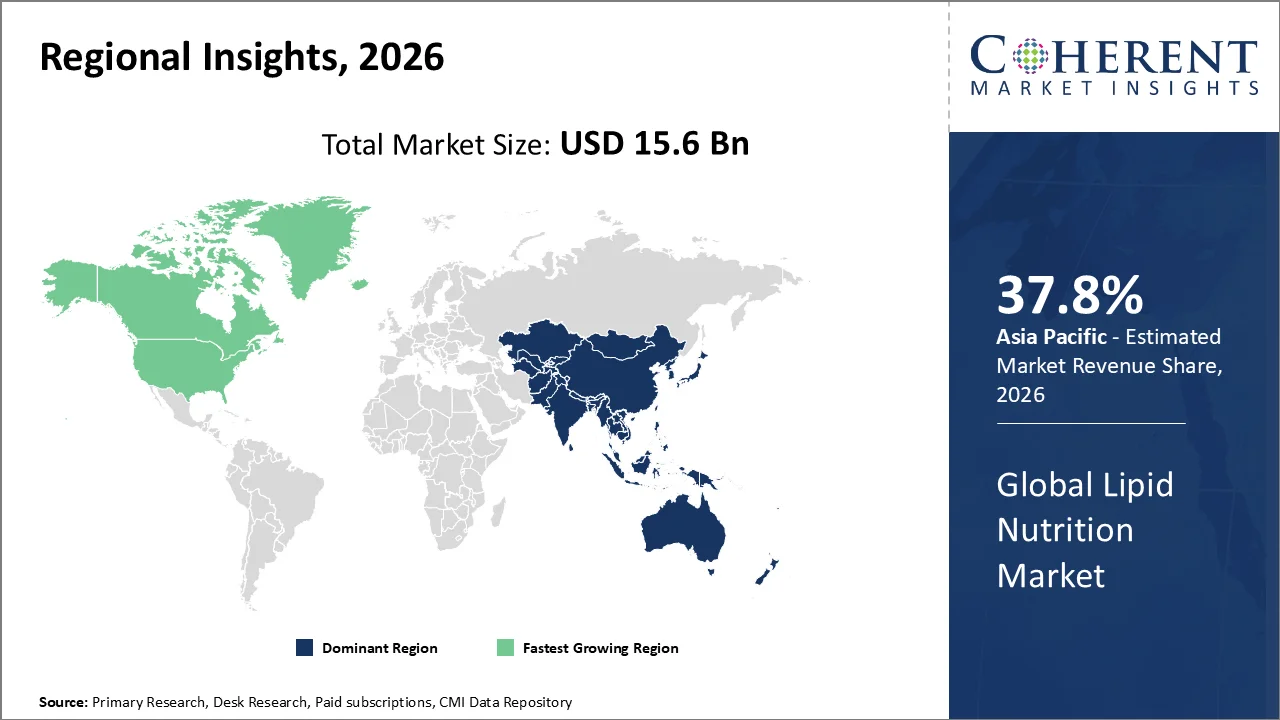
- Asia Pacific is expected to acquire the prominent share of 37.8% in 2026. The region’s growth is owing to the rising population health awareness, increasing disposable incomes, and growing penetration of functional foods and supplements in countries such as China, India, and Japan. India’s per capita disposable income increased from US$ 2.11 thousand in 2019 to US$ 2.54 thousand in 2023 and is projected to reach US$ 4.34 thousand by 2029.
Growing Health Awareness and Preventive Healthcare Demand is Transforming the Lipid Nutrition Market in the US
The rising health awareness and an increased emphasis on preventive healthcare are driving notable changes in the U.S. Lipid Nutrition Market, with a particular focus on higher consumption of omega‑3 fatty acids and related products.
According to the National Health Interview Survey (NHIS) data, about 7.8% of U.S. adults and 1.1% of U.S. children reported using fish oil or omega‑3 supplements, demonstrating established consumer adoption of lipid nutrition products.
The regulations by the U.S. Food and Drug Administration (FDA) under the Dietary Supplement Health and Education Act (DSHEA) ensures the safety and proper labeling of these products, thereby fostering consumer confidence and strengthening the market growth.
In addition, the innovation in the field is highlighted by a U.S.-registered clinical trial (NCT06749028) that assessed phospholipid‑bound omega‑3 versus standard omega‑3 for hypertriglyceridemia. Initiated in December 2024, the study underscores ongoing advancements as well as optimized intervention strategies in lipid nutrition.
Shift toward Sustainable Sources and Advanced Delivery Technologies: A Major Breakthrough in the Lipid Nutrition Market
The lipid nutrition market is witnessing a major transformation. This is mainly due to sustainable ingredient sourcing and cutting edge delivery technologies. The firms like dsm-firmenich are producing high-purity EPA and DHA from microalgae, thereby facilitating stable, vegan, and more sustainable omega-3 supply chains. At the same time, innovative delivery formats are addressing long-standing challenges like oxidation, unpleasant taste, short shelf life, as well as limited bioavailability.
The advanced microencapsulation helps in converting sensitive polyunsaturated fatty acids into high-load, odorless powders. The lipid nanoparticle-based systems protect ingredients from digestive degradation and improve absorption. These advances are allowing for the development of next-generation functional foods, dietary supplements, along with targeted nutraceuticals.
In March 2026, SIRIO Europe unveiled LifeChews, a patented plant-based chewable jelly tablet designed for lipid-based nutrients. This innovative format allows high-load delivery of lipid-soluble actives while minimizing oxidation along with masking taste.
- Current Industry Events of 2026
- Market Size Estimation
- Regional Breakdown
- Competitive Landscape
- Customer Intelligence
- Segmental Analysis
- Pricing Analysis
- Key Market Drivers, Challenges & Future Trends
- Customized Insights Section
Current Events and Their Impact on the Lipid Nutrition Market
Current Event | Description and its Impact |
U.S. FDA Updated “Healthy” Nutrient Content Claim |
|
U.S. FDA Front-of-Package Nutrition Labeling Proposal |
|
Segmental Insights
Why is Omega 3 Acquiring the Largest Share?
On the basis of product type, the Omega 3 segment is projected to account for the largest Lipid Nutrition Market share of 42.5% in 2026. The segment’s growth is owing to the rising demand for EPA and DHA in pharmaceuticals, dietary supplements, and infant formula. This demand is fueled by widespread evidence of their cardiovascular and anti-inflammatory benefits.
In February 2026, Progress Biotech’s algae-based DHA oil received EU organic certification for use in infant nutrition. The development shows the market is shifting toward more sustainable as well as plant-based options.
In October 2025, Naturmega inaugurated a pioneering supercritical fluid fractionation facility. It is the first in South America which is dedicated to omega-3 production. The new facility enhances purity, sustainability, and performance in omega-3 concentrates, supporting advanced lipid science and products such as EssentiOmega Nova, EssentiOmega Algae, and Ruby-O.
Food & Beverages hold the Largest Market Share
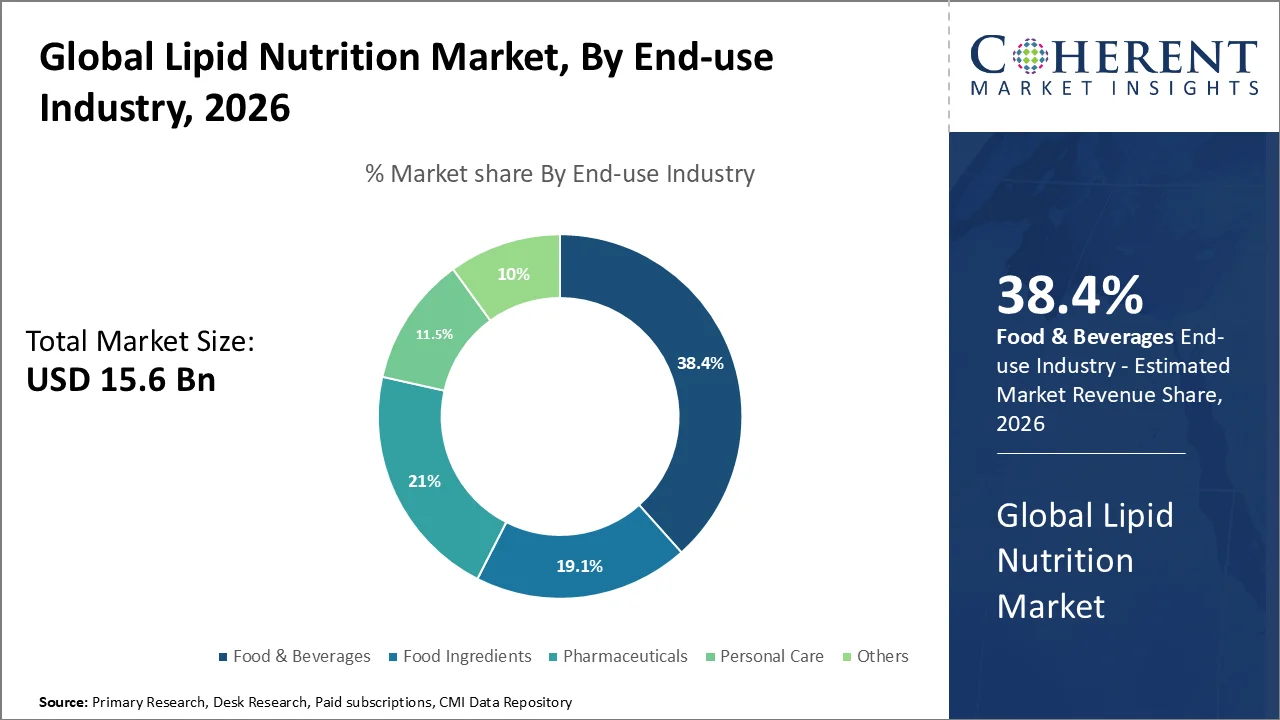
The food & beverages segment lead with a major 38.4% share in 2026. The segment’s growth is owing to the increasing consumer demand for functional and health-optimized lipids, rising awareness of cardiovascular health, and the growing preference for fortified and nutritionally enhanced food products.
The European Food Safety Authority (EFSA) has established a tolerable upper intake framework to mitigate metabolic risks, thereby prompting manufacturers to incorporate healthier lipid profiles like omega-3 fatty acids, plant-based oils, along with alternative fat formulations.
In April 2025, Arla Foods Ingredients launched Whey360, a food and beverage concept demonstrating the benefits of milk fat globule membrane (MFGM) beyond infant formula. It delivers a powerful synergy between high-quality whey protein, complex milk lipids, vitamins, as well as micronutrients, thereby providing important nutrients for both infants as well as adults.
Lipid Nutrition Market Trends
- Rising demand for omega-3, MCTs, phospholipids, structured lipids, and specialty fatty acids is driving growth across dietary supplements, functional foods, infant nutrition, and medical nutrition
- Sustainable lipid sourcing is gaining traction, with algal-derived DHA and EPA reducing dependence on marine fish oil and supporting vegan, traceable, and contaminant-controlled nutrition solutions. In October 2024, dsm-firmenich launched life’sDHA B54-0100, providing 545 mg DHA and 80 mg EPA per gram for high-potency algal omega-3 formulations.
- Advanced delivery formats such as microencapsulated powders, emulsions, gummies, softgels, and phospholipid-bound omega-3 improve taste masking, oxidation stability, absorption, and consumer compliance.
- Increasing cardiometabolic health concerns support lipid nutrition adoption. Cardiovascular diseases caused an estimated 19.8 million deaths in 2022, while average EPA and DHA intake among U.S. adults remains only around 90 mg per day, highlighting a clear dietary gap.
- Supportive dietary guidelines and regulatory frameworks strengthen market growth. In the U.S., FDA guidance recommends at least 8 ounces of seafood per week for adults and 8–12 ounces for pregnant or breastfeeding women, and qualified claims allow EPA and DHA products to communicate potential heart and blood pressure benefits when labeling criteria are met.
Regional Insights
Asia Pacific Dominates Owing to the Increasing Awareness of Preventive Nutrition
The Asia Pacific region accounts for 37.8% of the market share in 2026. The region’s growth is owing to by the rising burden of chronic diseases, increasing awareness of preventive nutrition, and targeted regulatory approvals for functional lipid ingredients.
Public health evidence shows growing clinical interest in lipid-based interventions. For instance, a National Institutes of Health cardiovascular meta-analysis covering 80,426 intervention participants reported that sustained omega-3 lipid consumption delivered a 1.48% absolute risk reduction in cardiovascular outcomes. This supports wider adoption of essential fatty acids across healthcare and nutrition systems.
In October 2025, Friso launched Friso Pro, a 100% imported formula from the Netherlands designed to support children’s gut and immune health. The product incorporates Milk Lipid Complex (MLC), Human Milk Oligosaccharides (HMO), Galacto-oligosaccharides (GOS), and probiotics, offering a comprehensive nutritional solution that enhances digestive wellbeing and strengthens immunity.
North America Lipid Nutrition Market Trends
North America is expected to witness strong growth in Lipid Nutrition Market over the forecast period. The region’s growth is owing to the increasing clinical use of polyunsaturated fatty acids to manage chronic metabolic conditions.
According to the National Institutes of Health (NIH) Office of Dietary Supplements, findings from the National Health and Nutrition Examination Survey (NHANES) reveal that average daily intake of docosahexaenoic acid (DHA) and eicosapentaenoic acid (EPA) from food sources alone is insufficient among U.S. adults. To address these nutritional deficiencies and manage severe hypertriglyceridemia, the U.S. Food and Drug Administration (FDA) has approved long-chain omega-3-acid ethyl ester formulations for clinical use.
The ingredient suppliers are scaling production of sustainable, algal-based functional lipids and are also investing in advanced manufacturing technologies. In January 2026, Solace Nutrition announced updates for Encala, its proprietary plant-based structured-lipid medical food. Encala is designed to address fat malabsorption, fatty acid and choline deficiencies, poor growth in children, and unintentional weight loss in adults, thereby reflecting advances in clinical, scientific, as well as commercial applications.
Government-led Initiatives Promoting Balanced Diets is Accelerating the Lipid Nutrition Market in China
The market in China is being propelled by the growing awareness of cardiovascular health as well as the government-led initiatives promoting balanced diets. The rising incidences of hyperlipidemia along with metabolic disorders among adults are fueling the demand for fortified foods and supplements.
In 2024, the National Health Commission released the Chronic Disease Nutrition & Exercise Guidelines under the Healthy China Action, thus emphasizing lipid-focused nutrition education in clinical and community settings. Currently, the average daily omega intake is around 49 mg, under 20 % of recommended levels.
In April 2026, China launched its first omega-3 enriched pork, a product fortified with polyunsaturated fatty acids. This innovation represents a structural shift in the nation’s approach to public health and livestock nutrition.
United States Lipid Nutrition Market Trends
The rising awareness of cardiovascular health and the importance of preventive nutrition are key drivers of the lipid nutrition market in the U.S. The consumers are increasingly seeking products that support heart health and help manage cholesterol levels.
According to the CDC’s NHANES survey (2021–2023), 11.3 % of U.S. adults aged 20 years and older have high total cholesterol (≥240 mg/dL), highlighting ongoing nutritional gaps. Regulatory oversight is provided by the FDA under the Dietary Supplement Health and Education Act (DSHEA), which governs safety, labeling, and new dietary ingredient notifications.
In December 2025, LIB Therapeutics Inc. announced that the U.S. FDA approved LEROCHOL™ (lerodalcibep‑liga) injection, a lipid-lowering therapy targeting hypercholesterolemia.
Who are the Major Companies in Lipid Nutrition Industry
Some of the major key players in Lipid Nutrition Market are Archer Daniels Midland Company, BASF S.E., FMC Corporation, Croda International Plc, Cargill, Incorporated, Omega Protein Corporation, Polaris Nutritional Lipids, and Kerry Group Plc.
Key News
- In September 2025, UNICEF distributed 5,392 cartons of Small Quantity Lipid-based Nutrient Supplements (SQ-LNS) in Plateau State, Nigeria, in collaboration with the state government. These supplements aim to combat malnutrition among vulnerable children and support improved child health outcomes in the region.
- In October 2024, KD Pharma Group, a leading CDMO in pharmaceutical and nutritional lipids, completed the acquisition of dsm-firmenich’s Marine Lipids business. The transaction strengthens KD Pharma’s position in the lipid nutrition space by expanding its marine lipid portfolio and enhancing its capabilities in pharmaceutical and nutritional lipid solutions.
- In September 2020, Evonik expanded its AvailOm high-load omega-3 powder platform for dietary supplements targeting healthy agers, vegans, pregnancy, and other consumer groups. AvailOm offers superior bioavailability, stability, and convenience, with high DHA grades derived from algae and high EPA/DHA grades from fish oil.
Market Report Scope
Lipid Nutrition Market Report Coverage
| Report Coverage | Details | ||
|---|---|---|---|
| Base Year: | 2025 | Market Size in 2026: | USD 15.6 Bn |
| Historical Data for: | 2020 To 2024 | Forecast Period: | 2026 To 2033 |
| Forecast Period 2026 to 2033 CAGR: | 9.6% | 2033 Value Projection: | USD 29.63 Bn |
| Geographies covered: |
| ||
| Segments covered: |
| ||
| Companies covered: | Archer Daniels Midland Company, BASF S.E., FMC Corporation, Croda International Plc, Cargill, Incorporated, Omega Protein Corporation, Polaris Nutritional Lipids, and Kerry Group Plc. | ||
| Growth Drivers: |
| ||
| Restraints & Challenges: |
| ||
Analyst Opinion
- Lipid nutrition is driven by a clear intake gap, not only by wellness trends. CDC/NCHS data shows that only 24.3% of U.S. adults consumed seafood at least twice per week during August 2021–August 2023, while U.S. dietary guidance recommends 8 oz. or two servings of seafood weekly. This supports demand for omega-3 supplements, fortified foods, and functional nutrition products.
- EPA and DHA intake remains low among adults. NIH Office of Dietary Supplements states that DHA and EPA from foods contribute only about 90 mg per day to adult omega-3 intake, while only 7.8% of U.S. adults used fish oil, omega-3, DHA, or EPA supplements in the 2012 NHIS survey. This creates a strong opportunity for convenient, palatable lipid formats.
- Advanced lipid delivery formats are gaining traction through algal oils, phospholipid-based omega-3, emulsions, gummies, and microencapsulated powders. NIH notes that algal oil usually provides 100–300 mg DHA, and some products also contain EPA. FDA also permits qualified health claims for EPA and DHA in food and dietary supplements, supporting wider adoption in heart-health-positioned nutrition products.
Speak to the analyst
Want personalized insights?
Take the findings above to one of our principal consultants, or have the report rebuilt around the segments, geographies and competitors you actually track.
Market Segmentation
- By Product Type (Revenue, USD Bn, 2021-2033)
- Omega 3
- EPA
- DHA
- ALA
- Medium Chain Triglyceride
- Caprylic Acid
- Capric Acid
- Lauric Acid
- Caproic Acid
- Omega 6
- ARA
- GLA
- CLA
- Long Chain Triglyceride
- Omega 9
- Oleic Acid
- Elaidic Acid
- Gondoic Acid
- Mead Acid
- Others
- Others
- Omega 3
- By Product Form (Revenue, USD Bn, 2021-2033)
- Solid
- Liquid
- By Source (Revenue, USD Bn, 2021-2033)
- Plant Extract
- Coconut Oil
- Chia Oil
- Soybean Oil
- Flaxseed Oil
- Others
- Marine Source Extract
- Fish Oil
- Krill Oil
- Algae Oil
- Others
- Plant Extract
- By End-Use Industry (Revenue, USD Bn, 2021-2033)
- Food & Beverages
- Pharmaceuticals
- Personal Care
- Food Ingredients
- Others
- By Region (Revenue, USD Bn, 2021-2033)
- North America
- U.S.
- Canada
- Latin America
- Brazil
- Mexico
- Argentina
- Rest of Latin America
- Europe
- Germany
- U.K.
- France
- Italy
- Spain
- Russia
- Rest of Europe
- Asia Pacific
- China
- India
- Japan
- Australia
- South Korea
- ASEAN
- Rest of Asia Pacific
- Middle East
- GCC
- Israel
- Rest of Middle East
- Africa
- South Africa
- Central Africa
- North Africa
- North America
Sources
Primary Research Interviews
- Lipid Nutrition Ingredient Manufacturers
- Omega-3, Omega-6, Omega-9, and MCT Producers
- Functional Food & Beverage Formulators
- Dietary Supplement and Nutraceutical Companies
- Infant Nutrition and Clinical Nutrition Product Manufacturers
- Pharmaceutical and Medical Nutrition Companies
- Lipid Nutrition Distributors and Raw Material Suppliers
- Nutritionists, Dietitians, and R&D Consultants
- Others
Databases
- Bloomberg Terminal
- Thomson Reuters Eikon
- Factiva
- UN Comtrade
- ITC Trade Map
- Others
Magazines
- Nutraceuticals World
- NutraIngredients
- Nutrition Insight
- Food Ingredients First
- Food Business News
- Prepared Foods Magazine
- Dairy Foods Magazine
- Others
Journals
- Journal of Lipid Research
- Lipids Journal
- Nutrients
- The American Journal of Clinical Nutrition
- Lipids in Health and Disease
- Prostaglandins, Leukotrienes and Essential Fatty Acids
- Journal of Nutrition
- Others
Newspapers
- Financial Times
- The Wall Street Journal
- Reuters
- Bloomberg News
- Business Standard
- The Economic Times
- Others
Associations
- Global Organization for EPA and DHA Omega-3s (GOED)
- Council for Responsible Nutrition (CRN)
- American Oil Chemists’ Society (AOCS)
- International Alliance of Dietary/Food Supplement Associations (IADSA)
- European Federation for the Science and Technology of Lipids (Euro Fed Lipid)
- International Society for the Study of Fatty Acids and Lipids (ISSFAL)
- Others
Public Domain Sources
- U.S. Food and Drug Administration (FDA)
- European Food Safety Authority (EFSA)
- National Institutes of Health – Office of Dietary Supplements
- World Health Organization (WHO)
- Food and Agriculture Organization (FAO)
- Codex Alimentarius
- USDA FoodData Central
- European Commission
- UN Comtrade
- Others
Proprietary Elements
- CMI Data Analytics Tool
- Proprietary CMI Existing Repository of Information for the Last 10 Years
Get access to 250+ pages report
Every segment, forecast, competitor profile and data table behind the analysis above — available for instant download.
- ESOMAR Member
- ISO 9001:2015 Certified
- D-U-N-S Registered
- GDPR & CCPA Compliant
Missing comfort of reading report in your local language? Find your preferred language:
Transform your Strategy with Exclusive Trending Reports
Frequently Asked Questions
The Lipid Nutrition Market is expected to reach USD 29.63 Bn in 2033.
Major players operating in the global Lipid Nutrition Market include Archer Daniels Midland Company, BASF S.E., FMC Corporation, Croda International Plc, Cargill, Incorporated, Omega Protein Corporation, Polaris Nutritional Lipids, and Kerry Group Plc.
The high production and raw material costs (particularly for marine-based omega-3s), supply chain instability, and strict, varied international regulations are the key factors hampering growth of the market.
The rising consumer awareness of health benefits (such as omega-3s for heart/brain health) and the increasing prevalence of lifestyle diseases like obesity and cardiovascular issues is boosting the demand for Lipid Nutrition.
The Lipid Nutrition Market is anticipated to grow at a CAGR of 9.6% between 2026 and 2033.
Among regions, Asia Pacific is expected to account for a largest market share in the global Lipid Nutrition Market over the forecast period.
Omega-3 fatty acids such as ALA, EPA, and DHA are important because they support normal body functions and are widely used in nutrition products. NIH states that ALA is mainly found in plant oils, while EPA and DHA are mainly found in fish and seafood.