

Global oat-based ingredients market is estimated to be valued at USD 154.4 Mn in 2026 and is expected to reach USD 277.8 Mn by 2033, exhibiting a compound annual growth rate (CAGR) of 8.8% from 2026 to 2033.
Key Takeaways
- By application, the breakfast cereals segment is expected to lead the market accounting for 29.9% market share in 2026. This growth is driven by increasing demand for health-focused food products and growing consumer awareness regarding the nutritional benefits of oat-based ingredients.
- In terms of Distribution Channel, the Offline segment is expected to hold the largest market share in 2026 due to the development of hypermarkets and supermarkets along with the availability of global brand products in stores.
- Based on region, North America is projected to hold the largest share of the global oat-based ingredients market in 2026, accounting for approximately 31.5%. The rise in demand for nutritious foods due to increasing prevalence for diabetes and obesity is expected to bolster the North America oat-based ingredients market growth.
Market Overview
Increasing health awareness and growing demand for plant-based and functional foods globally are boosting the oat-based ingredients market growth. With their high nutritional value and versatility, oat-based ingredients are being utilized across various food industries such as beverages, bakery, and dairy alternatives. Advances in food technology, including new milling methods and enzyme treatments, are improving the quality and stability of products based on oats, which are becoming increasingly appealing to industry and consumers alike. In addition, the increasing incidence of gluten intolerance and demand for clean-label food are likely to contribute further to the market growth. Still, the potential presence of substitute grains like rice, barley, and quinoa can be a threat to the market expansion.
Current Events and Their Impact on the Oat-based Ingredients Market
Current Events | Description and its impact |
Regulatory Changes and Healthcare Policy Reforms
|
|
Public Health Trends
|
|
Oat-Based Ingredients Market Trend
Growing Demand for Functional Foods and Products Catering to Health-Conscious Consumers
The oat-based ingredients market growth is primarily driven by the rising global demand for functional and plant-based food products. As consumers increasingly prioritize wellness, sustainability, and clean-label nutrition, oats are emerging as a preferred ingredient due to their versatility, high fiber content, and clinically proven benefits such as heart health support and blood sugar regulation.
The surge in veganism and flexitarian diets across regions like North America, Europe, and parts of Asia has further boosted demand for oat-based alternatives in dairy, bakery, beverage, and snack segments.
In September 2023, PepsiCo India expanded its Quaker brand portfolio by introducing ready-to-eat breakfast cereals, specifically Quaker Oats Muesli, available in 'Fruit & Nut' and 'Berries & Seeds' variants. This launch targets urban millennials seeking convenient and nutritious breakfast options.
Emphasis on Sustainable and Plant-Based Food Choices
Large-scale manufacturers and retailers are actively spending on sustainable packaging and ingredients for the purpose of lowering environmental pressures and responding to consumer preference for greener consumption. For example, in July 2024, Aldi substituted plastic packaging with paper for its "Everyday Essentials Porridge Oats," which will cut plastic use by 57 tons a year. This action demonstrates the retailer's dedication to sustainability and responds directly to increasing consumer demand for environmentally friendly options.
Oats are at the center of this shift because they have low water needs and low greenhouse gas emissions during production, particularly when compared to other cereal crops. With plant-based diets increasingly popular in North America, Europe, and certain regions of Asia, oat-based foods like oat milk, cereals, and snacks are experiencing strong demand from health-oriented and environmentally conscious consumers.
- Current Industry Events of 2026
- Market Size Estimation
- Regional Breakdown
- Competitive Landscape
- Customer Intelligence
- Segmental Analysis
- Pricing Analysis
- Key Market Drivers, Challenges & Future Trends
- Customized Insights Section
Market Opportunity: Expansion of Oat-Based Ingredients in Health-Driven and Sustainable Food Markets
Growing need for plant-based, healthy, and sustainable food products offers a high growth potential for the market for oat-based ingredients. Oat-based ingredients like oat milk, oat flour, oat protein, and beta-glucan provide an attractive combination of health advantages in terms of lowering cholesterol, aiding digestion, and maintaining heart health. For instance, Oatly has led in the utilization of oats in milk-alternative drinks, spotlighting the ecological and functional benefits of oats like low water demand and high-yielding land.
In 2022, Oatly informed that its production of oat milk has 80% fewer greenhouse gas emissions and 60% less energy expenditure than cow's milk. It also discovered it takes around 80% less land. Oatly has also begun using regenerative agriculture methods on its supply chain, working together with farmers in the U.S., Canada, and Europe to encourage sustainable agricultural practices.
The versatility and scalability of oats enable them to be incorporated in a broad range of food and beverage applications. Gluten-free oat production meets consumers' increasing demands for products for those with gluten sensitivity. Additionally, the clean-label nature of oats as a non-GMO, allergen-safe, artificial-additive-free ingredient makes it more desirable by manufacturers seeking to reformulate to align with changing consumer needs.
Segmental Analysis
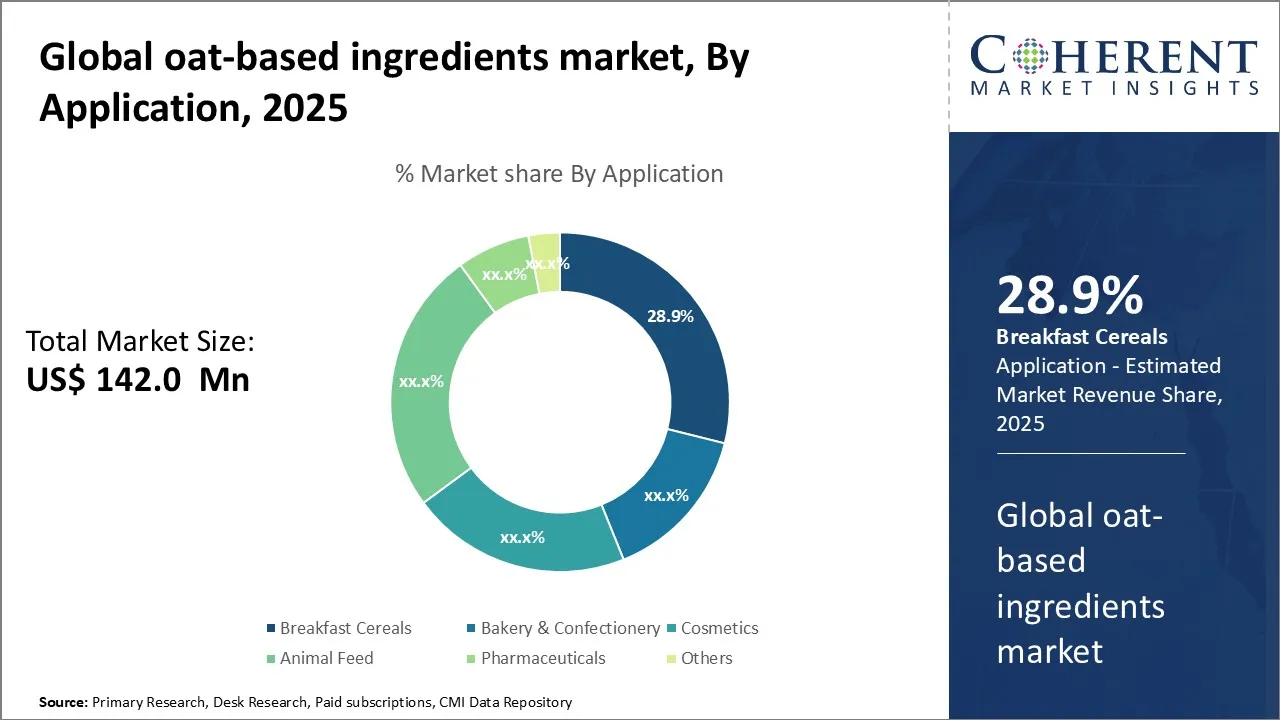
Oat-Based Ingredients Market Insights, By Application – Health Trends Drive Breakfast Cereals Segment Growth
By application, the breakfast cereals segment is expected to contribute the highest market share in 2026. This expansion is primarily driven by increasing demand for healthy food and increasing consumer knowledge of the nutritional benefits associated with oats. Oat breakfast cereals contain high levels of soluble fiber, which maintains cholesterol and blood sugar levels healthy.
Apart from their low calorie content and rich nutritional values, their addition to the diet contributes to enhancing the quality of food intake by offering needed nutrients without adding to body fat. A good example is the introduction of So Delicious Dairy Free Organic Oatmilk by Danone North America in April 2023. The product is an example of the increasing consumer interest in plant-based drinks, providing a clean-label option that is certified organic, gluten-free, and Non-GMO Project Verified.
Increased use of oats as a multi-faceted, plant-based component has also helped spur their use in oat milk, a rapidly growing dairy alternative. With continued consumer demand influence from health and wellness trends, food makers are taking advantage of advancements in formulation and processing to build on oat-based breakfast foods. Together, these drivers bolster the stronghold that the breakfast cereals segment has in the market for oat-based ingredients.
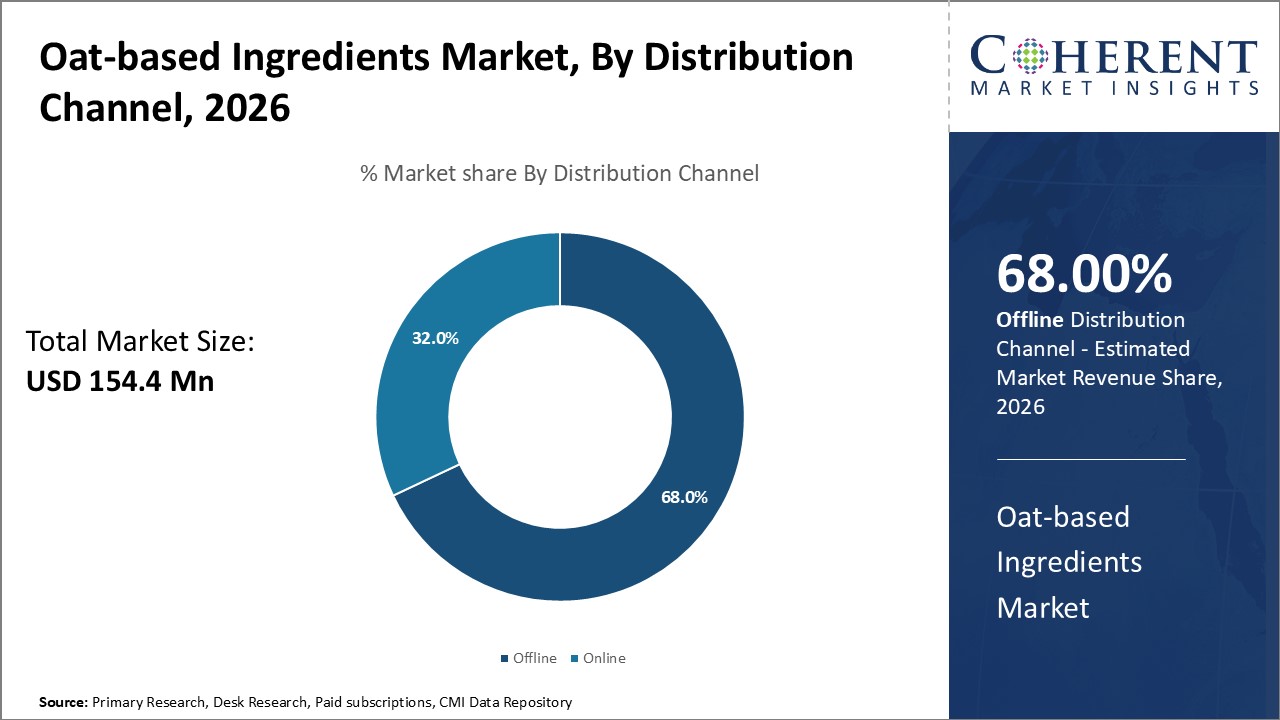
Oat-Based Ingredients Market Insights, By Distribution Channel – Retail Expansion Drives Offline Segment Growth
Based on distribution channel, the offline segment is anticipated to account for the largest market share in 2026 due to the high growth of hypermarkets and supermarkets, as well as the extensive distribution of global brand products across brick-and-mortar retail outlets. Such stores offer customers the advantage of in-store access to products, discounting during promotions, and sampling, enhancing purchasing decisions and sales. Large brands take advantage of high visibility in stores to target health-conscious consumers in search of oat-based foods, snacks, and dairy alternatives.
For example, in 2023, Quaker Oats launched an in-store promotion in partnership with major grocery chains in the U.S., offering product samples of their new oat-based protein bars and oatmeal, which helped boost customer engagement and sales. Additionally, most customers still enjoy the tactile nature of shopping and the instant gratification of offline retail.
Oat-Based Meat Alternatives:
- Application: Oat proteins are employed to produce meat-free alternatives based on plants, offering clean-label, sustainable, and allergen-friendly products for consumers seeking meat-free options.
- Example: Kraft Heinz, in collaboration with TheNotCompany, rolled out a series of plant-based products under the Oscar Mayer label in March 2024, including "NotHotDogs" and "NotSausages." The products are aimed at substituting the original flavor and texture of meat-based sausages and hot dogs to address the growing demand for plant-based offerings.
Oat-Based Skincare Products:
- Application: Colloidal oatmeal and oat extracts are being utilized in skincare products owing to their anti-inflammatory and moisturizing properties, catering to consumers with sensitive or dry skin.
- Example: In February 2023, Oat Cosmetics launched Rejuvaveen, an oat bran extract-based active skincare ingredient. Rejuvaveen has been formulated to preserve the integrity of the epidermal barrier, fight stress-related skin thinning, and improve hydration and smoothness. It contains anti-aging oat beta-glucan, moisturizing starches, skin-compatible lipids, and inflammation-fighting tryptophan, and is suitable for products aimed at sensitive and aging skin.
Functional Beverages with Oat Beta-Glucan:
- Application: Oat-based beverages fortified with beta-glucan are gaining traction as functional drinks that support heart health, regulate blood sugar, and improve digestion.
- Example: On April 3, 2025, a Japan-based dairy company, Meiji, launched a ready-to-drink (RTD) coffee beverage made from whole oats. This innovative product combines the benefits of oats, including their beta-glucan content, with the convenience of a RTD format, catering to health-conscious consumers seeking functional beverages. The product was introduced in 200ml cartons across Japan.
Regional Insights
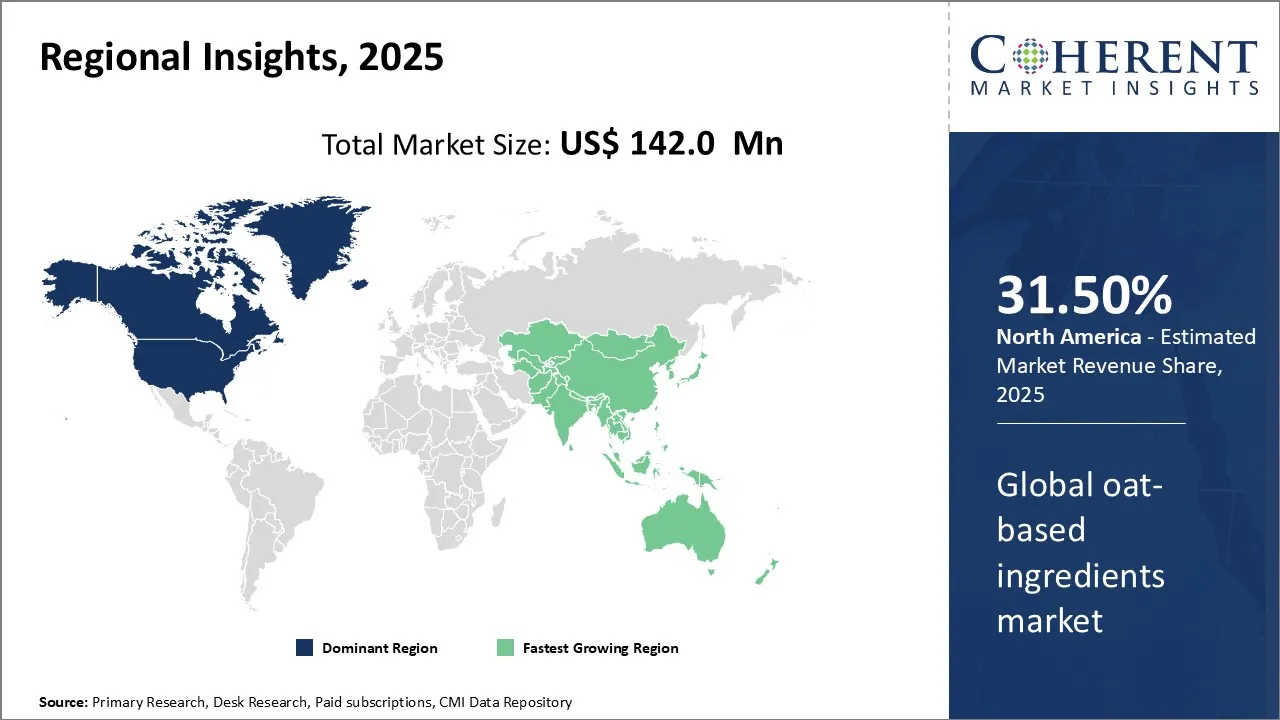
North America Oat-Based Ingredients Market Trends
North America dominates the oat-based ingredients market, driven by increasing health awareness and the rising prevalence of diabetes and obesity in the region. In 2026, the region is projected to account for approximately 31.5% of the global market share.
The U.S. and Canadian consumers are increasingly turning their diets to high-fiber, low-calorie products like oat-based cereals and beverages as a means of weight control and general wellness. Oats, with beta-glucans, are widely known for their capacity to help stabilize blood sugar levels and are thus a favorite among diabetic consumers. For example, as per the Centers for Disease Control and Prevention (CDC), in North America, approximately 37 million Americans had diabetes as of 2023. The dominant share of major players, along with increased expenditure by consumers towards health and wellness, solidifies North America's dominance in the oat-based ingredients market.
Asia Pacific Oat-Based Ingredients Market Trends
The oat ingredients market sees a strong growth prospect in Asia Pacific, led by mounting health consciousness, urbanization, and the trend towards plant-based consumption. China, India, and Australia are seeing the demand for oat-based breakfast food, beverages, and milk alternatives grow due to surging diabetes, obesity, and heart health concerns.
According to the 2023 ICMR INDIAB study, India has over 101 million people living with diabetes, accelerating the adoption of high-fiber, blood sugar-friendly foods like oats. In addition, expanding e-commerce channels and product launches by global and regional brands are making oat-based foods more accessible across urban and semi-urban areas.
Europe Oat-Based Ingredients Market Trends
Europe represents a mature market for oat-based ingredients, driven by consumer preference for natural, sustainable, and allergen-free products. Scandinavian countries like Sweden and Finland have historically incorporated oats into their diets, while countries like Germany, France, and the U.K. are experiencing increased demand for oat milk, oat snacks, and gluten-free oat options.
Government programs that encourage sustainable agriculture and plant-based nutrition are fueling the market growth. For instance, the EU Farm to Fork Strategy calls for a move towards healthier eating, such as whole grains such as oats.
Moreover, higher investment in food innovation and product development is solidifying the European market for oat-based ingredients. On March 25, 2026, Danone S.A., a France-based multinational food-products corporation, made an announcement stating that its plant-based business Alpro is investing in the U.K. to source oats direct from British farmers and produce its oat drink from 100% British oats for the very first time.
U.S. Oat-Based Ingredients Market Trends
The U.S. continues to lead the oat-based ingredients market in North America, supported by a high prevalence of lifestyle-related health conditions and increasing demand for functional foods. Technological innovations in food processing and strategic product launches (e.g., oat milk, oat-based protein bars) are fueling the market expansion.
Major brands such as Quaker, Oatly, and General Mills are introducing oat-enriched products targeting weight management and heart health as well as lactose intolerance. For instance, on April 15, 2026, Jell-O, a Kraft Heinz’s brand offering the original gelatin dessert, launched JELL-O Oat Milk Chocolate Pudding, marking a step into the plant-based desserts category.
Pricing Analysis
Pricing in the oat-based ingredients market is influenced by multiple factors such as raw material costs, processing methods, regional variations, supply chain logistics, and demand dynamics driven by health and sustainability trends. Below is a detailed breakdown of key pricing components:
- Raw Material Costs
- Conventional Oats:
- The cost of conventionally grown oats varies between US$ 200 and US$ 300 per metric ton, depending on harvest yields, weather conditions, and global supply-demand fluctuations
- Organic Oats:
- Due to stricter cultivation practices and certification costs, organic oats are priced higher, typically ranging from US$ 400–US$ 600 per metric ton
- High-Beta-Glucan Oats:
- Oats specially cultivated for their high soluble fiber content (beta-glucan) can cost US$ 450–US$ 700 per metric ton, used especially for functional and health-promoting applications
- Processing and Ingredient-Specific Costs
- Oat Flour (Conventional):
- Milled from whole oats using standard techniques, oat flour generally ranges from US$ 1.20–US$ 2.50 per kg, depending on fineness and moisture content
- Oat Flour (Functional or Organic):
- Milled using proprietary or enzymatic methods with functional properties (e.g., viscosity, emulsification) or organic certification. Prices range from US$ 2.80–US$ 4.50 per kg.
- Oat Milk Base or Concentrate:
- Used in plant-based beverages; prices vary between US$ 3.00–US$ 6.00 per kg, depending on concentration, purity, and origin
- Oat Protein Isolate/Concentrate:
- Extracted from oats and used in protein-enriched foods or supplements. This ingredient is typically priced between US$ 8.00 and US$ 14.00 per kg due to high production complexity and nutritional value.
Market Report Scope
Oat -Based Ingredients Market Report Coverage
| Report Coverage | Details | ||
|---|---|---|---|
| Base Year: | 2025 | Market Size in 2026: | USD 154.4 Mn |
| Historical Data for: | 2020 To 2024 | Forecast Period: | 2026 To 2033 |
| Forecast Period 2026 to 2033 CAGR: | 8.8% | 2033 Value Projection: | USD 277.8 Mn |
| Geographies covered: |
| ||
| Segments covered: |
| ||
| Companies covered: | KELLOGG Company, Grain Millers, Inc., General Mills., Morning Foods, Abbott, Quaker Oats Company, Blue Lake Milling, RICHARDSON INTERNATIONAL LIMITED., Conagra Brands, Inc., Avena Foods Limited | ||
| Growth Drivers: |
| ||
| Restraints & Challenges: |
| ||
Oat-based Ingredients Industry News
- In January 2025, Oatly Group AB – the world’s original and largest oat drink brand – teamed up with Nespresso to create a limited-edition coffee made for oat drink lovers. Nespresso’s Oatly Barista Edition Coffee, with its rich and biscuity notes, is the perfect pairing with Oatly’s oat drink and made exclusively for Nespresso Vertuo coffee machines.
- In April 2023, Tirlán, the Ireland’s largest dairy company and the biggest buyer of Irish grains, expanded its oat portfolio to include Organic Oat-Standing Functional Oat Flour, which helps manufacturers meet demand for organic, natural and other oat product. Organic Oat-Standing Functional Oat Flour is milled through a proprietary process and provides consistent viscosity throughout heating and cooling cycles. This unique ingredient offers valuable functional properties, clean labelling, and whole grain benefits and flavor.
Analyst Viewpoint:
- The oat-based ingredients market is reaching a pivotal moment, fueled by rising consumer demand for functional, clean-label, and plant-based foods. Oats—rich in beta-glucans—are prized for their proven ability to lower cholesterol and regulate blood sugar, making them a smart choice for managing heart health and diabetes. This is especially relevant in regions like North America, where over 37 million people in the U.S. are living with diabetes (CDC, 2023).
- Oats also play an emerging role in meat substitutes and skincare, thanks to their fiber content, protein profile, and anti-inflammatory benefits. However, market risks remain: climate volatility threatens crop yields in key producing countries, and competition from alternative grains like quinoa and barley is intensifying. Still, oats’ versatility, superior functionality, and sustainability credentials give them a distinct edge.
- Forward-looking brands that invest in regenerative agriculture, upcycled oat ingredients, and diversified product portfolios are well-positioned to lead. With growing clean-label demands and a surge in plant-forward living, oats are more than a trend—they’re a foundational ingredient in the future of food.
Market Segmentation
- Application Insights (Revenue, US$ Mn, 2021 - 2033) (Revenue, USD Mn, 2021 - 2033)
- Breakfast Cereals
- Bakery and Confectionery
- Cosmetics
- Animal Feed
- Pharmaceuticals
- Others
- Distribution Channel (Revenue, US$ Mn, 2021 - 2033)
- Online
- Offline
Regional Insights (Revenue, USD Mn, 2021 - 2033)
- North America
- U.S.
- Canada
- Latin America
- Brazil
- Argentina
- Mexico
- Rest of Latin America
- Europe
- Germany
- U.K.
- Spain
- France
- Italy
- Russia
- Rest of Europe
- Asia Pacific
- China
- India
- Japan
- Australia
- South Korea
- ASEAN
- Rest of Asia Pacific
- Middle East
- GCC Countries
- Israel
- Rest of Middle East
- Africa
- South Africa
- North Africa
- Central Africa
- North America
- Key Players Insights
- KELLOGG Company
- Grain Millers, Inc.
- General Mills.
- Morning Foods
- Abbott
- Quaker Oats Company
- Blue Lake Milling
- RICHARDSON INTERNATIONAL LIMITED.
- Conagra Brands, Inc.
- Avena Foods Limited
Sources
Primary Research Interviews:
Stakeholders:
- Oat Ingredient Manufacturers
- Food & Beverage Companies utilizing oats in products
- Raw Oat Producers and Farmers
- Plant-Based Food Brands
- Retailers and Distributors
- R&D Teams and Food Technologists
- Sustainability Consultants and Agronomists
- Regulatory and Food Safety Authorities
Databases:
- FAOSTAT (Food and Agriculture Organization of the UN)
- USDA National Agricultural Statistics Service (NASS)
- Eurostat
- OECD-FAO Agricultural Outlook Database
- Mintel Global New Products Database (GNPD)
Magazines:
- Food Business News
- Beverage Industry Magazine
- Food Ingredients First
- Plant Based News
- Nutraceuticals World
Journals:
- Journal of Cereal Science
- Trends in Food Science & Technology
- Food Chemistry
- Journal of Agricultural and Food Chemistry
- International Journal of Food Science & Technology
Newspapers:
- The Guardian (Food & Farming Section)
- Financial Times (Agribusiness & Commodities)
- The Globe and Mail (Canada – Agricultural Markets)
- The New York Times (Food & Climate coverage)
- ABC Rural (Australia – Grain Markets)
Associations:
- Grain Growers of Canada
- North American Millers’ Association (NAMA)
- Canadian Organic Growers (COG)
- European Oat Millers Association
- Plant Based Foods Association (PBFA)
- Sustainable Agriculture Initiative (SAI) Platform
Public Domain Sources:
- U.S. Census Bureau – Agricultural Trade Reports
- EUROSTAT – Crop Production Data
- FAO – Food and Agriculture Organization of the United Nations
- OECD Agriculture Statistics
- World Bank – Agriculture & Rural Development Indicators
- ResearchGate – Open Access Academic Publications on Oats
Proprietary Elements:
- CMI Data Analytics Tool, and Proprietary CMI Existing Repository of information for last 8 years
*Definition- Oat-based ingredients consist of beta glucan, which enhances nutrition, taste, and texture in bakery & confectionery products. These ingredients are resources of protein, vitamins, iron, carbohydrates, and dietary fibers. Moreover, it is used for dry skin, blood pressure, cancer, and other health problems.
Get access to 250+ pages report
Every segment, forecast, competitor profile and data table behind the analysis above — available for instant download.
- ESOMAR Member
- ISO 9001:2015 Certified
- D-U-N-S Registered
- GDPR & CCPA Compliant
Missing comfort of reading report in your local language? Find your preferred language:
Transform your Strategy with Exclusive Trending Reports
Frequently Asked Questions
The Oat-based Ingredients Market is estimated to be valued at USD 154.4 Mn in 2026, and is expected to reach USD 277.8 Mn by 2033.
The CAGR of the Oat-based Ingredients Market is projected to be 8.8% from 2026 to 2033.
Soaring demand for oat-based ingredients due its health benefits is one of the driving factors for the market.
The ill-effects of oat-based ingredients including gastric swelling is hindering growth of the market.
In terms of Application, breakfast cereals segment is expected to dominate the market revenue share in 2026.
Major players operating in the market include KELLOGG Company, Grain Millers, Inc., General Mills., Morning Foods, Abbott, Quaker Oats Company, Blue Lake Milling, RICHARDSON INTERNATIONAL LIMITED., Conagra Brands, Inc., Avena Foods Limited.
North America is expected to lead the Oat-based ingredients market.