

Sustainable Packaging Market Analysis & Forecast: 2026-2033
Global Sustainable Packaging Market is estimated to be valued at USD 462.69 Bn in 2026 and is expected to reach USD 772.64 Bn by 2033, exhibiting a compound annual growth rate (CAGR) of 7.6% from 2026 to 2033.
Key Takeaways
- By Material Type, the Paper segment is projected to hold the largest share of the global sustainable packaging market in 2026, accounting for 37.1% of the total market
- By Process, the Recycled Packaging sub-segment is expected to lead in 2026, capturing 39.3% of the market share, driven by regulatory incentives and consumer preference for circular economy solutions.
- By End-User Industry, the Food and Beverage sector is anticipated to dominate the market in 2026, with a 39.3% share, reflecting strong demand for eco-friendly and compliant packaging options.
- By Region, North America is expected to maintain its leadership position in the global sustainable packaging market, holding 37.2% of the market share in 2026, followed by Europe and Asia-Pacific.
Market Overview
The increasing focus on the environment and new laws encouraging sustainable practices have positive impacts on the growth of the sustainable packaging market. These packaging technology innovations are resulting in less waste and carbon emissions. A good instance of this is Amazon’s reduction in the use of plastic in their use of paper-based mailers. There is an increasing availability of compostable and recyclable packaging due to adeptness in materials science. There is an ability to achieve global targets when it comes to environmental sustainability and this trend is trending across countries.
Current Events and Its Impact on the Sustainable Packaging Market
Event | Description and Impact |
EU Single-Use Plastics Directive and Extended Producer Responsibility Regulations |
|
China’s National Sword Policy and Plastic Import Restrictions |
|
Advanced Packaging Technology Breakthroughs and Scaling |
|
Sustainable Packaging Market Growth Factors
The global sustainable packaging market is expected to grow at an exponential rate during the projected timeframe. Along with the ecological benefits, the economic benefits offered by sustainable packaging are projected to fuel the demand for sustainable packaging from various end-users.
Moreover, expanding end-users in the market is another factor observed as a driver for the growth of the sustainable packaging market. Along with the food and cosmetics, healthcare, pharmaceuticals, electronics, and chemical industries are expected to boost the utilization of sustainable packaging in upcoming years, this will create a plethora of opportunities for market players.
- Current Industry Events of 2026
- Market Size Estimation
- Regional Breakdown
- Competitive Landscape
- Customer Intelligence
- Segmental Analysis
- Pricing Analysis
- Key Market Drivers, Challenges & Future Trends
- Customized Insights Section
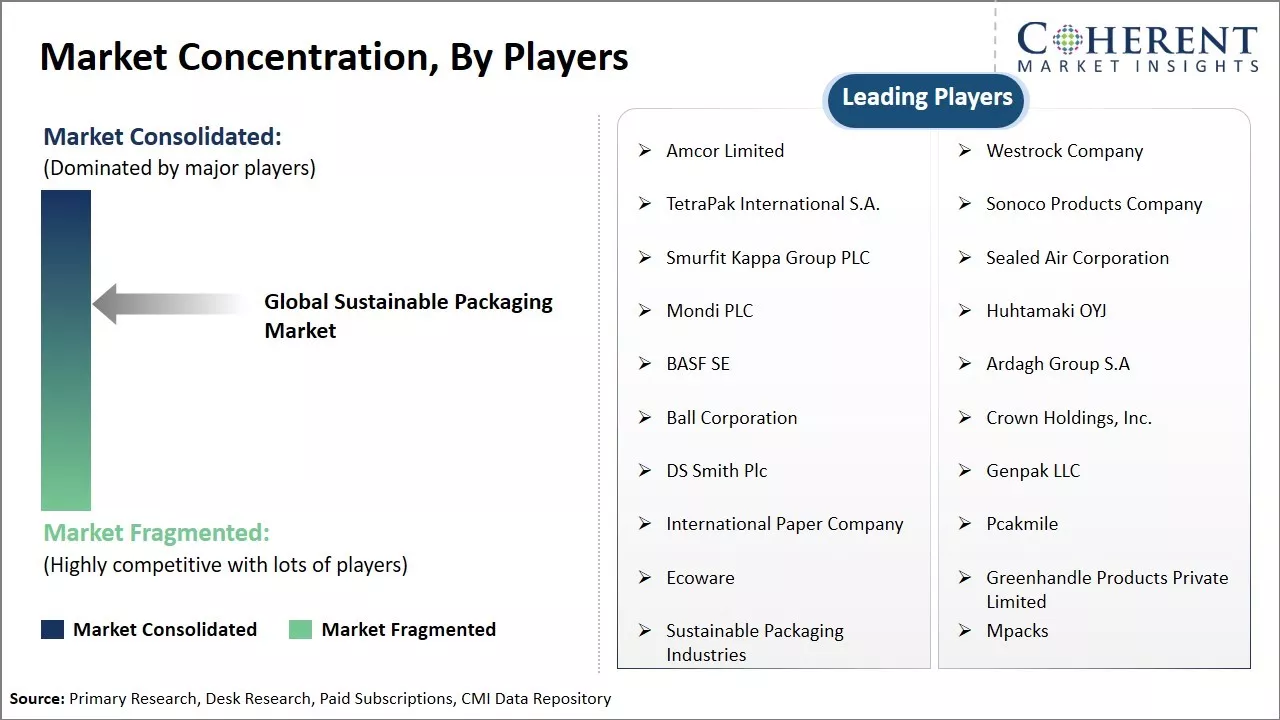
Market Concentration and Competitive Landscape
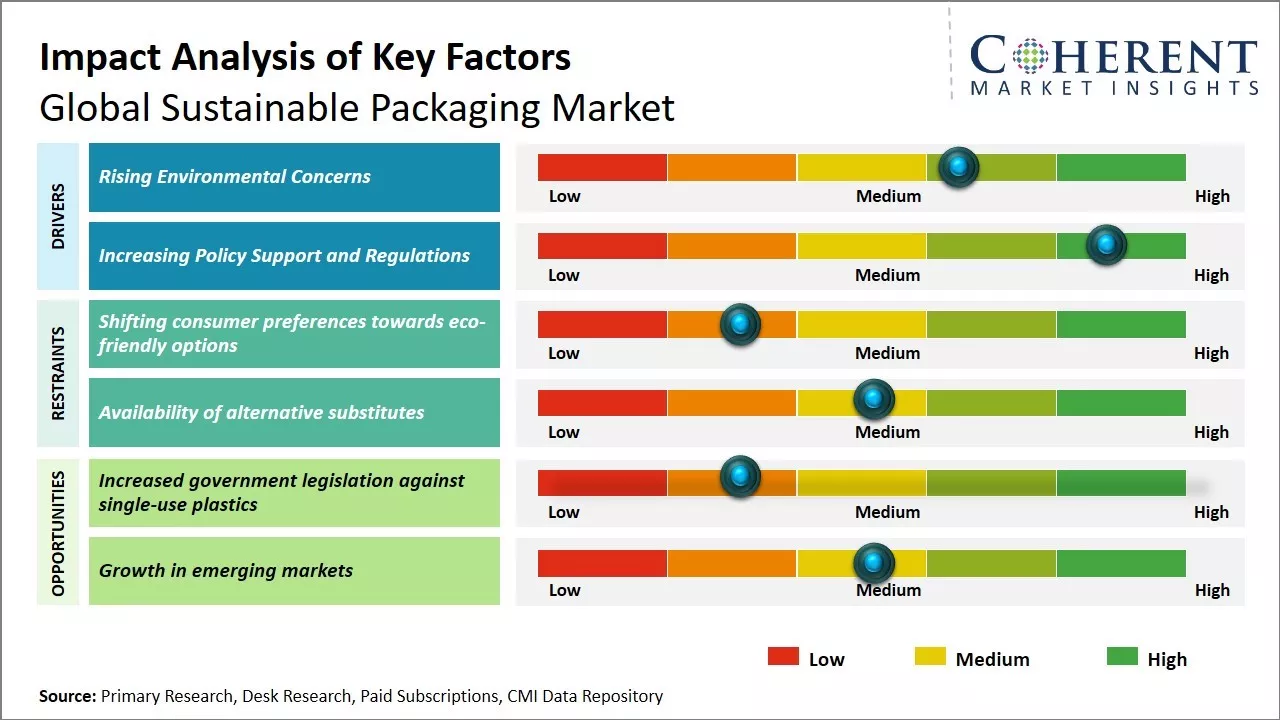
Rising Environmental Concerns
Sustainable packaging has emerged as an important issue globally in the past decade. With increasing environmental degradation and the looming threats of climate change, people around the world are becoming more concerned about the negative impact of plastic and other non-degradable materials that are commonly used in packaging.
There is a growing realization that if one does not switch to more eco-friendly alternatives, one may severely damage the planet in irreversible ways. Many national governments and international organizations are highlighting the need to adopt circular economy principles and promote sustainable practices to achieve long term environmental sustainability. Regional bans and regulations on single-use plastics have also raised awareness about sustainable packaging.
More companies and brands are facing pressure from environmentally-conscious consumers to reduce waste and use packaging made from recycled or renewable sources. Young consumers, in particular, want to buy from companies that are committed to green values. Various studies have shown that many would be willing to pay slightly higher prices for products in sustainable packaging.
Non-governmental organizations are actively campaigning on issues like plastic pollution in oceans. The media also regularly reports on topics such as the alarming increase in plastic waste and its harmful effects. These factors have made sustainability a priority for government policymakers, businesses and individuals.
Increasing Policy Support and Regulations
Increasing Policy Support and Regulations is significantly driving the growth of Global Sustainable Packaging Market. Governments across the world are introducing stringent regulations and policies to curb plastic waste generation and promote use of sustainable and eco-friendly packaging options.
For instance, European Union passed a directive in 2019 banning select single-use plastic items like straws, cutlery, and plates by 2021. The directive aims to reduce marine plastic litter and move EU countries towards more circular economy. Similarly, governments in many Asian and Latin American countries have either banned or imposed heavy tax on single-use plastic bags and Styrofoam containers. These increasing regulatory pressures are encouraging packaging manufacturers and brands to shift towards more sustainable packaging materials and solutions.
Many major brands and retailers have announced commitments and targets to use recycled content in their packaging or make them reusable/recyclable by certain timelines. For example, major retailers like Walmart, Target, and Aldi have targets that 100% of their private label packaging will be recyclable, reusable or compostable by 2025.
Food and beverage giants like PepsiCo, Coca-Cola, and Nestle have also committed to use minimum 25% recycled plastic in their bottles by 2025. According to United Nations Environment Programme (UNEP) report published in 2022, plastic pollution has severe economic impacts with losses estimated at $3-12 billion to marine ecosystems annually. The report also highlighted need for global agreement on fixing plastic pollution.
Opportunity: Increased government legislation against single-use plastics
Increased government legislation against single-use plastics will drive packaging innovation. More companies are committing to sustainability goals which will raise demand. Consumers, especially millennials and Gen Z, indicate a strong willingness to pay extra for eco-friendly products.
Segmental Insights
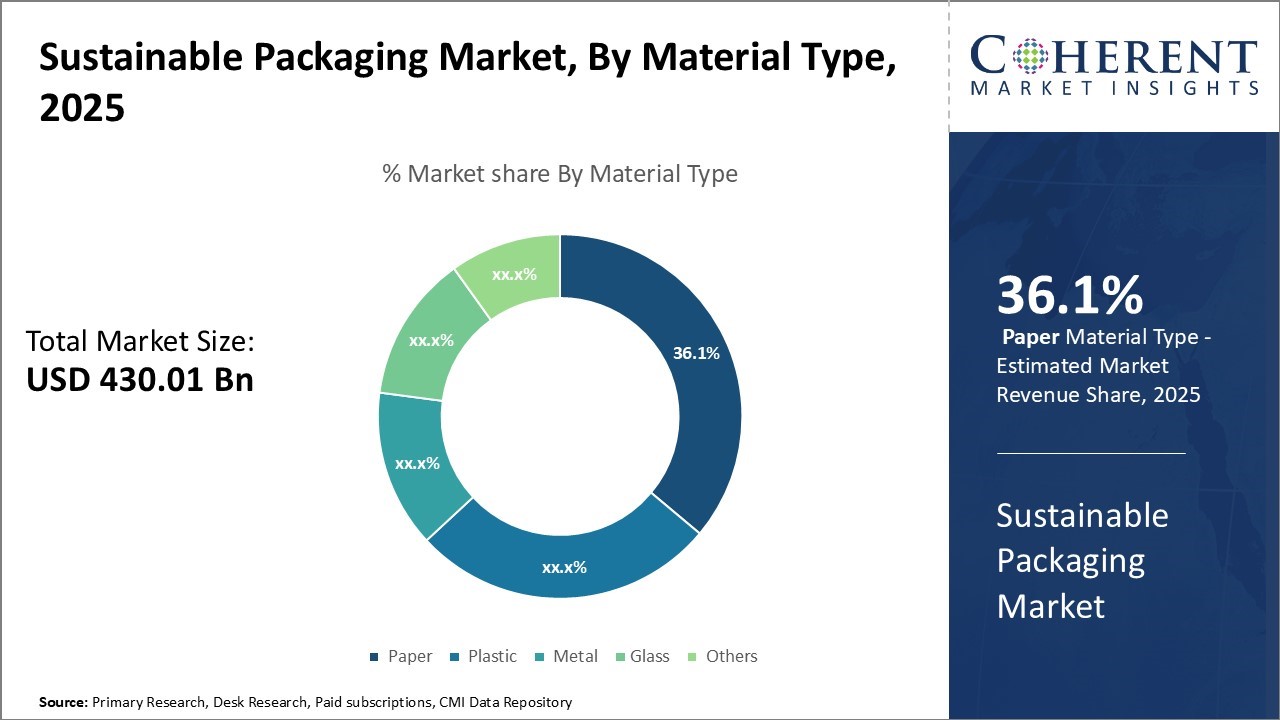
Global Sustainable Packaging Market Insights, By Material Type
In terms of material type, paper segment is estimated to contribute the 37.1% of the market share in 2026, owing to its renewable nature and wide array of uses. Paper is derived from wood or plant fibers, and can be regrown and replenished, making it a sustainable material choice. It also has the advantage of being lightweight yet durable, especially when layered or coated.
Paper is highly versatile in the forms it can take such as cardboard, cartons, bags, boxes, and wrappings. It is suitable for most packaging applications across various industries. Being renewable and biodegradable provides paper an edge over plastic and metal materials. The widest use of paper is in the corrugated packaging segment. It offers strength as well as printability, and is used extensively for transit packaging of goods.
Paper also performs well as a wrapping or carrier for food and other consumable products. New innovations are expanding paper's uses further via techniques like wax or plastic coatings that improve its barrier properties. Overall, paper's natural, environment-friendly composition and adaptability make it the top choice in sustainable packaging materials.
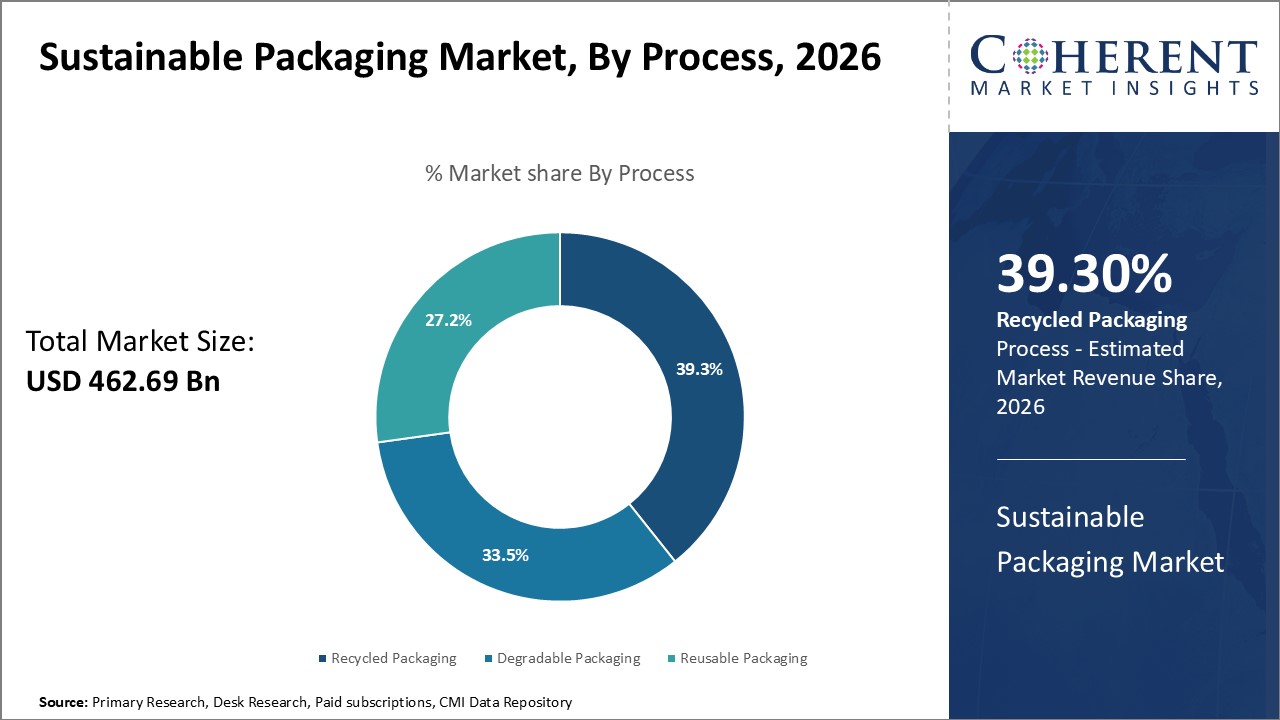
Global Sustainable Packaging Market Insights, By Process
In terms of process, recycled packaging segment is estimated to contribute the 39.3% of the market share in 2026, due to growing push for circular economy initiatives. Recycled packaging involves using post-consumer or post-industrial scrap materials to manufacture new packaging. This closed loop process provides both economic and ecological benefits.
Recycling saves valuable raw material resources from being used to make new packaging from scratch. It takes much less energy to reprocess waste materials than to extract and manufacture virgin fibers, plastics, metals and others. Recycling also reduces industrial pollution as well as greenhouse gas emissions associated with material extraction and transport. Many governments now mandate minimum recycled content levels in packaging or offer incentives for its use.
Brand owners also promote the recyclability of their packages to appeal to environmentally conscious consumers. The availability of infrastructure to collect, sort and reprocess waste packaging back into feedstock has increased drastically. Advanced recycling technologies are making even multi-material flexible pouches and films recyclable now.
With the linear take-make-waste model being replaced worldwide, recycled packaging provides a hands-on way for industries and individuals to participate in the circular flow of resources. It embraces the classic reduce-reuse-recycle mantra and brings packaging production more in line with ecological sustainability principles. This boosts its widespread preference and higher share over other processes.
Global Sustainable Packaging Market Insights, By End User Industry
In terms of end user industry, food and beverage segment is estimated to contribute the 39.3% of the market share in 2026 due to specific regulatory requirements and consumer demands in this sector. Stringent safety and hygiene rules determine how food is packaged. Yet consumers increasingly seek sustainable options and companies face government waste reduction targets. Recycled packaging satisfies both through techniques like sterile processing of waste paper fibers and use of high-quality resins in plastic recycling.
Food-grade recycled paper and rigid plastic help replace virgin material’s intensive layers and trays. Recycled material is also ideal for secondary or tertiary food packaging like shipping boxes and bags. Branded items wish to display green credentials through such outer coverings. Shelf-stable and dry grocery goods suit recycled paperboard cartons and wrappings, while recycled PET and HDPE work for bottles and jugs.
Regional Insights
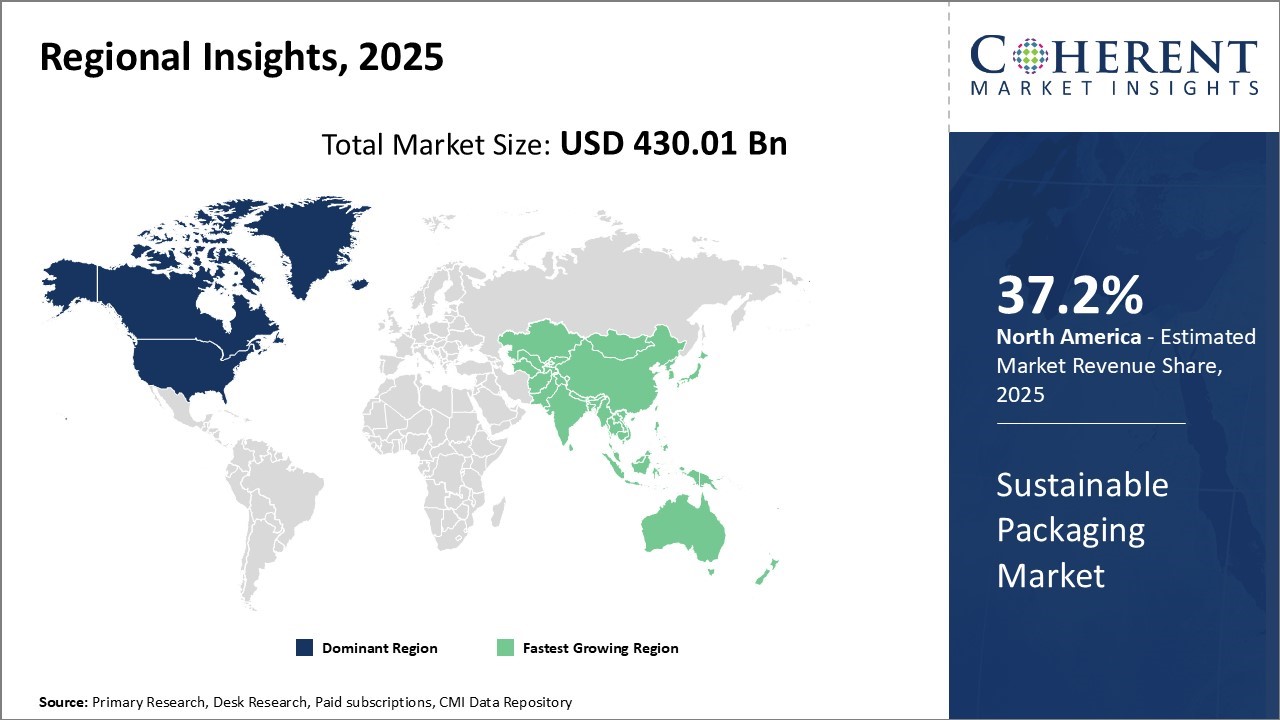
North America Sustainable Packaging Market Analysis and Trends
North America is expected to maintain its position as the largest market for sustainable packaging in 2026, accounting for an estimated 37.2% share of the global market. This leadership is driven by strong regulatory frameworks, growing environmental awareness, and active participation from major packaging companies and consumer brands.
The U.S. and Canada have implemented a range of federal and state-level policies aimed at reducing plastic waste and encouraging the use of recyclable, compostable, and reusable packaging materials. Government-backed initiatives and bans on single-use plastics have accelerated the shift toward more sustainable alternatives across multiple industries, including food & beverage, personal care, and e-commerce.
Additionally, leading consumer goods companies in North America are pledging to transition to eco-friendly packaging solutions in response to mounting consumer demand. The region’s mature recycling infrastructure, high per-capita consumption, and widespread public support for environmental sustainability make it a highly attractive market for innovation in sustainable packaging.
Asia Pacific Sustainable Packaging Market Analysis and Trends
Asia Pacific is emerging as the fastest-growing region in the global sustainable packaging market and is projected to dominate the landscape in the coming years. Rapid industrialization, urbanization, and rising environmental concerns across countries such as China, India, Indonesia, and Vietnam are fueling strong demand for sustainable packaging solutions.
The region’s robust GDP growth, expanding middle-class population, and rising standards of living are increasing consumption of packaged consumer goods—driving both domestic demand and regulatory focus on sustainability. Governments in several Asia Pacific countries are implementing policies to reduce plastic pollution and encourage sustainable materials, including incentives for manufacturers to adopt eco-friendly packaging formats.
Asia Pacific’s expanding manufacturing base, combined with growing awareness around environmental responsibility, positions the region as a key driver of global market growth in sustainable packaging.
Dominating Countries in the Asia Pacific Sustainable Packaging Market
China Sustainable Packaging Market Analysis and Trends
China is a leading force in the Asia Pacific sustainable packaging market, backed by strong government mandates and national-level plastic reduction policies. The country’s vast consumer market and rapidly growing e-commerce sector are driving demand for innovative, biodegradable, and recyclable packaging formats. Strategic investments in green technology and circular economy initiatives are helping China scale sustainable solutions while reducing its reliance on traditional plastics.
India Sustainable Packaging Market Analysis and Trends
India’s sustainable packaging market is witnessing rapid growth due to increased environmental regulation, urban expansion, and rising consumer awareness. The government has imposed strict bans on single-use plastics and is actively promoting biodegradable and recyclable packaging through national programs like Swachh Bharat and the Plastic Waste Management Rules. India’s expanding FMCG sector and push for sustainable development are fostering an ecosystem for local innovation in eco-friendly packaging materials.
Indonesia Sustainable Packaging Market Analysis and Trends
Indonesia is emerging as a high-potential market for sustainable packaging, driven by growing public concern over marine plastic pollution and strong governmental commitments to environmental preservation. Efforts to reduce plastic usage in retail and food sectors are complemented by public-private partnerships focused on developing affordable, sustainable packaging alternatives. The country’s large population and rising consumer spending create a favorable environment for market expansion.
Vietnam Sustainable Packaging Market Analysis and Trends
Vietnam’s sustainable packaging market is growing rapidly, supported by increasing government regulation and global export requirements. As a key manufacturing hub, Vietnam is under pressure from international partners to adopt environmentally responsible practices. Local companies are investing in recyclable and compostable packaging to stay competitive. The country’s economic growth, export-oriented industries, and shifting consumer preferences are accelerating the adoption of sustainable packaging solutions.
Market Report Scope
Sustainable Packaging Market Report Coverage
| Report Coverage | Details | ||
|---|---|---|---|
| Base Year: | 2025 | Market Size in 2026: | USD 462.69 Bn |
| Historical Data for: | 2020 To 2024 | Forecast Period: | 2026 To 2033 |
| Forecast Period 2026 to 2033 CAGR: | 7.6% | 2033 Value Projection: | USD 772.64 Bn |
| Geographies covered: |
| ||
| Segments covered: |
| ||
| Companies covered: | Amcor Limited, Westrock Company, TetraPak International S.A., Sonoco Products Company, Smurfit Kappa Group PLC, Sealed Air Corporation, Mondi PLC, Huhtamaki OYJ, BASF SE, Ardagh Group S.A, Ball Corporation, Crown Holdings, Inc., DS Smith Plc, Genpak LLC, International Paper Company, Pcakmile, Ecoware , Greenhandle Products Private Limited, Sustainable Packaging Industries, Mpacks | ||
| Growth Drivers: |
| ||
| Restraints & Challenges: |
| ||
Analyst Viewpoint
- The sustainable packaging market is gaining rapid traction, primarily fueled by strict environmental regulations and shifting consumer preferences toward eco-friendly alternatives.
- Material innovation—including plant-based polymers, edible packaging, and next-gen recycling technologies—offers substantial growth opportunities for industry players.
- The e-commerce sector is a key driver for demand in lightweight, recyclable, and protective packaging solutions, especially post-pandemic.
- Government incentives, green tax credits, and sustainability-linked financing are creating a more supportive environment for long-term investment.
- North America continues to show strong growth potential, backed by brand-led sustainability initiatives and consumer demand across industries like food, cosmetics, and healthcare.
Speak to the analyst
Want personalized insights?
Take the findings above to one of our principal consultants, or have the report rebuilt around the segments, geographies and competitors you actually track.
Sustainable Packaging Market Key Developments
- In July 2024, 2M Group of Companies launched a new packaging-focused business unit, Sustainable Packaging Technologies. This helps in promoting its growing portfolio of biomaterial technologies.
- In April 2023, Huhtamaki, a leading global packaging solutions company, redefined the possible by employing scientific advancements to develop pioneering mono-material technology. Its innovative and sustainable flexible packaging, in Paper, PE, and PP Retort, proved transformational and addressed the requirements of both its clients and their consumers.
Market Segmentation
- Material Type Insights (Revenue, USD Bn & KT, 2021 - 2033)
- Glass
- Plastic
- Metal
- Paper
- Others
- Process Insights (Revenue, USD Bn & KT, 2021 - 2033)
- Reusable Packaging
- Degradable Packaging
- Recycled Packaging
- End User Industry Insights (Revenue, USD Bn & KT, 2021 - 2033)
- Pharmaceutical and Healthcare
- Cosmetics and Personal Care
- Food and Beverage
- Other End user Industries
- Regional Insights (Revenue, USD Bn & KT, 2021 - 2033)
- North America
- U.S.
- Canada
- Latin America
- Brazil
- Argentina
- Mexico
- Rest of Latin America
- Europe
- Germany
- U.K.
- Spain
- France
- Italy
- Russia
- Rest of Europe
- Asia Pacific
- China
- India
- Japan
- Australia
- South Korea
- ASEAN
- Rest of Asia Pacific
- Middle East & Africa
- GCC Countries
- Israel
- Rest of Middle East & Africa
- Key Players Insights
- Amcor Limited
- Westrock Company
- TetraPak International S.A.
- Sonoco Products Company
- Smurfit Kappa Group PLC
- Sealed Air Corporation
- Mondi PLC
- Huhtamaki OYJ
- BASF SE
- Ardagh Group S.A
- Ball Corporation
- Crown Holdings, Inc.
- DS Smith Plc
- Genpak LLC
- International Paper Company
- Pcakmile
- Ecoware
- Greenhandle Products Private Limited
- Sustainable Packaging Industries
- Mpacks
Sources
Primary Research Interviews
- Sustainable packaging manufacturers and suppliers
- Packaging design and innovation executives
- Brand managers from consumer goods companies
- Retail and e-commerce packaging decision makers
- Others
Databases
- Euromonitor International
- Others
Magazines
- Packaging World Magazine
- Sustainable Packaging Magazine
- Food & Beverage Packaging
- Packaging Digest
- Others
Journals
- Journal of Cleaner Production
- Packaging Technology and Science
- Resources, Conservation and Recycling
- Others
Newspapers
- Financial Times
- The Wall Street Journal
- Reuters Business News
- Bloomberg Green
- Others
Associations
- Sustainable Packaging Coalition (SPC)
- Packaging & Processing Women's Leadership Network
- International Safe Transit Association (ISTA)
- European Organization for Packaging and the Environment (EUROPEN)
- Others
Public Domain Sources
- Environmental Protection Agency (EPA)
- European Environment Agency (EEA)
- United Nations Environment Programme (UNEP)
- OECD Environmental Data
- Others
Proprietary Elements
- CMI Data Analytics Tool
- Proprietary CMI Existing Repository of information for last 8 years
Get access to 250+ pages report
Every segment, forecast, competitor profile and data table behind the analysis above — available for instant download.
- ESOMAR Member
- ISO 9001:2015 Certified
- D-U-N-S Registered
- GDPR & CCPA Compliant
Missing comfort of reading report in your local language? Find your preferred language:
Transform your Strategy with Exclusive Trending Reports
Frequently Asked Questions
The Sustainable Packaging Market size is estimated to be valued at USD 462.69 Bn in 2026, and is expected to reach USD 772.64 Bn by 2033.
The CAGR of the global Market is projected to be 7.6% from 2026 to 2033.
Rising environmental concerns and increasing policy support and regulations are the major factors driving the growth of global sustainable packaging industry.
Shifting consumer preferences towards eco-friendly options and availability of alternative substitutes are the major factors hampering the growth of global market.
In terms of material type, paper segment is estimated to dominate the market in 2026.
Amcor Limited, Westrock Company, TetraPak International S.A., Sonoco Products Company, Smurfit Kappa Group PLC, Sealed Air Corporation, Mondi PLC, Huhtamaki OYJ, BASF SE, Ardagh Group S.A, Ball Corporation, Crown Holdings, Inc., DS Smith Plc, Genpak LLC, International Paper Company, Pcakmile, Ecoware , Greenhandle Products Private Limited, Sustainable Packaging Industries, Mpacks are the major players.
North America is expected to lead the global sustainable packaging industry.