

Plant-Sourced Food Emulsifiers Market Size and Forecast — 2026 - 2033
The Global Plant-Sourced Food Emulsifiers Market size is estimated to be valued at USD 1.85 billion in 2026 and is expected to reach USD 3.12 billion by 2033, exhibiting a compound annual growth rate (CAGR) of 7.8% from 2026 to 2033.
Overview
The plant-sourced food emulsifiers market is driven by growing consumer demand for clean-label, natural, and plant-based food ingredients. Increasing adoption of vegan and vegetarian diets, along with rising awareness of health and sustainability, has encouraged food manufacturers to replace synthetic and animal-derived emulsifiers with plant-based alternatives. The expansion of the processed food, bakery, confectionery, dairy alternatives, and beverage sectors further supports market growth, as emulsifiers improve texture, stability, and shelf life. Regulatory support for natural ingredients and the rising preference for environmentally friendly products also contribute to demand. Continuous innovation in plant-derived emulsifier formulations is enhancing functionality and broadening application opportunities.
Key Takeaways
- Soy-based emulsifiers dominate the Source Type segment due to their strong functional properties, wide availability, and cost-effectiveness in processed food applications, while pea-based emulsifiers are the fastest-growing category because of increasing demand for allergen-free and non-GMO ingredients.
- Bakery products represent the leading Application segment, driven by extensive use of plant-sourced emulsifiers in bread, cakes, pastries, and confectionery products to improve texture, stability, and shelf life.
- Dairy alternatives are witnessing rapid growth as rising adoption of plant-based diets and vegan food products increases demand for natural emulsifiers in non-dairy beverages, yogurts, and desserts.
- North America holds a significant share of the Plant-Sourced Food Emulsifiers market due to strong clean-label food demand, high consumer awareness, and active investment in food ingredient innovation and R&D activities.
- Asia Pacific is the fastest-growing regional market, supported by expanding food processing industries, favorable government initiatives, rising disposable incomes, and increasing consumer focus on health-conscious and plant-based food products.
Plant-Sourced Food Emulsifiers Market Segmentation Analysis
Plant-Sourced Food Emulsifiers Market Insights, By Source Type
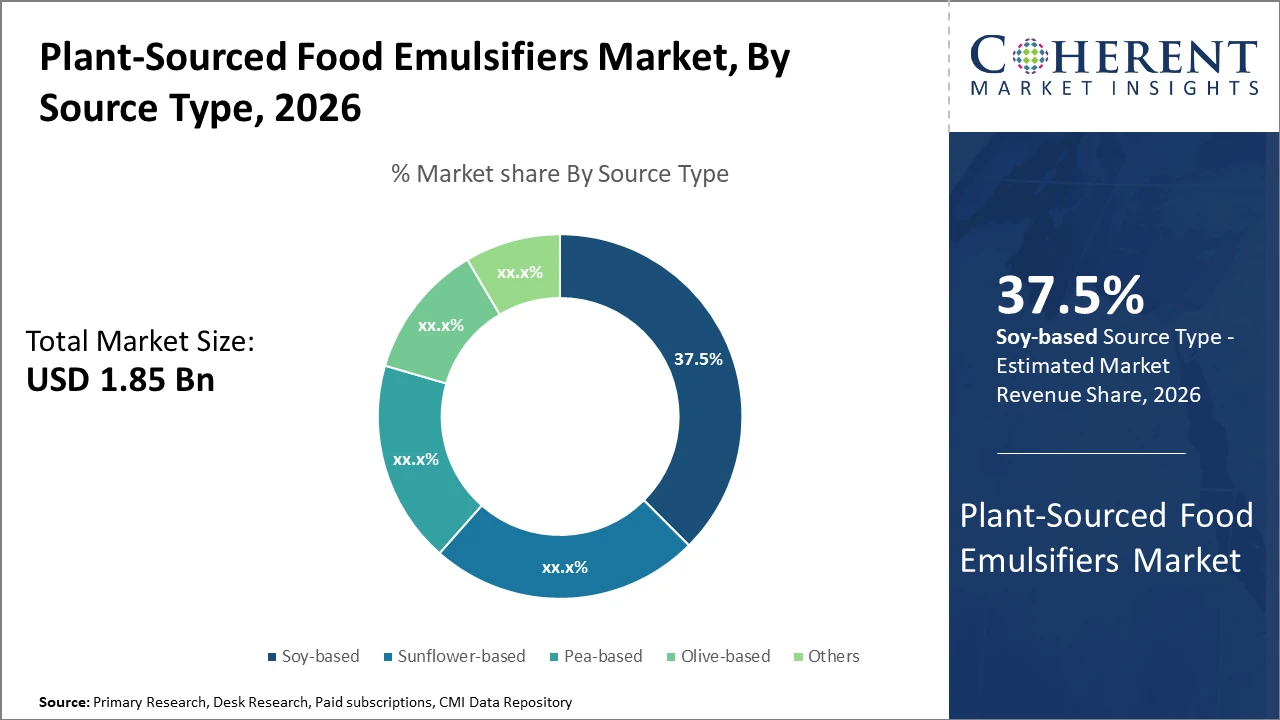
Soy-based emulsifiers dominate the Plant-Sourced Food Emulsifiers market with approximately 37.5% share due to their functional versatility, cost efficiency, and established large-scale production capabilities. These emulsifiers are widely used across bakery, confectionery, dairy, and processed food applications for texture enhancement and product stability. Pea-based emulsifiers are the fastest-growing segment, driven by rising demand for allergen-free, non-GMO, and vegan food ingredients. Sunflower-based emulsifiers are also gaining popularity because of their clean-label positioning and favorable taste characteristics. Olive-based emulsifiers occupy a premium niche in health-focused formulations, while other emerging sources such as rice and chickpea proteins address specialized dietary and plant-based nutrition requirements.
Plant-Sourced Food Emulsifiers Market Insights, By Application
Bakery products dominate the Plant-Sourced Food Emulsifiers market due to the extensive use of emulsifiers in improving texture, moisture retention, dough stability, and shelf life across bread, cakes, pastries, and other baked goods. Dairy alternatives represent the fastest-growing application segment as rising consumer preference for plant-based nutrition increases demand for non-dairy milk, yogurt, and cheese products. In beverages, plant-sourced emulsifiers help stabilize flavors, oils, and nutritional ingredients while improving consistency. Confectionery applications benefit from enhanced fat dispersion and sugar crystallization control. Other emerging applications include meat substitutes, infant nutrition, and functional foods, creating additional growth opportunities for plant-based emulsifier manufacturers globally.
Plant-Sourced Food Emulsifiers Market Insights, By Form
Powder emulsifiers dominate the Plant-Sourced Food Emulsifiers market because of their ease of handling, extended shelf life, and strong compatibility with dry-mix food formulations used in bakery, confectionery, and processed foods. Their stability and convenience make them highly preferred by large-scale food manufacturers. Liquid emulsifiers are experiencing rapid growth, especially in beverages and dairy alternative applications where smooth blending and uniform dispersion are essential for product consistency. Granular emulsifiers serve specialized uses in bakery and confectionery products requiring accurate dosing and controlled functionality. Other innovative formats include encapsulated emulsifiers and advanced delivery systems developed for controlled release and improved performance in specialized food formulations.
Plant-Sourced Food Emulsifiers Market Trends
- The Plant-Sourced Food Emulsifiers market is increasingly focused on clean-label and allergen-free product innovation, driving higher adoption of pea-based and sunflower-based emulsifiers across food manufacturing applications.
- Since 2024, food manufacturers have accelerated the incorporation of plant-derived emulsifiers into bakery products, dairy alternatives, beverages, and vegan formulations to meet changing consumer preferences.
- Hybrid emulsifier technologies combining plant proteins and polysaccharides are gaining traction due to their ability to improve texture, stability, and shelf life in plant-based food products.
- In 2025, a leading food ingredient manufacturer introduced an enzymatically hydrolyzed soy-based emulsifier designed to enhance stability and consistency in vegan yogurt products, contributing to increased market revenue growth.
Plant-Sourced Food Emulsifiers Market Insights, By Geography
North America Plant-Sourced Food Emulsifiers Market Analysis and Trends
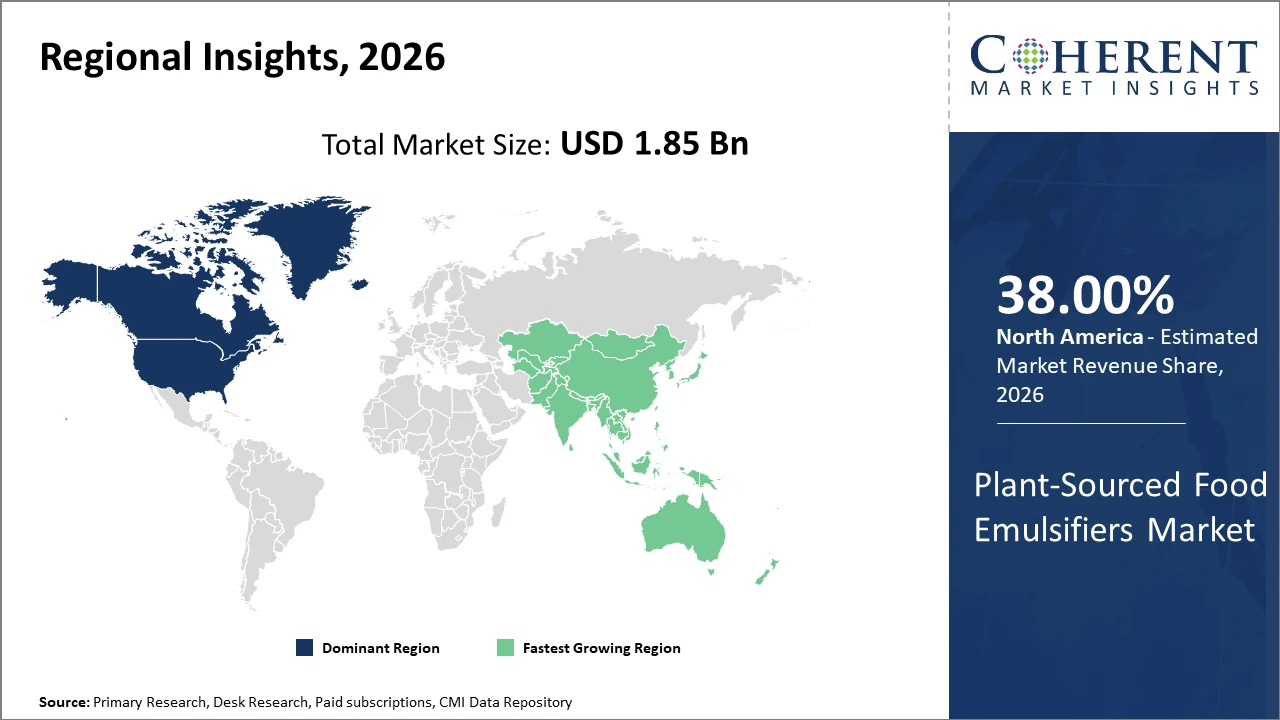
North America dominates the Plant-Sourced Food Emulsifiers market with more than 38% industry share, supported by strong consumer demand for clean-label, sustainable, and plant-based food ingredients. Strict food labeling regulations and increasing awareness regarding natural additives have encouraged food manufacturers to adopt plant-derived emulsifier solutions across multiple applications. Product innovation in dairy alternatives, bakery products, and functional beverages has remained particularly strong in the United States. Major companies such as Ingredion and Cargill continue introducing advanced functional ingredients to meet evolving consumer preferences, while partnerships with large food processors and retail brands further strengthen regional market growth.
Asia Pacific Plant-Sourced Food Emulsifiers Market Analysis and Trends
Asia Pacific is the fastest-growing region in the Plant-Sourced Food Emulsifiers market, projected to register a CAGR exceeding 9.2% through 2033. Rapid expansion of food processing industries across China, India, and Southeast Asia is significantly increasing demand for natural and plant-based food ingredients. Government initiatives supporting agricultural innovation, clean-label products, and sustainable food manufacturing are further accelerating regional market growth. Rising consumer awareness regarding health, vegan nutrition, and allergen-free food products is also contributing to higher adoption rates. Companies such as Roquette Frères and Tate & Lyle have expanded regional production capacities to meet the growing demand for plant-sourced emulsifier solutions.
Plant-Sourced Food Emulsifiers Market Outlook for Key Countries
USA Plant-Sourced Food Emulsifiers Market Analysis and Trends
The United States Plant-Sourced Food Emulsifiers market remains strong due to advanced food technology infrastructure and rising consumer demand for plant-based, clean-label food products. Growing preference for natural and sustainable ingredients has encouraged manufacturers to expand the use of plant-derived emulsifiers across bakery, dairy alternatives, beverages, and meat substitute applications. In 2025, imports of plant-based emulsifiers increased by approximately 27%, reflecting rising dependence from the expanding food processing industry. Major companies are increasingly adopting vertical integration strategies to secure raw material supply and reduce production costs. Collaborations with biotechnology firms are also accelerating the development of innovative functional emulsifiers tailored for plant-based meat and dairy alternative formulations.
Germany Plant-Sourced Food Emulsifiers Market Analysis and Trends
The Germany plant-sourced food emulsifiers market is experiencing steady growth due to increasing demand for clean-label, vegan, and sustainable food ingredients. German food manufacturers are increasingly adopting plant-derived emulsifiers such as lecithin, pectin, and starch-based blends in bakery, dairy alternatives, confectionery, and ready-to-eat products. Consumer preference for organic and non-GMO foods is encouraging innovation in natural emulsifier formulations. Germany’s strong processed food industry and stringent food safety regulations are also supporting market expansion. In addition, rising investments in plant-based food production and sustainable ingredient sourcing are driving research and development activities, strengthening Germany’s position in the European food emulsifiers market.
Analyst Opinion
- More than 42% of new food product launches in 2025 incorporated plant-based emulsifiers, while North American imports of plant-derived emulsifiers increased by nearly 35% between 2024 and 2026 due to rising clean-label demand.
- Expanded extraction and processing facilities in China and India boosted Asia Pacific production capacity by approximately 28% in 2025, improving product availability and competitive pricing.
- Revenue from plant-based dairy alternatives and bakery applications grew by around 15% in 2024, supported by increasing use of emulsifiers for texture improvement, shelf-life enhancement, and nutritional fortification.
- Advanced extraction technologies and biotechnology innovations reduced production costs by nearly 12% in 2026, while emerging applications in infant nutrition and functional beverages created additional market opportunities.
- Current Industry Events of 2026
- Market Size Estimation
- Regional Breakdown
- Competitive Landscape
- Customer Intelligence
- Segmental Analysis
- Pricing Analysis
- Key Market Drivers, Challenges & Future Trends
- Customized Insights Section
Market Scope
Report Coverage | Details | ||
Base Year: | 2025 | Market Size in 2026: | USD 1.85 billion |
Historical Data for: | 2020 To 2024 | Forecast Period: | 2026 To 2033 |
Forecast Period 2026 to 2033 CAGR: | 7.8 % | 2033 Value Projection: | USD 3 .12 billion |
Geographies covered: | North America: U.S. and Canada Latin America: Brazil, Argentina, Mexico, and Rest of Latin America Europe: Germany, U.K., Spain, France, Italy, Benelux, Denmark, Norway, Sweden, Russia, and Rest of Europe. Asia Pacific: China, Taiwan, India, Japan, South Korea, Indonesia, Malaysia, Philippines, Singapore, Australia, and Rest of Asia Pacific. Middle East & Africa: Bahrain, Kuwait, Oman, Qatar, Saudi Arabia, United Arab Emirates, Israel, South Africa, North Africa, Central Africa, and Rest of MEA. | ||
Segments covered: | By Source Type: Soy-based, Sunflower-based, Pea-based, Olive-based, Others By Application: Bakery Products, Dairy Alternatives, Beverages, Confectionary, Others By Form: Powder, Liquid, Granular, Others | ||
Companies covered: | Ingredion Inc., Cargill Inc., Kerry Group, Tate & Lyle Plc, BASF SE, Bunge Limited, CP Kelco, AB Enzymes, Symrise AG, Corbion | ||
Growth Drivers: | Increasing prevalence of veganism and flexitarian diets Technological advancements in extraction and refinement processes | ||
Plant-Sourced Food Emulsifiers Market Growth Factors
The plant-sourced food emulsifiers market is primarily driven by the growing adoption of vegan and flexitarian diets, increasing demand for natural ingredients in processed foods and beverages. In 2025, global plant-based product launches rose by 28%, significantly boosting demand for plant-derived emulsifiers. Sustainability regulations across Europe and North America are accelerating the shift away from synthetic additives toward eco-friendly alternatives. Technological improvements in extraction and purification processes have enhanced emulsifier functionality and product quality, expanding applications in dairy alternatives and bakery products. Furthermore, continuous innovation targeting health-conscious consumers has supported growth in gluten-free, organic, and allergen-free food segments worldwide.
Plant-Sourced Food Emulsifiers Market Development
In September 2025, Tallinn-based biotech company Äio successfully completed a one-tonne production run of its sustainable alternative to palm oil, coconut oil, and petroleum-derived mineral oils. Using yeast fermentation, the company converts wood and agricultural industry byproducts, including sugars derived from sawdust, into renewable fats.
Key Players
Leading Companies of the Market
- Ingredion Inc.
- Cargill Inc.
- Tate & Lyle Plc
- Kerry Group
- BASF SE
- Bunge Limited
- CP Kelco
- AB Enzymes
- Symrise AG
- Corbion
Leading companies in the plant-sourced food emulsifiers market are increasingly adopting strategic initiatives to strengthen market position and supply chain stability. Companies such as Ingredion Incorporated have pursued vertical integration strategies, including acquisitions of upstream plant protein processing facilities, to reduce raw material price volatility and improve supply reliability. Meanwhile, Cargill expanded its innovation capabilities through partnerships with biotechnology firms focused on developing proprietary pea protein-based emulsifiers, contributing to notable revenue growth in 2025. Additionally, Tate & Lyle strengthened its market presence across Europe and North America by emphasizing sustainability certifications, clean-label positioning, and environmentally responsible ingredient solutions.
Plant-Sourced Food Emulsifiers Market Future Outlook
The future outlook for the plant-sourced food emulsifiers market remains highly positive, driven by growing consumer demand for clean-label, vegan, and sustainable food ingredients. Increasing adoption of plant-based foods, dairy alternatives, and functional beverages is expected to accelerate the use of natural emulsifiers such as lecithin, pectin, guar gum, and starch derivatives. Food manufacturers are likely to focus on developing allergen-free, non-GMO, and organic emulsifier solutions to meet evolving regulatory and consumer preferences. Technological advancements in ingredient extraction and formulation will further enhance product performance and cost efficiency. Expanding applications in processed foods and beverages will continue supporting long-term global market growth.
Plant-Sourced Food Emulsifiers Market Historical Analysis
The plant-sourced food emulsifiers market has evolved steadily over the past decade due to rising awareness of natural and clean-label food ingredients. Initially, demand was primarily concentrated in bakery and confectionery applications, where lecithin and starch-based emulsifiers were widely used to improve texture and shelf life. Over time, the expansion of vegan and plant-based food industries significantly increased the adoption of pectin, guar gum, and other botanical emulsifiers in dairy alternatives, beverages, and processed foods. Regulatory restrictions on synthetic additives in several regions further accelerated market growth. Continuous innovation in sustainable ingredient sourcing and food formulation technologies also strengthened the market’s historical development trajectory.
Sources
- Primary Research Interviews:
- Food ingredient manufacturers, plant-based food producers, emulsifier suppliers, bakery and confectionery companies, beverage manufacturers, distributors, and procurement managers involved in plant-sourced emulsifier production and supply chain operations.
- Food scientists, nutrition experts, regulatory specialists, clean-label product developers, agricultural researchers, and R&D directors specializing in lecithin, citrus fiber, starch derivatives, and plant-based food formulation technologies.
- Magazines:
- Food Business News – Insights into food ingredient innovations, clean-label trends, and plant-based product developments.
- Prepared Foods – Coverage of food emulsifier technologies, formulation advancements, and functional ingredient trends.
- Food Technology Magazine – Updates on food processing innovations, sustainable ingredients, and plant-based food applications.
- Journals:
- Journal of Food Science – Research on food emulsification, ingredient functionality, and plant-derived food additives.
- Food Hydrocolloids – Studies focused on emulsifier performance, texture optimization, and food stability technologies.
- Trends in Food Science & Technology – Research related to clean-label ingredients, plant-based nutrition, and sustainable food processing innovations.
- Newspapers:
- Financial Times – Coverage of food industry investments, sustainability initiatives, and plant-based food market trends.
- Reuters – Reporting on food ingredient launches, agricultural supply developments, and regulatory updates in the food sector.
- Bloomberg – Insights into mergers, acquisitions, and strategic partnerships among global food ingredient and consumer goods companies.
- Associations:
- Institute of Food Technologists – Research developments, food ingredient standards, and food science innovations.
- International Food Additives Council – Insights into emulsifier regulations, ingredient safety standards, and food additive technologies.
- Plant Based Foods Association – Information on plant-based food trends, sustainable ingredient adoption, and market expansion initiatives.
Get access to 250+ pages report
Every segment, forecast, competitor profile and data table behind the analysis above — available for instant download.
- ESOMAR Member
- ISO 9001:2015 Certified
- D-U-N-S Registered
- GDPR & CCPA Compliant
Missing comfort of reading report in your local language? Find your preferred language:
Transform your Strategy with Exclusive Trending Reports
Frequently Asked Questions
Leading companies include Ingredion Incorporated, Cargill, and Corbion, all leveraging innovative formulations and supply chain optimization to strengthen market share.
The market size is projected to grow from USD 1.85 billion in 2026 to nearly USD 3.12 billion by 2033, supported by increasing demand for sustainable, clean-label, and health-focused food ingredients.
The bakery products sectors present the largest growth opportunities due to rising consumer preference for plant-based, vegan, and clean-label food products.
Market trends are expected to shift toward multifunctional and hybrid emulsifiers, with expanding applications in infant nutrition, functional beverages, and fortified food products.
The competitive landscape is marked by mergers, acquisitions, vertical integration, and continuous product innovation. Key challenges include securing high-quality plant raw materials and managing production costs amid agricultural commodity price fluctuations.
Companies commonly emphasize sustainability certifications, partnerships with biotechnology firms, clean-label product development, and expansion into emerging food application segments to strengthen market penetration and brand positioning.