

Synthetic Food Antioxidant Market Size and Forecast — 2026 - 2033
The Global Synthetic Food Antioxidant Market size is estimated to be valued at USD 2.75 billion in 2026 and is expected to reach USD 4.83 billion by 2033, exhibiting a compound annual growth rate (CAGR) of 8.5% from 2026 to 2033.
Overview
The synthetic food antioxidant market is primarily driven by the growing demand for processed, packaged, and convenience foods with extended shelf life. Synthetic antioxidants such as butylated hydroxyanisole (BHA), butylated hydroxytoluene (BHT), tert-butylhydroquinone (TBHQ), and propyl gallate are widely used to prevent oxidation, preserve flavor, maintain product quality, and reduce spoilage in food products containing fats and oils. Rapid urbanization, changing lifestyles, and increasing consumer preference for ready-to-eat meals have significantly increased the consumption of processed foods, thereby boosting demand for effective antioxidant solutions. The expansion of the global food and beverage industry, particularly in emerging economies, further supports market growth.
Key Takeaways
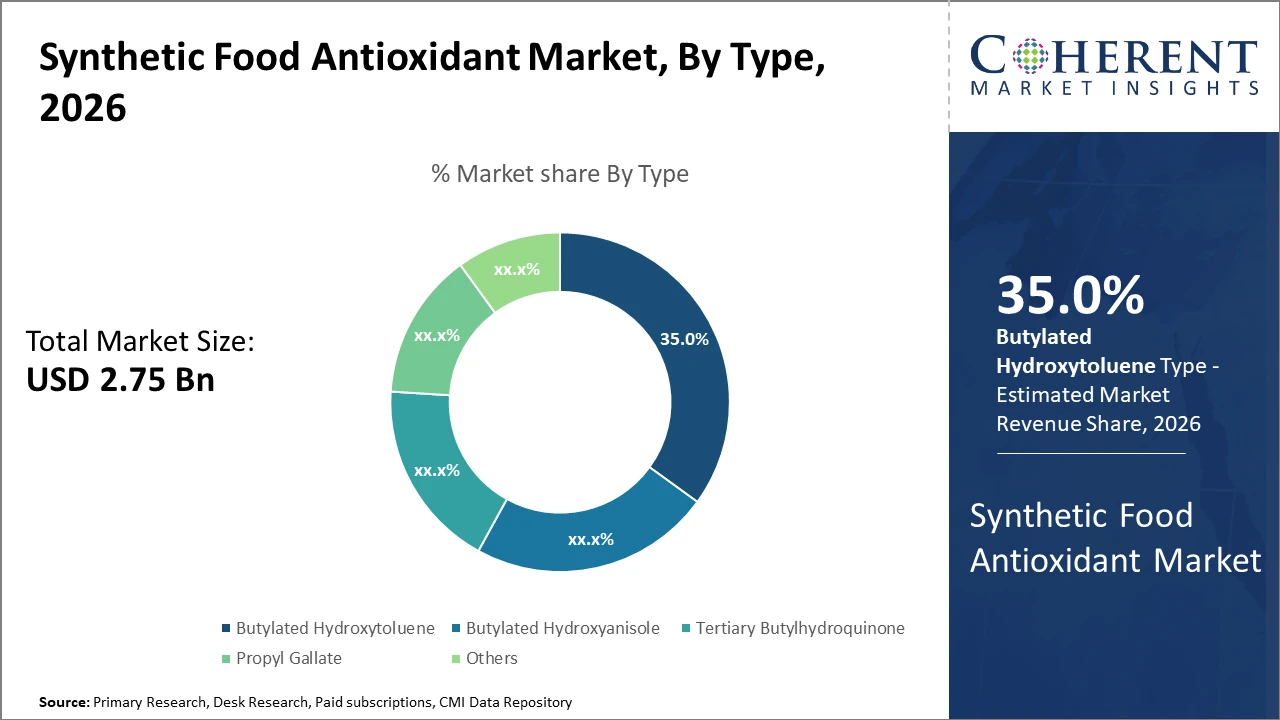
Butylated Hydroxytoluene (BHT) dominates the synthetic food antioxidant market with a 35% share, driven by its strong antioxidant performance, wide applicability, and cost-effectiveness across food preservation uses.
The meat and meat products segment leads application demand with a share of 48% due to the high need for preventing lipid oxidation during processing, storage, and long-distance distribution.
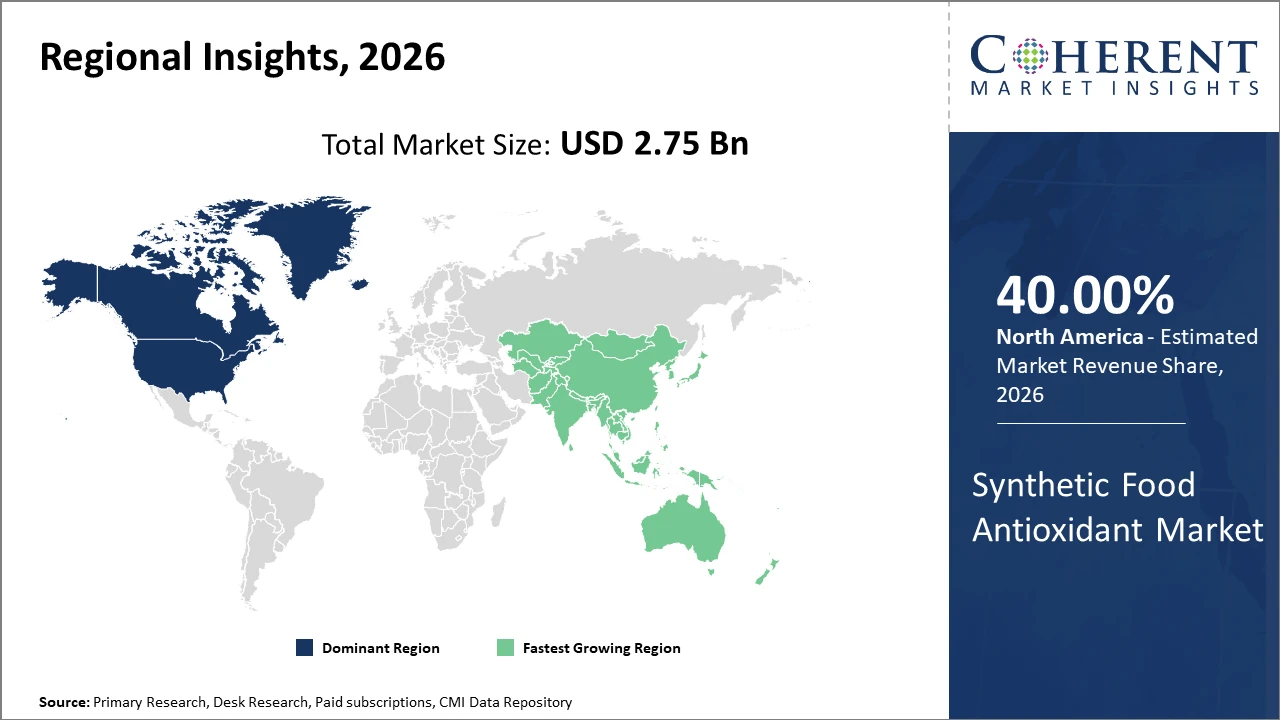
North America holds the largest market share, supported by advanced food processing infrastructure, strong regulatory standards, and widespread adoption of food safety technologies.
Asia Pacific is the fastest-growing region, driven by rapid expansion of food manufacturing, rising disposable incomes, and increasing demand for processed and packaged foods.
Market growth across regions is further supported by innovations in food preservation technologies and stricter global food quality regulations.
Synthetic Food Antioxidant Market Segmentation Analysis
Synthetic Food Antioxidant Market Insights, By Type
Butylated Hydroxytoluene (BHT) dominates the synthetic food antioxidant market with a share of 35% due to its wide application across food products, cost efficiency, and strong antioxidant performance that significantly extends shelf life. Its high oxidative stability in lipid-rich food matrices ensures consistent demand, particularly in meat products, processed snacks, and baked goods. TBHQ is the fastest-growing subsegment, driven by its superior effectiveness in high-fat foods and increasing regulatory acceptance in key markets. Meanwhile, BHA, propyl gallate, and other antioxidants hold smaller but important shares, serving specialized applications such as dry foods, edible oils, cosmetics, and pharmaceutical formulations with specific preservation requirements.
Synthetic Food Antioxidant Market Insights, By Application
Meat and meat products dominate the synthetic food antioxidant market with a share of 48% due to their high susceptibility to lipid oxidation and microbial spoilage, requiring effective preservation solutions to maintain quality and shelf life. Rising consumption of processed and packaged meat products further drives demand for synthetic antioxidants in this segment. Bakery products represent the fastest-growing application area, supported by urbanization, busy lifestyles, and increasing demand for convenient food options, where antioxidants help prevent staling and rancidity. Dairy products and processed fruits and vegetables show steady growth, while the “others” segment includes niche applications requiring customized antioxidant formulations for specific food preservation needs.
Synthetic Food Antioxidant Market Insights, By Form
Powder form dominates the synthetic food antioxidant market due to its ease of handling, long shelf life, and strong compatibility with diverse food processing applications. It allows flexible dosing and uniform blending, making it highly preferred by large-scale food manufacturers for consistent product quality. Liquid form is the fastest-growing segment, driven by its superior solubility and rapid integration into liquid-based food systems such as beverages, sauces, and dressings.
Synthetic Food Antioxidant Market Trends
The market is witnessing a shift toward hybrid antioxidant blends combining synthetic and natural ingredients, improving performance while addressing clean-label consumer preferences.
In 2026, a new formulation demonstrated around 18% better preservation efficiency in emulsified sauces compared to conventional synthetic antioxidants.
Nanoencapsulation technologies are emerging, improving controlled release and showing over 20% better lipid oxidation prevention in bakery applications (2025 data).
North America dominates with nearly 40% market share, supported by strict food safety regulations, mature food processing industries, and strong manufacturer presence.
Asia Pacific is the fastest-growing region (CAGR >10%), driven by urbanization, rising processed food demand, and strong expansion in China and India supported by key regional players.
Synthetic Food Antioxidant Market Insights, By Geography
North America Synthetic Food Antioxidant Market Analysis and Trends
North America dominates the synthetic food antioxidant market with approximately 40% market share, supported by its advanced food processing industry and stringent food safety regulations. The region’s strong regulatory framework ensures strict compliance with approved food additives, driving consistent demand for safe and effective synthetic antioxidants. Well-established infrastructure and a mature packaged food sector further strengthen market growth, particularly in applications such as meat processing, bakery products, and snacks. Continuous innovation by leading food ingredient manufacturers also supports the development of more efficient antioxidant formulations. This combination of regulatory oversight, industrial maturity, and technological advancement sustains North America’s market leadership.
Asia Pacific Synthetic Food Antioxidant Market Analysis and Trends
Asia Pacific is the fastest-growing region in the synthetic food antioxidant market, with a CAGR exceeding 10%, driven by rapid expansion of food manufacturing industries in China, India, and Southeast Asia. Growth is supported by rising per capita income, increasing urbanization, and evolving consumer preference for processed and packaged foods. Government initiatives to strengthen food safety regulations and improve food processing infrastructure are further accelerating market development. Investments in cold chain logistics and supply chain modernization are also enhancing product distribution efficiency. Additionally, local manufacturers are gaining traction by offering customized antioxidant solutions tailored to regional food applications and export-driven demand.
Synthetic Food Antioxidant Market Outlook for Key Countries
USA Synthetic Food Antioxidant Market Analysis and Trends
The USA’s synthetic food antioxidant market is a key contributor to global revenue, supported by a highly developed food processing industry and strong advancements in food technology research. Major companies are investing in innovative antioxidant solutions aligned with sustainability goals and growing clean-label preferences. In 2025, the country recorded a 7% increase in synthetic antioxidant usage, driven primarily by rising consumption of processed meat and bakery products. Regulatory oversight from the USDA ensures strict safety compliance while encouraging innovation in high-performance formulations. This supportive regulatory environment, combined with strong demand from processed food sectors, continues to strengthen U.S. market growth.
Germany Synthetic Food Antioxidant Market Analysis and Trends
Germany’s synthetic food antioxidant market is shaped by strict food safety regulations, strong demand for processed foods, and a highly developed food manufacturing industry. Regulatory oversight from the European Food Safety Authority influences permitted usage levels of antioxidants such as BHA, BHT, and TBHQ. The market is witnessing steady demand from bakery, confectionery, and edible oil sectors, where shelf-life extension is critical. However, increasing consumer preference for clean-label and natural ingredients is gradually limiting growth of synthetic additives. Key trends include reformulation of food products, adoption of safer antioxidant blends, and rising R&D investment to comply with evolving EU food safety standards.
Analyst Opinion
Rising processed food consumption is a key demand driver, with Asia Pacific recording a 12% increase in 2025, boosting the need for synthetic antioxidants to improve food stability and shelf life.
On the supply side, production capacity expanded significantly, with global output of key antioxidants like BHT and TBHQ rising by about 9% in 2025, ensuring stable availability and competitive pricing.
Trade dynamics show strong export activity, as North America increased synthetic antioxidant exports by around 7% in 2024, helping balance global supply chain disruptions and regional demand gaps.
Application diversification supports growth, with the bakery segment accounting for over 30% of total usage in 2026, highlighting expanding opportunities across multiple food categories.
- Current Industry Events of 2026
- Market Size Estimation
- Regional Breakdown
- Competitive Landscape
- Customer Intelligence
- Segmental Analysis
- Pricing Analysis
- Key Market Drivers, Challenges & Future Trends
- Customized Insights Section
Market Scope
| Report Coverage | Details | ||
|---|---|---|---|
| Base Year: | 2025 | Market Size in 2026: | USD 2.75 billion |
| Historical Data for: | 2020 To 2024 | Forecast Period: | 2026 To 2033 |
| Forecast Period 2026 to 2033 CAGR: | 8.5% | 2033 Value Projection: | USD 4.83 billion |
| Geographies covered: |
| ||
| Segments covered: |
| ||
| Companies covered: | BASF SE, Eastman Chemical Company, Lanxess AG, Akzo Nobel NV, Royal DSM NV, Yangnong Chemical Group Co. Ltd., AMERICAN VITAMIN CORPORATION, Songwon Industrial Co. Ltd. | ||
| Growth Drivers: |
| ||
Synthetic Food Antioxidant Market Growth Factors
Key market drivers include rising consumer preference for processed and convenience foods, which increases the need for effective antioxidant systems to extend shelf life and maintain food quality. Growing regulatory approvals for synthetic antioxidants in regions such as North America and Europe are supporting broader market adoption and product commercialization. Technological advancements in formulation, including improved solubility and stability, are expanding application potential; for example, microencapsulated antioxidants introduced in 2025 enhanced preservation efficiency by over 30%. Additionally, rapid expansion of food manufacturing industries in Asia Pacific and Latin America, supported by urbanization and higher per capita food spending, is driving strong market growth.
Synthetic Food Antioxidant Market Development
In May 2026, Tea Drops introduced Ube Berries Tea Drops, an antioxidant-rich blend of Filipino ube (purple yam) and berries. Marketed as the brand’s signature summer 2026 flavor, the new USDA Organic tea is available exclusively through Tea Drops' website in 5-pack bundles and 10-drop retail boxes.
Key Players
Leading Companies of the Market
BASF SE
Eastman Chemical Company
Lanxess AG
Akzo Nobel NV
Royal DSM NV
Yangnong Chemical Group Co. Ltd.
AMERICAN VITAMIN CORPORATION
Songwon Industrial Co. Ltd.
Leading companies in the synthetic food antioxidant market are pursuing growth through strategic mergers, capacity expansions, and collaborative R&D initiatives. For instance, BASF SE entered into a strategic partnership in 2025 with major food processors to develop customized antioxidant solutions, which reduced oxidation in packaged food products by around 20% and strengthened its competitive position. Similarly, Eastman Chemical Company expanded its production capacity in Asia Pacific in early 2026 to capitalize on rising regional demand, resulting in a 15% increase in regional revenue within six months. These strategies highlight the industry’s focus on innovation, regional expansion, and application-specific product development.
Synthetic Food Antioxidant Market Future Outlook
The synthetic food antioxidant market is expected to experience moderate growth in the coming years, driven by increasing demand for processed and packaged foods with extended shelf life. Rising urbanization and changing dietary habits continue to support the use of antioxidants such as BHA, BHT, TBHQ, and propyl gallate in edible oils, snacks, and bakery products. However, regulatory scrutiny and growing consumer preference for natural and clean-label ingredients may restrain long-term expansion. Future developments will focus on improved formulation technologies, such as encapsulation and blended antioxidant systems, to enhance safety, efficiency, and compliance with evolving global food safety standards and regulations.
Synthetic Food Antioxidant Market Historical Analysis
The synthetic food antioxidant market has evolved alongside the growth of the processed food industry. In earlier decades, antioxidants such as BHA, BHT, and propyl gallate gained widespread adoption due to their effectiveness in preventing lipid oxidation and extending shelf life of packaged foods. Rapid industrialization and urbanization in the late 20th century significantly increased demand for convenience foods, boosting market expansion. Over time, regulatory frameworks were introduced to ensure safe usage levels, particularly in North America and Europe. In recent years, concerns over health impacts have led to gradual shifts toward natural alternatives, though synthetic antioxidants still remain widely used globally.
Sources
Primary Research Interviews:
Food scientists, food technologists, nutritionists, quality assurance managers, and R&D heads in food processing companies involved in synthetic food antioxidant formulation and application.
Regulatory affairs specialists, toxicologists, chemical engineers, food safety auditors, and supply chain managers specializing in food additives, preservatives, oxidation control systems, and shelf-life enhancement technologies.
Magazines:
Food Technology Magazine – Coverage of food additive innovations, preservation technologies, and antioxidant applications in processed foods.
Food Business News – Insights into food ingredient trends, packaged food innovations, and preservative market developments.
Food Engineering Magazine – Updates on processing technologies, shelf-life extension solutions, and industrial food preservation systems.
Journals:
Journal of Food Science – Research on food chemistry, oxidation prevention, and synthetic antioxidant performance in food systems.
Food Chemistry – Studies focused on lipid oxidation, preservative efficacy, and antioxidant mechanisms in food products.
International Journal of Food Science & Technology – Research on food preservation technologies, additive safety, and formulation advancements.
Newspapers:
Financial Times – Coverage of food ingredient companies, mergers, acquisitions, and global packaged food industry trends.
Reuters – Reporting on food safety regulations, additive approvals, and processed food market developments.
Bloomberg – Insights into global food manufacturers, ingredient innovation, and consumer demand shifts in packaged foods.
Associations:
Food and Agriculture Organization (FAO) – Guidelines on food safety, additives, and global food preservation standards.
Codex Alimentarius Commission – International food standards and regulations for food additives and preservatives.
Institute of Food Technologists (IFT) – Research, standards, and innovations in food science and preservation technologies.
Get access to 250+ pages report
Every segment, forecast, competitor profile and data table behind the analysis above — available for instant download.
- ESOMAR Member
- ISO 9001:2015 Certified
- D-U-N-S Registered
- GDPR & CCPA Compliant
Missing comfort of reading report in your local language? Find your preferred language:
Transform your Strategy with Exclusive Trending Reports
Frequently Asked Questions
Dominant players in the synthetic food antioxidant market include BASF SE, Eastman Chemical Company, Lanxess AG, Akzo Nobel N.V., which maintain strong market positions through innovation, global distribution, and capacity expansion strategies.
The market is projected to grow from USD 2.75 billion in 2026 to approximately USD 4.83 billion by 2033, registering a CAGR of 8.5% due to increasing demand for processed and packaged food products.
The meat and meat products segment offers the largest growth opportunity, driven by rising consumption of processed meats and the need for effective oxidation control during storage and distribution.
Market trends are expected to evolve toward hybrid antioxidant formulations, nanoencapsulation technologies, and customized solutions designed for specific food applications, enhancing performance and efficiency.
The competitive landscape is highly active, with companies focusing on R&D, partnerships, and innovation, while facing challenges such as regulatory compliance and growing preference for natural alternatives.
Go-to-market strategies include strategic partnerships with food manufacturers, production capacity expansion, and continuous product innovation to address diverse application needs and strengthen market penetration.