

Bio Vanillin Market Size and Forecast — 2026 - 2033
The Global Bio Vanillin Market size is estimated to be valued at USD 350 million in 2026 and is expected to reach USD 720 million by 2033, exhibiting a compound annual growth rate (CAGR) of 11.5% from 2026 to 2033.
Overview
The Bio Vanillin market is driven by growing consumer demand for natural and clean-label ingredients in food, beverages, and cosmetics, as synthetic vanillin faces increasing regulatory scrutiny. Rising awareness of health and wellness trends encourages the use of bio-based flavors and fragrances, supporting market adoption. Technological advancements in microbial fermentation and enzymatic synthesis enable cost-effective, sustainable production of bio vanillin at scale. Expanding applications in confectionery, dairy, bakery, and personal care products further boost demand. Additionally, increasing global production of plant-based and organic products, coupled with supportive government policies promoting green and bio-based chemicals, underpins sustained market growth.
Key Takeaways
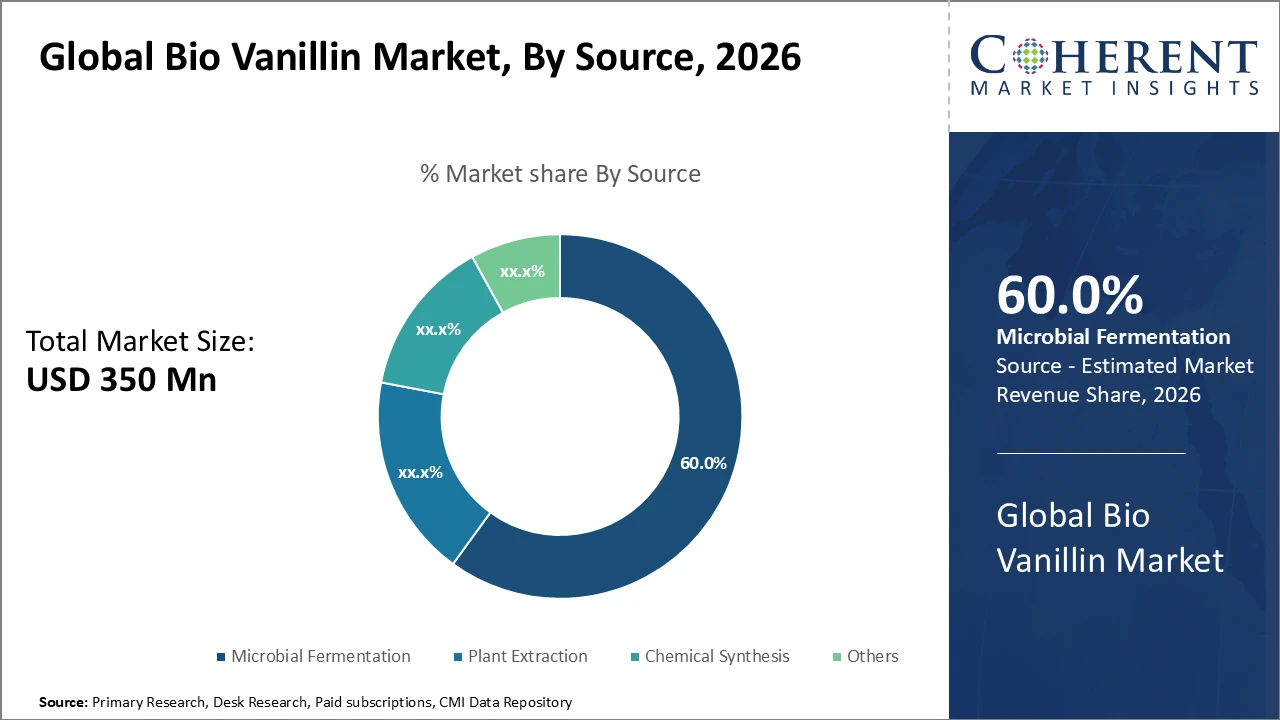
The microbial fermentation source segment remains the leading revenue contributor in the Bio Vanillin Market, accounting for more than 60% of market share due to advancements in biotechnology, production scalability, and sustainable manufacturing processes.
Food and beverage applications dominate the market with nearly 58% industry share, supported by increasing consumer preference for natural flavors, clean label products, and bio-based ingredients.
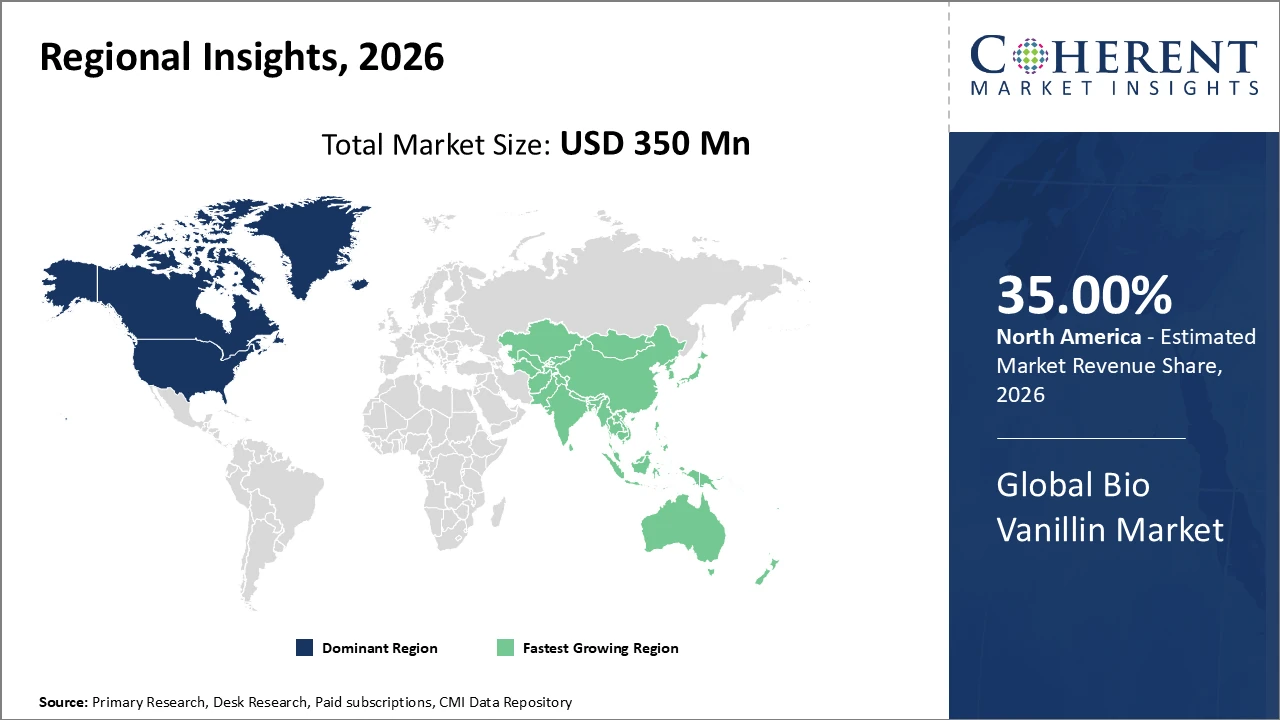
North America leads the global Bio Vanillin Market, contributing over 35% of total market revenue because of strong regulatory support, advanced food processing industries, and growing adoption of sustainable flavor ingredients.
Asia Pacific represents the fastest growing regional market, driven by expanding manufacturing capabilities, increasing processed food demand, and rising adoption of natural flavoring ingredients in countries such as India and China.
Bio Vanillin Market Segmentation Analysis
Bio Vanillin Market Insights, By Source
Microbial fermentation dominates the Bio Vanillin Market, contributing more than 60% of total market revenue due to its cost effectiveness, scalability, and sustainability benefits. This segment is also the fastest growing because of continuous advancements in fermentation strain optimization and yield enhancement technologies that improve production efficiency. Plant extraction from vanilla beans remains a niche segment valued for natural purity and premium quality, although limited raw material availability restricts large scale expansion. Chemical synthesis holds a comparatively smaller market share due to increasing regulatory pressure and consumer preference for natural ingredients. Other emerging segments include hybrid synthetic biotechnology methods that currently maintain limited but gradually expanding market penetration.
Bio Vanillin Market Insights, By Application
Food and beverage applications dominate the Bio Vanillin Market with more than 58% share, primarily driven by growing consumer demand for natural flavor enhancers and clean label food products. This segment is also the fastest growing due to increasing innovation in functional beverages, organic snacks, bakery products, and confectionery applications. Cosmetics and personal care industries are steadily expanding their use of bio vanillin because of its natural antioxidant properties and pleasant aroma profile. Pharmaceutical applications remain smaller in market share but demonstrate growth potential through use in drug formulations and nutraceutical products. Other emerging applications include animal feed additives and specialty wellness products utilizing natural flavor ingredients.
Bio Vanillin Market Insights, By Form
Powder form dominates the Bio Vanillin Market with nearly 70% market share because of its ease of handling, extended shelf life, and broad application across dry food products, bakery items, confectionery, and cosmetic formulations. This segment is also the fastest growing due to advancements in drying, stabilization, and microencapsulation technologies that improve product quality and storage efficiency. Liquid bio vanillin is gaining popularity in beverages, dairy products, and personal care applications where direct blending is required, although it currently represents a smaller market share. Other forms include encapsulated and derivative based bio vanillin products designed for specialized industrial and high-performance flavor applications.
Bio Vanillin Market Trends
The Bio Vanillin Market is increasingly adopting advanced microbial fermentation technologies that improve production efficiency, reduce manufacturing costs, and support large scale commercial output.
During 2025, bio vanillin producers across Europe and Asia Pacific reported nearly 17% improvement in production yields through enhanced fermentation processes and strain optimization technologies.
The growing clean label movement continues to strengthen market demand, with natural ingredient formulations gaining significant popularity in food, beverage, and personal care industries across North America and Europe.
Sustainability initiatives are encouraging manufacturers to implement zero waste and environmentally friendly production methods, aligning with stricter regulatory expectations and supporting long term market expansion.
Bio Vanillin Market Insights, By Geography
North America Bio Vanillin Market Analysis and Trends
North America holds a dominant position in the Bio Vanillin Market, accounting for nearly 35% of global market share. Growth in the region is supported by stringent regulatory frameworks that encourage the use of natural and bio-based additives across food, beverage, and personal care industries. Strong consumer preference for clean label products and sustainable ingredients continues to drive market demand. Major manufacturers in the region have significantly invested in advanced fermentation technologies, production efficiency improvements, and supply chain optimization strategies. The well-established food and beverage sector, combined with continuous product innovation, further strengthens North America’s leadership in global bio vanillin market revenue.
Asia Pacific Bio Vanillin Market Analysis and Trends
Asia Pacific is projected to be the fastest growing region in the Bio Vanillin Market, recording a CAGR exceeding 14% during the forecast period. Growth is mainly driven by expanding biotechnology manufacturing capabilities and increasing consumer demand for natural flavoring ingredients in countries such as China, India, and Japan. Government support for biotechnology industries, rising exports of bio-based ingredients, and growing investments in sustainable production technologies further accelerate regional expansion. The United States and Japan also contribute significantly through clean label initiatives and increased research and development activities.
Bio Vanillin Market Outlook for Key Countries
USA Bio Vanillin Market Analysis and Trends
The United States bio vanillin market benefits from a highly developed regulatory framework that promotes the safety and adoption of natural ingredients across food and consumer products. Demand is rapidly increasing in functional foods, nutraceuticals, beverages, and personal care formulations as consumers increasingly prefer clean label and organic products. In 2025, investments in fermentation technology infrastructure contributed to nearly 22% growth in bio vanillin production capacity across the country. Major food manufacturers and cosmetic companies are expanding the use of bio vanillin in premium formulations. Strategic collaborations between ingredient producers and biotechnology firms are also advancing precision fermentation technologies to improve product purity and manufacturing efficiency.
Germany Bio Vanillin Market Analysis and Trends
Germany represents a key market for bio vanillin in Europe, driven by increasing consumer preference for natural flavors, clean label ingredients, and sustainable food products. The market is supported by strong demand from the food and beverage, fragrance, and pharmaceutical industries, where manufacturers are increasingly replacing synthetic additives with bio-based alternatives. Germany’s advanced food processing sector and strict regulations favoring natural ingredients continue to accelerate adoption of bio vanillin products. Technological advancements in fermentation-based production and lignin derived vanillin are also shaping market trends. The Germany bio vanillin market is projected to grow steadily, supported by premium food innovation and sustainability focused manufacturing practices.
Analyst Opinion
Supply side developments in the Bio Vanillin Market highlight major advancements in fermentation capacity, enabling manufacturers to increase production output by nearly 18% in 2024 compared to 2023. A leading fermentation facility in Europe expanded bio vanillin production by approximately 25% during the first half of 2025 to meet rising demand for clean label ingredients.
Demand from the food and beverage industry increased by nearly 20% in 2025 due to growing consumer preference for natural flavoring agents. Regulatory scrutiny on synthetic additives in North America also contributed to around 12% growth in bio vanillin imports during early 2026.
Average bio vanillin prices declined by roughly 8% year over year through 2025 as improvements in fermentation technology enhanced manufacturing efficiency and competitiveness against synthetic vanillin alternatives. Competitive pricing across Southeast Asia supported approximately 10% market penetration growth in 2024.
Expanding use of bio vanillin in pharmaceutical excipients and cosmetic formulations increased adoption by nearly 15% since 2024 due to its antioxidant and natural aroma properties. In the United Kingdom, partnerships between biotechnology companies and cosmetic manufacturers boosted launches of bio vanillin based products by approximately 30% in 2026.
- Current Industry Events of 2026
- Market Size Estimation
- Regional Breakdown
- Competitive Landscape
- Customer Intelligence
- Segmental Analysis
- Pricing Analysis
- Key Market Drivers, Challenges & Future Trends
- Customized Insights Section
Market Scope
| Report Coverage | Details | ||
|---|---|---|---|
| Base Year: | 2025 | Market Size in 2026: | USD 350 million |
| Historical Data for: | 2020 To 2024 | Forecast Period: | 2026 To 2033 |
| Forecast Period 2026 to 2033 CAGR: | 11.5% | 2033 Value Projection: | USD 720 million |
| Geographies covered: |
| ||
| Segments covered: |
| ||
| Companies covered: | Firmenich, Evolva, PureCircle, Naturex, Symrise AG, ADM, Dohler Group, Sensient Technologies | ||
| Growth Drivers: |
| ||
Bio Vanillin Market Growth Factors
The Bio Vanillin Market is experiencing strong growth due to the rising popularity of organic and clean label food products, particularly within the food and beverage industry. Increasing consumer health awareness contributed to nearly 15% year over year growth in demand for natural flavoring ingredients between 2024 and 2026. Technological advancements in microbial fermentation have improved production scalability and reduced manufacturing costs, significantly strengthening market expansion. Regulatory measures restricting synthetic flavor additives in regions such as North America and Europe further accelerated adoption, supporting market revenue growth of over 18% during 2025. Additionally, growing utilization of bio vanillin in cosmetic formulations because of its antioxidant properties created new opportunities, with the cosmetics segment expanding by approximately 22% between 2024 and 2026.
Bio Vanillin Market Development
In March 2026, Lallemand launched Hevani, a natural vanillin produced via yeast-based precision fermentation, offering food and beverage manufacturers a stable, high-purity alternative to synthetic vanillin and traditional vanilla beans.
Key Players
Leading Companies of the Market
Firmenich
Evolva
PureCircle
Naturex
Symrise AG
ADM
Dohler Group
Sensient Technologies
Leading companies in the Bio Vanillin Market are increasingly focusing on sustainable raw material sourcing, advanced fermentation technologies, and strategic partnerships to strengthen market competitiveness. Evolva partnered with a fermentation technology provider in 2025 to reduce production costs by nearly 20%, supporting aggressive expansion across North America. Meanwhile, Symrise AG expanded its research and development initiatives in 2024 to produce high purity bio vanillin variants aimed at premium cosmetic and fragrance applications. These strategic initiatives have enhanced product differentiation, improved operational efficiency, and strengthened innovation pipelines, significantly reshaping the competitive landscape of the global bio vanillin industry.
Bio Vanillin Market Future Outlook
The Bio Vanillin Market is expected to witness steady growth in the coming years due to increasing consumer demand for natural flavors, clean label ingredients, and sustainable food additives. Advancements in biotechnology and fermentation-based production methods are improving manufacturing efficiency and reducing environmental impact, making bio vanillin more commercially attractive. The food and beverage sector will continue to dominate demand, while applications in cosmetics, fragrances, and pharmaceuticals are also expanding. Emerging economies in Asia Pacific are projected to offer strong growth opportunities because of rising processed food consumption and growing awareness of natural ingredients. The market is also expected to benefit from increasing regulatory support for bio-based products.
Bio Vanillin Market Historical Analysis
The Bio Vanillin Market has evolved steadily over the past decade due to growing consumer preference for natural flavors and sustainable ingredients. Historically, synthetic vanillin dominated the flavor industry because of its low production cost, but increasing demand for clean label and bio-based products accelerated the adoption of bio vanillin solutions. Between 2018 and 2025, advancements in biotechnology and fermentation-based manufacturing significantly improved commercial production efficiency. The food and beverage industry remained the largest application sector, while cosmetics and pharmaceuticals also increased utilization. Asia Pacific emerged as a major growth region due to expanding processed food industries and rising consumer awareness regarding natural ingredients.
Sources
Primary Research Interviews:
Flavor ingredient manufacturers, food processing companies, and beverage producers utilizing bio vanillin in clean label and natural product formulations.
Supply chain managers, biotechnology specialists, and procurement executives responsible for sourcing lignin, ferulic acid, and fermentation based raw materials for bio vanillin production.
Market analysts, R&D directors, and regulatory experts from companies developing sustainable flavoring ingredients, biotechnology solutions, and natural aroma compounds.
Magazines:
Food Ingredients First – Updates on flavor innovations, natural ingredient trends, and sustainable food technologies.
Beverage Industry – Insights into beverage formulation trends, flavor ingredient demand, and product launches.
Perfumer & Flavorist – Coverage of aroma chemicals, fragrance ingredients, and flavor industry developments.
Journals:
Journal of Agricultural and Food Chemistry – Research on flavor compounds, food additives, and bio-based ingredient technologies.
Food Chemistry – Studies on natural flavor production, biotechnology applications, and ingredient innovation.
International Journal of Food Science & Technology – Research on clean label ingredients, sensory evaluation, and sustainable food formulations.
Newspapers:
Financial Times – Coverage of global food ingredient investments, sustainability initiatives, and biotechnology market developments.
Reuters – Reporting on product launches, mergers, acquisitions, and business expansion in the flavor and fragrance industry.
Bloomberg – Insights into corporate strategies, R&D investments, and market growth in bio-based ingredients and food technology sectors.
Associations:
International Organization of the Flavor Industry – Regulatory guidance, industry standards, and market insights for flavor ingredients.
Institute of Food Technologists – Research updates, food innovation trends, and ingredient technology developments.
European Flavour Association – Industry regulations, sustainability initiatives, and market analysis for flavor and fragrance products.
Get access to 250+ pages report
Every segment, forecast, competitor profile and data table behind the analysis above — available for instant download.
- ESOMAR Member
- ISO 9001:2015 Certified
- D-U-N-S Registered
- GDPR & CCPA Compliant
Missing comfort of reading report in your local language? Find your preferred language:
Transform your Strategy with Exclusive Trending Reports
Frequently Asked Questions
Leading companies in the Bio Vanillin Market include Firmenich, ADM, Symrise AG, Evolva. These companies maintain strong market positions through technological innovation, sustainable production methods, and strategic collaborations.
The Bio Vanillin Market is projected to grow from USD 350 million in 2026 to USD 720 million by 2033, registering a compound annual growth rate (CAGR) of 11.5% during the forecast period.
The food and beverage industry represents the largest growth opportunity because of increasing global demand for natural flavoring ingredients, clean label products, and organic food formulations.
Market trends are expected to focus on biotechnology-based production advancements, precision fermentation, sustainable sourcing practices, and expanding applications of bio vanillin in pharmaceuticals, cosmetics, and nutraceutical products.
The competitive landscape is innovation driven, with companies emphasizing process efficiency, sustainability, and compliance with natural ingredient regulations. Major challenges include raw material supply limitations, high production costs, and competition from lower priced synthetic vanillin alternatives.
Companies commonly adopt strategies such as technology partnerships, expansion of premium product portfolios, investment in fermentation infrastructure, geographic market expansion, and collaborations with food and cosmetic manufacturers to increase market penetration and revenue growth.