

Drinkable Peanut Powder Market Size and Share Analysis - 2026 To 2033
The global drinkable peanut powder market is estimated to be valued at USD 891 Mn in 2026 and is projected to grow at a robust CAGR of 5.6% during the forecast period (2026-2033), reaching USD 1,305 Mn by 2033. This growth is mostly due to rising consumer demand for plant-based protein alternatives and increasing adoption of functional beverages. According to our research, Functional Beverage Industry is estimated to be valued at surpass USD 440 Bn in 2033.
Key Takeaways from the Drinkable Peanut Powder Market Report
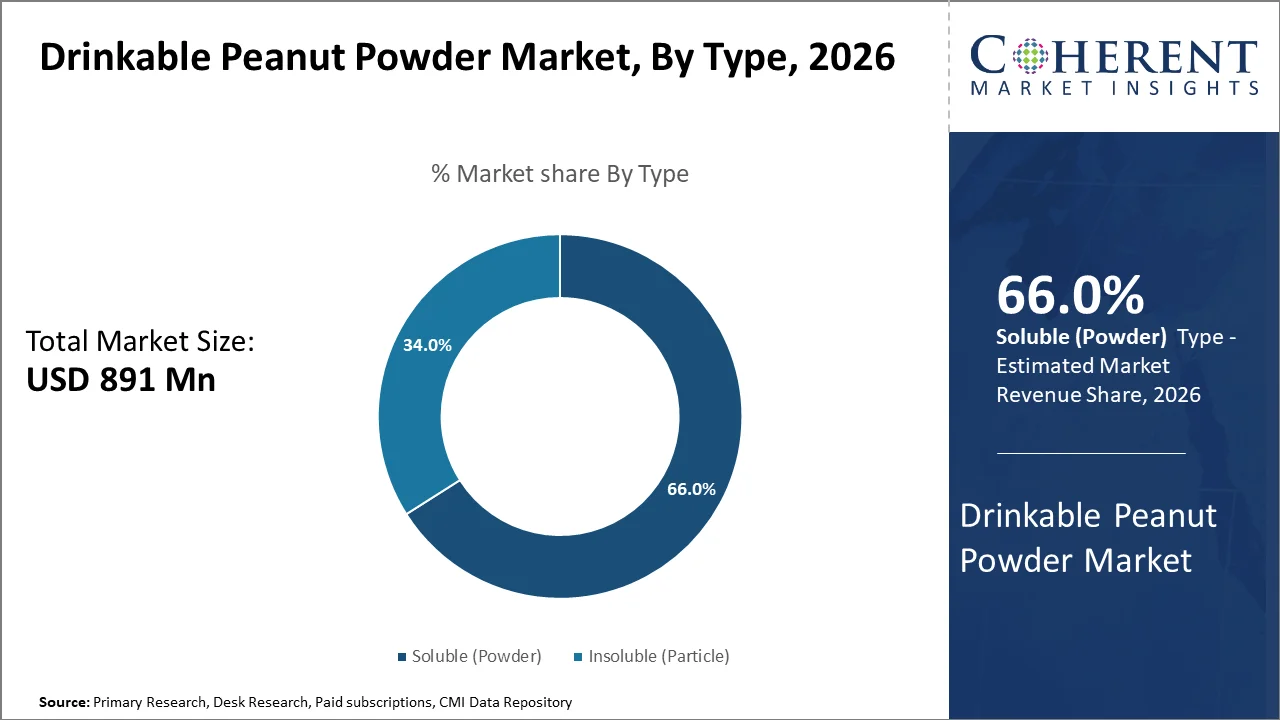
- Soluble (powder) is expected to lead the market with a share of 66% in 2026 due to its easy mixing, smooth texture, and suitability for shakes and smoothies.
- Shakes segment is slated to account for the largest market revenue share of 45% in 2026, owing to rising fitness trends and demand for meal replacements.
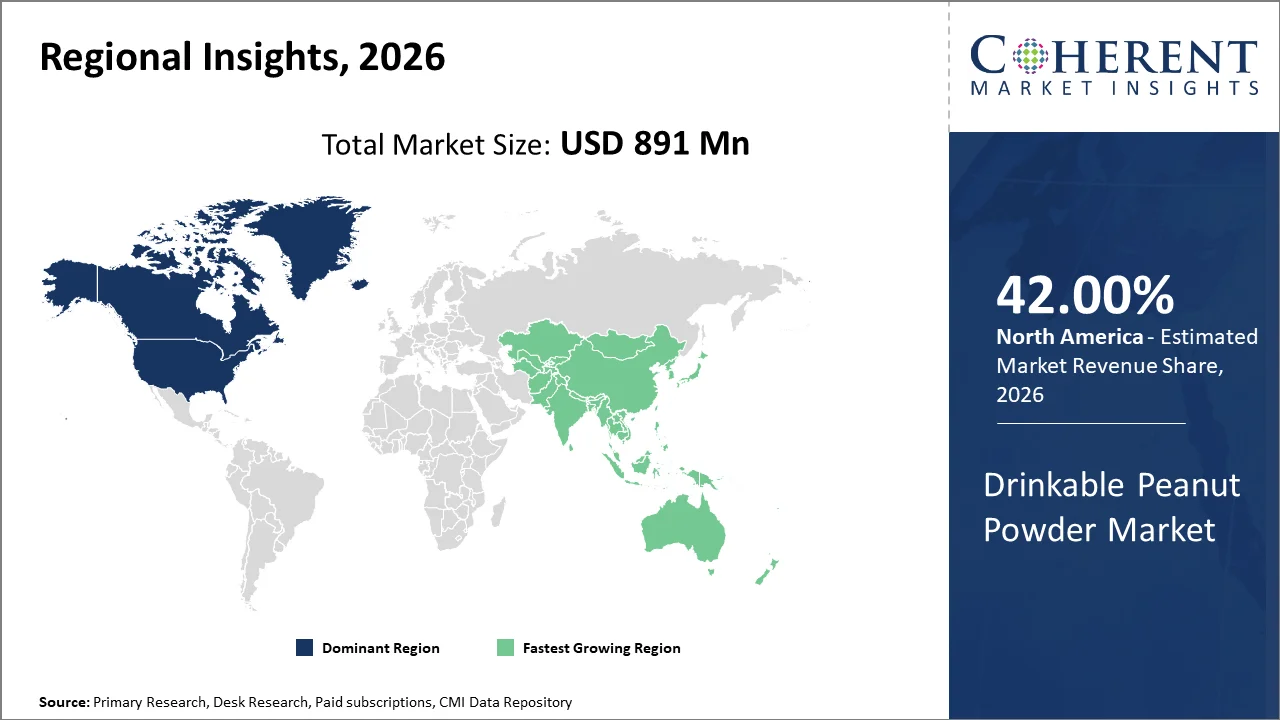
- North America is projected to retain its dominance in the global drinkable peanut powder market, accounting for a 42% share in 2026, due to high adoption of protein supplements.
- Asia Pacific is anticipated to emerge as the fastest growing market for drinkable peanut powder during the forecast period, registering a CAGR of 8%, thanks to rising health consciousness and increasing demand for protein-rich functional beverages.
Drinkable Peanut Powder Market Overview
The global drinkable peanut powder market is projected to exhibit steady growth during the forecast period. This growth is primarily due to rising demand for plant-based protein alternatives, increasing health consciousness among consumers, and growing popularity of functional foods and ready-to-drink nutritional beverages. Expanding applications of peanut powders in smoothies, shakes, and meal replacements are also expected to support market expansion over the forecast period.
Drinkable peanut powder is a finely processed peanut-based ingredient used in beverages such as smoothies and protein drinks as well as in various food applications. It is made by roasting peanuts, removing some of their oil, and grinding them into a fine powder. It adds a rich peanut flavor and boosts the nutritional value of beverages, baked goods, and desserts.
Thanks to its high protein content and energy density, drinkable peanut powder is popular among fitness enthusiasts and athletes as an ingredient in protein-rich drinks and functional foods. Rising adoption of this drinkable peanut powder in a wide range of food and beverage applications is set to boost market growth during the projection period.
Rising preference for on-the-go nutrition is expected to fuel demand for drinkable peanut powder during the assessment period. Busy lifestyles are encouraging demand for convenient and easy-to-prepare nutritional products. Drinkable peanut powder can be quickly mixed into shakes, smoothies, and beverages, making it a convenient meal or snack option.
Similarly, shift toward natural ingredients is projected to create growth avenues within the drinkable peanut powder industry during the forthcoming period. Consumers are increasingly seeking products made with natural, non-GMO, organic, and minimally processed ingredients. This, in turn, is encouraging manufacturers to develop cleaner-label formulations.
Segmental Insights
Which Type of Drinkable Peanut Dominates the Market?
Soluble (powder) Capture Over Two-Third of the Drinkable Peanut Powder Market in 2026
According to Coherent Market Insights’ latest drinkable peanut powder market analysis, soluble (powder) is set to account for the largest market share of 66% in 2026. This dominance can be attributed to its superior convenience, instant solubility in liquids, and ease of incorporation into a wide range of applications such as smoothies, protein shakes, bakery products, and functional beverages. In addition, its longer shelf life compared to liquid or paste formats, along with growing consumer preference for plant-based, high-protein, on-the-go nutrition options, also supports the strong adoption of soluble peanut powder across both household and commercial end-use segments.
- Current Industry Events of 2026
- Market Size Estimation
- Regional Breakdown
- Competitive Landscape
- Customer Intelligence
- Segmental Analysis
- Pricing Analysis
- Key Market Drivers, Challenges & Future Trends
- Customized Insights Section
Which is the Most Lucrative Application of Drinkable Peanut Powder?
Shakes Continue to Dominate as the Leading Application Segment
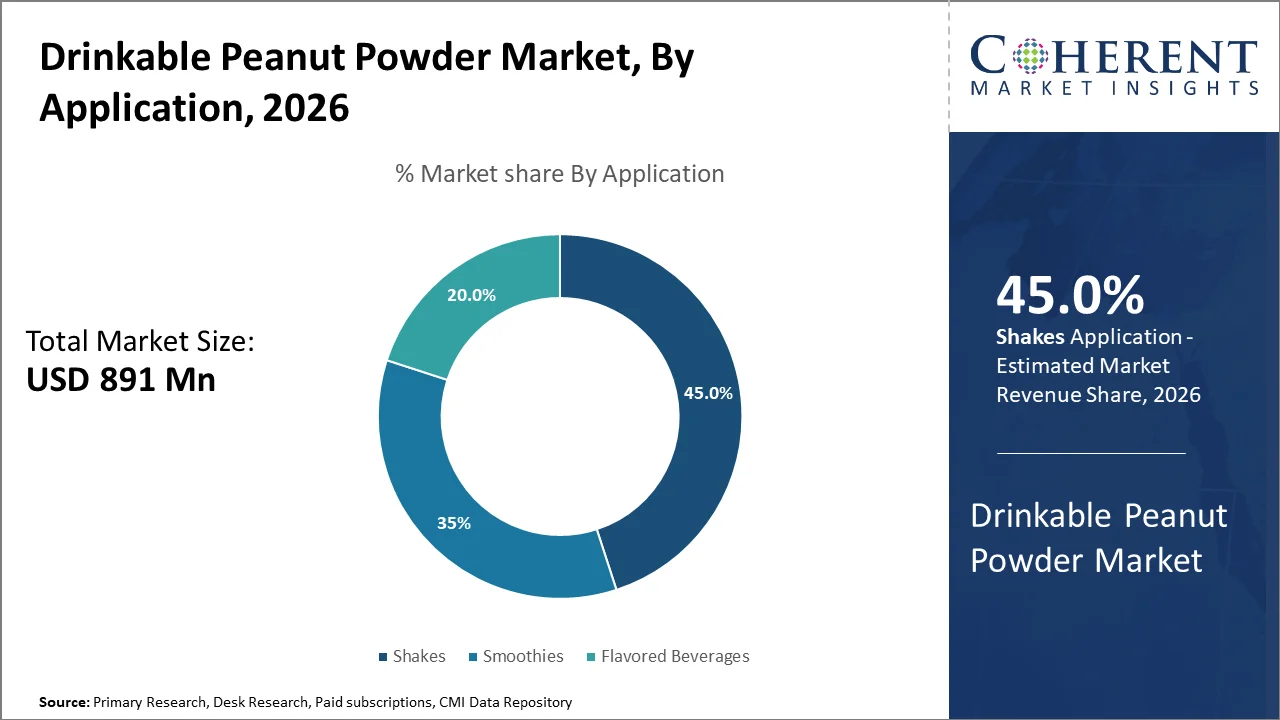
Based on application, shakes segment is projected to lead the market during the assessment period, accounting for a market revenue share of 45% in 2026. This is mostly due to growing consumer preference for convenient, on-the-go nutrition products and rising demand for protein-rich beverage alternatives. Consumer demand for protein-infused beverages is rising rapidly, driven by the need for convenient, on-the-go nutrition. With 42% of consumers prioritizing protein in their diets.
Drinkable peanut powder is increasingly being incorporated into protein shakes, smoothies, and meal replacement drinks owing to its high nutritional value, including healthy fats, plant-based protein, and essential micronutrients. In addition, expanding fitness culture, rising health consciousness among urban populations, and increasing popularity of functional beverages among athletes and working professionals are fueling demand in this segment.
Drinkable Peanut Powder Market Growth Drivers
Rising Demand for Plant-Based Protein
Increasing demand for plant-based proteins is providing a strong impetus for the growth of the drinkable peanut powder market. Consumers are increasingly adopting vegan, vegetarian, and flexitarian diets, which is driving demand for plant-based protein alternatives. Drinkable peanut powder offers a protein-rich, dairy-free option that appeals to health-conscious consumers.
Drinkable Peanut Powder Market Opportunities
Growing Health and Wellness Awareness
Consumers across the world are becoming increasingly aware of nutrition, weight management, muscle recovery, and overall wellness. This is boosting the popularity of high-protein, low-fat beverages. Drinkable peanut powder is valued for its high protein content as well as its fiber, vitamins, and minerals. Thus, growing focus on health and wellness is expected to create lucrative growth opportunities for the drinkable peanut powder market during the forecast period.
Drinkable Peanut Powder Market Trends
Rising Fortification Trend
Introduction of fortified and functional formulations is a key growth-shaping trend in the drinkable peanut powder market. Brands are launching products enriched with probiotics, adaptogens, electrolytes, collagen, vitamins, and minerals to meet growing demand for multifunctional beverages. This product innovation is likely to open new revenue streams for the drinkable peanut powder industry in the coming years.
Current Events and Their Impact on the Drinkable Peanut Powder Market
Current Event | Description and its Impact |
Launch of new organic peanut protein powders for beverages (2026) |
|
Rising adoption of peanut protein in sports and lactose-free diets |
|
Regional Insights
North America Dominates the Drinkable Peanut Powder Market Growth
North America is expected to account for around 42% of the global drinkable peanut powder market share in 2026. This is attributable to rising demand for high-protein beverages, growing health and fitness awareness, and increasing popularity of convenient plant-based nutrition products. Consumers are increasingly seeking protein-rich drinks that support active lifestyles, creating favorable conditions for drinkable peanut powder adoption.
Rising consumption of peanut-based protein products in the United States is playing a key role in boosting growth of North America drinkable peanut powder market. According to the USDA Economic Research Service, peanut butter consumption in the U.S. during the 2024/25 marketing year was 6% higher than the previous 10-year average, reflecting strong consumer demand for peanut-derived protein foods. This trend is expected to support the continued growth of drinkable peanut powder products across North America.
Asia Pacific Emerges as a Fast-Growing Market for Drinkable Peanut Powder
Asia Pacific is projected to be the fastest-growing regional market for drinkable peanut powder during the forecast period, exhibiting a CAGR of 8%. This is mostly due to increasing health consciousness, rapid expansion of plant-based nutrition, and rising demand for convenient protein beverages among urban consumers. Growing popularity of functional and dairy-free drinks is also creating new opportunities for manufacturers.
Rising demand for plant-based protein beverages is booting Asia Pacific drinkable peanut powder market. There is a rapid increase in the consumption of plant-based beverages across nations like China, India, and Japan, driven by increasing consumer preference for healthier and plant-based drink options. This trend is expected to boost sales of drinkable peanut powder products in Asia Pacific during the forecast period.
Drinkable Peanut Powder Market Outlook – Country-wise
U.S. Drinkable Peanut Powder Market Trends
The United States is set to remain a leading market for drinkable peanut powder during the projection period. This can be attributed to growing demand for protein-rich beverages, rising health and wellness awareness, and increasing adoption of plant-based nutrition products. Rising participation in fitness activities, growing preference for convenient on-the-go nutrition, and continuous innovation in functional beverage formulations are also supporting market growth in the nation.
China Drinkable Peanut Powder Market Forecast
China is expected to witness rapid growth in the drinkable peanut powder market during the forecast period. This is primarily due to increasing health consciousness, rising consumption of plant-based beverages, and growing demand for convenient nutritional products among urban consumers. Expanding middle-class population, changing dietary habits, and increasing availability of functional and protein-enriched drinks are also boosting market expansion in the country.
Who are the Major Companies in the Drinkable Peanut Powder Market?
Some of the major players in Drinkable Peanut Powder Market are The J.M. Smucker Company, Golden Peanut and Tree Nuts, Santa Cruz Natural Incorporated, Bell Research Companies, Peanut Butter & Co., The Tru-Nut Company, Sukrin Ltd., Protein Plus, LLC, Better Body Foods, and Nutrinity Foundation.
Key Strategies Adopted by Industry Players
Leading drinkable peanut powder companies are adopting various organic and inorganic strategies to boost their revenue as well as gain a competitive edge in the industry. These include new product launches, collaborations, mergers and acquisitions, partnerships, and distribution agreements. Industry players are also expanding their investments in research and development to improve product formulation, enhance nutritional profiles, and extend shelf life.
- In July 2024, Alpino Health Foods launched a 100% peanut-based protein powder with 24 grams of protein per serving. This launch shows how companies are introducing new, high-protein peanut products to meet growing consumer demand for healthy nutrition options.
- In May 2024, The J.M. Smucker Company launched Jif Peanut Butter & Chocolate Flavored Spread. The launch helped expand its peanut-based product portfolio and strengthen its market presence.
Market Report Scope
Drinkable Peanut Powder Market Report Coverage
| Report Coverage | Details | ||
|---|---|---|---|
| Base Year: | 2025 | Market Size in 2026: | USD 891 Mn |
| Historical Data for: | 2020 To 2024 | Forecast Period: | 2026 To 2033 |
| Forecast Period 2026 to 2033 CAGR: | 5.6% | 2033 Value Projection: | USD 1,305 Mn |
| Geographies covered: |
| ||
| Segments covered: |
| ||
| Companies covered: | The J.M. Smucker Company, Golden Peanut and Tree Nuts, Santa Cruz Natural Incorporated, Bell Research Companies, Peanut Butter & Co., The Tru-Nut Company, Sukrin Ltd., Protein Plus, LLC, Better Body Foods, and Nutrinity Foundation | ||
| Growth Drivers: |
| ||
| Restraints & Challenges: |
| ||
Analyst Opinion (Expert Opinion)
- Rising demand for convenient protein drinks is boosting sales of drinkable peanut powders. Consumers want quick, high-protein beverages for fitness and busy lifestyles. Drinkable peanut powder fits well as a plant-based protein source, which can boost adoption in ready-to-mix shakes and health drinks.
- Shift toward plant-based nutrition is set to open revenue streams for drinkable peanut powder industry during the forthcoming period. More people are reducing dairy and animal protein intake. Peanut-based drinks benefit from this shift, helping brands expand in vegan and lactose-free product categories.
- Improved processing technology is expanding usage. Advances like spray-drying and defatting improve taste, solubility, and shelf life of peanut powder. This makes it easier to use in ready-to-drink beverages, expanding commercial food and beverage applications.
Speak to the analyst
Want personalized insights?
Take the findings above to one of our principal consultants, or have the report rebuilt around the segments, geographies and competitors you actually track.
Market Segmentation
- By Type Insights (Revenue, US$ Mn, 2021 - 2033)
- Soluble (Powder)
- Insoluble (Particle)
- By Application Insights (Revenue, US$ Mn, 2021 - 2033)
- Shakes
- Smoothies
- Flavored Beverages
- By Distribution Insights (Revenue, US$ Mn, 2021 - 2033)
- Super Markets & Hypermarket
- Departmental stores
- Online Retailing
- By Region Insights (Revenue, US$ Mn, 2021 - 2033)
- North America
- U.S.
- Canada
- Latin America
- Brazil
- Argentina
- Mexico
- Rest of Latin America
- Europe
- Germany
- U.K.
- Spain
- France
- Italy
- Russia
- Rest of Europe
- Asia Pacific
- China
- India
- Japan
- Australia
- South Korea
- ASEAN
- Rest of Asia Pacific
- Middle East
- GCC Countries
- Israel
- Rest of Middle East
- Africa
- South Africa
- North Africa
- Central Africa
- North America
Sources
Primary Research Interviews
- Manufacturers of drinkable peanut powder and peanut-based beverage ingredients
- Raw material suppliers and peanut processors
- Beverage manufacturers and formulators
- Food ingredient distributors and wholesalers
- Product development managers and R&D specialists
- Nutritionists and dietitians
- Retailers, supermarkets, and e-commerce sellers
- Industry experts and key opinion leaders
Databases
- United Nations Comtrade Database (UN Comtrade)
- Food and Agriculture Organization Corporate Statistical Database (FAOSTAT)
- Eurostat Database
- World Bank Open Data
- International Trade Centre (ITC) Trade Map
- U.S. Department of Agriculture (USDA) Database
- Agricultural Marketing Service (AMS) Database
- National Agricultural Statistics Service (NASS)
Magazines
- Food Business News
- Food Technology Magazine
- Prepared Foods
- Beverage Industry Magazine
- Food Ingredients First
- Nutraceuticals World
- Dairy Foods Magazine
- Food Processing Magazine
Journals
- Journal of Food Science
- Food Chemistry
- Journal of Agricultural and Food Chemistry
- Food Research International
- Critical Reviews in Food Science and Nutrition
- International Journal of Food Science & Technology
- Journal of Food Processing and Preservation
- Foods
Newspapers
- The Wall Street Journal
- Financial Times
- The New York Times
- USA Today
- The Guardian
- The Economic Times
- Business Standard
- The Hindu BusinessLine
Associations
- American Peanut Council (APC)
- National Peanut Board (NPB)
- Peanut Institute
- International Nut and Dried Fruit Council (INC)
- Institute of Food Technologists (IFT)
- Specialty Food Association (SFA)
- International Food Information Council (IFIC)
- Grocery Manufacturers Association (GMA)
Public Domain Sources
- U.S. Department of Agriculture (USDA)
- Food and Agriculture Organization (FAO)
- World Health Organization (WHO)
- U.S. Food and Drug Administration (FDA)
- European Food Safety Authority (EFSA)
- United Nations Industrial Development Organization (UNIDO)
- World Bank
- International Trade Centre (ITC)
- Organisation for Economic Co-operation and Development (OECD)
- Government agriculture and food departments across key countries
Proprietary Elements
- CMI Data Analytics Tool
- Proprietary CMI Existing Repository of Information for Last 10 Years
Get access to 250+ pages report
Every segment, forecast, competitor profile and data table behind the analysis above — available for instant download.
- ESOMAR Member
- ISO 9001:2015 Certified
- D-U-N-S Registered
- GDPR & CCPA Compliant
Missing comfort of reading report in your local language? Find your preferred language:
Transform your Strategy with Exclusive Trending Reports
Frequently Asked Questions
The global market is estimated to be valued at USD 891 Mn in 2026.
The global Drinkable Peanut Powder Market value is expected to reach USD 1,305 Mn by 2033.
The global market is poised to exhibit a CAGR of 5.6% from 2026 to 2033.
Major growth factors include rising demand for plant-based protein and growing health and wellness awareness.
Soluble (powder) segment is expected to lead the market with a share of 66% in 2026.
Some major companies in the Drinkable Peanut Powder Market include The J.M. Smucker Company, Golden Peanut and Tree Nuts, Santa Cruz Natural Incorporated, Bell Research Companies, Peanut Butter & Co., The Tru-Nut Company, Sukrin Ltd., Protein Plus, LLC, Better Body Foods, and Nutrinity Foundation.
North America, with a 42% share in 2026, is set to lead the market during the forecast period.