

Coconut Milk Market Size and Forecast — 2026-2033
The Global Coconut Milk Market size is estimated to be valued at USD 3.74 billion in 2026 and is expected to reach USD 6.53 billion by 2033, exhibiting a compound annual growth rate (CAGR) of 8.3% from 2026 to 2033.
Overview
Coconut milk products are plant-based liquid extracts obtained by pressing grated coconut meat and mixing it with water to produce a creamy, nutrient-rich emulsion. They are available in canned, powdered, and refrigerated beverage forms, catering to culinary, nutritional, and cosmetic applications. The primary components—medium-chain triglycerides (MCTs), lauric acid, and natural sugars—contribute to their health-promoting properties and versatility.
Manufacturers employ ultra-high temperature (UHT) sterilization and aseptic packaging to enhance shelf stability without preservatives. Innovations include fortified and flavored variants, low-fat formulations, and barista-grade coconut milks designed for use in coffee and dairy alternatives. Sustainable sourcing and eco-friendly packaging are key priorities as plant-based diets and vegan lifestyles continue to expand globally.
Key Takeaways
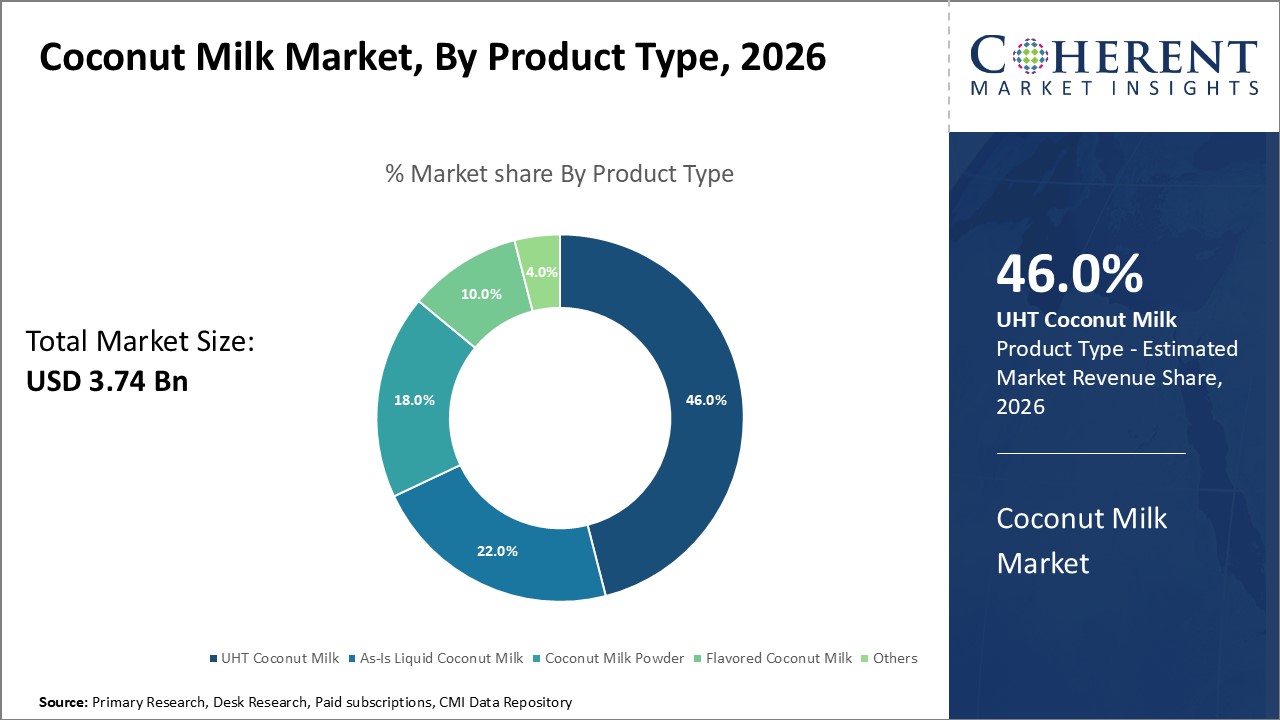
The UHT Coconut Milk segment, holding approximately 45% industry share, continues to leverage extended shelf life and convenience, solidifying its dominance in retail across North America and Europe.
Coconut Milk Powder is the fastest-growing subsegment, benefitting from rising use in ready-to-mix beverages and health supplements.
From a distribution perspective, online retail channels delivered the highest CAGR between 2025 and 2026, driven by changing consumer purchase behaviors.
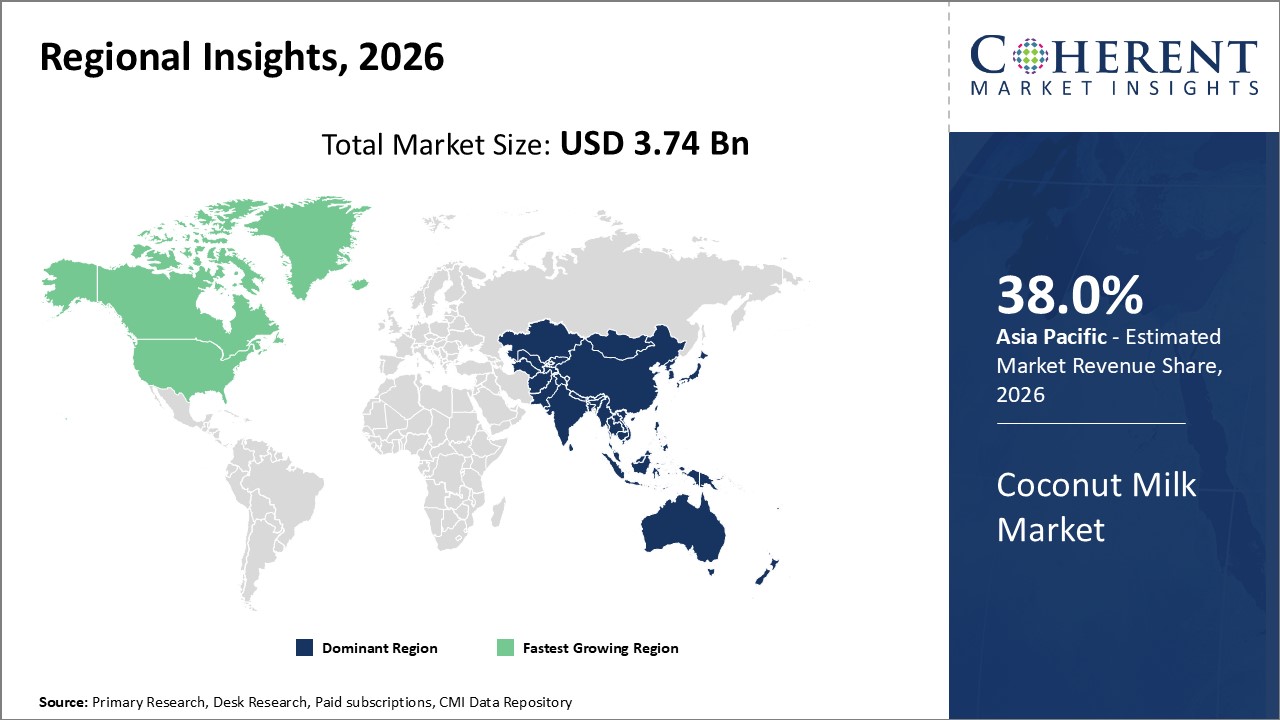
Regionally, Asia Pacific dominates with over 38% market revenue share due to abundant coconut production and growing domestic demand; meanwhile, North America is the fastest growing region, registering an 8.9% CAGR, propelled by consumer health trends and diverse end-use applications.
LatAm shows promise with increasing export volume, especially from Brazil and Mexico.
Coconut Milk Market Segmentation Analysis
Coconut Milk Market Insights, By Product Type
UHT Coconut Milk dominates the market share with approximately 45%, primarily due to its long shelf-life, convenience for retail distribution, and compatibility with various culinary and beverage applications. UHT coconut milk’s stability at ambient temperatures has driven its expansion in foodservice and retail channels, especially in North America and Europe, where demand for shelf-stable dairy alternatives is robust. Coconut Milk Powder is the fastest-growing subsegment, propelled by its ease of transportation, extended storage life, and suitability for formulations in sports nutrition and health supplements.
Coconut Milk Market Insights, By Distribution Channel
Supermarkets & Hypermarkets currently hold a commanding position given their extensive reach and established consumer base, supporting approximately 40% of market revenue. The rapid growth subsegment is Online Retail, which has witnessed a 25% increase in sales between 2023 and 2026, driven by digitalization, broader product variety, and consumer preference for home delivery convenience. Convenience Stores and Specialty Stores address localized and premium market niches, while Others include direct-to-consumer sales and foodservice agreements representing growing but smaller shares.
Coconut Milk Market Insights, By End-Use
Food & Beverage stands as the largest segment, driven by the incorporation of coconut milk in dairy alternatives, ready-to-drink beverages, and culinary preparations; it accounts for over 55% of total market revenue. The Cosmetics & Personal Care sector is the fastest-growing subsegment, propelled by the rising use of coconut milk as a natural moisturizer and ingredient in organic skincare products. Pharmaceuticals utilize coconut milk increasingly for therapeutic nutritional formulations, contributing to incremental market revenue.
Coconut Milk Market Trends
The coconut milk market is increasingly shaped by consumer health consciousness and sustainability demands.
Recent years saw a surging interest in plant-based alternatives from millennial and Gen Z consumers, bolstered by scientific validation of coconut milk’s nutritional benefits. For example, fortified coconut milk products launched in 2026 with added calcium and vitamins have attracted a significant share within wellness-focused diets.
Additionally, advancements in packaging have improved shelf stability, making coconut milk accessible globally outside traditional tropical regions.
Regional emphasis on organic and Fair Trade certifications reflects a broader trend toward corporate social responsibility within the market.
Coconut Milk Market Insights, By Geography
Asia Pacific Coconut Milk Market Analysis and Trends
In the Asia Pacific, dominance in the Coconut Milk market stems from the region’s vast coconut cultivation, strong integration in local cuisine, and rapidly growing processed food industry. Countries like the Philippines and Indonesia contribute significantly to production capacity and export volume, accounting for over 38% of global market share in 2026. The market ecosystem supported by government incentives and investments in agri-processing infrastructure fosters continued leadership. Key companies like Royal Sungei Kulim and Chaokoh play a vital role in maintaining supply chain stability.
North America Coconut Milk Market Analysis and Trends
North America exhibits the fastest growth, with a CAGR close to 8.9%, primarily driven by shifting consumer preferences toward plant-based diets and increasing lactose intolerance prevalence. Advanced retail infrastructure and rising e-commerce sales channels have accelerated market access. Major players, including Vita Coco and Blue Diamond Growers, have expanded product portfolios and strategically engaged with retailers like Walmart and Whole Foods to penetrate mainstream aisles. Robust health awareness campaigns and new applications in cosmetics and pharmaceuticals complement market expansion.
Coconut Milk Market Outlook for Key Countries
USA Coconut Milk Market Analysis and Trends
The USA’s coconut milk market benefits from a high level of consumer health awareness and strong vegan and lactose-free product adoption. Between 2023 and 2026, retail sales of coconut milk increased by more than 20%, driven by innovative flavored variants and fortified products. Leading companies such as Vita Coco have captured significant market share via strategic tie-ups with major supermarkets and online platforms, expanding market accessibility. The country’s diverse foodservice industry also boosts demand, incorporating coconut milk in cafes and restaurants, emphasizing plant-based alternatives.
Philippines Coconut Milk Market Analysis and Trends
The Philippines, as a major coconut producer, not only serves extensive domestic consumption but is a crucial exporter in the coconut milk market. Enhancements in processing capacity and the adoption of quality standards have improved product competitiveness internationally. Filipino companies like Chaokoh and Royal Sungei Kulim have significantly increased coconut milk production capacity in 2025, contributing to export growth of over 13% compared to previous years. Government support for agro-industrial development further solidifies this market’s regional and global significance.
Analyst Opinion
Production capacity expansion has been a pivotal supply-side indicator driving the coconut milk market’s growth, with major manufacturing hubs in Southeast Asia increasing output by an average of 13% in 2025 to meet rising global demand. For example, Indonesia and the Philippines have scaled up processing facilities, which helped boost export volumes by nearly 16% year-on-year.
The demand side has been primarily propelled by the foodservice industry and retail sectors, where coconut milk in plant-based products has surged. In 2026, retail sales of coconut milk-based beverages and dairy substitutes revealed an increase of 18% across North America and Europe, underscoring their mainstream acceptance.
Pricing trends reveal a steady premium for organic and sustainably sourced coconut milk variants, which have contributed to increased market share among health-conscious consumers. The average retail price for organic coconut milk rose by 11% in 2025 compared to 2023, demonstrating consumers’ willingness to invest in quality products.
Micro-indicators like packaging innovation and fortified products are emerging as critical growth drivers. In 2026, launches of fortified coconut milk enriched with vitamins and minerals grew by 23%, capturing consumer segments focused on nutritional benefits beyond basic dairy alternatives. These product advancements have expanded use cases in both infant nutrition and therapeutic food segments.
- Current Industry Events of 2026
- Market Size Estimation
- Regional Breakdown
- Competitive Landscape
- Customer Intelligence
- Segmental Analysis
- Pricing Analysis
- Key Market Drivers, Challenges & Future Trends
- Customized Insights Section
Market Scope
| Report Coverage | Details | ||
|---|---|---|---|
| Base Year: | 2025 | Market Size in 2026: | USD 3.74 billion |
| Historical Data for: | 2020 To 2024 | Forecast Period: | 2026 To 2033 |
| Forecast Period 2026 to 2033 CAGR: | 8.3% | 2033 Value Projection: | USD 6.53 billion |
| Geographies covered: |
| ||
| Segments covered: |
| ||
| Companies covered: | Chaokoh, Aroy-D, Goya Foods, Inc., Vita Coco, The Kraft Heinz Company, Blue Diamond Growers, Native Forest Organic, Harmless Harvest, So Delicious Dairy Free, Vitasoy International Holdings Ltd. | ||
| Growth Drivers: |
| ||
Coconut Milk Market Growth Factors
Sustained growth in plant-based diets is a primary driver impacting coconut milk’s rising adoption, with vegan and flexitarian consumers accounting for over 28% growth in retail purchases during 2025 globally. Additionally, expanding use in the pharmaceutical industry for medicinal and therapeutic formulations has opened new revenue streams, evidenced by a 14% increase in pharmaceutical-grade coconut milk demand in the Asia Pacific last year. Rising lactose intolerance cases worldwide, especially in North America and Europe, are shifting consumer preference from traditional dairy, contributing strongly to market expansion. Finally, innovative packaging solutions such as Tetra Pak and aseptic cartons have enhanced product shelf-life and convenience, directly driving higher market penetration in emerging urban regions.
Coconut Milk Market Development
In August 2023, Axelum Resources Corp. launched its Fiesta Coconut Milk Powder in flexible retail pouches, aimed at strengthening its branded consumer foods segment in the Philippines and beyond. The product is described as “a fine, creamy white powder made from freshly-squeezed coconut milk blended with natural stabilizers,” and is positioned as both a versatile culinary ingredient (for curries, baked goods, dairy-substitute uses) and a “better-for-you” indulgence aligned with plant-based and health-active lifestyle trends. The new format and brand packaging enable broader retail distribution via major supermarkets and e-commerce (Shopee, Lazada) and reflect Axelum’s strategy to shift its mix toward higher-margin consumer-brand products.
In April 2023, Atlante introduced its “Berry Sanders” Organic Coconut Milk made from Thai-sourced coconuts, marking its entry into the premium organic coconut milk market segment. The product is marketed as vegan, gluten-free, lactose-free, and free of added sugar, catering to vegetarian and wellness-oriented consumers in Italy and Europe. By sourcing organic coconuts from Thailand and integrating them into its import/distribution platform of ethnic-cuisine and specialty foods, Atlante seeks to capitalize on the growth of plant-based dairy alternatives and the rising consumer interest in premium, globally-sourced ingredients.
Key Players
Leading Companies of the Market
Chaokoh
Aroy-D
Goya Foods, Inc.
Vita Coco
The Kraft Heinz Company
Blue Diamond Growers
Native Forest Organic
Harmless Harvest
So Delicious Dairy Free
Vitasoy International Holdings Ltd.
Key competitive strategies adopted by market players include aggressive product innovation, focusing on organic, non-GMO, and fortified coconut milk versions. For instance, Chaokoh recently introduced a line of fortified coconut milk targeting the infant nutrition sector, resulting in a 10% market revenue uplift in 2026. Similarly, Vita Coco expanded its distribution footprint in North America and Europe by partnering with prominent retail chains, which boosted their market share by approximately 7% in Q2 2026.
Coconut Milk Market Future Outlook
Future coconut milk product development will emphasize functionality, flavor diversity, and environmental responsibility. Innovations in enzymatic processing and emulsifier technologies will enhance texture and stability for use in coffee, smoothies, and culinary recipes. Fortified variants enriched with calcium, vitamins, and plant proteins will target the health-conscious consumer base. Cold-pressed and minimally processed lines will appeal to clean-label markets, while biodegradable and recyclable packaging will support sustainability goals. Integration with e-commerce and D2C health food platforms will allow greater accessibility and brand differentiation in the competitive plant-based beverage landscape.
Coconut Milk Market Historical Analysis
Coconut milk evolved from a traditional culinary ingredient to a globally popular plant-based alternative to dairy. Early products were primarily canned with limited processing, but technological improvements in extraction, emulsification, and sterilization expanded their shelf life and texture consistency. Manufacturers introduced powdered and UHT-packaged variants suitable for diverse applications ranging from food preparation to beverages and cosmetics. The rise of vegan and lactose-free diets further boosted demand, prompting the launch of organic, preservative-free, and fortified coconut milk products. Production facilities began incorporating sustainable coconut sourcing and environmentally friendly packaging to meet ethical consumer standards.
Sources
Primary Research Interviews:
Food Scientists
Beverage Formulation Experts
Plant-Based Product Manufacturers
Retail Category Managers
Databases:
FAO Food Balance Sheets
GlobalData Plant-Based Food Reports
USDA Food Product Data
Statista Dairy Alternatives Database
Magazines:
Food Navigator
Beverage Daily
Dairy Industries International
Plant-Based World Journal
Journals:
Food Hydrocolloids
International Journal of Food Science & Technology
Journal of Dairy Science
LWT - Food Science and Technology
Newspapers:
The Hindu (Food Business)
The Guardian (Sustainability)
The Wall Street Journal (Consumer Goods)
Business Standard (Agri-Food)
Associations:
Plant-Based Foods Association (PBFA)
Food and Agriculture Organization (FAO)
International Coconut Community (ICC)
Institute of Food Technologists (IFT)
Get access to 250+ pages report
Every segment, forecast, competitor profile and data table behind the analysis above — available for instant download.
- ESOMAR Member
- ISO 9001:2015 Certified
- D-U-N-S Registered
- GDPR & CCPA Compliant
Missing comfort of reading report in your local language? Find your preferred language:
Transform your Strategy with Exclusive Trending Reports
Frequently Asked Questions
Dominant market companies include Chaokoh, Vita Coco, Aroy-D, and Goya Foods, which together hold the majority share through strong product portfolios and strategic expansions.
The Coconut Milk market is expected to grow from USD 3.74 billion in 2026 to USD 6.53 billion by 2033, reflecting sustained demand and new market applications.
The Food & Beverage industry leads growth, buoyed by rising plant-based dietary trends, while cosmetics and pharmaceuticals represent emerging lucrative verticals.
Emerging trends include increased organic and fortified product launches, expansion of online retail penetration, and intensified focus on sustainable sourcing.
Market competition is intense with players focusing on innovation, branding, and distribution. Challenges include supply chain disruptions and pricing pressures on organic raw materials.
Strategies center around diversification of product offerings, strategic retail partnerships, and investment in premium, certified organic product lines to capture high-value segments.