

Global Dietary Fibers Market Analysis & Forecast: 2026-2033
Global dietary fibers market size is expected to reach USD 16.33 Bn by 2033, from USD 8.65 Bn in 2026, exhibiting a compound annual growth rate (CAGR) of 9.5% during the forecast period.
Key Takeaways
- On the basis of Application, Functional Foods and Beverages division is poised to hold around 37.4% shares in 2026.
- Regionally, Asia Pacific is projected to hold dominating position with 43% shares in the global dietary fiber market in 2026.
Market Overview
Dietary fibers are ingredients present in the food products that encourage waste movement inside the body. The consumption of dietary fibers-based food products also reduces the risk of chronic diseases such as diabetes and cardiovascular disease by lowering the level of blood sugar in the body. Moreover, they also support weight management.
Current Events and their Impact on the Dietary Fibers Market
Current Event | Description and its Impact |
Supply Chain Disruptions and Agricultural Raw Material Volatility |
|
Technological Advancements in Fiber Extraction and Processing |
|
End User Feedback and Unmet Demand - Global Dietary Fibers Market
End User Feedback - Global Dietary Fibers Market
- Consumers value dietary fibers for improving digestive health and overall wellness.
- Positive response towards fibers that help reduce sugar and calorie content in products.
- Preference for fibers that do not negatively affect taste or texture.
- Interest in clean-label, natural, and allergen-free fiber ingredients.
Unmet Demand - Global Dietary Fibers Market
- Need for fibers with better solubility and minimal impact on product texture.
- Lack of customizable fiber solutions tailored to specific food applications.
- Limited availability of sustainably and ethically sourced dietary fibers.
- Current Industry Events of 2026
- Market Size Estimation
- Regional Breakdown
- Competitive Landscape
- Customer Intelligence
- Segmental Analysis
- Pricing Analysis
- Key Market Drivers, Challenges & Future Trends
- Customized Insights Section
Segmental Insights
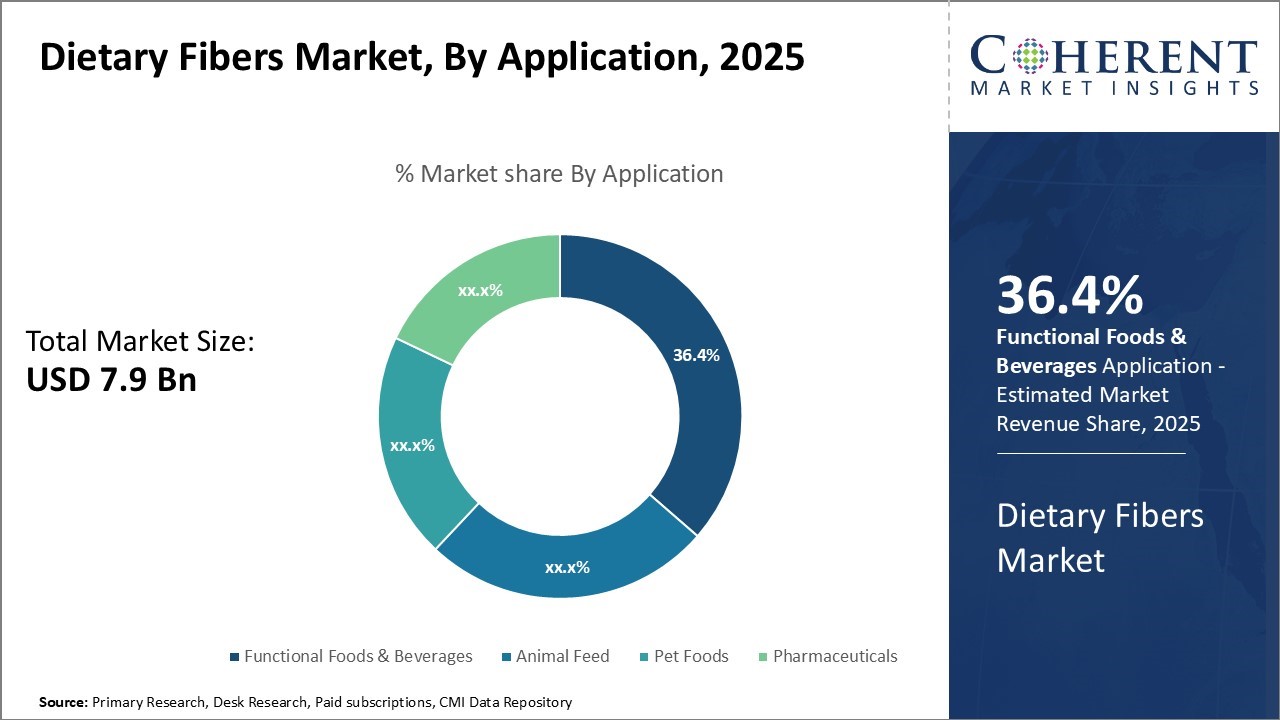
Global Dietary Fibers Market Insights, by Application
Based on application, functional food and beverages segment is projected to hold dominating position in the global dietary fiber market, owing to increasing consumer demand for healthier options, growing awareness of dietary fiber benefits, and the rise in product innovation within this sector.
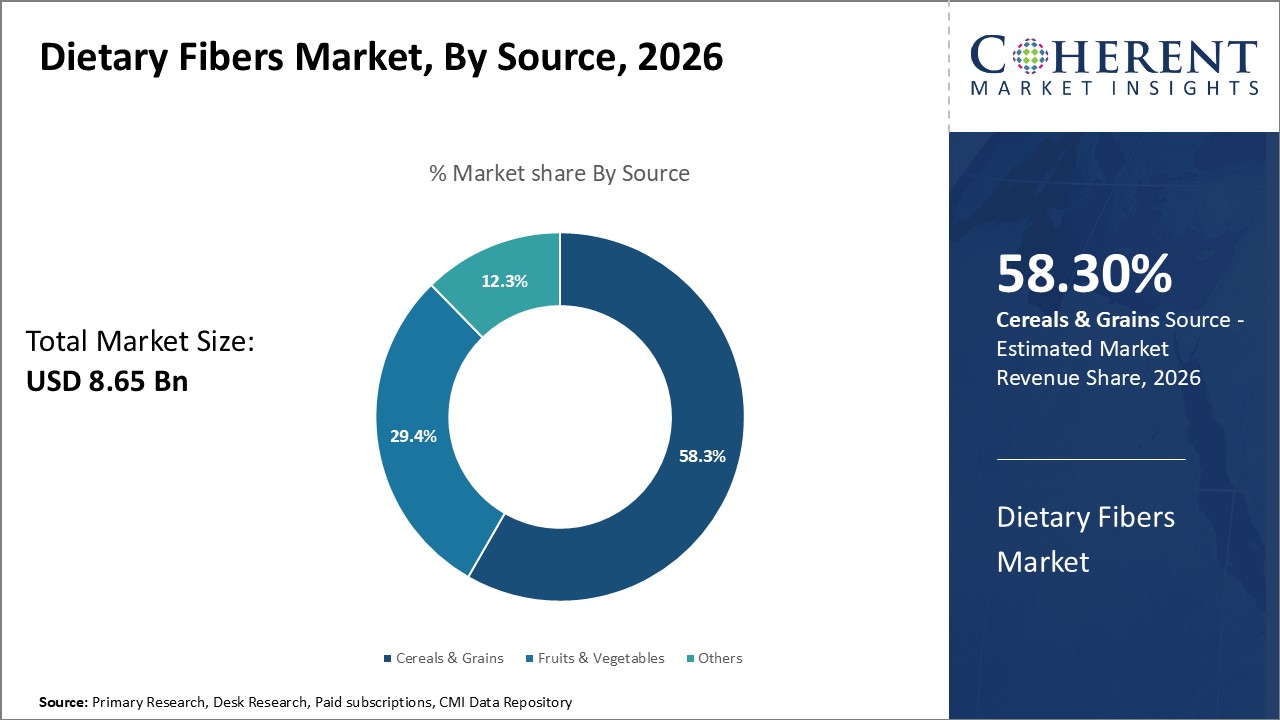
Global Dietary Fibers Market Insights, by Source
Based on source, cereals and grains segment is projected to hold dominating position in the global dietary fiber market, owing to their high fiber content, widespread availability, and increasing consumer preference for whole-grain and natural fiber-rich foods.
For instance, in October 2026, Nestlé Malaysia launched a new addition to its hot cereal range: Nestum 5 Grains. This latest offering blended the familiar taste and aroma of Nestum with a wholesome mix of grains and was available in two variants—Quinoa & Black Rice and Oats & Red Rice. Both options were rich in protein and iron and provided a good source of dietary fibre.
Global Dietary Fibers Market Insights, by Type
Based on type, soluble dietary fibers segment is projected to hold dominating position in the global dietary fiber market, owing to their wide range of health benefits, including improved digestion, blood sugar regulation, and cholesterol reduction, as well as their versatile applications in food and beverage products.
Regional Insights
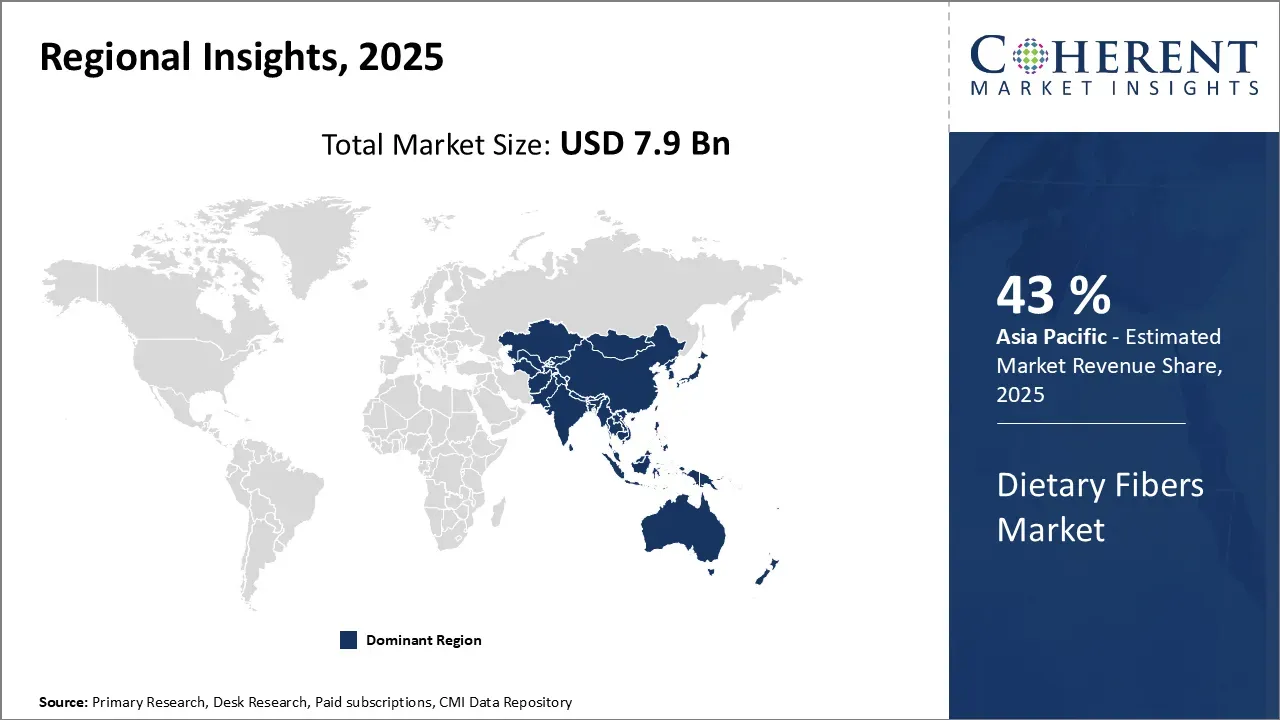
Asia Pacific Dietary Fibers Market Analysis and Trends
Asia Pacific held the largest dietary fibers market share and accounted for over 43% share of the global dietary fibers market in 2026. Countries such as China, Indonesia, and Japan are expected to be the leading producers of foods and beverages during the next few years. Promising trends in the food & beverage industry in the Asia Pacific region are estimated to spur the demand for dietary fibers during the forecast years.
For instance, in July 2023, CP Kelco unveiled NUTRAVA® Citrus Fiber to the Australian market at the FoodPro 2023 event held in Melbourne.
North America Dietary Fibers Market Analysis and Trends
North America accounted for 24% of the market share in 2026. North America was the largest market for immunity-boosting and health-enhancing products in 2026. Nutritional care has witnessed a major evolution in the region, with consumers becoming highly aware of packaged food products' ingredients. The new trending diets and lifestyles adopted by the people in the North America region have rendered the consumption of dietary fibers highly significant.
For instance, Ingredion introduced Novelose 3490 was a low FODMAP dietary fiber that gave bakers and snack makers the ability to develop high-fiber products supporting digestive wellness, according to Ingredion, Inc., which launched the fibers in the U.S.
Europe Dietary Fibers Market Analysis and Trends
Europe accounted for 18% of the dietary fibers market demand in 2026. Increased online product delivery services across developed countries in Western Europe including Italy, the U.K., Germany, France, and Spain will positively influence the market growth in the region.
For instance, American agribusiness Cargill dedicated $35 million to launch a new line of soluble fibers in Europe, which were used to reduce sugar by 30% and lower calories in confectionery, bakery goods, fillings, cereals, ice cream, and dairy products, as well as to fortify foods with additional fiber.
Dietary Fiber Market – Dominating Countries
The U.S. Dietary Fiber Market Trends
The U.S. is projected to dominate the global dietary fiber market demand during the forecast period, owing to increasing consumer demand for health and wellness products, growing awareness of dietary fiber benefits, and the presence of major food and beverage companies investing in innovative fiber-enriched products.
For instance, Roquette launched NUTRIOSE® soluble fiber obtained from yellow peas in the USA. Plant-based foods had become more mainstream, and the desire to eat more of them was a driving factor in consumer behavior.
China Dietary Fiber Market Trends
China is projected to dominate the global dietary fiber market during the forecast period, due to its large population, increasing health awareness, growing demand for functional foods, and strong government support for the food and nutrition sectors.
For instance, Tate & Lyle PLC, a leading global provider of food and beverage ingredients and solutions, announced that it had signed an agreement to acquire Quantum Hi-Tech (Guangdong) Biological Co., Ltd (Quantum), a leading prebiotic dietary fibre business in China, from ChemPartner Pharmatech Co., Ltd (ChemPartner) for a total consideration of USD 237 Mn.
Analyst Opinion
Global dietary fibers market is expected to have tremendous growth potential over the next decade driven by increasing health consciousness among consumers globally. As people become more aware about the various health benefits of a fiber-rich diet such as maintaining digestive health, managing weight, and reducing cholesterol levels, the demand for dietary fiber ingredients from food and beverage manufacturers is expected to surge. Functional foods with added dietary fibers will be in high demand. The market will further get support from rising incidences of lifestyle diseases forcing people to make dietary changes.
However, the lack of consumer education about suitable dosage and different types of fibers can restrain the market to an extent. Finding innovative ways to mask the strong flavors that are associated with some fiber types will also be a challenge for companies. The Asia Pacific region will dominate the market and remain the fastest growing as developing countries like India and China continue to emerge as major consumer markets boosted by changing dietary habits and rising affluence.
Speak to the analyst
Want personalized insights?
Take the findings above to one of our principal consultants, or have the report rebuilt around the segments, geographies and competitors you actually track.
Recent Developments
- In January 2023, Fiberstar, Inc., the leader of innovative citrus fibers launched a line of new organic citrus fibers – Citri-Fi® 400 series. These new citrus fibers are in response to the increasing demand for natural, sustainable and organic food ingredients.
- In May 2023, Nestlé India has launched Resource Fiber Choice, a gut health product containing a prebiotic dietary fiber that is gentle on the body and offers a daily dose of immune-nutrients
Market Report Scope
Dietary Fibers Market Report Coverage
| Report Coverage | Details | ||
|---|---|---|---|
| Base Year: | 2025 | Market Size in 2026: | USD 8.65 Bn |
| Historical Data for: | 2020 To 2024 | Forecast Period: | 2026 To 2033 |
| Forecast Period 2026 to 2033 CAGR: | 9.5% | 2033 Value Projection: | USD 16.33 Bn |
| Geographies covered: |
| ||
| Segments covered: |
| ||
| Companies covered: | Cargill, Incorporated, Archer Daniels Midland, and Ingredion Incorporated, E. I. du Pont de Nemours and Company, Tate & Lyle PLC, SunOpta Inc., Suedzucker AG Company, Grain Processing Corporation, J. RETTENMAIER & SÖHNE GmbH & Co KG, and Roquette Frères S.A | ||
| Growth Drivers: |
| ||
| Restraints & Challenges: |
| ||
Market Drivers
- Increasing health awareness: Increasing awareness about the importance of a healthy diet and lifestyle is one of the key factors driving the growth of the market. More consumers are recognizing that obtaining adequate fiber intake through diet is essential for maintaining overall health and preventing illnesses. High fiber foods are known to reduce the risk of heart diseases, diabetes, bowel disorders, and other chronic diseases. Many national health organizations recommend consuming at least 25-30 grams of fiber per day.
- Wide application in food and beverages industry: Global dietary fibers market is witnessing significant growth driven by its wide application in the food and beverages industry. Dietary fibers find extensive usage in various food products to enhance texture, increase shelf-life, and offer various health benefits. Many national and international food regulators also recommend adequate intake of dietary fibers for a healthy diet. Food manufacturers are increasingly utilizing various types of soluble and insoluble fibers to develop healthier food options for consumers.
- Rising incidence of lifestyle diseases: Growing prevalence of lifestyle diseases such as obesity, cardiovascular diseases, and diabetes across the globe has significantly propelled the demand for dietary fibers in 2022. These chronic health conditions have been associated with modern sedentary lifestyles and unhealthy dietary habits which lack essential fiber intake.
Market Opportunities
- Emerging markets in developing countries: Emerging markets in developing countries present a massive opportunity for market growth. These developing nations are experiencing rapid economic development and urbanization, thereby leading to significant changes in consumer lifestyles and diets. People in these countries have more discretionary income and there is a growing middle class with rising health consciousness. This has increased the demand for packaged food products that provide added health and nutrition. Dietary fibers play an important role in maintaining overall wellness and preventing diseases.
- Innovation of new functional food products: The innovation of new functional food products presents tremendous opportunities in the market. In recent times, consumers have developed greater awareness about the importance of intestinal health and balanced diet. There is an increasing understanding among people that adequate fiber intake helps maintain digestive regularity and reduces risks of serious issues like heart diseases and diabetes.
- Growth in food supplements sector: Global dietary fibers market has tremendous potential for growth driven by rising awareness about the health benefits of fiber-rich diets. The consumption of dietary fibers through food supplements is emerging as an important trend. Dietary fibers play a key role in maintaining gastrointestinal and cardiovascular health by regulating bowel movements, lowering cholesterol, and managing blood sugar levels.
Market Trends
- Preference for clean label and natural ingredients: The clean label and natural ingredients trend has significantly influenced the market in recent years. Consumers have become increasingly conscious about the ingredients in their food and are preferring products with easy-to-understand labels highlighting only natural constituents. This preference for simplicity and transparency in food labeling is driving the demand for naturally-sourced dietary fibers that do not involve artificial processing and additives.
- Rising demand for gluten free and sugar free products: The rising demand for gluten free and sugar free products is having a significant influence on the global dietary fibers market. More and more people are opting for healthier food options that help to manage their weight and promote overall wellness. This has increased the demand for fiber-rich foods across the world.
Market Segmentation
- Source Insights (Revenue, USD Bn, 2021 - 2033)
- Cereals & Grains
- Wheat
- Rice
- Bran
- Others
- Fruits & Vegetables
- Apple
- Others
- Others
- Cereals & Grains
- Type Insights (Revenue, USD Bn, 2021 - 2033)
- Soluble Dietary Fibers
- Insulin
- Polydextrose
- Pectin
- Beta-Glucan
- Others
- Insoluble Dietary Fibers
- Cellulose
- Hemicellulose
- Chitosan
- Chitin
- Lignin
- Resistant Starch
- Others
- Soluble Dietary Fibers
- Application Insights (Revenue, USD Bn, 2021 - 2033)
- Functional Food & Beverages
- Animal Feed
- Pet Feed
- Pharmaceuticals
- Regional Insights (Revenue, USD Bn, 2021 - 2033)
- North America
- U.S.
- Canada
- Latin America
- Brazil
- Argentina
- Mexico
- Rest of Latin America
- Europe
- Germany
- U.K.
- Spain
- France
- Italy
- Russia
- Rest of Europe
- Asia Pacific
- China
- India
- Japan
- Australia
- South Korea
- ASEAN
- Rest of Asia Pacific
- Middle East
- GCC Countries
- Israel
- Rest of Middle East
- Africa
- South Africa
- North Africa
- Central Africa
- North America
- Top Companies in this Market
- Cargill, Incorporated
- Archer Daniels Midland
- Ingredion Incorporated
- E.I. du Pont de Nemours and Company
- Tate & Lyle PLC
- SunOpta Inc.
- Suedzucker AG Company
- Grain Processing Corporation
- RETTENMAIER & SÖHNE GmbH & Co KG
- Roquette Freres S.A
Sources
Primary Research Interviews
- Online dietary fiber manufacturers and suppliers
- E-commerce platform managers specializing in health products
- Nutritionists and dietitians recommending fiber supplements
- Health-conscious consumers purchasing dietary fibers online
- Others
Databases
- Global Trade Atlas
- Euromonitor International
- IBISWorld Industry Reports
- Others
Magazines
- Nutraceuticals World
- Food Business Magazine
- Natural Products Insider
- Functional Foods & Nutraceuticals
- Others
Journals
- Journal of Functional Foods
- Food Hydrocolloids
- International Journal of Food Sciences and Nutrition
- Others
Newspapers
- Financial Times
- The Wall Street Journal
- Reuters Health News
- Food Navigator
- Others
Associations
- International Food Information Council (IFIC)
- Fiber Box Association
- Natural Products Association (NPA)
- Council for Responsible Nutrition (CRN)
- Others
Public Domain Sources
- FDA (Food and Drug Administration) guidelines
- WHO (World Health Organization) nutrition reports
- USDA National Nutrient Database
- European Food Safety Authority (EFSA) publications
- Others
Proprietary Elements
- CMI Data Analytics Tool
- Proprietary CMI Existing Repository of information for last 8 years
*Definition: Dietary fibers are a type of carbohydrate found in plant-based foods such as fruits, vegetables, whole grains, legumes, nuts, and seeds. They are defined as the edible parts of plants or analogous carbohydrates that are resistant to digestion and absorption in the human small intestine, usually with complete or partial fermentation in the large intestine. The term includes polysaccharides, oligosaccharides, and lignins. There are two main types of dietary fibers: soluble and insoluble. Soluble fibers dissolve in water and form a gel-like substance, while insoluble fibers do not dissolve in water and pass through the digestive system largely intact. Dietary fibers have been associated with numerous health benefits, including improved digestive health, lower cholesterol levels, and reduced risk of heart disease, diabetes, and certain types of cancer.
Get access to 250+ pages report
Every segment, forecast, competitor profile and data table behind the analysis above — available for instant download.
- ESOMAR Member
- ISO 9001:2015 Certified
- D-U-N-S Registered
- GDPR & CCPA Compliant
Missing comfort of reading report in your local language? Find your preferred language:
Transform your Strategy with Exclusive Trending Reports
Frequently Asked Questions
The dietary fibers market is estimated to be valued at USD 8.65 Bn in 2026, and is expected to reach USD 16.33 Bn by 2033.
High prices of dietary fibers and stringent international quality standards and regulations are the key factors hampering the growth of the global hot melt adhesive market.
Increasing health awareness, wide application in food and beverages industry, and rising incidence of lifestyle diseases are the major factors driving the global dietary fibers market growth.
The functional foods & beverages is the leading application segment in the global dietary fibers market.
The major players operating in the global dietary fibers market are Cargill Incorporated, Archer Daniels Midland, and Ingredion Incorporated, E. I. du Pont de Nemours and Company, Tate & Lyle PLC, SunOpta Inc., Suedzucker AG Company, Grain Processing Corporation, J. RETTENMAIER & SÖHNE GmbH & Co KG, and Roquette Frères S.A.
Asia Pacific will lead the global dietary fibers market.
The CAGR of the Dietary Fibers Market is projected to be 9.5% from 2026 to 2033.