

Phytosterols Market Size and Forecast — 2026-2033
The Global Phytosterols Market size is estimated to be valued at USD 1,038.35 million in 2026 and is expected to reach USD 1,935.02 billion by 2033, exhibiting a compound annual growth rate (CAGR) of 9.3% from 2026 to 2033.
Overview
Phytosterols are plant-derived compounds structurally similar to cholesterol, used in food, dietary supplements, and pharmaceuticals to reduce blood cholesterol levels and support cardiovascular health. They are primarily extracted from vegetable oils, nuts, and seeds, and incorporated into products such as margarines, yogurts, and nutrition bars. In addition to functional foods, phytosterols are used in cosmetics for their anti-inflammatory and skin-repairing properties.
Growing health awareness and increasing demand for fortified foods and nutraceuticals are driving market expansion, with ongoing research focused on improving bioavailability and formulation stability.
Key Takeaways
Functional Foods and Beverages dominate the market segments, constituting over 41% market share due to rising consumer inclination toward lifestyle nutrition.
Vegetable Oils remain the primary source, accounting for nearly half of the market size, supported by cost-effective extraction and supply chain stability.
In regional terms, Europe commands the largest industry share backed by regulatory support and strong health awareness, while Asia Pacific exhibits the fastest market growth, driven by expanding healthcare infrastructure and consumer spending.
Phytosterols Market Segmentation Analysis
Phytosterols Market Insights, By Product Type
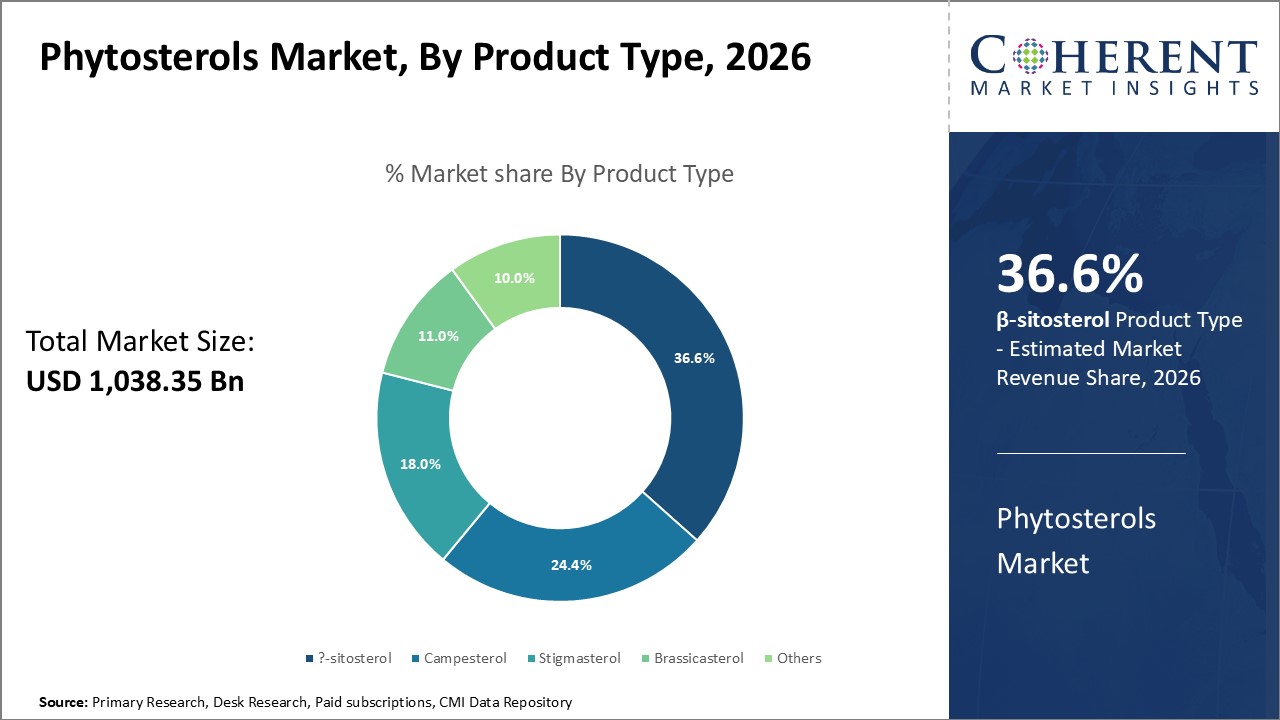
In terms of Product Type, β-sitosterol dominates with a significant market share of 36.6%. This dominance is attributed to its widespread prevalence in vegetable oil sources and its superior efficacy in lowering LDL cholesterol, as evidenced by clinical trials conducted in 2025. The fastest-growing subsegment is Campesterol, driven by innovative extraction techniques that enhance its purity and functionality, making it an increasingly preferred ingredient in dietary supplements.
Phytosterols Market Insights, By Application
Functional Foods and Beverages occupy the dominant share. This dominance stems from elevated consumer health awareness and successful health claim approvals, enabling product innovation and broadened market scope. The Dietary Supplements subsegment is the fastest-growing, fueled by increasing consumer preference for easy-to-consume formats and rising chronic disease awareness.
Phytosterols Market Insights, By Source-Based
Vegetable Oils dominate with the largest share of 48.3% owing to their abundant availability, cost-effective processing, and consistent quality, integral to meeting market demand. Nuts and Seeds represent the fastest-growing source segment, credited to their increasing popularity in organic and clean-label product formulations, particularly in Asia Pacific markets, expanding their nutraceutical footprint. Cereals and Legumes offer alternative extraction avenues, albeit at a smaller scale, with emerging research focused on enhancing yields and extraction efficiency.
Phytosterols Market Trends
The sustainability agenda has accelerated innovation in extraction technologies, with enzyme-based approaches reducing solvent use and enhancing purity.
Europe’s regulatory environment provides a conducive ecosystem for growth, where approval for heart-health claims aids market penetration.
Personal care applications introduce additional revenue streams, showcasing an adaptive and diversified market landscape.
Phytosterols Market Insights, By Geography
Europe Phytosterols Market Analysis and Trends
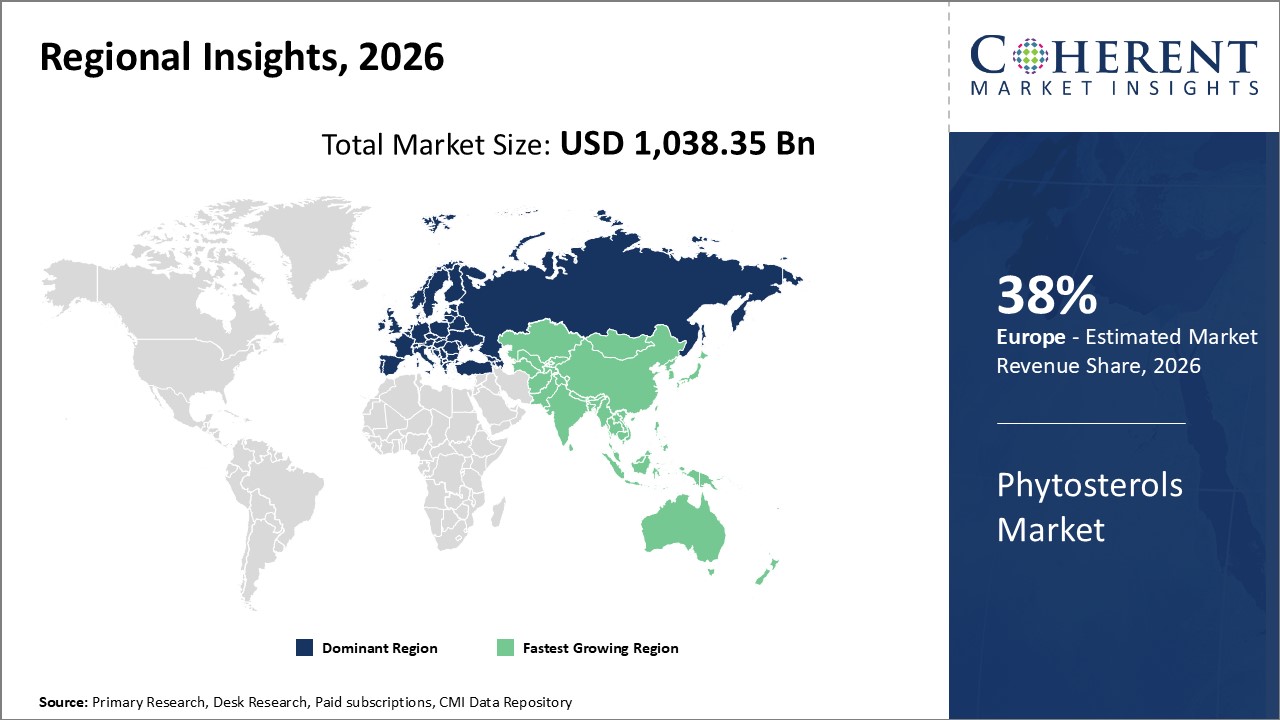
In Europe, the phytosterols market holds a commanding market share of approximately 38%, driven by stringent health regulations, strong consumer awareness, and advanced functional food industry infrastructure. Countries like Germany and France are pivotal in product innovation and commercial production. The region benefits from comprehensive regulatory frameworks that endorse health claims on phytosterols, providing a stable growth environment.
Asia Pacific Phytosterols Market Analysis and Trends
Meanwhile, Asia Pacific exhibits the fastest growth at a CAGR of nearly 11%, propelled by expanding middle-class populations, rising disposable incomes, and increasing health-consciousness. Markets such as China and India are witnessing rapid adoption of phytosterol-enriched products in both the pharmaceutical and dietary supplement sectors. Favorable government policies promoting preventive healthcare and local manufacturing contribute significantly to this growth trajectory.
Phytosterols Market Outlook for Key Countries
USA Phytosterols Market Analysis and Trends
The U.S. market is characterized by robust demand for phytosterol-enriched functional foods and dietary supplements, boosted by increasing cardiovascular disease prevalence. In 2025, phytosterol product launches in the U.S. functional food sector grew by over 17%, prominently led by Archer Daniels Midland Company and Cargill. Regulatory approvals by the FDA supporting heart-health claims have been instrumental in driving market revenue and market share gains. The country’s vibrant health and wellness ecosystem and extensive distribution channels ensure sustainable market expansion.
India Phytosterols Market Analysis and Trends
India’s phytosterols market is witnessing exponential growth fueled by rising healthcare expenditure and consumer awareness around natural cholesterol management alternatives. With government initiatives promoting dietary supplement adoption and improvements in supply chain logistics, the market has grown approximately 14% annually since 2023. Key market players such as Wilmar International Limited and local manufacturers are focusing on regional partnerships and product localization, enhancing accessibility. The burgeoning urban population’s preference for plant-based nutraceuticals has further expanded market scope and revenue potential.
Analyst Opinion
Increasing production capacity combined with process innovation has fueled phytosterols’ supply-side dynamics. For instance, advancements in enzymatic extraction methods in 2025 have boosted global phytosterol output by approximately 13%, enhancing market revenue and market share. This augmented production capacity alleviates supply constraints amid rising demand in dietary supplements and fortified food sectors.
Demand-side indicators highlight a notable surge in imports in the Asia Pacific, especially in India and China, accounting for almost 27% growth in phytosterols imports during 2023, driven predominantly by the functional food and pharmaceutical industries. These demand dynamics have contributed significantly to shaping the market size and trends globally.
Micro-indicators emphasize niche applications such as phytosterol-enriched cosmetics and topical agents, registering a 16% year-on-year growth in 2025. This micro-use case expands the overall market scope and reveals emerging opportunities previously underexplored within the market.
Price stability observed in 2025, despite raw material cost pressures, has encouraged consistent business growth among mid-tier market companies, with pricing strategies pivoting toward value-based models catering to end-user price sensitivity. This stable pricing environment has preserved market dynamics by balancing affordability and profitability.
- Current Industry Events of 2026
- Market Size Estimation
- Regional Breakdown
- Competitive Landscape
- Customer Intelligence
- Segmental Analysis
- Pricing Analysis
- Key Market Drivers, Challenges & Future Trends
- Customized Insights Section
Market Scope
| Report Coverage | Details | ||
|---|---|---|---|
| Base Year: | 2025 | Market Size in 2026: | USD 1,038.35 million |
| Historical Data for: | 2020 To 2024 | Forecast Period: | 2026 To 2033 |
| Forecast Period 2026 to 2033 CAGR: | 9.3% | 2033 Value Projection: | USD 1,935.02 billion |
| Geographies covered: |
| ||
| Segments covered: |
| ||
| Companies covered: | Archer Daniels Midland Company, BASF SE, Cargill, Incorporated, Koninklijke DSM N.V., Gelest, Inc., Nenter & Co. GmbH, Wilmar International Limited, Lipoid GmbH, Tokyo Chemical Industry Co., Ltd., Roquette Frères, Akzo Nobel N.V. | ||
| Growth Drivers: |
| ||
Phytosterols Market Growth Factors
The rising prevalence of cardiovascular diseases has accelerated demand for cholesterol-lowering ingredients, with phytosterols acknowledged for their efficacy, supported by clinical evidence published in 2023 by the American Heart Association.
Regulatory approvals expanding health claims related to phytosterols in nutraceuticals across Europe and the Asia-Pacific regions have significantly widened market scope and consumer acceptance.
Increasing consumer preference for plant-based and natural bioactive compounds in dietary supplements and functional foods is driving industry trends and business growth globally.
Technological advancements improving extraction yields and product purity have driven cost reductions and improved product availability, stimulating market growth despite raw material fluctuations.
Phytosterols Market Development
In 25 July 2026, the European Commission adopted Regulation (EU) 2026/1509, amending the specifications for phytosterols/phytostanols as a novel food. The change increases the allowable maximum level of “other sterols/stanols” from <3.0% to <7.0% for extracts derived from plants such as sunflower. This update reflects the natural composition of certain sources and doesn’t affect safety, per assessments by EFSA.
In October 2025, DuPont (now part of IFF's Health & Biosciences division) introduced a next-generation phytosterol powder designed for improved dispersion in liquid applications. The new ingredient is an advanced form of the company's existing VEGAPURE plant sterols, which are primarily used to target and reduce LDL ("bad") cholesterol.
Key Players
Leading companies of the market:
Archer Daniels Midland Company
BASF SE
Koninklijke DSM N.V.
Gelest, Inc.
Nenter & Co. GmbH
Wilmar International Limited
Lipoid GmbH
Tokyo Chemical Industry Co., Ltd.
Roquette Frères
Akzo Nobel N.V.
Leading market companies have adopted product innovation and capacity expansion as core competitive strategies. For example, BASF SE’s deployment of bioengineering technologies in 2025 enhanced its phytosterol extraction efficiency by 19%, positively impacting its market share. Meanwhile, Archer Daniels Midland Company successfully fortified its portfolio by launching blends tailored for functional foods, resulting in a 11% surge in market revenue in North America.
Phytosterols Market Future Outlook
In the coming years, the phytosterols market is expected to experience strong growth as consumer preference shifts toward preventive healthcare and plant-based nutrition. Innovations in microencapsulation and emulsification technologies will improve absorption and stability, expanding their application beyond food to pharmaceuticals and cosmetics. Manufacturers are likely to emphasize clean-label and non-GMO product formulations, appealing to health-conscious consumers. Additionally, expanding awareness of functional foods in emerging economies and increasing investments in food fortification programs will boost market penetration. With continuous research exploring phytosterols’ potential benefits for immune support, anti-inflammatory effects, and metabolic health, the market is poised for diversification and technological advancement in product formulation and delivery.
Phytosterols Market Historical Analysis
The phytosterols market has evolved from a niche segment within the nutritional ingredients industry into a vital component of the global functional foods and nutraceuticals market. Initially, phytosterols were primarily used in dietary supplements for their cholesterol-lowering properties, supported by clinical studies and regulatory approvals from health agencies worldwide. Over the years, rising awareness of cardiovascular diseases and the importance of maintaining healthy cholesterol levels led to the integration of phytosterols into everyday food products such as fortified margarine, yogurts, and milk. The early 2000s marked a significant turning point as consumers increasingly sought natural alternatives to statins and other synthetic cholesterol-lowering agents. Continuous research into the bioavailability and stability of phytosterols in various food matrices further enhanced their commercial appeal.
Sources
Primary Research interviews:
Food Technologists
Nutrition Scientists
Dietary Supplement Manufacturers
Functional Food Developers
Databases:
FAO Food Composition Database
USDA Nutrient Data
Magazines:
Nutrition Insight
Food Navigator
Nutraceuticals World
- Food Business News
Journals:
Journal of Functional Foods
Food Chemistry
Nutrition & Metabolism
Journal of Nutritional Biochemistry
Newspapers:
The Economic Times (Food Industry)
The Guardian (Health)
Hindustan Times (Wellness)
Financial Times (Food & Nutrition)
Associations:
American Society for Nutrition
International Food Information Council (IFIC)
World Health Organization (WHO)
Global Organization for EPA and DHA Omega-3s (GOED)
Get access to 250+ pages report
Every segment, forecast, competitor profile and data table behind the analysis above — available for instant download.
- ESOMAR Member
- ISO 9001:2015 Certified
- D-U-N-S Registered
- GDPR & CCPA Compliant
Missing comfort of reading report in your local language? Find your preferred language:
Transform your Strategy with Exclusive Trending Reports
Frequently Asked Questions
Leading companies include Archer Daniels Midland Company, BASF SE, Cargill, and Koninklijke DSM N.V., among others, who drive significant market share through innovation and capacity expansion.
The market size is projected to increase from USD 1,038.35 million in 2026 to approximately USD 1,935.02 billion by 2033, driven by growing applications and global health trends.
Functional foods and beverages represent the largest growth opportunity, leveraging consumer preference for heart-health-promoting ingredients enriched with phytosterols.
Market trends will evolve toward sustainable sourcing, advanced bioavailability formulations, and broader application in personal care sectors, driven by consumer demand and regulatory support.
The market remains competitive with a mix of established players focusing on R&D and product innovation, encountering challenges like raw material supply fluctuations and pricing pressures.
Strategies include diversification of product portfolios, capacity expansion, regulatory certifications, and strategic partnerships to boost market penetration and revenue growth.